Long before tablets and streaming cartoons, recess ran on a set of rules nobody ever wrote down. Children in the 1950s, 1960s, and 1970s learned dozens of chants from older siblings, cousins, and the kid next door, then taught them to younger kids a few years later.
No toy company sold these games, and no teacher handed out the lyrics. A jump rope, two free hands, or a circle of friends was all the equipment required.
Folklorists noticed this hidden culture early. Henry Carrington Bolton collected counting rhymes in 1888, and researchers kept recording schoolyard chants through the twentieth century.
Here is the catch: a rhyme that only lives in memory needs someone to keep saying it out loud. As organized sports, video games, and shorter recess periods changed how kids spend free time, fewer chants get passed along each year.
Some of these verses are still going strong, while others are hanging on by a thread. Keep reading to find out where these rhymes came from, how the games actually worked, and why a few silly lines about elephants, peppers, and steamboats carry more history than you might expect.
1. Miss Mary Mack
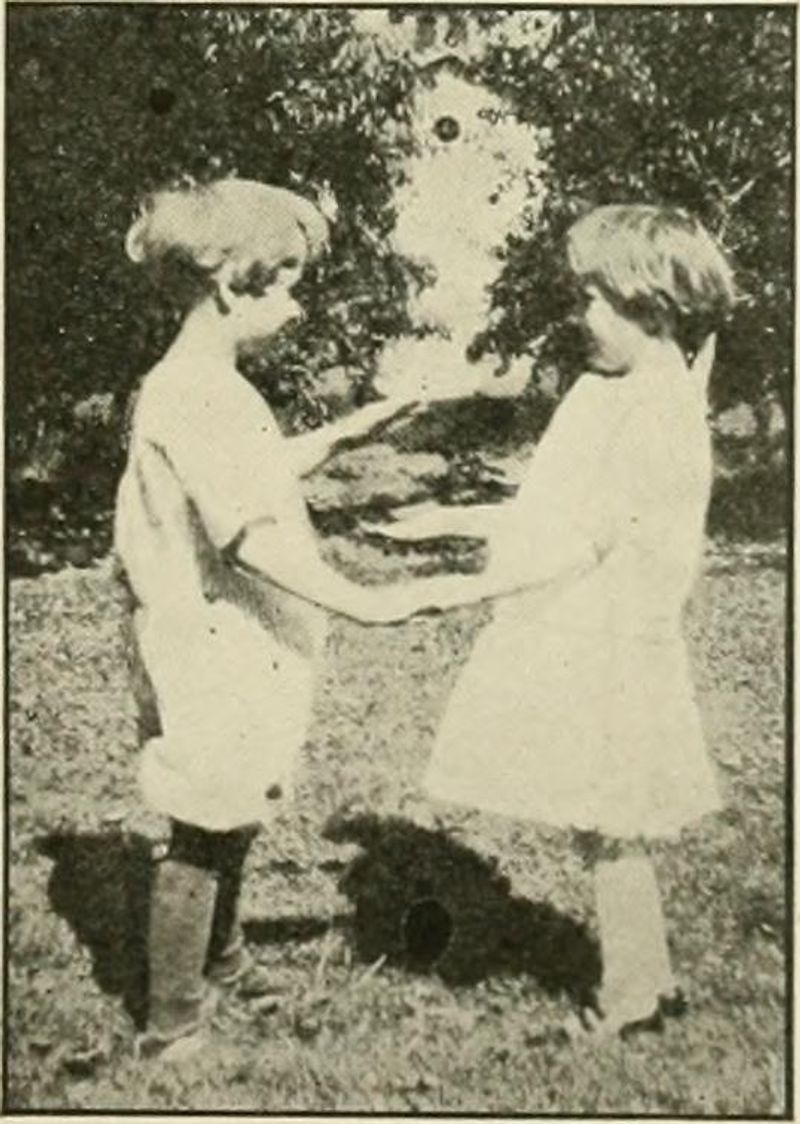
A girl dressed in black, an elephant, and a fifty-cent fence jump make a strange cast for a children’s game. Somehow, that odd story became one of the best-known clapping rhymes in the English-speaking world.
An early version showed up in Henry Carrington Bolton’s 1888 book, The Counting-Out Rhymes of Children. He collected it in West Chester, Pennsylvania.
By the 1920s, the rhyme was firmly rooted as a clapping game, especially among Black children. From there it spread to playgrounds in Canada, Australia, and New Zealand.
Nobody knows who Mary Mack really was. One popular theory points to the USS Merrimack, a black ship with silver rivets.
Another suggests a circus performer from the 1880s, which would explain the elephant.
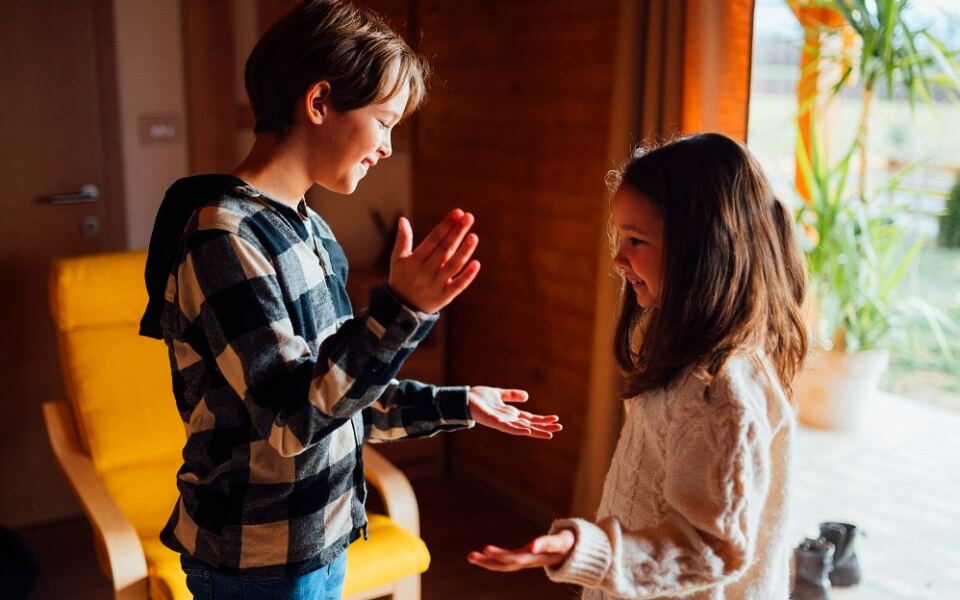
The game itself was a coordination test. Partners patted thighs, clapped their own hands, then crossed right, left, and both hands together.
Speeding up was the whole point. Want to keep it alive?
Teach a kid the pattern and let them race you.
2. Eeny, Meeny, Miny, Moe
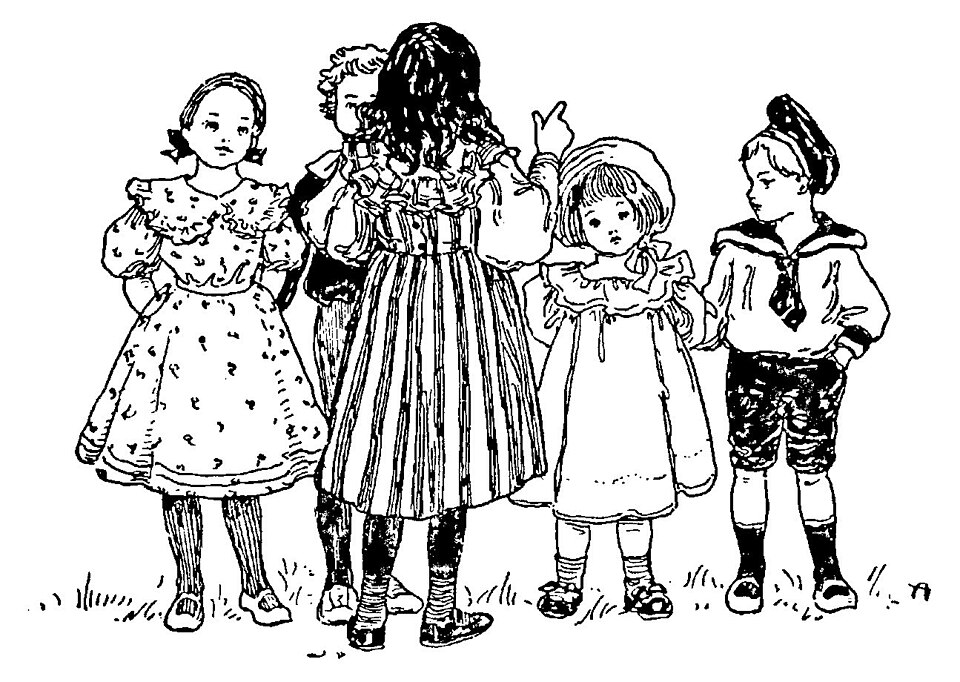
Every game of tag starts with one tricky question. Who has to be it?
For generations, the answer came from a pointing finger and four nonsense words. A child moved around the circle, tapping one player per word, and whoever landed on the last word was chosen.
The roots run deep. Similar counting-out chants were recorded in several European languages centuries ago, and the English version we know took shape in the 1800s.
Its past is not spotless. Older versions used hurtful language, and many communities replaced it with the line about catching a tiger by the toe.
That change is a useful lesson in how folk rhymes work. They belong to the people who say them, so they shift as values shift.
Here is a fun secret many kids figured out. A clever chooser could secretly control the result by counting the words ahead of time.
So the rhyme was never perfectly fair. Still, everyone agreed to follow it, and that was enough to end the argument.
3. Miss Susie Had a Steamboat
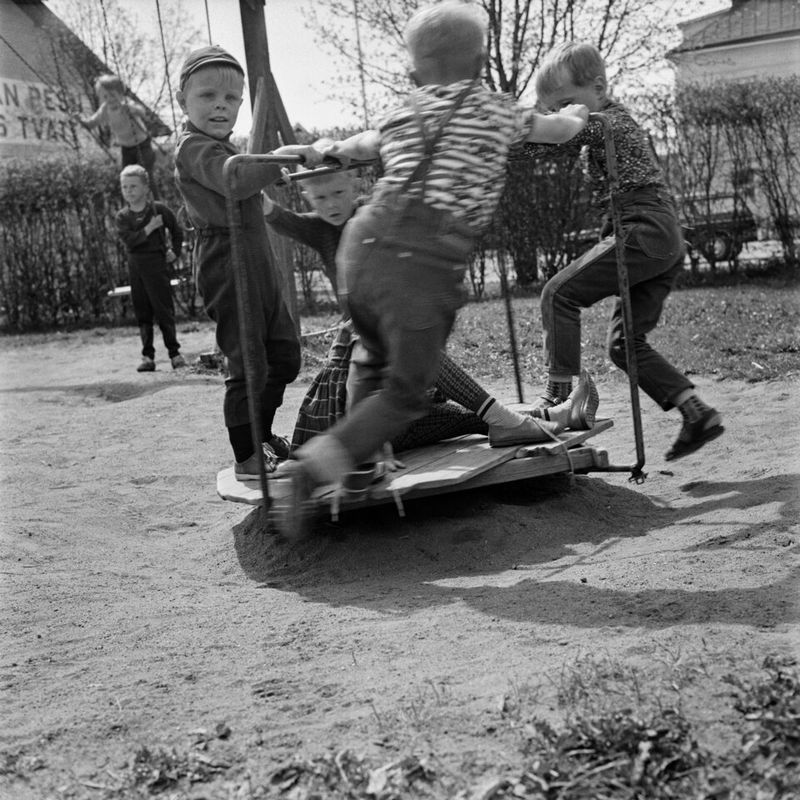
Some rhymes teach counting. One rhyme taught children the fine art of almost getting in trouble.
Miss Susie and her steamboat worked like a verbal magic trick. Each line seemed to build toward a word no teacher would allow, then swerved into something harmless at the very last second.
Hell-o operator became the most famous switch. The fake-out was the entire joke, and kids loved watching grown-ups flinch for a split second.
Versions changed wildly from school to school. Some called her Miss Lucy, and the plot might include a baby in a bathtub, a phone call, or a boy named Tommy.
The rhyme peaked during the twentieth century, though many kids still know a version today. Folklorists see it as a safe way for children to test rules using wordplay instead of actual mischief.
Performing it fast made the timing even funnier. If you remember all the verses, you have a small piece of schoolyard comedy history stored in your head.
4. Down Down Baby
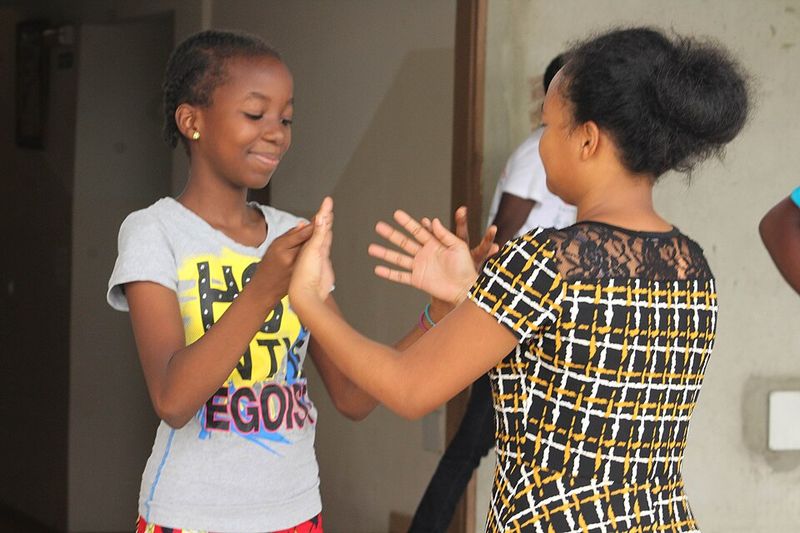
Long before it showed up in hip-hop tracks, this chant was already a hit at recess.
Down Down Baby mixed claps, hip bumps, and quick body moves into one fast routine. Lines about a roller coaster and sweet sweet baby gave the game its bounce.
The rhyme grew out of African American children’s musical traditions. In those circles, hand games have long been a way to build rhythm, teamwork, and creative skill.
Improvisation was part of the fun. Groups added their own lines, changed the moves, and invented new endings that only their block or school knew.
That flexibility made it easy to join. Younger kids could follow the basic beat, while older kids added tricky combinations at higher speeds.
Pop culture borrowed it too. Nelly’s 2002 song Country Grammar opened with the chant, introducing it to millions of listeners.
Many adults say the moves come back the instant they hear the first line. Try saying it out loud and see what your hands remember.
5. One, Two, Buckle My Shoe
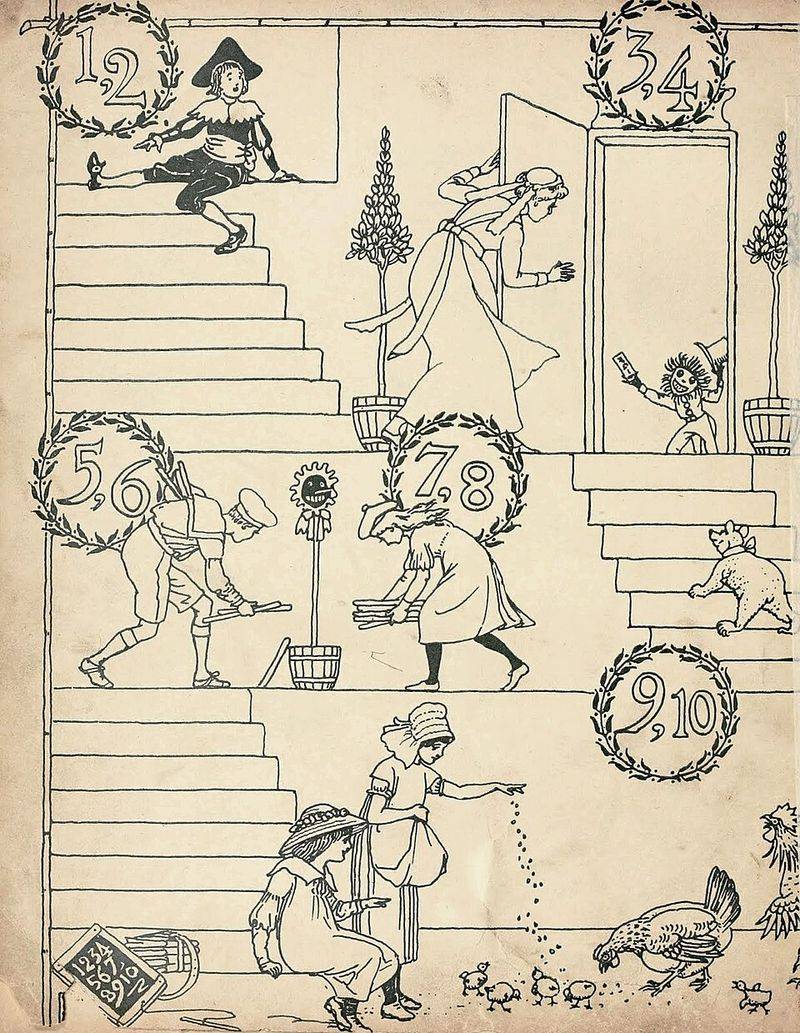
Plenty of children learned to count to twenty with help from a shoe, a door, and a pile of sticks.
The rhyme appeared in print during the early 1800s, with a version recorded in an 1805 collection called Songs for the Nursery. It quickly became a standard in English-language picture books.
Each pair of numbers comes with a simple task. Buckle my shoe, knock at the door, pick up sticks, and lay them straight.
By the middle of the twentieth century, American kids met it at home, in kindergarten, and outside at recess. Some chanted it while skipping rope, keeping one jump per number.
Later verses mention a big fat hen and maids in the kitchen. Many families dropped those lines, so the endings vary widely.
Its teaching value is easy to see. Rhythm helps young brains store number order without worksheets.
Parents today can still use it the same way. Count stairs, socks, or blocks while reciting it, and the numbers stick.
6. Cinderella Dressed in Yella
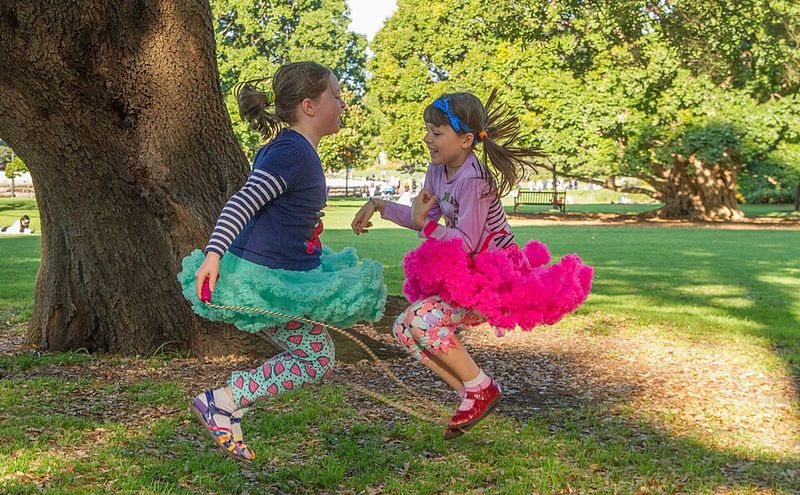
Fairy tales usually end with a royal ball. On the jump-rope line, Cinderella got a much sillier plot twist.
In the best-known version, she goes upstairs to kiss a fellow and kisses a snake by mistake. Then comes the important question of how many doctors it will take.
That question launched the counting. The jumper kept going, one number per hop, until the rope finally caught a foot.
Your score was your final number. Kids compared totals the way athletes compare records.
The color changed depending on who taught you. Some playgrounds dressed her in red or blue, and the snake sometimes became a frog.
Disney’s 1950 film made Cinderella famous with a whole generation, which helped the rhyme spread fast. Kids loved twisting a polished princess story into a goofy accident.
A cheap rope and three friends were all it took. That low-cost formula kept the game popular on driveways and blacktops for decades.
7. Teddy Bear, Teddy Bear, Turn Around
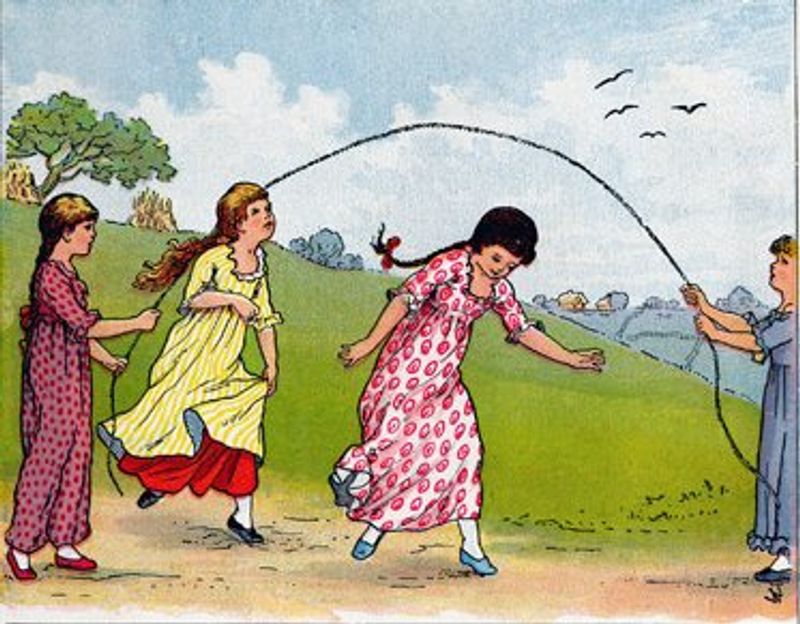
Jumping rope is hard enough. Now try spinning in a circle while the rope keeps moving.
That was the challenge of this classic chant. Each line gave the jumper a new command, starting with turn around and moving on to touch the ground.
Later lines got trickier. Show your shoe, go upstairs, say your prayers, turn out the light, and finally say good night, which meant hopping out cleanly.
Teddy bears themselves only date to 1902, named after President Theodore Roosevelt. The rhyme followed after the toy became a household favorite, so it is younger than many playground chants.
The game scaled nicely by age. Beginners stopped after a couple of tasks, while confident jumpers ran the full list without a stumble.
Coaches today use similar drills to build balance and footwork. Kids on the playground were doing agility training without knowing it.
Want to test yourself? Grab a rope and see if you can still touch the ground on beat.
8. Engine, Engine Number Nine
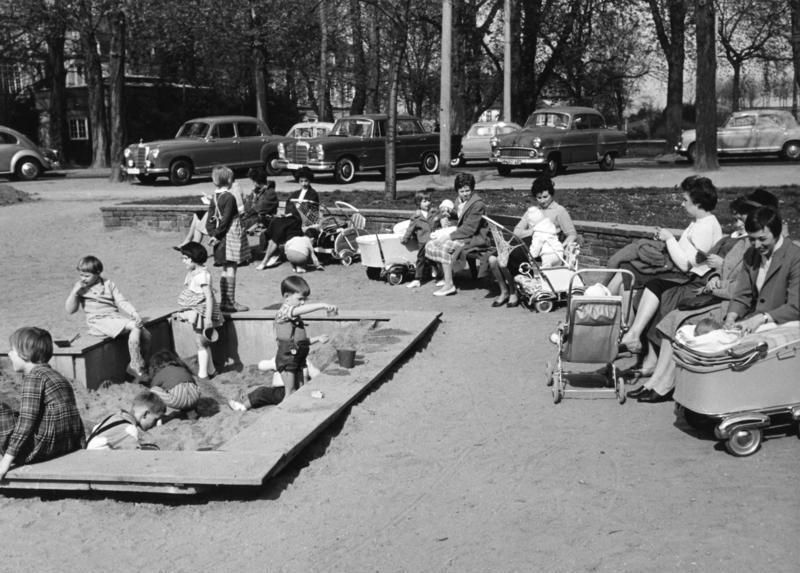
Railroads once shaped daily life across America, so it makes sense that kids put a train into their counting games.
The basic verse follows engine number nine going down the Chicago line. In many versions, a question follows about what happens if the train falls off the track.
The answer decided the game. Someone shouted a number, and the counter tapped players until landing on that spot.
Its steady beat matched the pointing motion perfectly. One word, one tap, and no confusion about whose turn came next.
The wording drifted from city to city. Some versions skipped Chicago entirely, while others added a ticket or a conductor.
The rhyme even reached the radio. Roger Miller recorded Engine Engine Number 9 in 1965, borrowing the playground line for a hit song.
Passenger trains faded from most kids’ lives after the 1960s. As that link weakened, fewer children had reason to chant about engines, which makes this one worth teaching again.
9. A Sailor Went to Sea, Sea, Sea
Sea, see, and see again. Three words that sound the same turned into one of recess’s busiest clapping routines.
The sailor went to sea to see what he could see. All he could see was the bottom of the deep blue sea.
That homophone joke made the rhyme a quiet language lesson. Kids learned that matching sounds can carry different meanings.
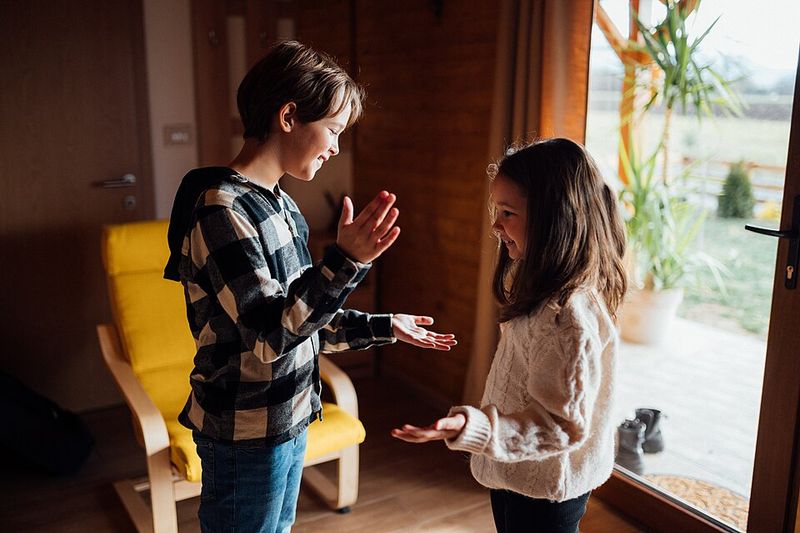
Each repeated word got its own gesture, often a salute to the forehead. Players had to clap and salute at the right moments without breaking the pattern.
Later rounds swapped sea for other words. Knee, chop, and a combination of actions piled on until somebody laughed and lost track.
The rhyme traveled widely across Britain, North America, and Australia during the twentieth century. Teachers still use it in music classes to build rhythm skills.
Reading the words is the easy part. The real test comes when a partner across from you speeds up, and your hands have to keep pace.
10. Apples, Peaches, Pumpkin Pie
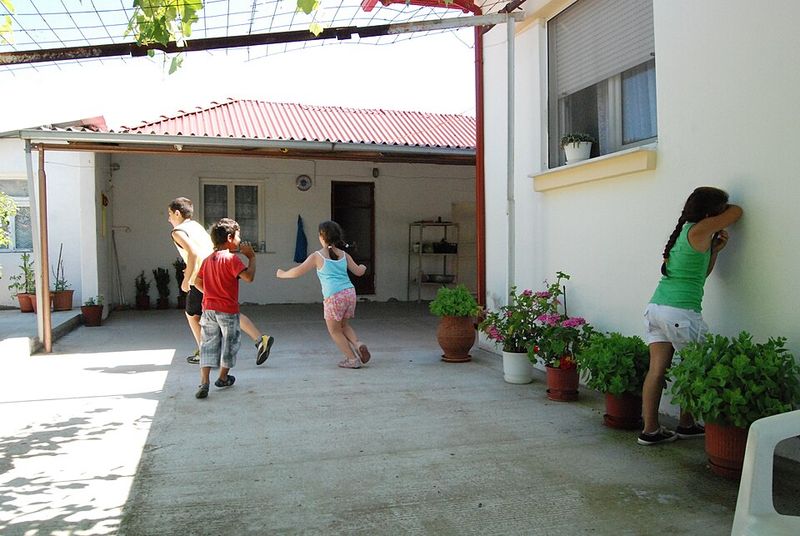
Dessert menus rarely start games. This one kicked off thousands of hide-and-seek rounds.
The chant opened with apples, peaches, pumpkin pie, then asked who was not ready, holler I. That question gave hiders a fair warning before the seeker opened their eyes.
It also worked as a counting-out tool. A child pointed around the circle, one player per word, to pick who would search.
Food words made it easy for little kids to remember. Fruit and pie were familiar from every kitchen table.
Endings varied by region. Some playgrounds added extra lines, while others stopped right after the question.
The rhyme fit the free-range neighborhood play common in the 1950s and 1960s. Kids often organized games for hours with no adults in charge, so built-in rules mattered.
A quick chant solved disputes before they started. Parents planning a backyard party can still use it to get a group of children playing in seconds.
11. Here Is the Church, Here Is the Steeple
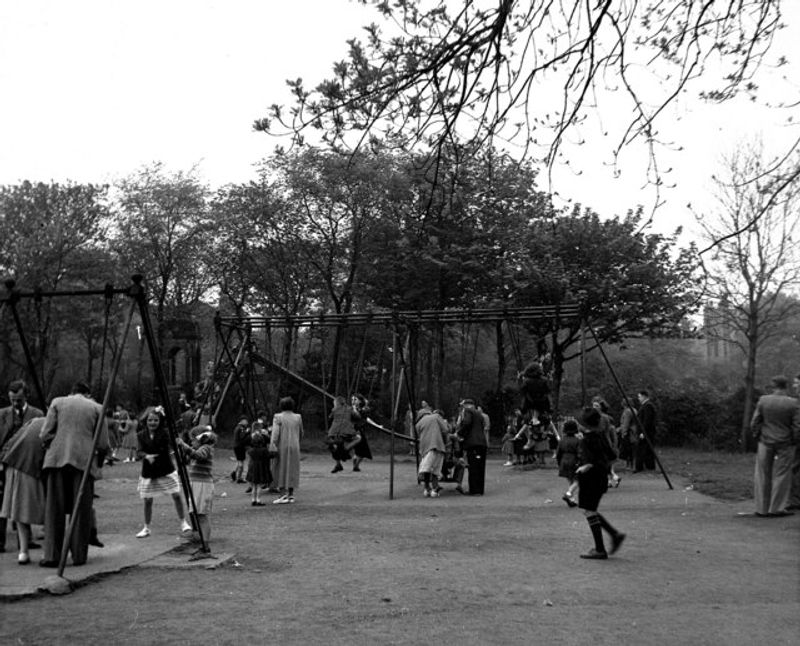
Ten fingers, one building, and a crowd hidden inside. Not bad for a trick that needs zero equipment.
The rhyme goes like this. Here is the church, here is the steeple, open the doors and see all the people.
Hands start folded with fingers tucked inside. Two pointer fingers rise to form the steeple, then the hands flip open to show wiggling fingers as the people.
Fingerplays like this were common teaching tools in nurseries, Sunday schools, and kindergartens. Friedrich Froebel, who founded the first kindergarten in 1837, promoted hand games for small children.
It was not a recess competition. Kids still showed it off to each other, especially to anyone who had never seen the reveal.
The movements help young children build fine motor control. Small hands practice gripping, lifting, and coordinating fingers separately.
Many adults can perform it without thinking decades later. If there is a toddler in your life, this is one of the easiest traditions to pass on today.
12. Red Hot Pepper in the Pot
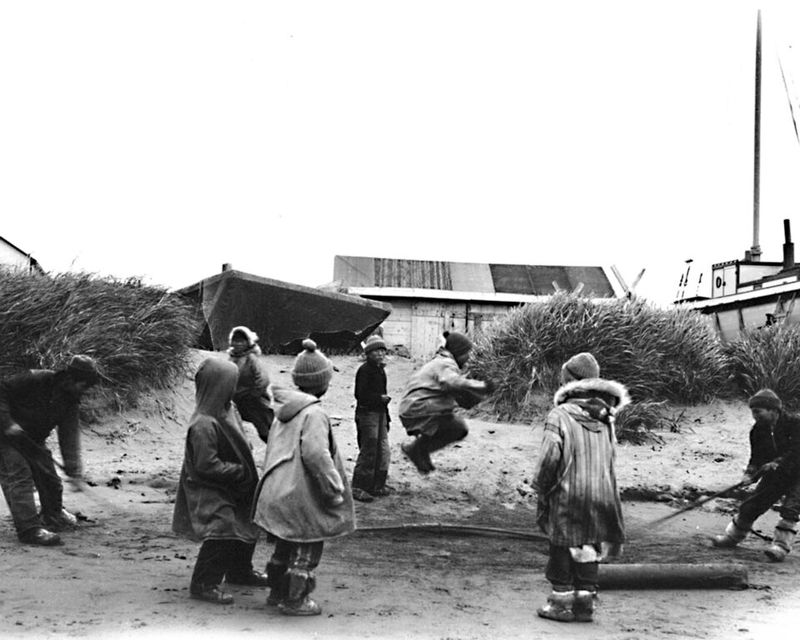
Two words could turn a calm jump-rope session into a full sprint. The words were red hot.
When turners called for pepper, they spun the rope as fast as their arms allowed. The jumper had to match that speed until a foot finally clipped the rope.
Some groups used a short chant, such as mabel, mabel, set the table, ending with a burst of pepper. Others just shouted the signal mid-game.
Scores came from counting jumps at top speed. Bragging rights went to whoever lasted longest.
The term hot pepper showed up in jump-rope collections from the early 1900s. It spread through city sidewalks and school yards where ropes were cheap and space was tight.
Modern competitive jump rope has a speed event with official timers. Recess kids were basically holding their own version without referees.
Fast feet were only part of it. Turners needed teamwork, since uneven arms could trip even the best jumper.
13. Mabel, Mabel, Set the Table
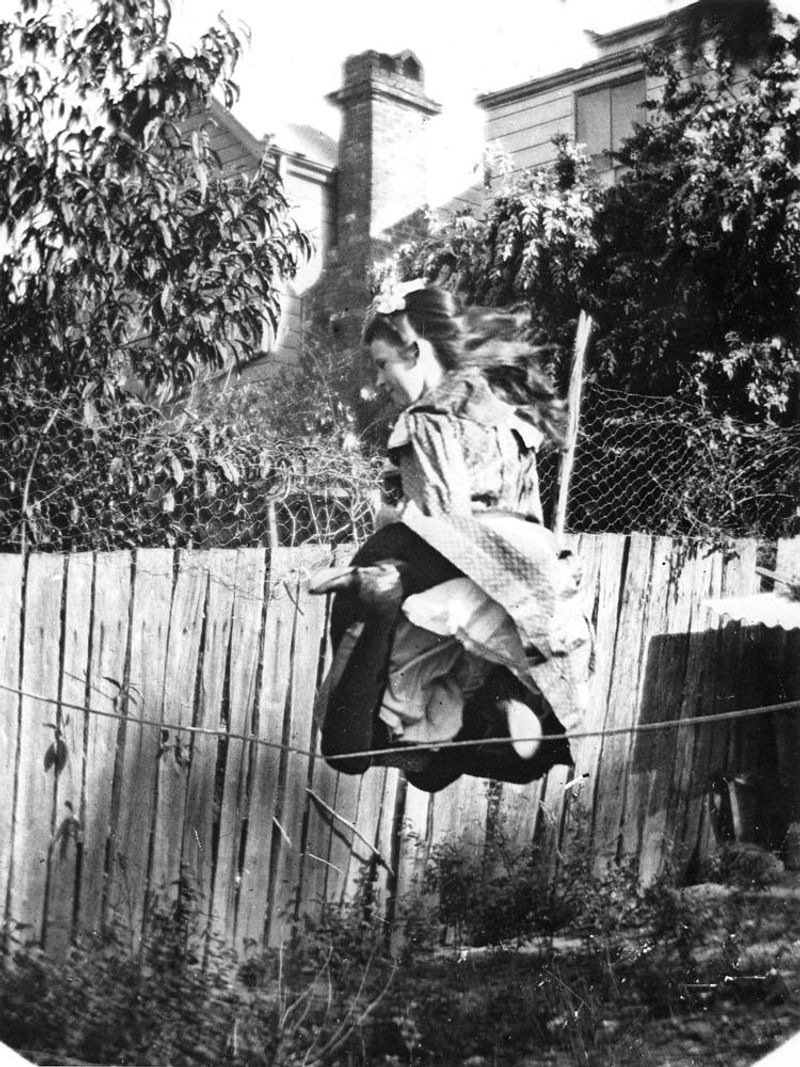
Chores rarely feel like fun. On the jump-rope line, setting the table suddenly became a sport.
The chant told Mabel to set the table and not forget the salt, vinegar, mustard, and pepper. That final word was the signal to speed up, linking it to the hot pepper game.
Kids borrowed language from ordinary home life all the time. Dinner duties, family names, and kitchen items showed up in dozens of rope rhymes.
Folklorists see this as a mirror of the times. In the 1940s and 1950s, many children helped with nightly meals, so the words felt natural.
No version was official. One neighborhood listed different condiments, while another added extra lines to stretch the game longer.
Children rarely argued over accuracy. Whatever the group knew became the right version for that day.
Try teaching it to a younger relative. You might find they like the speed twist at the end better than any app.
Share this story