Stone can soar, sing and tell stories when skilled hands shape it with care. Hindu temples across India and Southeast Asia show just how far that idea can go, from carved cliffs to towers that scrape the sky.
Each site on this list reveals clever engineering, deep faith and jaw-dropping artistry. Get ready to meet 17 buildings that prove sacred spaces can also be pure genius.
Angkor Wat – Cambodia
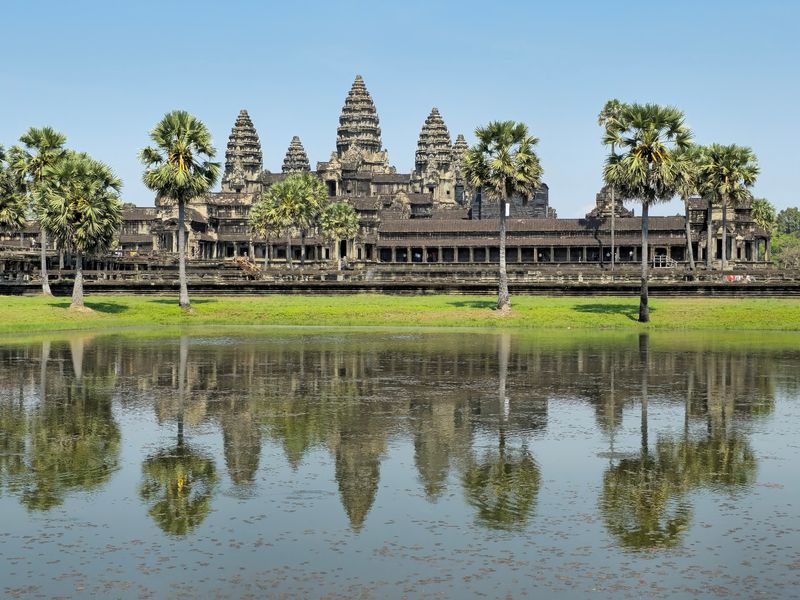
Picture a whole mountain range built by hand, then placed neatly inside a moat. That is Angkor Wat, the giant of Khmer architecture, raised in the 12th century.
It was first dedicated to Vishnu and later became a Buddhist site as well.
Five central towers stand for Mount Meru, the sacred mountain at the heart of Hindu belief. Wide moats and rectangular galleries wrap around them in neat layers.
Walk the long corridors and you will see bas-reliefs packed with gods, battles and royal parades.
The temple sits inside Angkor Archaeological Park, which stretches across roughly 400 square kilometers. That is a lot of ground to explore, so give yourself plenty of time.
Many visitors say the quiet hour before sunrise is the best moment, when the towers glow against the sky and the crowds are still yawning.
UNESCO counts Angkor Wat among the undisputed masterpieces of Khmer architecture. Bring a hat, a water bottle and comfortable shoes, because the stone steps are steep and the sun gets bold by midmorning.
Climbing to the upper level feels like a small adventure of its own.
Brihadisvara Temple – Thanjavur, India
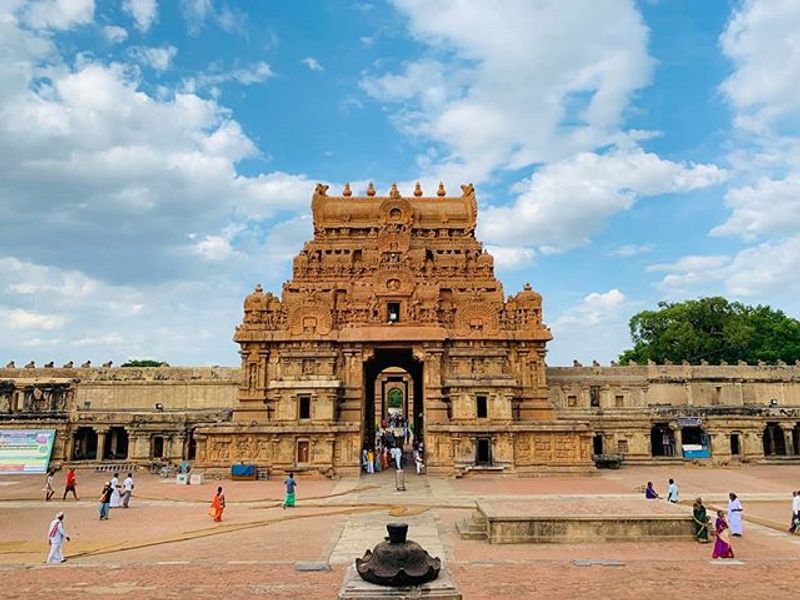
Raising a stone tower over 60 meters tall in the year 1010 was no small feat. The Brihadisvara Temple in Thanjavur did exactly that, and it still dominates the skyline today.
King Rajaraja I of the Chola Empire ordered it built as a grand home for Shiva.
The soaring vimana rises above a carefully planned group of halls, shrines and courtyards. Everything feels balanced and calm, even at this size.
Look closely and you will spot detailed sculptures, long inscriptions and traces of old paintings on interior walls.
The temple belongs to UNESCO’s Great Living Chola Temples. The word living matters here, because worship still happens daily.
You may hear bells and chanting echo through the courtyards while you wander.
UNESCO praises the Cholas for their brilliance in architecture, sculpture, painting and bronze casting, and this site shows all of those talents together. Visit in the early morning for softer light and cooler stones.
Remove your shoes at the entrance, and wear socks if the ground heats up.
Kailasa Temple – Ellora, India
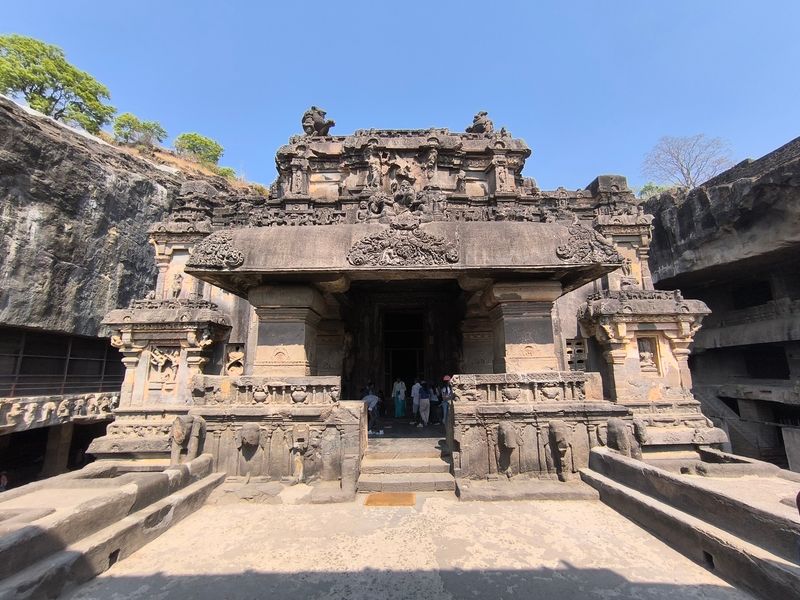
Here is a mind-bending fact: nobody stacked the stones of Kailasa Temple. Builders started at the top of a basalt cliff and carved downward, removing rock until a full temple appeared.
There was no room for mistakes, since a stone could never be put back.
Known as Cave 16 at Ellora, the temple represents Mount Kailasa, the legendary home of Shiva. Columns, shrines, life-sized elephants and busy sculpture panels all come from one single mass of rock.
The scale feels unreal when you stand in the courtyard and look up.
UNESCO calls it the largest monolithic temple at Ellora and a technological achievement without equal in the rock-cut tradition. That is a big compliment, and the site earns it.
Ellora also holds Buddhist and Jain monuments, so the whole complex shows how different faiths lived side by side. Plan a full day if you can.
Walk around the upper edge for a bird’s-eye view, then head down to the base to feel small in the best way.
Kandariya Mahadeva Temple – Khajuraho, India
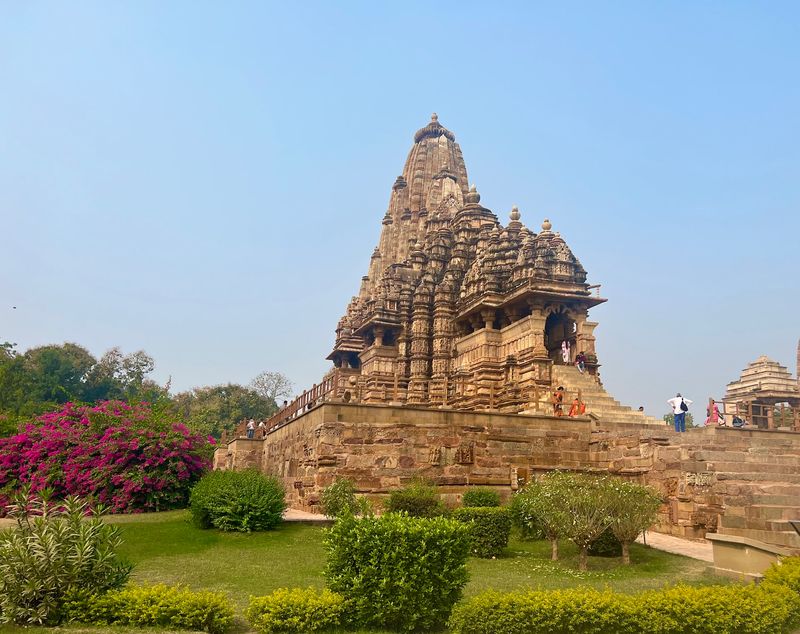
“It looks like a mountain range someone decided to carve.” That is a common reaction when visitors first see Kandariya Mahadeva. Built by the Chandella dynasty in the 11th century, it is the largest and most elaborate surviving Hindu temple at Khajuraho.
Dedicated to Shiva, the temple climbs through a series of spires that grow taller until they reach the main shikhara. The layered shape recalls Mount Kailasa, the sacred peak linked with the god.
Now look at the walls. Almost every surface carries sculpture, including gods, musicians, dancers, celestial beings and scenes from everyday life.
The figures are small but full of motion, so slow down and let your eyes wander.
UNESCO regards Khajuraho as the high point of northern Indian Nagara-style temple design and singles out Kandariya for its rich decoration. For the best photos, arrive late in the afternoon when warm light brings out the shadows in the carvings.
A local guide can point out details that are easy to miss.
Meenakshi Amman Temple – Madurai, India
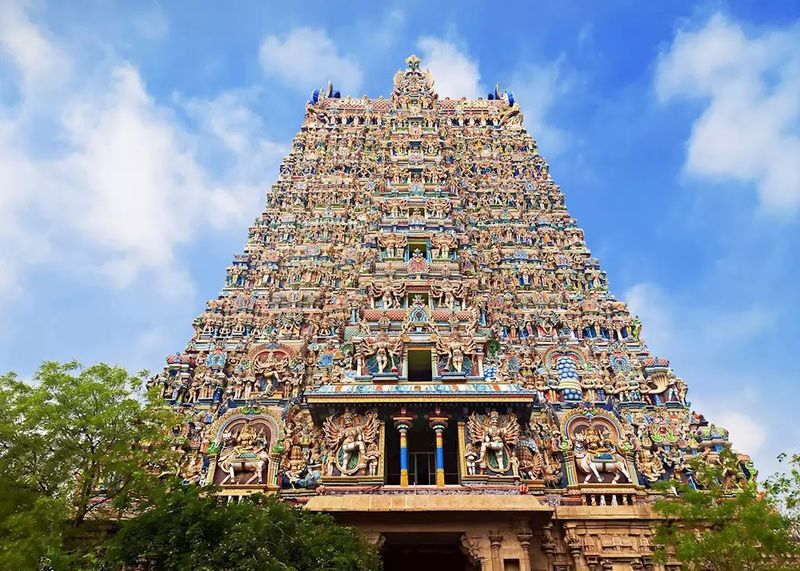
Color hits first at Madurai’s Meenakshi Amman Temple. Towering gateways called gopurams rise above the city, and every inch is crowded with painted gods, goddesses, guardians and fantastic creatures.
Thousands of figures seem to wave from the walls.
The temple honors Meenakshi, a form of Parvati, and Sundareshwarar, a form of Shiva. The site has ancient roots, though most of what you see today grew under the Nayak rulers in the 16th and 17th centuries.
Step inside and the mood changes. Long pillared halls, quiet shrines, wide courtyards and sacred tanks create a complex that feels like a small town.
Worshippers move through it all day, carrying flowers and lamps.
This is a working temple, so dress modestly and expect some rules about cameras in the inner areas. Go early to avoid the heat and the biggest crowds.
Take a moment to stop and stare up at one gopuram. You will find new characters every time you look.
Sun Temple – Konark, India
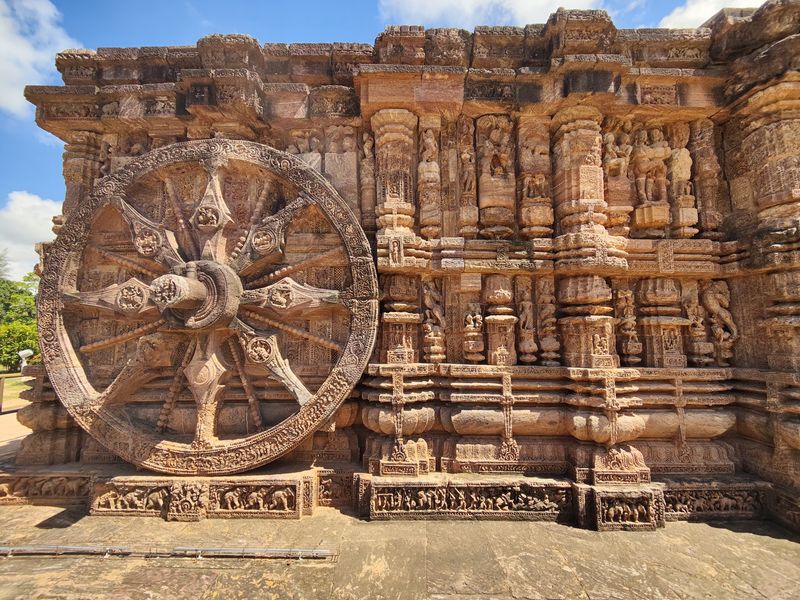
Twenty-four giant stone wheels, each carved with fine detail, roll across the sands of Konark. The whole Sun Temple was designed as the chariot of Surya, the sun god, pulled by sculpted horses.
It was built in the 13th century under the Eastern Ganga dynasty.
The wheels are not just decoration. Locals have long said their spokes work like sundials, helping people read the hour from shadows.
Guides love to demonstrate this, and it never fails to impress.
The walls are covered with reliefs of musicians, dancers, animals, divine figures and daily life. The carving is lively and full of personality.
The main sanctuary tower no longer stands, yet the surviving structure still feels enormous. UNESCO calls Konark the high point of Kalinga temple architecture and praises its design and sculpture.
Visit near sunset, when the stone turns golden. A short walk to the nearby beach makes a nice finish to the day.
Prambanan – Indonesia
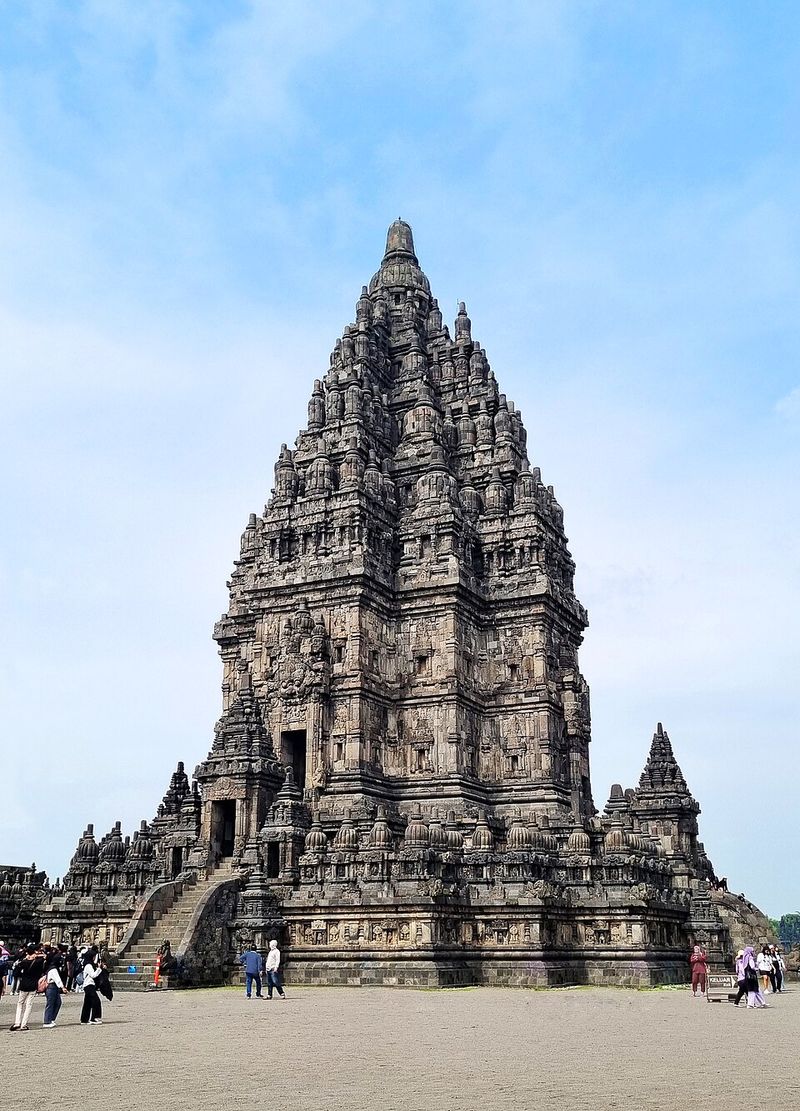
Sharp, slim and strikingly tall, the main tower of Prambanan seems to poke the clouds. This Central Java complex proves that Hindu architecture traveled far beyond India.
It rose in the 9th and 10th centuries and honors Shiva, Vishnu and Brahma.
The central Shiva temple stands in the middle, with a steep profile that pulls your eyes upward. Smaller shrines sit in neat enclosures around it, like guests arranged around a great host.
Walk along the temple walls and you can follow episodes from the Ramayana in stone panels. The story unfolds as you circle the building, so go slowly and read the scenes in order.
UNESCO describes Prambanan as the largest temple compound dedicated to Shiva in Indonesia and a fine example of classical Javanese Hindu art. Some structures were damaged by earthquakes and have been carefully restored.
Come at sunset for a golden glow, and bring water, because the open grounds can get warm.
Hoysaleswara Temple – Halebidu, India
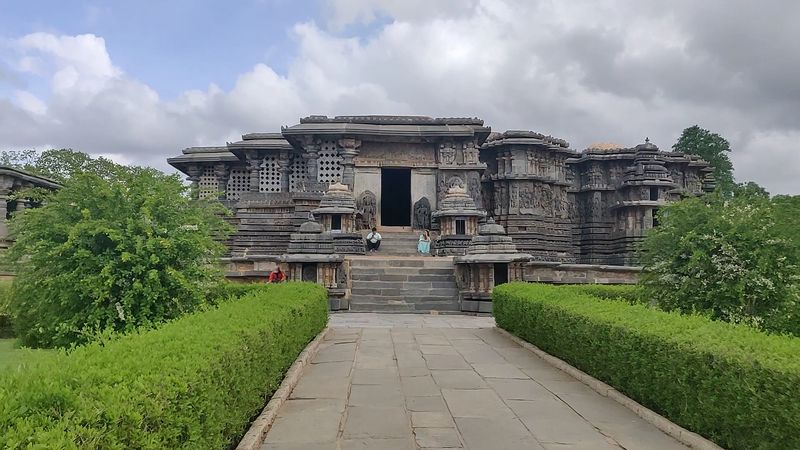
Halebidu’s Hoysaleswara Temple looks like a sculptor’s playground. Built in the 12th century during the Hoysala period, it is wrapped in carved bands of elephants, horses, mythical beasts, flowers and scenes from the great epics.
Its star-shaped plan is a clever trick. All those corners and projections create more wall space, which gave artists room for even more detail.
The result is a building that seems to ripple in the light.
The temple is dedicated to Shiva and belongs to UNESCO’s Sacred Ensembles of the Hoysalas. UNESCO notes the tradition for its fine sculpture, layered friezes and unmistakable style.
Bring patience and a good eye. Try following a single frieze band from one end of the wall to the other, and count how many different animals appear.
A small museum nearby adds helpful context. Early morning visits are calm and cool, with soft light that shows off every tiny curve in the stone.
Chennakeshava Temple – Belur, India
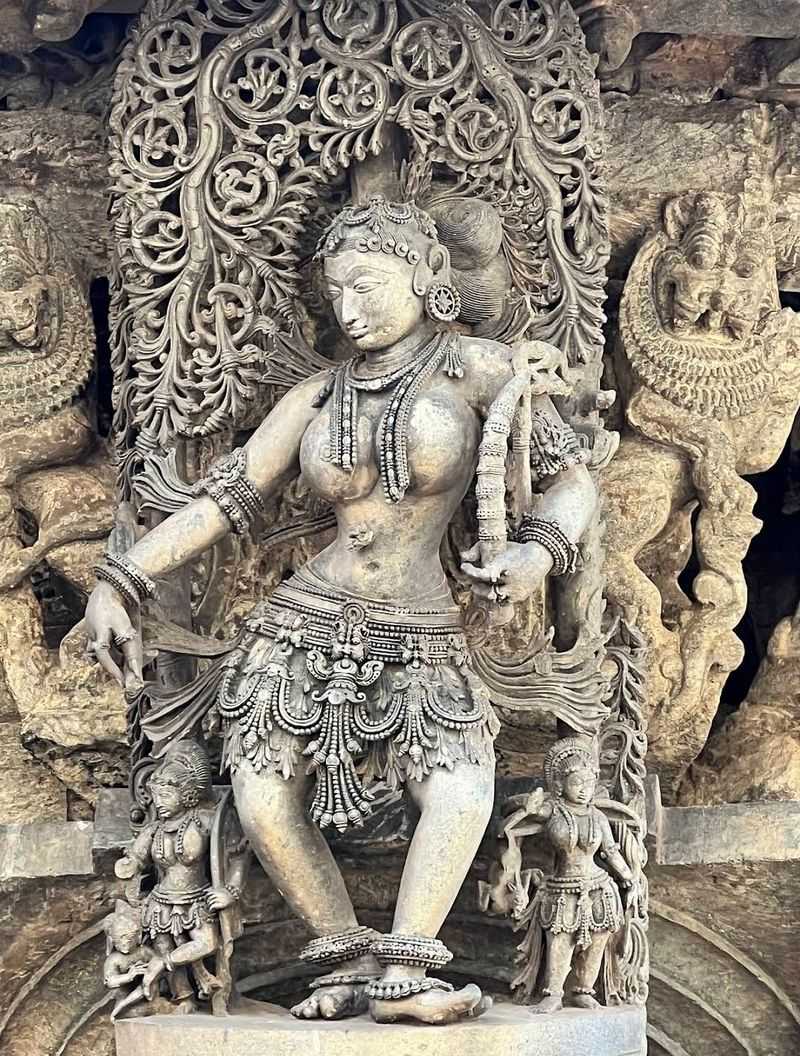
Some of the carvings at Belur look so delicate that you might think they are made of jewelry. Chennakeshava Temple, built in the 12th century for Vishnu, is another shining example of Hoysala design.
It sits proudly on a raised platform.
Outside, the walls are layered with animals, plants and mythological scenes. Graceful figures peek out beneath the roofline.
The dark stone allowed craftspeople to cut extremely fine details that stay sharp after centuries.
Inside, the pillars steal the show. Each one is shaped with care, and some seem polished to a shine.
Stand quietly and notice how the patterns change from pillar to pillar.
Together with Halebidu and Somanathapura, Belur forms UNESCO’s Sacred Ensembles of the Hoysalas. The group is recognized for taking Hindu temple architecture in a new regional direction.
This is an active place of worship, so expect rituals and music. Visit in the morning, when the hall is peaceful.
Vittala Temple – Hampi, India
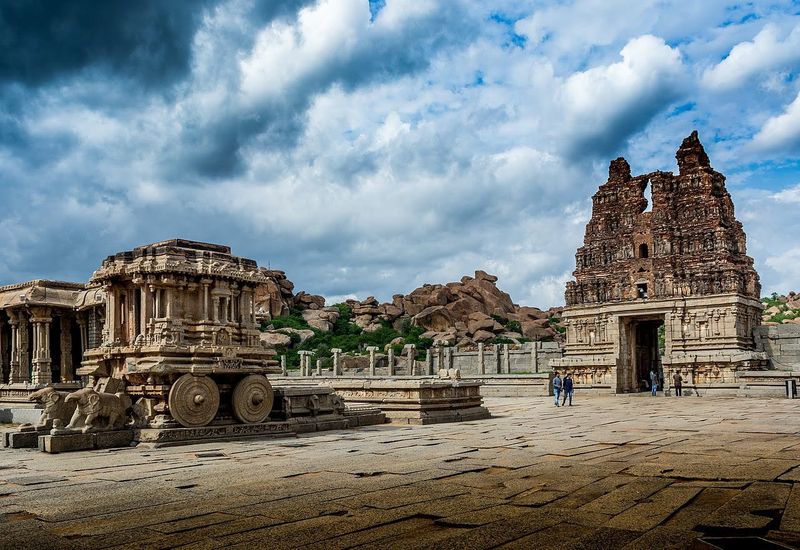
A stone chariot that never moves an inch has become one of India’s most famous images. It stands in the courtyard of the Vittala Temple at Hampi, a standout of the Vijayanagara Empire.
The shrine is shaped like a ceremonial chariot, complete with wheels.
The rest of the complex is just as ambitious. Large pillared halls, carved columns, ceremonial spaces and gateways fill the enclosure.
Some pillars are said to ring with musical notes when tapped, though visitors are no longer allowed to test that.
Hampi was once the capital of the last great Hindu kingdom of southern India. Hundreds of religious and royal buildings spread across a landscape of giant boulders.
UNESCO describes Vittala as the most exquisitely ornate building at Hampi and the high point of Vijayanagara temple design. Rent a bicycle to explore the site.
Start early, carry plenty of water and save Vittala for the golden light of late afternoon.
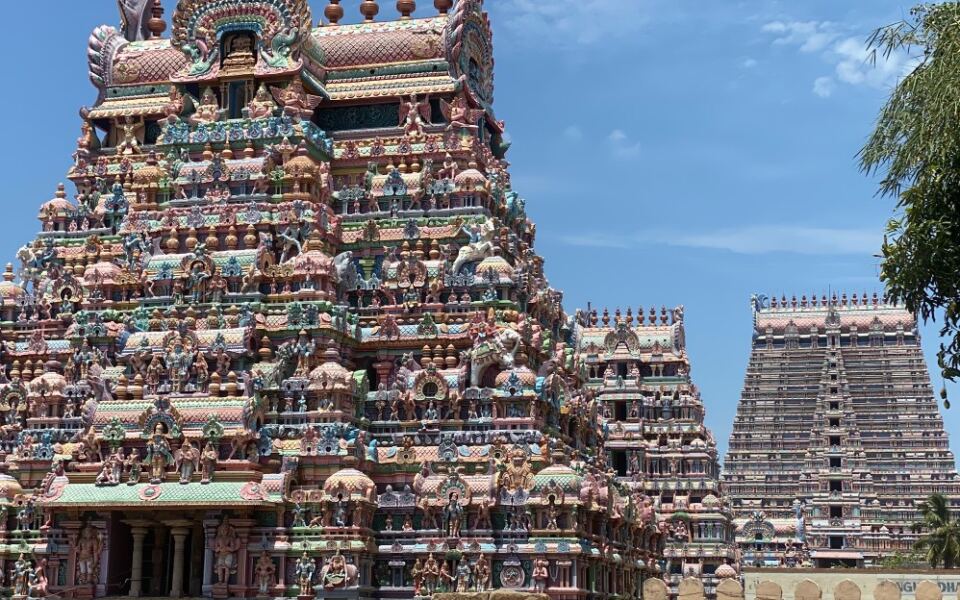
Sri Ranganathaswamy Temple – Srirangam, India
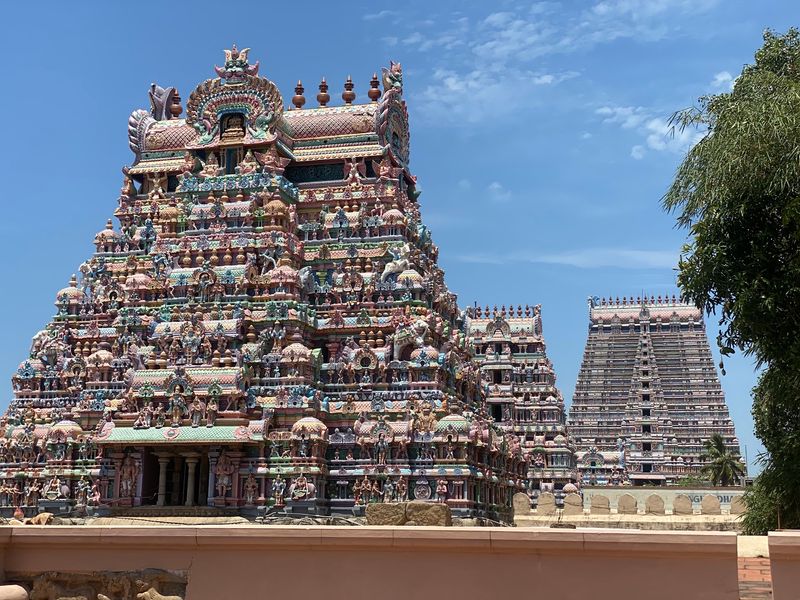
Calling Srirangam a temple is almost too modest. It is more like a sacred city wrapped in walls.
Dedicated to Vishnu as Ranganatha, the complex covers roughly 156 acres and has seven concentric enclosures.
Twenty-one gopurams rise above the precinct. The tallest is an enormous entrance tower that can be seen from far beyond the temple grounds.
Passing through one gateway after another feels like moving deeper into a story.
Inside are dozens of shrines, sacred pools, halls and ceremonial spaces. Shops and homes cluster near the outer walls, so daily life flows right up to the sacred center.
UNESCO’s tentative listing calls Srirangam one of the world’s largest functioning temple complexes and a fine example of the South Indian temple-town tradition shaped by many dynasties. Wear comfortable footwear that is easy to remove.
Give yourself at least half a day, and consider climbing the main gopuram for a wide view over the rooftops.
Ramappa Temple – Telangana, India
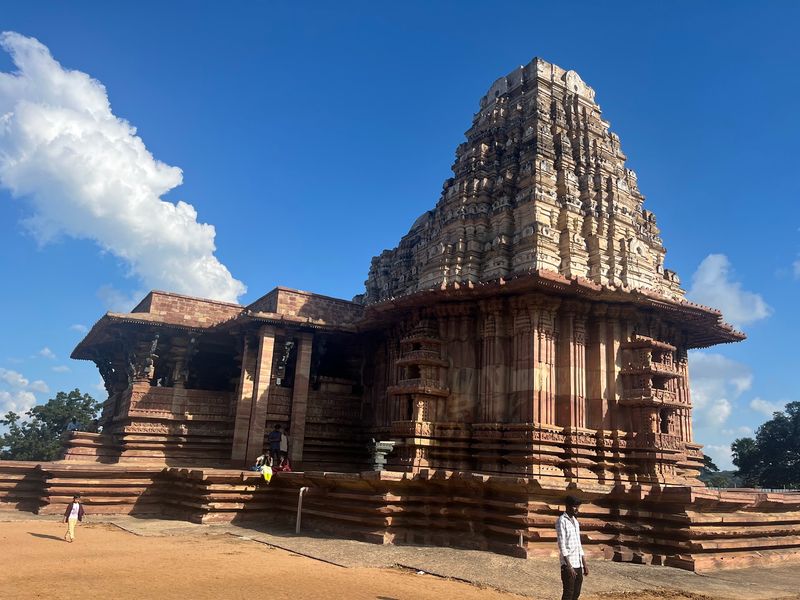
Bricks that float? Not quite, but Ramappa Temple comes close.
Its pyramidal tower uses unusually light porous bricks that cut the weight of the roof. Builders under the Kakatiya rulers began the temple in 1213.
The Shiva temple blends sandstone with carved granite and dolerite. Dolerite is very hard, yet artists polished it until it shone.
Look for slender dancers and musicians that seem frozen mid-move.
The foundation is another clever trick. Engineers used a special system to help the structure stay stable for centuries, and it has survived heavy rains and earthquakes.
UNESCO recognizes Ramappa as a masterpiece of Kakatiya architecture, praising both its engineering experiments and the fine finish on its stone carvings. It shows how design, sculpture and technology can work as one idea.
Visit in the cooler months, and notice how the pillars catch light and throw it back.
Shore Temple – Mahabalipuram, India
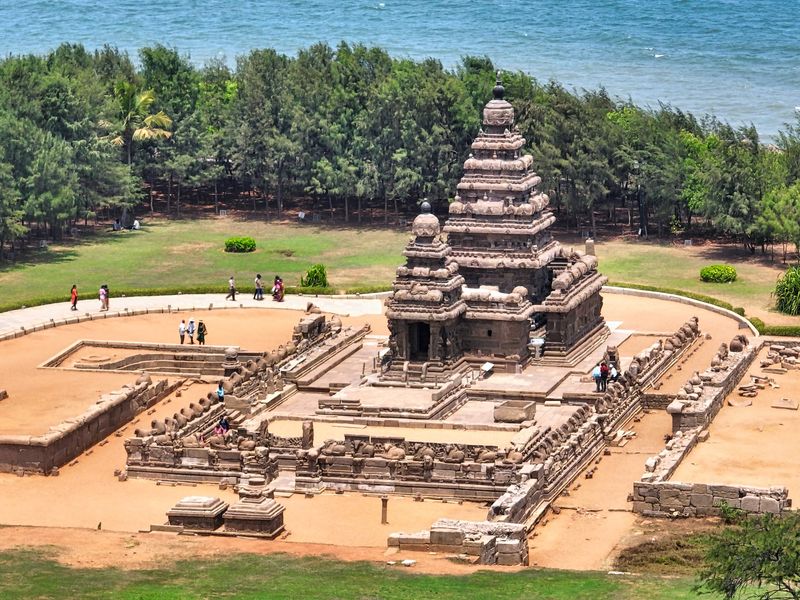
Salt air, crashing waves and ancient stone: the Shore Temple has all three. It stands beside the Bay of Bengal and has watched the tides for more than 1,200 years.
The Pallava dynasty built it around the late 7th and early 8th centuries.
The temple marks a big shift in design. Earlier sanctuaries were carved into rock, but this one was built from cut stone blocks as a freestanding structure.
Its compact towers look sharp against the sea.
Shrines inside are linked mainly with Shiva and Vishnu. The sea breeze has softened many carvings, giving the stone a worn, gentle look.
UNESCO describes it as the culmination of Pallava structural architecture at Mahabalipuram. The wider site also includes cave temples, monolithic shrines and huge relief carvings.
Go at sunrise for soft light and fewer people. Then walk to Arjuna’s Penance nearby for more stone storytelling.
Preah Vihear – Cambodia
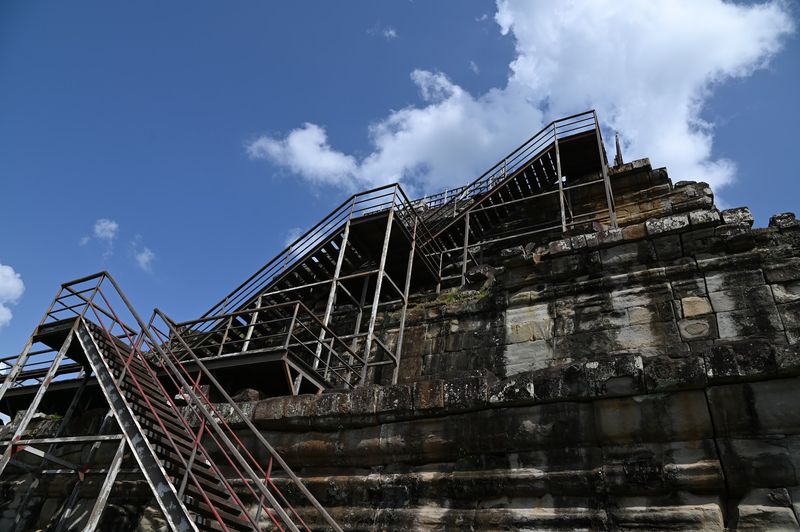
Few temples ask you to climb quite as much as Preah Vihear. Perched on the edge of a high plateau, it looks out over the Cambodian plain.
The view alone is worth every step.
Instead of gathering around a single courtyard, the temple stretches along an axis about 800 meters long. Visitors pass through staircases, causeways, gateways and sacred spaces, each one a little higher than the last.
The path works like a slow reveal.
Dedicated to Shiva, the temple developed over several centuries, with key parts dating to the Khmer period. Builders adapted the plan to the mountain instead of flattening it.
UNESCO calls Preah Vihear an outstanding masterpiece of Khmer architecture, especially for the way its plan, decoration and natural setting work together. Bring sturdy shoes, sun protection and lots of water.
Check current access conditions before traveling, since the area lies near a border.
Pashupatinath Temple – Kathmandu, Nepal
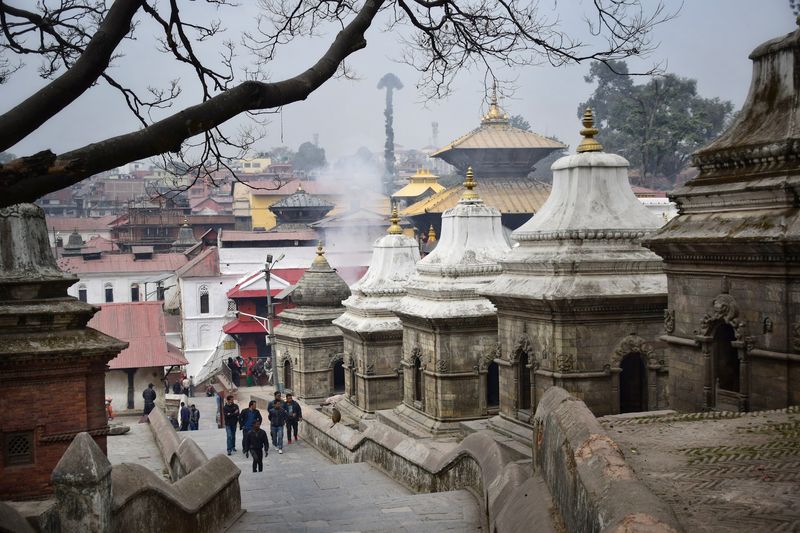
Bells, incense and river mist set the scene at Pashupatinath. This is one of the holiest Hindu sites in Nepal, set along the Bagmati River in Kathmandu.
It honors Shiva as Pashupati, the lord of animals.
The main temple is easy to spot thanks to its tiered pagoda-style roofs, a signature of traditional Nepalese architecture. Gilded details flash in the sun and draw the eye.
Around it spreads a wide precinct with many shrines, smaller temples, cremation ghats and religious buildings. Much of it grew slowly over many centuries, so each corner has its own age and mood.
The site is part of the UNESCO-listed Kathmandu Valley, where it stands as a major Hindu ensemble that shows the region’s artistic style. Non-Hindus may not enter the main sanctuary, but the riverbank offers fine views.
Be respectful, ask before photographing people, and visit in the evening for aarti prayers.
Changu Narayan – Nepal
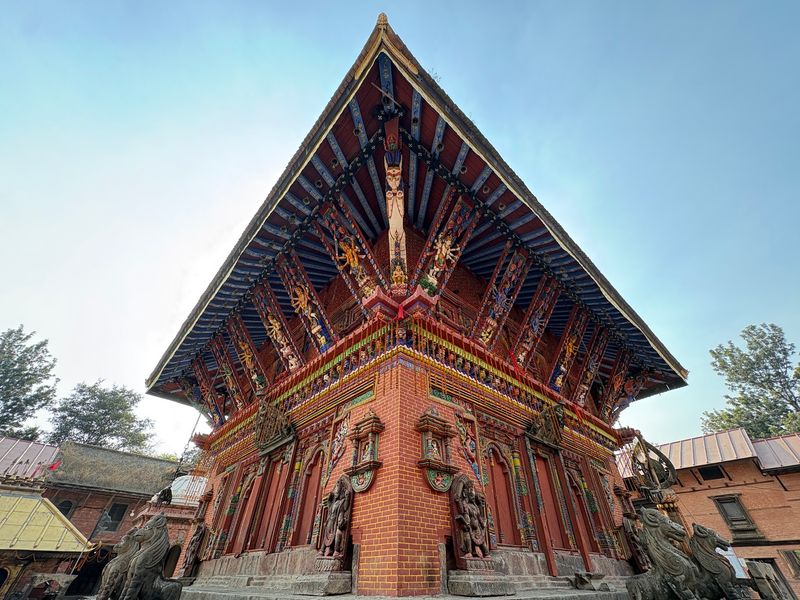
High on a ridge above the Kathmandu Valley, Changu Narayan carries history like a well-kept secret. The temple is dedicated to Vishnu and sits inside a traditional Newari village.
Narrow lanes and brick houses lead up to its courtyard.
Look at the roof first. Its multiple tiers rest on carved timber struts, and stone sculptures guard the courtyard.
Together they show a distinctly Himalayan take on Hindu temple design.
A fifth-century inscription found here is among the oldest in the valley, which makes the site a treasure for historians. Stone pillars and statues around the temple are older than many visitors expect.
UNESCO includes Changu Narayan among the seven monument zones of the Kathmandu Valley World Heritage Site and praises its artistic and historical importance. The hike or short ride up is rewarding, with views of terraced fields.
Visit in the morning, then wander the village for local snacks.
Banteay Srei – Cambodia
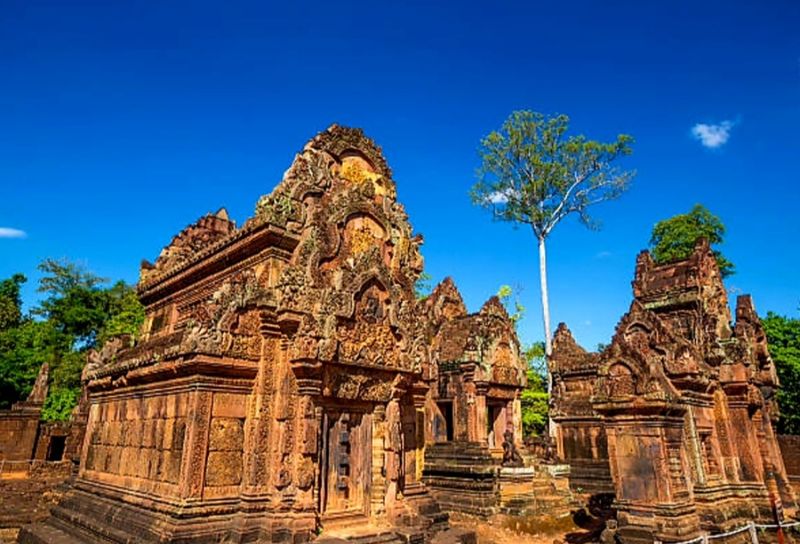
Small can still be spectacular, and Banteay Srei proves it. Built in the 10th century and dedicated mainly to Shiva, this temple is famous for its warm reddish sandstone.
The color glows softly in the morning light.
Step closer and the carvings take over. Doorways, pediments and walls are covered with scenes from Hindu mythology, flowing plant patterns and divine figures.
The cuts are so crisp that the stone looks almost like jewelry.
The modest size is a bonus. You can stand an arm’s length from the details and study faces, jewelry and tiny flames carved into the stone.
Banteay Srei belongs to the wider Angkor landscape, and UNESCO names it alongside Angkor Wat and the Bayon as one of the great artistic achievements of Khmer civilization. It lies a short drive from the main Angkor sites.
Go early to beat tour groups, and bring a camera with good zoom.
Share this story