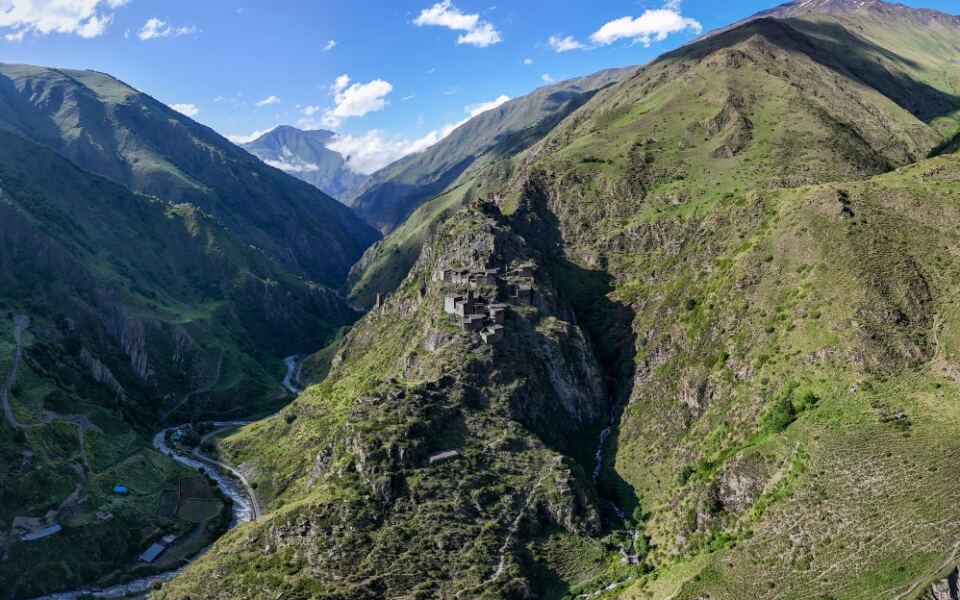
High in the Caucasus Mountains of northern Georgia, a village called Mutso clings to a rocky slope. Long ago, about forty stone houses stood shoulder to shoulder to guard it from attackers.
Today the ruins still tell wild tales of Khevsur warriors, mountain life, and stubborn stone. Ready to climb up and meet one of the most dramatic villages in Georgia?
A Village Built Like a Fortress
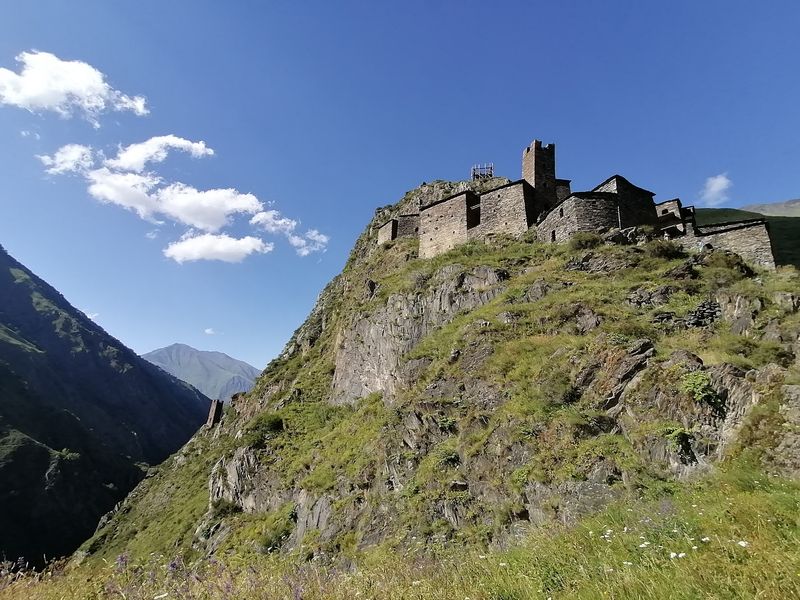
Picture a hillside where nearly every house doubles as a brick in a giant wall. That was Mutso.
About forty stone houses were packed tightly together, and their outer faces made a solid barrier against raiders.
Nobody needed a separate castle here. The homes themselves were the castle.
Walls were thick, windows were tiny, and the whole cluster hugged a steep, rocky ridge.
Walk the old paths and you can see how smart the plan was. Attackers had to climb uphill, in plain view, toward stone that did not budge.
Defenders could watch every move from above.
The village sits in Pirikita Khevsureti, in the Dusheti Municipality of Mtskheta-Mtianeti. That is a part of Georgia where mountain life shaped every design choice.
Today the dark stone blends into the cliffs, so the village seems to grow out of the mountain. Spotting it from the trail below feels like finding a secret that the landscape has been keeping for centuries.
Where in the World Is Mutso?
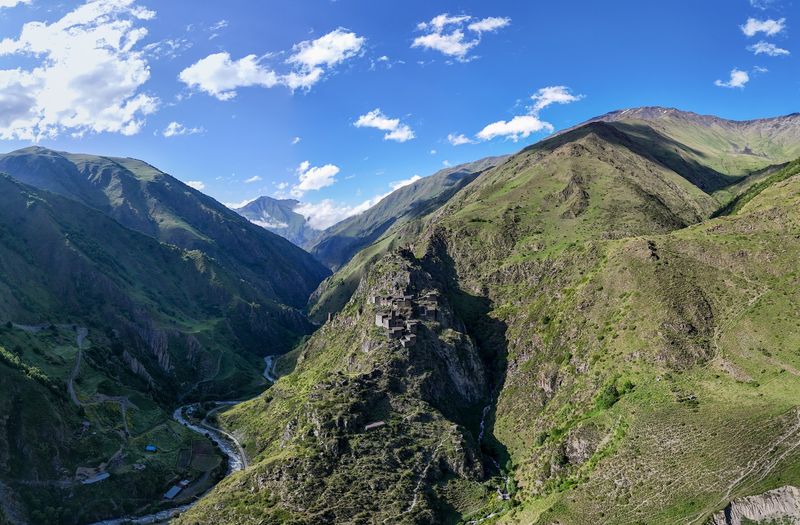
Grab a map of Georgia and look north, almost to the Russian border. Mutso sits at about 42.6 degrees north in the high Caucasus.
It is a long way from city lights.
The village belongs to the historical region of Pirikita Khevsureti. Officially it is part of Dusheti Municipality in the Mtskheta-Mtianeti region.
A local ordinance lists it among the villages of the Shatili administrative unit.
Getting there takes patience. Roads wind through mountain passes, and weather can change the plan in an hour.
Many travelers reach it through the Shatili area, then walk the last stretch.
That remoteness is exactly why the place survived as it did. Few outsiders passed through, so old customs and old stones stayed put.
Pack sturdy boots, a rain jacket, and a flexible schedule. In the highlands, the journey is half the story, and the views along the way make the effort feel worth it.
Forty Houses, One Big Wall
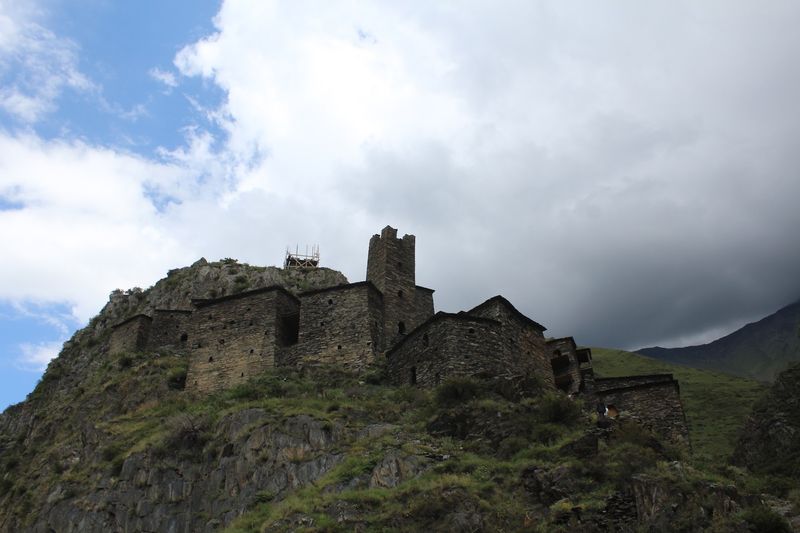
Forty is not a random number. It is the count of stone houses said to have lined up to shape the village’s outer shield.
Each home leaned on its neighbor. Side walls touched, so there were no gaps for enemies to slip through.
If one family was in trouble, the neighbors were literally next door.
Builders stacked local stone without fancy tools. They chose flat pieces, fitted them snugly, and relied on weight and skill to keep everything standing.
Some walls are still upright after generations of snow.
Inside, rooms were small and practical. Heat mattered more than space, and thick stone kept winter winds out.
Here is a fun thought. Your own street probably has fences, hedges, and mailboxes.
Mutso’s street had firepower, lookout posts, and a very clear message: do not try it.
The Khevsur Warrior Spirit
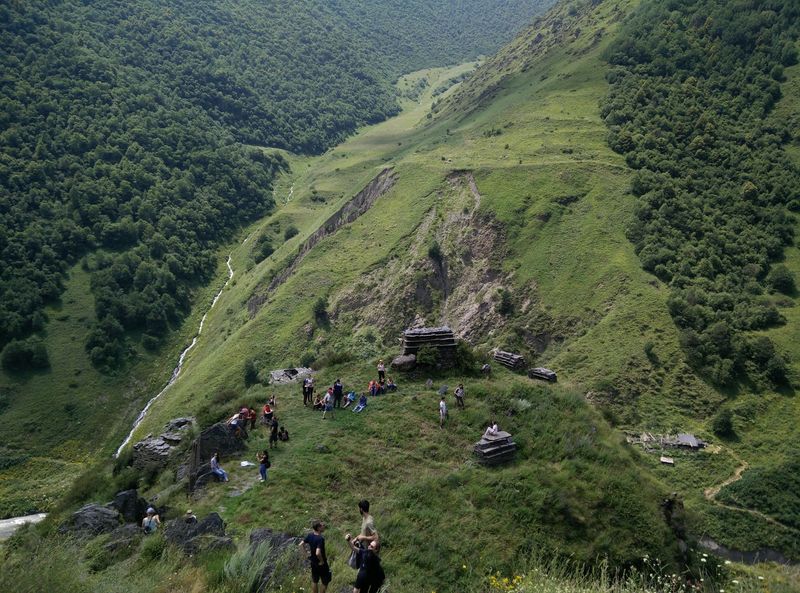
Khevsurs have a reputation that sounds like a movie script. Mountain men wore chainmail and carried swords and shields well into recent centuries, long after most of Europe had moved on.
Mutso belongs to that world. The people here defended their land, their herds, and their families from raiders and rival groups.
Fighting was not only about anger. It followed strict codes of honor, and rules about how disputes were settled.
Elders helped keep order.
Festivals and clothing still celebrate this heritage. Embroidered crosses on tunics, bold patterns, and traditional dances keep the memory alive.
Visitors often notice how proud local people are of their roots. Ask a respectful question, and you might get a story that no guidebook has ever printed.
Towers With a View
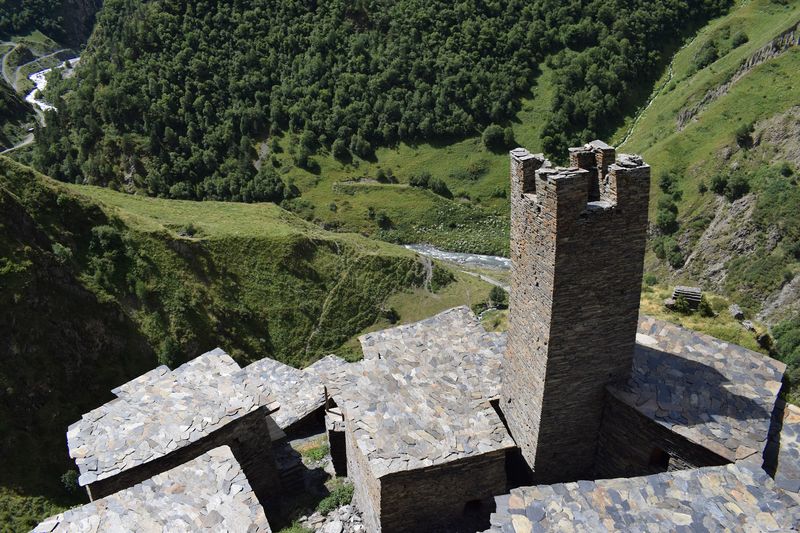
Look up. Stone towers poke above the rooftops like exclamation marks.
They were the village lookouts.
From the top, guards could scan the valley for approaching trouble. Smoke signals and shouts carried warnings to nearby settlements.
Tower walls were thick at the bottom and narrower higher up, which made them sturdier. Slits in the stone let defenders watch and shoot while staying covered.
Families also used towers as safe rooms during emergencies. Food, water, and weapons could be stored inside when danger loomed.
Photographers love these shapes against the sky. At sunrise, golden light slides across the rock, and the whole scene turns warm.
It is a good reminder that practical buildings can still be beautiful.
Life Above the Clouds
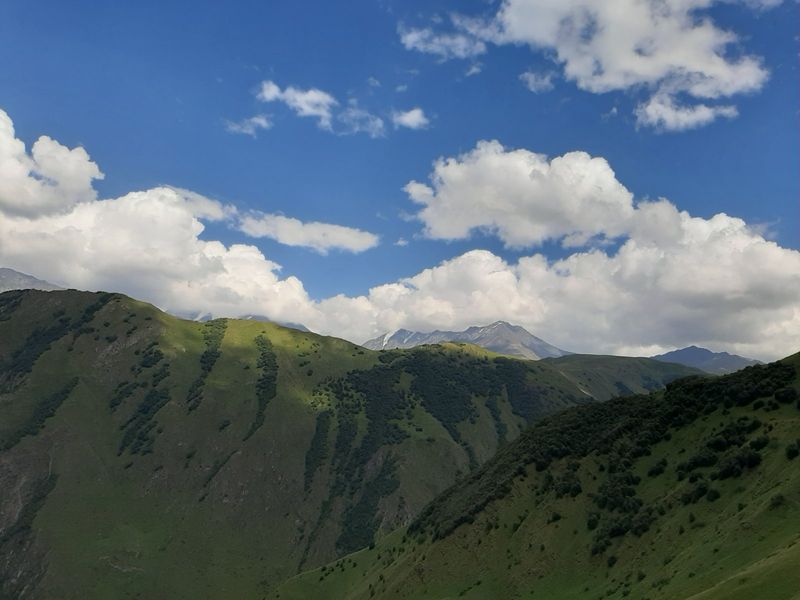
Winter in the Caucasus does not tiptoe. Snow piles up, passes close, and villages can be cut off for months.
People in Mutso planned ahead. They stored grain, cheese, and dried meat, and they kept animals close.
Sheep were central to survival, providing wool, milk, and food.
In summer, herders moved flocks to high meadows full of wildflowers. The grass there was rich, and the air was cool and clear.
Daily life meant hard work, but also tight community. Neighbors shared tools, labor, and news.
Kids learned to read weather by watching clouds.
If you visit in warm months, listen for bells on the hillside. That soft clanging is the sound of a mountain tradition that has not quite faded.
Stone Shrines and Old Beliefs
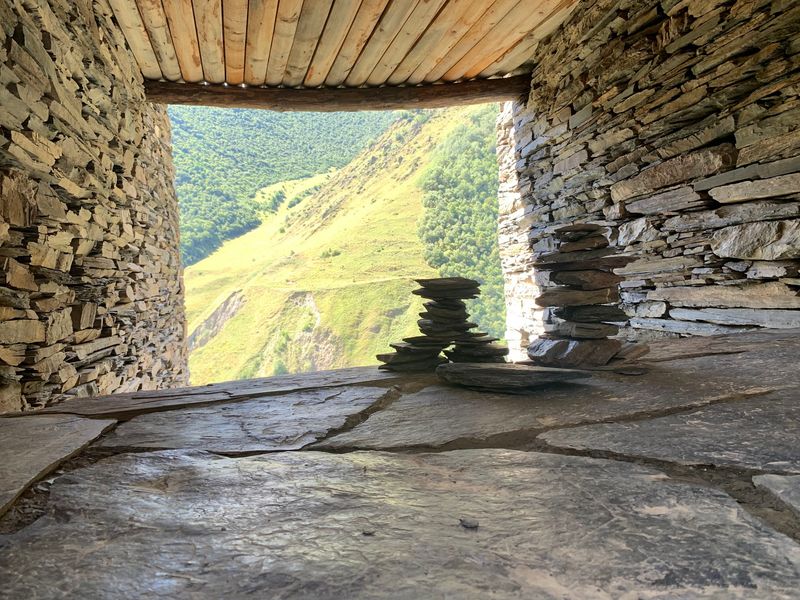
Faith in Khevsureti has a flavor all its own. Christianity blends with older mountain customs, and shrines dot the hills.
Many shrines are simple stone buildings, often closed to outsiders and tied to local traditions. Some are reserved for men, others for certain rituals.
Respect for these rules is a big deal.
Offerings might include candles, animal horns, or other symbols left by the community. Seasonal feasts bring families together to honor protectors of the land.
As a visitor, the best approach is quiet curiosity. Keep your distance from sacred sites, follow local advice, and avoid touching anything.
Even from the path, the shrines add mystery to the scenery. They remind you that Mutso was never only about defense.
It was also about belief.
The Shatili Connection
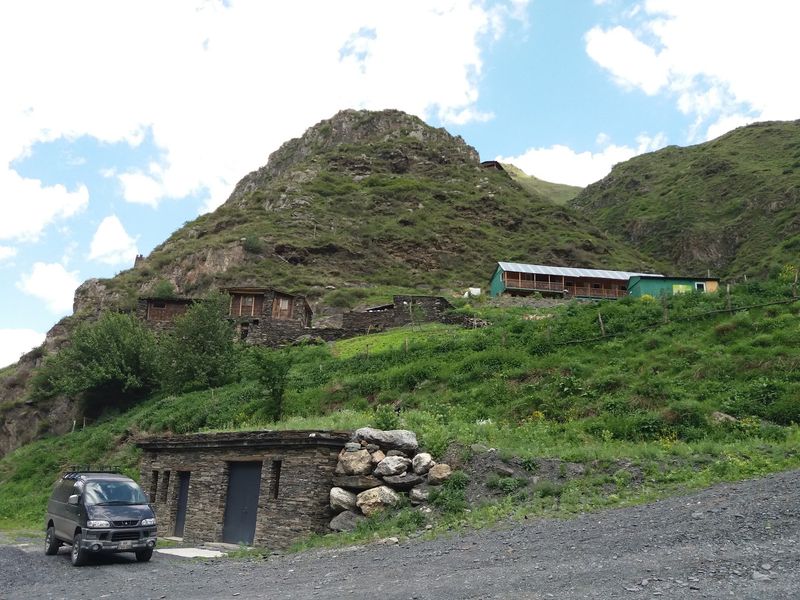
Mutso has a famous neighbor. Shatili, a short distance away, draws many more visitors with its fortress-like cluster of towers.
On paper, the two are linked. A municipal ordinance lists Mutso among the villages of the Shatili administrative unit.
The similarities are clear. Both used stone, both packed buildings together, and both guarded a rugged border area.
The difference is crowds. Shatili has guesthouses and tour groups.
Mutso feels wilder, quieter, and far more abandoned.
Many travelers combine the two in one trip. Start in Shatili for a hot meal and a bed, then head out to explore Mutso’s ruins.
The contrast makes both places more interesting.
Hiking to the Ruins
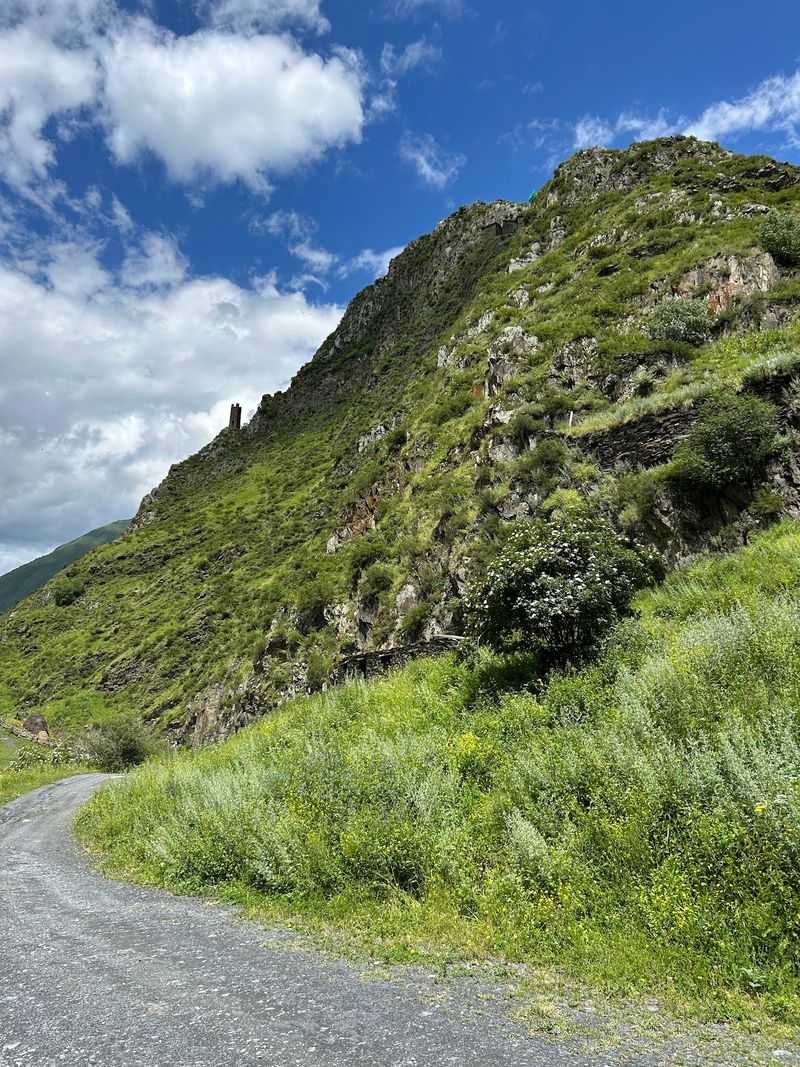
Bring good boots, because the trail does not hold your hand. Paths near Mutso are steep, rocky, and sometimes muddy.
The reward comes quickly. Around each bend, ridges stack up in layers of green and gray, and the village appears piece by piece.
Plan for changing weather. Mornings can be bright, and by afternoon the clouds roll in.
Layers, water, snacks, and a map or offline GPS are smart choices.
Many hikers hire local guides or drivers. They know the safest routes and can share stories you would never find on your own.
Go slowly, take photos, and watch your footing on loose stone. The ruins are fragile, so leave everything exactly where you found it.
Why Mutso Still Matters
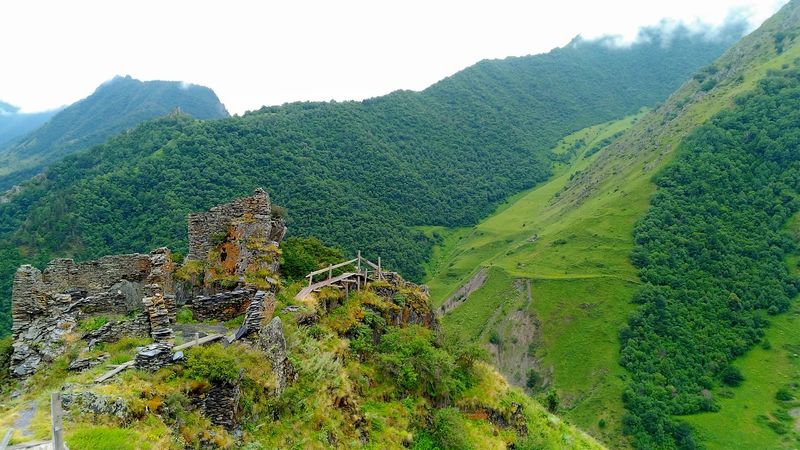
Silence is the first thing many visitors mention. No traffic, no crowds, just wind and stone.
Mutso matters because it shows how people adapted to a tough landscape. Their solution was clever, communal, and built to last.
The village also carries the story of Khevsureti. Its homes, towers, and traditions help explain how highland communities survived for centuries.
Preservation is a challenge. Harsh weather, landslides, and time all take a toll on old stone.
Respectful travel helps, since careless feet can do real damage.
So if you ever find yourself in northern Georgia with a free day and strong legs, remember this tiny place. Forty houses once stood together as one big wall, and their echo still carries across the mountains.
Share this story