Sicily treats snacking like a serious sport, and the locals are all champions. On this island, a lunch can fit in one hand, cost a few euros, and come with a recipe older than your great-grandparents.
Some of these bites started as cheap food for workers. Others came from nuns, bakers, and market cooks who refused to waste a single scrap.
Today they still pull crowds from early morning breakfast to late evening strolls. In the sections below, you will find twelve foods worth a detour, plus the exact shops that make them well.
You will learn what to order, how locals eat each one, and a few fun bits of history along the way. One sandwich even comes with a dancing chef.
Another breakfast is basically ice cream with a bun. Pack your appetite, loosen your belt a notch, and get ready to plan your trip around snacks.
1. Arancini at Pasticceria Savia, Catania, Sicily, Italy
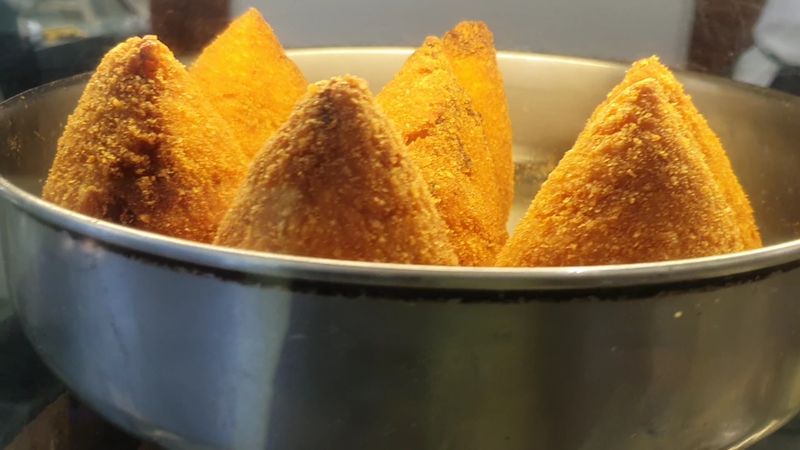
Since 1897, Pasticceria Savia has been handing out rice balls to hungry walkers on Via Etnea. That is a long time to get a recipe right, and they clearly did.
Catania shapes its arancini with a pointed top and a flat base. Some people say the shape honors Mount Etna, the volcano looming over town.
Either way, it makes them easy to spot in the glass case.
The star is the classic ragù filling, a meat sauce tucked inside saffron rice. Savia also offers versions with ham and mozzarella, spinach, eggplant in the local Catanese style, and pistachio.
Order at the marble counter and pay first, since many Sicilian bakeries use a receipt system. Then show your ticket to the staff to collect your food.
Fun fact: the savory meat version probably became popular in the 1700s, when tomatoes spread across European kitchens.
Grab your arancino and cross the street to Villa Bellini park. A shady bench there makes an excellent dining room.
2. Panelle at Friggitoria Chiluzzo, Palermo, Sicily, Italy
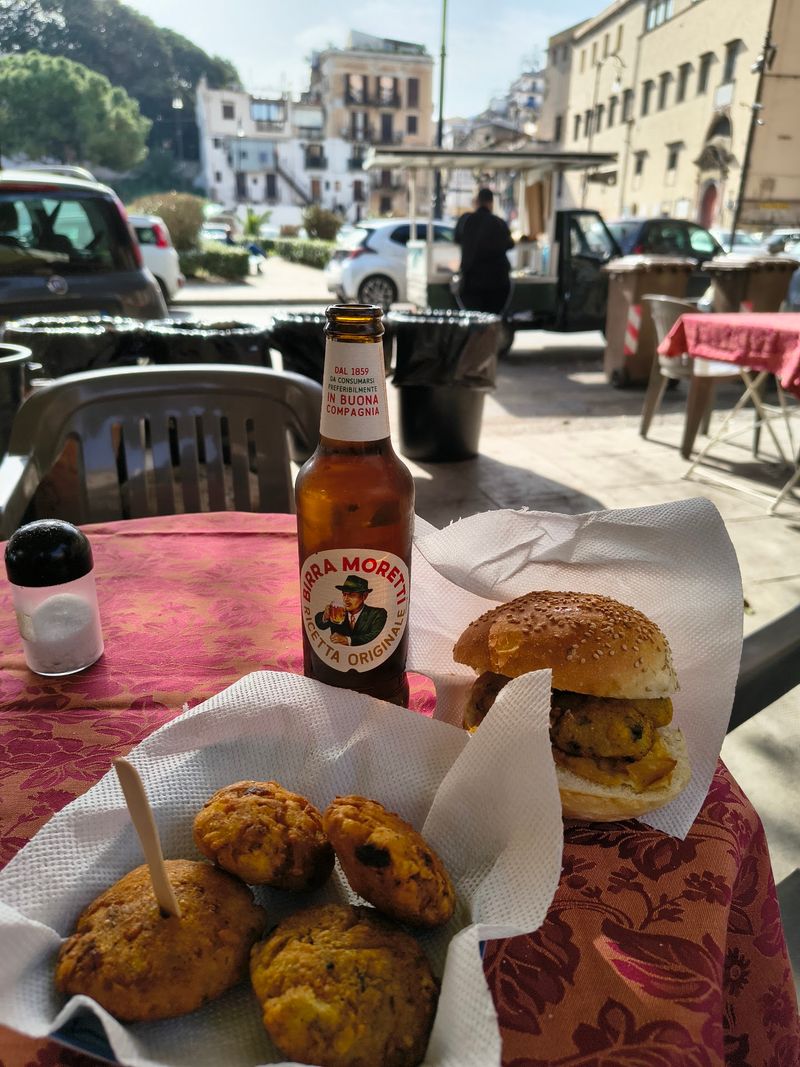
Palermo had fast food long before burger chains arrived, and pane e panelle is the proof. The recipe needs little more than chickpea flour, water, salt, and parsley.
Friggitoria Chiluzzo has been frying these thin fritters in the Kalsa district since 1943. The family behind it still follows recipes passed down through the generations.
Panelle are cooked flat, cut into squares, and fried until golden. Most people eat them stuffed into a soft sesame roll.
Locals often add a few crocchè, the potato croquettes, and a squeeze of lemon.
The setup is simple. Chiluzzo is a small kiosk, not a sit-down restaurant, so expect to eat standing up or perched on a nearby step.
Prices are friendly, which explains why office workers, students, and tourists all crowd the counter at lunchtime.
After eating, take a short walk to the Foro Italico, a seaside park nearby. It is a fine place to let that sandwich settle while you watch boats come and go.
3. Pani Ca Meusa at Nino ‘u Ballerino, Palermo, Sicily, Italy
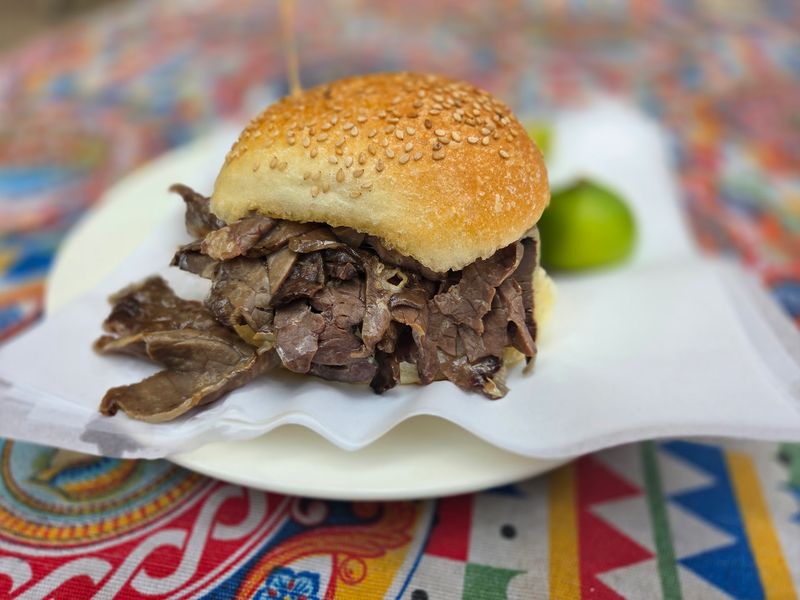
Brave eaters, this one is for you. Pani ca meusa is a sandwich of veal spleen and lung, and Palermo is very proud of it.
The founder of Nino ‘u Ballerino earned his nickname, which means Nino the Dancer, from the lively moves he made while assembling sandwiches. The shop on Corso Camillo Finocchiaro Aprile has become a local landmark.
Here is how it works. The meat is boiled, sliced, then cooked in lard and piled into a soft sesame roll called a vastedda.
You get two choices. Ask for schettu, meaning single, for a plain version with lemon.
Ask for maritata, meaning married, and it comes with ricotta and caciocavallo cheese.
History buffs will enjoy this part. The dish is often linked to Palermo’s medieval Jewish butchers, who kept organ meats as payment for their work.
Not feeling that bold? The menu also lists panelle, crocchè, and stigghiola, so your more cautious friends will not go hungry.
4. Sfincione at Antica Focacceria San Francesco, Palermo, Sicily, Italy
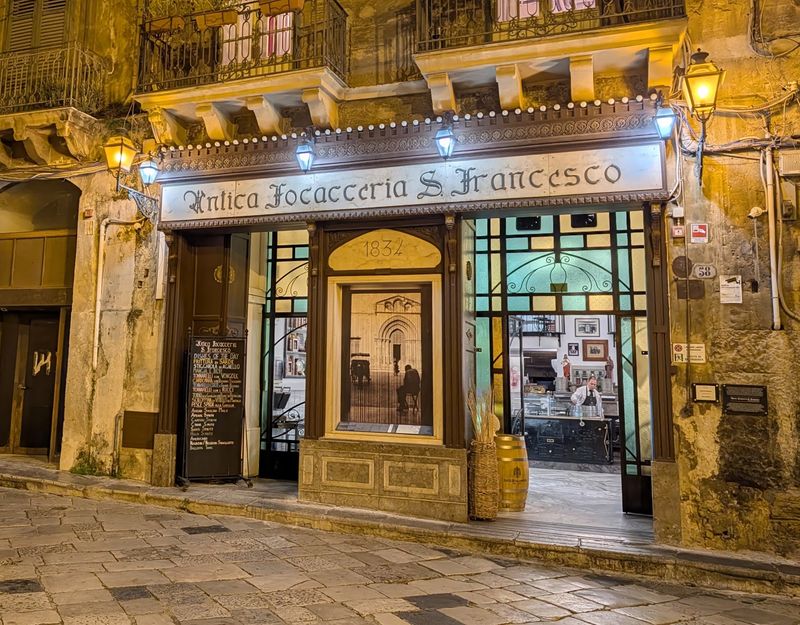
Call it pizza in Palermo and someone may politely correct you. Sfincione is its own thing, with a thick, soft, spongy base.
The classic topping uses tomato, onions, anchovies, caciocavallo cheese, and a generous layer of breadcrumbs. You will not find mozzarella in the traditional version.
Bakers often top it in stages. They bake it with part of the sauce first, then add more sauce and breadcrumbs before a second trip into the oven.
Antica Focacceria San Francesco opened in 1834, right across from the Church of San Francesco d’Assisi. The cast-iron kitchen dates to its founding year, and some marble tables arrived in 1902.
Famous guests have stopped by over the years, including Giuseppe Garibaldi, the hero of Italian unification.
The fifth generation of the founding family now runs the place. Order a square of sfincione, take a seat at one of those old tables, and then visit the church across the square for dessert of the cultural kind.
5. Crocchè at Ke Palle, Palermo, Sicily, Italy
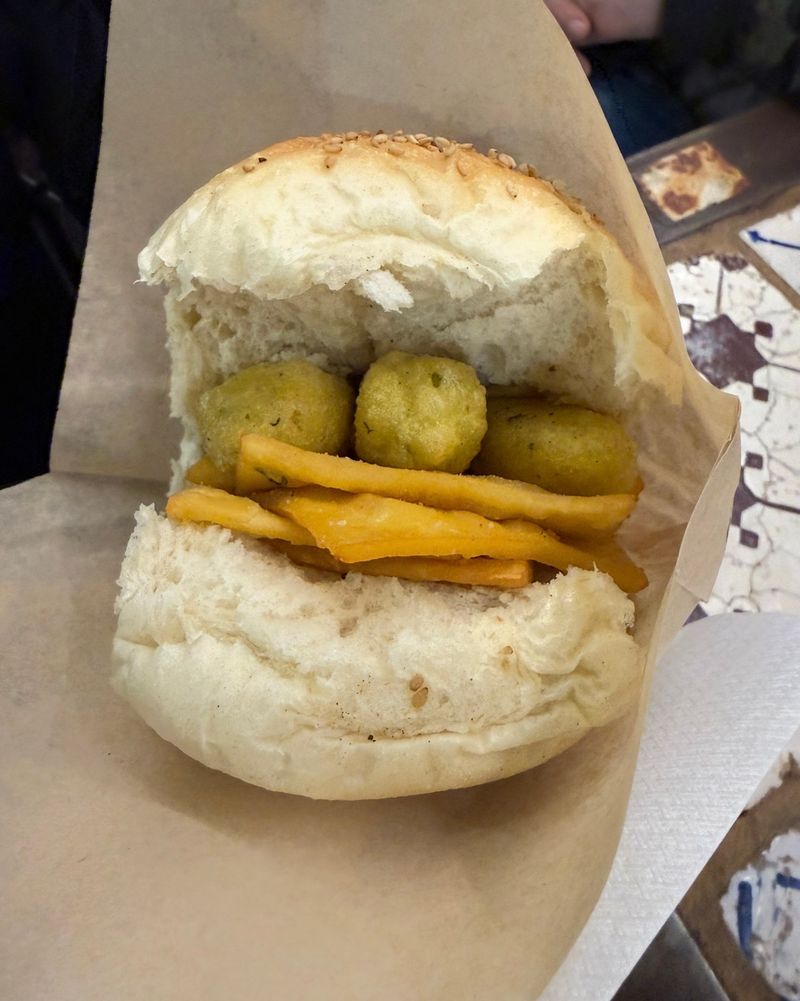
Potatoes rarely get top billing, but in Palermo they have their own fan club. Crocchè are fried potato croquettes, and locals also call them cazzilli.
The recipe is short. Mashed potatoes get mixed with parsley, sometimes a bit of mint, then shaped into small logs and fried.
Ke Palle sits on Via Maqueda, one of the busiest pedestrian streets in the old town. The shop is best known for arancine, but the crocchè deserve equal attention.
Staff fry them fresh in clean oil kept at a steady temperature. That care keeps them crisp outside instead of greasy.
Here is a handy bonus for plant-based travelers. Traditional crocchè are vegan, which is not always easy to find among Sicilian fried snacks.
Order them in a paper cone, called a coppo, for easy walking. You can also tuck a few into a sandwich with panelle for a true Palermo combo.
Then keep strolling toward Quattro Canti, the famous crossroads just down the street.
6. Fried Seafood Cones at Scirocco Sicilian Fish Lab, Catania, Sicily, Italy
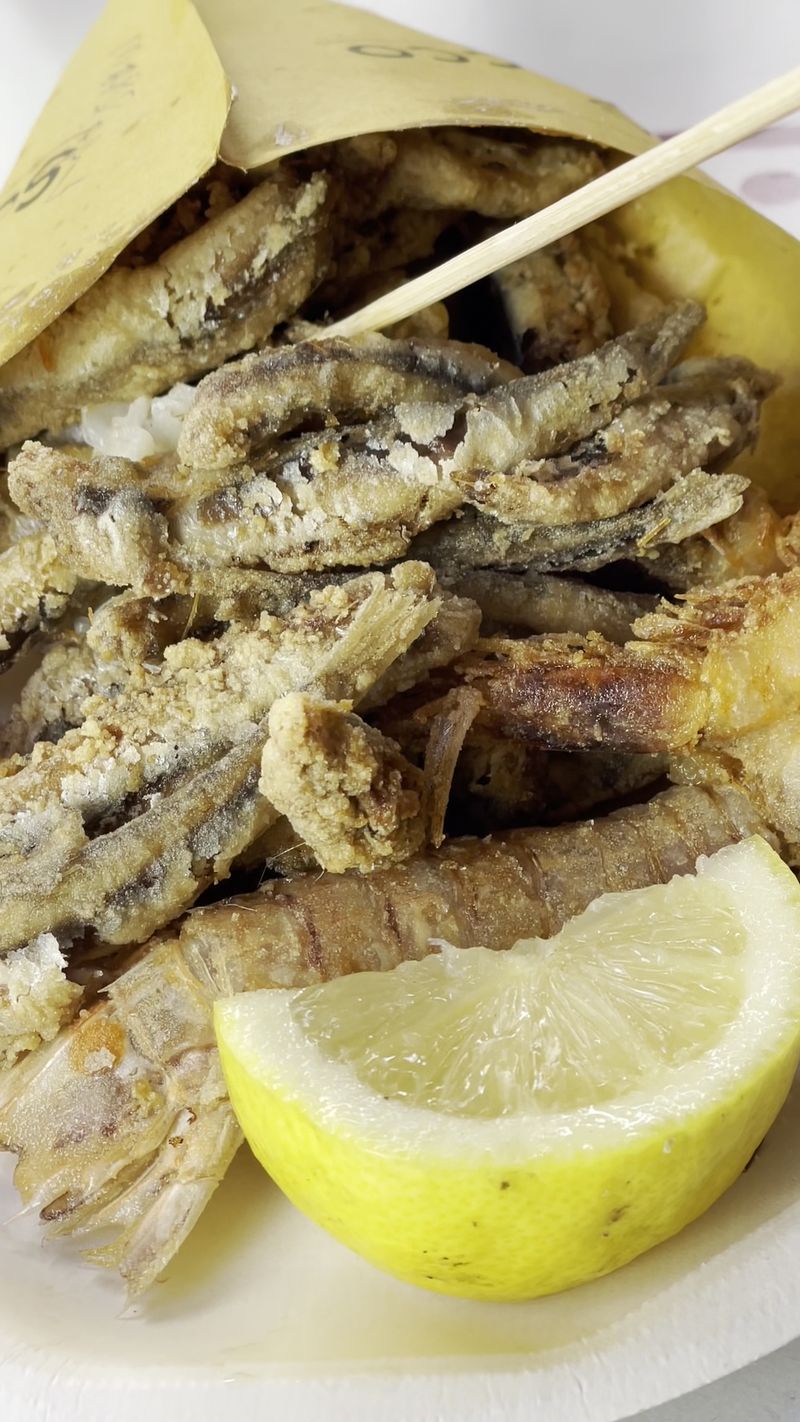
Two brothers opened Scirocco in May 2016 with a clever plan. They set up shop right beside Catania’s historic fish market, known locally as A Piscaria.
The space used to be a butcher shop. The owners kept some of the old features, so the room still shows a bit of its past.
The house specialty is the cuoppo, a paper cone packed with fried seafood. Contents change with the day’s catch, but you might see calamari, shrimp, squid, and small local fish.
A squeeze of lemon is the standard finish. Nobody here expects ketchup.
The kitchen is open, so you can watch cooks prepare orders. They fry in high-oleic sunflower oil to keep the coating light.
The menu also offers mini seafood arancini and fried vegetables for anyone who wants variety.
Visit in the morning, when the market is busiest. Grab an outdoor seat, eat your cone, and watch fishmongers shout prices across the square.
It is dinner and a show before noon.
7. Scaccia Ragusana at Panificio Giummarra, Ragusa, Sicily, Italy
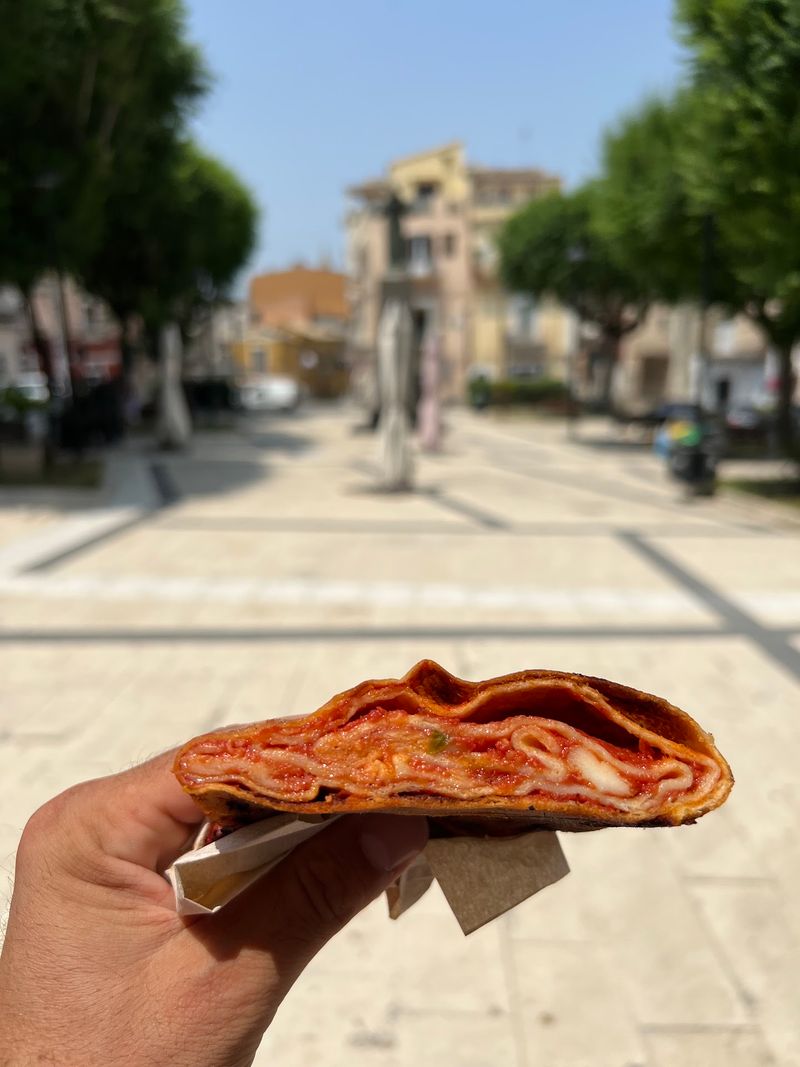
Count the layers in a slice of scaccia and you might lose track. Bakers in Ragusa roll dough very thin, spread on a filling, then fold it over and over.
When the baked loaf is sliced, you see stripes of bread and filling stacked like pages in a book.
Tomato and cheese make the most traditional pairing. Other popular versions include ricotta with sausage, or eggplant, depending on the bakery and the season.
Panificio Giummarra is a Ragusa bakery known for these local favorites. It is a good place to try several flavors in one visit.
Scaccia comes from a thrifty kitchen tradition. Families used simple, cheap ingredients and turned them into something filling enough for a long workday.
Locals eat it warm or at room temperature, which makes it perfect for picnics.
A smart tip: buy a few slices in different flavors and share them. Then carry your leftovers on a walk through Ragusa Ibla, the old upper town full of baroque churches.
8. Pidone Messinese at Rosticceria Famulari, Messina, Sicily, Italy
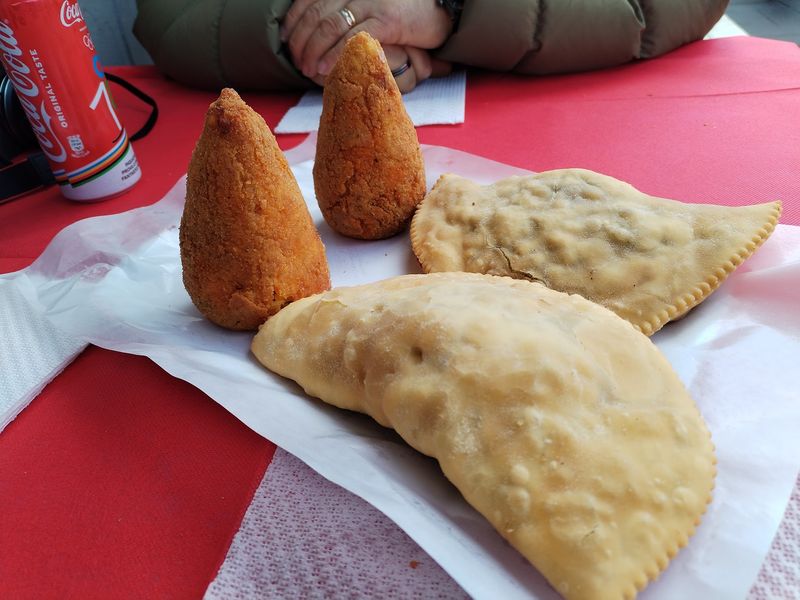
Arancini get the headlines, but Messina quietly keeps its own champion. The pidone is a half-moon turnover that locals defend with real pride.
The classic fried version holds escarole, cheese, and anchovies inside a golden pastry. The dough often includes a little sugar and vinegar, which gives it a distinct bite.
Salvatore Famulari opened Rosticceria Famulari in September 1986, turning an old bar on Via Cesare Battisti into a busy food stop.
Today the counter is crowded with rustici, Messina’s name for small savory snacks eaten at any hour. Pidoni share space with arancini, focaccia, and full hot dishes.
Famulari also bakes some pidoni instead of frying them. These may come with ham or vegetables, giving lighter eaters another option.
Because the shop sells so many snacks each day, trays get refilled often. That means fresher food for you.
Try one classic fried pidone and one baked version side by side. Comparing them is research, after all.
9. Pane Cunzato at Panificio di Stabile e Anselmo, Scopello, Sicily, Italy
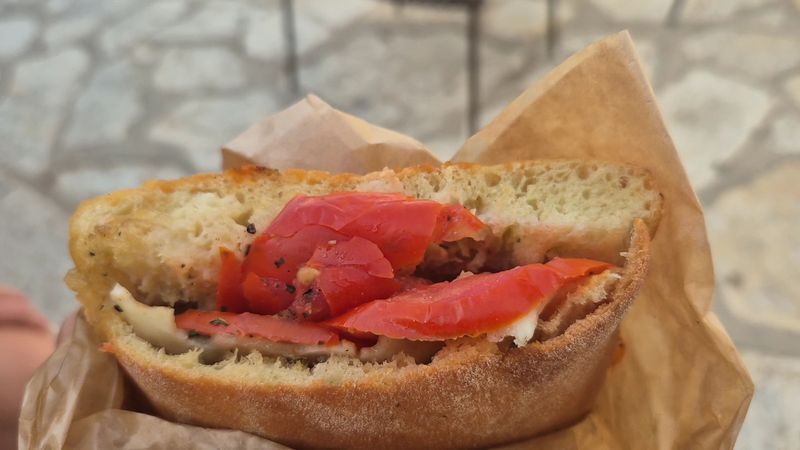
Pane cunzato means seasoned bread, which is a modest name for a meal this big. One order can easily feed two people.
Rosaria Anselmo and Giuseppe Stabile opened their bakery in tiny Scopello in 1965. Their son Vincenzo runs it now, still baking in a wood-fired oven.
The bread is sliced open and loaded with tomatoes, local cheese like primosale, anchovies, olive oil, salt, pepper, and oregano.
Many ingredients come from very close by. The family uses olive oil from its own trees and grows tomatoes and oregano in its garden.
The dish began out of simple need. Bakers used what they had on hand, and word of mouth did the rest.
Expect a line in summer, since Scopello is a small village with a big fan base.
The bakery also sells sfincione, arancine, panelle, and sweet cassatelle. Pack your sandwich and head to the coast nearby, or to the Zingaro nature reserve for a hike that earns every bite.
10. Cannoli at I Segreti del Chiostro, Palermo, Sicily, Italy
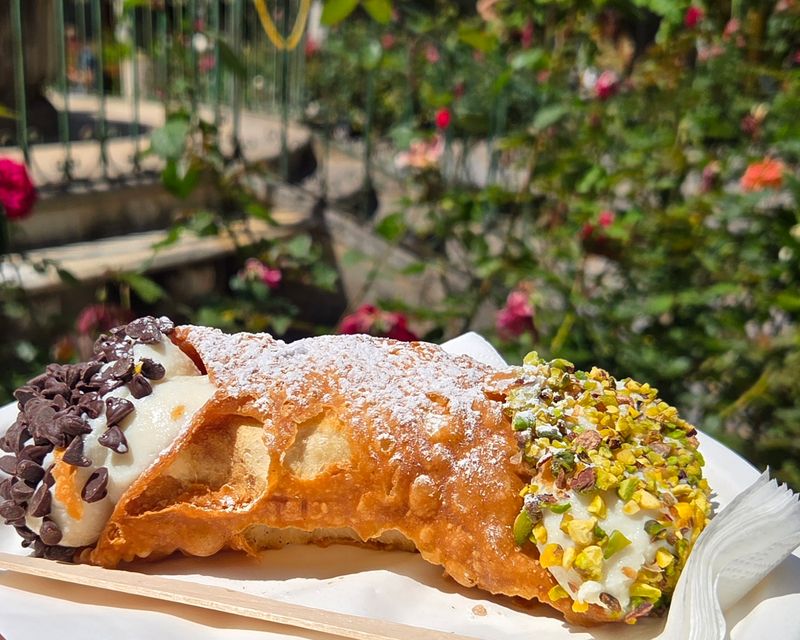
Nuns once ran one of Palermo’s sweetest secrets. For centuries, cloistered sisters baked pastries and sold them through a turning wooden wheel called a ruota, so they never had to meet customers face to face.
I Segreti del Chiostro, meaning The Secrets of the Cloister, brings those recipes back to life. The pastry shop sits inside the Santa Caterina monastery, a complex about 800 years old.
Many of the original recipes were never written down. Nuns passed them along by word of mouth.
The cannoli here are filled only when you order. That keeps the fried shell crisp instead of soggy.
The filling is sweet sheep’s milk ricotta. Toppings may include chocolate chips, Bronte pistachios, or candied orange peel.
Part of the monastery became a museum in 2017. Buy a ticket and you can wander the rooftop terraces for wide city views.
Afterward, enjoy your cannolo in the quiet tiled courtyard. It is a calm break from the busy Piazza Bellini right outside.
11. Granita With Brioche at Briosa Granite Siciliane, Palermo, Sicily, Italy
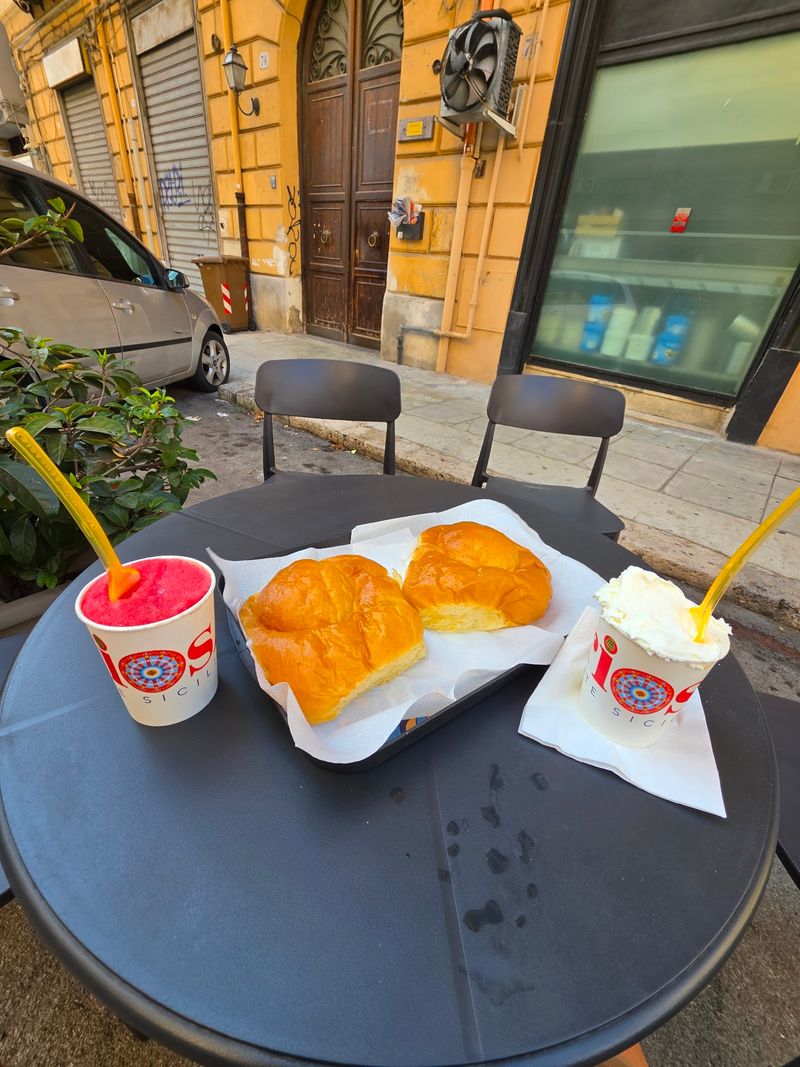
Breakfast in Sicily can look a lot like dessert, and nobody feels guilty about it. Locals often start the day with a cup of granita and a soft bun.
Granita is a semi-frozen treat made from water, sugar, and natural flavors. It is smoother than a slushie and lighter than ice cream.
Popular choices include almond, lemon, coffee, mulberry, and pistachio.
Its story goes back to Arab rule in Sicily, between 827 and 1091. Back then, people stored snow from Mount Etna in underground pits called neviere to chill drinks.
The partner bun is the brioche col tuppo. The tuppo is a small ball of dough on top, said to look like a traditional hair bun.
Locals tear off the tuppo first and use it to scoop granita. Then they dunk the rest of the brioche.
Briosa Granite Siciliane on Via Roma focuses on this pairing. Order two flavors in one cup, which is common practice and lets you sample more.
12. Brioche Con Gelato at Terzo Cerchio Gelateria, Palermo, Sicily, Italy
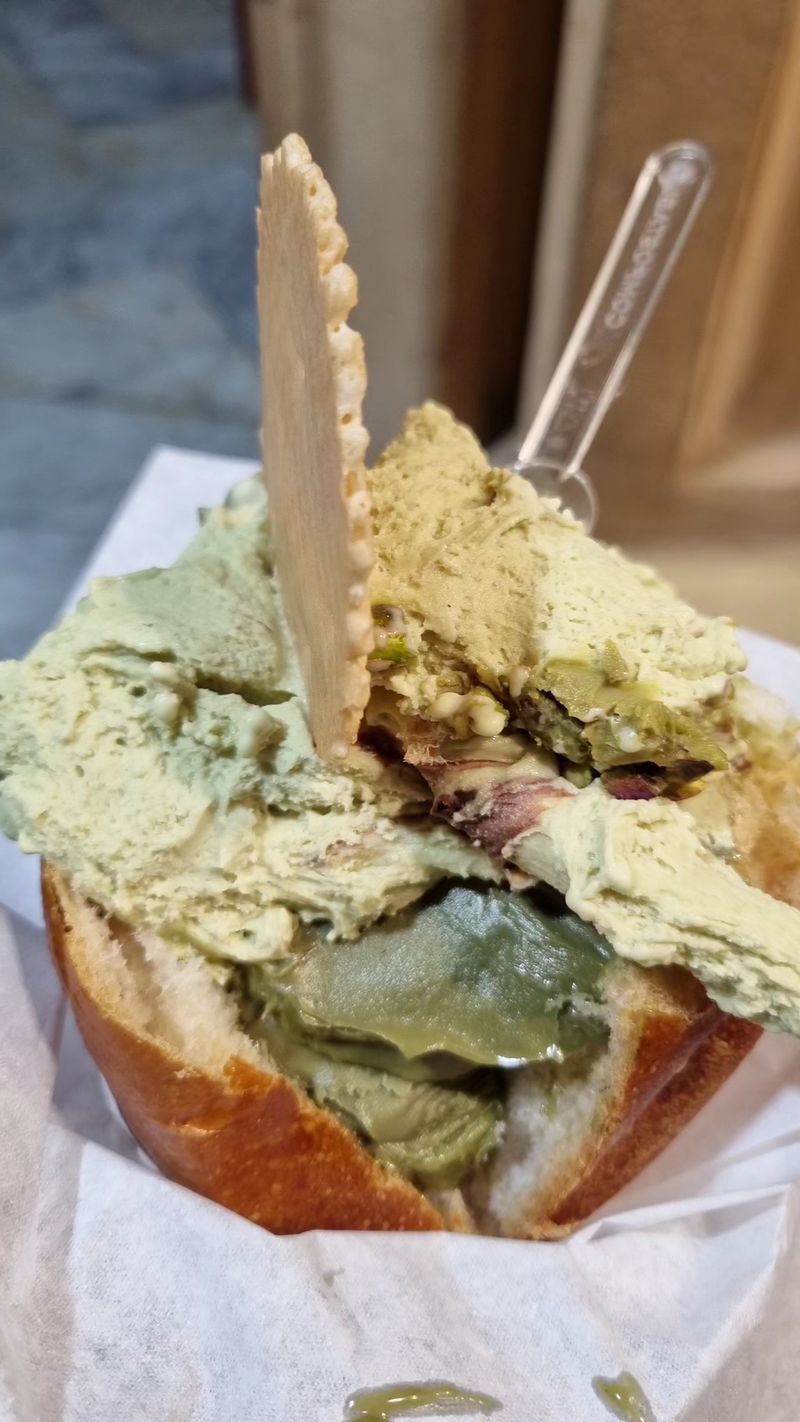
Cones are fine, but Sicilians found a bigger idea. They split a soft brioche bun and pack it with gelato, creating a sandwich that counts as dessert.
The bun is usually the same brioche col tuppo served with granita at breakfast. Later in the day, it trades icy granita for creamy gelato.
Gelato uses milk and sugar, giving it a denser body than granita. Fun fact: its invention is often credited to Bernardo Buontalenti of Florence in the 1500s, though Sicily certainly perfected the bun version.
Terzo Cerchio Gelateria sits on Via Maqueda, a short stroll from Teatro Massimo, one of Europe’s largest opera houses.
Pistachio is a crowd favorite, and chocolate flavors draw plenty of fans too. Most shops let you pick two or three flavors for one bun.
A quick tip: eat from the bottom up and keep napkins close. Then wander toward the theater steps, sit down, and call it a perfect ending to a tasty Sicilian tour.
Share this story