Cheese has a way of turning simple food into the kind of meal people remember from childhood. Across America, it has been melted over burgers, stirred into casseroles, layered onto potatoes, and baked over dishes that have appeared at family dinners and neighborhood restaurants for generations.
Some of these classics have strong regional roots, while others became standards almost everywhere. What follows is a look at 14 cheesy American comfort foods that have never really lost their appeal, along with the history, culture, and traditions that made each one stick around.
1. Broccoli Cheese Casserole
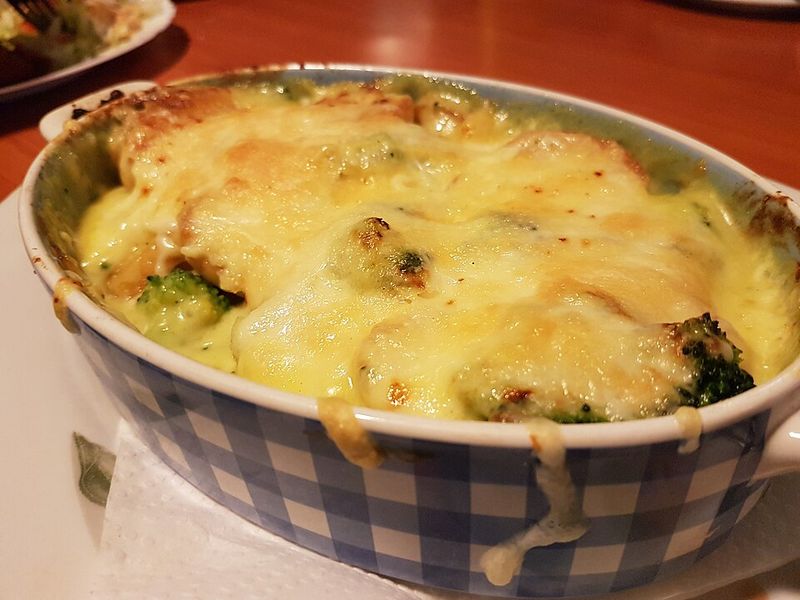
Broccoli cheese casserole became a fixture in American homes during the postwar era, when casserole cooking was at its peak popularity. The 1950s and 1960s saw a surge in recipes that combined vegetables with cream-based sauces and processed cheese, driven partly by the convenience of canned condensed soups and pre-shredded dairy products.
Church suppers and community potlucks helped standardize the dish across regions. Cookbooks published by churches, schools, and civic organizations throughout the 1960s and 1970s almost always included at least one broccoli cheese casserole variation.
Some versions added rice to make the dish more filling, while others relied on buttery cracker crumbs for a crunchy topping. For generations of American children, this casserole became one of the few reliable arguments in favor of eating broccoli at the dinner table.
2. Philly Cheesesteak
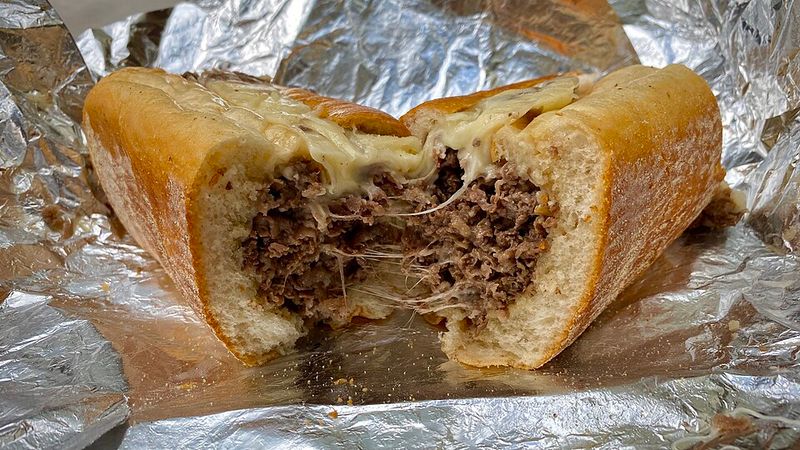
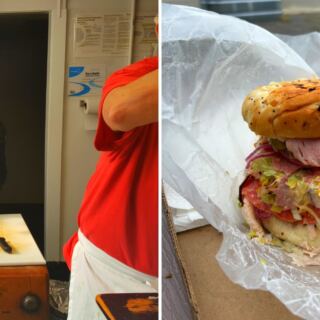
Pat Olivieri, a hot dog vendor in South Philadelphia, is widely credited with creating the original cheesesteak in the 1930s. The earliest version used thinly sliced beef on a roll without any cheese at all.
Cheese was added later, and by the mid-20th century it had become the defining element of the sandwich.
Cheez Whiz became an official option at Pat’s King of Steaks in the 1950s, a choice that remains controversial among purists but is historically significant. Provolone and American cheese are the other traditional options, and debates over which is correct have been running in Philadelphia for decades.
The sandwich went from a local street food to a nationally recognized icon during the latter half of the 20th century. Tourists visiting Philadelphia often treat eating a cheesesteak as a required activity, and the city takes the bread, the beef, and the cheese selection very seriously.
3. Macaroni and Cheese
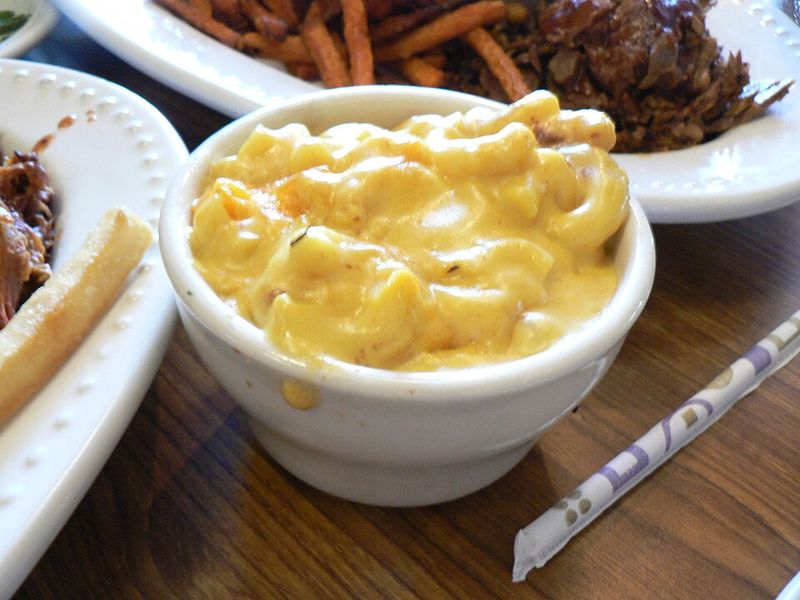
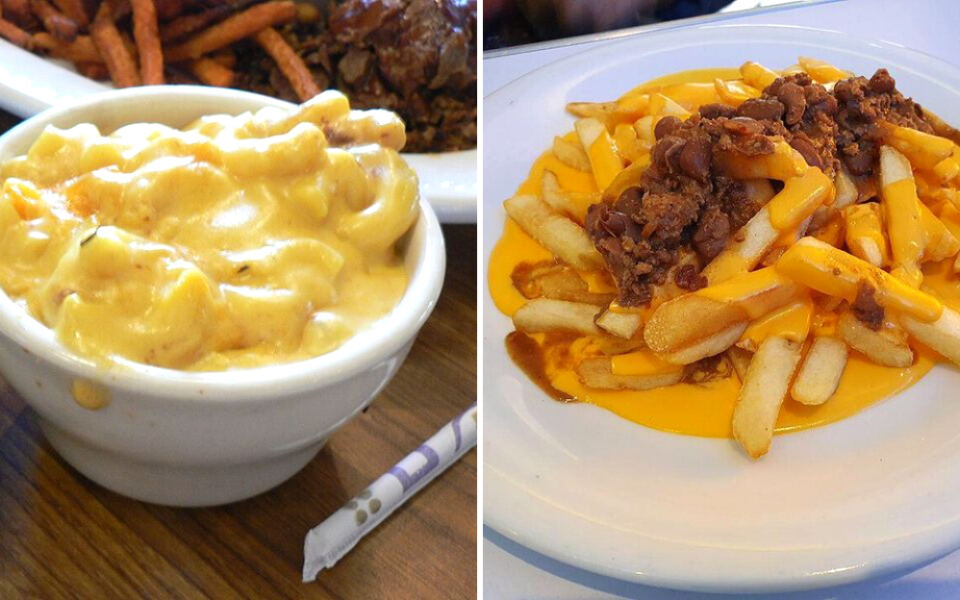
Thomas Jefferson did not invent macaroni and cheese, but he absolutely helped put it on the American map. After encountering pasta dishes in France and Italy during his time as ambassador in the 1780s, he returned with recipes and a pasta machine, and reportedly served a pasta and cheese dish at a White House dinner in 1802.
Food historians credit his enslaved chef, James Hemings, with actually learning and adapting the recipe. Mary Randolph’s 1824 cookbook “The Virginia House-Wife” included a layered macaroni and cheese recipe that influenced Southern cooking for generations.
Kraft’s boxed version, introduced in 1937, made the dish accessible to millions during the Great Depression. The dish has since appeared in pop culture references, celebrity cook-offs, and countless family kitchens across every region of the country.
4. Cheesy Potato Casserole
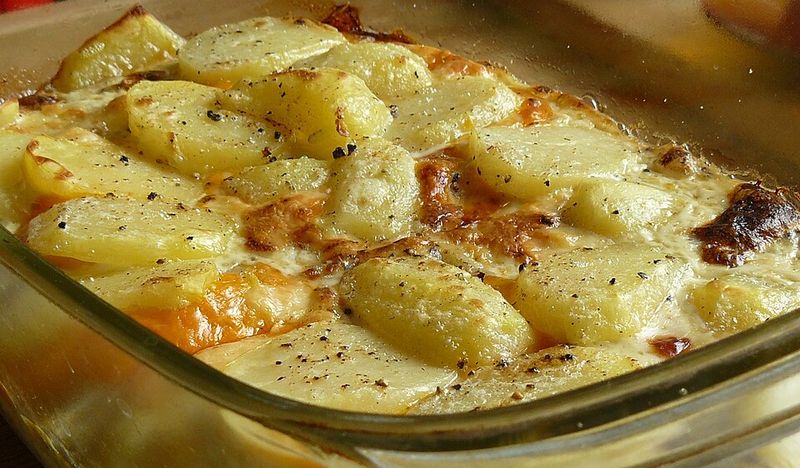
The nickname “funeral potatoes” tells you almost everything about this dish’s cultural role in the American West. Closely associated with Utah and the surrounding Intermountain region, the casserole became a standard offering at post-funeral luncheons, where community members would bring food to grieving families throughout the 20th century.
The dish itself is straightforward: diced or shredded potatoes combined with sour cream, cream of chicken soup, shredded cheddar, and butter, all topped with crushed cornflakes before baking. It feeds a large group inexpensively and requires no complicated preparation.
Its cultural reach extended beyond funerals over time. The casserole became a regular at holiday gatherings, ward dinners, and family reunions.
In 2002, when Salt Lake City hosted the Winter Olympics, funeral potatoes appeared on commemorative pins, cementing the dish as an unofficial regional symbol with genuine historical identity.
5. Chili Cheese Fries
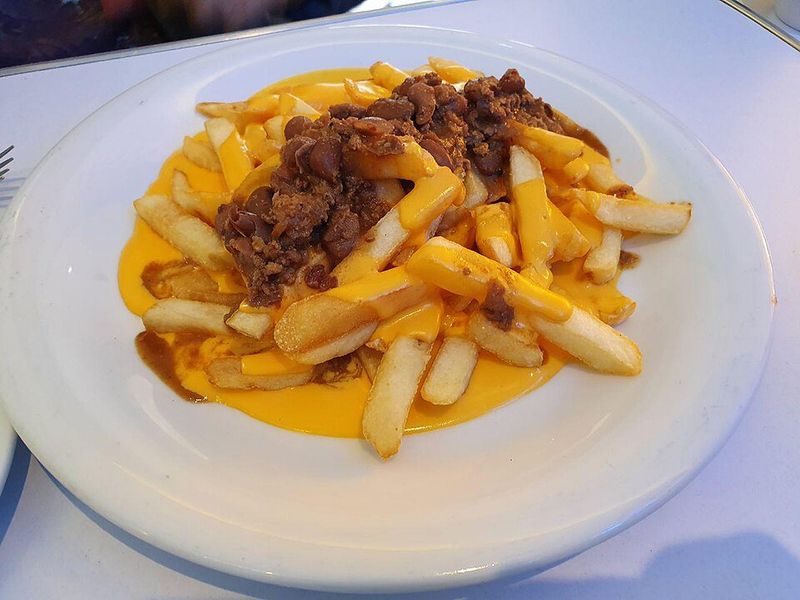
Nobody planned for chili cheese fries to become a staple of American food culture. The dish started appearing in restaurants around the 1930s, a decade when chili and cheese were already being paired together regularly and french fries were gaining popularity at diners and burger stands across the country.
It was only a matter of time before someone piled all three together on one plate. By mid-century, chili cheese fries had spread to fast food chains, drive-ins, state fairs, and late-night spots from coast to coast.
Variations grew over the decades. Some versions added jalapenos, some swapped beef chili for vegetarian options, and others introduced sour cream or guacamole.
The core combination, however, stayed the same. It is deliberately messy food, and that has always been part of what makes it so satisfying.
6. Pimento Cheese
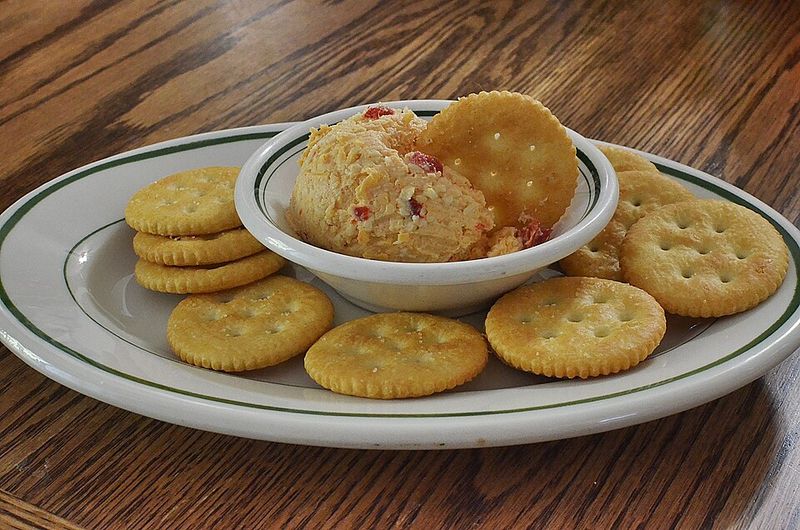
Pimento cheese has a longer history than most people expect. Early versions appeared in Northern cookbooks around the turn of the 20th century, when cream cheese and imported pimentos became more widely available.
By the 1920s and 1930s, the spread had migrated south and taken on a distinctly regional identity.
Southern cooks adapted the recipe using sharp cheddar instead of cream cheese and added mayonnaise as a binder. The result was tangier, bolder, and spreadable in a way that made it useful across dozens of applications, from sandwich filling to burger topping to cracker spread.
Its most famous cultural moment arrives every April at the Masters Tournament in Augusta, Georgia. Pimento cheese sandwiches have been sold at Augusta National Golf Club for decades and are considered as much a part of the tournament experience as the golf itself.
The sandwiches are famously affordable and consistently sold out.
7. Cheeseburger
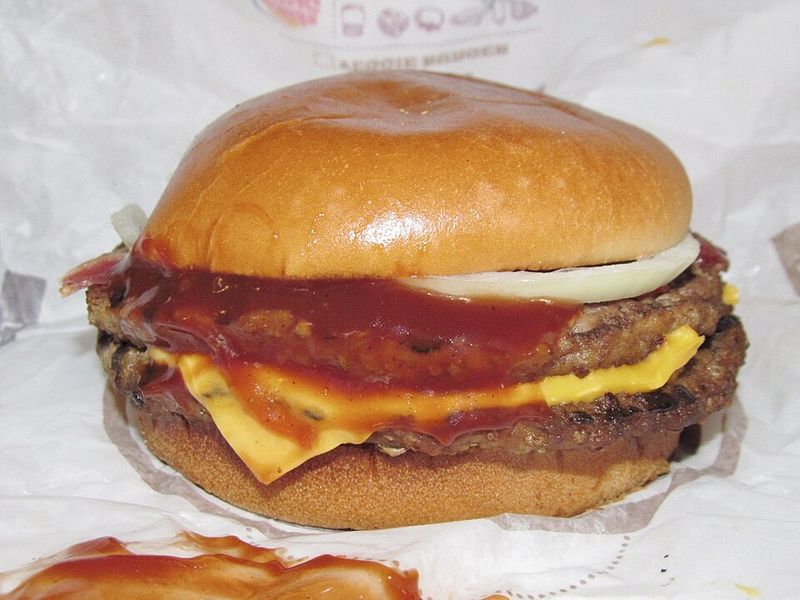
Multiple restaurants have claimed credit for inventing the cheeseburger, and the disputes have never been fully resolved. Lionel Sternberger of Pasadena, California is one early claimant, reportedly adding cheese to a burger at his father’s sandwich shop around 1926.
Kaelin’s Restaurant in Louisville, Kentucky made a similar claim for 1934.
What is not disputed is how quickly cheese became standard on American burgers once the idea caught on. American cheese became the default choice at diners and fast food chains because of how cleanly it melts over a hot patty.
Cheddar, Swiss, and pepper jack followed as alternatives at higher-end establishments.
By the 1950s, the cheeseburger was already embedded in American food culture through drive-in restaurants, roadside stands, and the emerging fast food industry. McDonald’s, Burger King, and Wendy’s each built empires partly on the back of this single, reliable combination of beef and melted cheese.
8. Cheesy Grits
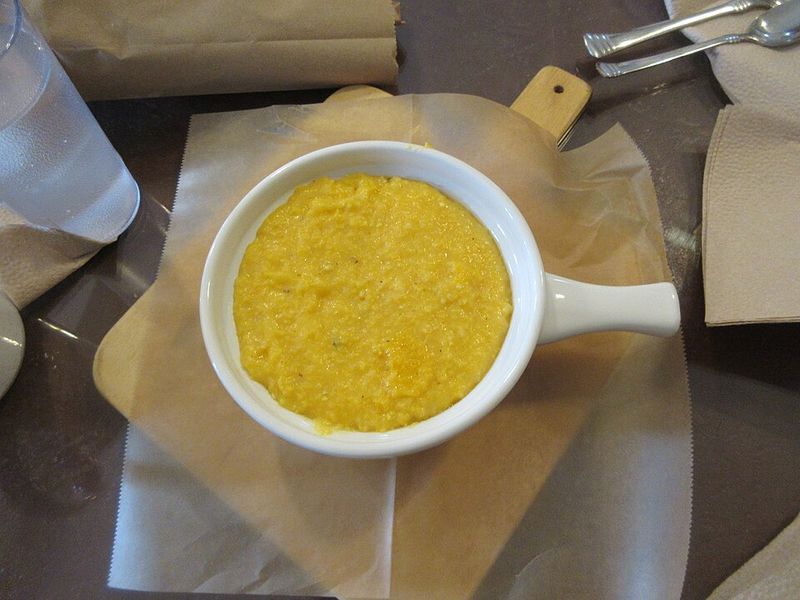
Grits have been part of Southern cooking since long before the United States existed as a country. Native American tribes in the Southeast were grinding corn into coarse meal centuries before European settlers arrived, and the practice was adopted and adapted across the region over generations.
Cheese entered the picture gradually, with cheddar becoming the most common addition as Southern dairy production expanded during the 19th and early 20th centuries. The combination proved practical as well as satisfying: cheese added fat, protein, and flavor to an already inexpensive staple ingredient.
Cheesy grits became a fixture at Southern breakfast tables, appearing alongside eggs, biscuits, and cured meats. They also became a base for shrimp and grits, a Lowcountry dish that gained national recognition during the 1980s and 1990s.
The dish now appears on menus ranging from casual diners to upscale Southern restaurants throughout the country.
9. Chicken Spaghetti
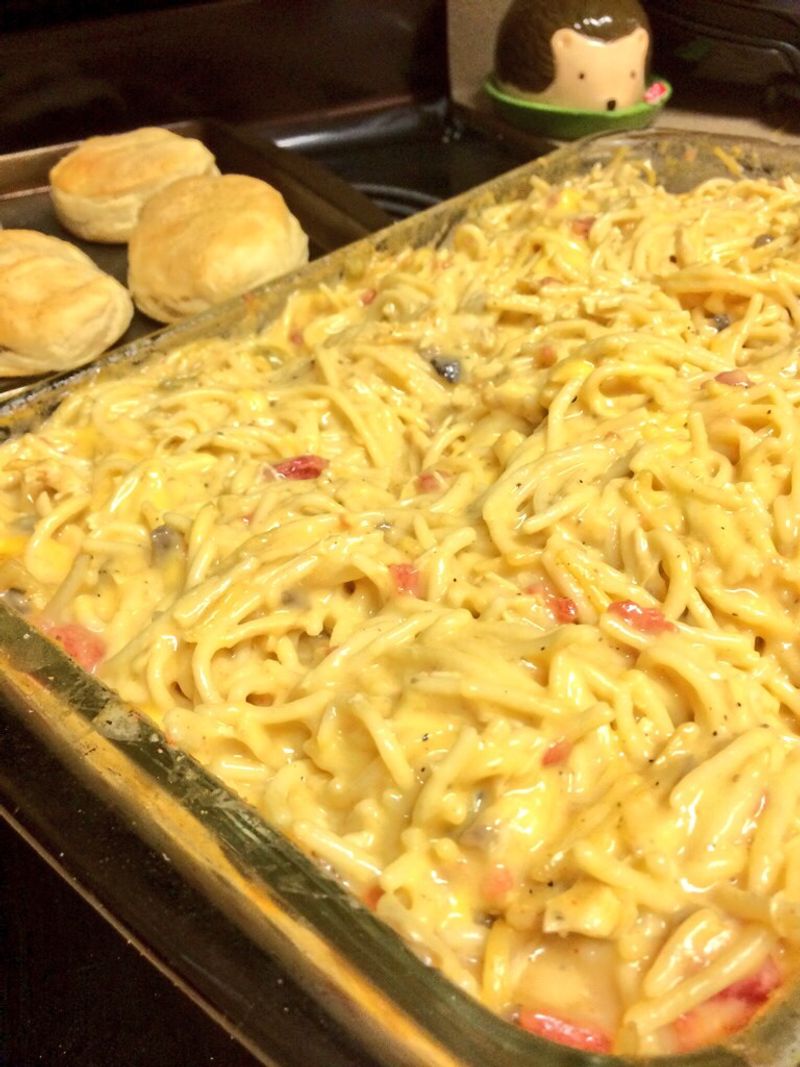
Chicken spaghetti is not Italian food wearing a disguise. It is American casserole cooking in its most straightforward form, built for practicality, portability, and feeding a crowd without spending much money.
The dish became especially popular across Texas and the broader American South during the mid-20th century.
Most versions call for cooked spaghetti and shredded chicken combined with canned condensed cream of mushroom or chicken soup, diced peppers, onions, and a generous amount of cheddar or Velveeta cheese before baking. The result is creamy, filling, and easy to transport to a potluck or community dinner.
The dish spread through spiral-bound church cookbooks and community fundraiser recipe collections throughout the 1960s and 1970s. Its reliance on pantry staples made it reliable during lean times.
Today it still appears regularly at covered-dish suppers, school fundraisers, and family gatherings across the South.
10. Chili Con Queso
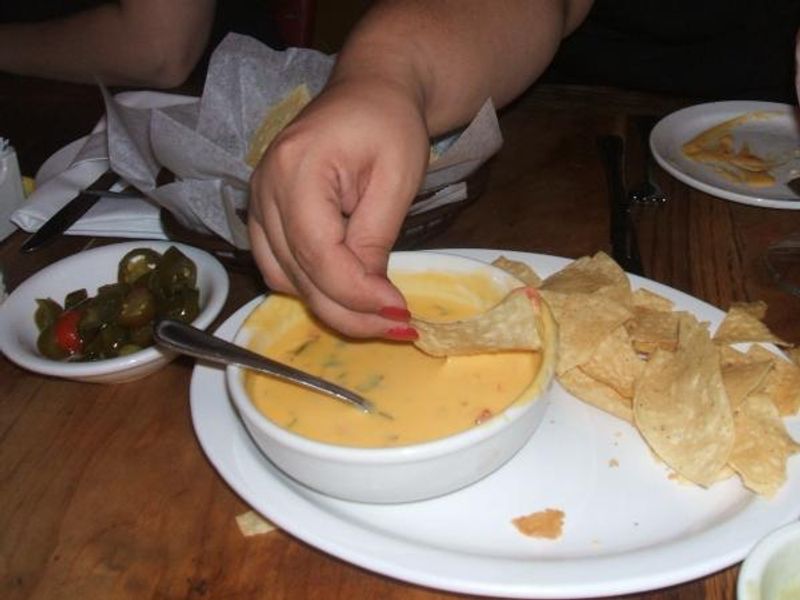
Queso’s roots in American food culture trace back to the Tex-Mex cooking traditions that developed along the Texas-Mexico border throughout the late 19th and early 20th centuries. Early versions were simple combinations of melted cheese and roasted chile peppers, served as a side or condiment at border region restaurants.
The dish evolved significantly once processed cheese became widely available in the mid-20th century. Velveeta, introduced in 1928 and reformulated over the decades, became a popular base for home queso recipes because it stayed smooth and creamy when melted without separating the way natural cheese sometimes does.
By the 1980s and 1990s, queso had become a standard offering at Tex-Mex restaurants nationwide and a default game-day snack across the country. The combination of warm cheese dip and tortilla chips occupies a unique spot in American food culture, sitting comfortably between appetizer and accidental main course.
11. Cheesy Hash Brown Casserole
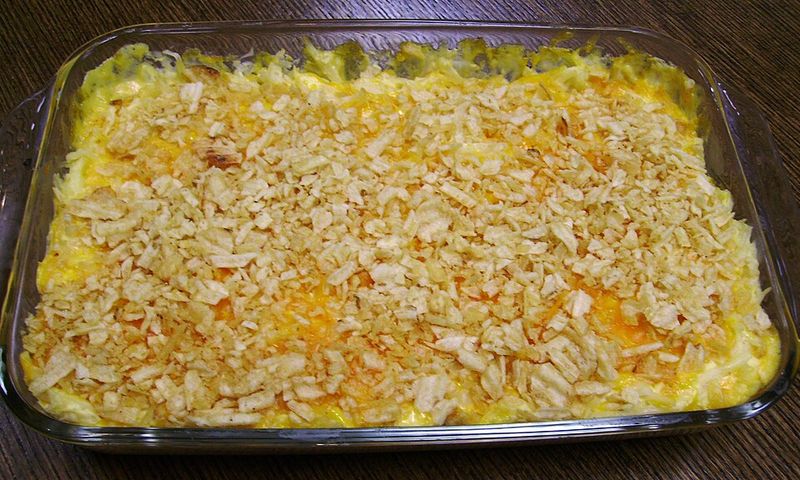
Hash brown casserole took a breakfast ingredient and gave it the full potluck treatment sometime in the latter half of the 20th century. Shredded frozen hash browns, which became widely available in American grocery stores during the 1960s, provided the convenient base that made the dish practical for home cooks.
The classic recipe combines frozen hash browns with sour cream, butter, shredded cheddar, and a can of cream of chicken soup, then tops the whole thing with additional cheese or crushed cornflakes before baking. The result is dense, creamy, and unmistakably indulgent.
Cracker Barrel Old Country Store helped nationalize the dish when it added a version to its menu, introducing the casserole to travelers and families across the country. It remains one of the chain’s most ordered sides.
At home, the dish appears most often at holiday breakfasts, Easter brunches, and church fellowship meals throughout the South and Midwest.
12. Kentucky Hot Brown
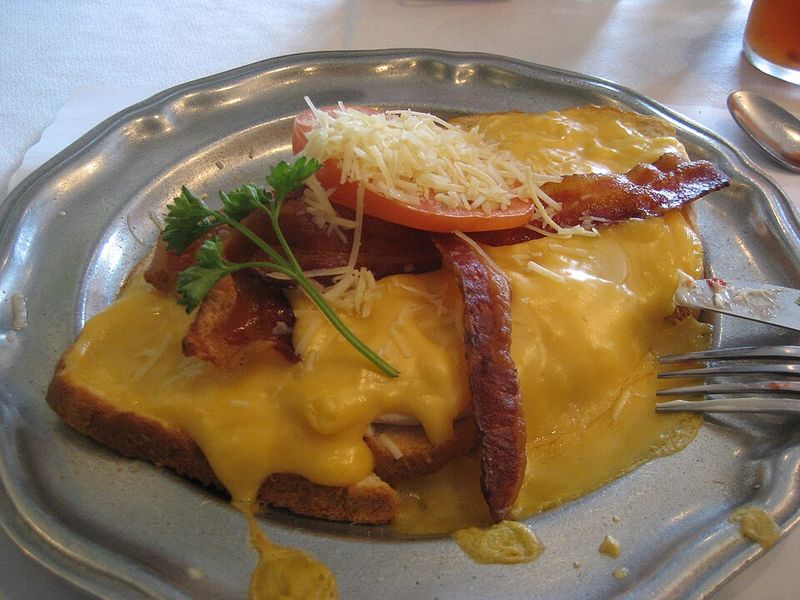
Fred Schmidt, the chef at Louisville’s Brown Hotel, created the Hot Brown in 1926 as a late-night offering for guests who had been dancing in the hotel’s ballroom. The hotel reportedly drew around 1,200 guests on dance nights, and Schmidt needed something more substantial than traditional late-night fare to satisfy them.
His solution was an open-faced sandwich combining turkey and toast with strips of bacon and a rich Mornay sauce, a cheese-enriched white sauce that gets browned under a broiler. The dish was served in individual baking dishes and became an immediate fixture on the hotel’s menu.
Nearly a century later, the Hot Brown remains one of Kentucky’s most recognized culinary contributions. The Brown Hotel still serves the original recipe, and restaurants throughout Louisville and the broader state have developed their own interpretations.
During Kentucky Derby season each May, the Hot Brown appears on menus and event spreads across the region.
13. Cheese Enchiladas
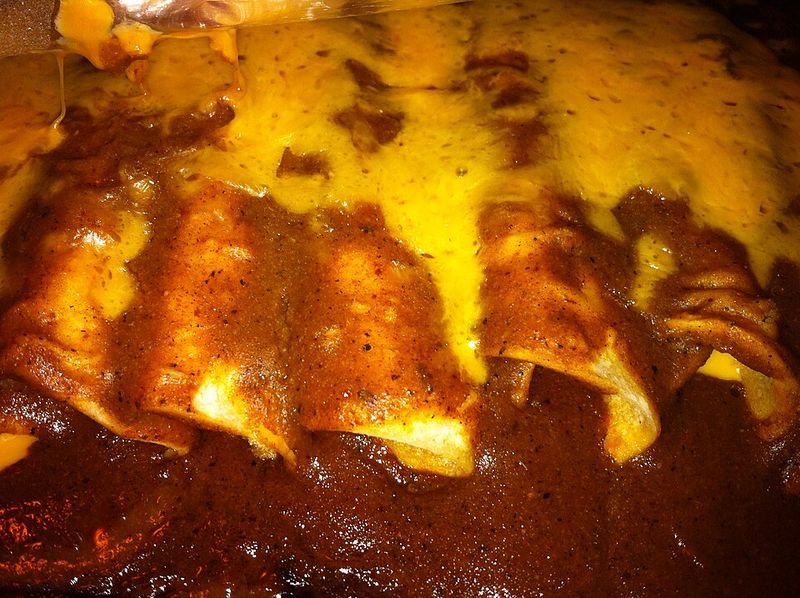
Cheese enchiladas became a cornerstone of Tex-Mex restaurant culture during the late 19th and early 20th centuries, as Mexican-American communities in Texas developed a regional cuisine that blended traditional Mexican cooking with locally available ingredients and American tastes.
The standard Tex-Mex version uses corn tortillas filled with shredded yellow cheese, rolled tightly, and covered with a chili gravy or red enchilada sauce before being topped with more cheese and baked. Diced white onions are a traditional finishing touch.
The dish typically arrives on a very hot plate alongside rice and refried beans.
Old-school Tex-Mex restaurants in San Antonio, Houston, and El Paso built loyal followings around this combination for decades. The all-cheese version holds its own against meat-filled alternatives because the cheese is not an accent here.
It is the entire point. The simplicity of the dish is precisely what has kept it on menus for well over a century.
14. Cheese Curds
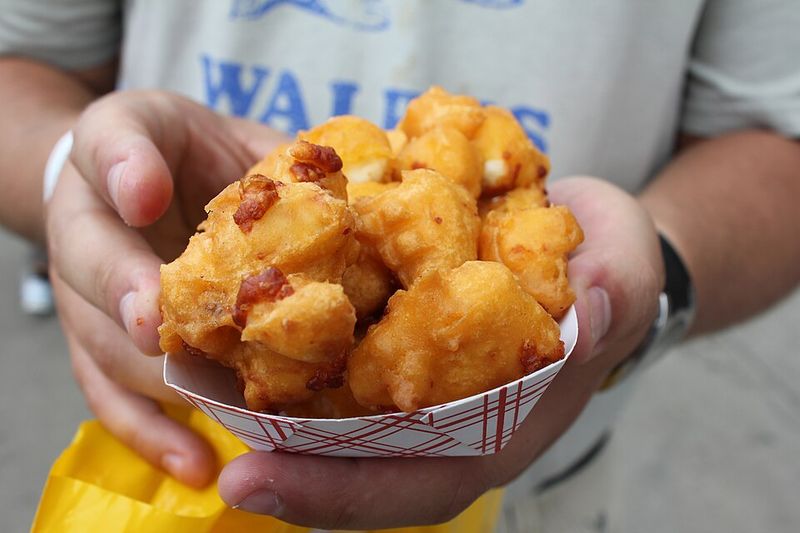
Wisconsin’s dairy industry became one of the most productive in the United States during the late 19th century, driven by waves of European immigrant cheesemakers who brought Old World techniques to the region’s abundant farmland. Cheese curds, the fresh byproduct of the cheddar-making process, were initially a practical snack eaten by workers at dairy operations.
Battering and frying the curds transformed them from a simple dairy byproduct into a regional comfort food. Taverns and supper clubs across Wisconsin began offering fried curds as a bar snack during the mid-20th century, and the dish spread to fairs, festivals, and casual restaurants throughout the state.
The Wisconsin State Fair draws significant attention to the product each August, where vendors compete to offer the most creative variations. Cheese curds became so central to Wisconsin food identity that the state officially designated cheese as its state dairy product in 1970.
Eating a basket of fried curds remains a near-mandatory experience for any food-focused visit to the state.
Share this story