Most people today see ancient symbols printed on t-shirts, stamped on jewelry, or painted on walls without thinking twice about what they actually mean. These designs have traveled thousands of years from sacred temples, royal courts, and religious ceremonies into modern pop culture. The gap between their original purpose and their current use is enormous. Created to communicate with gods, protect the living and the departed, or mark divine authority, these symbols were serious business in the civilizations that invented them.
Understanding where they came from changes how you look at them entirely.
1. The Ankh
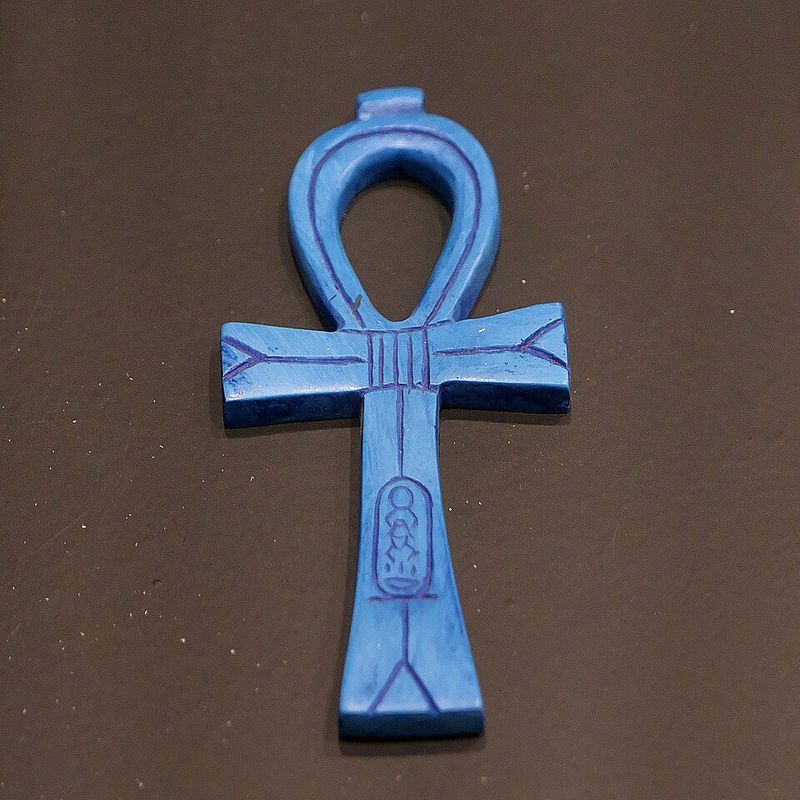
No other symbol in ancient Egyptian culture carried the weight of life itself quite so directly. The ankh represented eternal existence, and gods were routinely depicted holding it to the noses of rulers, an act understood as delivering the literal breath of life.
The symbol combined a loop with a cross, and scholars have debated its origins for centuries. Some connect it to a sandal strap, others to fertility symbols. What remains consistent across Egyptian history is its meaning: life, both earthly and eternal.
Ankhs appeared in temple carvings, painted on coffin walls, and placed inside tombs as protective objects. The pharaoh carried it as a sign of divine authority. Priests used it during religious ceremonies. Unlike decorative crosses in modern culture, the ankh was a functional spiritual tool with a clear, documented purpose across three thousand years of Egyptian civilization.
2. The Ouroboros
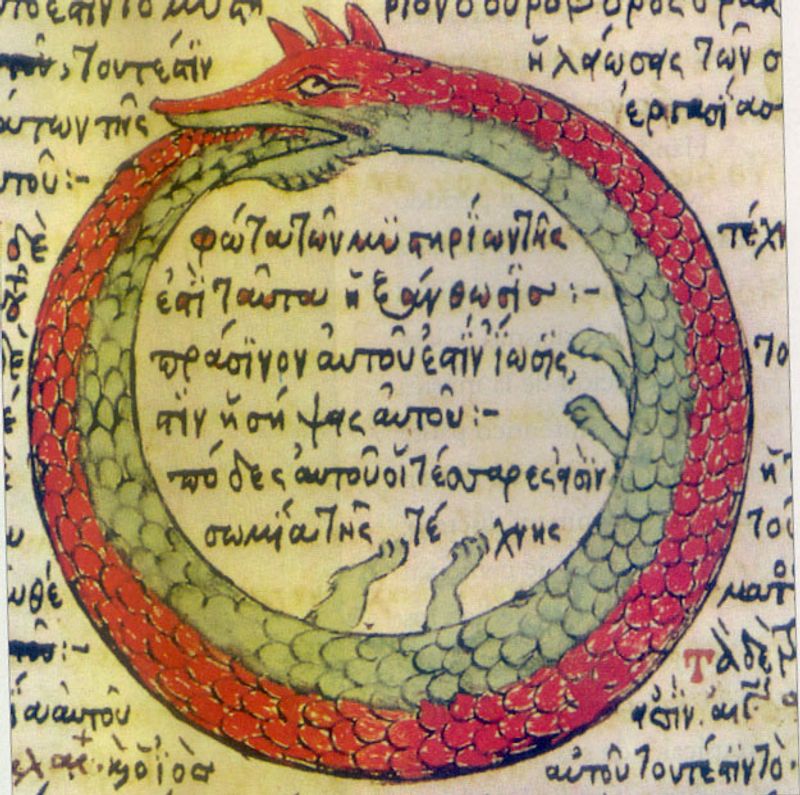
A serpent consuming its own tail sounds like a strange image, but ancient civilizations found it one of the most accurate ways to represent something they deeply believed: that time has no true beginning or end.
The ouroboros appeared first in Egypt around 1600 BCE, found inside the tomb of Tutankhamun on a golden shrine. It later traveled into Greek philosophical texts, alchemical manuscripts, and Norse mythology, each culture adapting it to fit their own understanding of eternity and cosmic cycles.
Alchemists in medieval Europe used it to represent the continuous transformation of matter. Greek philosophers connected it to the idea that the universe is self-sustaining and self-consuming. This symbol was never background art. It was a diagram of how the cosmos worked, drawn in a single curving line that scholars and priests took very seriously for thousands of years.
3. The Winged Sun Disk
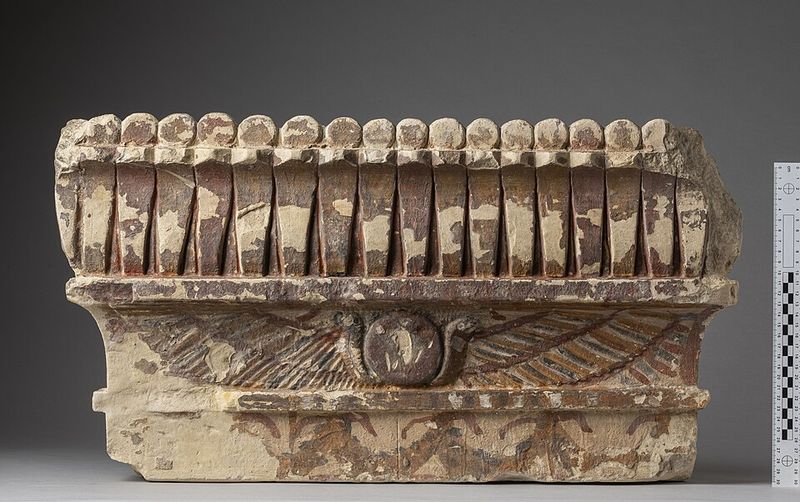
Above the doorways of ancient Egyptian temples and palaces, one image appeared more consistently than almost any other. The winged sun disk announced that whoever passed beneath it was entering a space under divine protection.
The symbol combined a solar disk with outspread falcon wings, sometimes flanked by cobras. It represented the god Horus of Behdet, a solar deity associated with kingship and protection. Placing it above an entrance was a deliberate political and religious statement about who held power and under whose divine authority a building stood.
The symbol spread beyond Egypt into the ancient Near East, appearing in Assyrian, Persian, and Anatolian art. Each culture adapted its visual details while keeping the core meaning intact. Rulers used it to legitimize their authority by connecting themselves visually to the sky gods. It was, in practical terms, the ancient equivalent of an official government seal backed by divine law.
4. The Eye of Horus
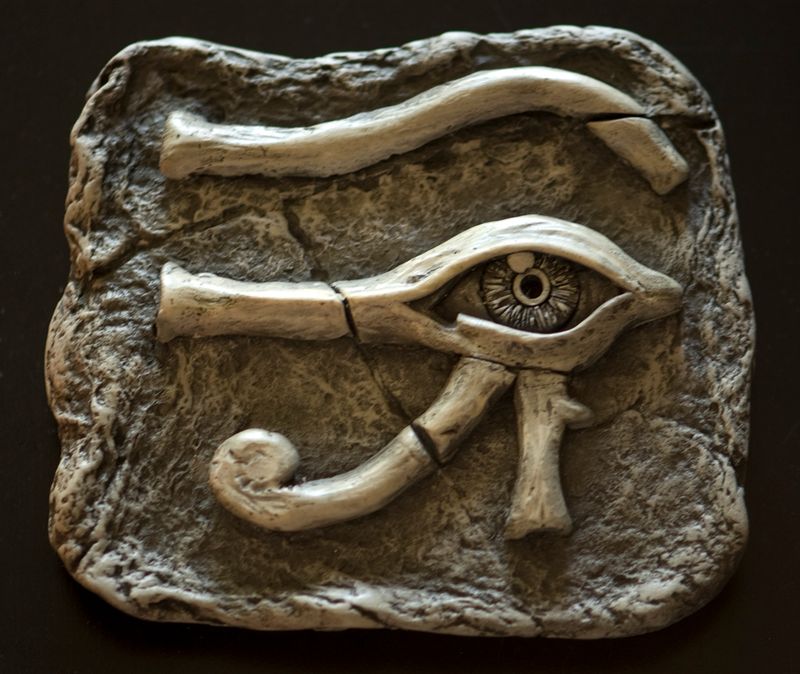
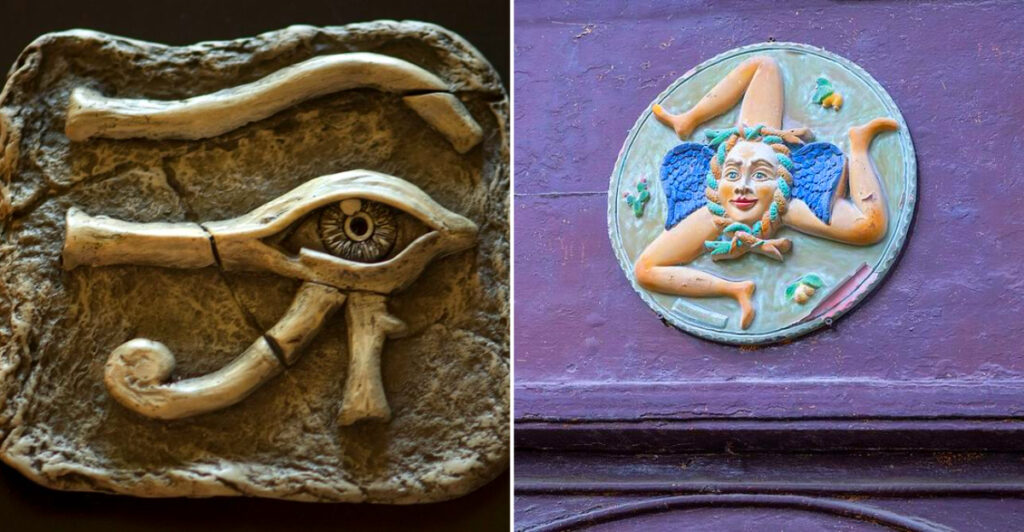
Sailors in ancient Egypt painted it on the front of their boats, trusting it would guide them safely across dangerous waters. The Eye of Horus, known also as Wadjet, was one of the most actively used protective symbols in Egyptian history, not merely a visual motif.
Its origins come from the myth of Horus, who lost his eye battling the god Set. Thoth later restored it, making the eye a symbol of healing and divine recovery. Horus then offered the restored eye to his father Osiris as a gift to sustain life in the afterworld.
Egyptians wore amulets shaped like the eye from the Old Kingdom all the way through the Roman period. Craftsmen made them from gold, lapis lazuli, and carnelian. Each part of the symbol also represented a mathematical fraction used in measuring medical ingredients.
5. The Triskelion
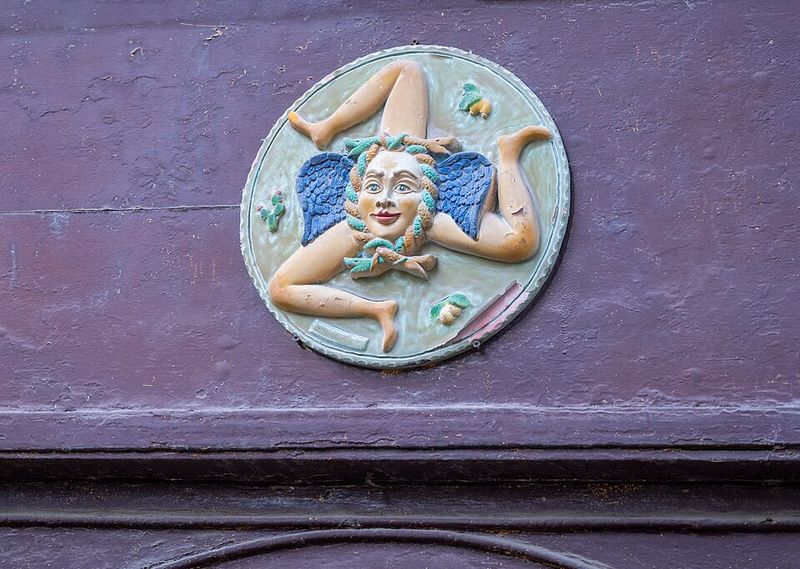
Carved into the entrance stone at Newgrange in Ireland over five thousand years ago, the triskelion predates the Celtic civilization most people associate it with by thousands of years. That single fact repositions it from cultural decoration to something far older and more deliberate.
The three-armed spiral design appears across ancient Europe, from Malta to Sicily to the British Isles. Scholars have connected it to the movement of the sun, seasonal cycles, and concepts of motion and progress. In Celtic traditions, the three points were often interpreted as representing land, sea, and sky, or the three stages of life.
Greek coins from Sicily featured the triskelion as an official emblem. The Isle of Man still uses it on its flag today. Whatever the exact meaning in each culture, the symbol consistently marked sacred or important spaces. Communities did not carve complex triple spirals into stone for purely visual reasons when the work itself required enormous effort.
6. The Lotus Flower
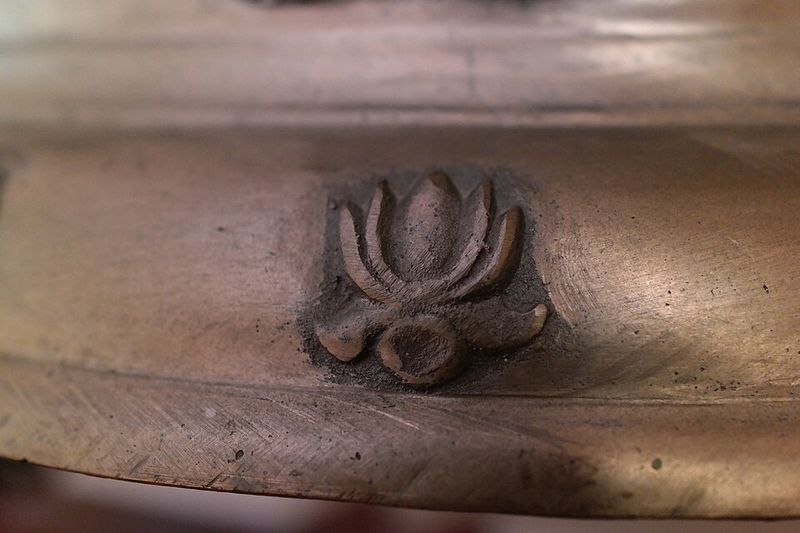
Ancient Egyptians watched the lotus close each evening and reopen each morning, and they concluded it held something the rest of the natural world did not: a daily demonstration of resurrection. That observation turned a flower into one of the most powerful religious symbols in the ancient world.
In Egyptian cosmology, the first sunrise occurred when a lotus rose from the primordial waters of chaos and opened to reveal the sun god Ra. This creation story embedded the flower permanently into religious art, temple architecture, and funerary objects. Columns in temples were shaped like lotus stalks.
In ancient India and later across Buddhist Asia, the lotus carried parallel meaning. Growing from muddy water but blooming cleanly above the surface, it represented spiritual development and the ability to rise above difficult conditions toward enlightenment. Both civilizations arrived independently at similar conclusions about the same plant, which speaks to how observable its behavior actually was.
7. The Scarab Beetle
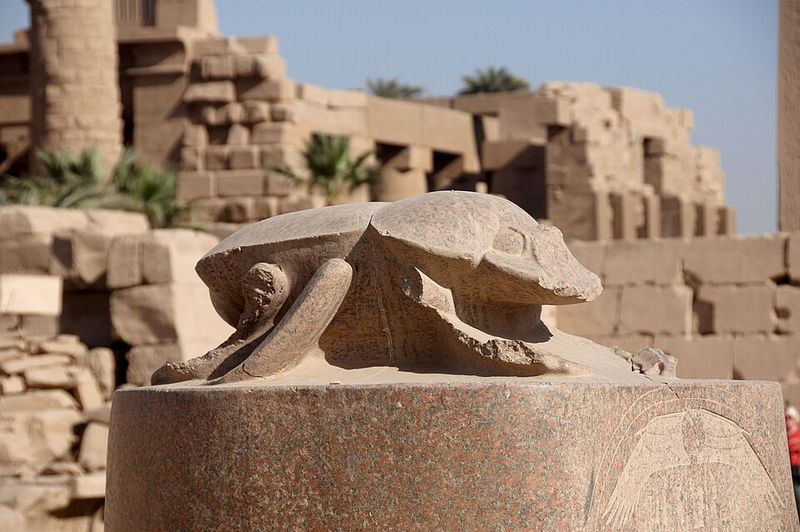
Ancient Egyptians elevated a dung beetle to the status of a divine symbol, and the reasoning was entirely logical within their cosmological framework. The scarab rolled balls of dung across the ground, which reminded observers of the sun moving across the sky, guided by an invisible divine force.
The god Khepri, who represented the rising sun, was depicted with a scarab head. Khepri pushed the sun into the sky each morning just as the beetle pushed its ball across the earth. This connection gave the scarab enormous religious significance that lasted for thousands of years.
Heart scarabs were placed inside mummy wrappings near the chest, inscribed with spells from the Book of the Dead. They were meant to prevent the heart from testifying against the deceased during the judgment of the soul. Scarab amulets were also given as gifts and used as official seals by government officials throughout Egyptian history.
8. The Labrys
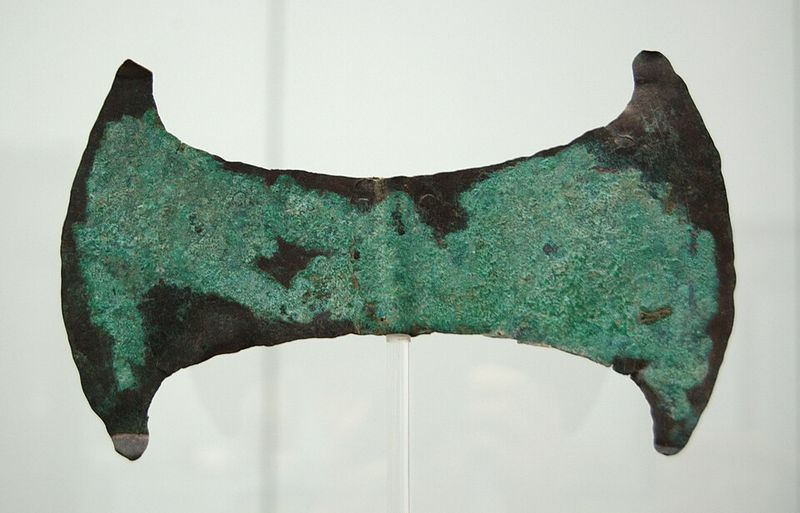
Found throughout Minoan Crete in palace frescoes, pottery, and ritual objects, the double-headed axe called the labrys was so central to Minoan culture that the palace of Knossos may take its name from it, as labrys and labyrinth share the same linguistic root.
Unlike battle axes, the labrys appeared consistently in religious and ceremonial contexts rather than military ones. Miniature versions were offered at sacred sites. Large versions were installed in shrines. The symbol appeared on walls alongside images of priestesses and sacred bulls, linking it firmly to religious authority.
Scholars believe the labrys was connected to female religious power in Minoan society, where women held prominent ritual roles. It likely represented the authority of priestesses who conducted ceremonies at major sites. The Minoan civilization flourished from roughly 2700 to 1450 BCE on Crete, and throughout that period the labrys remained a symbol of sacred, not military, power.
9. The Tree of Life
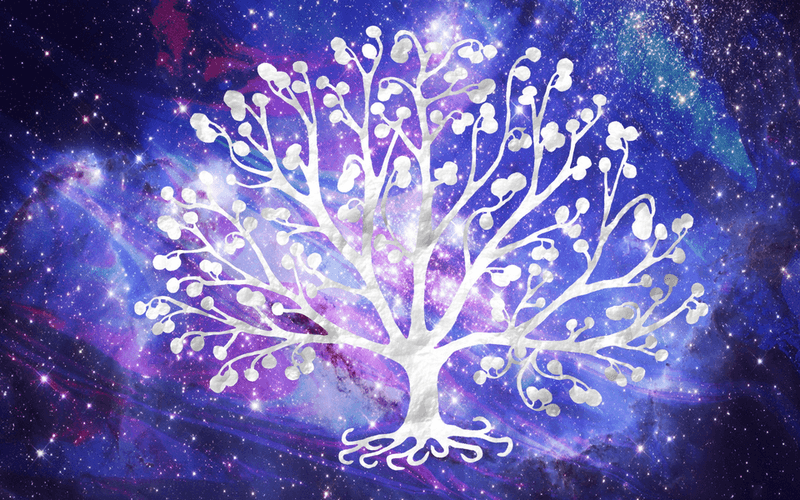
Across ancient Mesopotamia, palace walls were carved with a repeating image: two winged figures flanking a stylized tree, each reaching toward it in a gesture that clearly conveyed reverence. This was not decorative wallpaper. It was a cosmological diagram.
The Tree of Life in Mesopotamian tradition represented the axis connecting the heavens, the earth, and the underworld. It appeared in Assyrian, Babylonian, and Sumerian contexts from at least 3000 BCE onward. The tree symbolized divine order, fertility, and the source of sacred knowledge that flowed between worlds.
Similar concepts appeared independently in ancient Egypt, where the sycamore tree was associated with the goddess Hathor. Persian traditions featured it in royal iconography. Norse mythology placed the world tree Yggdrasil at the center of all existence. Each culture developed its own version, but all used the symbol to map the structure of reality rather than to fill visual space on a wall.
10. The Swastika
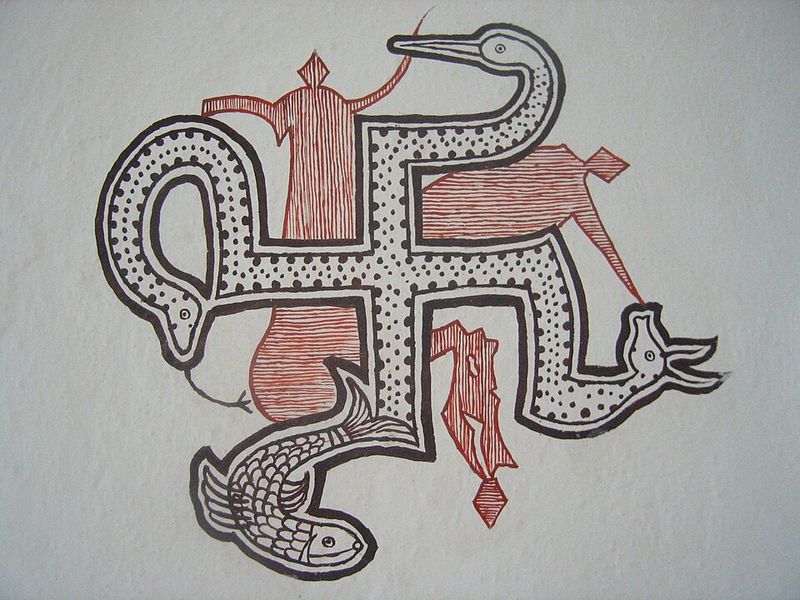
Few symbols carry a heavier modern burden than the swastika, yet its history stretches back at least twelve thousand years before its 20th-century appropriation entirely transformed its public meaning. The oldest known examples appear in Ukraine, carved into mammoth ivory around 10,000 BCE.
Across ancient India, the symbol appeared in Hindu, Buddhist, and Jain traditions as a sign of good fortune, prosperity, and cosmic order. The word itself comes from Sanskrit, meaning conducive to well-being. In ancient Greece it appeared on pottery. Native American cultures used it independently.
Norse communities carved it into artifacts as a symbol of Thor.
Its near-universal appearance across disconnected ancient cultures suggests it arose naturally from the human tendency to observe rotating patterns in nature, including the movement of stars. Understanding its original meaning does not minimize its modern associations, but it does clarify that for most of human history, this symbol carried entirely different intentions.
11. The Caduceus
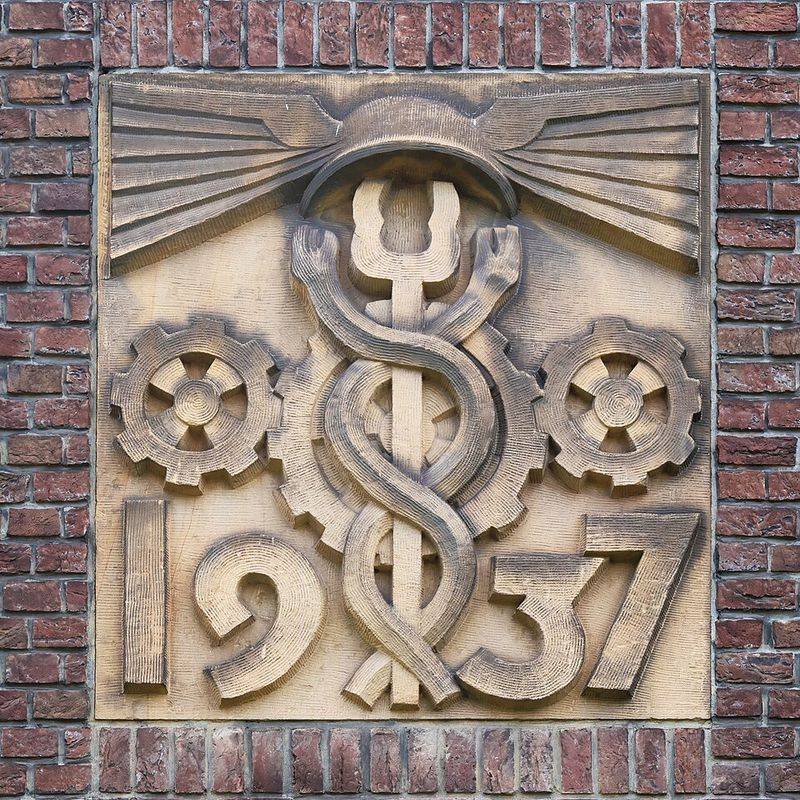
Walk into almost any hospital in the United States and you will likely see a staff with two serpents coiled around it and wings at the top. Most people assume it represents medicine. It does not. The caduceus belonged to Hermes, the Greek messenger god, and it had nothing to do with healing.
Hermes carried the caduceus as a symbol of his roles in commerce, communication, travel, and negotiation. It represented his ability to move between worlds and broker agreements. The two serpents were said to have stopped fighting when Hermes placed his staff between them, making it a symbol of balance and peaceful resolution.
The actual medical symbol is the Rod of Asclepius, which features a single serpent and no wings. A mix-up in the early 20th century led the United States Army Medical Corps to adopt the caduceus by mistake in 1902, and the error spread widely from there. The original symbol was always about diplomacy, not medicine.
12. The Wheel of Dharma
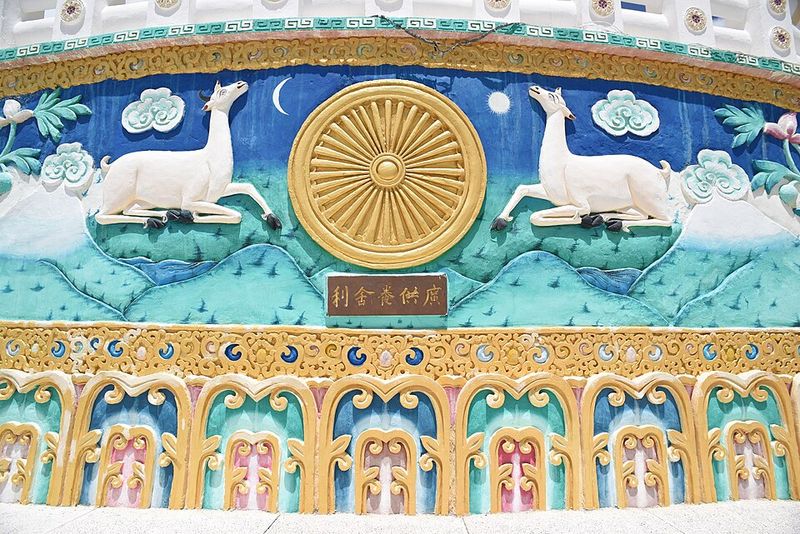
When the Buddha gave his first teaching after reaching enlightenment, the event was described as setting the wheel of the law in motion. That moment gave birth to one of Buddhism’s most enduring symbols, the Dharma Wheel, which has represented the structure of Buddhist practice ever since.
The wheel’s eight spokes stand for the Noble Eightfold Path, the practical guide to ethical living and mental development that forms the core of Buddhist teaching. The hub represents discipline, the spokes represent wisdom, and the rim represents concentration. Every part carries specific doctrinal meaning.
The Dharma Wheel appeared in Indian art long before Buddhism, connected to solar symbolism and royal power. Emperor Ashoka, who ruled the Maurya Empire in the 3rd century BCE, adopted it as a symbol of his commitment to Buddhist principles. It now appears at the center of India’s national flag, chosen in 1947 to represent the nation’s historical and ethical heritage.
13. The Triple Moon

Ancient cultures without telescopes or modern calendars tracked time by watching the moon, and what they observed shaped entire religious systems. The triple moon symbol encoded those observations into a single image that represented far more than astronomy.
The three phases shown in the symbol, waxing crescent, full moon, and waning crescent, were connected to the three stages of the divine feminine in many ancient traditions. Different cultures mapped these onto maiden, mother, and crone figures representing youth, fullness of life, and wisdom. The Greek goddess Hecate was associated with the triple moon in her role as deity of crossroads, magic, and transitions.
The symbol appeared in ancient Greek and Roman religious contexts and was later documented in connection with goddess worship across the Mediterranean. It functioned as a religious calendar, a theological statement, and a marker of sacred time all at once. Communities used it to organize planting cycles, ritual observances, and communal ceremonies tied to the lunar calendar.
14. The Celtic Knot
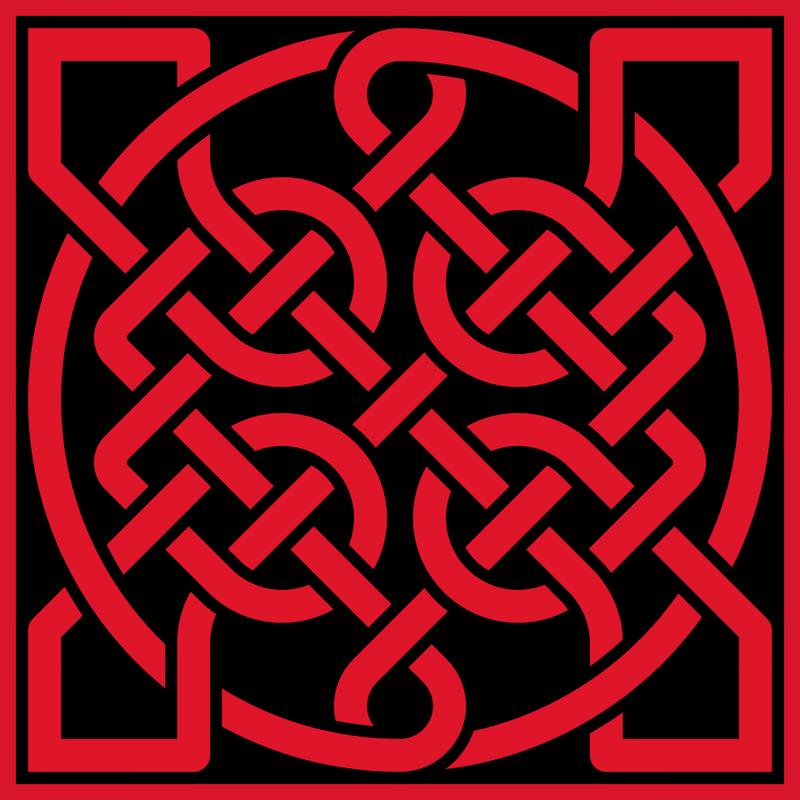
Celtic knotwork looks like pure artistry, and the craftsmanship is genuinely remarkable, but the patterns were chosen with purpose. A design with no visible start or end point was a deliberate theological statement about the nature of existence.
The earliest Celtic knots appeared in Roman floor mosaics around the 3rd century CE, but Irish and Scottish craftsmen developed them into a distinct visual language by the 7th century. Illuminated manuscripts like the Book of Kells, produced around 800 CE, filled entire pages with knotwork that scholars believe carried spiritual meaning related to eternity, interconnection, and the structure of the divine.
Knots appeared on high crosses, carved stones, and religious metalwork throughout the early medieval period. Christian monks adopted them to represent the eternal nature of God and the interconnectedness of faith and life. The patterns were never random. Craftsmen followed strict geometric rules, and deviations from those rules were considered errors, not creative choices.
15. The Hand of Fatima (Hamsa)
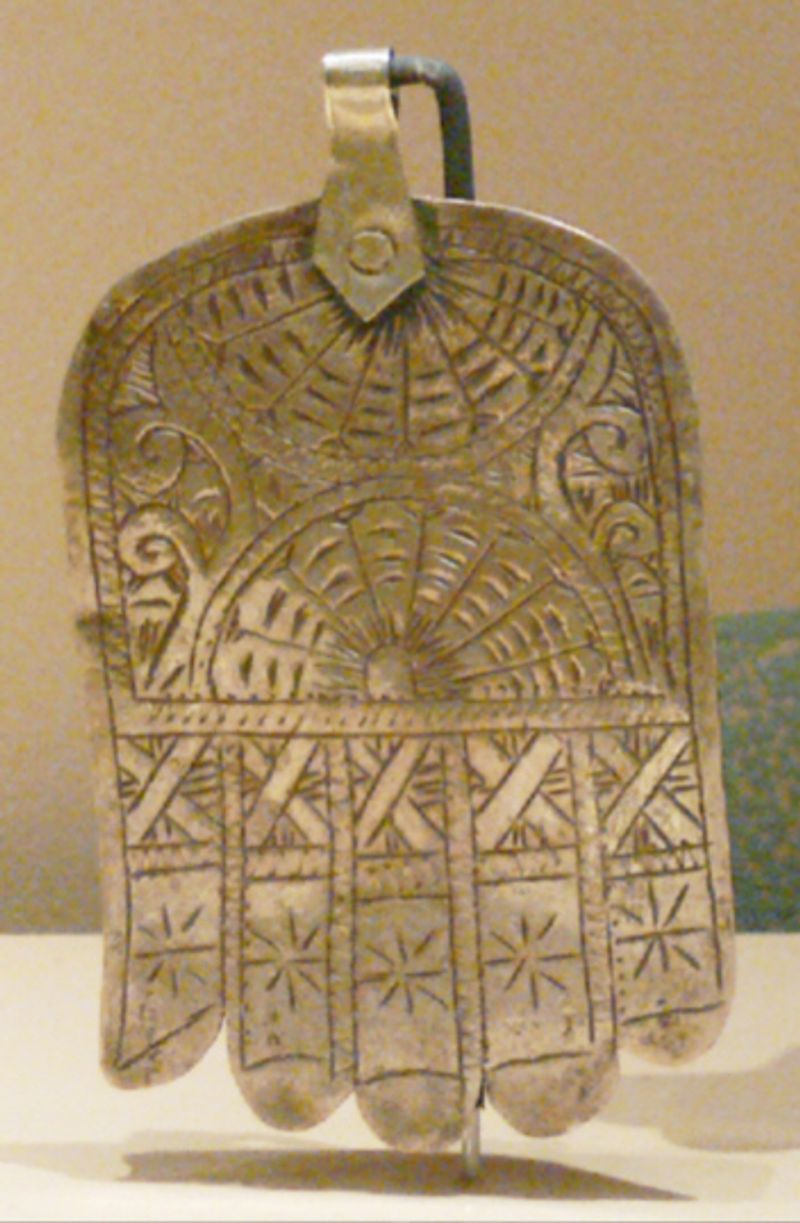
Archaeologists have traced the open hand as a protective symbol back to ancient Mesopotamia and Carthage, where it appeared in connection with the goddess Tanit long before it became associated with the Islamic or Jewish traditions most people know today.
The Hamsa, meaning five in Arabic and Hebrew, depicts an open right hand, sometimes with an eye at the center. The eye within the hand directly addressed the evil eye, a widespread belief across the ancient Mediterranean and Middle East that envious gazes could cause real harm to people, animals, crops, and homes.
Jewish, Muslim, and Christian communities across North Africa and the Middle East all used the Hamsa as a protective object for centuries, each attaching their own religious meaning to the same basic form. Hanging it above a doorway or wearing it as jewelry was a practical act of protection, not a fashion statement. The symbol predates all three Abrahamic faiths by several centuries.
Share this story