Europe is home to some of the most breathtaking buildings ever constructed, from ancient cathedrals that took centuries to complete to royal palaces built to show off serious power. Whether you love history, art, architecture, or just a good photo opportunity, this continent delivers on every front.
Some of these buildings are so bold and dramatic that they feel more like landscapes than structures. This list covers 15 of the most stunning buildings across Europe, from Spain to Hungary, from Portugal to Germany, giving you a tour of the continent through the places that stopped people in their tracks the moment they were built and have never stopped doing so since.
Sagrada Família – Barcelona, Spain
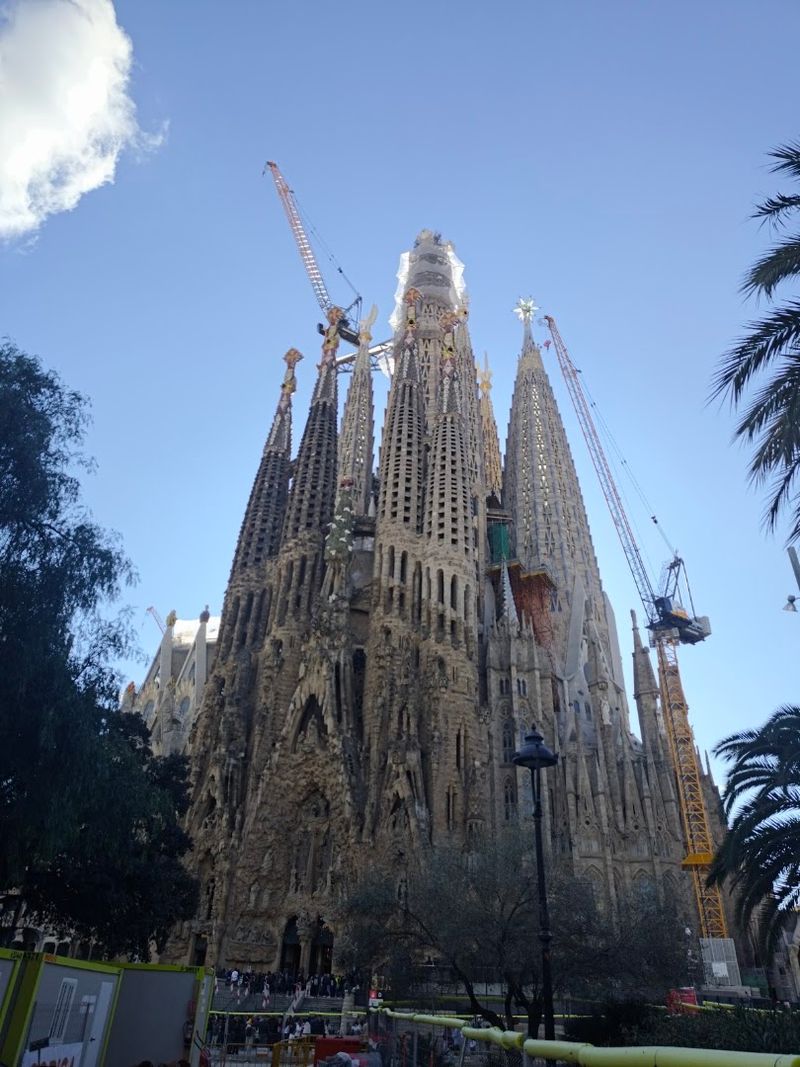
Almost every surface of Sagrada Família seems to be in motion. Antoni Gaudí designed this basilica to look like a stone forest growing upward, and standing outside, it is hard to argue with that vision.
The spires rise in clusters, each one covered in carved detail that shifts between nature-inspired shapes and religious symbolism.
Step inside and the experience changes completely. Branching columns reach toward a vaulted ceiling, and stained glass floods the nave with colored light that moves across the stone as the day progresses.
The mood inside is genuinely different in the morning than it is in the afternoon.
Visitors can currently purchase official tickets online, and the basilica operates with seasonal hours throughout the year. Optional tower visits are available and worth booking in advance.
The on-site museum adds historical context about Gaudí’s original vision and the long construction timeline that is still ongoing today.
Neuschwanstein Castle – Bavaria, Germany
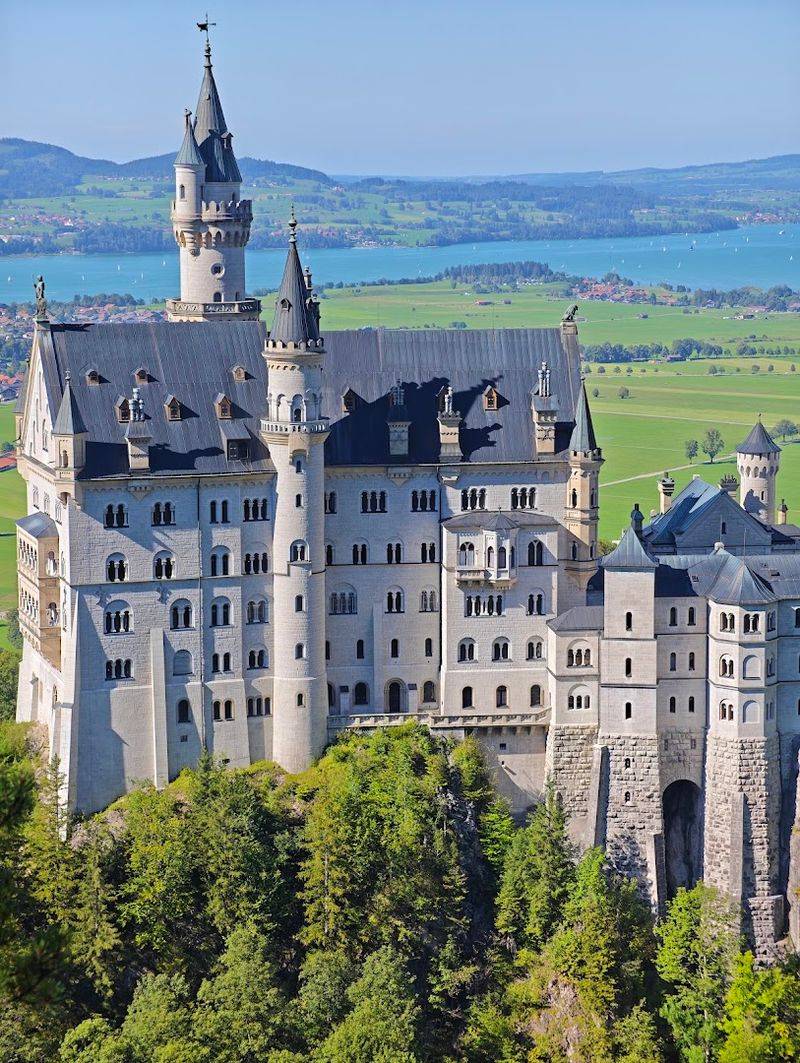
The word “fairytale” gets used loosely, but Neuschwanstein Castle genuinely earns it. King Ludwig II commissioned the castle in the 19th century as a personal retreat, and the result is a building that looks theatrical from every angle, with towers, steep roofs, and a mountain backdrop that seems designed for maximum drama.
What makes it even more interesting is how the setting does as much work as the architecture. From the Marienbrücke bridge, on a clear day, the castle appears framed by forested ridges and valleys in a way that photographs struggle to fully capture.
Guided tours run daily in both summer and winter, though the castle closes around major winter holidays, so checking official schedules before visiting is a smart move. The interior covers royal apartments, painted murals, and ornate halls that reflect Ludwig’s obsession with medieval legend and Wagnerian opera themes.
Palace of Versailles – Versailles, France
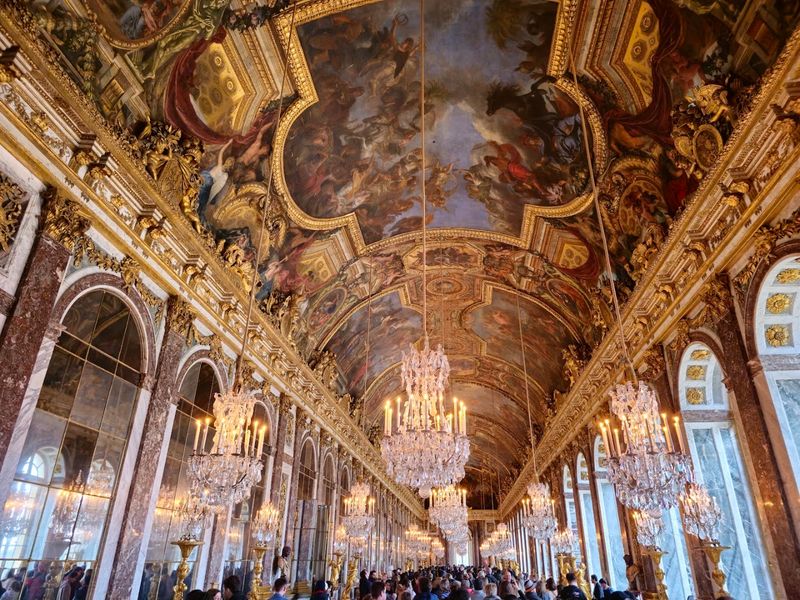
The Palace of Versailles was never meant to be subtle. Every element, from the gilded gate to the long garden perspective, was designed to communicate power, wealth, and control.
Louis XIV moved the French court here in 1682, and the palace has been making jaws drop ever since.
The Hall of Mirrors is the most famous room, and for good reason. Seventeen arched mirrors reflect seventeen arched windows overlooking the gardens, creating a corridor that feels both enormous and precise at the same time.
The royal chapel and grand apartments are equally impressive in their own quieter ways.
The palace is open every day except Mondays, while the gardens and the Trianon estate operate under their own separate access rules. Booking tickets in advance is strongly recommended, especially during peak summer months when crowds at the main entrance can be significant.
The estate genuinely rewards a full day of exploration.
Mont-Saint-Michel Abbey – Normandy, France
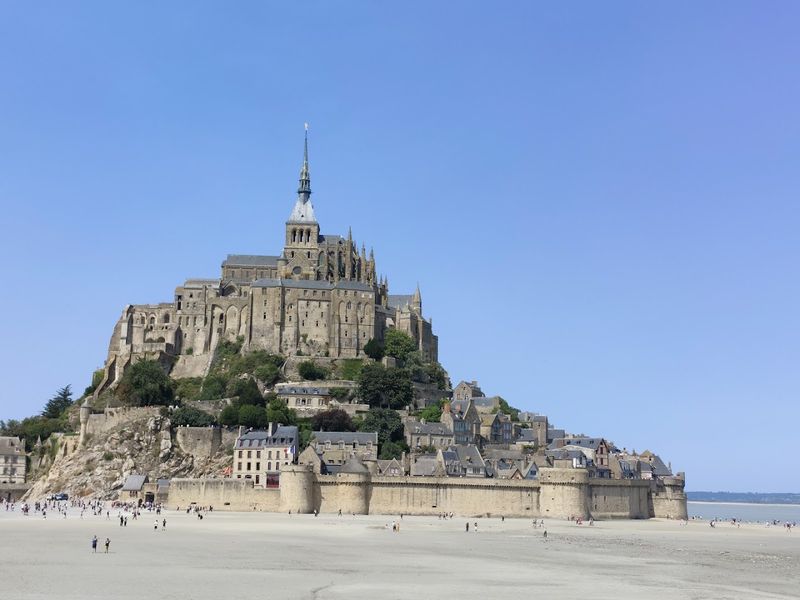
From a distance, Mont-Saint-Michel looks like something assembled from a dream. The rocky island rises from a tidal bay off the Normandy coast, topped by a medieval abbey that seems to defy both gravity and logic.
The closer you get, the more the layers reveal themselves: walls, lanes, gateways, and finally the church at the summit.
The architecture inside shifts noticeably as you climb. Lower sections feel fortress-like, built for defense, while the upper monastic spaces open into graceful arches and quiet stone courtyards.
The combination of military and spiritual design in one compact space is genuinely rare.
Practical details are worth knowing before you go. The abbey is closed on January 1, May 1, and December 25.
Tides affect access to the island, and the causeway can get congested during peak season. Arriving early in the morning or later in the afternoon tends to make the experience more manageable and more atmospheric.
Duomo di Milano – Milan, Italy
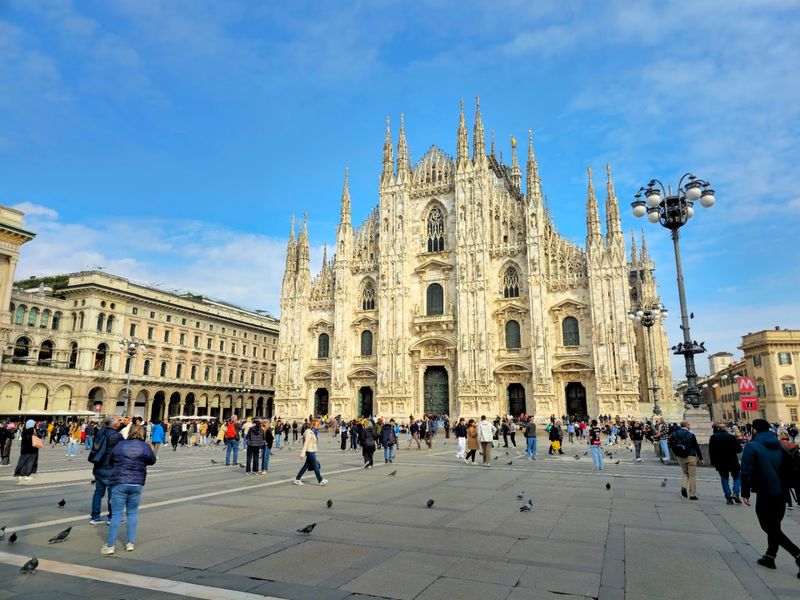
The Duomo di Milano took nearly six centuries to complete, and standing in the piazza looking up at its pale marble facade, that timeline starts to make sense. The sheer number of spires, statues, and carved details covering the exterior is almost overwhelming.
There are reportedly over 3,400 statues on the building, which makes every viewing angle different.
The rooftop terrace is one of the best reasons to visit beyond the ground-level experience. Visitors can walk among the forest of spires, look out over Milan’s skyline, and get close-up views of sculptural details that are impossible to see from street level.
It is a genuinely unusual way to experience a cathedral.
The official Duomo website publishes current ticket prices, opening hours, and access details for the various parts of the complex, including the church, rooftop, museum, and baptistery. Booking ahead is recommended, especially for the rooftop, which has timed entry slots during busy periods.
Hungarian Parliament Building – Budapest, Hungary
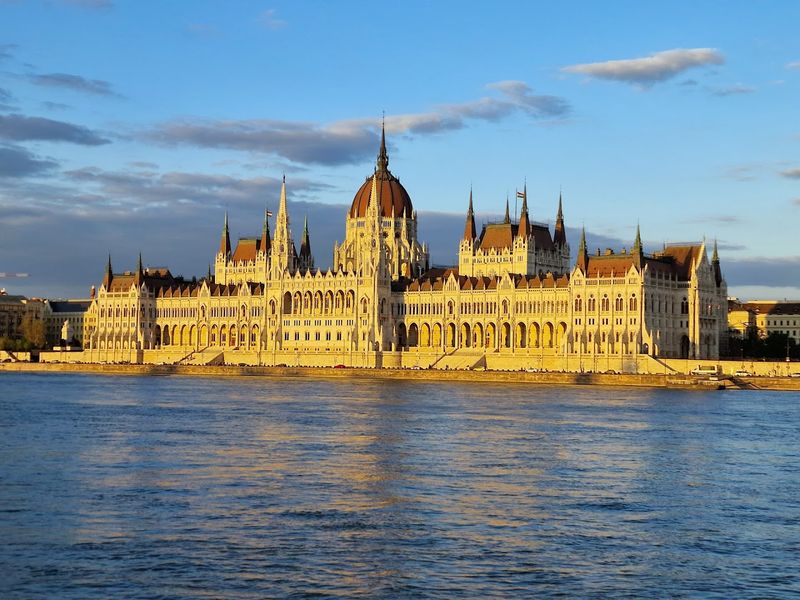
The Hungarian Parliament Building is one of those landmarks that actually looks better in person than in photographs. Its Gothic Revival facade stretches along the Danube with a symmetry and scale that photographs tend to flatten.
From the opposite bank in Buda, or from a river cruise, the full length of the building reads as something genuinely monumental.
Completed in 1904, it remains one of the largest parliament buildings in the world. The central dome rises 96 meters, a number chosen to match the year Hungary was founded, which gives you a sense of how deliberate every design decision was.
Guided tours run approximately 45 minutes and cover selected ceremonial spaces, including areas where Hungary’s crown jewels are displayed. Tours are available with audioguides or professional guides in multiple languages, and official visitor information confirms regular availability throughout the year.
Evening visits, when the building is illuminated, offer a very different and equally striking perspective.
Doge’s Palace – Venice, Italy
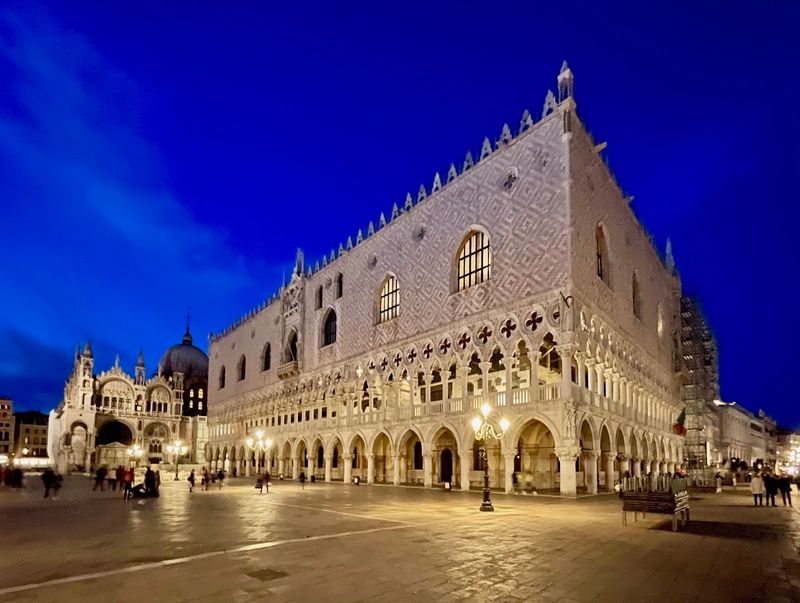
There is something almost contradictory about the Doge’s Palace. Its lower facade looks delicate and intricate, more like lacework than stone, yet this building was the seat of one of the most powerful governments in medieval Europe.
The Venetian Republic used beauty as a form of authority, and the palace is the clearest example of that approach.
The building layers Gothic, Byzantine, and Renaissance influences in a way that reflects Venice’s position as a crossroads between East and West. Inside, grand halls feature enormous painted ceilings by Tintoretto and Veronese, and the route through the palace includes the famous Bridge of Sighs, which connects to the historic prison.
The official museum website lists tickets, opening hours, accessibility information, and various itinerary options, including combined passes that cover multiple Venice museum sites. The palace remains one of the city’s most visited and most rewarding stops, offering genuine historical depth alongside its exceptional architectural presence.
Palace and Park of Pena – Sintra, Portugal
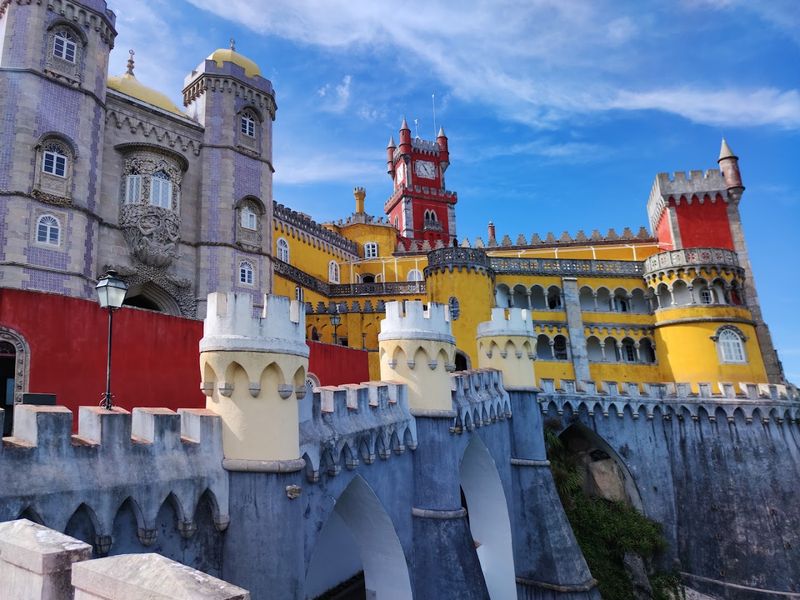
The Palace of Pena does not believe in understatement. Built in the 19th century for King Ferdinand II, it sits on a hilltop above Sintra with red and yellow walls, Moorish arches, Gothic towers, and Renaissance-style terraces, all combined into something that feels more like a theatrical set than a royal residence.
What makes Pena genuinely special is how the building interacts with its landscape. The surrounding forest park adds to the sense of discovery, with winding paths leading up to viewpoints and garden features.
On clear days, the views extend toward the Atlantic coast.
Official Sintra Parks information lists current opening times and ticket details, with timed palace entry required to manage visitor flow. Booking in advance is strongly recommended, especially during summer and on weekends, when the site draws large crowds.
The park surrounding the palace can be explored separately and offers a quieter way to experience the estate at a slower pace.
Prague Castle – Prague, Czech Republic
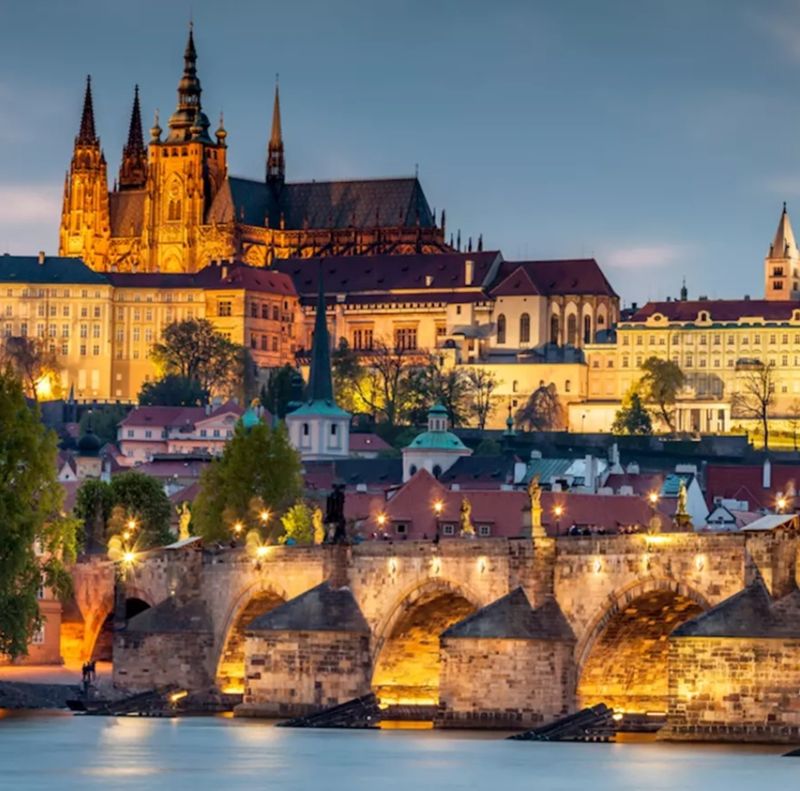
Prague Castle is technically a complex rather than a single building, and that distinction matters. Walking through the main gate puts you inside a historic district that includes St. Vitus Cathedral, the Old Royal Palace, St. George’s Basilica, Golden Lane, and multiple towers and courtyards spread across a hilltop above the city.
St. Vitus Cathedral alone justifies the visit. Its Gothic spires define Prague’s skyline from almost every viewpoint in the city, and the interior features stunning stained glass windows, including a notable Art Nouveau window designed by Alfons Mucha.
The castle complex is open daily, with individual historical buildings operating on seasonal hours. Some areas are free to enter, while others require a ticket.
The view from the castle looking down over Prague’s red rooftops and the Vltava River is one of the most photographed in Central Europe, and it holds up even on an overcast day.
Schönbrunn Palace – Vienna, Austria
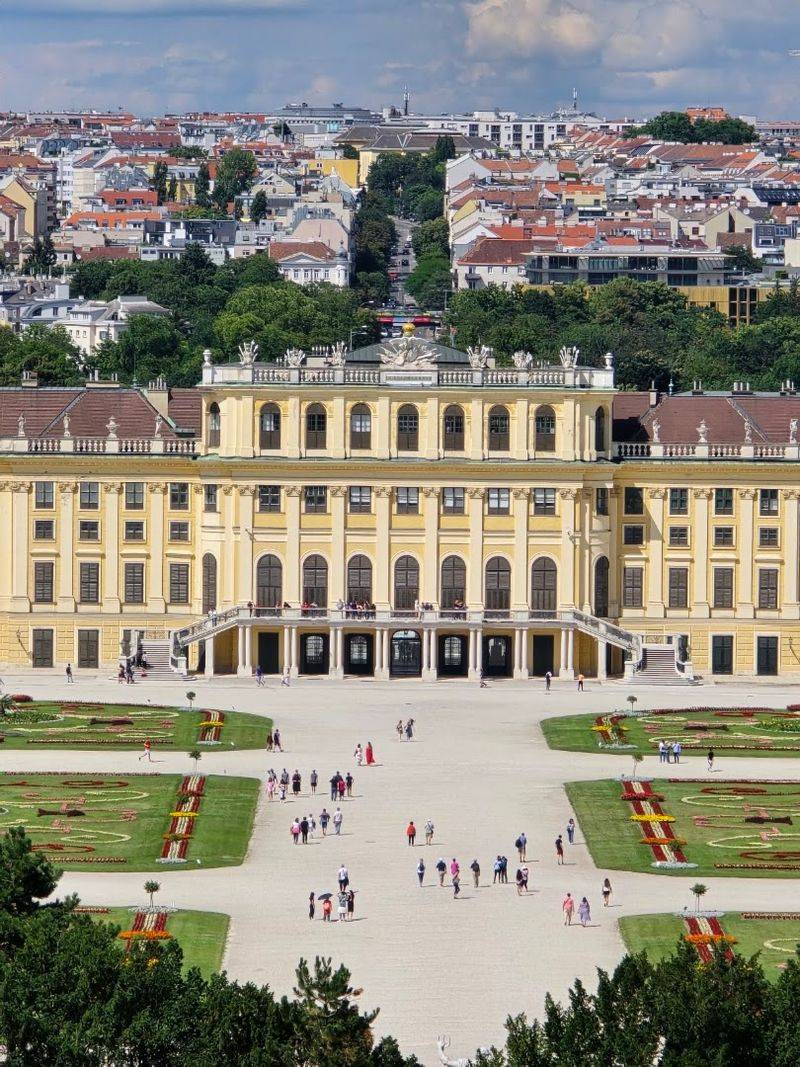
Schönbrunn Palace has a quality that many grand buildings lack: it feels composed from every distance. The long yellow Baroque facade reads beautifully up close, but it also anchors the formal gardens that stretch out in front of it, and the Gloriette monument crowns the hill behind, creating a layered landscape that works as a unified whole.
The palace served as the primary summer residence of the Habsburg emperors, and the state rooms inside reflect centuries of imperial taste. The Grand Gallery, the Chinese Rooms, and the apartments associated with Franz Joseph and Empress Elisabeth are among the most visited spaces.
Official visitor information lists opening times, ticket options, and park access details. The palace park generally opens early each morning and is free to enter, making it possible to enjoy the gardens and exterior views without buying a palace ticket.
The zoo within the grounds is one of the oldest in the world and operates as a separate attraction.
Hagia Sophia – Istanbul, Turkey
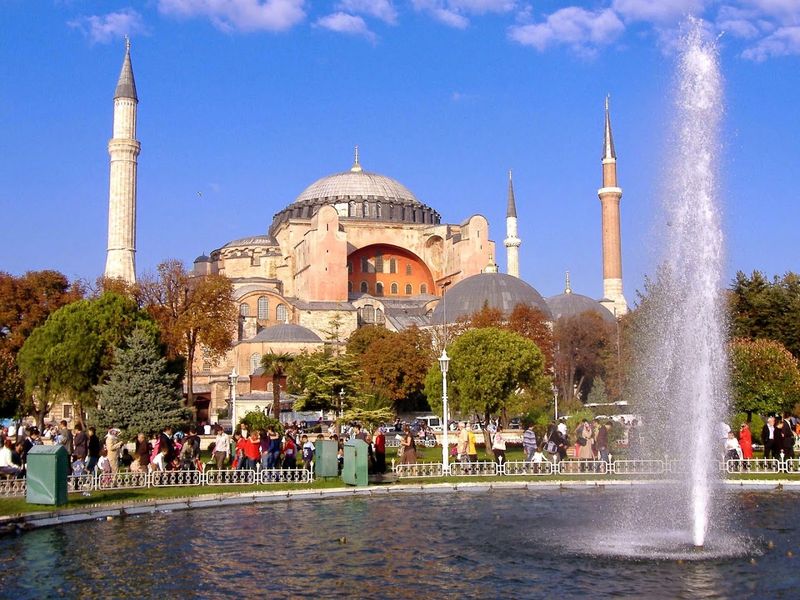
Few buildings anywhere carry as many architectural identities inside one structure. Hagia Sophia was built as a Byzantine Christian cathedral in 537 AD, converted into an Ottoman mosque in 1453, transformed into a secular museum in 1934, and returned to mosque use in 2020.
Each chapter left visible marks on the building, making it a layered record of history.
The dome is the architectural centerpiece. Spanning 31 meters across, it appears to float above the nave, supported by a ring of windows that flood the space with light.
Byzantine mosaics coexist with Ottoman calligraphic medallions on the walls, creating a visual dialogue between two distinct artistic traditions.
Visitor access is shaped by the building’s current status as a functioning mosque, with entry paused during prayer times. The official Hagia Sophia Mosque website outlines current visiting rules and historical context.
Despite the access adjustments, it remains one of Istanbul’s most significant and visually unforgettable landmarks for visitors from around the world.
Westminster Abbey – London, England
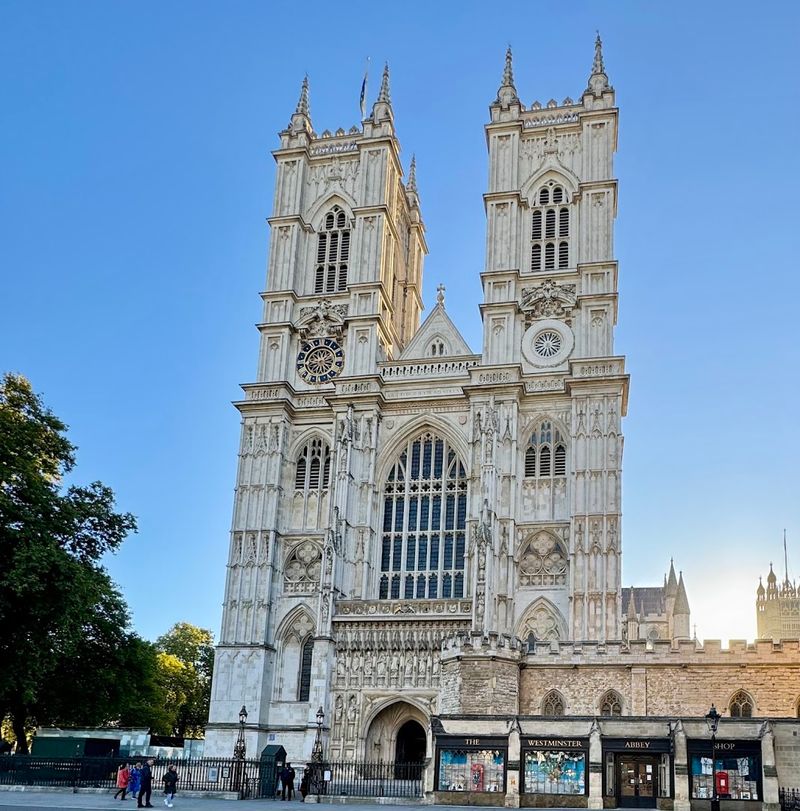
Westminster Abbey carries more history per square meter than almost any other building in Britain. Since 1066, every English and British monarch except two has been crowned here.
The abbey has also hosted royal weddings, state funerals, and national memorial services, giving it a role in British life that goes well beyond its architectural merit.
Architecturally, the building is beautiful in a solemn and precise way. The fan vaulting in the Henry VII Lady Chapel is considered one of the finest examples of late Gothic craftsmanship in Europe.
Stained glass, medieval floor tiles, carved monuments, and royal tombs fill every corner of the interior.
The abbey’s official visitor page lists current ticket prices and entry times, with entry fees going directly toward the building’s ongoing conservation. The abbey is still an active place of worship, so some areas may be restricted during services.
Arriving early on weekdays typically means smaller crowds and a quieter experience inside.
Château de Chambord – Loire Valley, France
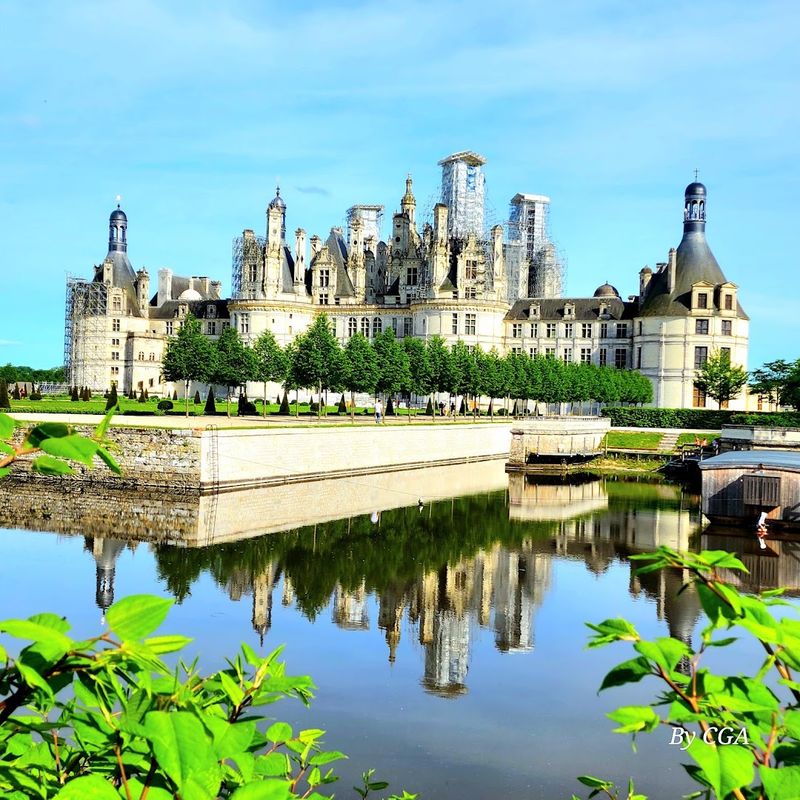
The roofline of Château de Chambord is unlike anything else in France. Towers, chimneys, dormers, and lanterns crowd the skyline above the main structure, creating a silhouette that reads as both palace and fantasy fortress simultaneously.
From across the water on a clear day, the reflection in the surrounding moat doubles the effect.
Construction began in 1519, likely under the influence of Leonardo da Vinci, who was living in the Loire Valley at the time. The famous double-helix staircase at the center of the building allows two people to ascend and descend without ever crossing paths, which remains one of the most discussed engineering features of the Renaissance period.
Current official visitor information lists 2026 opening hours, seasonal closures, ticket details, and special event programming. Some restoration work continues in parts of the estate, but the main château and grounds remain open and accessible.
The surrounding national estate offers cycling routes and wildlife viewing alongside the architectural visit.
Cologne Cathedral – Cologne, Germany
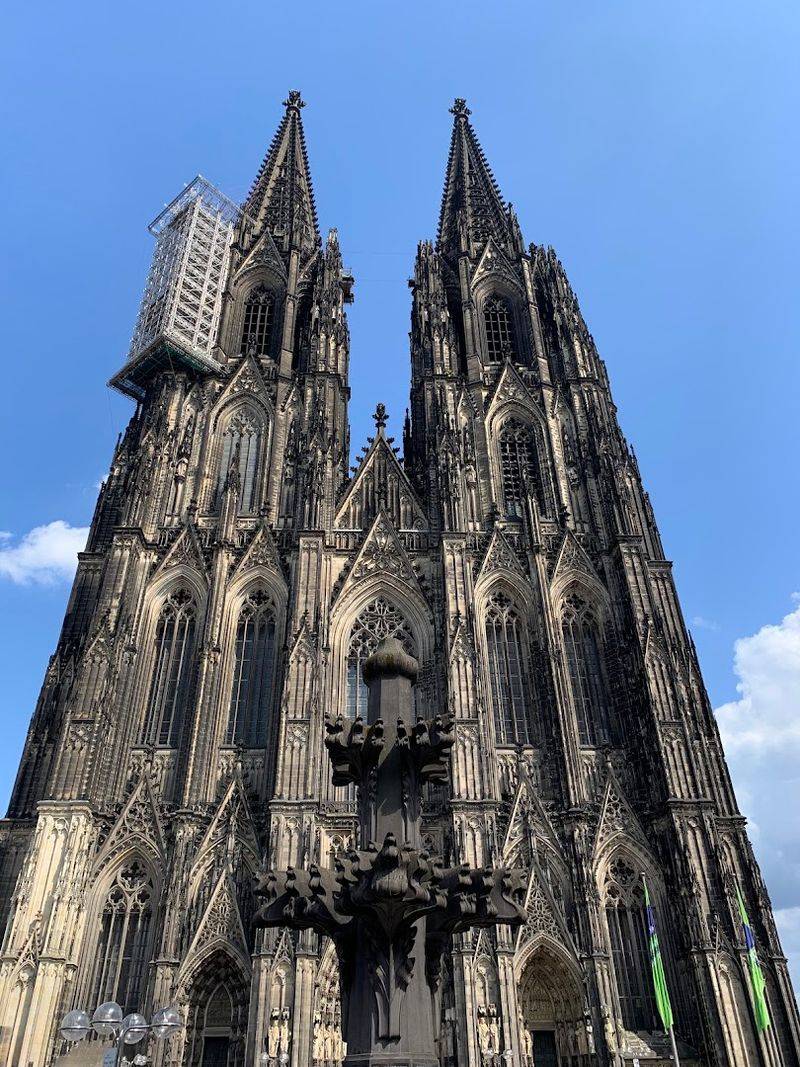
Cologne Cathedral spent over 600 years under construction. Work began in 1248, stalled for centuries, and was finally completed in 1880, making it one of the longest building projects in architectural history.
The twin spires reach 157 meters, and for a brief period after completion, the cathedral held the title of the world’s tallest building.
The dark stone exterior gives it a weight and gravity that contrasts sharply with lighter Gothic cathedrals like Chartres or Reims. Inside, the scale is equally imposing, with a nave that stretches upward and stained glass windows spanning multiple periods, including a modern window by Gerhard Richter installed in 2007.
The cathedral is a UNESCO World Heritage site and remains an active place of worship. Official information notes that from July 2026, tourist visits to the interior will require a ticket, while worship access stays separate and free.
Checking current hours before visiting is recommended, as services and events can affect access.
Guggenheim Museum Bilbao – Bilbao, Spain
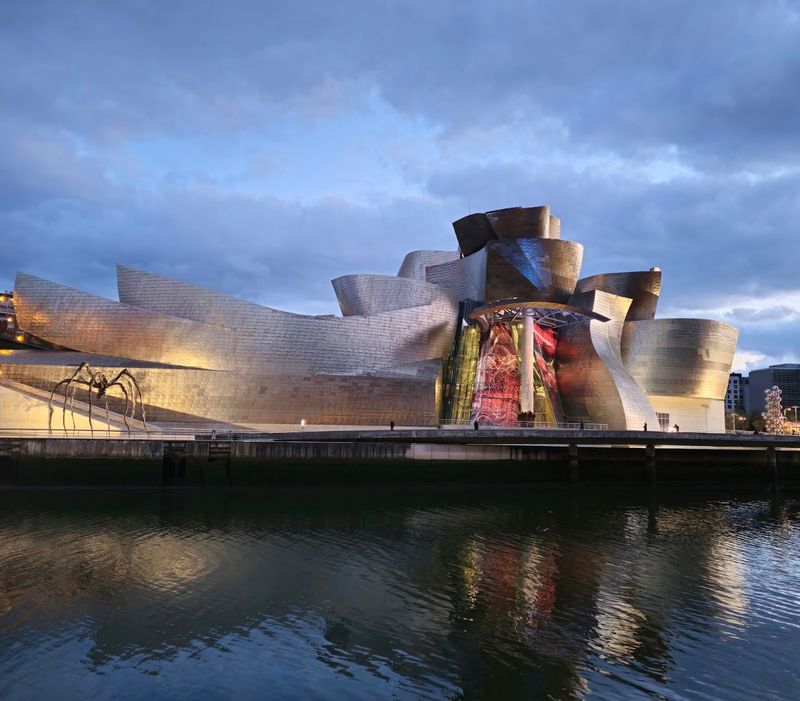
When the Guggenheim Museum Bilbao opened in 1997, it genuinely changed conversations about what a building could be. Frank Gehry designed the museum as a sculptural object as much as a functional space, using curved titanium panels that shift in appearance depending on cloud cover, sunlight, and the angle from which you approach.
The “Bilbao Effect” became shorthand in urban planning circles for how a single landmark building can transform a city’s international reputation. Before the museum opened, Bilbao was primarily known as an industrial port city.
Within a decade of the opening, it had become a significant European cultural destination.
The collection inside focuses on contemporary and modern art, with large-scale installations that take advantage of the building’s dramatic interior volumes. Official museum information confirms current hours, admission prices, and online ticket availability.
The riverside setting, combined with Jeff Koons’ giant floral sculpture “Puppy” outside the entrance, makes the exterior worth exploring before you even step inside.
Share this story