The summer of 1975 was filled with moments that helped shape the modern world. From groundbreaking films and historic sporting achievements to major political agreements, space exploration, and early advances in technology, it was a season of remarkable change across many fields.
These 12 events capture the stories that defined those memorable months. Together, they offer a fascinating look at a summer whose influence can still be seen today in entertainment, science, politics, and everyday life.
1. Jaws Created the Summer Blockbuster
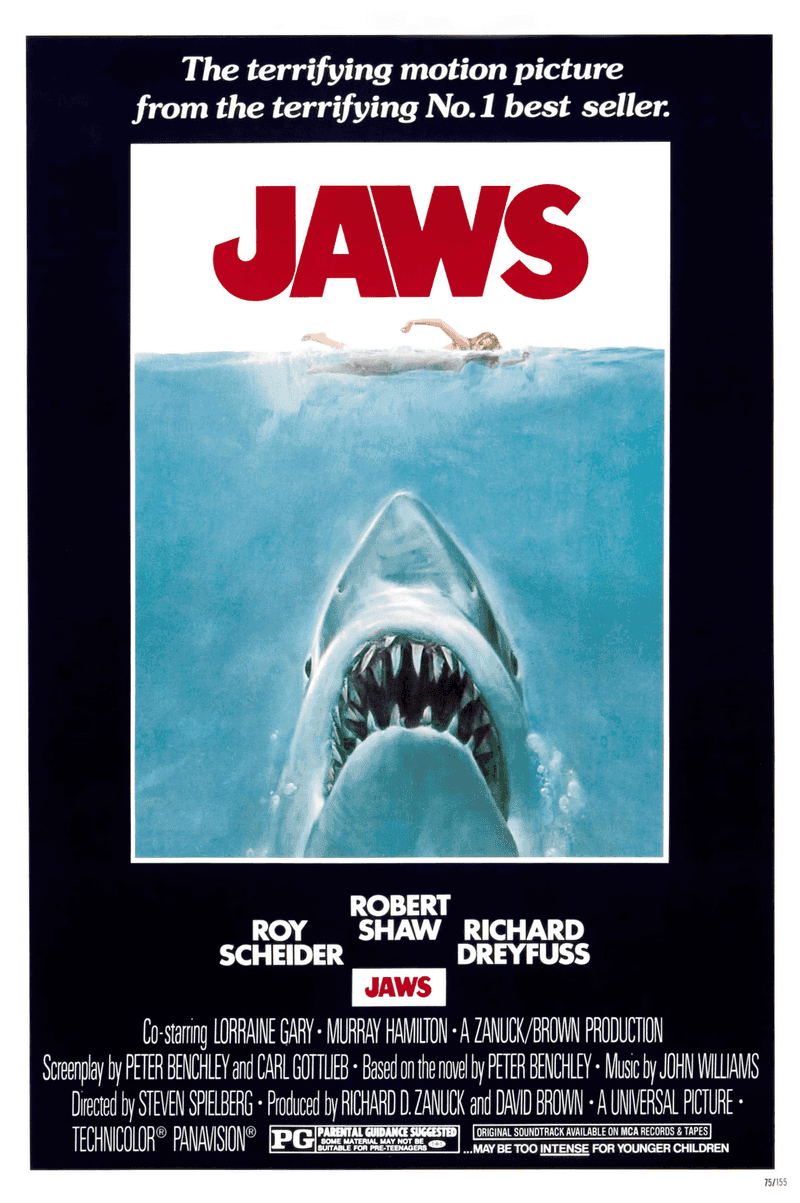
Hollywood had no idea a shark movie would permanently change its calendar. On June 20, 1975, Steven Spielberg’s Jaws opened in theaters across the United States, and audiences responded with a level of enthusiasm the industry had rarely seen before.
The film was based on Peter Benchley’s 1974 novel about a great white shark terrorizing a New England beach community. Rather than opening in a limited number of theaters as was common practice, Jaws launched simultaneously in nearly 500 locations, supported by heavy television advertising. That strategy was virtually unheard of at the time.
Within weeks, it became the highest-grossing film in history, surpassing previous records by a significant margin. The film earned Academy Awards for Best Sound, Best Film Editing, and Best Original Score, with composer John Williams receiving widespread recognition. Studios quickly recognized that a wide summer release backed by major marketing could generate enormous returns. That formula became the foundation of modern blockbuster filmmaking.
2. Arthur Ashe Won Wimbledon

Nobody gave Arthur Ashe much of a chance going into the 1975 Wimbledon final. His opponent, Jimmy Connors, was the reigning champion, the world’s top-ranked player, and had won 14 consecutive matches on grass heading into that July 5 final.
Ashe approached the match with a carefully considered tactical plan, slowing the pace of play and using slice shots to disrupt Connors’ aggressive baseline game. The strategy worked precisely as intended. Ashe won in four sets, claiming the Wimbledon men’s singles title and becoming the first Black man to do so in the tournament’s history.
The victory was the third Grand Slam title of his career, following his wins at the 1968 U.S. Open and the 1970 Australian Open. Ashe was already known as a vocal advocate for civil rights and racial equality, and his Wimbledon win amplified that reputation considerably. His place among the sport’s all-time greats was firmly established that afternoon at the All England Club.
3. Apollo and Soyuz Docked in Space
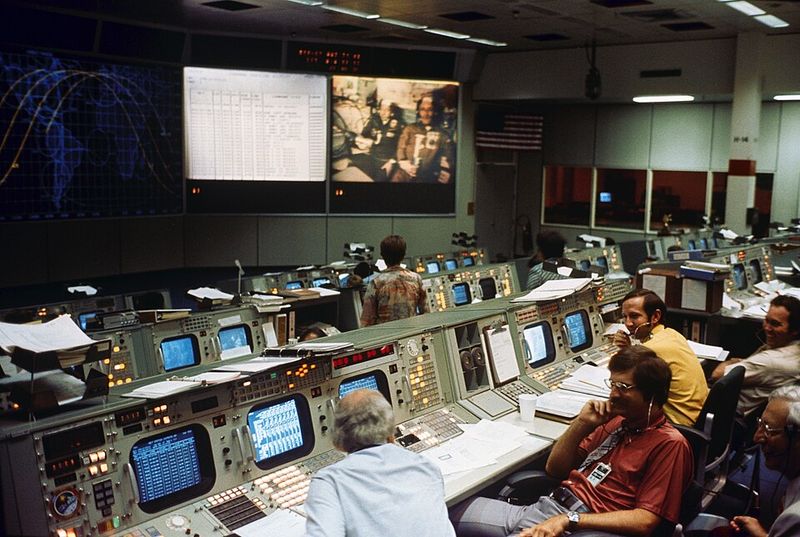
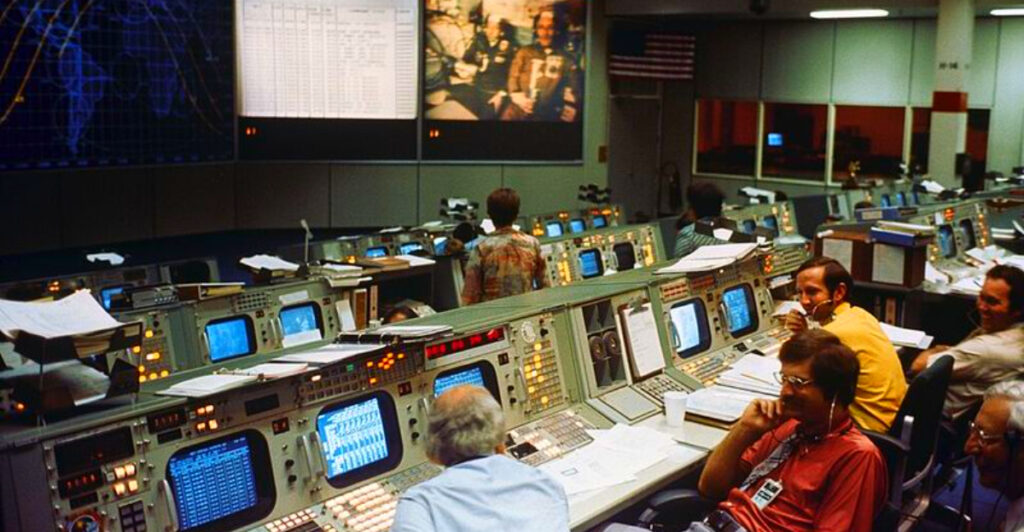
Two spacecraft representing two rival superpowers connected in orbit on July 17, 1975, in a moment that felt more like science fiction than Cold War reality. The Apollo-Soyuz Test Project was the product of years of diplomatic negotiations between the United States and the Soviet Union, formalized in an agreement signed in 1972.
American astronauts Thomas Stafford, Vance Brand, and Deke Slayton launched on July 15. Soviet cosmonauts Alexei Leonov and Valery Kubasov launched aboard Soyuz earlier that same day. The two craft docked successfully, and Stafford and Leonov shook hands through the open connecting hatch, an image that was broadcast on television worldwide.
The crews conducted joint scientific experiments over nearly two days of linked operations and exchanged commemorative gifts between the two nations. The mission also tested compatible docking equipment designed to allow one nation’s spacecraft to rescue the other in an emergency. It was the last American crewed spaceflight until the Space Shuttle program launched six years later.
4. Jimmy Hoffa Disappeared
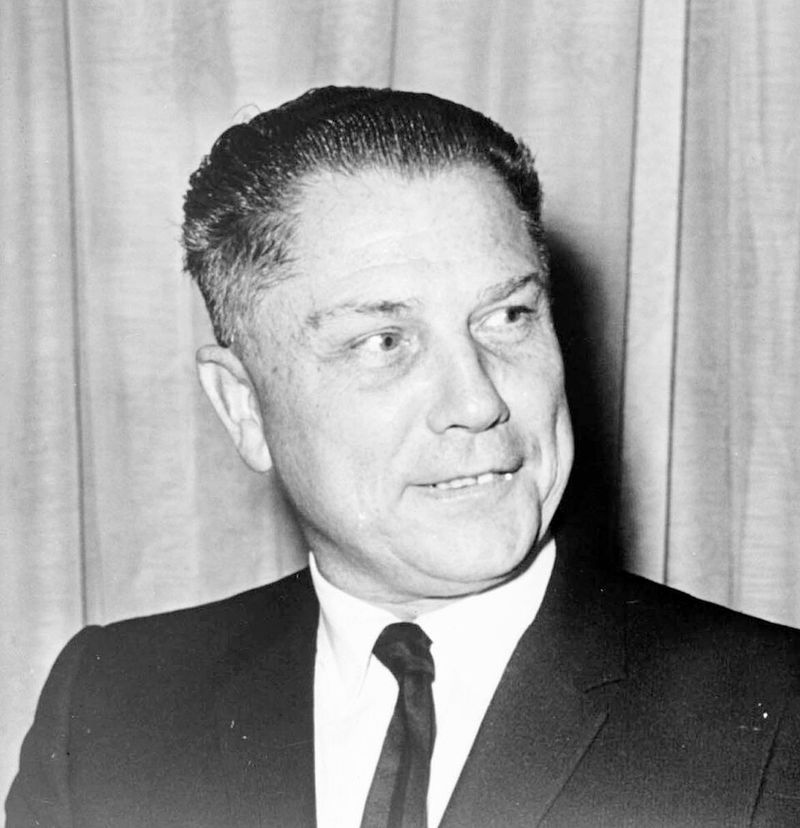
On July 30, 1975, Jimmy Hoffa left his home in Lake Orion, Michigan, and drove to the Machus Red Fox restaurant in Bloomfield Township for what he believed would be a business meeting. He was never seen again. No confirmed physical evidence of what happened to him has ever been produced.
Hoffa had led the International Brotherhood of Teamsters from 1957 to 1971, building it into the largest and most powerful labor union in the United States. His career was marked by both genuine achievements for working truck drivers and persistent federal scrutiny over alleged organized crime connections. He had served prison time for jury tampering and fraud before receiving a presidential pardon in 1971.
Federal investigators pursued dozens of leads over the following decades, periodically excavating sites based on new tips. His legal status was officially changed to “presumed dead” in 1982. The case remains one of the most widely recognized unsolved disappearances in American history, inspiring numerous books, documentaries, and films.
5. The Helsinki Accords Were Signed
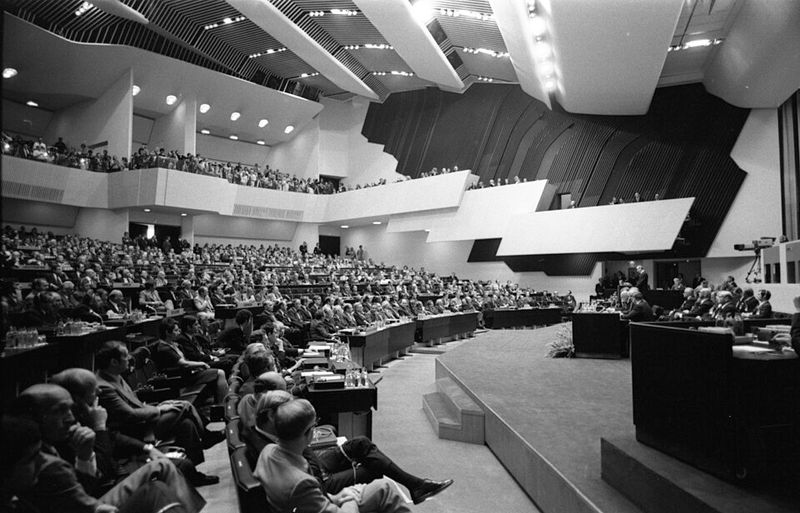
Thirty-five nations gathered in Helsinki, Finland, and on August 1, 1975, they signed the Helsinki Final Act, one of the most consequential diplomatic agreements of the Cold War era. The signatories included the United States, Canada, the Soviet Union, and nearly every European country, with Albania and Andorra as the notable exceptions.
The agreement was organized into four sections, commonly called “baskets.” The first addressed European security and respect for national borders. The second covered economic cooperation, science, and trade. The third basket, which proved the most far-reaching over time, contained commitments on human rights, freedom of movement, and freedom of information.
Communist governments signed on believing the border-recognition provisions legitimized their postwar territorial arrangements. What they underestimated was how the human rights language would be used by dissidents within their own countries. Activists in Poland, Czechoslovakia, East Germany, and elsewhere began citing the Helsinki commitments publicly, building pressure for democratic reform that contributed to major political changes across Eastern Europe in subsequent years.
6. Viking 1 Began Its Journey to Mars
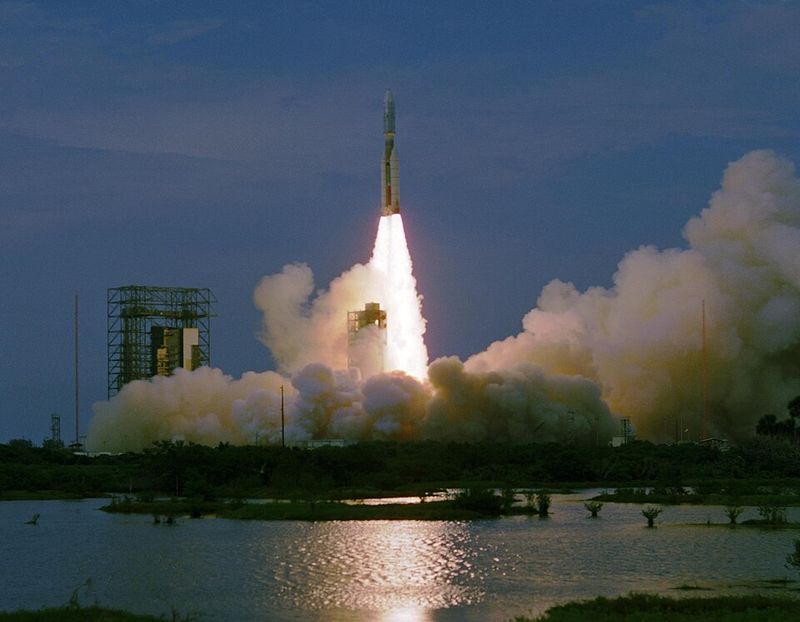
NASA sent its most ambitious planetary mission yet skyward on August 20, 1975, when Viking 1 lifted off from Cape Canaveral aboard a Titan III-Centaur rocket. The spacecraft was composed of two separate components: an orbiter designed to photograph Mars from above and a lander built to touch down on the surface.
The primary scientific goals were substantial. Scientists wanted detailed images of the Martian surface, measurements of the planet’s atmospheric composition, and data on soil chemistry. Most ambitiously, the mission carried biology experiments specifically designed to test for signs of microbial life in the Martian soil.
After an eleven-month journey, Viking 1 entered Mars orbit in June 1976. Its lander successfully touched down on July 20, 1976, in a region called Chryse Planitia, becoming the first American spacecraft to operate successfully on the Martian surface. The images it transmitted back to Earth were the first ever taken from the ground of another planet, fundamentally changing how scientists and the public understood Mars.
7. Born to Run Announced Bruce Springsteen’s Arrival

Bruce Springsteen had released two albums before the summer of 1975, and while critics appreciated them, mainstream success had stayed just out of reach. That changed on August 25, 1975, when Born to Run arrived in record stores after more than a year of painstaking recording sessions in New Jersey and New York.
The album featured a dense, layered sound that drew from classic rock and roll, Phil Spector’s Wall of Sound production approach, and Springsteen’s own storytelling instincts. Tracks like the title song and “Thunder Road” connected with listeners who recognized the characters and situations Springsteen described with such specific detail.
Within weeks of release, Springsteen appeared simultaneously on the covers of both Time and Newsweek magazines, a rare feat for a rock musician. Critics placed the album among the finest of the decade almost immediately. Decades later, Born to Run consistently appears near the top of major lists ranking the greatest albums in American music history, and its influence on rock songwriting remains substantial and widely acknowledged.
8. Scientists Investigated the First Lyme Disease Cases

Something unusual was happening in the small town of Lyme, Connecticut, in the summer of 1975. An abnormally high number of children and adults were developing a form of arthritis that did not match typical patterns, and two local mothers, Polly Murray and Judith Mensch, pushed health officials to take the cluster seriously.
Their persistence prompted a formal investigation led by Yale University researchers Dr. Allan Steere and Dr. Stephen Malawista, working alongside the Connecticut State Department of Health. The cases were concentrated in specific neighborhoods near wooded areas, and many patients recalled a distinctive circular skin rash weeks before joint symptoms appeared. That geographic and seasonal pattern strongly suggested an insect vector.
By 1977, researchers had linked the illness to bites from the black-legged tick, known scientifically as Ixodes scapularis. In 1982, microbiologist Willy Burgdorfer identified the bacterium responsible, which was named Borrelia burgdorferi in his honor. The investigation that began in 1975 gave the medical community its first systematic understanding of what is now the most commonly reported tick-borne illness in the United States.
9. The Banqiao Dam Disaster Struck China
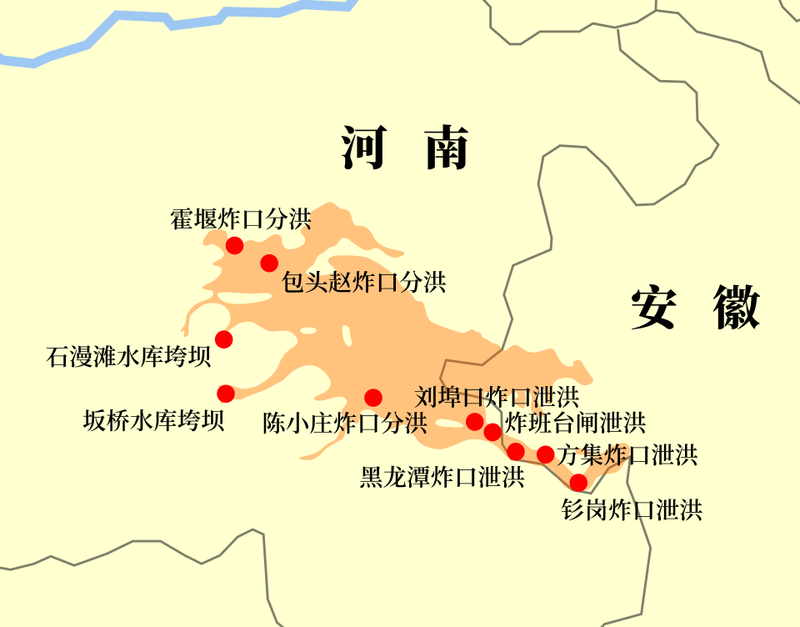
Typhoon Nina made landfall in China in early August 1975 and stalled over Henan Province, dropping an extraordinary volume of rainfall in a very short period. Some weather stations recorded more rain in 24 hours than they would typically receive in an entire year.
The Banqiao Dam on the Ru River was built in the early 1950s with Soviet engineering assistance and was considered one of the more structurally sound dams in the region. Nevertheless, the volume of water flowing into the reservoir far exceeded its design capacity. The dam failed in the early hours of August 8, releasing a massive wall of water downstream. Within hours, 61 additional dams and reservoirs in the region had also failed in a cascading series of structural collapses.
The floodwaters spread across more than a million hectares of farmland and reached depths that submerged entire communities. The absence of effective early warning systems and prepared evacuation plans significantly worsened the scale of displacement and infrastructure damage. The disaster prompted major reforms in Chinese dam safety standards and flood management policy in the years that followed.
10. America Prepared for the Bicentennial
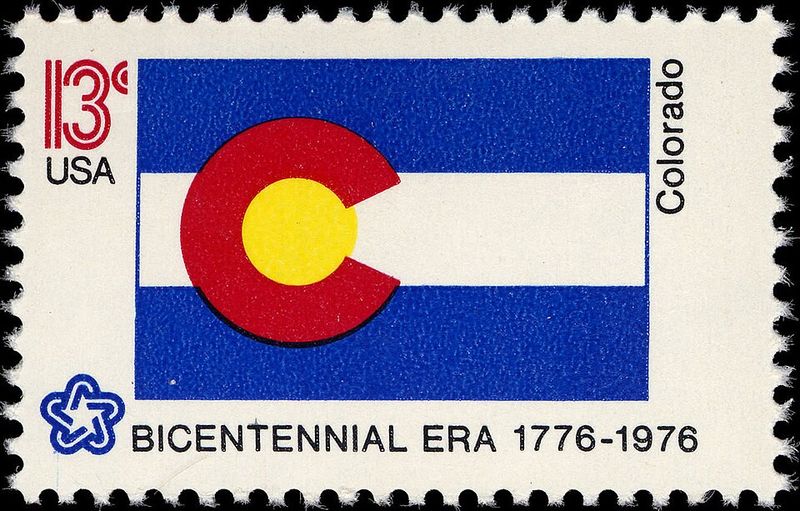
By the summer of 1975, the United States was one year away from its 200th birthday, and communities across the country were well into the process of planning how to mark the occasion. The American Revolution Bicentennial Administration, established by Congress, was coordinating thousands of local, state, and national programs.
Historic preservation projects picked up pace throughout the summer. Communities applied for federal grants to restore colonial-era buildings, create heritage trails, and document local history. Schools developed new curriculum materials focused on the nation’s founding, and public libraries organized exhibitions tied to American history and culture.
The preparations reflected a complicated national mood. The country had recently concluded its involvement in Vietnam and was still processing the political fallout of the Watergate scandal. Organizers worked to frame the bicentennial as a moment of forward-looking national reflection rather than simple self-congratulation. By the time July 4, 1976 arrived, the planning that had intensified during the summer of 1975 had produced one of the largest coordinated public celebrations in American history, drawing international attention and millions of participants.
11. Disco Continued Its Rise Across America

Disco had been building momentum in urban dance clubs since the early 1970s, but the summer of 1975 marked a clear turning point when the genre moved into the mainstream with unmistakable commercial force. Radio stations that had ignored the style began adding disco tracks to regular rotation, and record labels took notice of the sales numbers.
KC and the Sunshine Band released “That’s the Way (I Like It)” that year, and it became one of the defining hits of the season. Van McCoy’s “The Hustle” also climbed the charts in 1975, bringing a specific dance style into living rooms and school gymnasiums across the country. These were not underground club records; they were mainstream pop hits.
Discotheques expanded rapidly in cities large and small, operating as social gathering spaces that attracted diverse crowds. The economic model of the genre, built around 12-inch singles designed for extended dance play, reshaped how record companies produced and distributed music. The commercial infrastructure built during this period made the disco explosion of 1977 and 1978 not a sudden development but the logical outcome of steady groundwork laid in summers like this one.
12. Microsoft Took Its First Steps
Bill Gates was 19 years old and Paul Allen was 22 when they founded their partnership in April 1975 in Albuquerque, New Mexico. The company they named Micro-Soft, combining the words microcomputer and software, had exactly one product to sell during that first summer: a version of the BASIC programming language adapted for the Altair 8800.
The Altair 8800 was a kit computer sold primarily to electronics hobbyists, and it had no software of its own when it launched. Gates and Allen saw that gap as an opportunity. Allen had already demonstrated a working BASIC interpreter to the Altair’s manufacturer, MITS, in March 1975, and the licensing agreement that followed gave Microsoft its first revenue stream.
The decision to license software rather than sell it outright proved to be a defining strategic choice. Through the summer months, Gates focused on refining the BASIC code while Allen managed the business relationship with MITS. Those foundational months established the company’s core approach: write software that runs on other people’s hardware. That model, refined and expanded over the following decade, eventually made Microsoft the most valuable software company in the world.
Share this story