Sacred objects have never lived quietly in their shrines. For centuries, bones, garments, and fragments connected to holy figures have attracted kings, crusaders, rival churches, and ambitious governments alongside the faithful.
Whoever controlled the right relic could draw pilgrims and wealth to a city, claim divine backing for a throne, or outshine a political rival without firing a single arrow. Some of these objects were seized during wars, purchased for staggering sums, or quietly smuggled across borders wrapped in suspicious cargo.
Others became pawns in diplomatic negotiations or symbols that entire nations built their identities around. The 14 stories below reveal something that history textbooks rarely emphasize: sacred and political power have been tangled together for a very long time, and the objects caught in the middle have stories that are far more dramatic than most people expect.
1. The Crown of Thorns
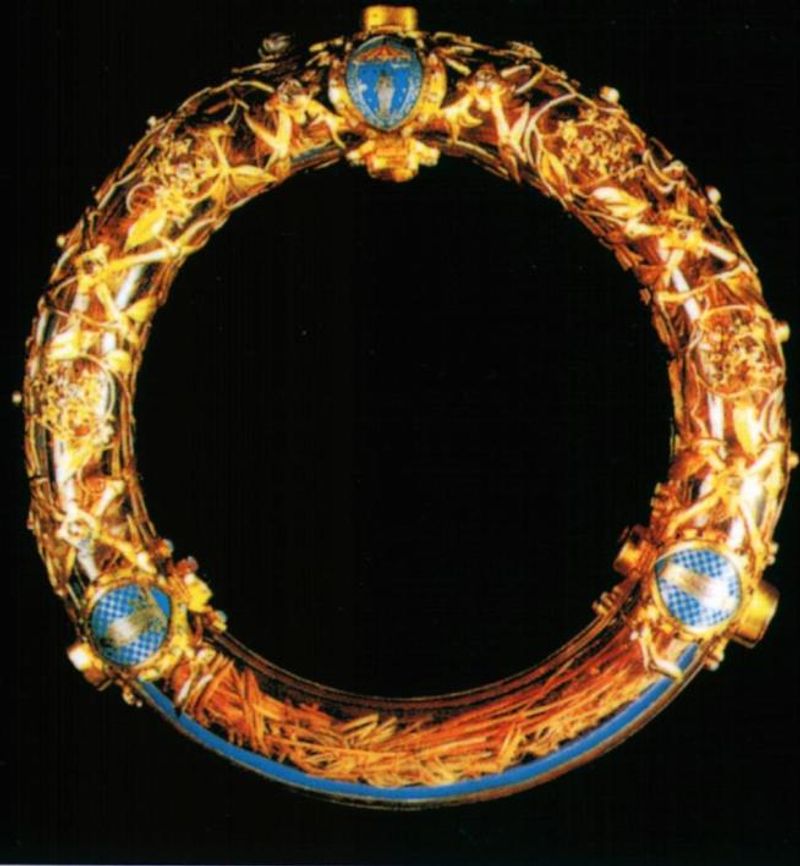
Louis IX of France didn’t just buy a relic in the 13th century. He made one of the most politically calculated purchases in medieval history.
The Crown of Thorns, traditionally identified with the crown placed on Jesus before the Crucifixion, had been kept in Constantinople for centuries. The financially troubled Latin emperor Baldwin II used it as leverage while seeking Western support, and the relic eventually passed to the French crown.
Louis paid an extraordinary sum and then built Sainte-Chapelle in Paris specifically to house it alongside other Passion relics. The chapel wasn’t just a devotional space.
It was a statement that the French monarchy stood closer to Christ than any rival power.
The Crown of Thorns now rests at Notre-Dame Cathedral in Paris, carrying centuries of devotion, diplomacy, and royal ambition in a single object.
2. The Shroud of Turin
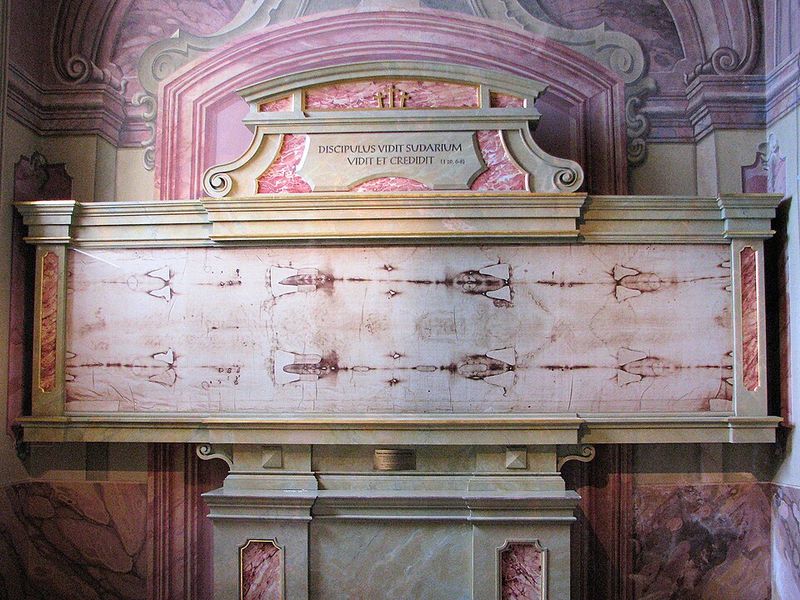
Radiocarbon dating, medieval dynasties, and a disputed burial cloth walk into a history book, and the argument hasn’t ended since 1988.
The Shroud of Turin is a linen cloth bearing a faint front-and-back image of a man with injuries consistent with crucifixion. Many Christians revere it as the burial cloth of Jesus, though its authenticity remains genuinely contested.
The 1988 radiocarbon tests dated the sampled material to between 1260 and 1390, while critics have raised questions about sample contamination and medieval repairs.
Its political journey is equally layered. The shroud first appeared publicly in Lirey, France, around 1355, then passed to the House of Savoy in 1453 before moving to Turin in 1578 as the city became the Savoyard capital.
The House of Savoy later produced the kings who unified Italy, making the shroud a thread connecting dynastic prestige to national history.
3. The True Cross
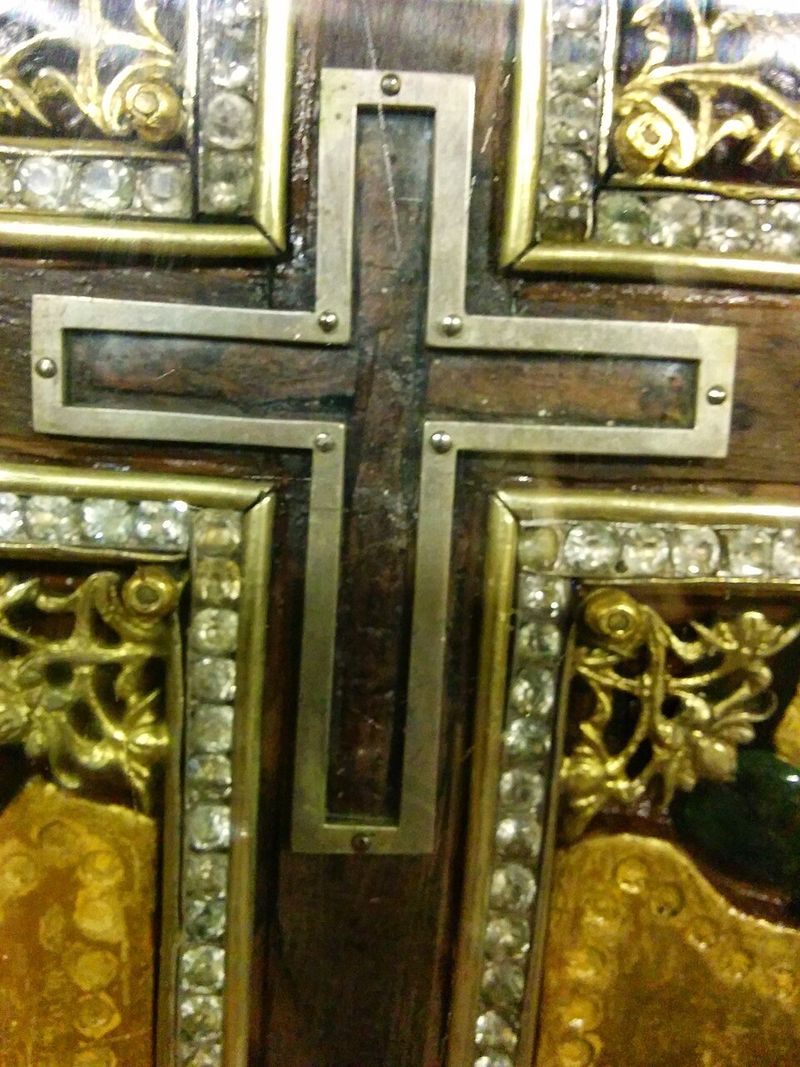
Armies marched behind it, emperors treasured it, and one of the most consequential military defeats in crusader history turned on who held it.
According to Christian tradition, Helena, mother of Emperor Constantine, discovered the True Cross in Jerusalem during the fourth century. Historians Gelasius of Caesarea and Tyrannius Rufinus recorded that she found three crosses believed used at the crucifixion.
Over subsequent centuries, pieces identified as fragments spread across the Christian world, carried by Byzantine emperors, crusader rulers, monasteries, and European elites.
Possessing a fragment signaled closeness to Christianity’s most defining moment and reinforced the authority of whoever controlled it. A major relic of the True Cross accompanied the army of the Crusader Kingdom of Jerusalem into the Battle of Hattin in 1187, where Saladin’s forces won a decisive victory and captured the relic.
That capture handed the sacred and the geopolitical together in a single moment.
4. The Holy Lance
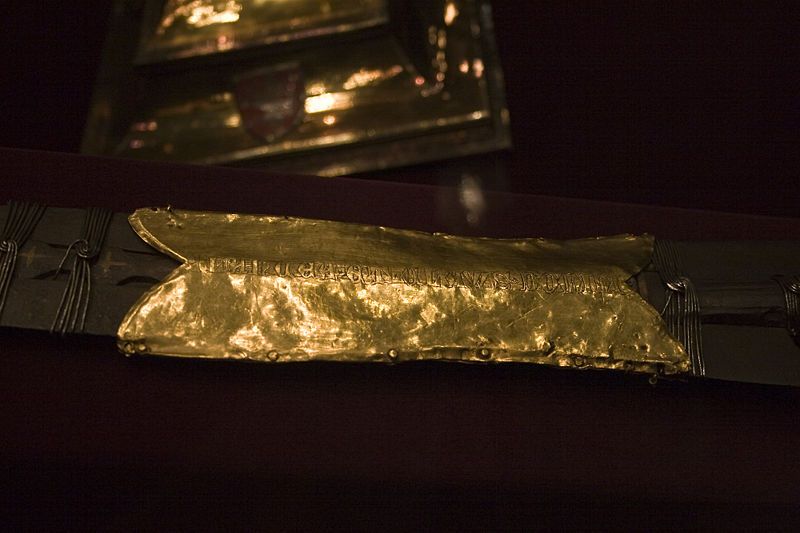
An iron spearhead in Vienna has carried more political weight than most armies, and it didn’t need a single soldier to do it.
Several objects have been identified over the centuries as the Holy Lance, the weapon said to have pierced the side of Jesus. The most historically significant version is preserved among the Imperial Regalia in the Weltliche Schatzkammer at the Hofburg Palace in Vienna.
Medieval rulers of the Holy Roman Empire treated it as central to their coronation regalia, using it to express the idea that imperial authority carried sacred legitimacy. An emperor holding the lance wasn’t just displaying a weapon.
He was presenting his office as divinely connected to Christ’s Passion.
Modern legends, including Trevor Ravenscroft’s 1973 book claiming Hitler sought it for supernatural power, should be treated with caution. The actual medieval political history is striking enough without embellishment.
5. The Relics of the Three Magi
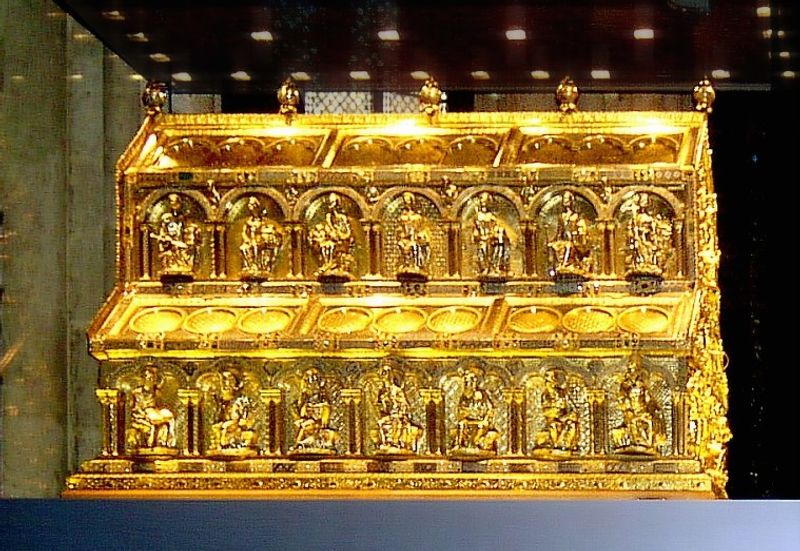
Frederick Barbarossa captured Milan in 1162 and walked away with a prize that would reshape a German city’s identity for the rest of the medieval period.
The relics traditionally identified as the remains of the Three Magi had been kept in Milan after Bishop Eustorgius I brought them there in the fourth century. Barbarossa’s chancellor, Rainald of Dassel, transferred them to Cologne in 1164, a move that transformed the city almost immediately.
Pilgrims began arriving to venerate the supposed remains of the biblical wise men, and the magnificent Shrine of the Three Kings, crafted between 1180 and 1225, was created to house them. Cologne became one of medieval Europe’s most important pilgrimage destinations.
The Magi were kings who had recognized Christ, making their relics especially useful in a political world where rulers constantly needed religious validation. In 1904, a portion of the relics was returned to Milan’s Basilica of Sant’Eustorgio.
6. The Relics of Saint Mark
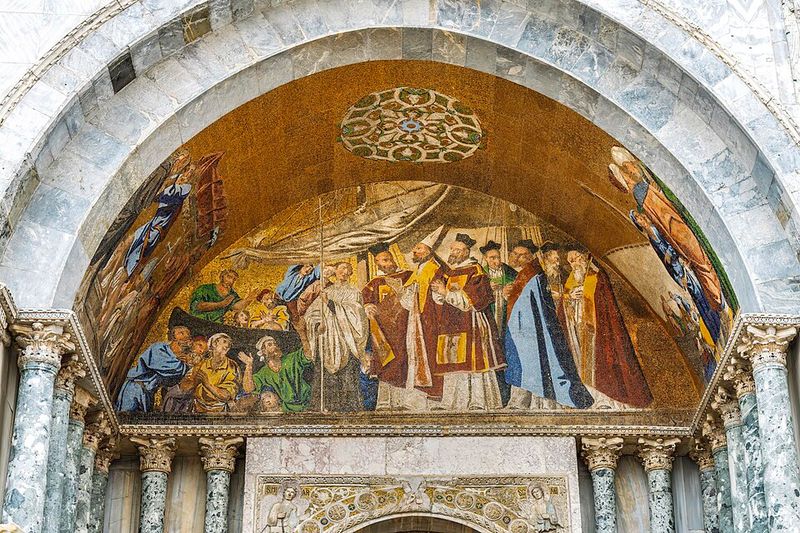
Buono da Malamocco and Rustico da Torcello pulled off one of history’s most audacious relic heists in 828, and Venice built an empire’s worth of identity on top of it.
According to Venetian tradition, the two merchants removed the remains of Saint Mark the Evangelist from Alexandria and transported them home. The famous version of the story claims they hid the relics beneath layers of pork to discourage Muslim customs officials from inspecting the cargo closely.
The political windfall was enormous. Venice gained an apostolic patron whose prestige rivaled Rome and Constantinople.
The winged lion of Saint Mark became the republic’s defining symbol, appearing on flags, coins, buildings, and territories across its maritime domain.
St. Mark’s Basilica, begun in the ninth century with the current structure started in 1063, was built specifically to house the relics. The surrounding Piazza San Marco became the ceremonial and political center of Venetian power for centuries.
7. The Relics of Saint Nicholas
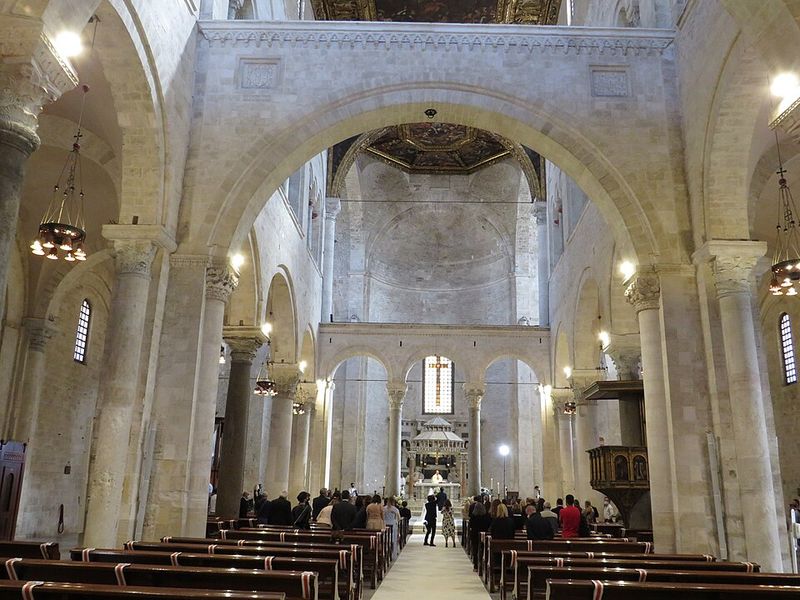
In 1087, sailors from Bari decided that Saint Nicholas deserved better neighbors, and they didn’t ask anyone’s permission before making that call.
Nicholas had been buried at Myra, in what is now Demre, Türkiye. Italian sailors removed most of the remains and brought them to Bari during a period of regional instability, with Myra under pressure from Seljuk expansion.
Bari framed the transfer as a rescue. Others have described it more plainly as a theft.
Either way, the consequences for Bari were dramatic. A basilica was constructed to house the relics, pilgrims began arriving, and the city’s religious standing rose considerably.
Venetians later claimed additional remains from Myra in 1099, creating competing traditions. A 1992 scientific study confirmed that the relics in both Bari and Venice belong to the same skeleton.
The story is a clear illustration of how a saint’s physical remains could redirect pilgrimage routes and reshape a city’s economic and cultural standing.
8. The Holy Robe of Trier
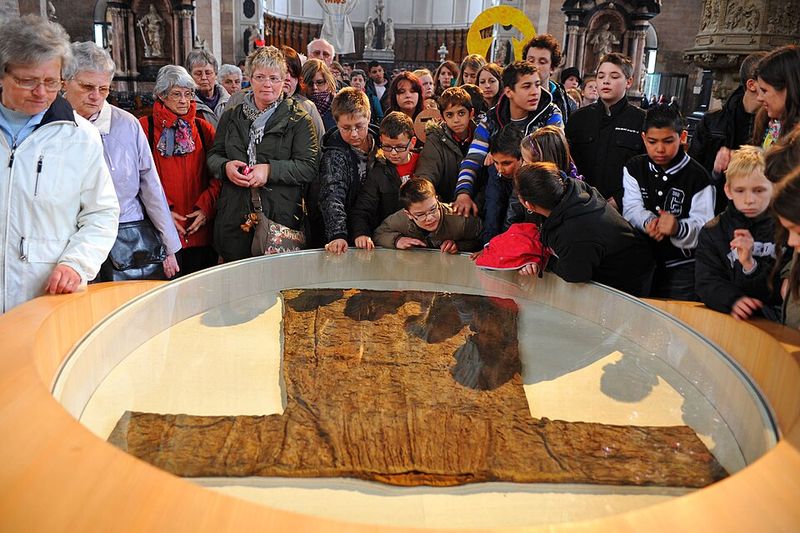
A single exhibition in 1844 turned a German cathedral’s most famous garment into the center of a political and religious controversy that neither side had fully anticipated.
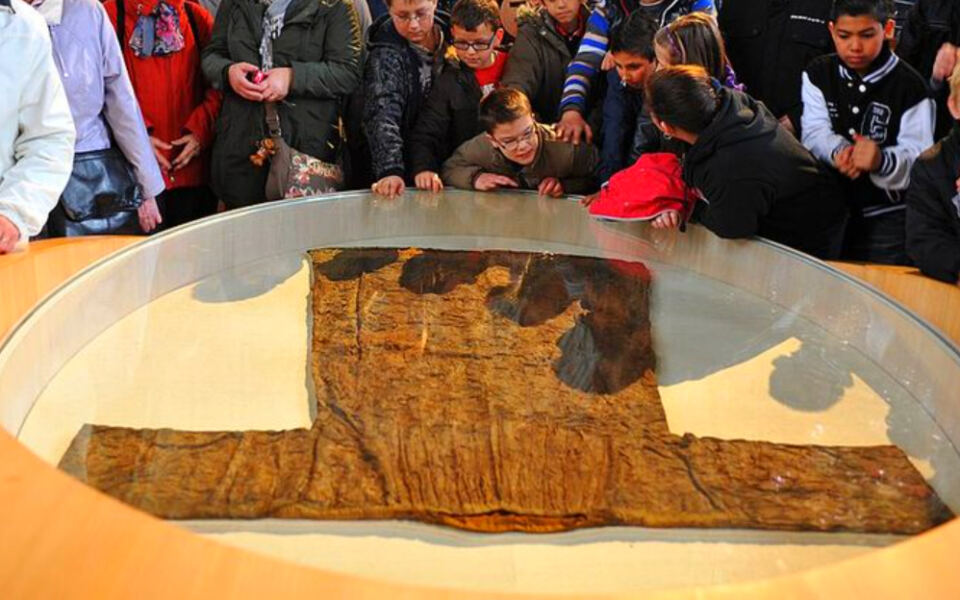
Trier Cathedral preserves a garment traditionally believed to be the seamless robe worn by Jesus at the Crucifixion. According to tradition, Helena brought it to Trier in the fourth century, though its securely documented history begins only in 1196, when Archbishop Johann I consecrated an altar containing it.
Its authenticity cannot be confirmed, as the surviving original sections are not suitable for carbon dating.
The 1844 public exhibition drew up to a million pilgrims, but it also sparked sharp criticism during a period of political tension between Catholics and Protestant authorities in the German states.
That criticism helped fuel the German Catholic movement, which challenged aspects of Roman Catholic institutional authority. A devotional display had become a flashpoint in a much larger argument about religious freedom and political power.
9. The Relics of Saint James at Santiago de Compostela
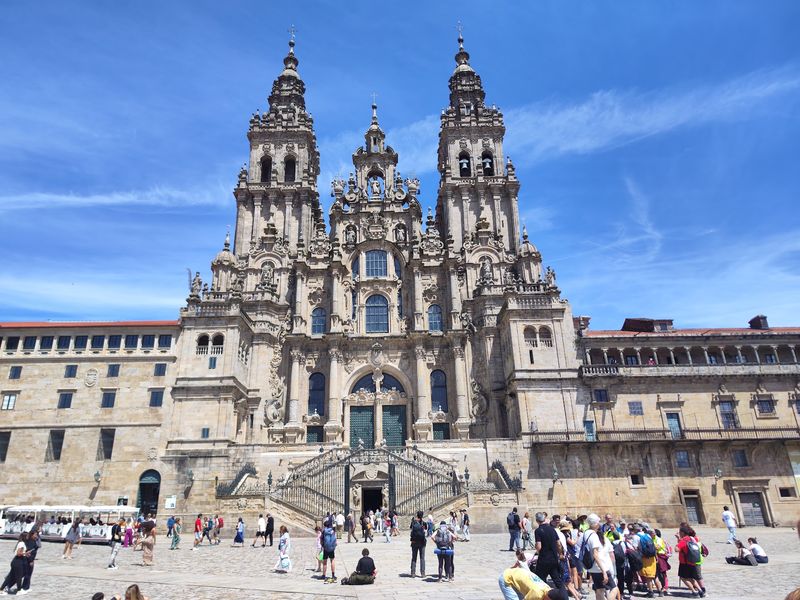
A hermit named Pelayo reportedly saw mysterious lights over a field in Galicia in the early ninth century, and that moment eventually produced one of the most politically charged pilgrimage destinations in Christian history.
The remains discovered at the site were identified as those of Saint James the Greater, and a shrine developed that became Santiago de Compostela. The discovery coincided with a critical period when Christian kingdoms in northern Iberia were pushing southward against Muslim-controlled territories.
Saint James gradually acquired a second identity alongside his role as a pilgrim’s patron. The image of Santiago Matamoros, Saint James the Moor-slayer, depicted the apostle miraculously intervening in battles during the Reconquista.
Historians treat the associated Battle of Clavijo as largely legendary, but the image became a powerful ideological symbol in Spanish national identity.
The Camino de Santiago remains a living spiritual tradition today, drawing pilgrims from around the world who walk for reasons both religious and personal.
10. The Relics of Saint Stephen of Hungary
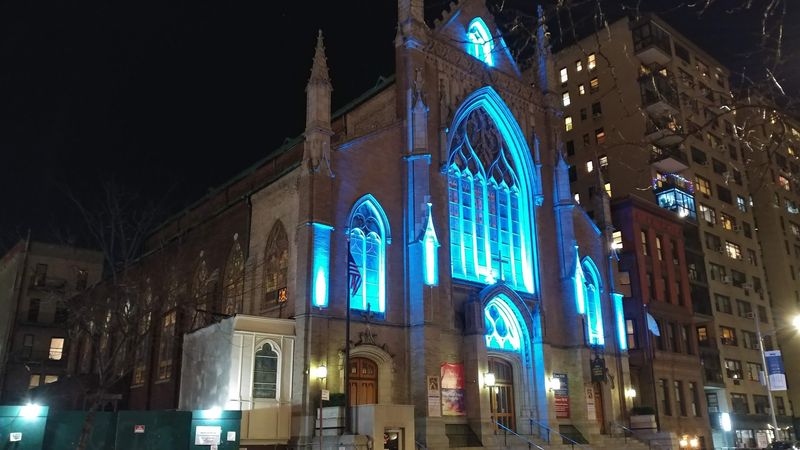
Hungary has a national holiday, a founding myth, and a mummified hand, and all three are deeply connected to the same person.
The Holy Right is the preserved right hand traditionally identified as that of Stephen I, Hungary’s first Christian king and a ruler later canonized as a saint. Stephen was crowned on Christmas Day in the year 1000, marking Hungary’s formal entry into the family of European Christian nations.
His relic carries both sacred and national weight. Over centuries it was moved for protection during the Tartar invasions of the 13th century and removed to Austria during the upheavals of World War II.
Since 1989, an annual national procession on August 20th has carried the Holy Right through Budapest, connecting the ceremony directly to celebrations of Hungarian statehood.
Few objects manage to be simultaneously a religious relic, a royal artifact, and a national symbol. The Holy Right does all three without contradiction, which says a great deal about how history layers meaning onto objects.
11. The Buddha’s Tooth Relic in Sri Lanka
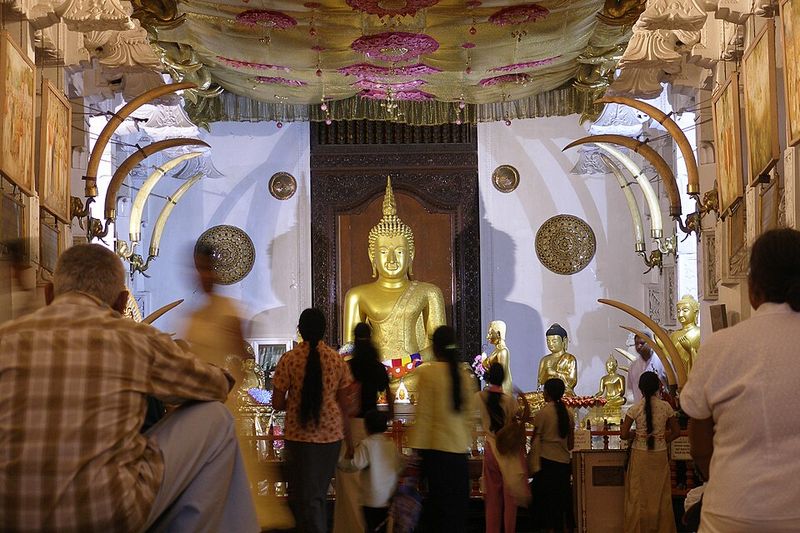
An ancient Sri Lankan belief held that whoever controlled a particular tooth controlled the island itself, which made one relic considerably more valuable than most crowns.
The Temple of the Sacred Tooth Relic in Kandy houses what Buddhists traditionally believe to be the left upper canine tooth of the Buddha. Historical chronicles record that Princess Hemamali and her husband Prince Dantha smuggled the relic from India to Anuradhapura in the fourth century CE during a period of political turmoil.
As dynasties rose and fell across Sri Lanka, the relic traveled with the centers of power, moving through Anuradhapura, Polonnaruwa, Dambadeniya, and other capitals before settling in Kandy in the late 16th century. Kings built temples around it and organized ceremonies to reinforce its connection to legitimate rule.
The Sri Dalada Maligawa is today a UNESCO World Heritage Site and one of Buddhism’s most important pilgrimage destinations. Its history is a clear reminder that relic politics was never exclusively a European or Christian phenomenon.
12. The Relics of Saint Wenceslas
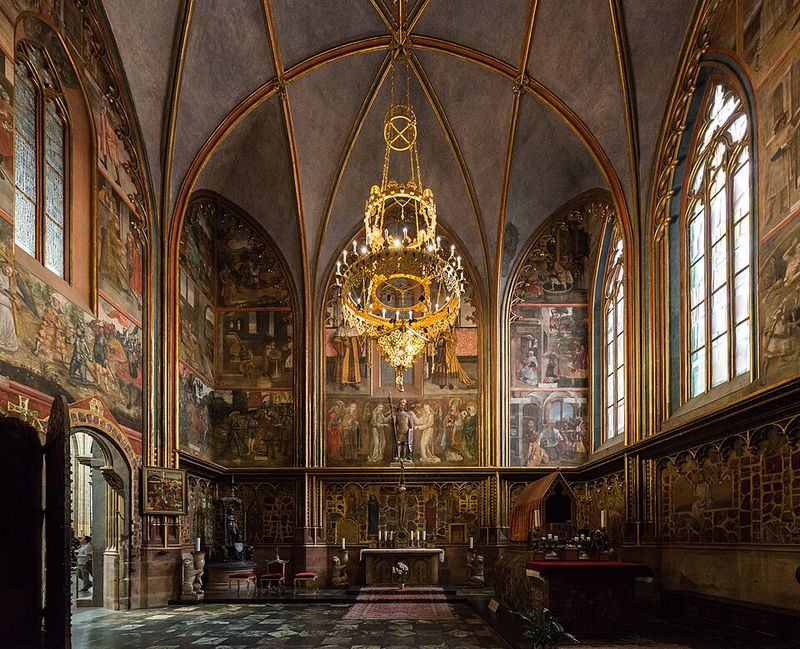
Most people know Wenceslas from a Christmas carol about a king looking out on a snowy feast day. Czech historians know him as the political foundation of a nation.
Wenceslas served as Duke of Bohemia from 921 until his death, likely in 929 or 935, killed during a power struggle with his younger brother Boleslav. After his death, he developed into a saintly symbol of legitimate Czech rulership, with his remains housed in the Saint Wenceslas Chapel at St. Vitus Cathedral in Prague.
Charles IV reinforced that connection in the 14th century by commissioning the Crown of Saint Wenceslas between 1346 and 1347. He dedicated the crown to the saint rather than to any individual monarch, meaning every subsequent Bohemian king wore it as a symbolic vassal of Wenceslas.
His feast day, September 28, is now celebrated as the Day of Czech Statehood. A duke from the 10th century became the anchor of a modern national identity, which is a remarkable political afterlife for anyone.
13. The Relics of Joan of Arc
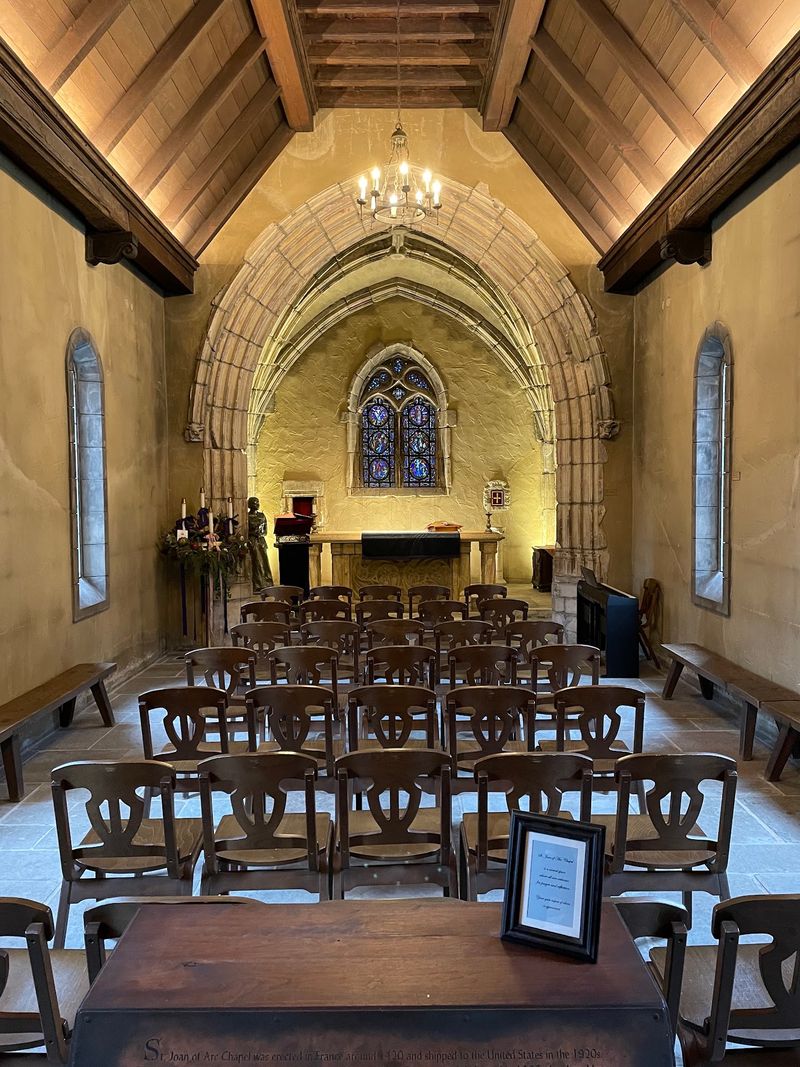
A jar discovered in a Paris pharmacy attic in 1867 was claimed to contain remains from Joan of Arc’s execution in Rouen. Science had other ideas.
Joan inspired French forces during the Hundred Years’ War, most notably lifting the siege of Orleans in 1429. Captured by Burgundian forces in 1430 and tried by a pro-English court, she was burned at the stake in Rouen on May 30, 1431, at the age of 19.
A nullification trial authorized by Pope Callixtus III declared her innocent on July 7, 1456, and the Catholic Church canonized her on May 16, 1920.
The Chinon remains, long presented as connected to her execution, were examined scientifically in 2007. Researchers found a charred human rib, a cat’s thigh bone, and chemical evidence of Egyptian embalming materials.
The collection dated to between the third and sixth centuries BC.
That result is almost more revealing than a genuine relic would have been. Joan’s symbolic power is so immense that demand for physical connections to her has persisted across centuries, regardless of what the evidence actually shows.
14. The Crown of Saint Stephen
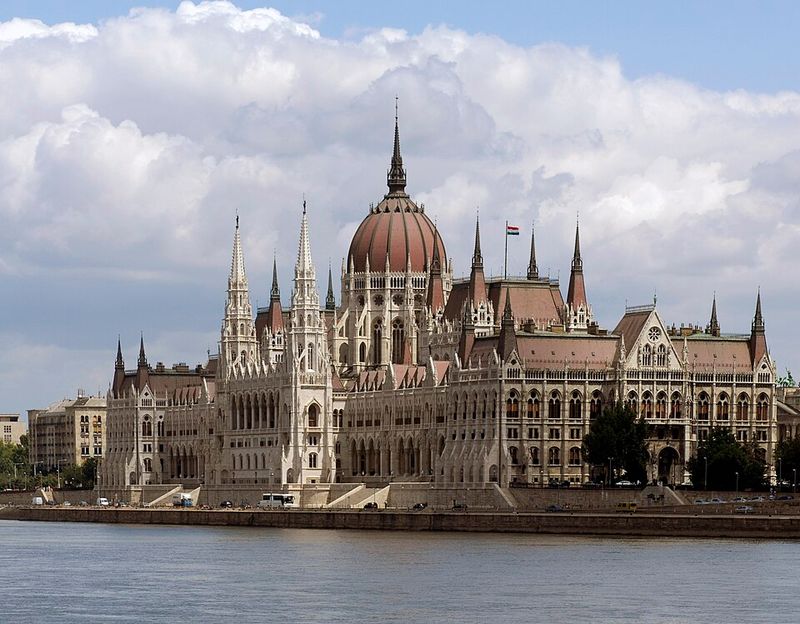
Hungary’s Holy Crown spent part of the Cold War stored at Fort Knox, Kentucky, which is either a remarkable footnote or the most Hungarian sentence ever written.
Traditionally associated with Saint Stephen, crowned around the year 1000 as Hungary’s first Christian king, the Holy Crown became far more than royal jewelry over the following centuries. Hungarian political thought developed what historians call the Doctrine of the Holy Crown, a concept treating the crown itself as a legal entity representing the Hungarian state, superior to any individual monarch.
That doctrine meant disputes over physical possession of the crown became disputes over legitimate authority. The crown was hidden, stolen, recovered, and guarded through repeated upheavals.
At the end of World War II, the Hungarian Crown Guard surrendered it to American forces in Austria to keep it out of Soviet hands. It was stored at Fort Knox until President Jimmy Carter authorized its return to Hungary on January 6, 1978.
Today it is displayed in the central Domed Hall of the Hungarian Parliament Building in Budapest, still carrying the weight of a thousand years of political meaning.
Share this story