History loves a clean story. A ship sinks and starts a war.
A crowd storms a prison and launches a revolution. A scientist drops objects from a tower and changes physics forever.
The problem is that the tidy version is rarely the full version. Some of the most famous turning points in history were exaggerated after the fact, deliberately shaped to serve a political purpose, or transformed into legends that quietly replaced what actually happened.
The real events were messier, more complicated, and honestly, far more interesting than the simplified versions taught in classrooms. A quotation gets invented.
A chaotic street brawl becomes a massacre. A press conference blunder reshapes a continent overnight.
Each of the 14 moments below changed history in a real and significant way, but the reasons behind them, and the stories told about them afterward, are not quite what most people believe.
1. The Storming of the Bastille Freed Very Few Prisoners
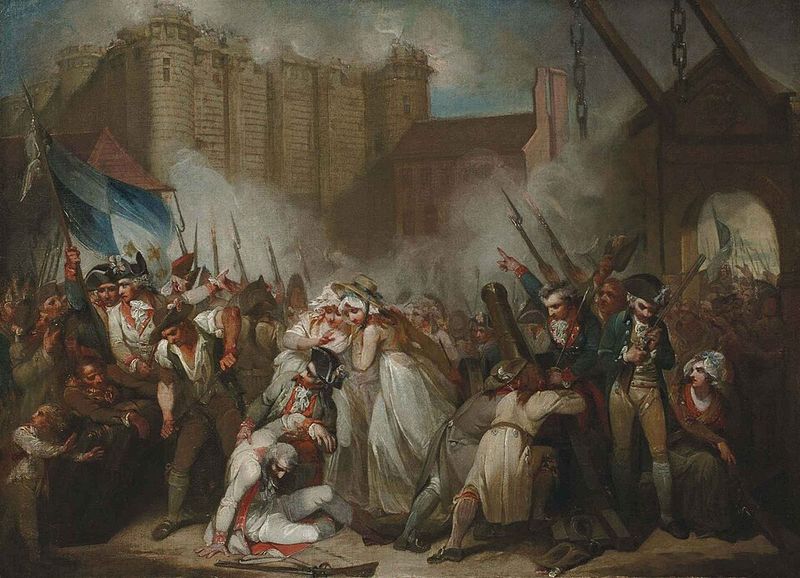
Seven. That is the number of prisoners found inside the Bastille when revolutionary crowds captured the famous fortress on July 14, 1789.
Four were forgers, two had mental health conditions, and one was a count whose own family had requested his imprisonment.
The crowds were not primarily there to liberate political prisoners. Their immediate goal was to seize weapons and gunpowder stored inside the thick stone walls, supplies they urgently needed as tensions with royal forces escalated across Paris.
None of that makes the event unimportant. Quite the opposite.
The fall of the Bastille sent a powerful message that ordinary Parisians could challenge and defeat royal authority. Its significance was political and symbolic rather than a dramatic prison liberation, yet France still celebrates July 14 every year as its national holiday, honoring a moment that contained far fewer captives than the legend suggests.
2. The Boston Massacre Was More Chaotic Than the Famous Image Suggests
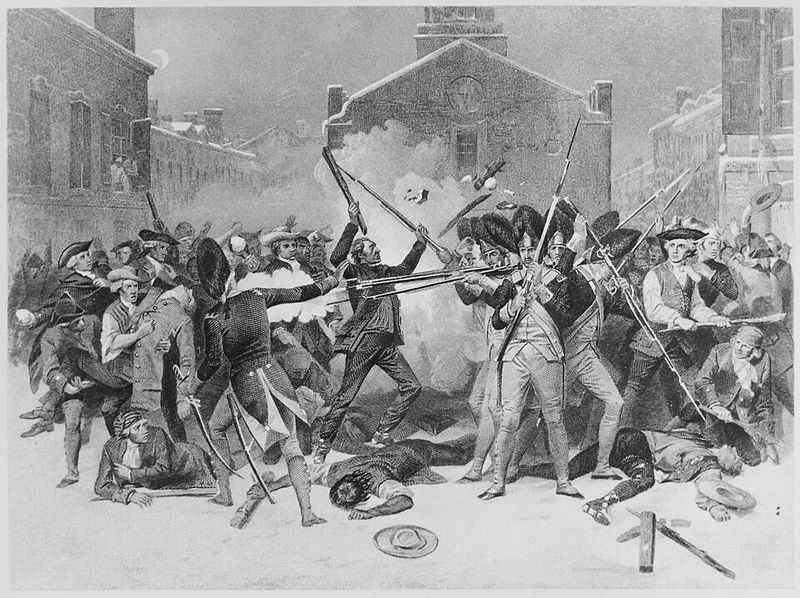
Paul Revere’s engraving of the Boston Massacre is a masterpiece of political messaging. It shows British soldiers standing in a neat line, deliberately firing into a helpless crowd, and it worked brilliantly as propaganda for the Patriot cause.
The actual confrontation on March 5, 1770 looked nothing like that tidy image. A hostile crowd of more than fifty people surrounded a small group of British soldiers, hurling insults, chunks of ice, and stones.
Tensions escalated rapidly until shots were fired and five colonists were killed.
What happened next reveals even more. John Adams, a leading revolutionary and future president, agreed to defend the soldiers in court.
Most were acquitted. Two were convicted of manslaughter rather than murder.
The word “massacre” and Revere’s iconic image transformed a chaotic street confrontation into a carefully constructed argument against British rule that proved far more powerful than any courtroom verdict.
3. Marie Antoinette Almost Certainly Never Said Let Them Eat Cake
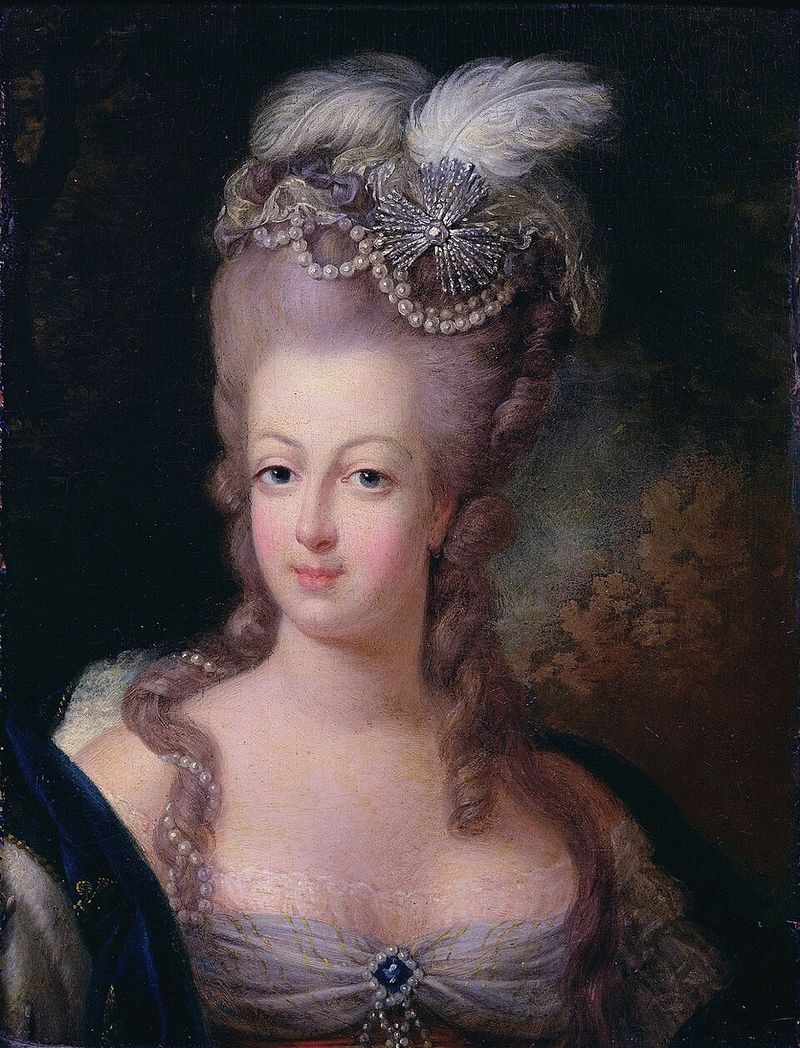
Few quotations have done more reputational damage than four words: “Let them eat cake.” The line perfectly captures an image of royal cluelessness so complete that a queen supposedly responded to news of starving peasants by suggesting they switch to pastry.
There is one significant problem with this story. There is no reliable evidence Marie Antoinette ever said it.
A version of the sentiment appeared in Jean-Jacques Rousseau’s Confessions, written around 1765, when Marie Antoinette was approximately nine years old and still living in Austria, not yet queen of France.
The quotation was attached to her later because it fit the image of extravagant, indifferent royalty that revolutionary France wanted to project. Marie Antoinette certainly lived an extraordinarily privileged life, but history invented a quotation to prove a point it could have made without one.
The line endures because a memorable story almost always outlasts the evidence against it.
4. Napoleon’s Retreat From Russia Was Not Defeated by Winter Alone
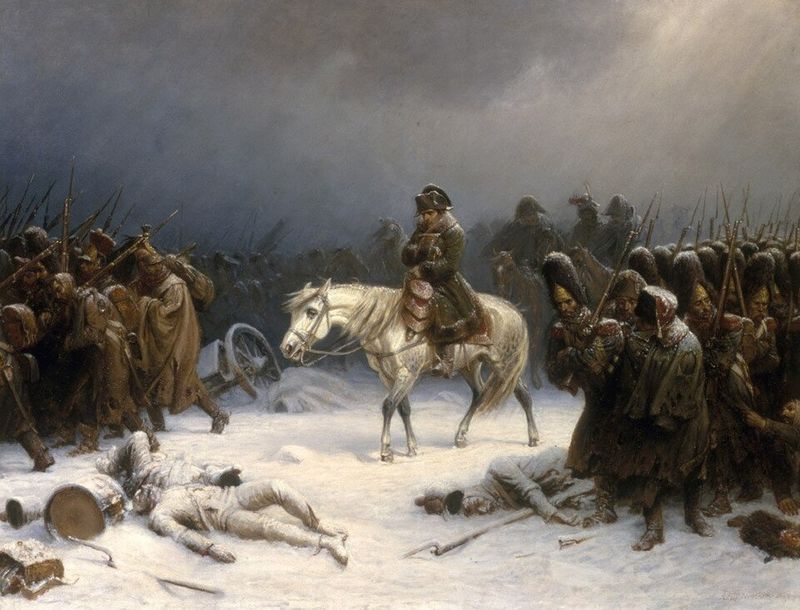
General Winter gets a lot of credit for destroying Napoleon’s army in Russia, and the freezing temperatures were genuinely catastrophic. But blaming the cold alone lets a much more complicated disaster off the hook.
Napoleon invaded Russia in June 1812, and the problems started almost immediately. Vast distances, poor roads, inadequate food supplies, disease, desertion, and constant skirmishing with Russian forces steadily eroded the Grande Armee long before temperatures dropped to their worst.
Russian commanders withdrew strategically, denying Napoleon the decisive victory he needed and leaving scorched earth behind them.
Even capturing Moscow failed to deliver the political surrender Napoleon expected. By the time the French began their retreat, the army was already severely weakened.
Winter then transformed a serious military failure into a full catastrophe. The cold was devastating, but it finished off an army that had been unraveling for months, not a healthy force that simply met bad weather.
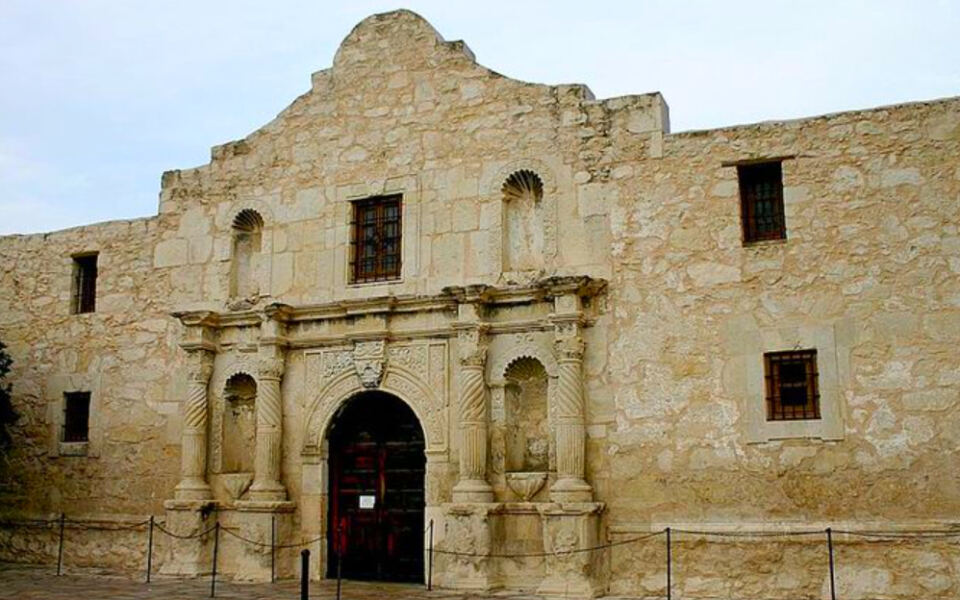
5. The Alamo Was Not Simply Americans Fighting Mexico for Freedom
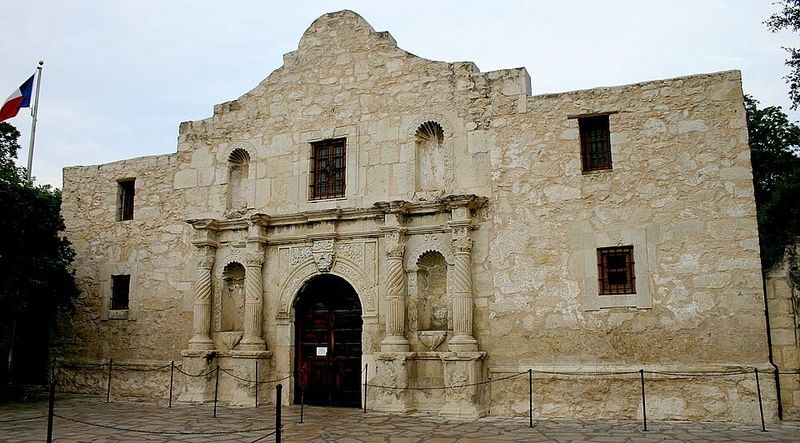
The Alamo is one of America’s most powerful legends, built around a small group of outnumbered defenders making a final stand against an overwhelming army. Their courage during the siege was genuine and their resolve was extraordinary.
But the political world surrounding that battle was far more complicated than the legend typically admits. Texas was part of Mexico at the time, and many settlers had arrived from the United States bringing their own interests and disputes with them.
The conflict involved immigration policy, political power, cultural tensions, and Mexican moves toward centralized government.
Slavery was also a central part of the story. Mexico had moved toward abolishing slavery, while many Anglo-American settlers in Texas owned enslaved people and were determined to protect that institution.
Describing the Alamo as a straightforward battle for freedom raises an important and uncomfortable question: freedom for whom, exactly, and built on what kind of society?
6. The California Gold Rush Did Not Make Most Prospectors Rich
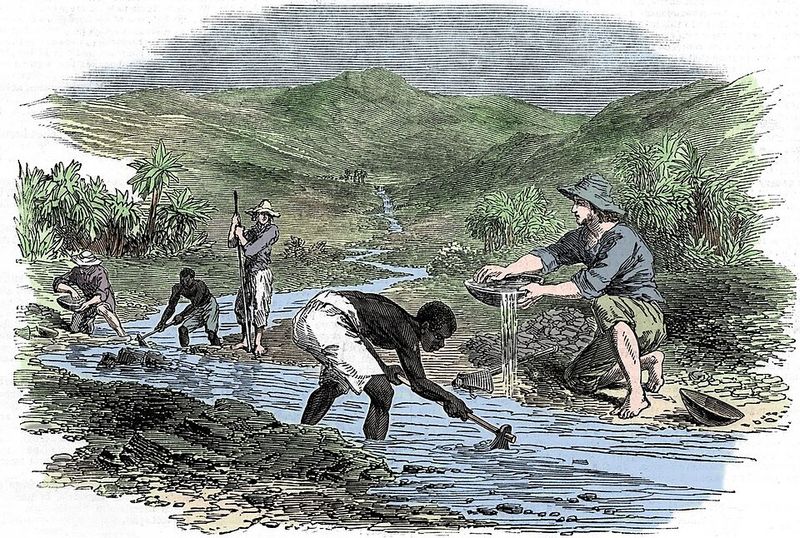
Gold fever is a powerful thing. When news spread about the discovery at Sutter’s Mill in 1848, hundreds of thousands of people abandoned their ordinary lives and headed to California convinced that fortune was waiting in the streambeds.
A small minority did strike it rich. The vast majority did not.
Surface deposits that were easy to access disappeared quickly, and mining became grueling, uncertain, and expensive work. Many prospectors spent heavily on equipment, transportation, food, and lodging only to come away with very little to show for it.
The people who made the most reliable fortunes were often not holding picks and pans at all. Merchants, property owners, transportation operators, and entrepreneurs who sold goods and services to the enormous influx of miners frequently profited far more consistently than the prospectors themselves.
The Gold Rush transformed California permanently, but for countless individuals who made the journey, the promised fortune stayed just out of reach.
7. The Sinking of the Lusitania Did Not Immediately Bring America Into World War I
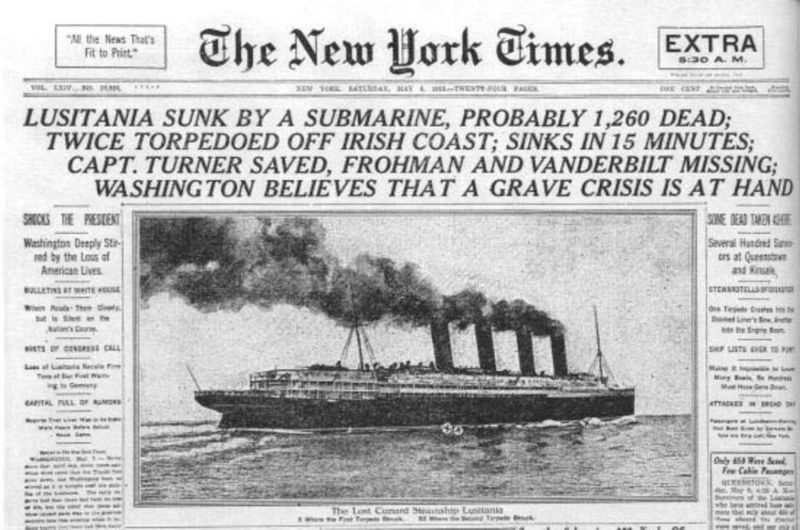
The chain of events sounds simple: Germany sinks a passenger liner carrying Americans, outrage erupts across the United States, and America enters World War I. Tidy, logical, and almost entirely wrong in its timing.
A German U-boat torpedoed the British liner Lusitania on May 7, 1915, and nearly 1,200 people died, including more than 100 Americans. Public anger in the United States was enormous and Germany’s reputation suffered badly.
But the United States did not declare war.
Almost two full years passed before America entered the conflict in April 1917. By then, Germany had resumed unrestricted submarine warfare threatening American shipping, and the Zimmermann Telegram had revealed a German proposal encouraging Mexico to ally against the United States.
The Lusitania was a critical turning point in American public opinion, shifting how people felt about the war. It was not, however, the immediate trigger that popular memory often makes it out to be.
8. The October Revolution Did Not Look Like the Epic Scenes Created Later
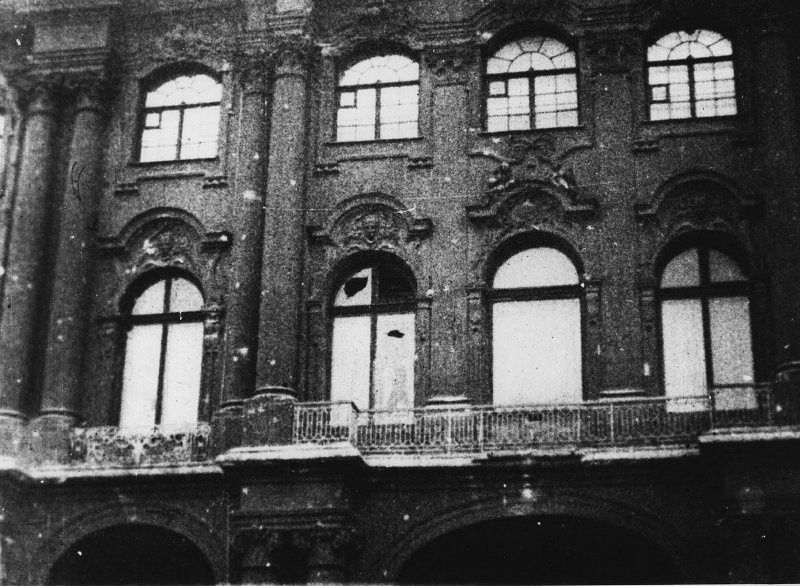
Soviet filmmakers were very good at their jobs. Sergei Eisenstein’s 1927 film October gave the world its defining images of the Bolshevik seizure of power: enormous revolutionary crowds surging dramatically toward the Winter Palace in a heroic, cinematic assault.
The actual events of November 1917 were considerably less spectacular. Bolshevik forces methodically occupied key locations across Petrograd, including bridges, telegraph offices, and train stations.
When they finally moved on the Winter Palace, where the Provisional Government was based, resistance was limited. The confrontation was nothing close to the epic battle that later representations suggested.
The revolution’s consequences were enormous, contributing to years of civil conflict and eventually producing the Soviet Union. But one of history’s most recognizable revolutionary images owes a significant portion of its drama to artistic and political decisions made years after the fact, not to what actually unfolded on those Petrograd streets in 1917.
9. The Stock Market Crash Did Not Cause the Great Depression by Itself
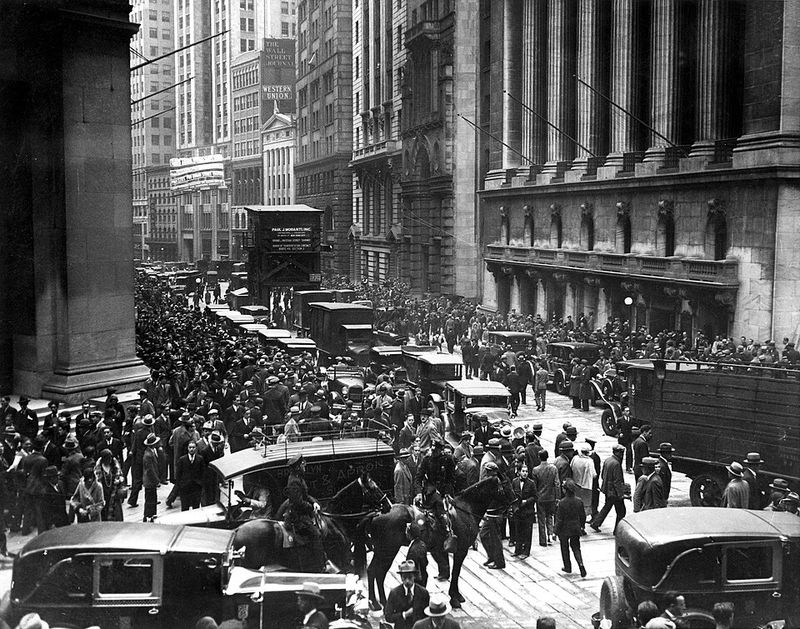
October 1929 has become the default starting point for any story about the Great Depression, and the images of frantic traders and collapsing stock prices make it an obvious dramatic opening. But a decade-long economic catastrophe that spread across the entire world cannot be explained by a few terrible days on Wall Street.
The American economy already had serious structural problems before the crash. Wealth was unevenly distributed, farmers had struggled through most of the 1920s, consumer debt had expanded, and the banking system was poorly regulated and vulnerable to shocks.
After the crash, widespread bank failures destroyed savings and reduced lending. Consumer spending collapsed.
International trade contracted as governments raised protective trade barriers. Policy decisions at multiple levels helped deepen and extend the downturn.
The stock market crash was unquestionably important, but it was one piece of a far larger breakdown, not a single cause that explains everything that followed.
10. Rosa Parks Was Not Simply a Tired Woman Who Spontaneously Refused to Move
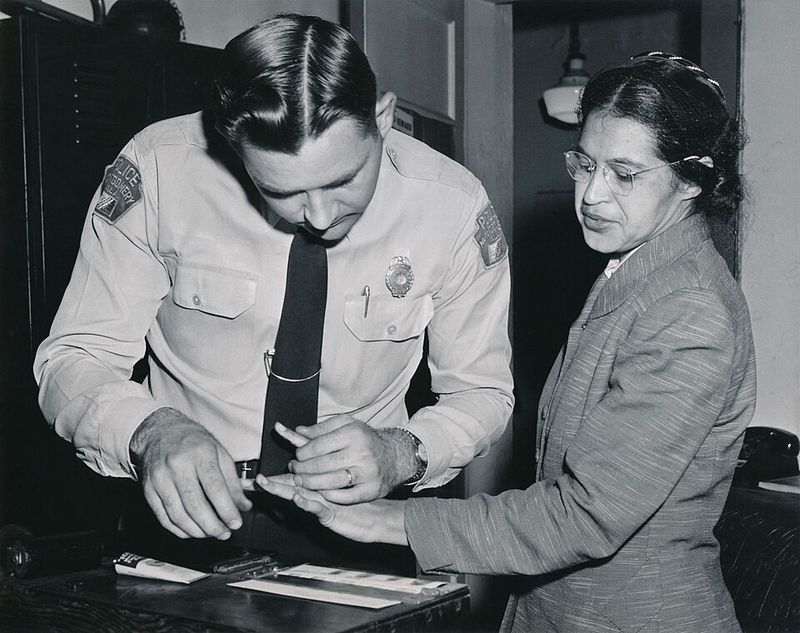
The simplified version of Rosa Parks’ story is appealing in its neatness: an exhausted woman, tired after a long workday, decides she simply cannot bring herself to give up her bus seat one more time. Spontaneous, human, and powerful.
The fuller picture is even more impressive. Parks had been involved in civil rights work for years before December 1, 1955.
She served as secretary of the Montgomery chapter of the NAACP and had previously investigated racial injustice and participated in organized efforts challenging segregation. Other Black women, including Claudette Colvin earlier that same year, had also resisted segregated seating on Montgomery buses.
What made Parks’ case uniquely consequential was the organized response that followed. Activists quickly built the Montgomery Bus Boycott into a sustained campaign lasting more than a year, propelling Martin Luther King Jr. into national prominence.
Parks later explained that her exhaustion was not physical. She was tired of giving in.
11. The Cuban Missile Crisis Was Not Solved Simply Because Khrushchev Backed Down
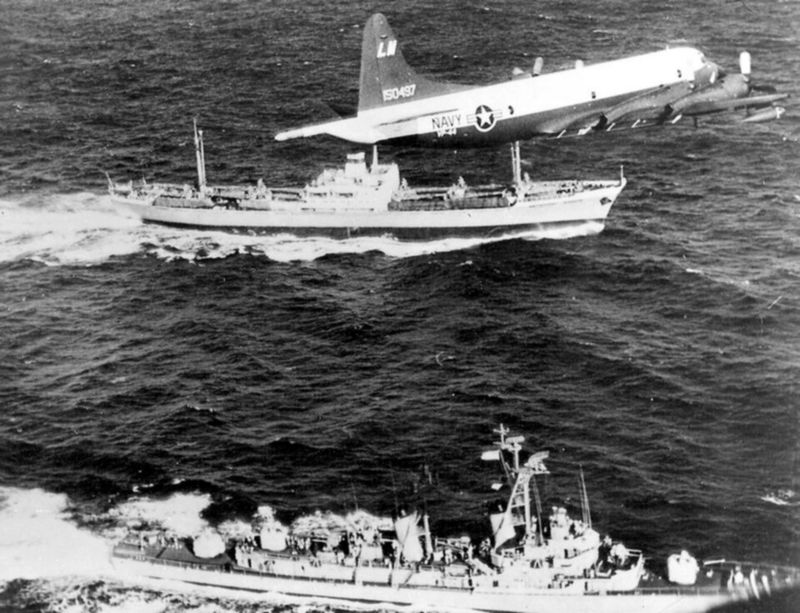
The standard American version of the Cuban Missile Crisis has a satisfying shape to it. Kennedy stands firm, Khrushchev blinks, the Soviet missiles leave Cuba, and the United States wins the most dangerous confrontation of the Cold War.
Clean, decisive, and only partially accurate.
The resolution involved a crucial compromise that was deliberately kept out of public view at the time. The United States publicly pledged not to invade Cuba.
Privately, the Kennedy administration also agreed to remove American Jupiter nuclear missiles from Turkey, though officials insisted this not appear as a direct public trade for Soviet concessions.
Those missiles in Turkey were already considered increasingly obsolete, but their removal mattered significantly to Moscow. Careful secrecy allowed both governments to manage the political fallout of compromise.
Kennedy could appear to have forced a Soviet retreat, while Khrushchev could point to concessions most of the world could not see. Both sides stepped back from the edge together.
12. The Gulf of Tonkin Incident Was Far Murkier Than Americans Were Initially Told
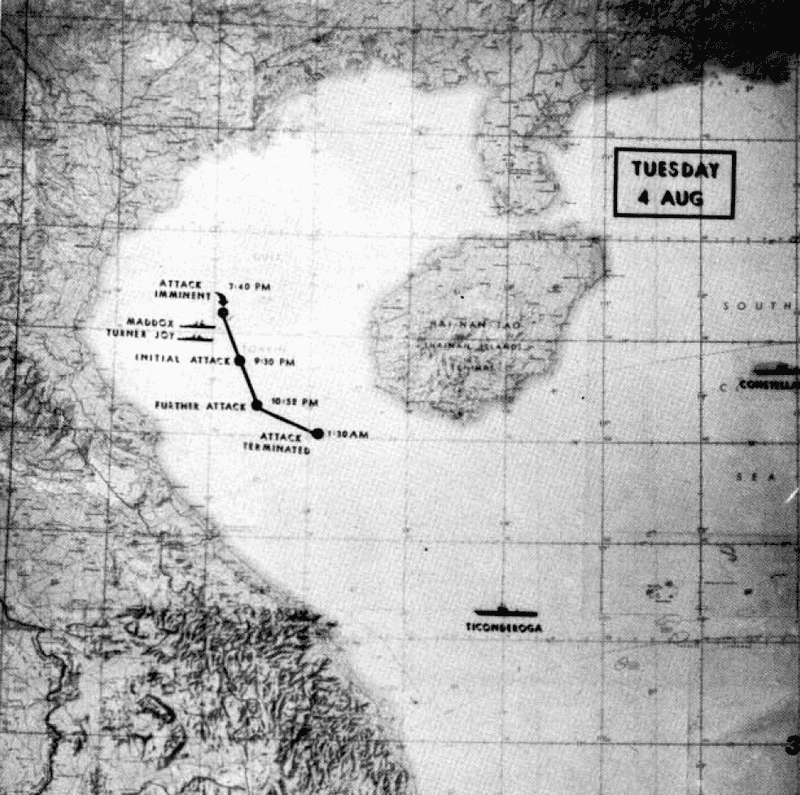
A confused night at sea in August 1964 helped set the course for years of American military involvement in Vietnam, which makes it worth looking at very carefully. The first confrontation, involving the USS Maddox on August 2, was a real engagement with North Vietnamese forces.
The supposed second attack on August 4 was a different matter entirely. Unreliable radar and sonar readings, challenging weather conditions, and genuine uncertainty among crew members produced reports of an attack that later evidence strongly indicated did not occur as originally described.
An internal National Security Agency historical study later concluded the August 4 incident was based on flawed intelligence and misrepresentations.
The Johnson administration presented the situation publicly with far greater certainty than the evidence warranted. Congress passed the Gulf of Tonkin Resolution, granting President Johnson broad authority to use military force in Southeast Asia.
A murky night on the water had been transformed into a definitive act of aggression, with consequences that lasted for years.
13. The Fall of the Berlin Wall Was Accelerated by a Botched Announcement
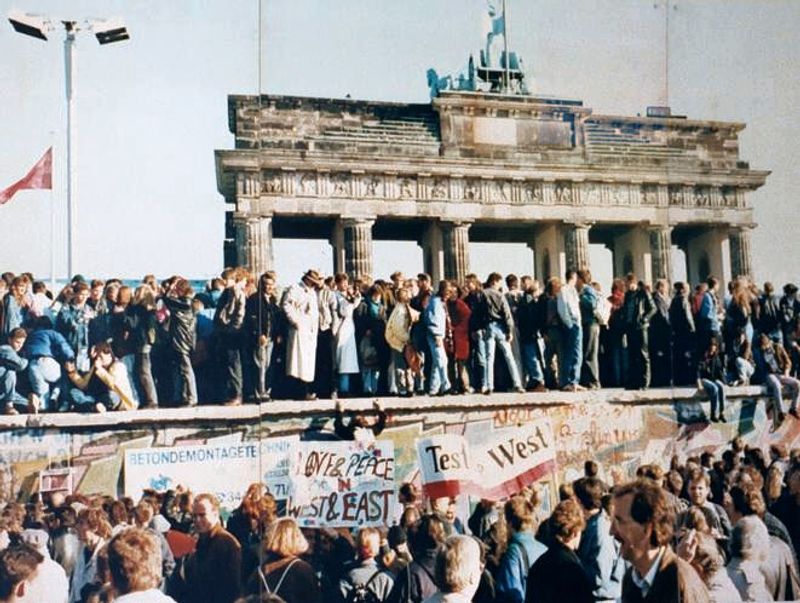
In hindsight, the fall of the Berlin Wall can look inevitable. East Germany was under enormous pressure, protests were growing rapidly, and communist governments across Eastern Europe were losing their grip.
But the exact timing of that extraordinary night came down to one remarkably consequential mistake.
East German official Gunter Schabowski held a televised press conference on November 9, 1989, and announced new travel regulations for citizens. When a journalist asked when the rules would take effect, Schabowski, apparently unaware of the planned delayed implementation, answered that they applied immediately.
They were not supposed to.
Television broadcasts spread the news within minutes. Thousands of East Berliners headed to border crossings expecting to pass through.
Border guards received no clear instructions and were overwhelmed by the size of the crowds. Officials eventually opened the checkpoints.
People poured across the border and climbed onto the Wall in scenes broadcast around the world, all triggered not by a government decision that evening, but by one unprepared official and one poorly timed answer.
14. The Boston Tea Party Was Not Simply About Expensive Tea
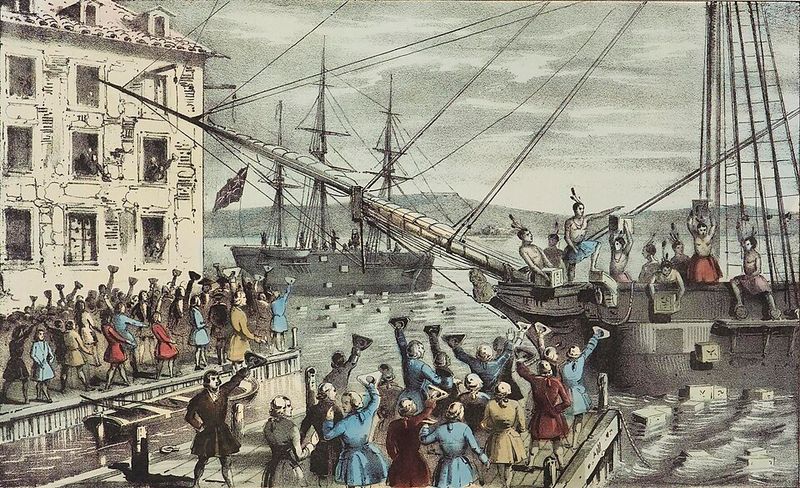
Forget the simple story of angry colonists furious about overpriced tea. The Tea Act of 1773 actually made legally imported British tea cheaper by allowing the East India Company to sell directly to the colonies, cutting out the middlemen.
The real fight was about something far bigger: whether Parliament had the authority to tax the colonies without their consent. Accepting cheaper tea could be seen as accepting that authority, which many colonists refused to do.
There were also commercial interests at play. Merchants like John Hancock had profitable businesses trading in smuggled Dutch tea, and a cheaper British alternative threatened their livelihoods.
When 342 chests of tea went into Boston Harbor in December 1773, the protesters were challenging political authority, trade monopolies, and the very question of colonial self-governance, not simply complaining about the price of a hot drink.
Share this story