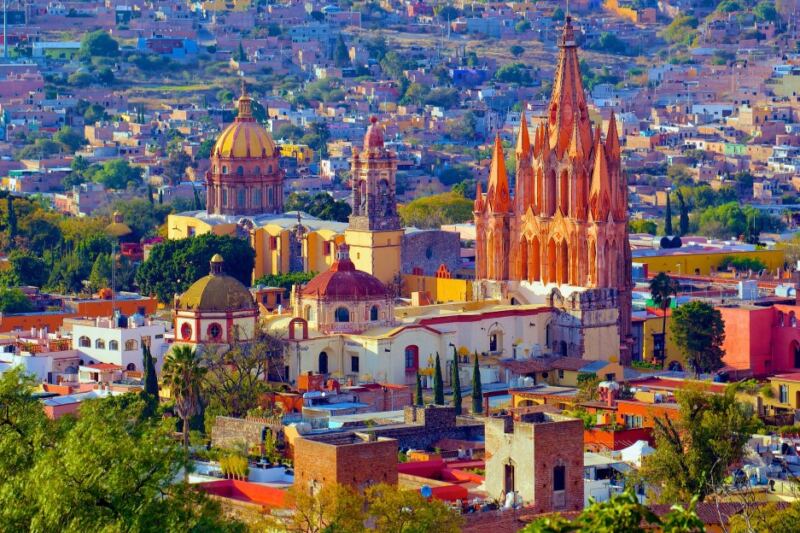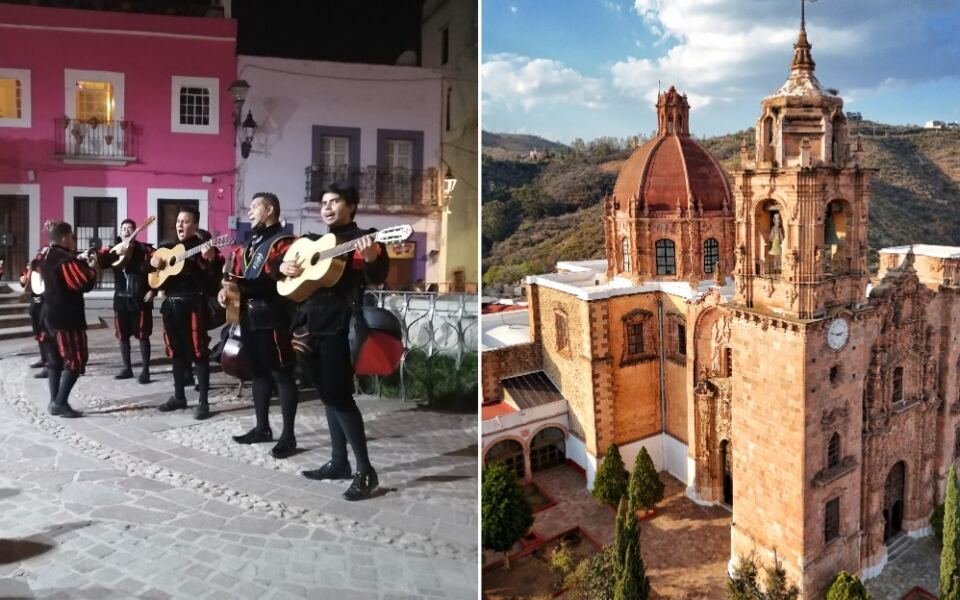
Guanajuato looks like a city someone folded into a canyon, with colorful houses stacked up steep hills and streets that dive underground. It is a UNESCO World Heritage city in central Mexico, and it packs history, art, student energy, and odd traditions into a small area.
This list covers fourteen stops that show why people keep coming back. You will find big viewpoints, old mining history, museums with surprising collections, and a few experiences that are simply fun to do after dark.
Some are famous, and some deserve more attention than they get. Whether you are planning a trip or just daydreaming over coffee, these picks give you clear reasons to care and a few practical tips to use.
Grab a pen, because you will want to save a few of these.
Monumento al Pípila & Funicular, Guanajuato, Guanajuato
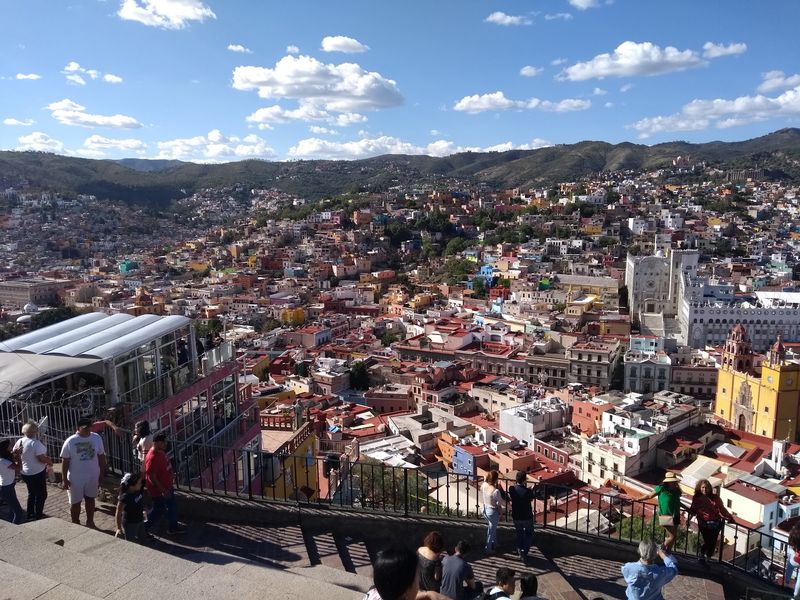
Want the best photo in town? Ride the funicular up the hill to the Pípila monument, where the whole city spreads out below in a jumble of bright houses and church domes.
The statue honors Juan José de los Reyes Martínez, known as El Pípila, a figure linked to the 1810 attack on the Alhóndiga de Granaditas during Mexico’s independence war. The monument stands high above the center and is easy to spot from many streets below.
The funicular climbs from behind the Teatro Juárez area and saves you a steep walk. Walking up through the narrow alleys is also an option if you like stairs and have the energy for them.
Plan your visit for late afternoon, when the light warms the colored walls and the view looks its best. Bring a hat and water, since the lookout has little shade.
There are small stands nearby selling snacks and souvenirs, so you can linger a while and enjoy the panorama without rushing back down.
Teatro Juárez, Guanajuato, Guanajuato
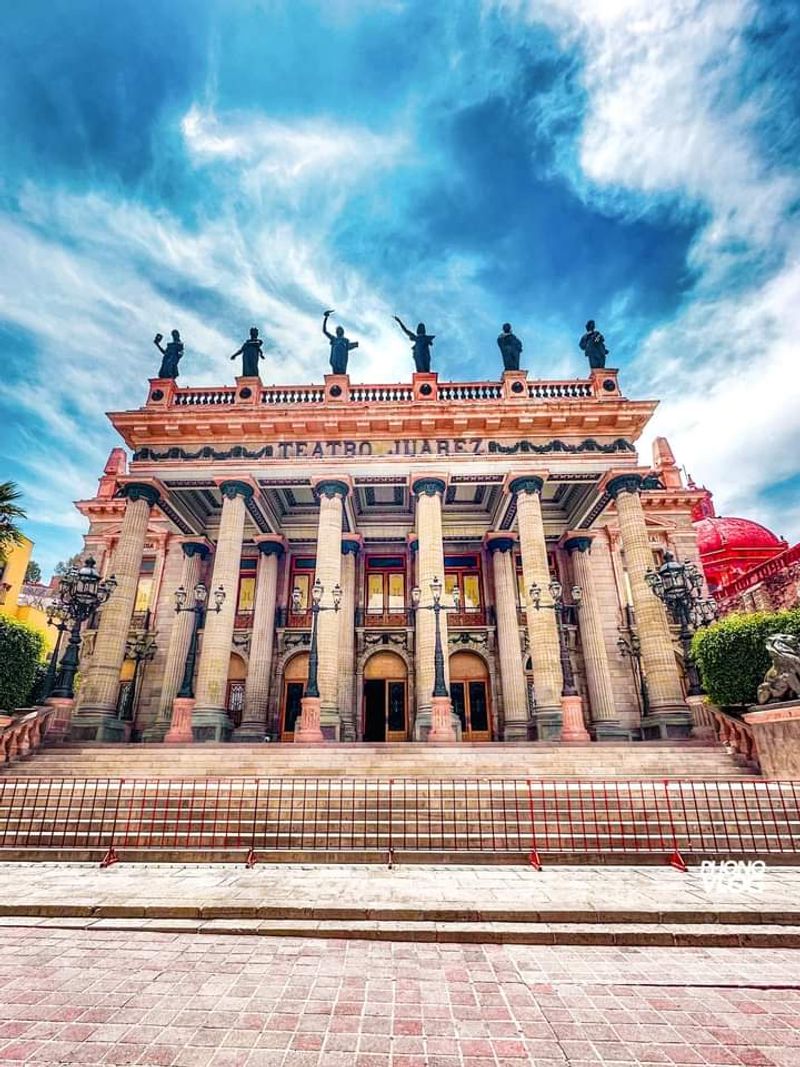
Bronze muses stand along the roofline of Teatro Juárez, and they are the first clue that this is no ordinary theater. The building sits right beside the Jardín de la Unión, so it is very easy to find.
Construction took place in the late 1800s, and it opened in 1903 during the era of President Porfirio Díaz. The outside mixes classical columns with a grand staircase, while the interior is known for rich decoration in a style often described as Moorish and Neoclassical.
The theater hosts performances, and it is a main venue during the Festival Internacional Cervantino each autumn. If you cannot catch a show, you can often visit during daytime hours to look around, though schedules change, so check ahead.
Dress neatly if you plan to attend an event. Arrive a little early to take photos on the steps and enjoy the busy plaza next door before the curtain rises.
Jardín de la Unión, Guanajuato, Guanajuato
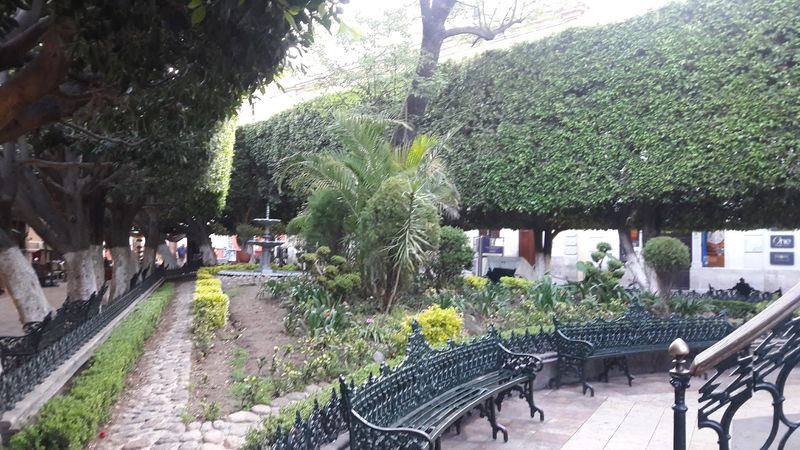
If Guanajuato has a living room, this is it. The Jardín de la Unión is a small triangular plaza in the heart of the city, shaded by neatly trimmed trees and lined with benches.
Around the edges you will find cafes and restaurants with outdoor tables, plus the Teatro Juárez and the Templo de San Diego. That makes it a natural starting point for any walking tour.
Students, families, and travelers all gather here, especially in the evening. Musicians often play, and the plaza turns into a place where people simply sit and watch the day wind down.
A practical tip: grab a table early if you want an outdoor seat on a weekend. Another idea is to use the plaza as your meeting spot, since everyone can find it easily.
Take a slow lap around the edges before choosing where to eat, because the menus vary and the people watching is free.
Museo de las Momias de Guanajuato, Guanajuato, Guanajuato
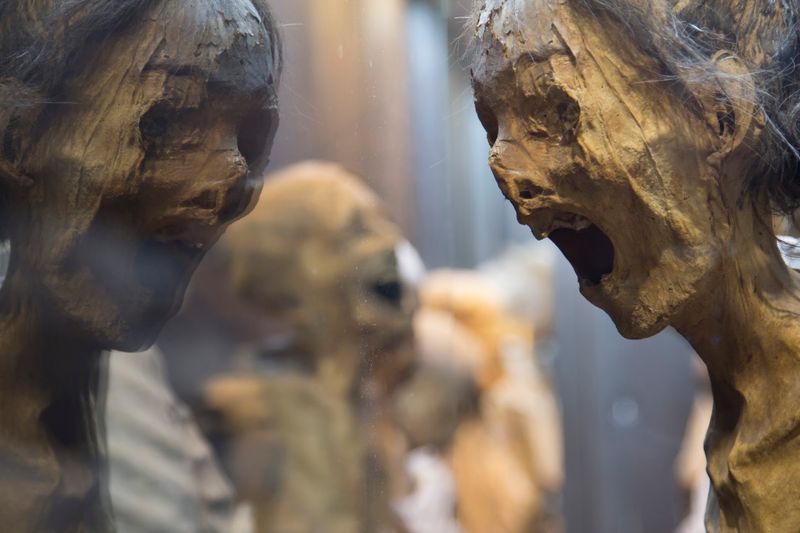
Here is a museum that people either love or approach with nervous curiosity. The Museo de las Momias displays naturally preserved bodies that were removed from the nearby municipal cemetery in the 1800s and later.
The preservation is linked to the local dry climate and mineral-rich soil, and the collection is one of the best known in Mexico. The museum sits just up the hill from the center, and city buses and taxis make the trip simple.
Exhibits are presented with information panels, so you can learn about the history of the cemetery and why these remains drew attention over time. Some displays may be intense for younger children, so parents may want to preview the content first.
Go earlier in the day to avoid longer lines, and keep a little cash handy for small fees such as camera use if they apply. Check current hours and ticket prices before you go.
Alhóndiga de Granaditas, Guanajuato, Guanajuato
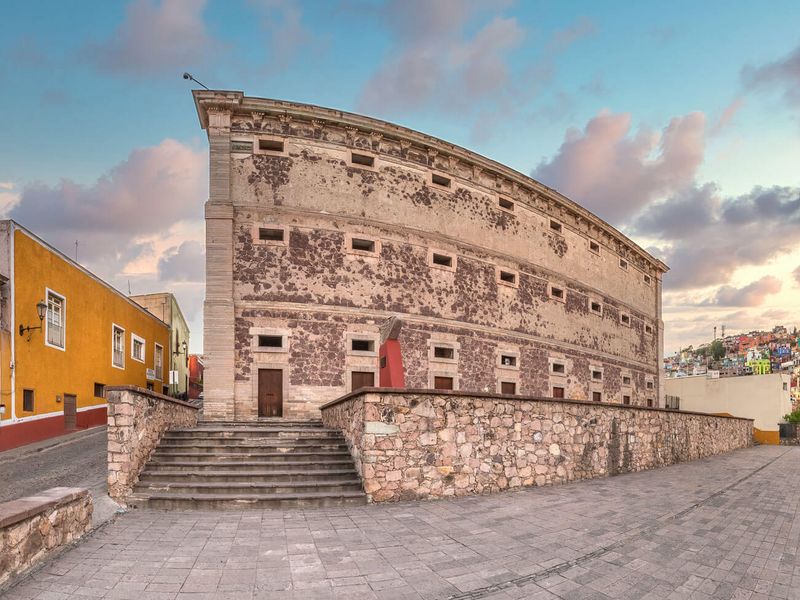
This stone building began as a grain storage warehouse, yet it ended up at the center of Mexican history. The Alhóndiga de Granaditas was finished in the late 1700s to store grain for the city.
In September 1810, insurgents led by Miguel Hidalgo attacked it early in the war for independence, and the site became a symbol of that struggle. Today it houses the Museo Regional de Guanajuato Alhóndiga de Granaditas.
Inside, you can see collections that cover local history, archaeology, art, and more. The thick walls and large central courtyard give a clear sense of how the building was originally designed for security and storage.
History fans should allow a good hour or two for a visit. Check the current schedule, since national museums often have set days and hours.
Wear comfortable shoes because there are stairs, and bring a camera for the stately courtyard and upper levels.
Callejón del Beso, Guanajuato, Guanajuato
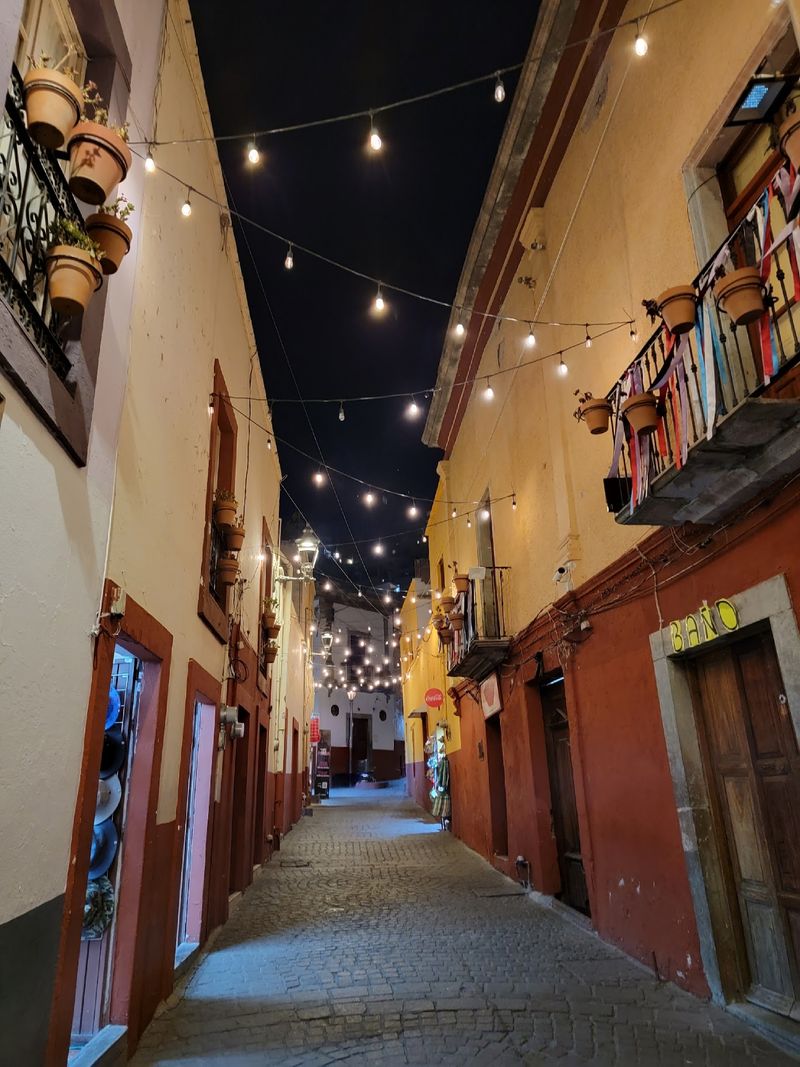
Some streets are for getting somewhere, and this one is for stopping. The Callejón del Beso is among the narrowest alleys in the city, with balconies on opposite sides so close that neighbors could nearly reach across.
The story tied to it is a local legend about two young lovers whose families disapproved. The tale is told in many versions, so treat it as folklore rather than recorded history, which is part of the fun.
Guides and locals will often share it on walking tours, and visitors come to take photos on the stone steps. A tradition says couples who kiss on a certain step will enjoy good luck, and many people give it a try.
Go early in the morning or later in the evening to avoid crowds in such a tight space. Be patient while others take their pictures, and plan on a short visit since the alley itself is small.
Mercado Hidalgo, Guanajuato, Guanajuato
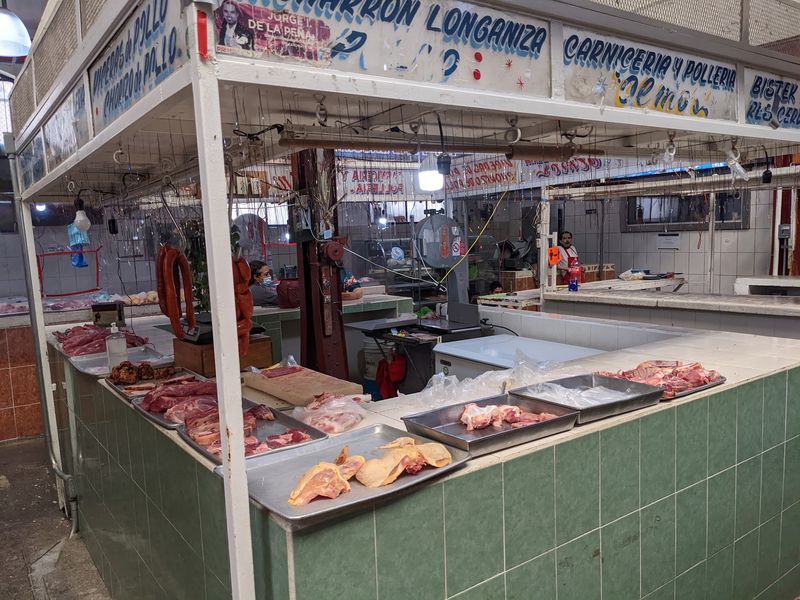
Hungry or shopping for gifts? Mercado Hidalgo handles both.
The market opened in the early 1900s in a large hall with an iron structure, and it is still a busy hub for daily life in the city.
The ground floor has stalls selling fresh produce, cheeses, sweets, and other food items. Upstairs you will find crafts, ceramics, textiles, and souvenirs, along with small eateries where you can try regional dishes.
Guanajuato’s local specialties include enchiladas mineras and guacamayas, a stuffed bread sandwich, and you may spot both in food stalls in the area. Ask vendors what they recommend and compare prices before buying.
Bring small bills for easier purchases, and visit in the morning when everything is fully stocked. Bargaining is not always expected for food, but may be common for handcrafts.
It is a relaxed way to see how residents shop and eat day to day.
Museo Casa Diego Rivera, Guanajuato, Guanajuato
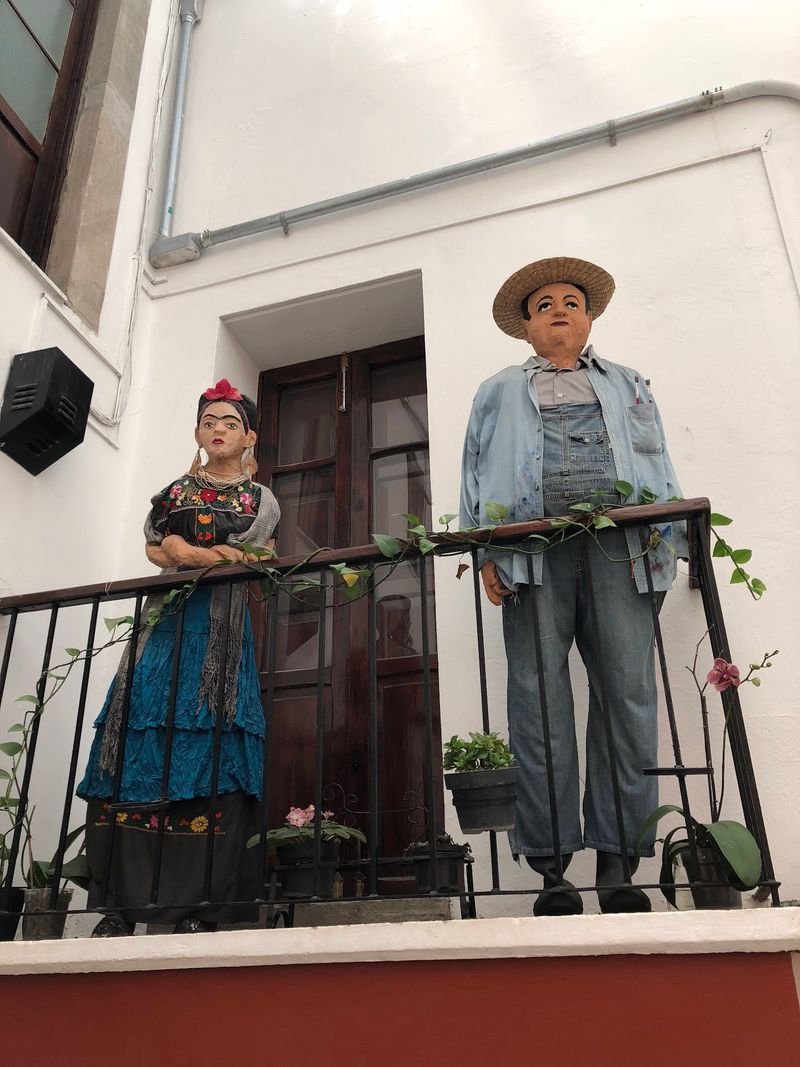
One of Mexico’s most famous painters was born in this very house. Diego Rivera came into the world in Guanajuato in 1886, and his family home on Calle Positos is now the Museo Casa Diego Rivera.
The upper floors show the house arranged in period style, giving a look at how a middle-class family lived in the late nineteenth century. Other rooms hold a collection of artworks by Rivera, including early pieces and studies.
It is a compact museum, so it works well when you want a cultural stop without a long commitment. Staff and signs help explain the artist’s early life and later career.
Art fans will enjoy seeing a more personal side of a muralist often known for enormous public works. Check the current opening days, since museum schedules can change, and consider pairing the visit with a stroll to nearby plazas and the Universidad de Guanajuato, which is only a short walk away.
Basílica Colegiata de Nuestra Señora de Guanajuato, Guanajuato, Guanajuato
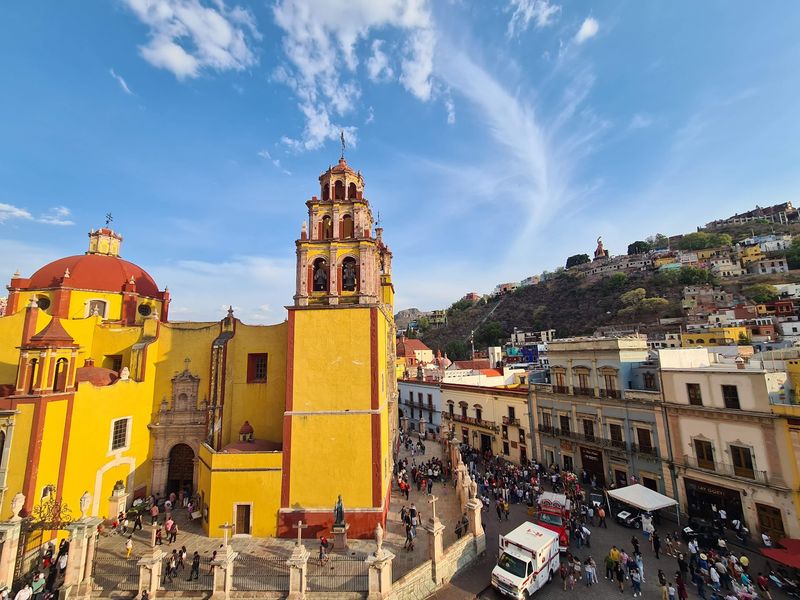
Painted a warm yellow, this basilica is the easy one to spot on Plaza de la Paz. It was built in the late 1600s and is one of the city’s main religious landmarks.
Inside is a wooden statue of the Virgin of Guanajuato, which is among the most treasured images in the city. Tradition says it was a gift from King Philip II of Spain to the town in the 1500s, and it is still honored today.
The baroque exterior and tall towers stand among colorful mansions that once belonged to wealthy mine owners, so the plaza is also a pleasant place to rest. Benches give a view of the facade and passersby.
Remember that this is an active church. Dress modestly, keep voices low, and avoid flash photography when services or prayers are happening.
Mornings usually offer easier access and calmer surroundings for taking in the details of the interior.
Universidad de Guanajuato, Guanajuato, Guanajuato
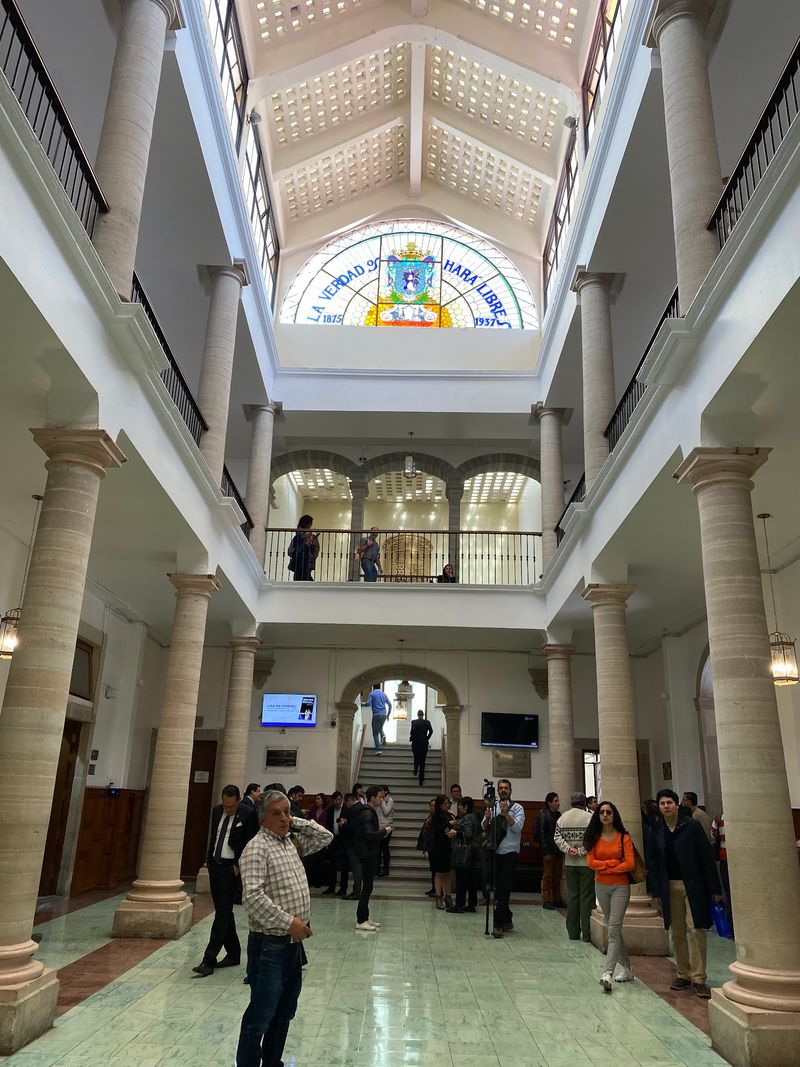
Look up from almost anywhere downtown and you might spot a wide staircase climbing to a stately building. That is the main building of the Universidad de Guanajuato, a school with roots going back to the 1700s.
The university gives the city a youthful feel, with students filling cafes, plazas, and sidewalks. It also plays a big role in the cultural calendar, supporting events such as the Cervantino festival.
The main building is known for its steps, its distinct facade, and its position above the street. Visitors often climb the stairs for photos and a quick look at the surroundings, and the area is easy to reach on foot.
Respect classes and campus rules if you step inside, and check which areas are open to the public. A late afternoon stop works well, as you can then wander toward nearby streets and enjoy the lively student atmosphere in the evening.
Museo Iconográfico del Quijote, Guanajuato, Guanajuato
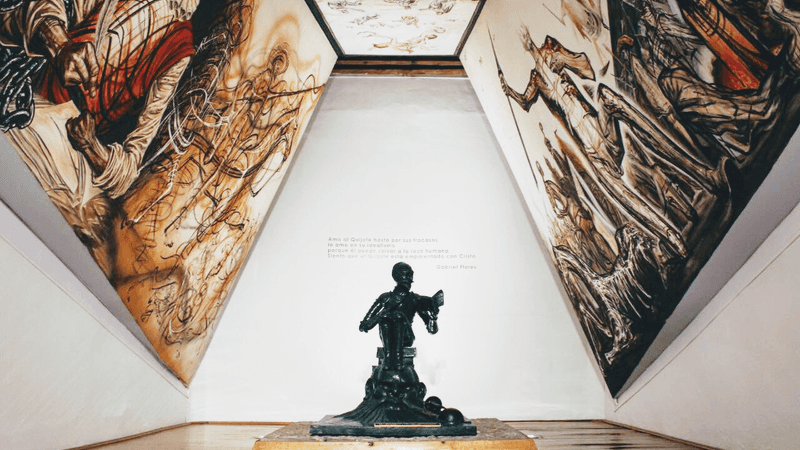
Few places will surprise you like a Don Quixote museum in the middle of Mexico. The Museo Iconográfico del Quijote is dedicated to the famous character created by Miguel de Cervantes.
Its collection includes paintings, sculptures, tapestries, and other works inspired by the story from many artists and countries. The museum sits on Plaza de San Fernando, close to the center of town.
The connection to Cervantes is strong in Guanajuato. The city hosts the Festival Internacional Cervantino every year, which is one of the major arts festivals in Latin America, and this museum fits the theme neatly.
Plan on an hour to move through the rooms at a comfortable pace. Even if you have never read the novel, the variety of styles keeps things interesting.
Check hours before you go, since museums sometimes close on specific days, and look for the nearby plaza statues for an easy photo.
Museo Ex-Hacienda San Gabriel de Barrera, Guanajuato, Guanajuato
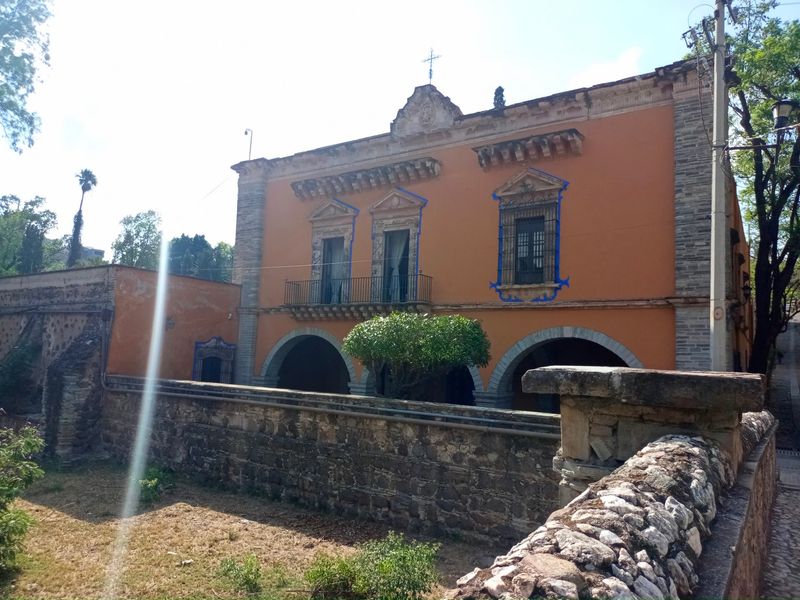
Grand gardens are not what most people expect on the edge of a mining city. Yet the Ex-Hacienda San Gabriel de Barrera has a series of themed gardens spread around an old estate.
The hacienda dates to the 1600s and was tied to the silver business, since it processed ore from nearby mines. Later it became a home for the Barrera family and is now a museum showing period rooms, furniture, and artwork.
The grounds include about a dozen gardens with fountains, ponds, and walking paths. Each one has its own style, which makes it easy to spend an hour or two outdoors.
It sits a short ride from downtown by bus or taxi, so build in some travel time. Visit on a mild day, wear comfortable shoes, and bring water.
Families, photographers, and anyone who needs a break from steep city streets will find it an easygoing stop.
Templo de San Cayetano de Valenciana, Guanajuato, Guanajuato
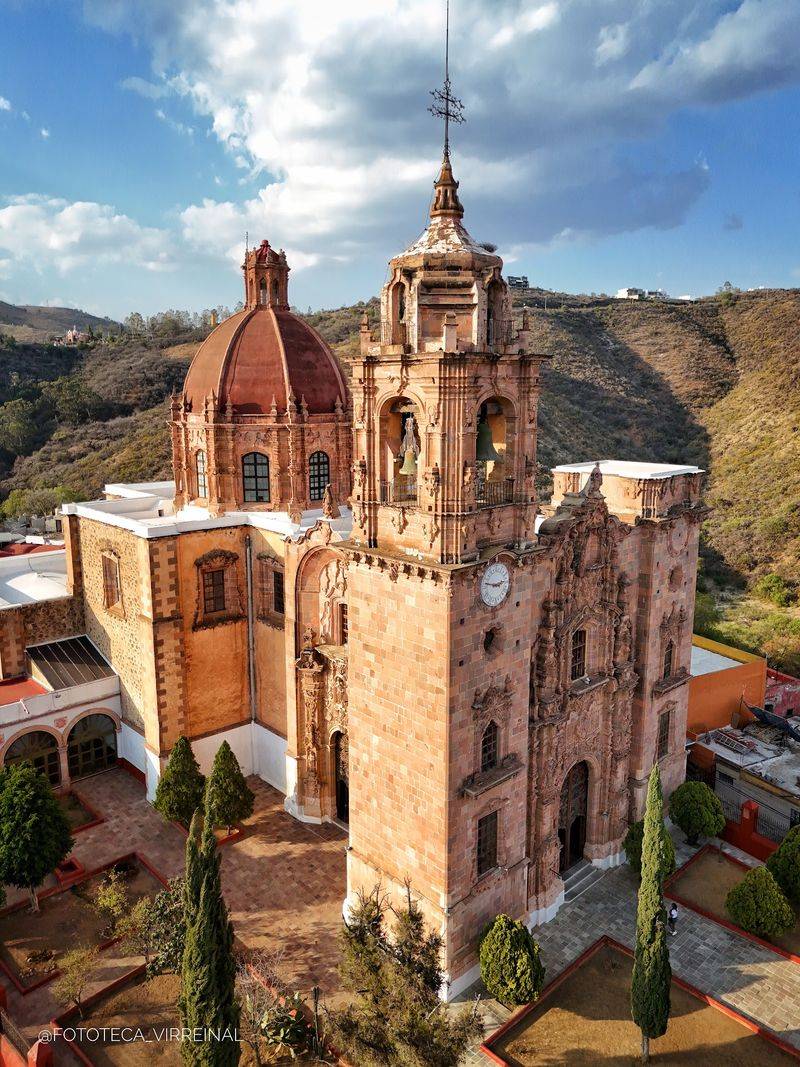
Silver money built this church, and it shows. The Templo de San Cayetano, also called La Valenciana, was constructed in the 1700s by the owner of the Valenciana mine, which was among the richest silver producers in the world.
The pink stone exterior is carved in detailed baroque style. Inside, the church is famous for three gilded altars covered in gold leaf, along with a carved pulpit and ornate decoration.
It sits on a hillside a short ride from downtown, and the area also includes the Bocamina San Ramón, a mine entrance that can be visited with a guided tour. That makes it easy to see both the wealth and the work behind it.
Treat the church as an active place of worship by dressing modestly and keeping quiet. Check opening times and tour schedules before heading up, and consider a taxi for the return trip if you prefer not to wait for the bus.
Callejoneada de Guanajuato, Guanajuato, Guanajuato
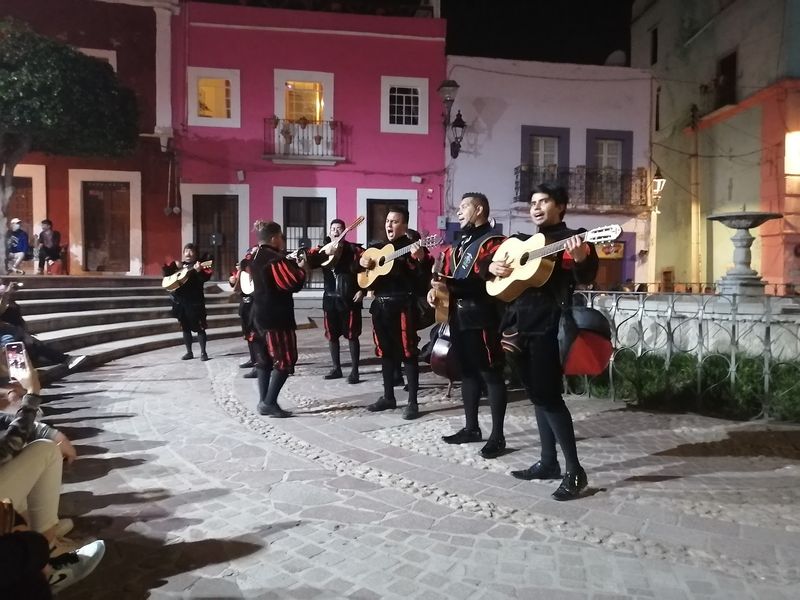
After sunset, the city has a favorite way to entertain visitors: a walking party led by musicians. A callejoneada is a group stroll through the alleys of Guanajuato, led by performers in traditional student costume.
The groups are known as estudiantinas, and the tradition has roots in Spain. Players carry guitars, mandolins, and other instruments, and they sing folk songs while telling stories and jokes about the city and its legends.
Several tours start near the Jardín de la Unión and the Templo de San Diego, and they are open to anyone who wants to join. Many guides weave in tales such as the story of the Callejón del Beso, which adds local flavor.
Ask about prices and tour times before you commit, since they can vary by group and season. Wear comfortable shoes because the route includes stairs and uneven stones.
Even if you do not speak much Spanish, the music and mood make it easy to enjoy.
Share this story