Bavaria is the part of Germany that looks like a storybook come to life. You will find sparkling lakes, tall Alpine peaks, walled medieval towns and castles that seem to float above the trees.
Some spots are famous around the world, while others are quiet treasures that few visitors discover. Here are 15 places that show Bavaria at its most beautiful.
Neuschwanstein Castle and Schwangau
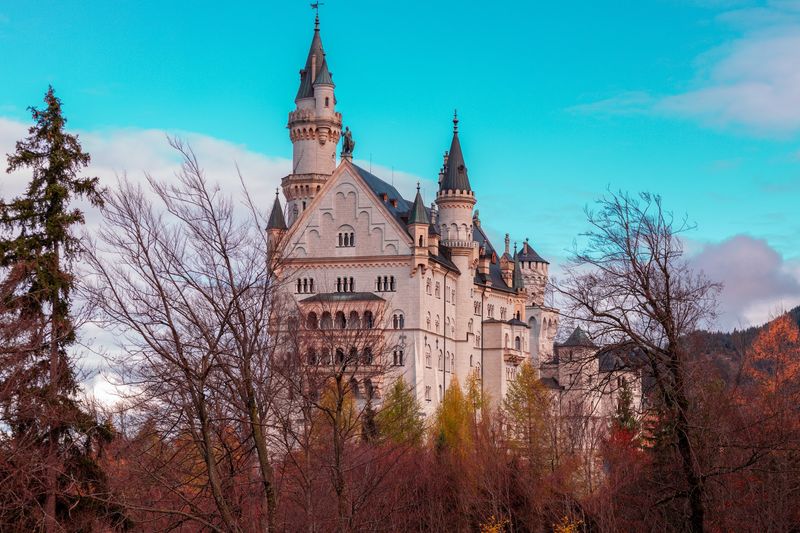
Picture a fairy-tale castle perched on a cliff, with pale towers poking out of the forest. That is Neuschwanstein, and it looks even better in person.
King Ludwig II began building it in 1869 as a dreamy medieval retreat above Hohenschwangau.
The Ammergau Alps stand behind the castle like a giant painted backdrop. Nearby lakes and mountain ridges add even more drama, so the whole landscape feels as memorable as the castle itself.
Bring a camera with plenty of space.
In 2025, Neuschwanstein and Ludwig II’s other royal creations joined UNESCO’s World Heritage List. That gave the famous landmark fresh worldwide recognition.
Tickets can sell out, so booking ahead is a smart move.
The nearby town of Füssen makes a handy base. It has a pretty historic center, cozy cafes and several lakes close by.
Walk to a viewpoint for a classic photo, then reward yourself with a slice of cake in town. Comfortable shoes help, because the paths are steep and the views are worth every step.
Königssee
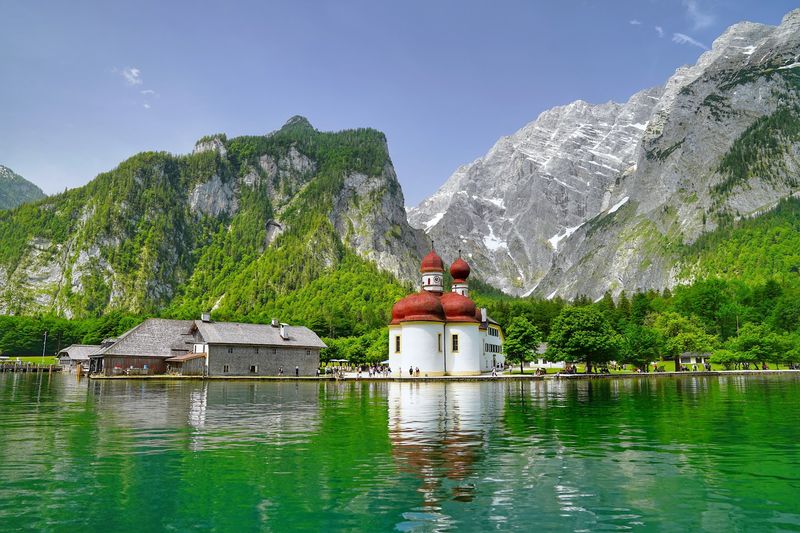
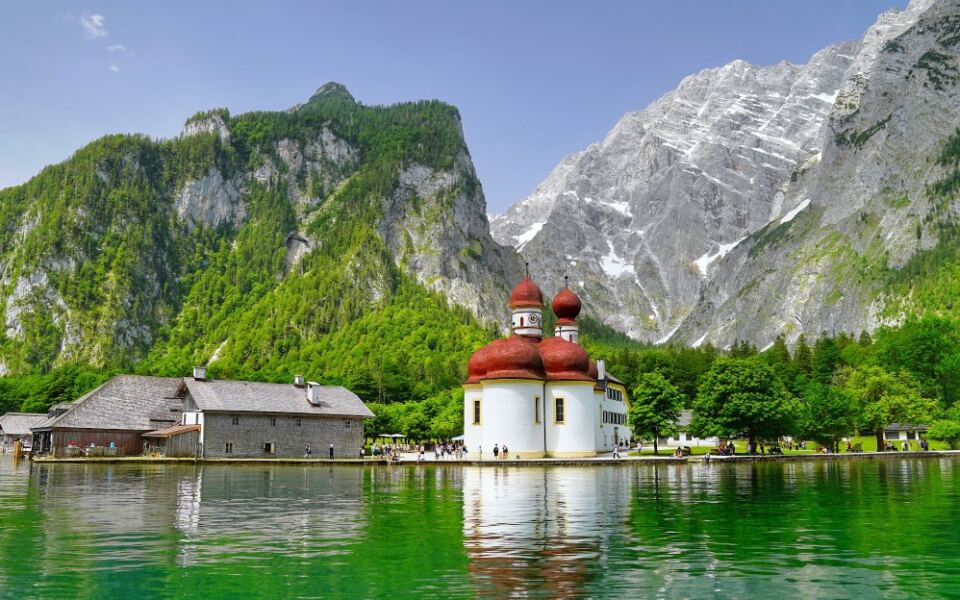
Quiet is the first thing you notice at Königssee. Electric boats glide across the water, so there is no engine roar to spoil the calm.
Steep mountain walls rise on every side of this long, narrow lake.
The water is famously clear, and it shows off shades of deep green and blue. Halfway across sits the pilgrimage church of St. Bartholomä, with red domes that pop against the forest.
It is one of the most photographed spots in southern Bavaria.
The lake lies deep inside Berchtesgaden National Park. Boat rides reach parts of the park that are hard to get to on foot.
The towering Watzmann massif keeps watch over the whole scene.
Plan your trip for a clear day, because the views are the main event. Pack a jacket, since the air near the water can feel cool even in summer.
Once you step off the boat at St. Bartholomä, grab a snack and enjoy a walk along the shore. Early boats tend to be less crowded and give you softer light for photos.
Eibsee and the Zugspitze
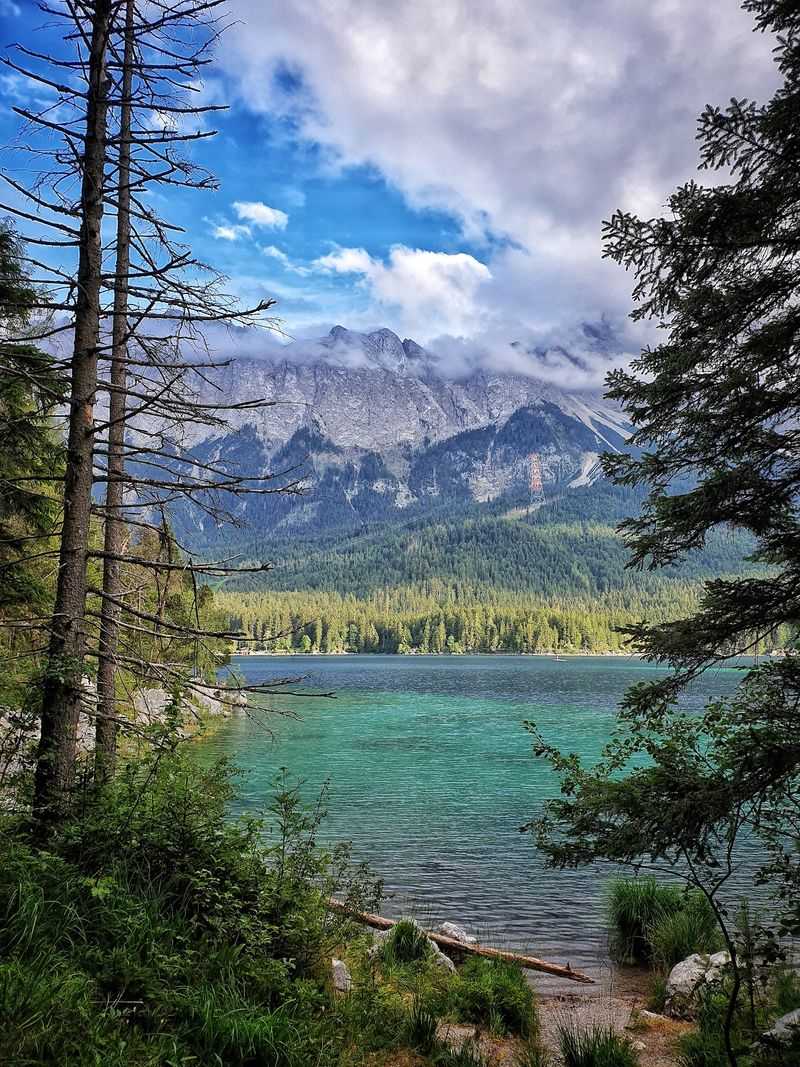
Some lakes look like someone turned up the color dial, and Eibsee is one of them. The water shifts from emerald to turquoise depending on the light.
Tiny wooded islands dot the surface, and the rocky Zugspitze towers behind them.
Bavaria Tourism describes the water as ranging from fir green to almost Caribbean green. That is quite a contrast beneath the rugged Wetterstein Mountains.
On a sunny day, it truly earns the comparison.
A walking trail circles the shoreline, and it is easy enough for most visitors. Allow a couple of hours if you like to stop for photos.
Benches along the way make perfect snack spots.
Right nearby, a cable car carries you up to the 2,962-meter summit of the Zugspitze, Germany’s highest mountain. From the top, Alpine peaks stretch into four countries.
Dress warmly, because it can be chilly up there even when the lake below feels mild. Go early if you can, since clouds often roll in by afternoon and hide the best views.
Rothenburg ob der Tauber
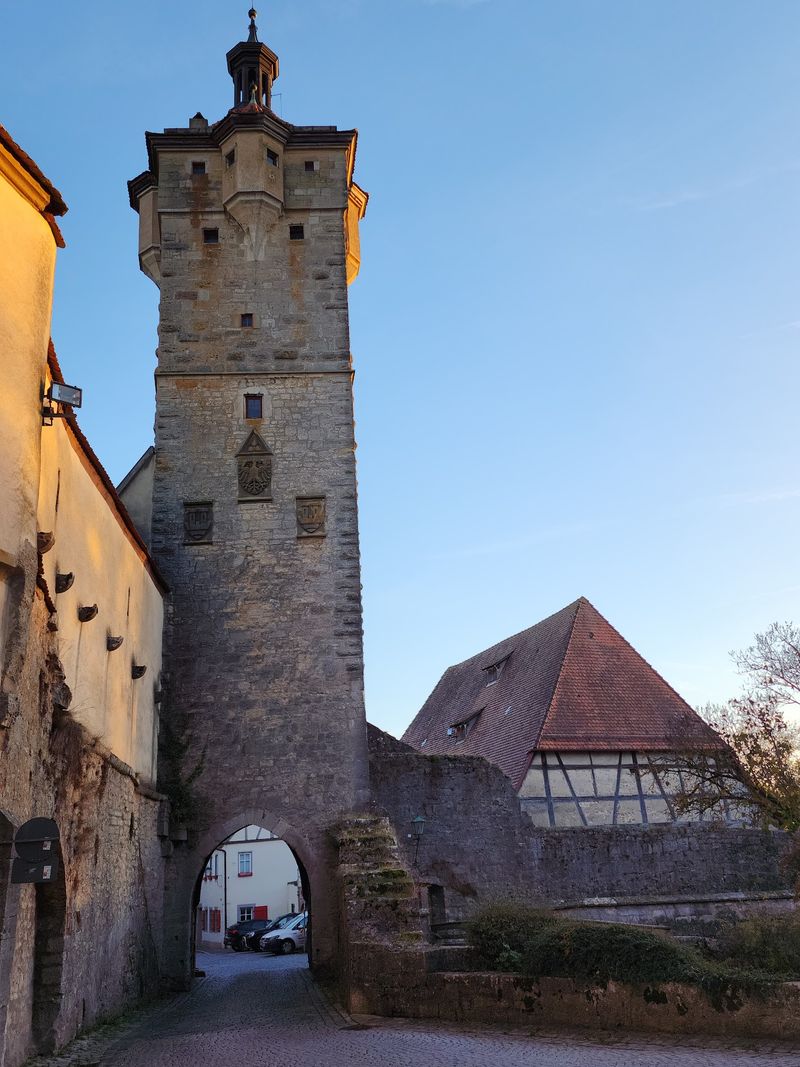
Ever seen a postcard so cute it seemed fake? The Plönlein corner in Rothenburg is that postcard.
Two lanes split beneath a slim timbered house, with a stone tower standing guard.
Fortified walls circle the whole town, and you can walk along them. Narrow lanes, towers and half-timbered homes make every turn look like a movie set.
The town sits on the Romantic Road, one of Bavaria’s best-known scenic routes.
Rothenburg also sits high above the Tauber Valley. From the walls and viewpoints, you get green countryside views along with the architecture.
It is a nice break from all the cobblestones.
Crowds can be big during the day, but mornings and evenings tell a different story. Streets turn quiet, lamps glow and the old buildings seem to relax.
Staying overnight is the best trick for enjoying the town without the tour groups. Try a local Schneeball pastry for a sweet treat while you wander.
Bamberg
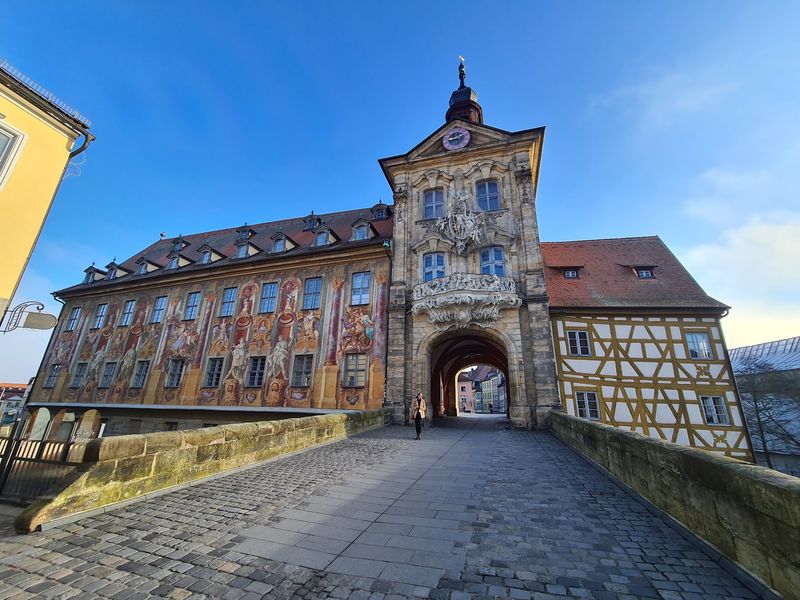
Here is a town hall that refused to stay on dry land. Bamberg’s Old Town Hall sits right in the middle of the Regnitz River, and it looks wonderfully out of place.
Painted scenes cover its walls, which makes it even more eye-catching.
The old town spreads across seven hills and holds around 1,200 monuments. They date from the 11th through 18th centuries.
UNESCO lists the whole center, so you are walking through living history.
Little Venice is a row of former fishermen’s houses leaning over the water. Stroll along the bank and you will see why photographers love it.
Nearby, the cathedral quarter rises above the rooftops.
Bavaria Tourism calls Bamberg a unique work of urban art, spanning the High Middle Ages through the Baroque era. That feels about right.
Bamberg is also known for smoked beer, a local specialty with a bold, campfire-like flavor. Try a glass in a traditional tavern after your walk, and you will understand why people linger here.
Lindau
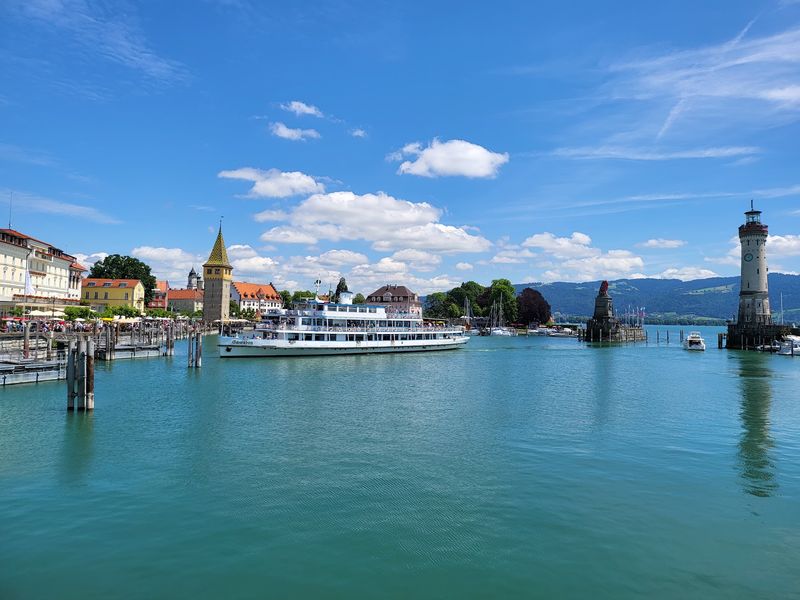
Lindau has a six-meter lion guarding its door. The stone Bavarian lion sits at the harbor entrance next to Germany’s southernmost lighthouse.
Together, they welcome every boat and visitor to this island town.
The old town sits mostly on an island in Lake Constance. Mountains from Austria and Switzerland rise across the water, so the harbor views feel wonderfully international.
Few places in Bavaria mix lake life and Alpine scenery so neatly.
Inside the 68-hectare island, narrow streets lead to squares and centuries-old buildings. The center is compact, which makes it perfect for a relaxed afternoon on foot.
Cafes with lakeside tables make it easy to slow down.
Climb the lighthouse platform for a wide look at the city, the lake and the peaks beyond. Bavaria Tourism calls the island magical because water surrounds it while the Alps seem almost within reach.
Visit on a clear day for the sharpest mountain views. Sunset is lovely here, when the harbor glows soft gold.
Chiemsee and Herrenchiemsee
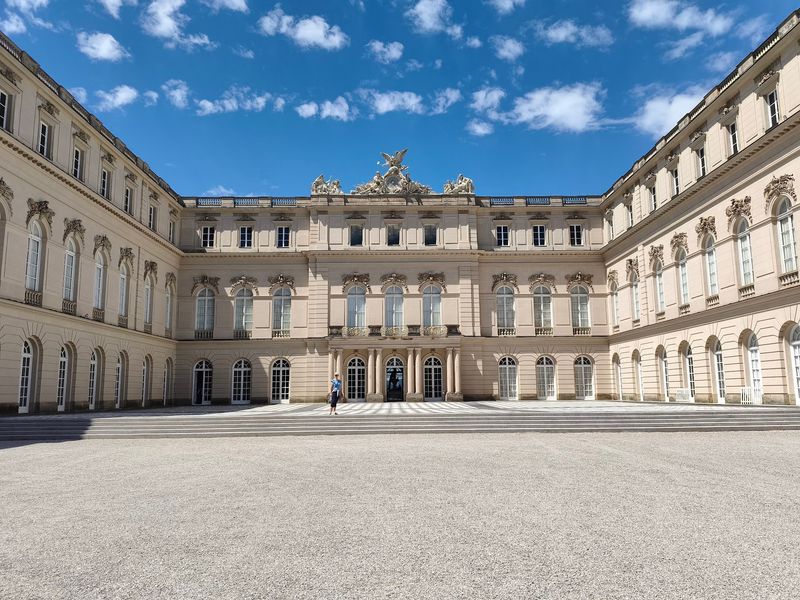
Bavaria’s biggest lake is nicknamed the Bavarian Sea, and it is easy to see why. Chiemsee stretches wide, with Alpine peaks lined up along the southern horizon.
Islands float across the surface like green stepping stones.
On Herreninsel, King Ludwig II built Herrenchiemsee Palace, a grand home inspired by Versailles. Its halls glitter with gold and mirrors.
The gardens outside feel just as dramatic.
Little Fraueninsel offers the opposite mood. It has a sleepy village feel and a historic abbey.
You can walk around the whole island in a short stroll.
Passenger boats link the islands with lakeside towns, so planning is easy. Hop on, hop off and mix scenery with sightseeing.
Bavaria Tourism calls Chiemsee-Alpenland one of Upper Bavaria’s most beautiful and diverse regions. Try smoked fish from a local stand on Fraueninsel for a tasty lakeside lunch.
Bring sunscreen, since the open water reflects plenty of light on bright days.
Garmisch-Partenkirchen and Partnach Gorge
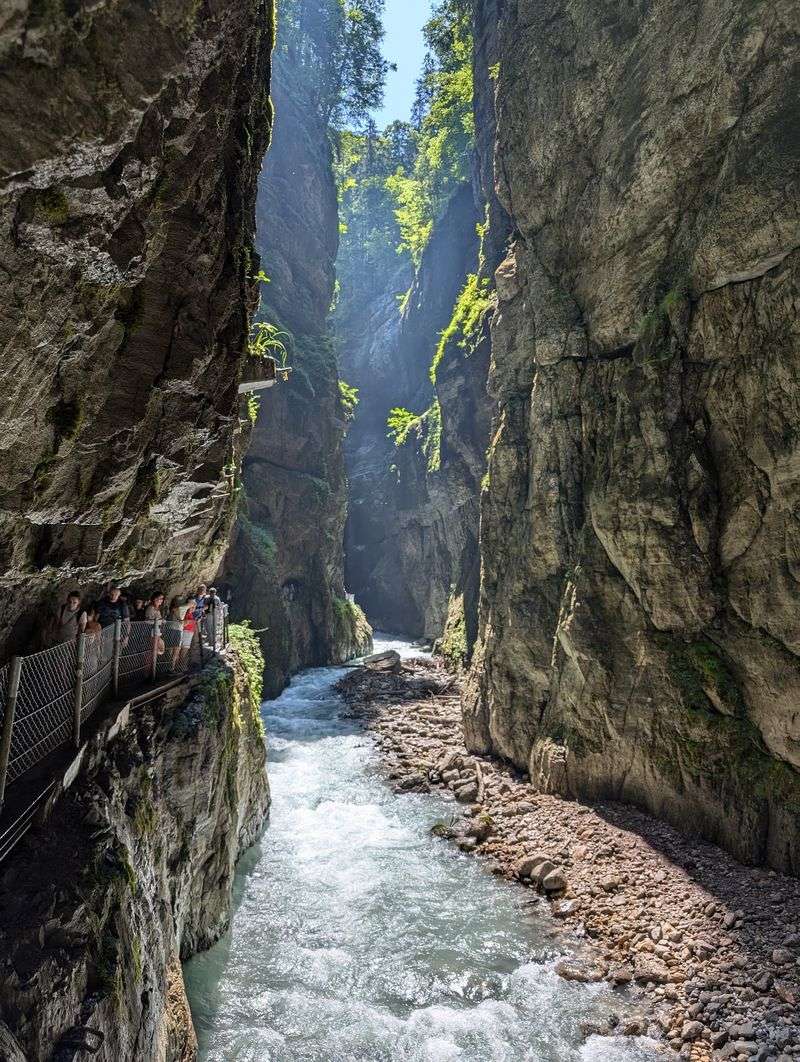
Water roars, rock walls drip and your voice disappears. Welcome to the Partnach Gorge, just outside Garmisch-Partenkirchen.
Walkways cut through tunnels and pass beside waterfalls, so you get very close to the action.
Germany Travel calls it a geological wonder. The narrow passage is especially thrilling when water runs high.
In winter, ice turns the walls into glittering curtains.
Back in town, Ludwigstrasse is lined with painted facades and traditional buildings. It is a charming spot for a stroll and a pretzel.
The surrounding Wetterstein Mountains provide year-round fun.
You can hike, ski or head up the Zugspitze from here. The area suits both thrill seekers and relaxed walkers.
Wear shoes with good grip and a light waterproof jacket for the gorge, because spray can soak you. Visit early in the day to avoid the busiest hours.
Regensburg
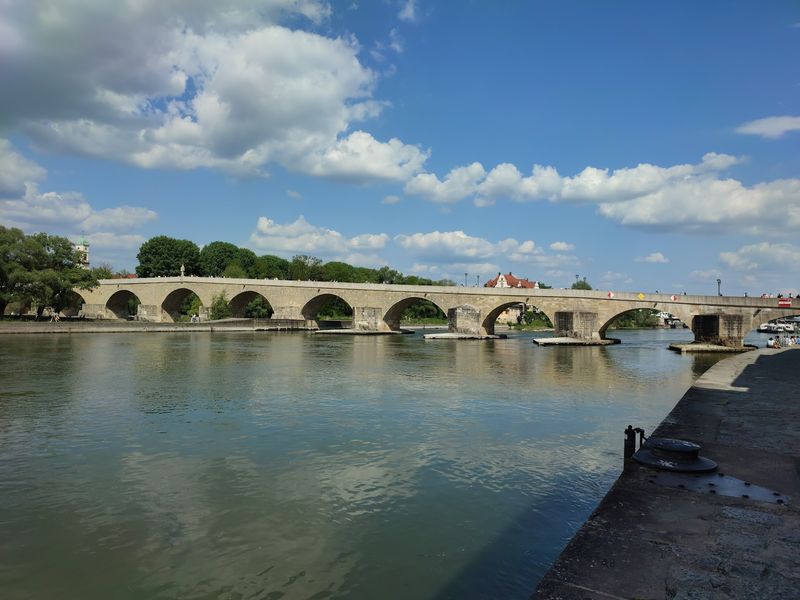
Nearly 900 years old and still carrying visitors, the Stone Bridge is Regensburg’s showpiece. It crosses the Danube toward the district of Stadtamhof.
From the far bank, the old town spreads out in a lovely line of rooftops.
The Gothic cathedral towers above a web of lanes and historic houses. UNESCO recognizes the old town and Stadtamhof.
Centuries of trade between northern Europe, Italy and Eastern Europe shaped what you see today.
Bavaria Tourism calls Regensburg one of Germany’s most beautiful cities. Wander without a map and you will still find something striking at every corner.
Tall tower houses and hidden courtyards reward curious walkers.
Riverside islands and elevated viewpoints add a touch of nature to a place known for architecture. Pick a bench by the water and enjoy the view.
A famous sausage kitchen near the bridge serves grilled sausages with sauerkraut, a very local lunch. Evening light on the river is hard to beat.
Würzburg
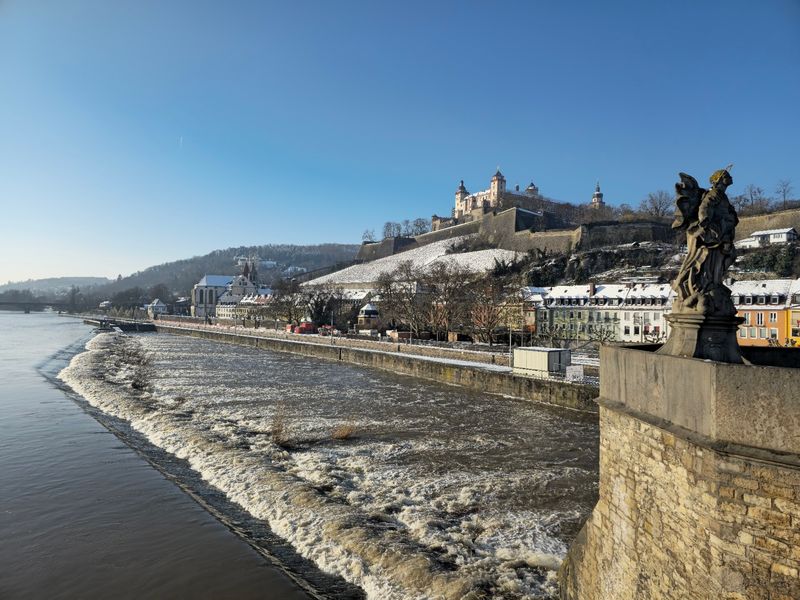
Grab a glass of Franconian white wine and head to the Old Main Bridge. Locals do it all the time, and the view explains why.
Marienberg Fortress sits above the river, with vineyards climbing the slope below.
Late afternoon light turns the hillside golden. It is the classic Würzburg scene, and a perfect time for photos.
The bridge is lined with stone statues that add extra character.
Across town, the UNESCO-listed Würzburg Residence is the city’s Baroque masterpiece. Its grand staircase and painted ceiling impress even people who do not usually like palaces.
Bavaria Tourism places the Residence and fortress at the top of the essential sights.
Würzburg also sits at the northern end of the Romantic Road. That makes it a great start for a trip through smaller historic towns.
Walk up through the vineyards to the fortress for broad views, and bring water for the climb. The surrounding wine landscape is part of the charm.
Nördlingen
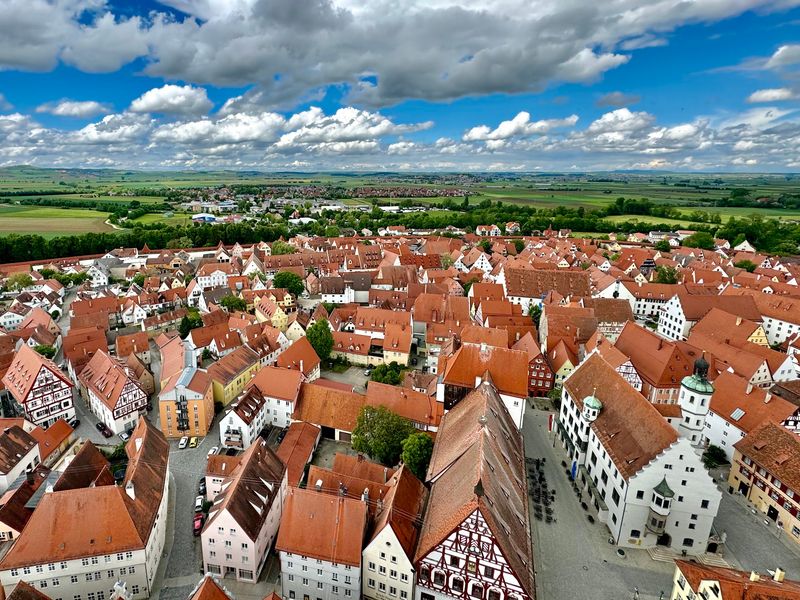
A space rock once smashed into this spot, and the town grew right inside the dent. Nördlingen sits within the Nördlinger Ries, a vast impact crater made millions of years ago.
The medieval town is almost perfectly round.
Walk the preserved town wall and you can circle the whole old center. Then climb the 90-meter Daniel tower for sweeping views over tiled rooftops.
The crater landscape stretches out beyond the walls.
Down below, the old Tanner Quarter has historic houses beside the small Eger River. It is peaceful and photogenic, with very few crowds.
The Ries Crater Museum explains the forces behind the region’s strange shape.
Bavaria Tourism highlights both the intact medieval character and the crater. Few places in Germany match that mix.
Arrive with energy for the tower stairs, and bring a camera for the views. Locals call out a friendly greeting from the tower guard, a tradition that still continues.
Passau
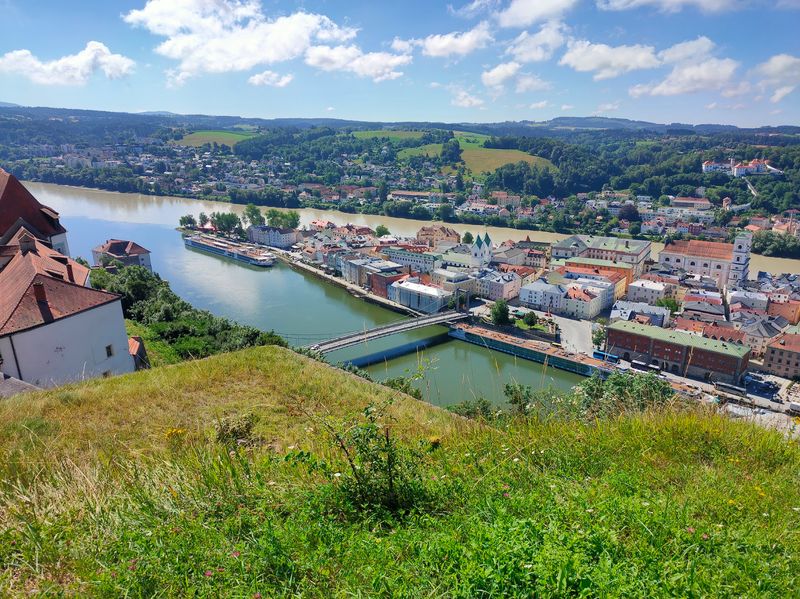
Three rivers, three colors, one meeting point. In Passau, the Danube, Inn and Ilz flow together beside the old town.
From the Veste Oberhaus fortress, you can see the different waters side by side.
The old town sits on a narrow peninsula, packed with Baroque church towers and pastel facades. Steep streets run between them.
The mood feels more Austrian or Italian than stereotypically German.
St. Stephen’s Cathedral dominates the historic center. Step inside and look up, because the interior is grand.
The cathedral organ is among the largest church organs in the world.
River cruises show the unusual geography from water level. Bavaria Tourism calls Passau the City on Three Rivers, and its location shapes both its look and its history.
Climb up to the fortress for the best views, and wear sturdy shoes for the hill. Evening is lovely, when lamps glow along the water.
Wieskirche and the Pfaffenwinkel
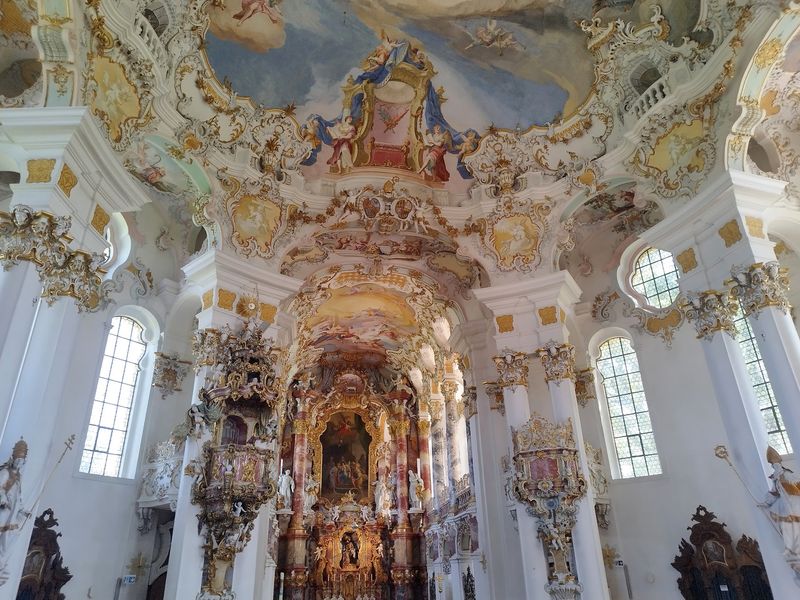
Plain on the outside, jaw-dropping on the inside. The Wieskirche looks like a simple white church sitting in a meadow.
Step through the door and Rococo decoration explodes in pastel, gold and painted sky.
The Zimmermann brothers and other artists created it in the 18th century. It has been a UNESCO World Heritage Site since 1983.
Many consider it one of southern Germany’s great Rococo masterpieces.
Its location near Steingaden adds to the magic. Meadows, farmland and gentle foothills wrap around the church.
Distant mountains and small Bavarian villages complete the scene.
Bavaria Tourism calls it a sensationally decorated highlight of South German Rococo. Spend a moment sitting inside and look up slowly.
Then take a walk through the surrounding fields, where cows often graze near the path. It is a peaceful stop that pairs well with a trip to nearby castles.
Remember that this is still an active church, so keep voices low.
Bavarian Forest National Park
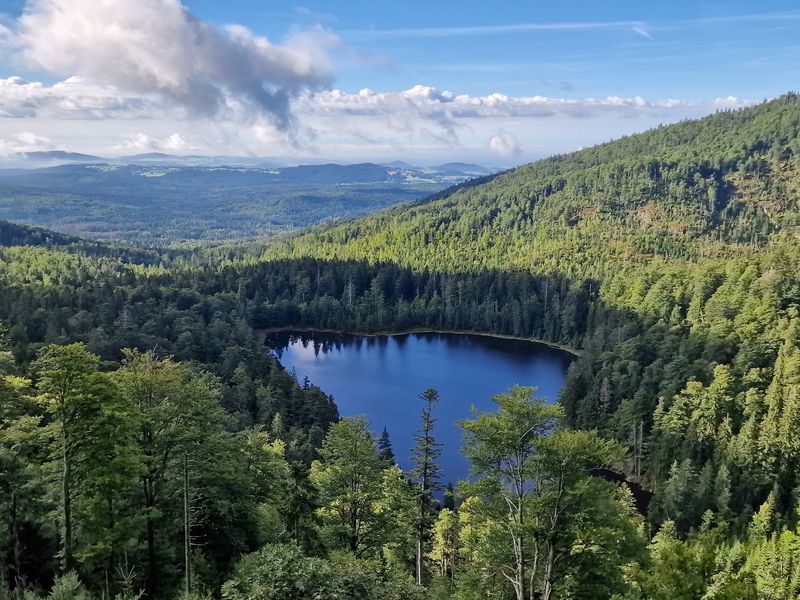
Not every Bavarian view has a snowy peak. Along the Czech border, the Bavarian Forest National Park offers deep woodland and a wilder mood.
Here, nature is allowed to grow with little human interference.
Marked paths total about 320 kilometers, and they cross forests, wetlands and mountain terrain. In winter, 170 kilometers of cross-country ski trails open up.
That makes the park a year-round playground.
Wildlife centers let you meet animals linked to the region. Keep an eye out for lynx, owls and deer, though they are shy.
Moss-covered trees and fallen logs make the forest feel ancient.
The park joins the neighboring Šumava region across the border. Together, they form one of Central Europe’s largest protected forests.
Pack layers, because mountain weather can change quickly. Bring a snack and take your time on the trails, because the best moments are quiet ones.
Dinkelsbühl
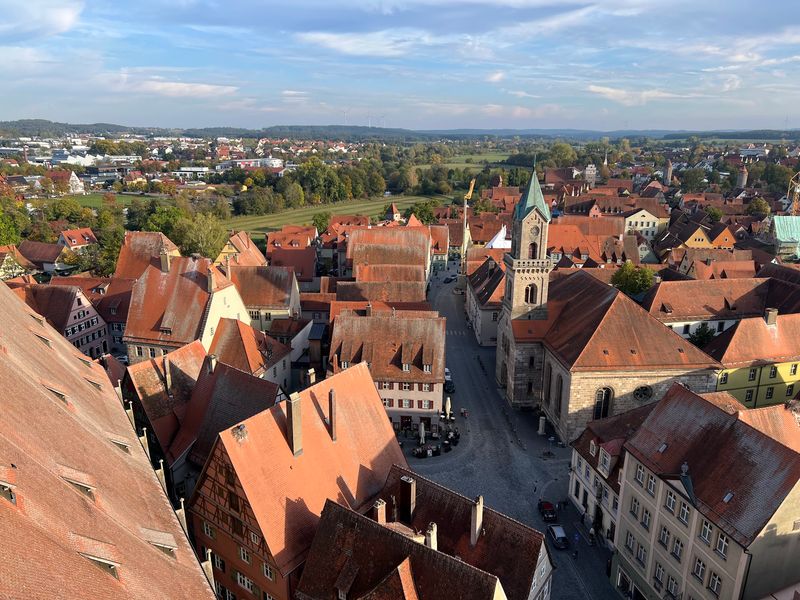
Visitors often say the same thing here: why is it so quiet? Dinkelsbühl is one of the Romantic Road’s prettiest walled towns, yet it gets less attention than Rothenburg.
That is good news for anyone who likes space to wander.
Colorful gabled houses surround the old market area. Towers, gates and long stretches of medieval wall still define the center.
The old town escaped large-scale wartime destruction, so the streets look wonderfully consistent.
Germany Travel includes Dinkelsbühl among its standout attractions. Bavaria Tourism also promotes smaller medieval towns as a key part of the state’s cultural landscape.
Dinkelsbühl fits that role perfectly.
Walk part of the wall at sunset, when the stone glows warm. Then find a seat in a courtyard cafe and watch the town settle down.
For travelers who want classic Bavarian architecture without the busy crowds, this is one of the best picks. A day trip works, but an overnight stay feels even better.
Share this story