The Wild West was built on dusty trails, frontier towns, and saloons that never seemed to close. These legendary watering holes were the heartbeat of their communities, where cowboys, outlaws, and gold miners gathered to share stories, settle scores, and raise a glass.
Remarkably, some of those very saloons are still welcoming guests today, offering a living connection to one of America’s most fascinating eras. Step inside these historic bars and feel history come alive around you.
1. The Palace Restaurant and Saloon, Prescott, Arizona (1877)
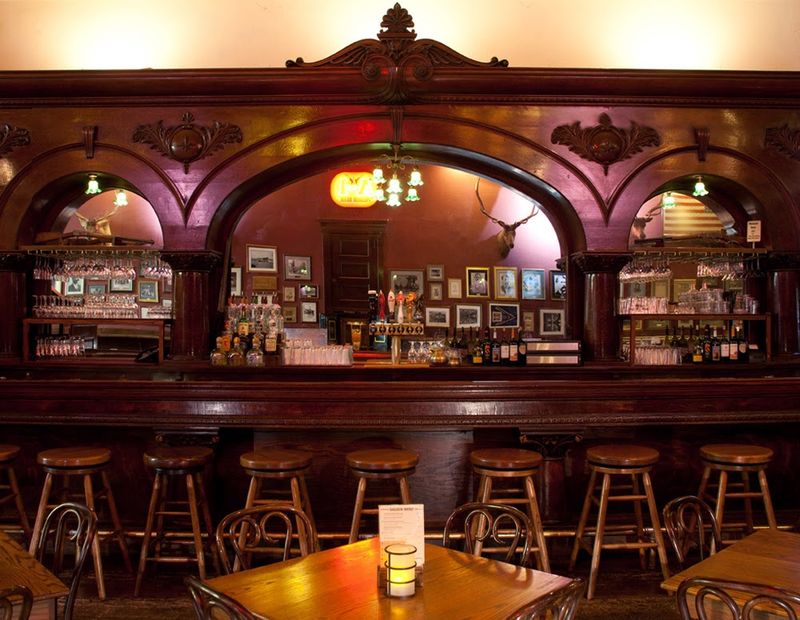
Walk through the doors of The Palace in Prescott and you are stepping into Arizona’s oldest frontier saloon still in continuous operation. Founded in 1877, this landmark survived a devastating town fire in 1900 because locals reportedly rolled the bar out into the street to save it before the flames took hold.
The building was rebuilt around that very same bar, which still stands today. Famous figures like Wyatt Earp and Doc Holliday are said to have spent time here during Prescott’s wild early days.
The tin ceilings, wooden floors, and mounted animal heads on the walls keep the frontier atmosphere completely intact.
Visitors can enjoy a full menu alongside cold drinks, all while soaking in the authentic 19th-century atmosphere. The Palace is more than a bar.
It is a living, breathing piece of Arizona history that continues to welcome guests every single day.
2. Crystal Palace Saloon, Tombstone, Arizona (1879/1882)
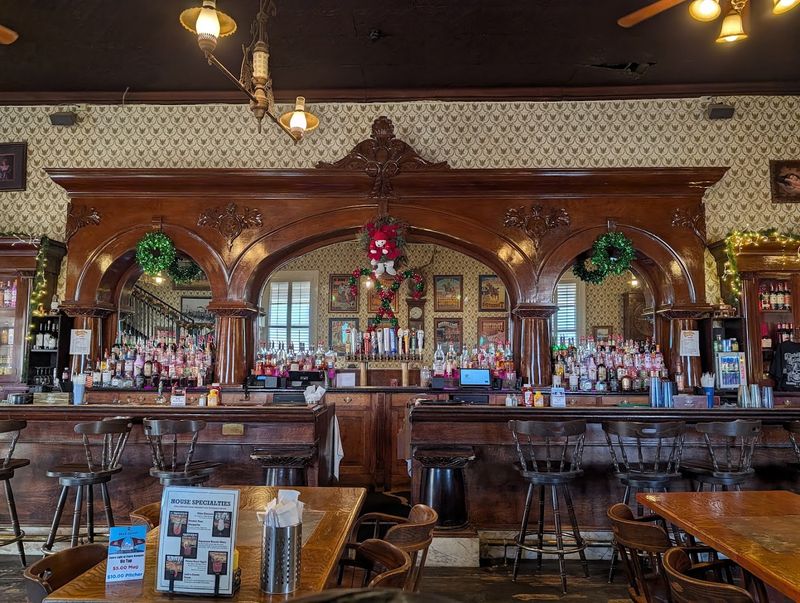
Tombstone, Arizona earned its reputation as “The Town Too Tough to Die,” and the Crystal Palace Saloon fits that description perfectly. Originally opened around 1879 and rebuilt after a fire in 1882, this saloon sat at the center of Tombstone’s rowdiest years, when gunslingers and lawmen walked the same dusty streets.
Wyatt Earp and his brothers were known to frequent the establishment, and the saloon’s location just blocks from the O.K. Corral puts it at the heart of frontier legend.
Today, the Crystal Palace has been beautifully restored to reflect its Victorian-era glory, complete with period-appropriate decor and a long wooden bar.
Live music, cold drinks, and costumed staff bring the 1880s back to life for modern visitors. Whether you are a history enthusiast or just passing through Tombstone, a stop at the Crystal Palace feels like a genuine step back in time.
3. Big Nose Kate’s Saloon, Tombstone, Arizona (1881 Building)
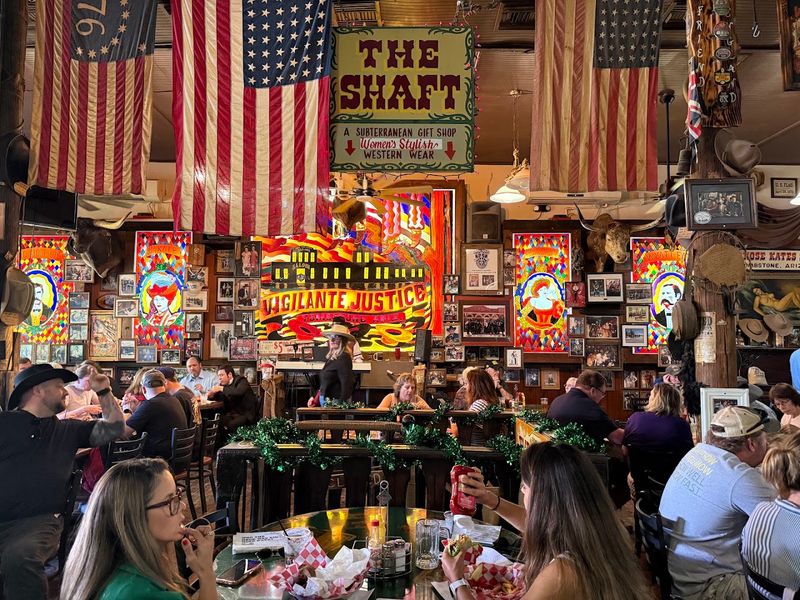
Named after Mary Katherine Haroney, better known as Big Nose Kate, the long-time companion of the notorious Doc Holliday, this Tombstone saloon carries one of the most colorful names in the entire Wild West. The building itself dates back to 1881, giving it a raw, authentic feel that many historic bars simply cannot match.
Originally operating as the Grand Hotel, the structure has seen plenty of drama over the decades. Today it functions as a lively saloon and tourist destination, packed with Western memorabilia, live entertainment, and the kind of spirited atmosphere that keeps the frontier spirit alive and kicking.
Guests often report unexplained sounds and strange occurrences, adding a ghostly layer to an already fascinating history. Tombstone is one of the most visited Western towns in America, and Big Nose Kate’s remains one of its most beloved and talked-about stops for curious travelers.
4. Saloon No. 10, Deadwood, South Dakota
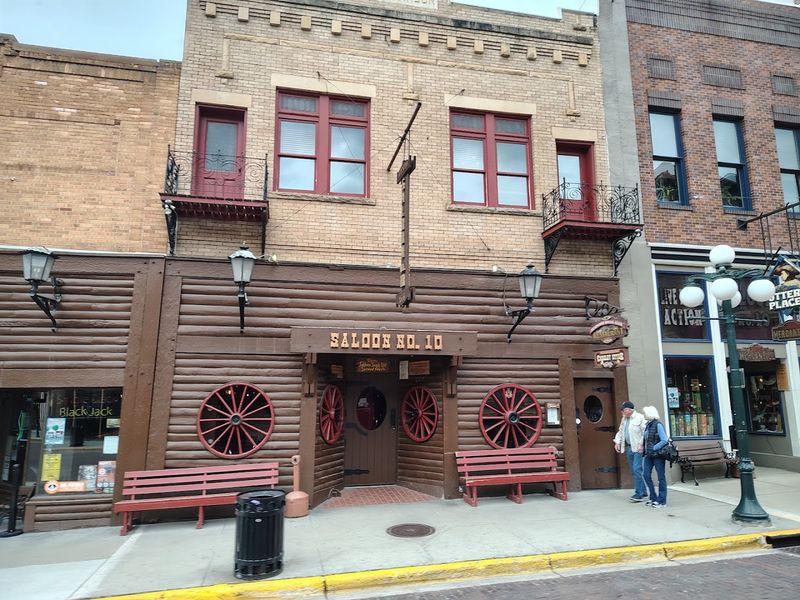
On August 2, 1876, Wild Bill Hickok was shot in the back of the head while playing poker at Deadwood’s original Saloon No. 10, making it one of the most infamous locations in all of American frontier history. He was holding a hand of aces and eights, a combination now forever known as the “Dead Man’s Hand.”
The modern Saloon No. 10 stands as a proud tribute to that legendary moment, located on the same historic street in Deadwood. Inside, the walls are covered with photographs, artifacts, and Western artwork that tell the story of the town’s wild past in vivid detail.
Daily reenactments of Hickok’s murder draw crowds of fascinated visitors year-round. The saloon also offers gaming, live entertainment, and a full bar, making it a fully functioning establishment that keeps Deadwood’s legendary reputation alive and well for every new generation of visitors.
5. Bucket of Blood Saloon, Virginia City, Nevada (1876)
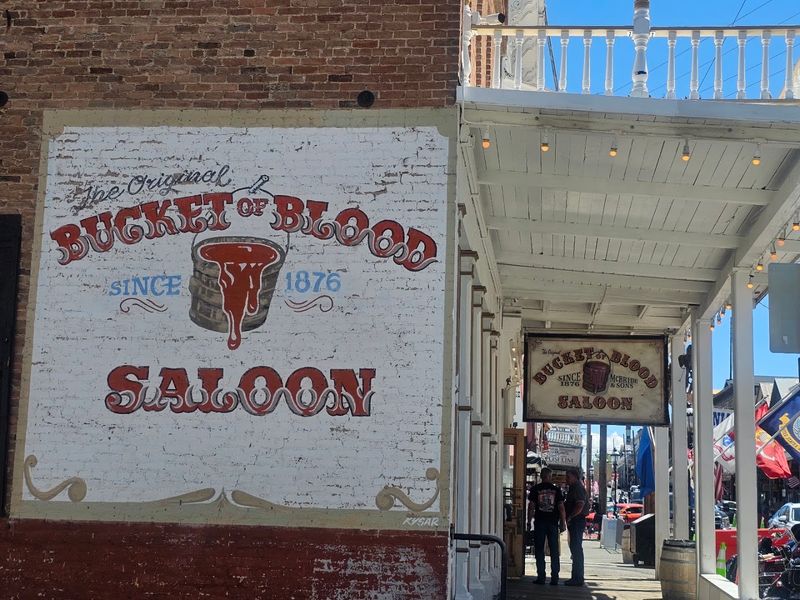
Few saloon names grab attention quite like the Bucket of Blood, and Virginia City’s version has been doing exactly that since 1876. The name alone is enough to make any traveler stop and stare, and the stories behind it are just as dramatic as you might expect from a Nevada mining boomtown.
Virginia City was one of the richest and rowdiest towns in the American West during the silver rush era, and this saloon witnessed more than its share of frontier chaos. Today it operates as a functioning bar and gift shop, preserving the rough-and-tumble spirit of the original establishment with genuine enthusiasm.
The wooden interior, vintage signage, and collection of Old West artifacts make it feel like very little has changed since the 1870s. Visitors can enjoy a cold drink while browsing the quirky collection of Western oddities that line the walls from floor to ceiling.
6. Pioneer Saloon, Goodsprings, Nevada (1913)
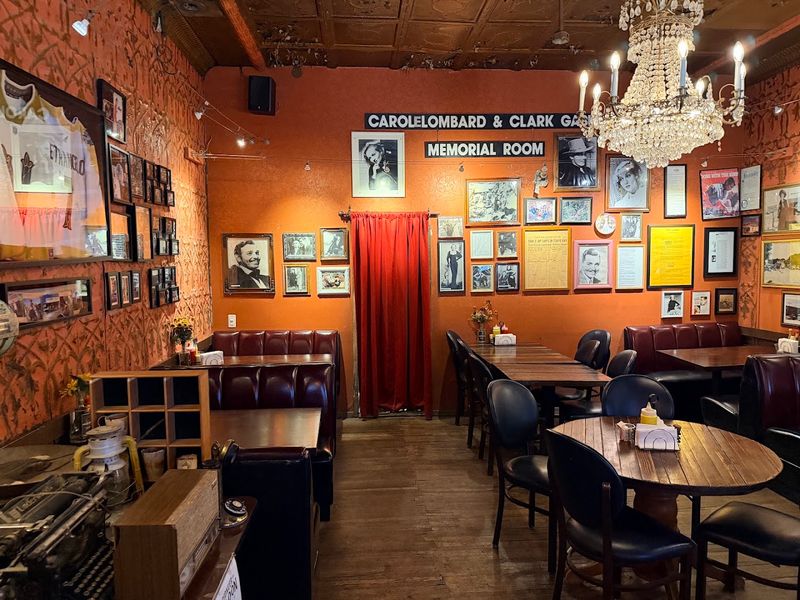
Tucked away in the tiny desert town of Goodsprings, Nevada, the Pioneer Saloon has been serving miners, wanderers, and curious travelers since 1913. Built from pressed tin panels, the structure itself is a remarkable artifact, looking almost exactly as it did when it first opened more than a century ago.
The saloon carries a particularly poignant piece of Hollywood history. In January 1942, actor Clark Gable spent three agonizing days at the Pioneer Saloon waiting for news after his wife, actress Carole Lombard, died in a plane crash nearby.
The bullet holes in the walls and the original potbelly stove add layers of raw, unfiltered authenticity.
Today the Pioneer Saloon is a beloved roadside destination, drawing visitors from Las Vegas who make the short drive out to experience something genuinely old and genuinely real. It remains one of Nevada’s most treasured and least-changed historic landmarks.
7. The Old Washoe Club Saloon, Virginia City, Nevada (1862)
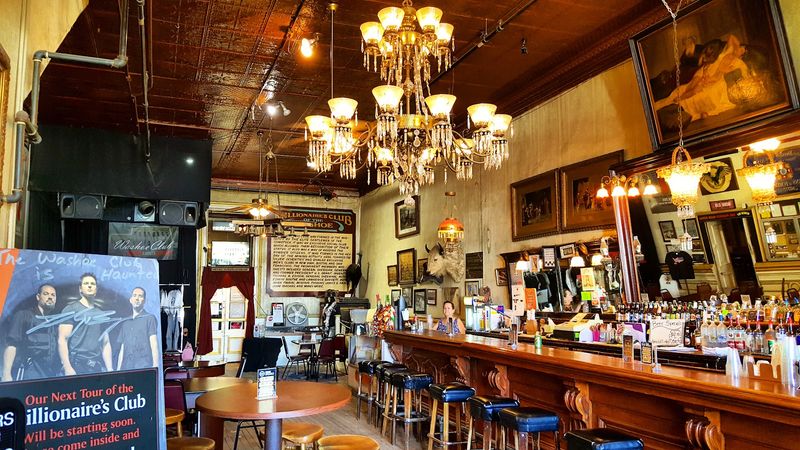
The Old Washoe Club in Virginia City is one of the oldest surviving saloon buildings in the entire American West, with roots stretching back to 1862. Originally founded as an exclusive social club for the wealthy silver barons who struck it rich during Nevada’s legendary Comstock Lode era, it later became a saloon open to a broader crowd.
The building features a stunning spiral staircase, ornate Victorian woodwork, and a bar that looks like it belongs in a museum. But it is not just the architecture that draws visitors here.
The Washoe Club is widely considered one of the most haunted buildings in America, regularly featured on paranormal television programs.
Ghost tours run regularly through the darkened upper floors, and the crypt in the basement adds an extra chill to the experience. Even for those who do not believe in ghosts, the sheer historical weight of this place is impossible to ignore.
8. Silver Dollar Saloon, Virginia City, Nevada
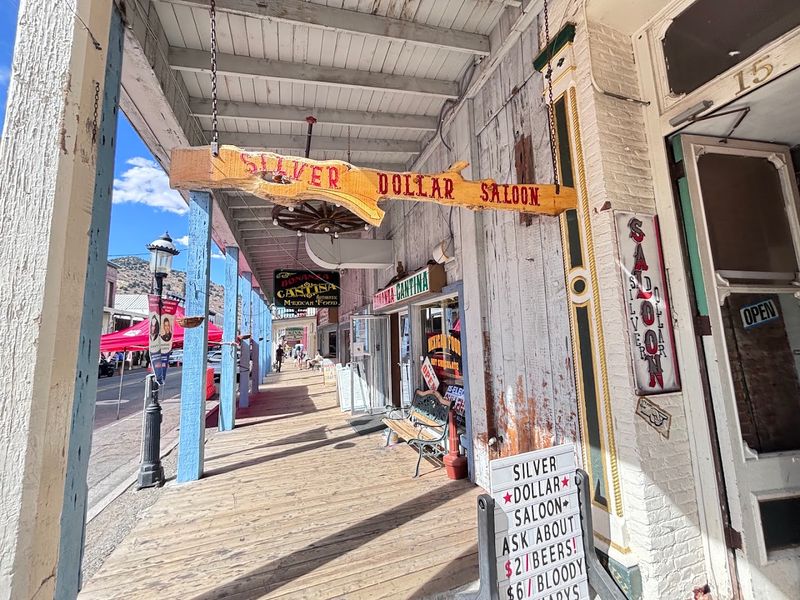
Virginia City, Nevada has more historic saloons per block than almost anywhere else in the American West, and the Silver Dollar Saloon stands proudly among the best of them. Operating out of a 19th-century building that captures the raw energy of the silver rush era, this bar brings a no-frills, boots-on-the-floor authenticity that polished tourist spots rarely manage to achieve.
The Silver Dollar has long been a favorite among locals and visitors alike, offering cold drinks and a laid-back atmosphere that feels refreshingly unpretentious. Old photographs, mining memorabilia, and vintage signage decorate the walls, giving every corner of the room a story to tell.
Virginia City itself is a National Historic Landmark, and the Silver Dollar contributes meaningfully to that designation. Stopping in for a drink here means participating in a tradition that stretches back well over a hundred years, connecting today’s visitors to the miners and merchants who built the American West.
9. Red Dog Saloon, Virginia City, Nevada
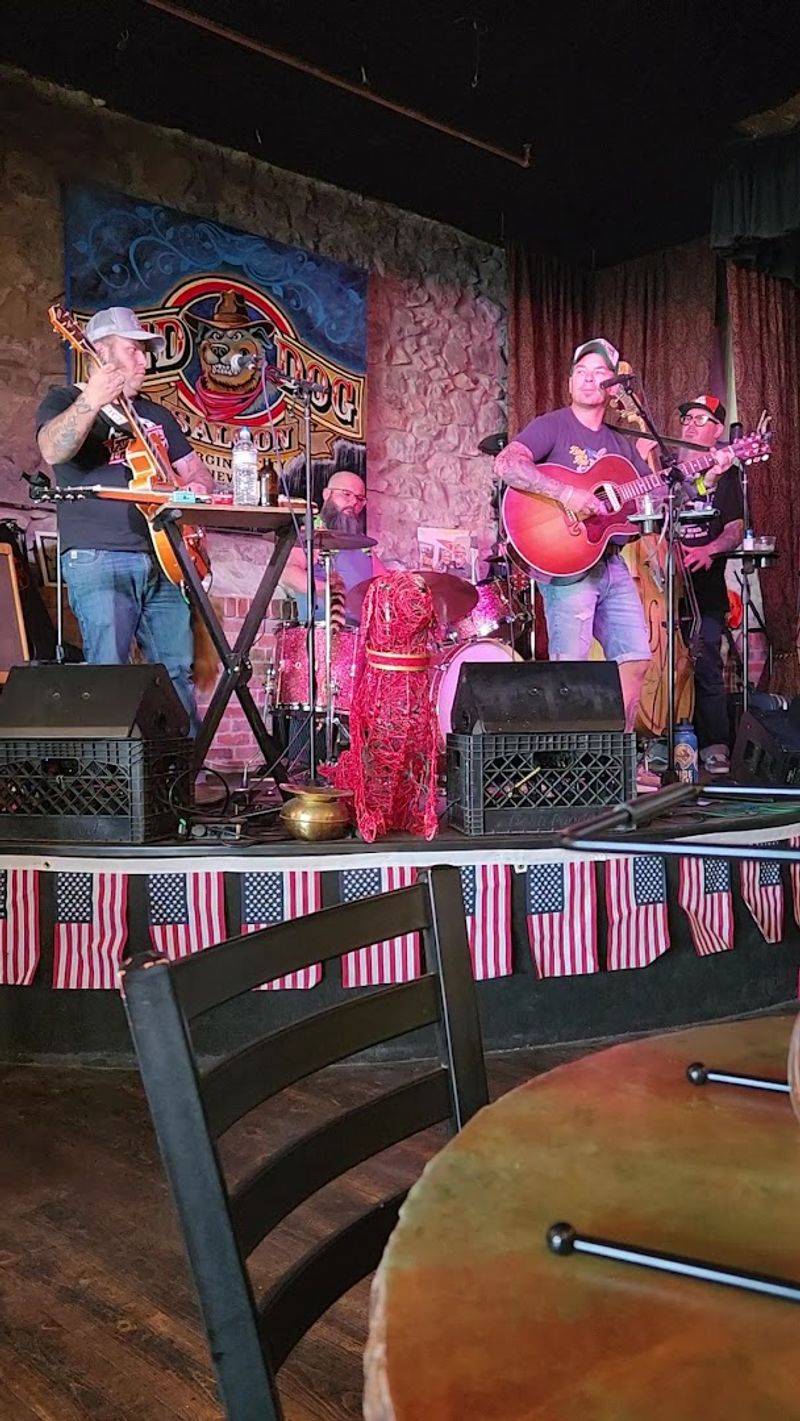
The Red Dog Saloon in Virginia City occupies a building from the 1860s and carries a reputation that extends well beyond Nevada’s borders. During the 1960s, the Red Dog became an unlikely birthplace of the psychedelic rock movement, hosting early performances by bands that would go on to define an entire generation of American music.
That quirky intersection of Wild West history and counterculture legacy makes the Red Dog unlike any other saloon on this list. The building retains its original frontier character, with weathered wood, creaking floors, and a bar that has seen more than a century and a half of stories unfold.
Today visitors can enjoy live music, cold drinks, and that one-of-a-kind Virginia City atmosphere that mixes Old West grit with a surprising artistic spirit. The Red Dog is proof that history does not always follow a straight line, and that is exactly what makes it so fascinating.
10. The Occidental Saloon, Buffalo, Wyoming (1880)
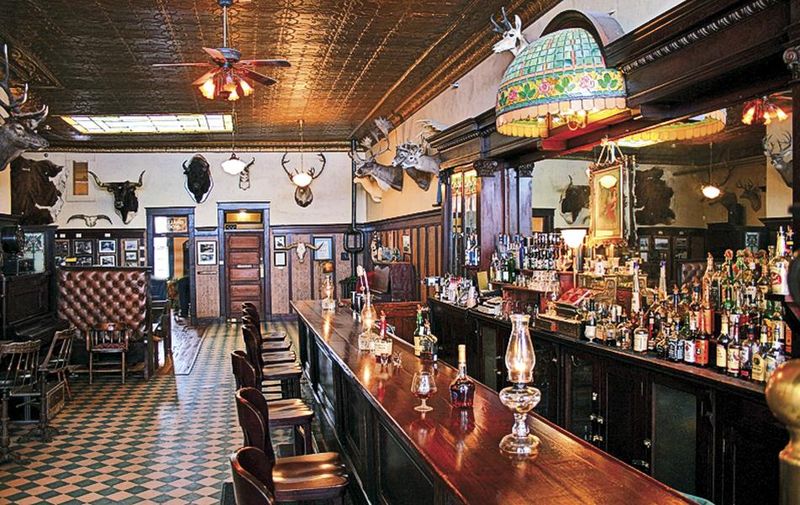
Buffalo, Wyoming’s Occidental Saloon opened in 1880 and quickly became one of the most storied establishments in the entire state. Calamity Jane, Butch Cassidy, and Owen Wister, the author who wrote the landmark Western novel “The Virginian,” all reportedly passed through its doors at one time or another.
Wister actually used the Occidental as inspiration for scenes in his famous novel, giving the saloon a permanent place in American literary history alongside its frontier credentials. The bar was closed for decades before being lovingly restored and reopened, bringing its original pressed tin ceilings, hand-carved wooden bar, and Victorian-era charm back to full glory.
Visitors today can enjoy the restored space while learning about the Johnson County War, one of Wyoming’s most dramatic and violent historical conflicts, which played out right in this region. The Occidental is a remarkable combination of authentic preservation and genuine Western storytelling.
11. Mint Bar, Sheridan, Wyoming (1907)
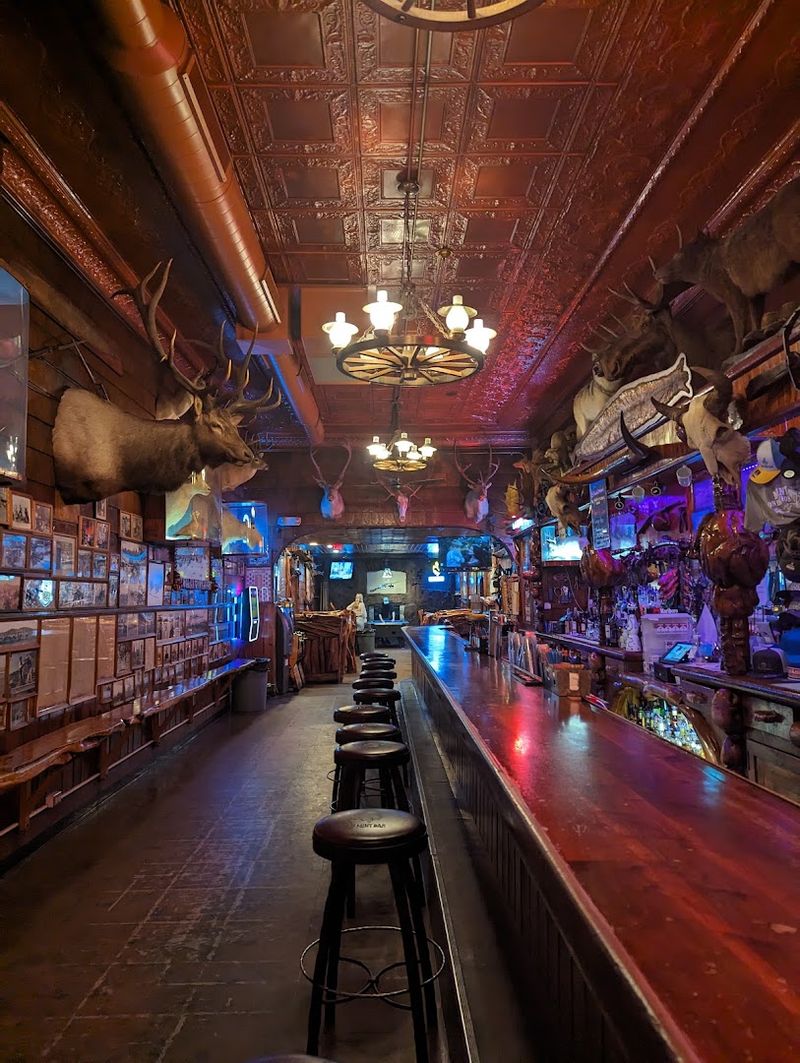
Ernest Hemingway once called the Mint Bar in Sheridan, Wyoming one of his favorite bars in America, and it is not hard to understand why. Opened in 1907, the Mint has a personality that is entirely its own, mixing the rugged authenticity of Wyoming ranch culture with an atmosphere that feels welcoming and warm rather than intimidating.
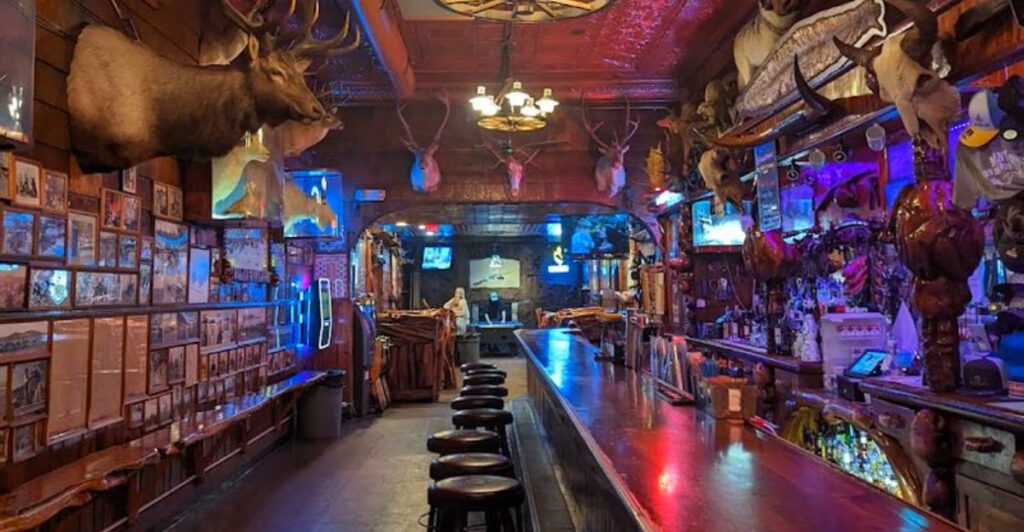
The interior is a spectacular collection of mounted wildlife, vintage neon signs, and rodeo memorabilia that covers nearly every inch of available wall space. It is visually overwhelming in the best possible way, and regulars say the place feels like a living museum of Wyoming life.
Sheridan itself is a charming small city in the shadow of the Bighorn Mountains, and the Mint Bar serves as its unofficial living room. Cowboys, ranchers, tourists, and townspeople all share the same barstools here, continuing a tradition of community gathering that stretches back more than a century.
12. Buckhorn Saloon, San Antonio, Texas (1881)
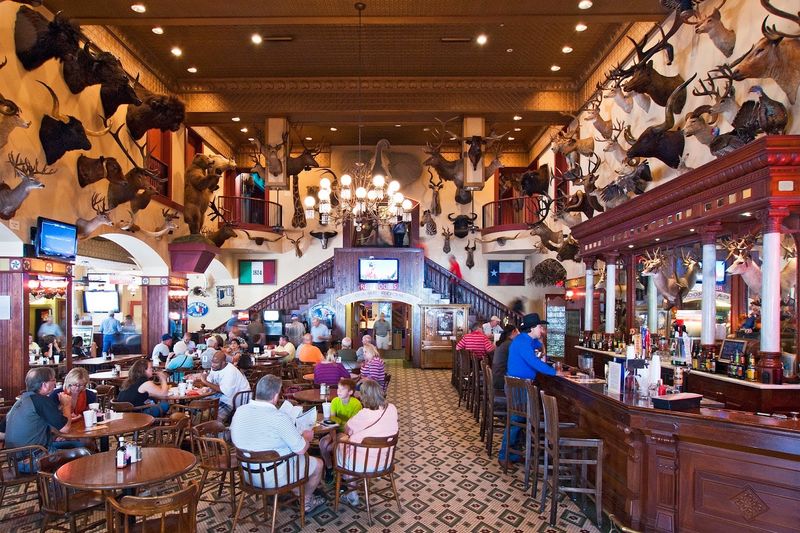
Albert Friedrich founded the Buckhorn Saloon in San Antonio in 1881 with a clever and unusual business model: customers could trade animal horns, antlers, and other wildlife trophies in exchange for a free drink. Over the decades, that policy produced one of the most jaw-dropping collections of taxidermy and natural curiosities in the entire country.
The collection eventually grew so large that the Buckhorn also became a museum, housing thousands of mounted animals, rare horns, and historical artifacts that draw visitors from around the world. Presidents, outlaws, and celebrities have all passed through these doors over the past 140-plus years.
Today the Buckhorn Saloon and Museum is one of San Antonio’s top tourist attractions, located near the famous Alamo. The bar continues to serve drinks just as it has for generations, while the surrounding museum showcases the extraordinary collection that makes this place genuinely unlike anywhere else in Texas or beyond.
13. White Elephant Saloon, Fort Worth, Texas
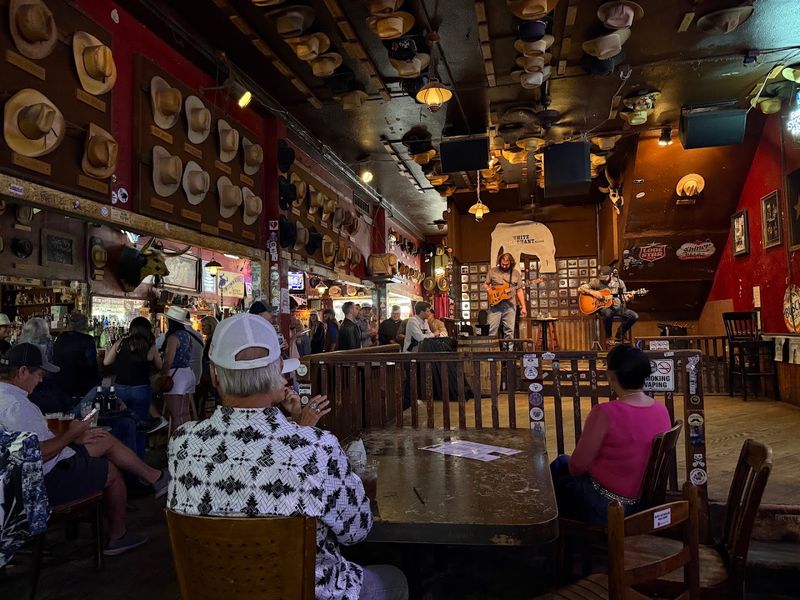
Fort Worth’s White Elephant Saloon carries one of the most famous names in Texas saloon history. The original White Elephant operated in the 1880s and was the site of a legendary gunfight in 1887 between lawman Luke Short and former marshal Timothy Isaiah Long, a confrontation that became part of Fort Worth’s wild folklore.
The modern White Elephant keeps that legacy alive in the heart of the Fort Worth Stockyards, one of the most visited historic districts in the entire state. Live country music fills the air most nights, and the Western decor creates an atmosphere that feels true to the spirit of the original without feeling like a cheap imitation.
The Stockyards district itself is a remarkable place, with longhorn cattle drives still taking place on the main street twice daily. The White Elephant sits right in the middle of all that energy, making it a natural gathering point for visitors who want to experience authentic Texas Western culture.
14. Iron Door Saloon, Groveland, California (1852)
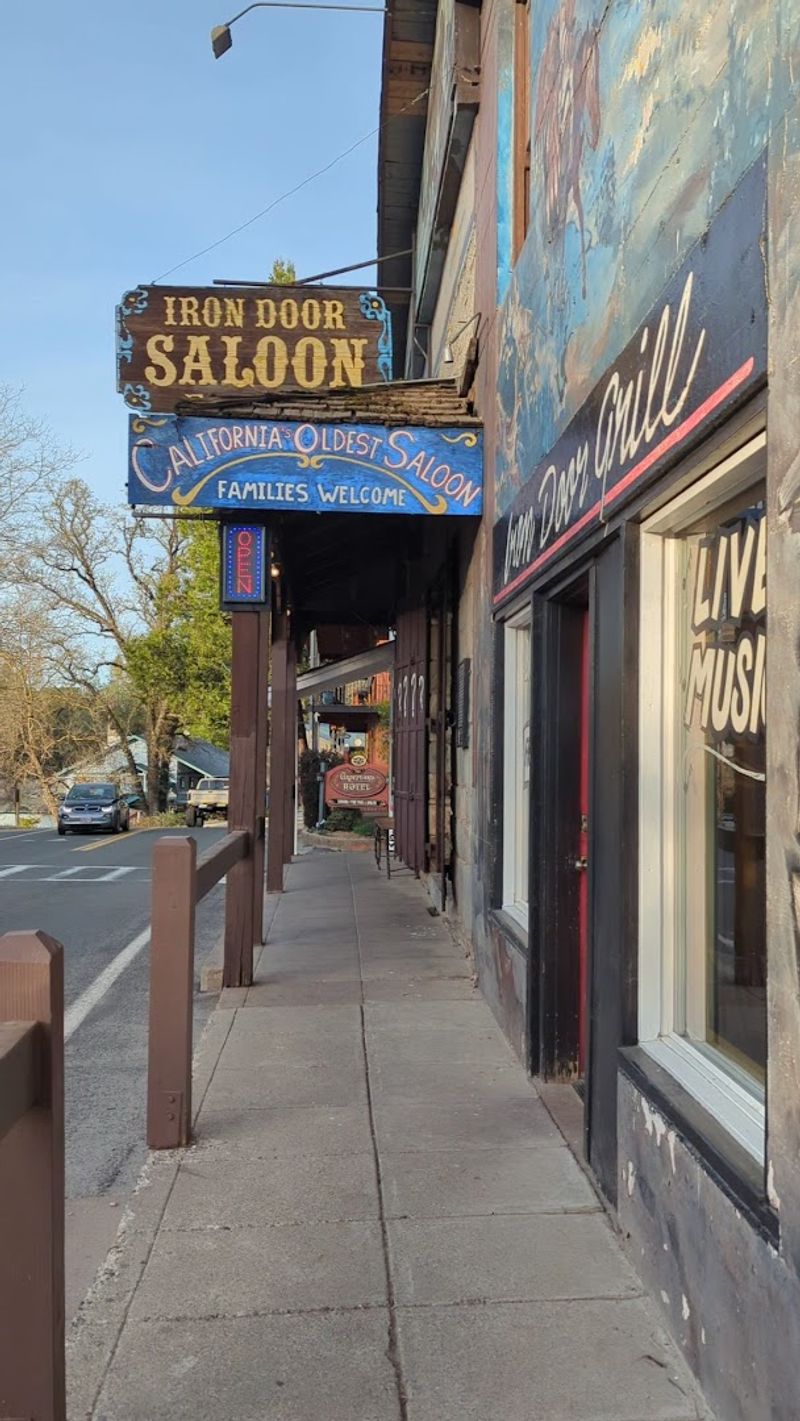
California’s Gold Rush era produced many legendary establishments, but the Iron Door Saloon in Groveland holds the distinction of being the oldest continuously operating saloon in the entire state of California. Founded in 1852, just three years after the Gold Rush began, it served the miners, prospectors, and fortune seekers who flooded the Sierra Nevada foothills in search of riches.
The building itself is constructed from granite and adobe, giving it a solidity that has helped it survive more than 170 years of California history. The famous iron door that gives the saloon its name still hangs at the entrance, a tangible link to the Gold Rush days that feels almost magical to touch.
Groveland sits near the entrance to Yosemite National Park, making the Iron Door a popular stop for park visitors looking for a cold drink and a story. Few California landmarks carry this much genuine, uninterrupted history within their walls.
15. Pozo Saloon, Pozo, California (1858)
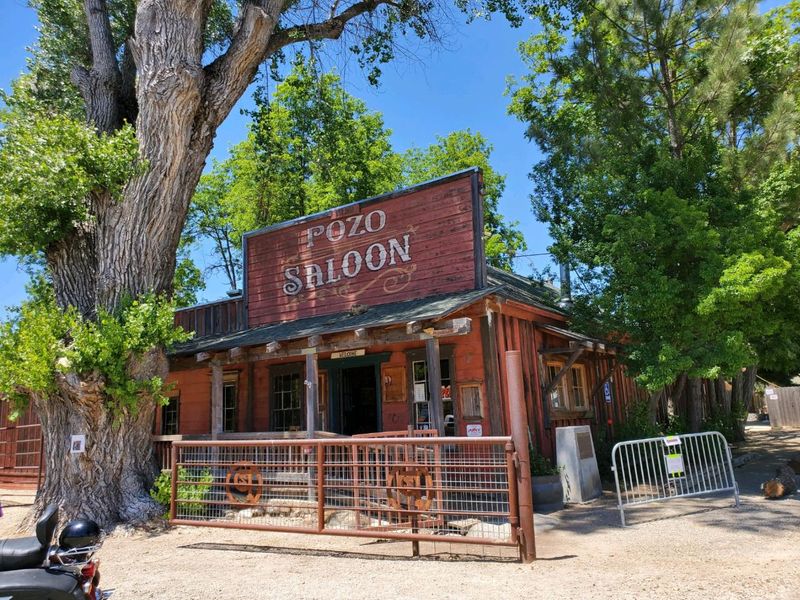
Hidden in the rolling hills of San Luis Obispo County, the Pozo Saloon has been a gathering place for California’s rural communities since 1858, making it one of the oldest surviving saloon buildings in the entire American West. Getting there requires a scenic drive through winding country roads, but regulars and new visitors alike agree the journey is absolutely worth it.
The remote location gives the Pozo Saloon a timeless quality that is increasingly rare in modern California. Weekends often bring live music, barbecue, and motorcycle riders who make the trip out specifically for the saloon’s legendary atmosphere and unpretentious hospitality.
The building retains much of its original rustic character, with a wooden bar and simple decor that let the history speak for itself without any need for embellishment. Pozo is the kind of place that reminds you why the American West captured the imagination of the entire world, and still does to this day.
Share this story