Czechia is quietly becoming one of Europe’s most talked-about travel destinations, and it is easy to see why. From towering castle complexes rising above river valleys to underground caves filled with rare mineral formations, this Central European country packs an extraordinary variety of experiences into a relatively compact area.
Add UNESCO-protected medieval town centers with painted facades, covered arcades, and centuries of history, and you have a destination that genuinely rewards curious travelers. Whether you are planning a first visit or looking to go beyond Prague, this list covers 15 of the most remarkable places Czechia has to offer right now.
Prague Castle, Prague
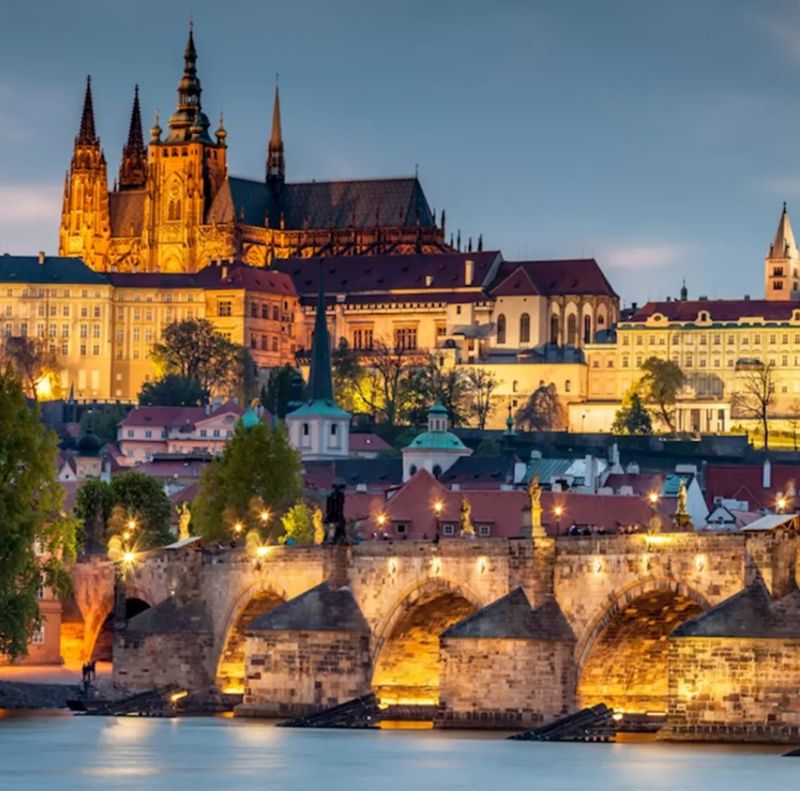
Few places in Europe can claim to be both a working national institution and one of the continent’s largest castle complexes at the same time. Prague Castle covers more than 70,000 square meters of palaces, courtyards, churches, and gardens stretching across a ridge above the Vltava River.
Its origins trace back to around 880, making it one of Central Europe’s oldest continuously occupied royal sites.
Inside the complex, St. Vitus Cathedral alone is worth the trip. Its Gothic nave, stained glass windows, and royal tombs represent centuries of craftsmanship.
The Old Royal Palace, St. George’s Basilica, and Golden Lane add further historical depth to any visit.
Because the grounds and individual buildings operate on separate ticketing systems with seasonal schedule changes, checking the official Prague Castle website before you go will save a lot of confusion at the gate. Early morning entry helps avoid the heaviest visitor crowds.
Karlštejn Castle, Karlštejn
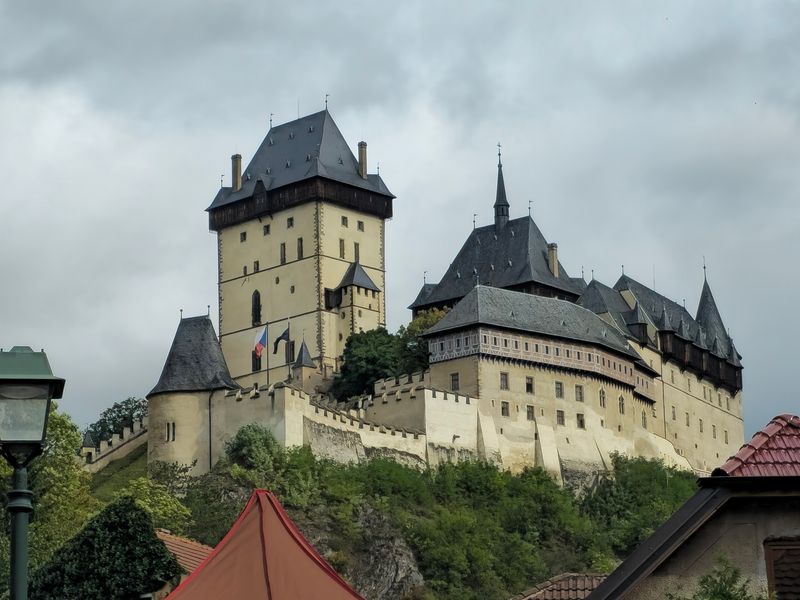
Charles IV did not build Karlštejn Castle as a military stronghold. He built it in the 14th century as a secure royal residence and treasury, designed specifically to protect crown jewels, sacred relics, and the royal archives of the Bohemian kingdom.
That original purpose gives the castle a different character from the typical fortress you find elsewhere in Central Europe.
Visually, Karlštejn is hard to top. Its towers climb steeply above thick forest southwest of Prague, creating one of the most photographed castle silhouettes in the country.
The train ride from Prague to the nearby village is part of the experience, passing through the Bohemian Karst landscape.
Guided tours cover the imperial residence, chapels, and various historic sections of the interior. If you want access to the Chapel of the Holy Cross, which contains the most significant decorative program in the castle, booking that specialized route in advance is strongly recommended because capacity is very limited.
Cesky Krumlov Castle And Historic Centre, Cesky Krumlov
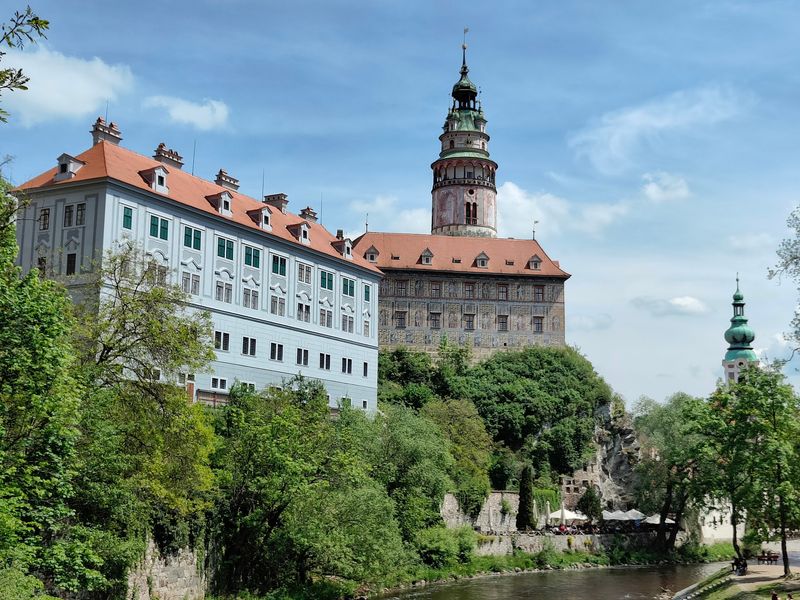
The town of Cesky Krumlov wraps around a tight horseshoe bend in the Vltava River, with a massive castle complex perched on the rock above it. That combination of water, stone, and layered historic architecture gives this South Bohemian town a visual drama that very few places in Europe can match.
UNESCO recognized the historic center decades ago, and the recognition still feels well-earned.
The castle itself is one of the largest in Czechia. Visitors can explore Renaissance and Baroque interiors, climb the painted tower for panoramic views, and walk through formal gardens that extend behind the main complex.
One of the most unusual features is the castle’s Baroque theater, which survives in remarkably complete condition and is considered among the best-preserved examples of its kind anywhere in Europe.
The Castle Museum and tower are open for independent exploration, while the main interior routes operate as guided tours. Multiple sections are scheduled to operate throughout the 2026 visitor season, but specific route hours vary.
Hluboka Castle, Hluboka Nad Vltavou
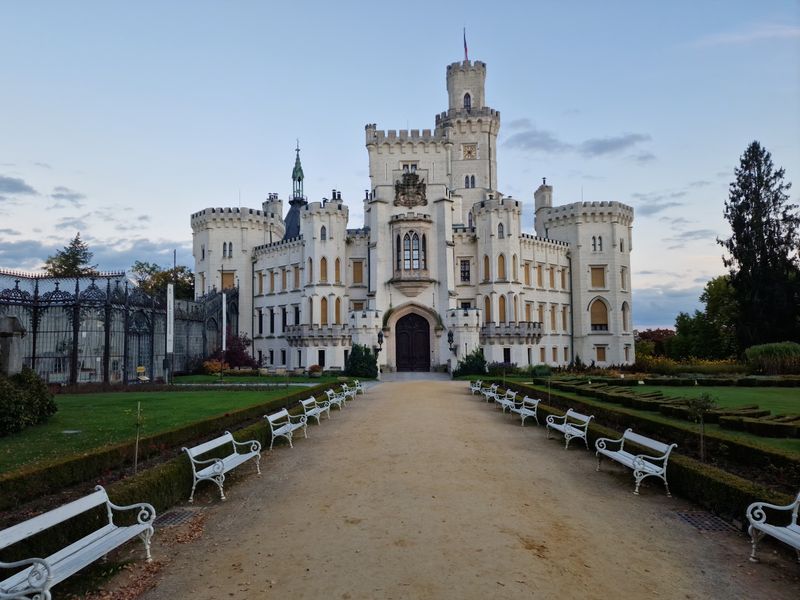
At first glance, Hluboka Castle looks like it belongs somewhere in the English countryside rather than South Bohemia. That resemblance is not accidental.
The Schwarzenberg family redesigned the castle in the 19th century after being inspired by English Gothic Revival architecture, particularly Windsor Castle. Prince Jan Adolf II’s visit to Britain for Queen Victoria’s coronation directly influenced the decorative choices that shaped the building’s current appearance.
The result is a white-walled, tower-studded residence with elaborately furnished interiors that feel more aristocratic country house than medieval fortress. Ceremonial rooms, private apartments, and a historic kitchen are all part of the visitor experience depending on the season and tour route selected.
The castle also offers limited winter access through adapted interior spaces, which makes it a viable excursion even outside the main tourist season. The formal gardens surrounding the building add a pleasant outdoor element to the visit, particularly in spring and early summer when the landscaping is at its best.
Lednice-Valtice Cultural Landscape, South Moravia
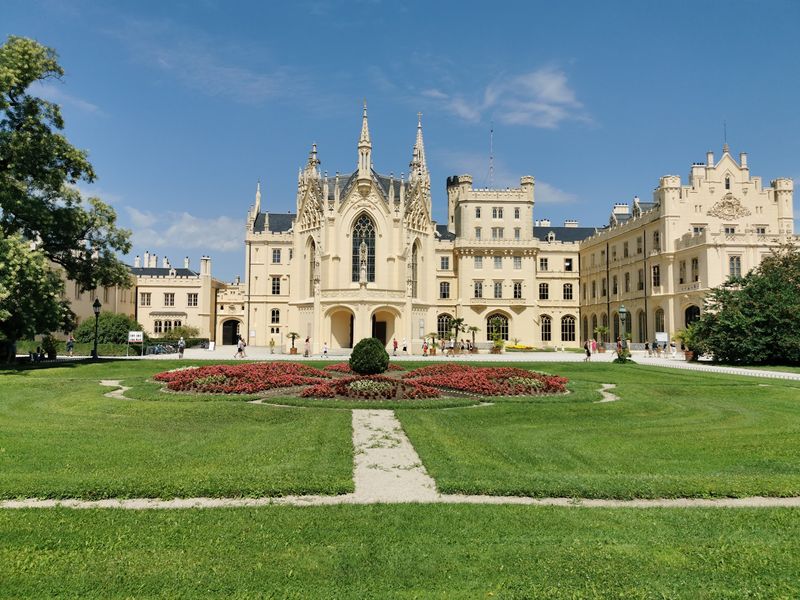
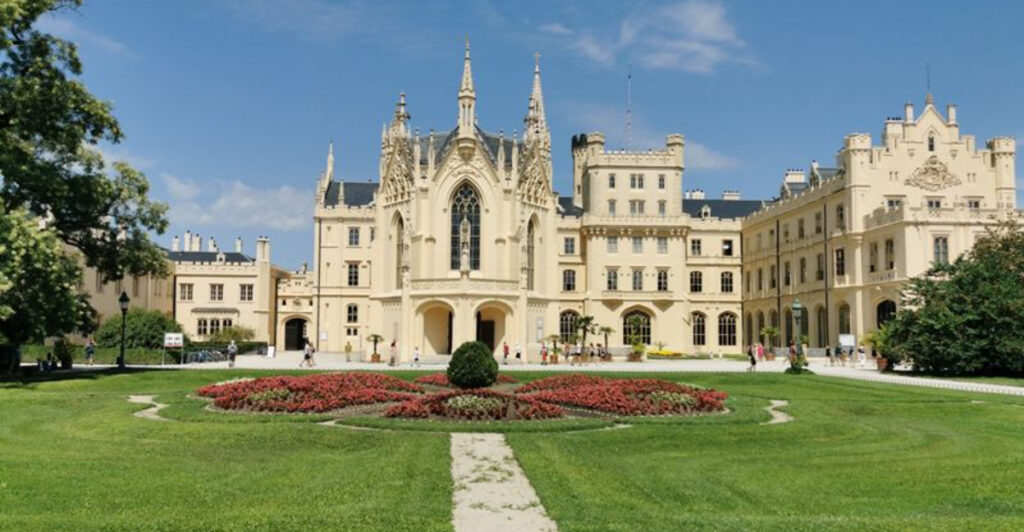
The Lednice-Valtice area is not just a pair of grand residences. It is an entire designed landscape covering roughly 283 square kilometers of South Moravia, shaped over several centuries by the Liechtenstein family into a coordinated composition of palaces, lakes, woodland paths, formal gardens, romantic ruins, and ornamental structures.
UNESCO describes it as one of the largest artificially created landscapes in Europe.
Lednice Chateau anchors one end of the landscape with its ornate Neo-Gothic exterior, elaborate interior rooms, and a large greenhouse. Nearby Valtice adds a Baroque palace, wine traditions rooted in the region’s long viticulture history, and further landscaped grounds worth exploring on foot or by bicycle.
Scattered between the two estates are follies, a minaret, a colonnade, a triumphal arch, and other landscape features that reward visitors who take the time to explore beyond the main buildings. A full day is really the minimum to do this area justice, and two days gives a much more satisfying experience.
Bouzov Castle, Bouzov
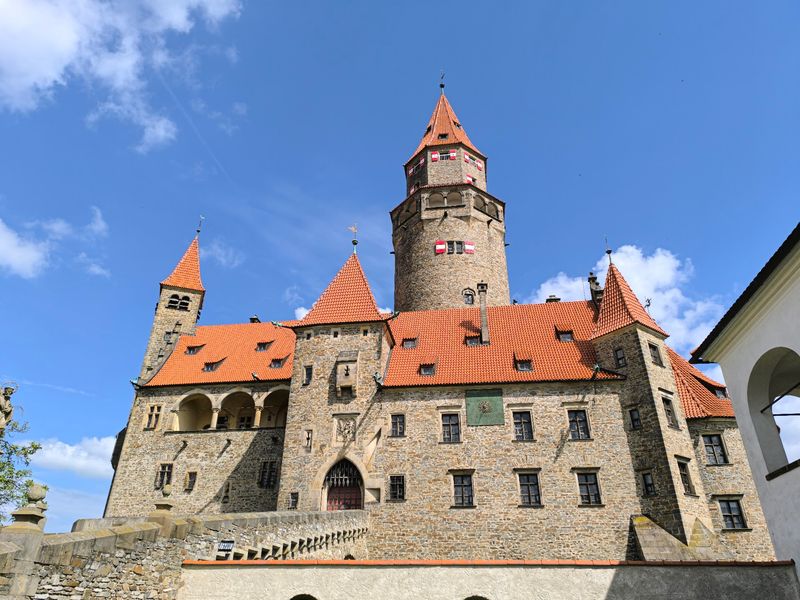
Bouzov looks like the castle a child would draw. Round towers, steep red roofs, stone walls, a working drawbridge, and a dramatic hilltop position all combine to create one of the most visually satisfying castle silhouettes in Moravia.
It genuinely looks like a storybook illustration brought to life, and that quality makes it especially popular with families.
The site has medieval origins, but the romantic appearance visitors see today is largely the result of major reconstruction carried out around the turn of the 20th century, when the Teutonic Order undertook a substantial rebuilding program. The result blends historical fabric with 19th-century ideals of what a medieval castle should look like.
Bouzov is managed by Czechia’s National Heritage Institute and operates guided visitor routes through its courtyards and furnished interiors. Tour availability changes throughout the year, so checking the current schedule before planning a visit is worthwhile.
The surrounding Moravian countryside adds a pleasant rural context to the excursion.
Litomysl Castle And Historic Town, Litomysl
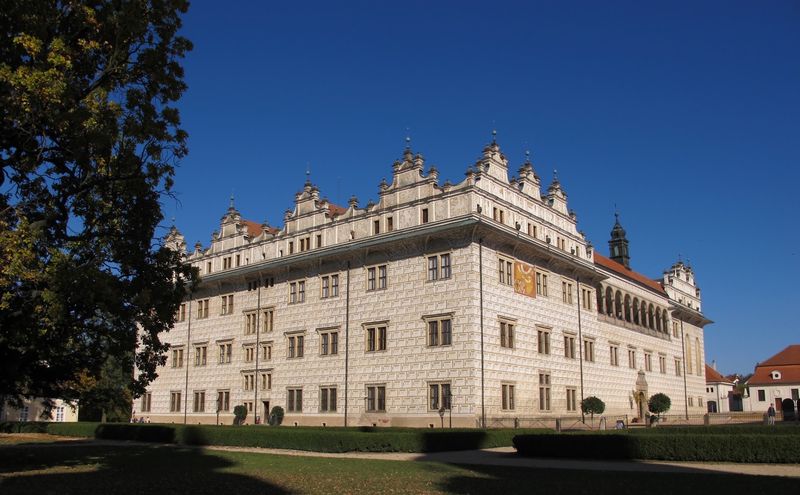
Litomysl Castle has a feature that makes it instantly recognizable among Czech Renaissance monuments. Its exterior walls and arcaded courtyard are covered with thousands of individually carved sgraffito panels, creating a detailed geometric and figurative surface that covers almost every visible facade.
The effect is unlike almost anything else in Central European architecture, and it is the reason the castle earned its UNESCO World Heritage listing.
Beyond the castle, the surrounding historic town adds considerable value to any visit. The main square is lined with colorful historic houses, many with covered arcades that invite a slow walk even in light rain.
The architecture reflects centuries of civic pride from a town that was once an important cultural center in eastern Bohemia.
Litomysl also holds a meaningful place in Czech musical history. Composer Bedrich Smetana, whose work includes the celebrated orchestral cycle Ma vlast, was born in the castle brewery in 1824.
Combining an interior castle tour with a walk through the town square makes for one of Czechia’s most rewarding smaller-city excursions.
Punkva Caves And Macocha Abyss, Moravian Karst
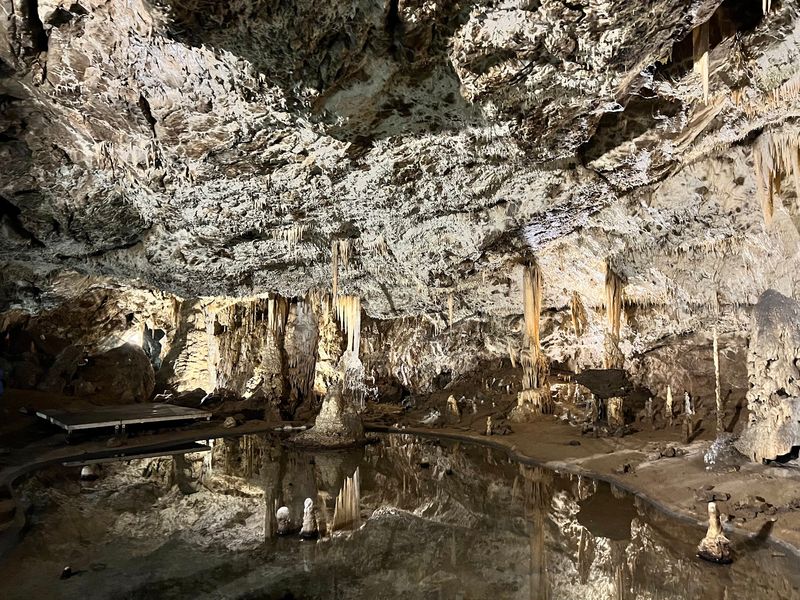
The Moravian Karst north of Brno contains one of the most dramatic underground landscapes in Central Europe, and the Punkva Caves sit at its most spectacular point. Tours pass through a sequence of limestone chambers filled with stalactites and stalagmites before arriving at the floor of the Macocha Abyss, a daylight-filled sinkhole approximately 138 meters deep.
Standing at the bottom and looking up at the sky framed by vertical rock walls is a genuinely striking experience.
Under suitable water conditions, the tour continues with an electric-boat journey along the underground Punkva River, which flows through the cave system before re-emerging at the surface. That boat section is what separates the Punkva tour from most other cave experiences in Czechia.
The caves attract more than 200,000 visitors each year, and tours frequently sell out during the main season between spring and early autumn. Booking tickets in advance through the official Moravian Karst website is strongly advisable, especially for weekend visits or school holiday periods.
Koneprusy Caves, Near Beroun
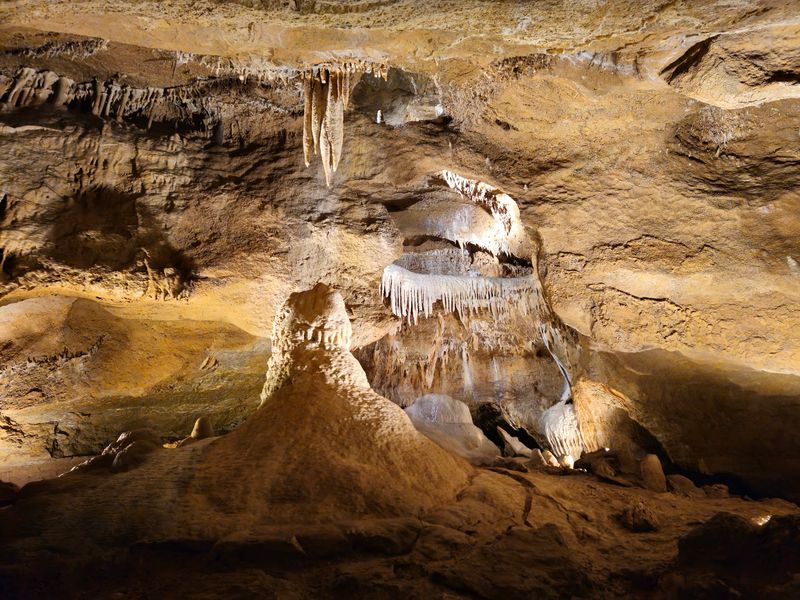
Located in the Bohemian Karst protected landscape southwest of Prague, the Koneprusy Caves extend through three levels of Devonian limestone, making them the largest publicly accessible cave system in Bohemia. The chambers contain a varied collection of speleothem formations including stalactites, stalagmites, cave pearls, and fossil deposits embedded in the ancient rock.
One of the most distinctive features of Koneprusy is a formation type found here called Koneprusy rosettes. These rare calcite structures appear in only a few cave systems worldwide, which gives the site a geological significance beyond its general scenic appeal.
The caves also have an unusual human history. Archaeological excavations revealed evidence of a medieval counterfeiting workshop operating within the cave system, where forgers produced counterfeit coins in the 15th century.
That detail tends to stick in visitors’ memories long after the stalactite formations have blurred together. Guided tours operate on a scheduled basis, with entry times arranged according to visitor numbers and available capacity throughout the season.
Bozkov Dolomite Caves, Bozkov
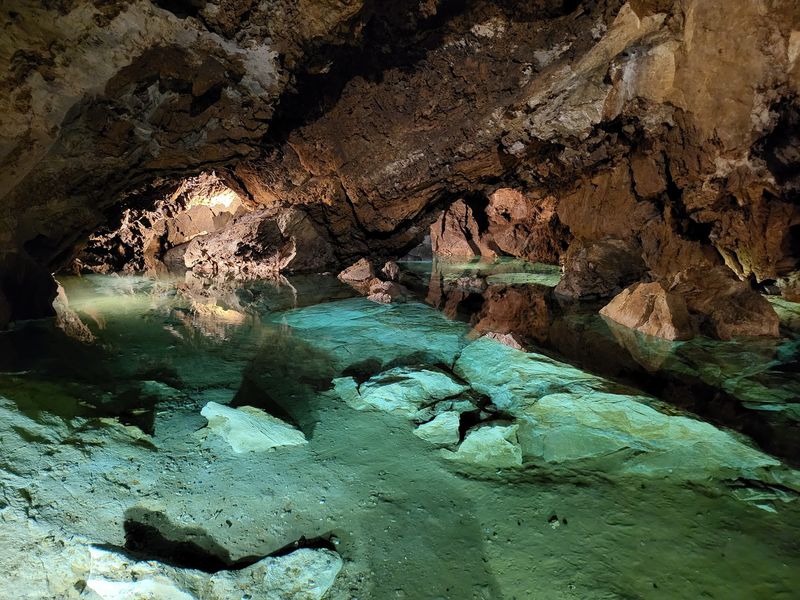
The Bozkov Dolomite Caves in the Liberec Region of northern Bohemia contain something that most Czech cave systems cannot offer: the country’s largest underground lake open to general visitors. The lake sits within a series of narrow passages and sculpted chambers, its still surface reflecting the colorful mineral coatings on the surrounding walls.
The tour route passes through formations named for their shapes, including one called the Petrified Eagle, which gives visitors an easy visual anchor for navigating the underground passages. The dolomite geology produces a different palette of colors and textures compared to the limestone caves found elsewhere in Bohemia and Moravia.
Unlike many seasonal cave attractions that close for extended periods in winter, Bozkov operates for much of the year, although schedules do differ between the main season and quieter months. Because the underground route has limited capacity, reserving ahead during busy periods is a practical step.
The cave sits in a quiet rural corner of Bohemia that sees fewer international visitors than the Moravian Karst.
Zbrasov Aragonite Caves, Teplice Nad Becvou
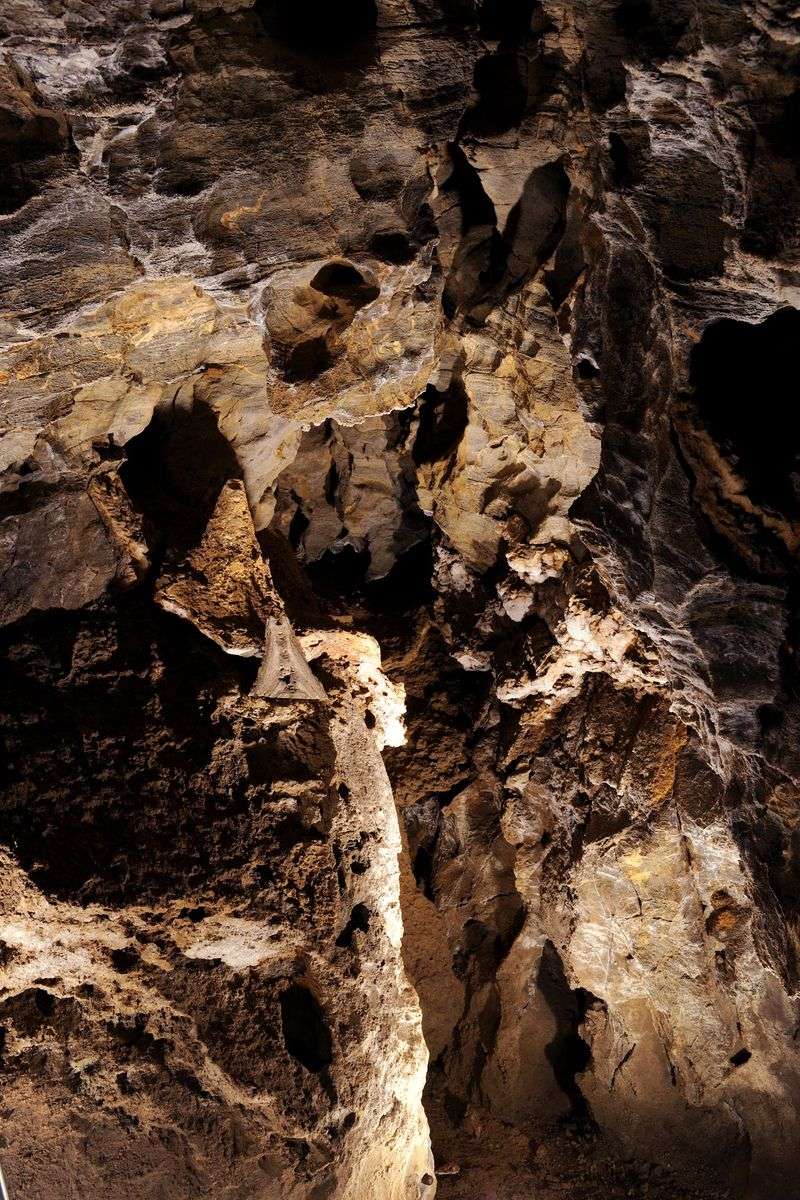
Most cave systems in Czechia formed through the slow dissolution of limestone by cool groundwater. The Zbrasov Aragonite Caves near Teplice nad Becvou followed a different process.
Warm carbon dioxide-rich mineral waters rising from depth created the unusual formations found here, including aragonite crystals, mineral coatings, and rare raft and geyser stalagmites that are not commonly seen in other publicly accessible caves.
The public visitor route stretches approximately 375 meters and maintains a relatively warm year-round temperature of about 14 degrees Celsius, which is noticeably warmer than most Czech cave systems. That warmth makes the visit comfortable even on cold days and gives the atmosphere a slightly humid, tropical quality.
The caves operate under an official seasonal schedule and can be combined with a walk toward the nearby Hranice Abyss, which holds the record for the world’s deepest known underwater cave. Pairing the two sites makes for a full and geologically fascinating day in this corner of Moravia, an area that most international visitors skip entirely.
Kutna Hora Historic Centre, Kutna Hora
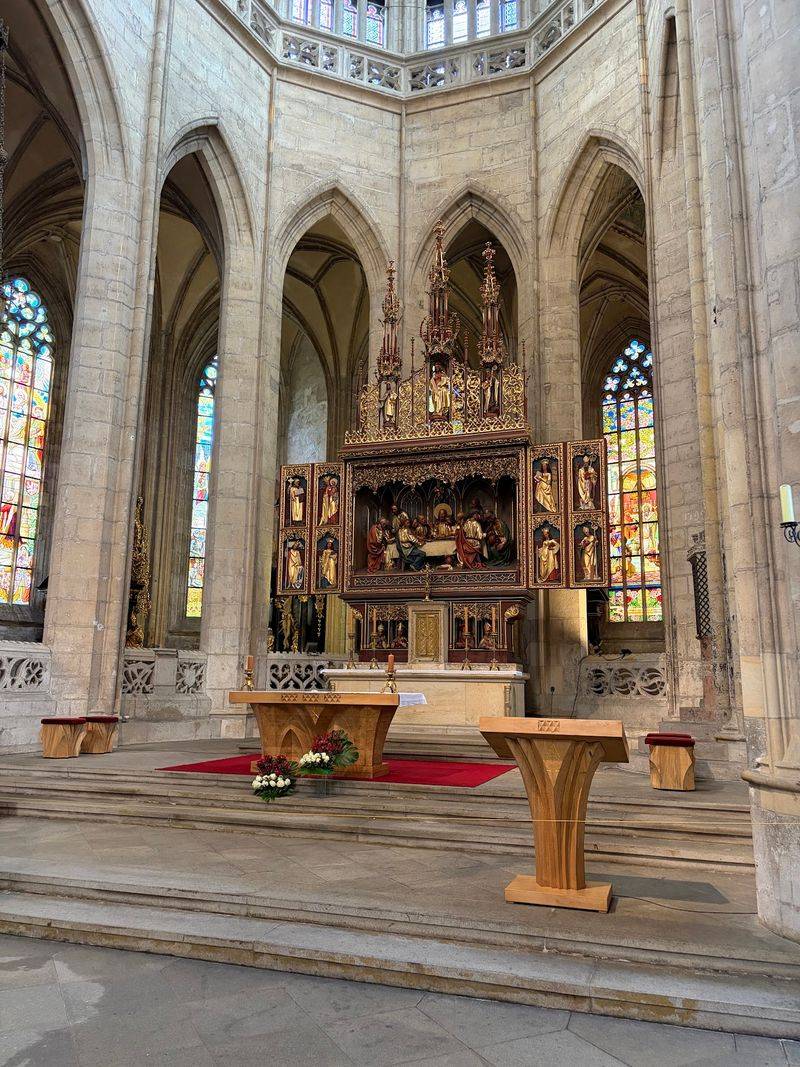
Silver made Kutna Hora one of the wealthiest and most politically significant towns in medieval Bohemia. The royal silver mines operating here from the 13th century funded royal ambitions and financed remarkable architecture, much of which still defines the town’s skyline today.
The historic center holds UNESCO World Heritage status, and the concentration of Gothic monuments within a relatively small area is genuinely impressive.
The Church of St. Barbara, built in honor of the patron saint of miners, is the most celebrated structure in town. Its soaring nave, elaborate vaulted ceiling, and flying buttresses rank it among the finest Gothic churches in Central Europe.
The Cathedral of Our Lady at Sedlec, also UNESCO-listed, adds a second major ecclesiastical monument to any visit.
The Sedlec Ossuary, located near the cathedral, is decorated with arrangements made from human bones and draws visitors from across Europe. The former Italian Court recalls Kutna Hora’s role in Bohemian coin production.
The combination makes this one of the most layered and historically rich day trips from Prague.
Telc Historic Centre, Telc
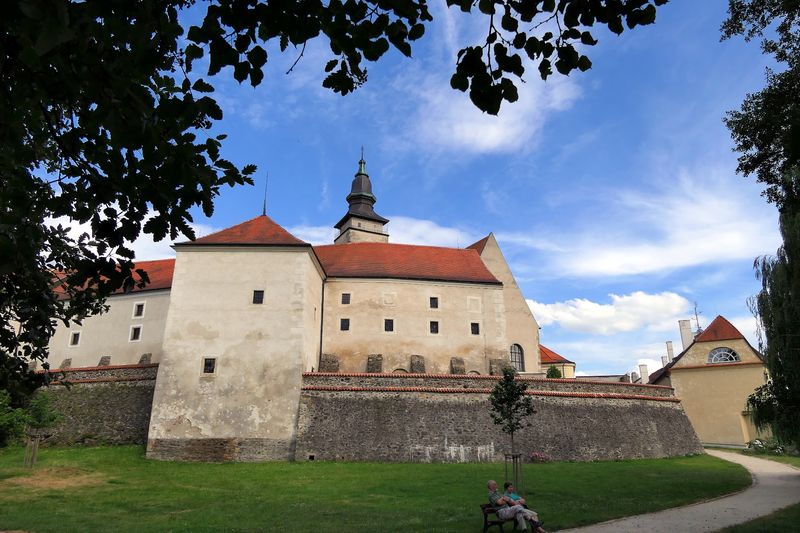
Walking into Telc’s central square feels like stepping into a perfectly preserved Renaissance painting. The square is surrounded on all sides by rows of pastel-colored houses with ornate gables, decorative facades, and covered arcades that have remained largely intact for centuries.
Ponds and former defensive water features frame the town on multiple sides, helping maintain the compact historic core’s visual coherence.
UNESCO added Telc to its World Heritage List in 1992, recognizing the exceptional unity of the townscape and the quality of its Renaissance and Baroque architecture. The town’s chateau adds furnished interior rooms, courtyards, and gardens that complement the outdoor experience of the square.
Telc is small enough to explore comfortably on foot in a few hours, but visually rich enough to justify a slower, more deliberate pace. The town sits in the South Moravian Highlands, making it a natural pairing with the nearby Trebic UNESCO site for visitors who want to combine two World Heritage properties in a single regional trip.
Trebic Jewish Quarter And St. Procopius Basilica, Trebic
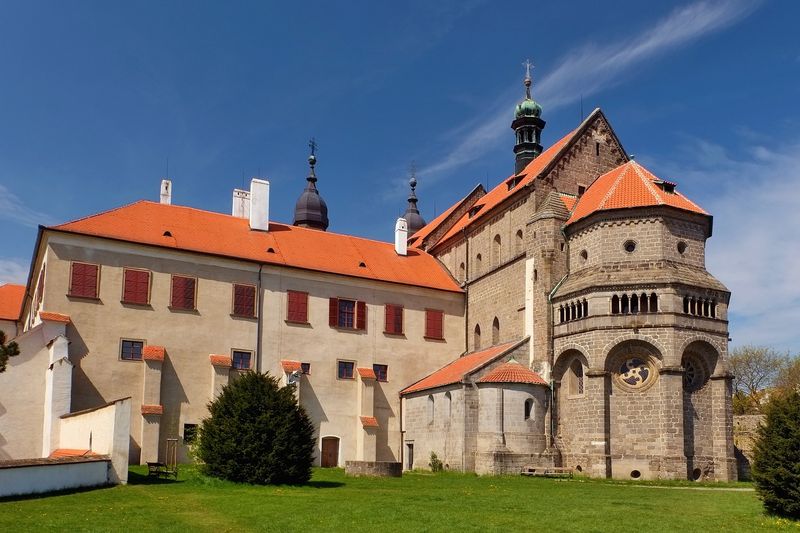
Trebic holds an unusual distinction among UNESCO World Heritage sites in Czechia. It was inscribed not for a single monument but for a combination of Jewish and Christian heritage existing side by side within one town.
The property includes the former Jewish Quarter, a Jewish cemetery, and the Romanesque-Gothic St. Procopius Basilica, which stands just across the river from the quarter.
The Jewish Quarter preserves narrow lanes, historic residential buildings, two synagogues, and communal structures that illustrate centuries of Jewish community life in Moravia. Much of this fabric survived because the quarter was not heavily redeveloped after the community’s decline, leaving an unusually intact record of that history.
Visitors can walk through the quarter independently and tour selected interiors, then cross to the wider historic center and the basilica. The combination of Romanesque architecture, preserved Jewish heritage, and an approachable town scale makes Trebic one of the most thoughtful and quietly moving stops on any Moravian itinerary.
It tends to feel less crowded than the bigger UNESCO sites in Bohemia.
Olomouc Historic Centre, Olomouc
Olomouc is the kind of city that rewards travelers who venture beyond the standard Bohemian circuit. Moravia’s second city has a historic center packed with Baroque fountains, medieval streets, Gothic churches, and palaces, yet it still functions as a lively university town rather than a preserved open-air attraction.
That combination of living city and historic depth gives Olomouc a character that feels genuinely different from Prague.
The Holy Trinity Column at the center of the Upper Square was completed in 1754 and inscribed as a UNESCO World Heritage monument in 2000. Standing 35 meters tall and decorated with gilded religious figures, it is one of the largest Baroque sculptural monuments in Central Europe.
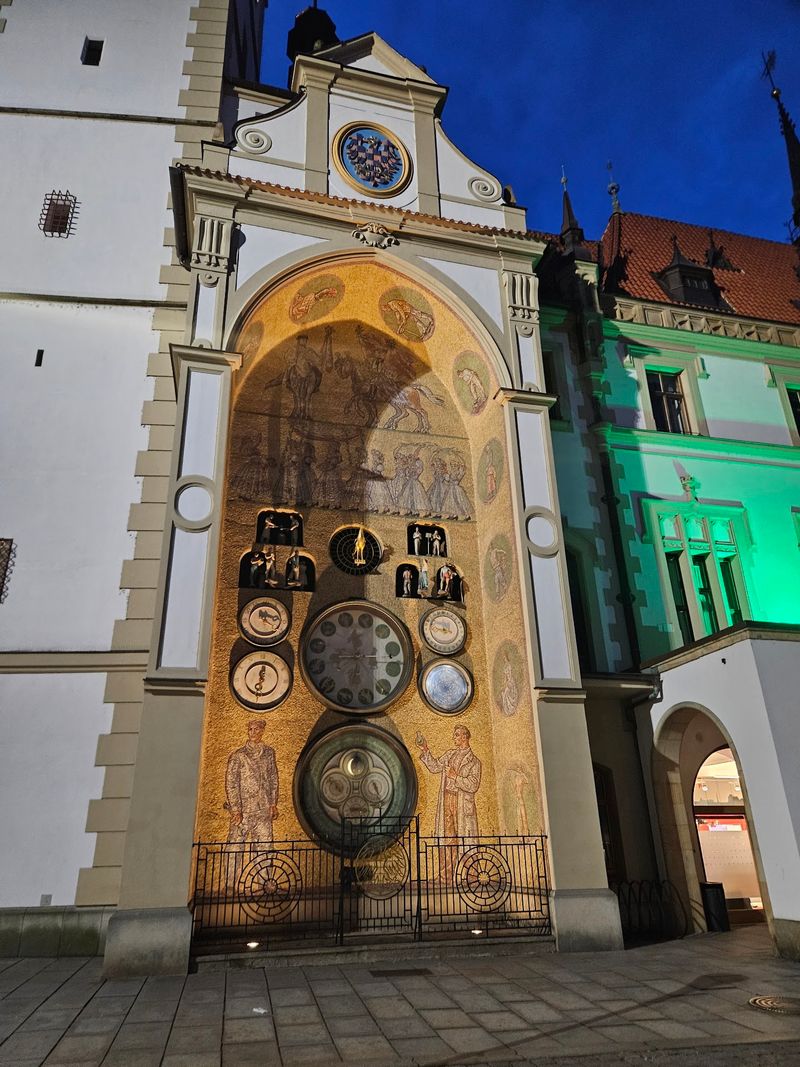
Other highlights include the Olomouc astronomical clock, which was rebuilt in a Socialist Realist style after World War II and is unlike any other astronomical clock in the country, along with St. Wenceslas Cathedral and the Archbishop’s Palace. Olomouc is also a practical base for exploring the wider Moravia region, with good rail connections to Brno and the Moravian Karst.
Share this story