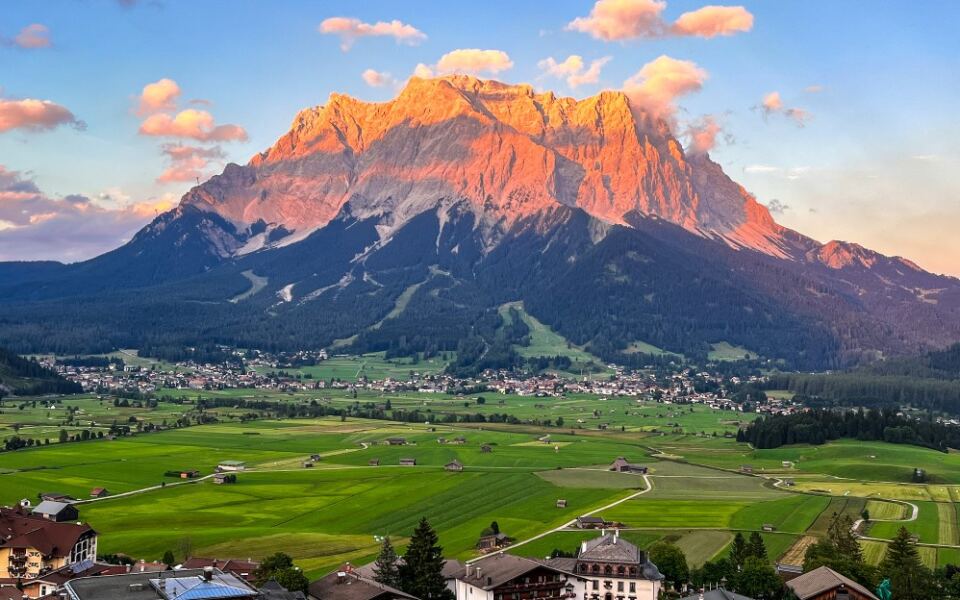
Europe is home to some of the most jaw-dropping mountain scenery on the planet, and you do not have to be a serious climber to enjoy any of it. From the icy peaks of the Swiss Alps to the volcanic craters of southern Spain, the continent offers a remarkable range of high-altitude experiences for every type of traveler.
Some of these mountains have cable cars and cogwheel railways that bring the views right to you, while others reward those willing to lace up their hiking boots and head uphill. Whether you are planning an adventure trip or just dreaming about where to go next, this list covers 18 European mountains that genuinely deliver on the view front.
Each one has something different to offer, and a few of them might completely surprise you.
Matterhorn, Switzerland
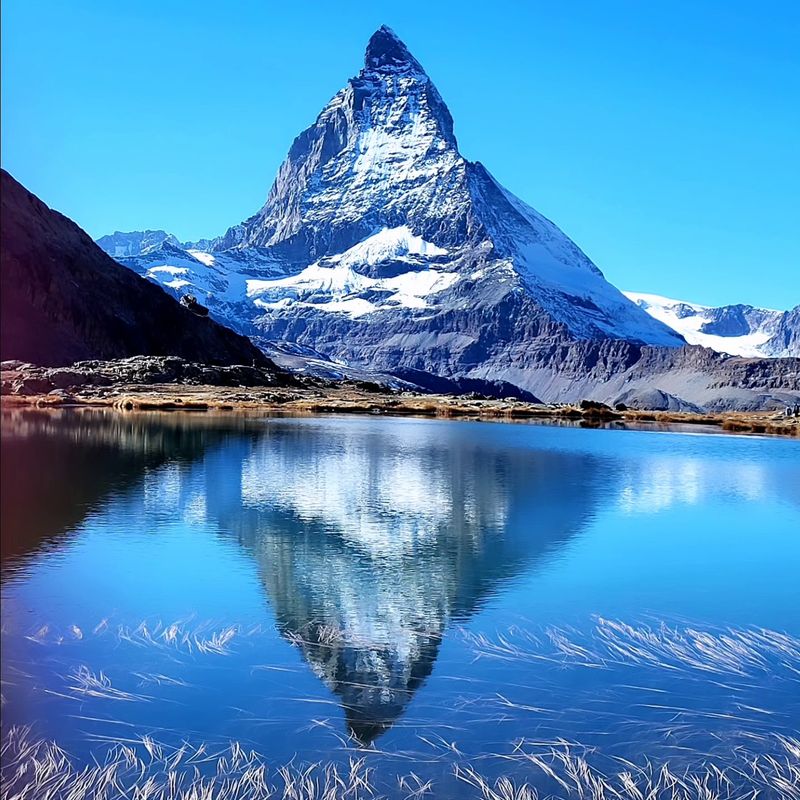
That iconic pyramid shape on the Toblerone chocolate box is a real mountain, and seeing it in person stops people in their tracks. The Matterhorn rises above the car-free village of Zermatt in the Swiss Alps, and its steep four-sided profile is unlike anything else in the range.
You do not need to be a mountaineer to experience it. The Gornergrat Railway, a rack-and-pinion train, climbs to around 3,135 meters and delivers panoramic views of the Matterhorn alongside the Gorner Glacier and dozens of surrounding 4,000-meter summits.
For an even wider perspective, the Matterhorn Glacier Paradise cable car reaches a viewing platform with a full 360-degree panorama spanning Switzerland, Italy, and France.
Weather plays a big role here, so building flexibility into your schedule helps. Clear mornings tend to offer the sharpest views before afternoon clouds roll in from the valley.
Jungfrau, Switzerland
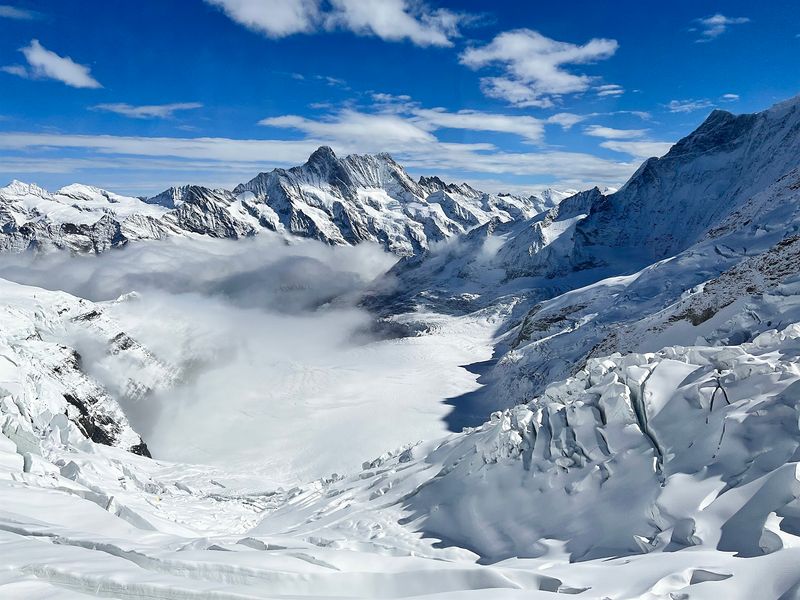
Standing at the Sphinx observation terrace at roughly 3,571 meters, with the Aletsch Glacier stretching out below you like a frozen highway, it becomes very clear why this part of Switzerland draws visitors from every corner of the world.
The Jungfrau sits alongside the Eiger and Monch in the Bernese Oberland, forming one of the Alps’ most celebrated mountain groups. Reaching Jungfraujoch, home to Europe’s highest railway station at 3,454 meters, is the standard way for travelers to experience the area without technical climbing.
The Jungfrau Railway handles the ascent, and the journey itself passes through tunnels carved directly through the Eiger.
Jungfraujoch is advertised as operating 365 days a year, though weather and maintenance can occasionally affect individual services. Booking tickets in advance is strongly recommended, particularly during summer and school holiday periods when the trains fill up quickly.
Mont Blanc, France and Italy
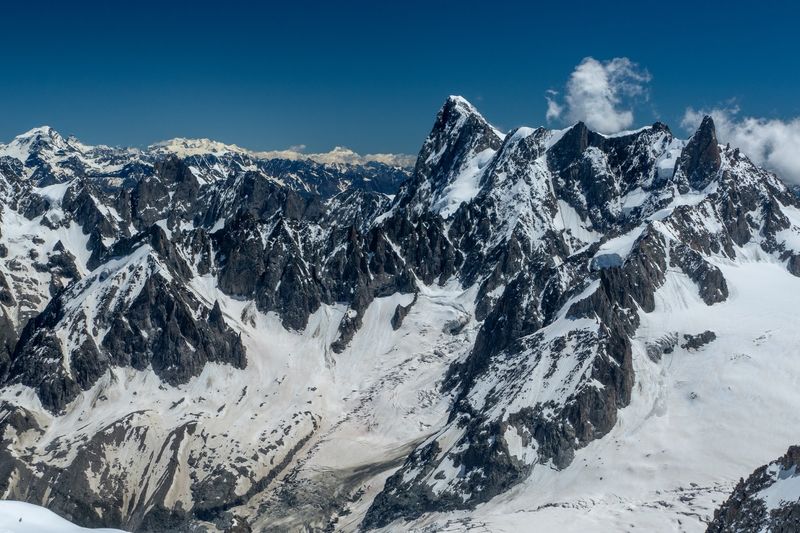
At roughly 4,806 meters, Mont Blanc holds the title of the highest mountain in the Alps, and its scale is genuinely hard to process until you are standing on a terrace looking directly at it.
The summit itself is a serious mountaineering objective that requires technical skills, experience, and proper equipment. Chamonix, the French resort town at the mountain’s base, offers a far more accessible route to the views.
The Aiguille du Midi cable car climbs to over 3,800 meters in two stages, depositing visitors on a narrow rock needle with terraces overlooking Mont Blanc and a sweeping panorama of the French, Swiss, and Italian Alps.
Services operate on seasonal schedules and are subject to closure when wind speeds or icing make operation unsafe. Checking current conditions through the Compagnie du Mont Blanc website before traveling avoids disappointment, especially during shoulder seasons when weather is unpredictable.
Zugspitze, Germany
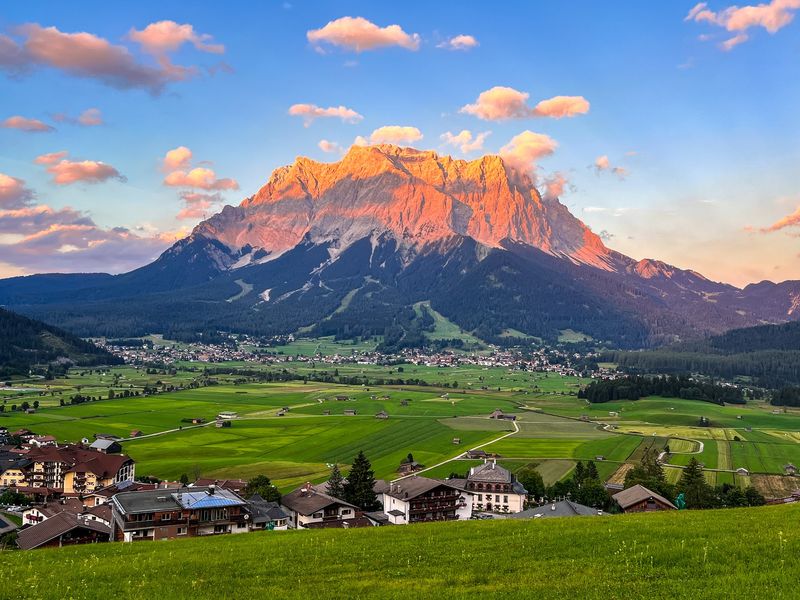
Germany’s highest mountain sits right on the Austrian border at 2,962 meters, and it pulls off the rare trick of offering seriously high-Alpine scenery without demanding a serious mountaineering background to enjoy it.
Visitors can reach the summit area using a combination of cogwheel railway and cable cars, making the experience accessible to a wide range of travelers. On clear days, the elevated terraces reveal an enormous sweep of Alpine peaks stretching across Germany, Austria, Switzerland, and Italy.
Snow regularly lingers at the summit even when the valleys far below are green and warm, which makes the contrast between the upper mountain and the towns beneath it particularly striking.
The mountain transport system operates through much of the year but closes periodically for maintenance. The official schedule already lists complete closures during several periods in late 2026, so checking the Zugspitze website before planning a visit is an essential first step.
Grossglockner, Austria
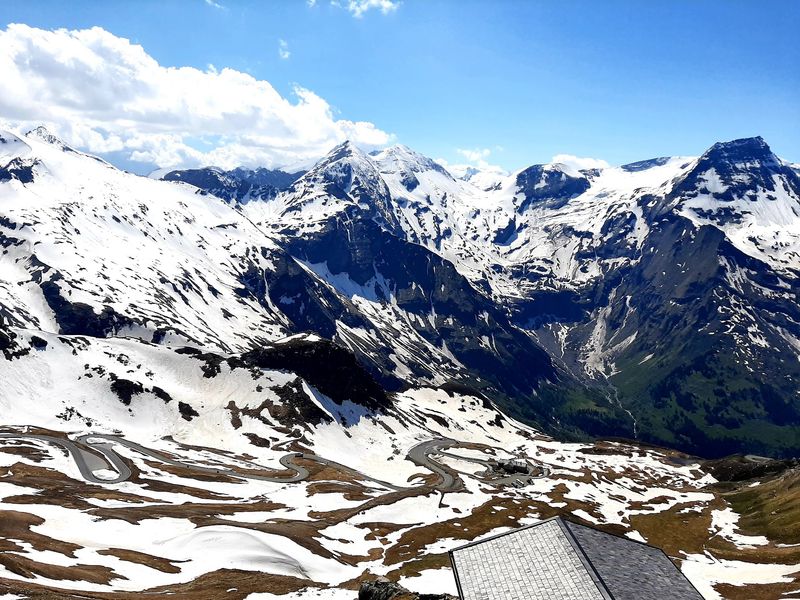
Austria’s highest peak at 3,798 meters sits inside Hohe Tauern National Park, surrounded by some of the most dramatic glacial scenery in the Eastern Alps. Reaching the actual summit requires real mountaineering experience, but the Grossglockner High Alpine Road makes the surrounding landscape available to almost anyone with a car.
The road stretches 48 kilometers through the mountains, eventually reaching viewpoints near the Pasterze Glacier and Kaiser-Franz-Josefs-Hohe. A separate side road climbs to Edelweissspitze at 2,571 meters, where a viewpoint looks across more than 30 peaks above 3,000 meters.
The setting is genuinely impressive, with the glacier visible below and the Grossglockner summit rising sharply above.
The road is seasonal and typically runs from late April through early November, with hours shortening as autumn progresses. Snow and weather can cause temporary access restrictions, and a toll applies to drive the route.
Planning ahead makes the experience considerably smoother.
Triglav, Slovenia
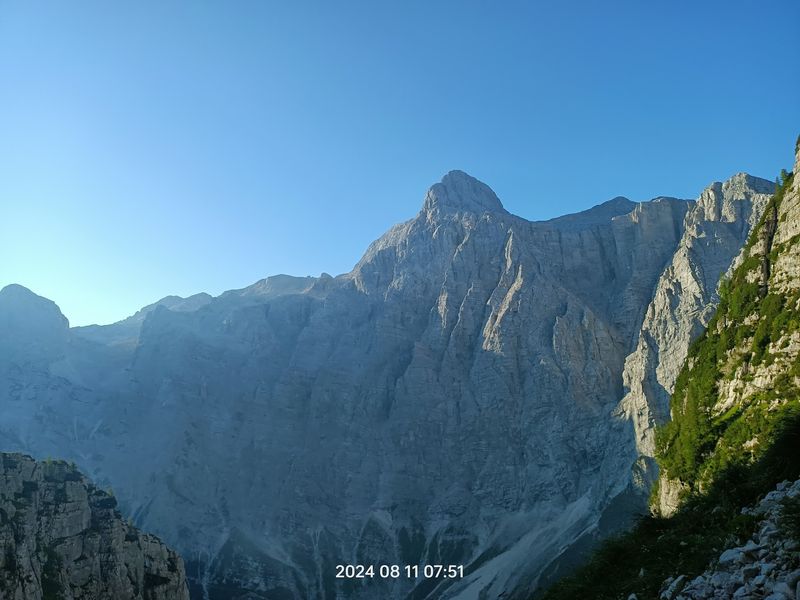
Triglav is more than just Slovenia’s highest mountain at 2,864 meters. It is a national symbol so deeply embedded in Slovenian identity that the mountain appears on the country’s flag and coat of arms.
That alone tells you something about the hold it has on the people who live beneath it.
The Julian Alps surrounding Triglav offer a landscape of limestone peaks, glacial valleys, alpine meadows, and turquoise rivers that many travelers find just as rewarding as the summit itself. Reaching the top is considerably more demanding than an ordinary hike, with exposed upper sections that require appropriate mountain experience and equipment.
Triglav National Park has marked routes at various difficulty levels, and plenty of outstanding viewpoints can be reached without attempting the highest terrain. The park strongly encourages hikers to match their route choice to their actual experience level, carry proper gear, and check conditions before heading into higher elevations.
Ben Nevis, Scotland
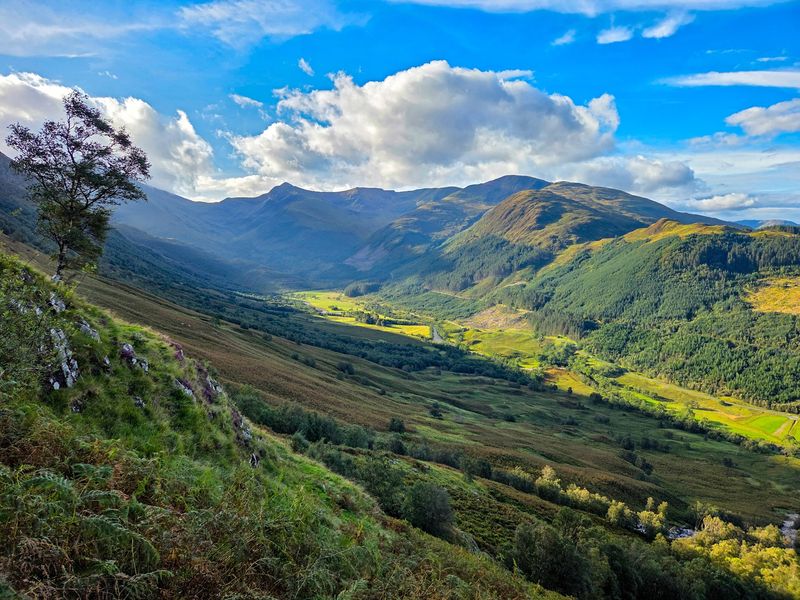
Ben Nevis reaches 1,345 meters above Fort William, which makes it the highest mountain in the entire United Kingdom. The number might look modest next to the Alps, but Scotland’s weather and the mountain’s north-facing cliffs create conditions that demand genuine respect from anyone heading upward.
The Mountain Track, starting near the Ben Nevis Visitor Centre in Glen Nevis, is the most commonly used ascent route. On one of those rare clear Scottish days, the summit panorama stretches across Highland mountains and lochs in every direction, with exceptional visibility occasionally extending far beyond the immediate region.
VisitScotland is clear that even the standard route requires solid footwear, appropriate clothing, physical fitness, and basic navigation skills. Fog rolls in frequently, and conditions can shift from manageable to genuinely serious in a short time.
The famous view is never guaranteed, which makes it feel all the more rewarding when it actually appears.
Yr Wyddfa (Snowdon), Wales
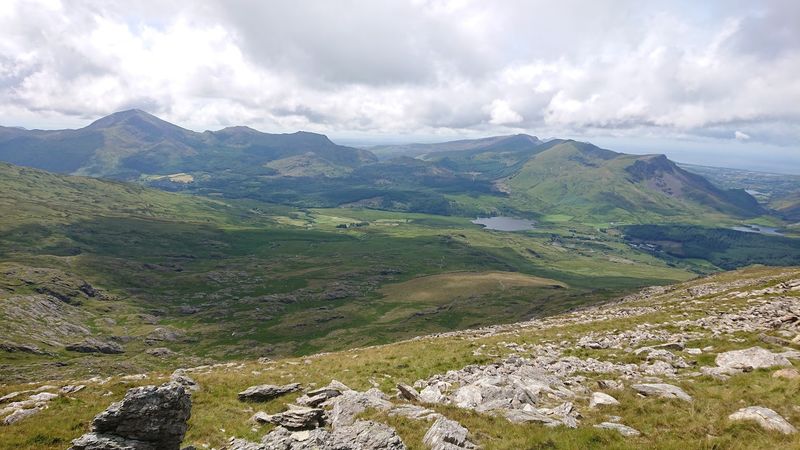
Known internationally as Snowdon but officially named Yr Wyddfa in Welsh, this mountain reaches 1,085 meters and stands as the highest point in Wales. Its position in Eryri National Park places it at the center of a landscape of ridges, lakes, and ancient geology that rewards exploration at every level.
Several established walking routes lead to the summit, ranging from the relatively straightforward Llanberis Path to the more challenging Crib Goch ridge. The Snowdon Mountain Railway offers an alternative for those who prefer to ride, operating seasonally with services dependent on weather and demand.
On clear days, the summit view extends across the national park, surrounding mountain groups, and distant coastlines.
For 2026, summit railway services operate mainly during warmer months, with certain autumn services terminating lower at Clogwyn due to planned works. Hiking access operates independently of the railway and always requires proper preparation, including waterproofs and sturdy footwear regardless of the forecast.
Mount Etna, Italy
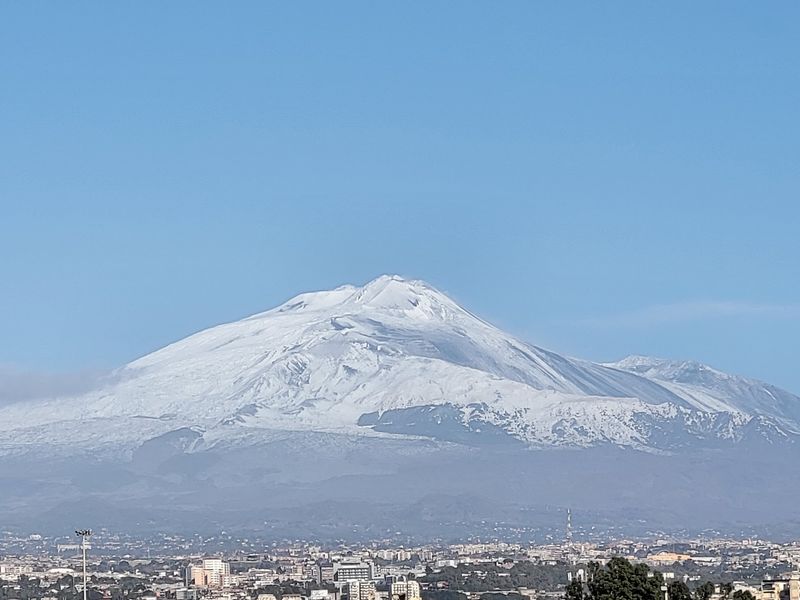
Mount Etna is Europe’s largest and most active volcano, and it towers over eastern Sicily at a height that changes periodically as eruptions reshape the summit. The views from its upper slopes combine volcanic craters, dark lava fields, dense forests, and a wide Mediterranean coastline in a single panorama that no Alpine peak can replicate.
The most common approach for visitors is from Rifugio Sapienza on the southern side, where the Etna cable car climbs into the high volcanic landscape. The cable car was confirmed fully operational following routine maintenance in September 2026.
Higher excursions into the summit crater area are more restricted and should be undertaken with qualified guides, as volcanic activity directly affects which zones are accessible at any given time.
The contrast between the lush lower slopes, where vineyards and chestnut forests grow in fertile volcanic soil, and the stark upper terrain of solidified lava is one of the most visually dramatic transitions anywhere in European mountain travel.
Mount Vesuvius, Italy
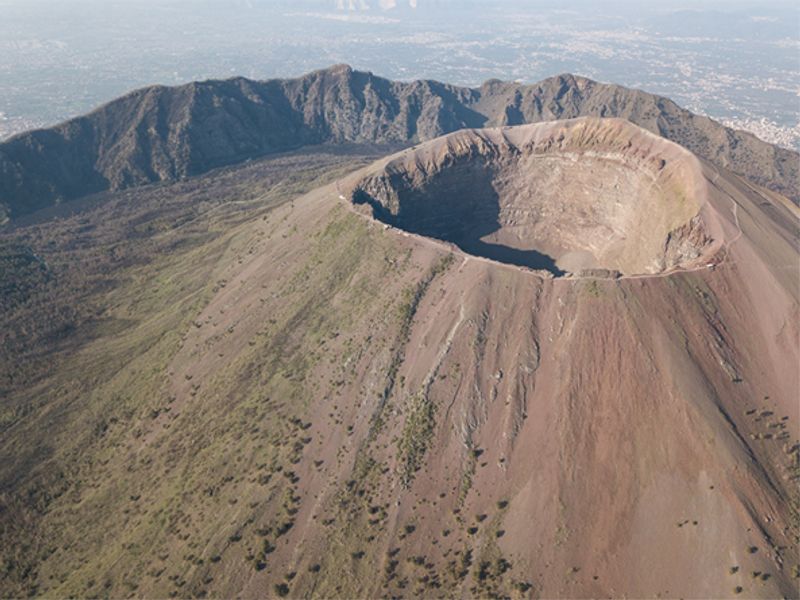
Very few European mountains let you peer directly into an active volcanic crater while a major city and sparkling bay spread out below you. Vesuvius manages both at once, which makes it one of the most unusual viewpoint experiences on this entire list.
The main tourist route is Trail No. 5, known as Il Gran Cono. Visitors climb gradually through a landscape of volcanic rock and sparse vegetation before reaching the crater rim, where the full scale of the caldera becomes visible.
Naples and the Bay of Naples fill the background in a view that has drawn travelers for centuries.
Entry is controlled and tickets must be purchased online in advance. Part of the trail temporarily closed after landslides in June 2026, but the park announced that full crater access was restored in July.
Severe weather or civil-protection alerts can still cause temporary closures, so checking the park’s current status before visiting remains important.
Mount Teide, Spain
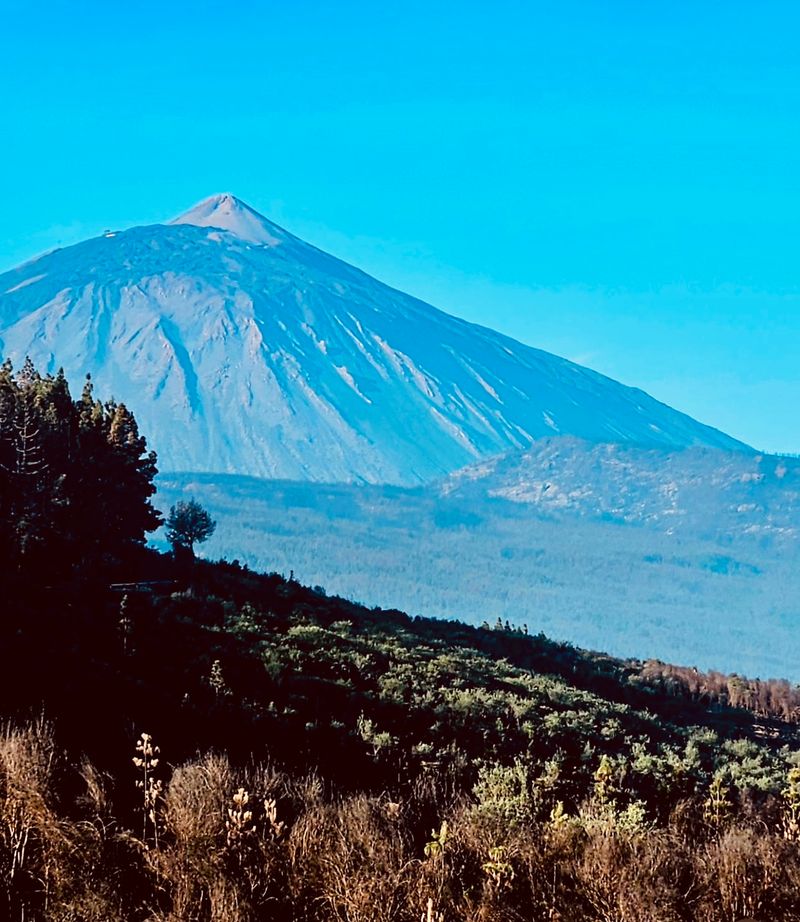
Spain’s highest mountain at 3,715 meters sits on Tenerife in the Canary Islands, rising from a landscape of ancient lava formations, volcanic craters, and high desert terrain that looks more like another planet than a beach holiday destination.
The Teide Cable Car carries visitors high onto the mountain, reaching an elevation where the clouds often sit far below and the curvature of the horizon becomes noticeable. The upper landscape is stark and otherworldly, with the red and ochre tones of the volcanic rock contrasting sharply against the blue Atlantic sky.
A cable-car ticket does not automatically grant access to the actual summit. The final section to the top requires a separate permit, which must be arranged in advance through the Teide National Park permit system.
Certain hiking routes in the park also require permits and specific equipment. Despite Tenerife’s warm coastal climate, conditions at this altitude change quickly, and temperatures at the summit can be genuinely cold.
Pico do Areeiro, Portugal
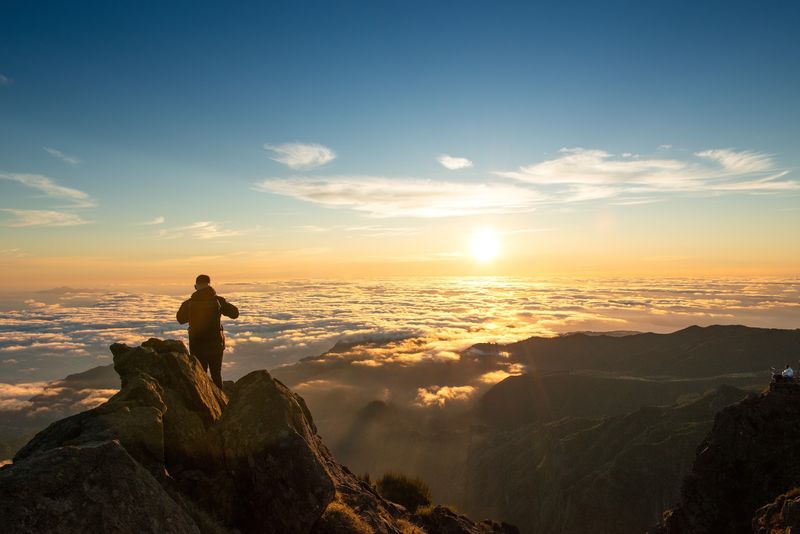
One of the easiest high-altitude viewpoints on this entire list to reach by road, Pico do Areeiro sits at 1,818 meters in the heart of Madeira’s central mountains. A paved road leads directly to the summit area, making the panorama accessible even for travelers who are not planning a full hiking day.
The landscape from the top is dramatic in a way that surprises many first-time visitors. Sharp ridges drop into deep valleys, and the Atlantic Ocean appears in the distance beyond the island’s coastal edges.
Clouds frequently settle below the viewpoint, producing the striking effect of standing above a solid white sea while the peaks rise clear above it.
On genuinely clear days, the view extends to landmarks including Ponta de Sao Lourenco and Curral das Freiras. Pico do Areeiro also serves as a trailhead for PR1, the high-level route toward Pico Ruivo.
Madeira’s trail system now requires advance booking for classified routes, so checking official status before heading out is essential.
Pico Ruivo, Portugal
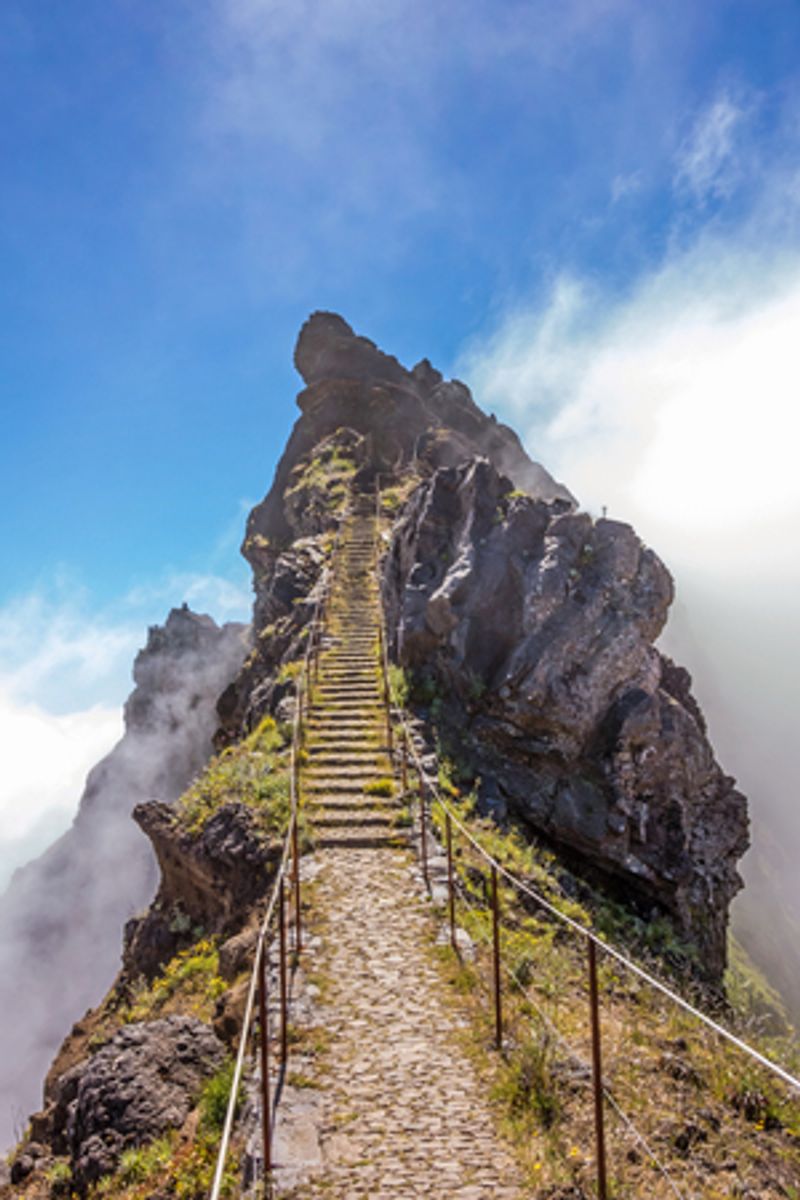
At 1,862 meters, Pico Ruivo is the highest point in Madeira, and its exposed summit position gives hikers a sweeping view across the island’s rugged central highlands that feels earned in a way a cable-car ride simply cannot replicate.
Peaks rise sharply from narrow valleys in every direction, and clouds frequently drift through the lower elevations while the summit sits clear above them. The most straightforward approach follows PR1.2 from Achada do Teixeira, a relatively manageable route compared to the longer traverse from Pico do Areeiro.
That longer route is one of Madeira’s most celebrated hikes, connecting the two highest points across a series of exposed ridges and dramatic viewpoints.
Madeira’s trail network is actively managed, and individual routes can be classified as open, restricted, or temporarily closed based on safety conditions. Reservations are now required for classified walking trails, making it important to check the official regional hiking website well before your planned visit date.
Mount Olympus, Greece
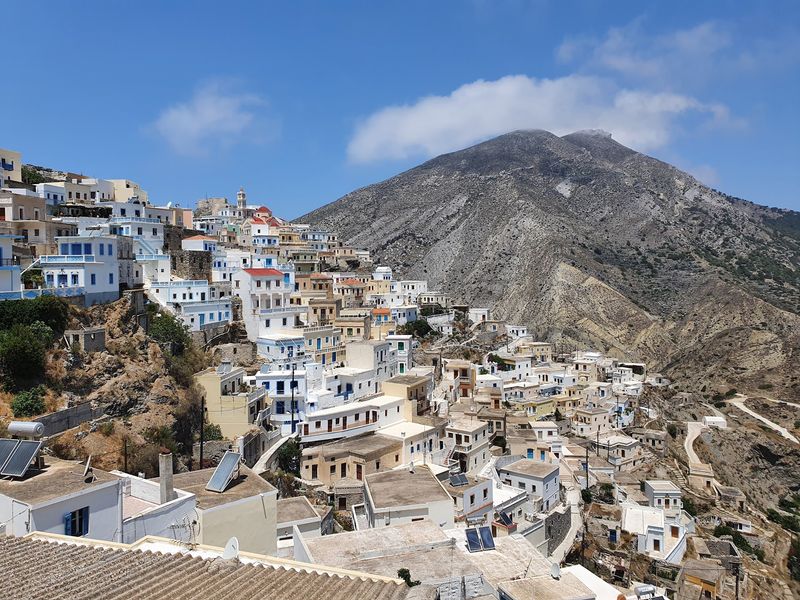
No other mountain on this list carries quite the same cultural weight. Mount Olympus was considered the home of the Greek gods in ancient mythology, and standing on its upper ridges with the landscape of northern Greece spreading out below, it is not hard to understand why the ancients looked up here for something divine.
The highest summit, Mytikas, reaches 2,918 meters. A classic approach begins at Prionia and climbs through forested valleys and past waterfalls before reaching the Spilios Agapitos refuge, which serves as a base for higher ascents.
The terrain above the refuge becomes considerably more demanding, with steep and exposed sections on the route toward Mytikas that require surefootedness and a calm head for heights.
Travelers who stop below the highest terrain still enjoy outstanding views across northern Greece from the mountain’s upper trails. The combination of natural scenery and layered historical significance makes Olympus a genuinely distinctive destination on any European mountain itinerary.
Musala, Bulgaria
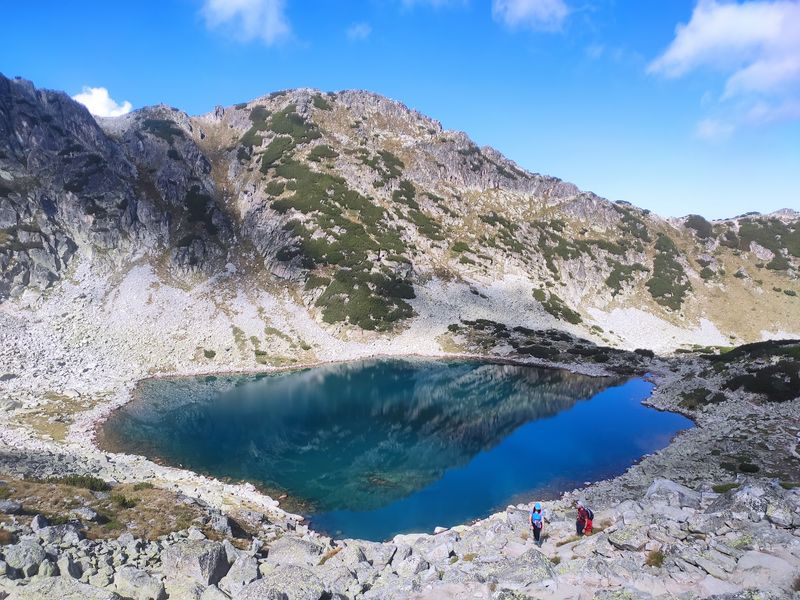
Bulgaria does not always appear at the top of European mountain destination lists, but Musala makes a strong case for the country’s alpine credentials. At 2,925 meters, it is the highest peak in Bulgaria and the entire Balkan Peninsula, sitting above a landscape of glacial lakes, rocky ridges, and conifer forests in the Rila Mountains.
The Musala Lakes sit on a series of glacial terraces below the summit, adding a scenic layer to the ascent that many hikers find just as rewarding as the top itself. The most popular approach starts from the Borovets ski resort area and follows a trail through progressively more exposed terrain as elevation increases.
Unlike the cable-car and railway experiences elsewhere on this list, Musala is purely a hiking destination. Current mountain weather and trail conditions matter considerably more than any posted schedule.
Snow and ice extend the difficulty significantly during colder months, so timing a visit for the stable summer season makes the experience far more straightforward.
Lomnicky Stit, Slovakia
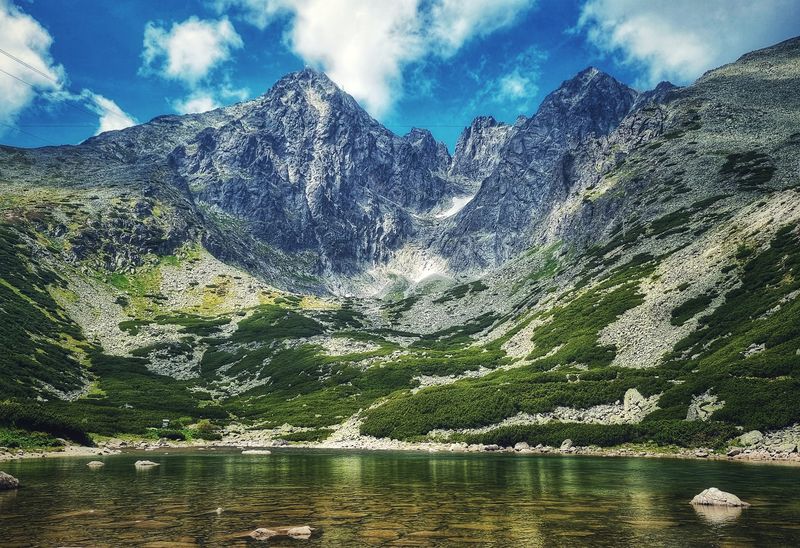
Central Europe does not get enough credit for its high-mountain scenery, and Lomnicky Stit makes a compelling argument for putting Slovakia on the alpine travel map. At 2,634 meters in the High Tatras, it offers one of the region’s most accessible high-altitude panoramas, reached by cable car rather than a technical climb.
The journey from Tatranska Lomnica runs in stages, passing through Skalnate pleso before continuing to the summit station. From the top, the jagged Tatras extend across Slovakia and toward Poland in a dense, dramatic landscape of rocky peaks and deep valleys.
A meteorological observatory has operated at the summit for decades, adding a functional scientific dimension to the visit.
Access is tightly linked to cable-car operation and weather conditions. The operator has scheduled maintenance for the Lomnicky Stit cable car from September 28 through October 2, 2026, with additional maintenance periods planned for later in autumn.
Checking the operating calendar before booking travel to the area avoids unnecessary complications.
Mount Pilatus, Switzerland
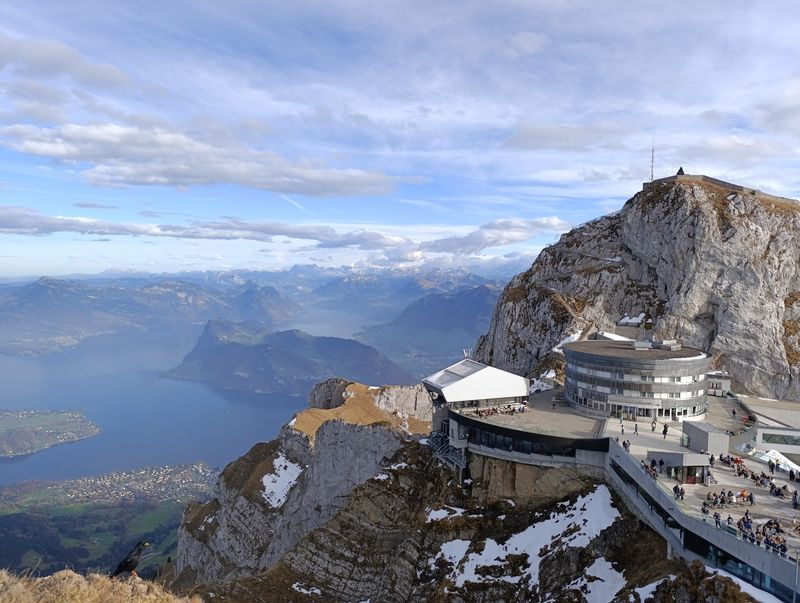
Mount Pilatus has been drawing visitors from Lucerne for well over a century, and the combination of lake views and alpine scenery from its summit remains one of Switzerland’s most photographed panoramas. The mountain rises sharply above the lake, and the contrast between the glittering water below and the rocky peaks above is visible from both directions.
Getting there is part of the appeal. The cogwheel railway from Alpnachstad holds the record for the world’s steepest cogwheel railway, with gradients reaching up to 48 percent.
An alternative approach uses gondolas and an aerial cableway from the Kriens side. From Pilatus Kulm, the panorama extends across Lake Lucerne and a broad section of the Swiss Alps in all directions.
Some routes operate seasonally rather than year-round. The Kriens cableway system has a scheduled maintenance closure from October 19 to November 27, 2026, before reopening for winter.
Checking which combination of routes is currently running before planning the trip saves considerable time on arrival.
Mulhacen, Spain
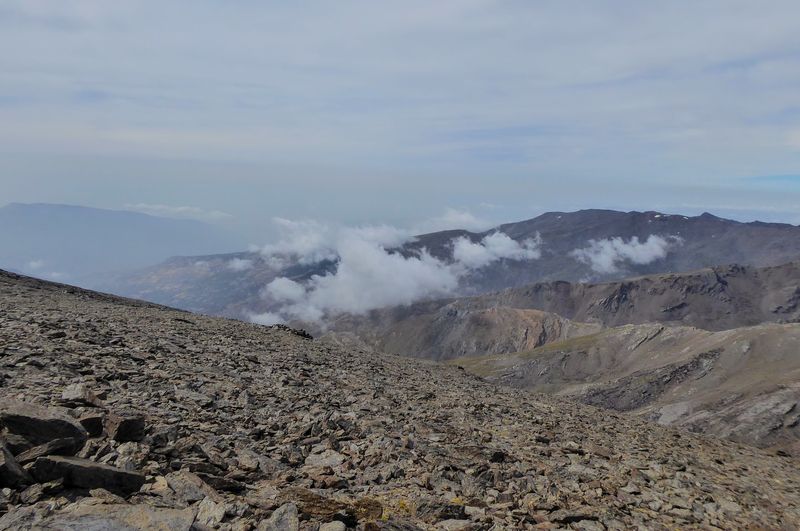
Most people associate Spain’s highest mountain with the Canary Islands, but the actual highest point on the Iberian Peninsula is Mulhacen, rising to roughly 3,480 meters in Andalucia’s Sierra Nevada. Its summit sits far enough above the surrounding terrain to deliver enormous views across the high sierra and toward the Mediterranean coast.
The landscape here looks noticeably different from the green alpine scenery of Switzerland or Austria. Bright southern light, dry ridges, and sparse high-altitude vegetation give Mulhacen a character that reflects its position in one of Europe’s most sun-drenched mountain ranges.
Several hiking routes approach the summit, varying considerably in length and technical difficulty depending on the starting point.
Spain’s Sierra Nevada is recognized as a major hiking region with numerous peaks exceeding 3,000 meters, and the area attracts both serious mountaineers and experienced day hikers. Despite the southerly location, snow, wind, and low temperatures can arrive quickly, so checking current mountain conditions before any ascent is a non-negotiable part of planning the trip.
Share this story