Turkey has more ancient fortresses than most countries could ever dream of, and each one was built for a very specific reason. Whether a castle sat above a harbor to stop enemy ships, perched on a cliff to watch over mountain roads, or stretched across a rocky hill to guard a river crossing, these structures tell real stories about power, survival, and geography.
From the Mediterranean coast to the eastern highlands near Lake Van, these fortresses shaped the regions around them for centuries. This list covers 13 of the most remarkable ones, ranging from UNESCO World Heritage sites to lesser-known ruins that reward the curious traveler willing to make the trip.
Alanya Castle, Antalya
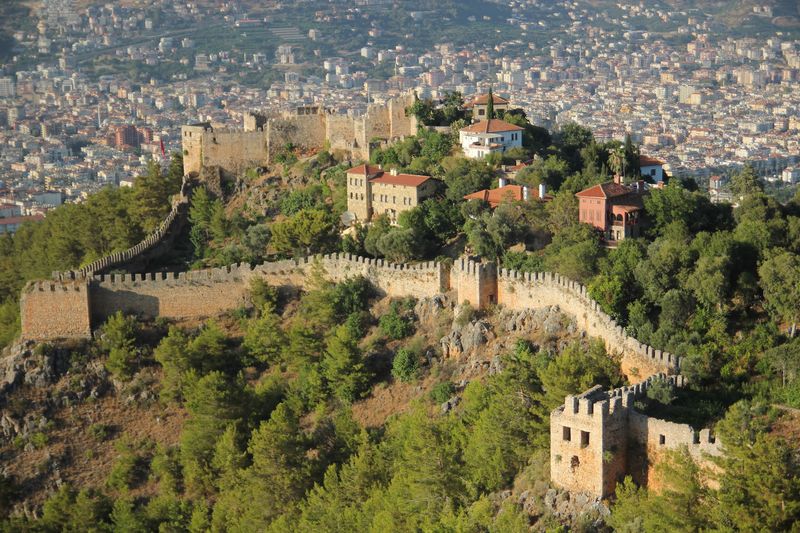
Perched on a rocky peninsula that juts straight into the Mediterranean Sea, Alanya Castle is one of the most visually striking fortress complexes in all of Turkey. The walls you see today are largely Seljuk in origin, but Romans and Byzantines used this headland long before the Seljuks arrived.
The strategic value of the location was obvious from the start.
Roughly 6.5 kilometers of walls connect Byzantine chapels, cisterns, a palace area, and multiple defensive towers across the peninsula. The Inner Castle operates as an open-air museum, and the elevated paths offer sweeping views of Alanya’s harbor, beaches, and the mountains rising behind the coast.
It is the kind of panorama that makes you understand immediately why rulers fought over this spot for so long.
The Ministry of Culture and Tourism lists the castle as an active visitor attraction. Plan for more walking than you expect, because the complex is much larger than it first appears from town.
Bodrum Castle, Mugla
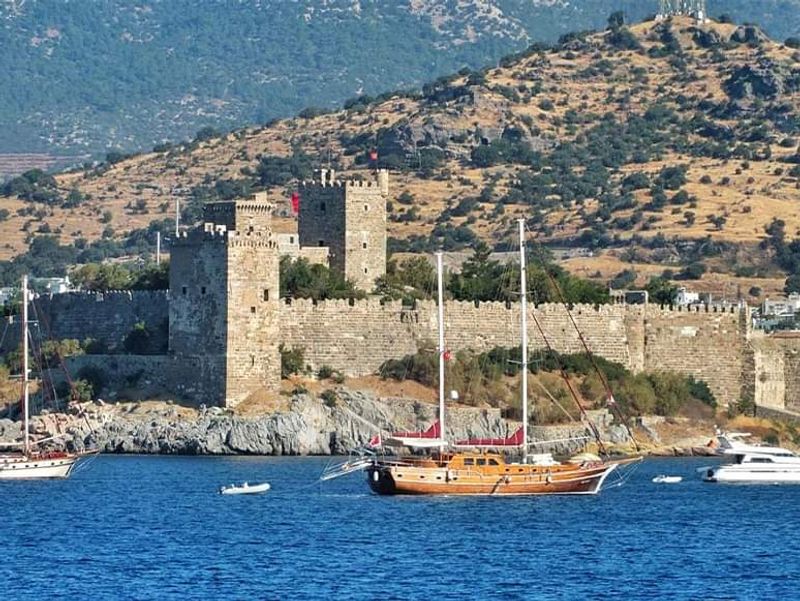
Built right at the edge of the harbor where the Aegean meets a busy modern resort town, Bodrum Castle has one of the most practical locations of any medieval fortress on the Turkish coast. The Knights Hospitaller began construction in the early 15th century, and they reportedly recycled stone from the nearby Mausoleum at Halicarnassus, one of the original Seven Wonders of the Ancient World, to build it.
That harbor-facing position gave defenders a clear view of ships approaching from the Greek islands and routes running along the Anatolian coastline. Today, the castle is home to the Bodrum Museum of Underwater Archaeology, which holds artifacts recovered from ancient shipwrecks found across the region.
The collection is genuinely impressive and well worth time on its own.
Visitors can walk through courtyards, climb towers, and step onto elevated terraces that look directly over the marina. The museum is officially open daily, with seasonal evening access available during certain times of year.
Mamure Castle, Mersin
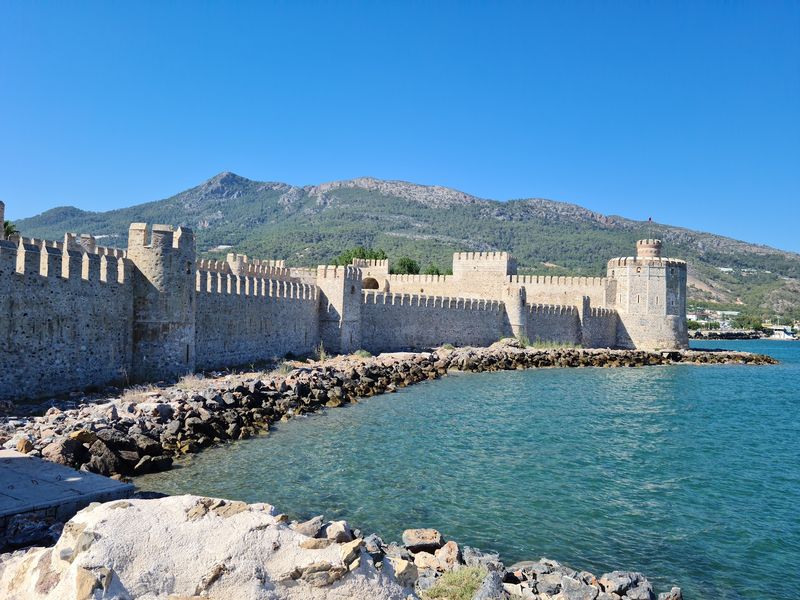
Few coastal fortresses in Turkey make as immediate an impression as Mamure Castle near Anamur. The walls, towers, and surrounding moat rise directly beside the Mediterranean, and the scale of the complex becomes clear only once you are standing in front of it.
Historians believe the current structure was built over the foundations of the Roman settlement of Rig Monai.
Seljuk, Karamanid, and Ottoman rulers each added to or repaired the fortress as control of the southern Anatolian coastline shifted over centuries. The position protected a coastal road connecting settlements across Cilicia while giving defenders a clear view of approaching ships from both directions.
That combination of road control and sea visibility made Mamure valuable far beyond its walls.
Mamure Castle appears on Turkey’s UNESCO World Heritage Tentative List, which reflects how significant the site is considered nationally. The fortress is officially open to visitors but typically closes on Mondays, so scheduling your visit accordingly will save you a wasted trip.
Kizkalesi And Korykos Castle, Mersin
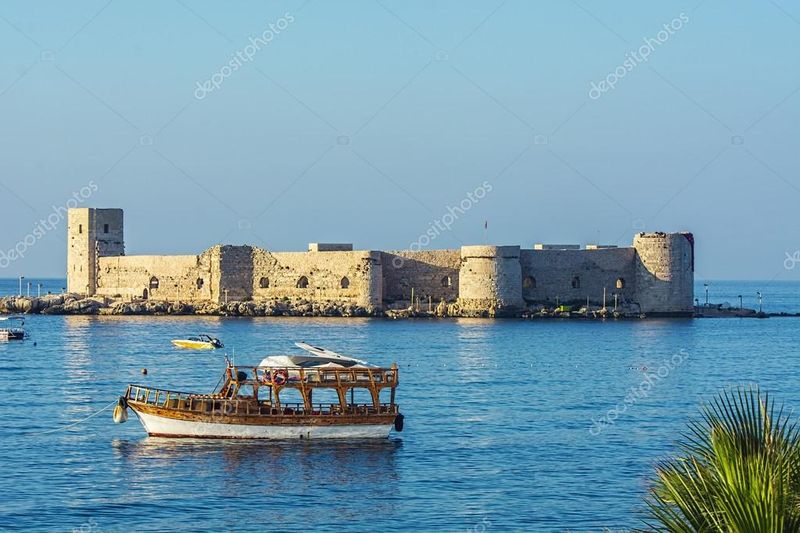
Almost no fortress view in Turkey matches what you see at Kizkalesi. A stone castle stands on a small island just offshore, with a second fortified complex sitting on the mainland directly opposite.
The two castles together defended Korykos, an important ancient port that prospered under Roman and Byzantine administration for hundreds of years.
The mainland side holds walls, churches, tombs, and other remains from the ancient settlement. The island fortress took shape primarily during the Byzantine and Armenian periods, when repeated attacks made offshore defense a practical necessity.
Getting to the island castle usually requires a short boat ride, and local service conditions can vary depending on the season and weather.
The combination of two castles facing each other across open water, with clear views in every direction, makes this site genuinely different from a standard fortress visit. The Ministry of Culture and Tourism lists the Kizkalesi archaeological attraction as open every day, making it an accessible stop along the Mersin coastline.
Simena Castle, Antalya
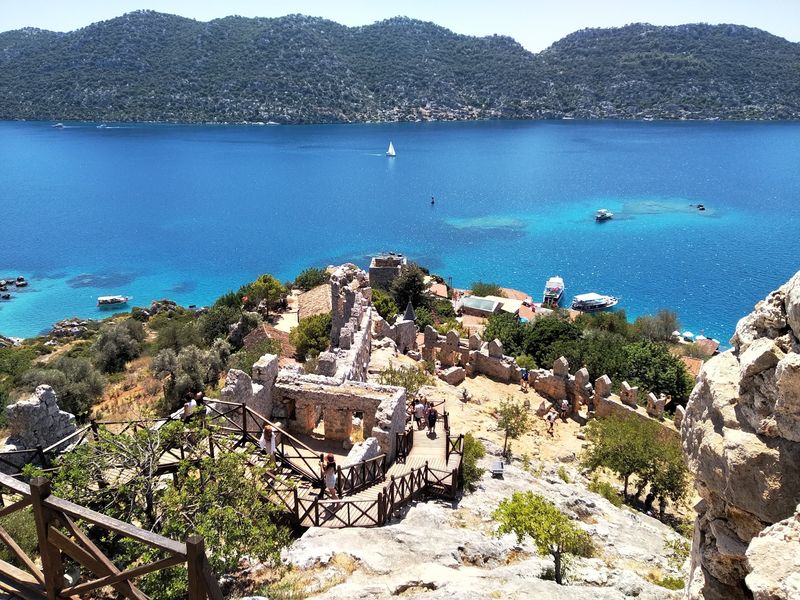
Getting to Simena Castle already feels like part of the adventure. The small coastal settlement of Kaleköy is accessible mainly by boat or on foot, and the climb to the fortress passes Lycian rock tombs and stone houses before the walls come into view above.
What waits at the top makes the effort completely worthwhile.
Simena’s documented history reaches back to at least the fourth century BCE, though the visible walls were reinforced through the medieval period. Roman, Lycian, Byzantine, and later defensive elements sit close together here, which gives the site an unusually layered feel.
One of the most surprising details is a tiny theater carved into natural rock inside the fortifications, with seven rows capable of seating roughly 300 spectators.
From the walls, the views extend over Kekova’s islands, coves, and partially submerged ancient remains visible through the clear water below. Simena Archaeological Site is officially listed as open every day, and the boat journey there through the Kekova region is a strong reason to visit on its own.
Van Castle, Van
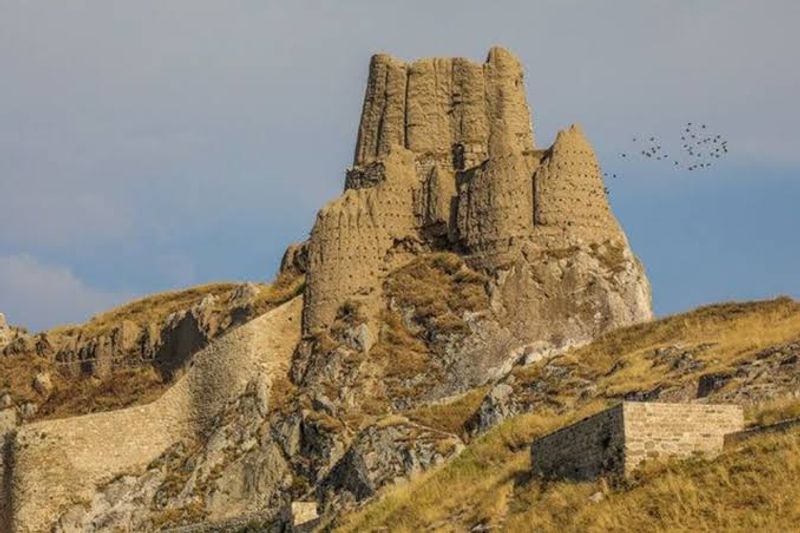
Van Castle is one of the oldest continuously significant fortresses in all of Anatolia. Known in antiquity as Tushpa, it served as the capital of the Urartian Kingdom, which dominated parts of eastern Anatolia from the ninth to the sixth century BCE.
The rock itself is enormous, and the builders carved chambers, stairways, tombs, inscriptions, and platforms directly into the stone.
Standing on the upper sections, you can see across Lake Van, the surrounding plain, the mound below the fortress, and the remains of Old Van below. The location also connected the Urartian Kingdom with long-distance trade routes running through eastern Anatolia, giving the site commercial and military importance at the same time.
That dual function shaped the region for centuries after the Urartians themselves disappeared.
Van Castle is officially open daily as an archaeological site. The scale of the rock formation alone is enough to leave a strong impression, and the carved interiors add a detail that most visitors do not expect before arriving.
Becin Castle And Archaeological Site, Mugla
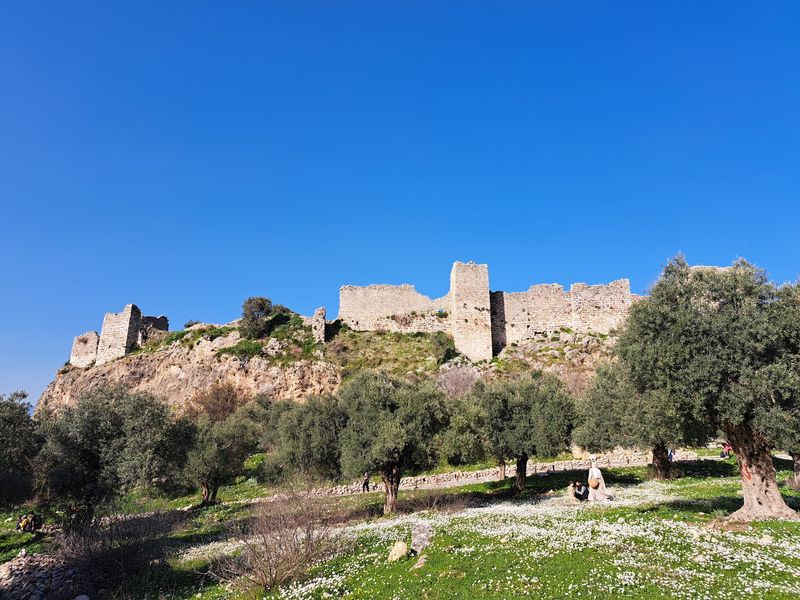
Becin Castle is the kind of site that rewards visitors who take the time to look past the main walls. The castle stands above a wide plain near Milas in southwestern Turkey, and while settlement in the surrounding region goes back to antiquity, Becin became especially significant between the 13th and 15th centuries as the political center of the Menteşe Principality.
The archaeological area around the castle contains defensive walls, mosques, madrasas, baths, tombs, fountains, and the remains of residential and commercial buildings from that medieval period. From the fortified hill, rulers could observe routes leading through inland Caria toward the Aegean coast, which made the location useful for both governance and defense simultaneously.
What makes Becin different from a typical single-castle visit is the sheer variety of structures spread across the site. The official museum website lists it as open to visitors.
Arriving with enough time to walk the full area, rather than just the citadel, gives a much more complete picture of what life here once looked like.
Cesme Castle, Izmir
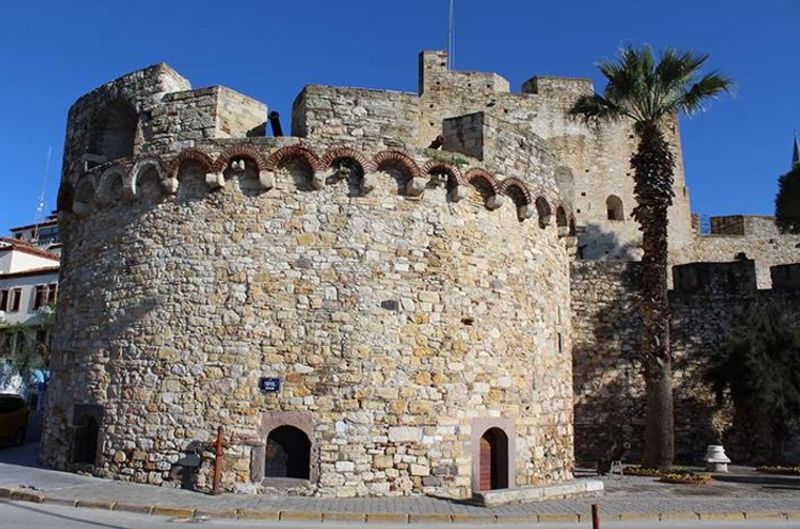
Cesme Castle sits right beside the town’s harbor on Turkey’s Aegean coast, and its connection to maritime trade is built into every wall. Genoese activity in the area preceded the fortress, but Sultan Bayezid II ordered major repairs and significant enlargement in 1508, reshaping the structure into the rectangular fortress that still stands today.
Three sides of the original fortress were once surrounded by a ditch, while the sea protected the western edge directly. Changes to the coastline over the centuries have altered the immediate setting, but the towers still overlook the harbor and the active ferry routes running between Cesme and the Greek island of Chios.
That maritime connection was the entire point of the castle’s existence, and it remains visible in the geography today.
The castle now houses Cesme Museum, with displays covering regional archaeology and history from multiple periods. The museum is officially listed as open every day, and the harbor setting makes the visit easy to combine with time spent exploring the rest of the town.
Rumeli Fortress, Istanbul
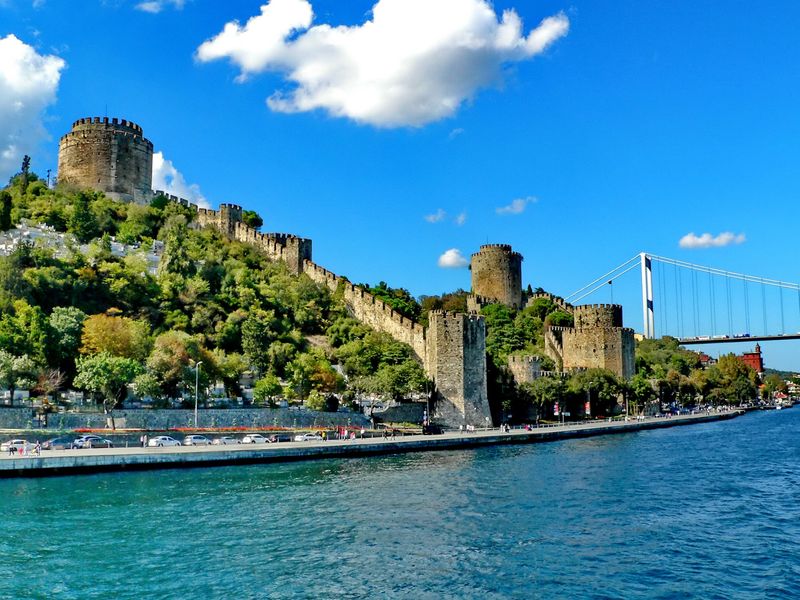
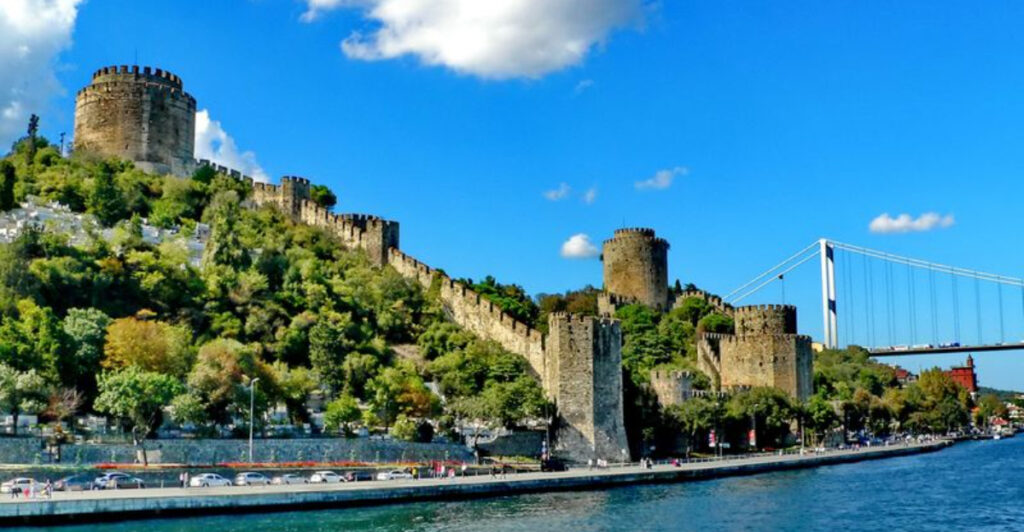
Sultan Mehmed II ordered Rumeli Fortress built in 1452, and the urgency behind that decision shaped everything about the structure. The goal was to control shipping through the Bosphorus before the Ottoman conquest of Constantinople, so his forces could cut off maritime support arriving from the Black Sea.
The fortress went up in just a few months, which is remarkable given its scale.
Three enormous towers dominate the complex, with walls descending toward the water on both sides. From the fortress grounds, visitors can see the Bosphorus itself, the Asian shoreline opposite, passing ships, and the modern bridge overhead.
The geography makes the strategic logic completely clear without needing a history lesson to explain it.
Rumeli Fortress operates as a museum open to visitors, though individual towers or sections may be temporarily closed during restoration periods. The site sits within Istanbul’s European neighborhoods, making it accessible from the city center while offering a setting that feels genuinely removed from the urban energy surrounding it.
Kilitbahir Castle, Canakkale
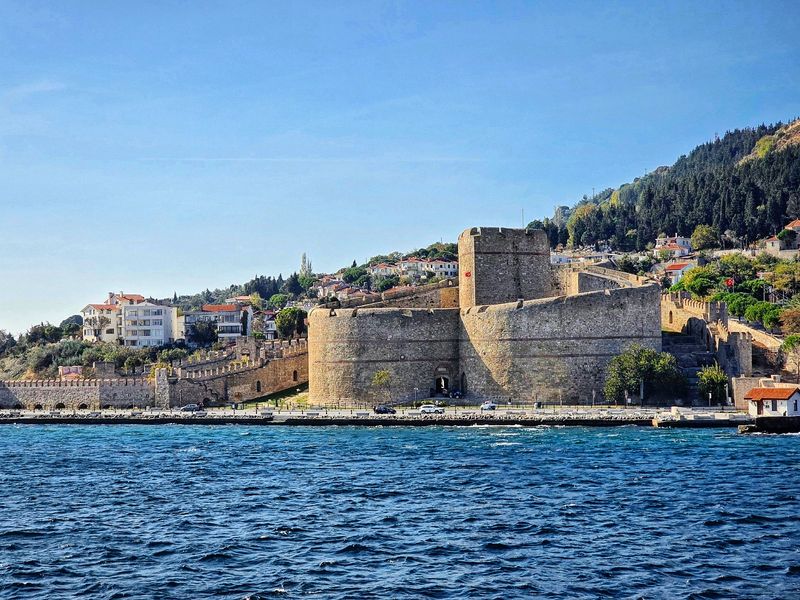
The name Kilitbahir translates roughly as the lock of the sea, and that name describes the castle’s purpose precisely. Sultan Mehmed II had it constructed on the European side of the Dardanelles opposite Cimenlik Castle, creating a paired defensive system capable of controlling every vessel passing through the strait.
The two castles together could stop maritime traffic between the Aegean Sea and the Sea of Marmara.
The distinctive central tower and the carefully arranged walls around it reflect how seriously Ottoman military planners treated the Dardanelles as a strategic corridor. Later defenses built around Kilitbahir also played roles during the Gallipoli campaign in World War I, adding another layer of historical weight to the site.
Visitors can explore exhibitions inside and climb to elevated sections overlooking ferries and commercial vessels still using the strait today. The castle museum is currently listed as open to visitors but normally closes on Mondays.
Watching modern ships pass through the same narrow waterway the castle was built to control is a surprisingly powerful experience.
Diyarbakir Fortress, Diyarbakir
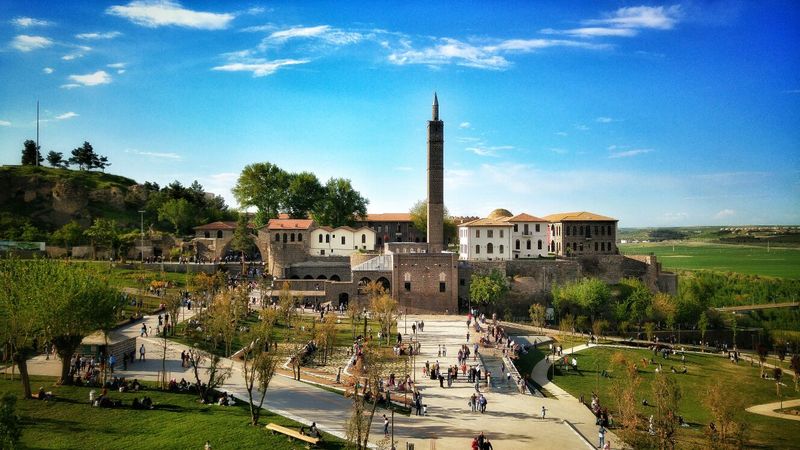
The dark basalt walls of Diyarbakir Fortress are unlike anything else in Turkey. Built from the volcanic stone that defines the region’s landscape, the defensive system includes monumental gates, towers, and the Ickale, or Inner Castle, all rising above the Tigris River and the Hevsel Gardens below.
The visual impact of those black walls against the surrounding landscape is immediate and unforgettable.
The fortified city developed across Roman, Byzantine, Sassanid, Islamic, Artuqid, and Ottoman periods, with each era leaving marks on the walls and the city inside them. Its position allowed inhabitants to oversee river crossings, farmland, and routes passing through southeastern Anatolia and the Upper Tigris Basin, making Diyarbakir one of the most consistently contested cities in the region’s long history.
UNESCO recognizes the fortress and Hevsel Gardens together as a World Heritage cultural landscape. Large sections of the walls, gates, and Ickale grounds remain publicly accessible.
Restoration work may temporarily affect individual areas, so checking current access conditions before visiting is a practical step worth taking.
Ankara Castle, Ankara
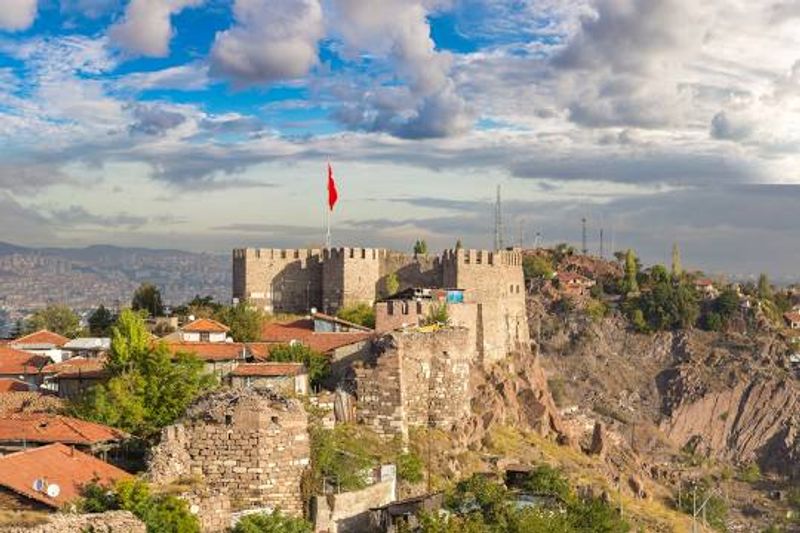
Sitting directly above the capital’s oldest neighborhoods, Ankara Castle has watched the city around it transform from a modest ancient settlement into a sprawling modern metropolis. A fortress existed on this rocky hill by the time of Galatian settlement in the second century BCE, and Roman, Byzantine, Seljuk, and Ottoman authorities each left their own repairs and alterations on the walls over the following centuries.
The inner and outer walls protected a settlement positioned near major overland routes crossing central Anatolia, which gave Ankara its long-term importance as a transit point. Today, the lanes inside and around the castle contain traditional houses, small museums, craft shops, cafes, and historic religious buildings that create a neighborhood feel quite different from the government districts below.
Viewpoints near the upper walls reveal how dramatically the city has expanded beyond its ancient core, which is a perspective worth seeing if you are spending any time in Ankara. The castle district is publicly accessible, though some individual structures maintain their own separate hours and entry conditions.
Yilan Castle, Adana
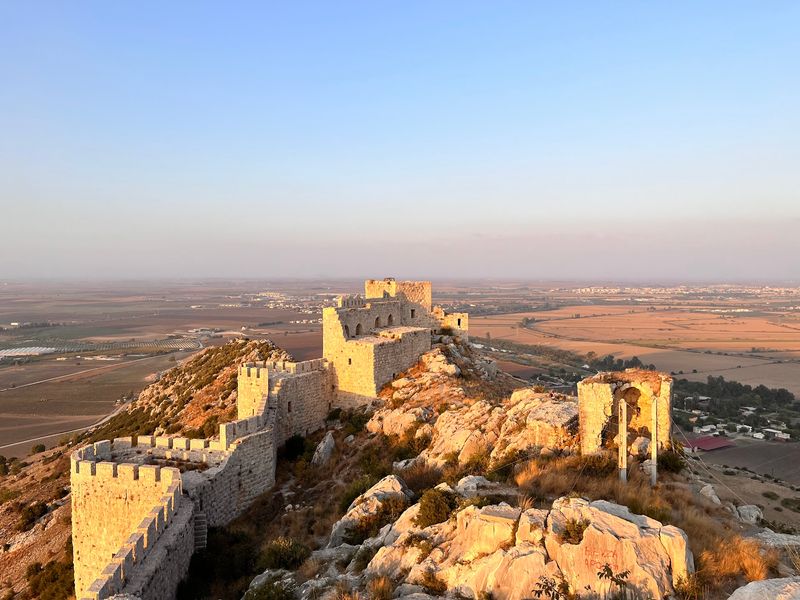
Yilan Castle earns its place on this list through sheer geographic logic. Rising from a steep limestone hill above the broad Cukurova Plain, the medieval fortress stood near the historic route that crossed the Taurus Mountains toward Antakya, a corridor historically linked with long-distance Silk Road trade.
Whoever held this hill controlled visibility over a vast stretch of moving traffic below.
Eight rounded towers, sections of curtain wall, vaulted chambers, and steep approaches survive at the site. The elevated towers could also communicate visually with other strongholds across the plain, including Anavarza, Tumlu, and Kozan, creating a network of observation points rather than a single isolated fortress.
That regional coordination is what made Yilan strategically significant rather than just locally useful.
The Ministry of Culture and Tourism presents Yilan Castle as a historic visitor attraction, but the site is an unmanaged outdoor ruin with no formal facilities. Sturdy footwear is genuinely necessary, and caution on uneven stone throughout the climb is not optional advice.
The views from the upper towers make the effort worthwhile on a clear day.
Share this story