France has a way of staying with you long after the trip ends. Whether it’s standing in front of a painting you’ve admired in books for decades, walking through a medieval village at golden hour, or finally understanding why a region’s food tastes the way it does, the country rewards curious travelers in ways that feel deeply personal.
For readers who have moved past the rush-everything style of travel, France offers something better: places that actually deserve your full attention. These 15 destinations help explain exactly why so many of our readers keep choosing France again and again.
Eiffel Tower in Paris
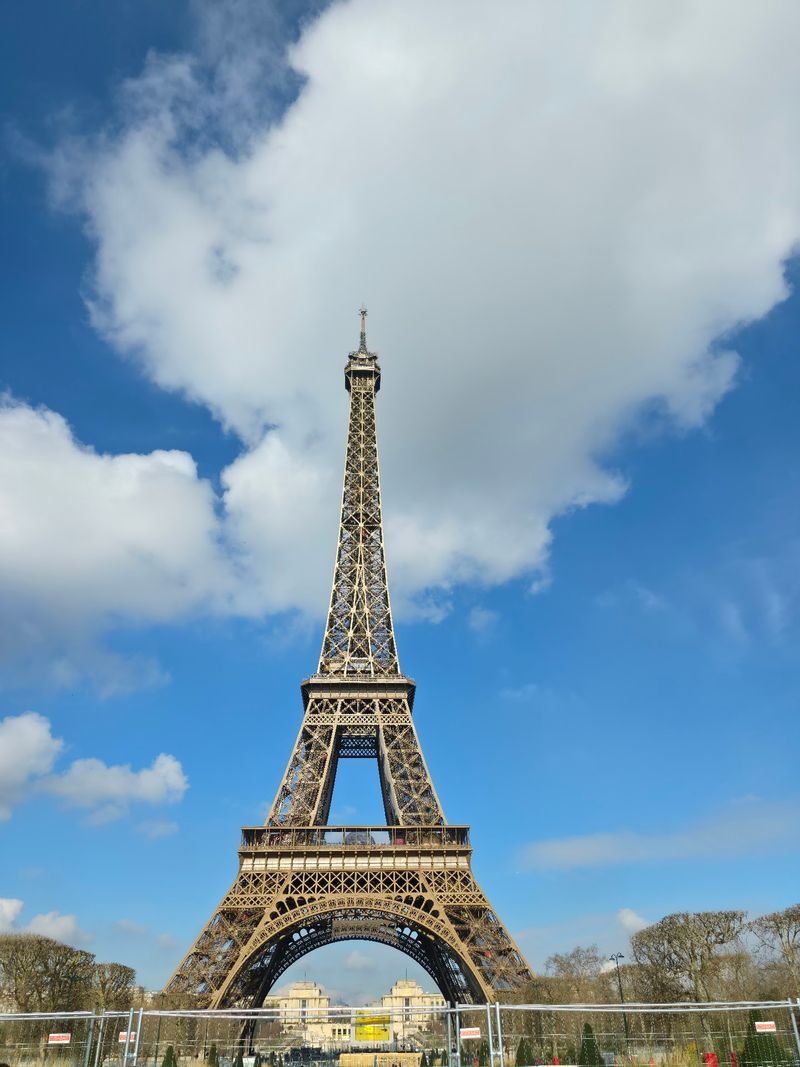
Some famous landmarks disappoint once you finally see them in person. The Eiffel Tower tends to have the opposite effect, especially for travelers who give it more than a quick glance from the ground.
Going up changes the way you understand Paris entirely. From the upper levels, the city’s broad avenues, rooftops, river bridges, and carefully planned neighborhoods start fitting together like a map you can actually read.
That shift in perspective is particularly satisfying for travelers who enjoy a destination more once they understand how it developed over time. You can admire Gustave Eiffel’s engineering, study the city’s layout from above, and then build an unhurried afternoon around the surrounding area.
Walking along the Seine afterward, stopping near the Trocadero, or finding a cafe with a view all feel more meaningful once you’ve seen Paris from above. France has a reliable talent for turning a single iconic sight into an entire day worth remembering.
Musee d’Orsay in Paris
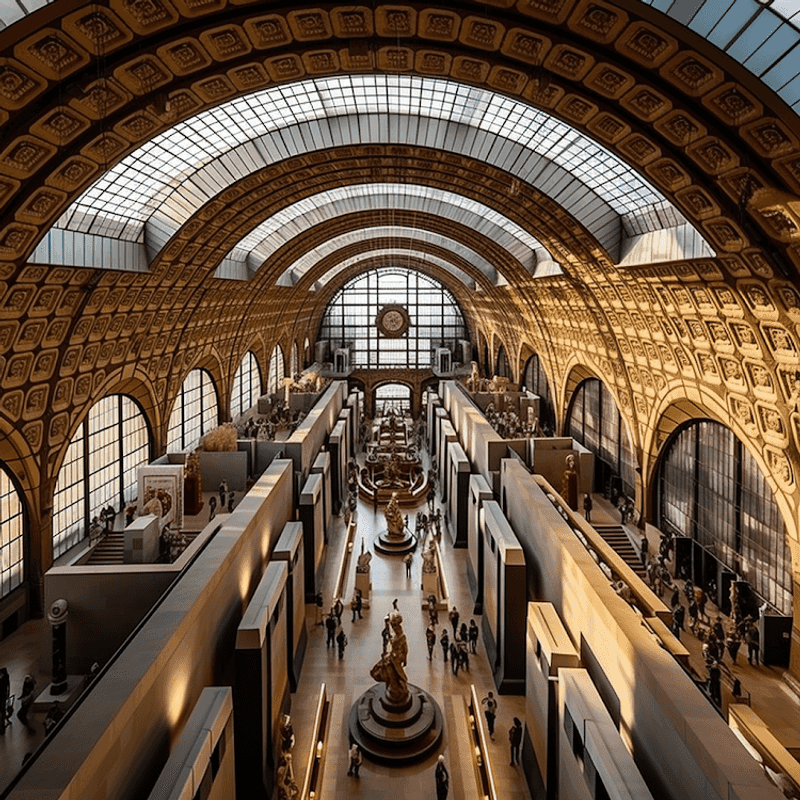
Housed inside a beautifully converted 19th-century railway station, the Musee d’Orsay makes an immediate impression before you even reach the first painting. The architecture alone earns its place on this list.
Its real strength, though, is the collection. The museum holds one of the world’s most celebrated gatherings of Impressionist and Post-Impressionist work, with paintings by Monet, Renoir, Degas, Cezanne, and Van Gogh among the highlights.
Seeing those familiar names in context, surrounded by the wider story of 19th-century France, makes the experience far more meaningful than viewing them in reproduction ever could.
For travelers who find the Louvre overwhelming, Orsay offers a more manageable scale without sacrificing depth or importance. You can spend a focused three or four hours here and leave feeling genuinely satisfied rather than exhausted.
France gives art lovers the rare gift of going deeper rather than simply checking names off a list.
Musee du Louvre in Paris
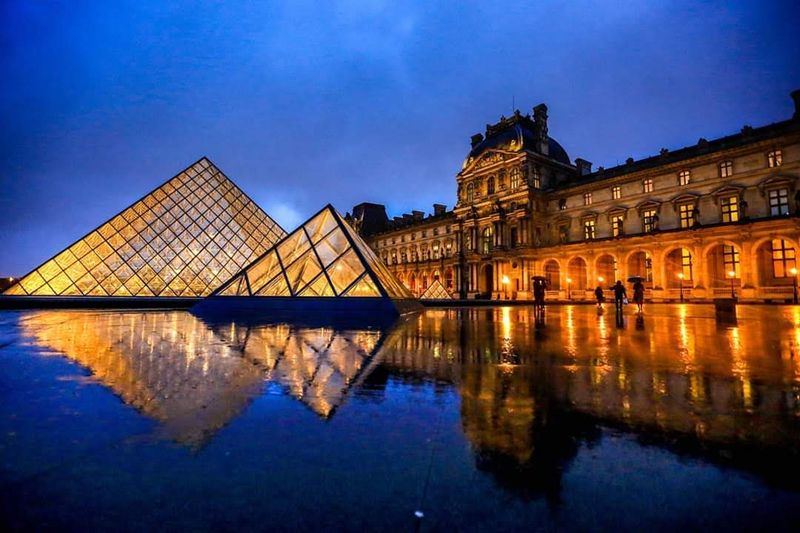
The Louvre is one of those institutions that genuinely earns its reputation, even for travelers who approach big museums with some caution. The scale is real, but so is the reward.
The smarter approach isn’t trying to cover everything. Choose two or three galleries that genuinely interest you, whether that’s Egyptian antiquities, Greek and Roman sculpture, European paintings, or French royal history, and give those sections your full attention.
Experienced travelers often find that accepting the Louvre’s size, rather than fighting it, makes the visit far more enjoyable. You’re walking through thousands of years of human civilization.
That’s not something to rush.
The building itself adds another layer. The former royal palace surrounding those galleries is worth studying on its own terms.
France is a destination you can revisit repeatedly without exhausting, and even one museum here can justify several separate trips. That kind of depth is rare anywhere in the world.
Notre-Dame de Paris
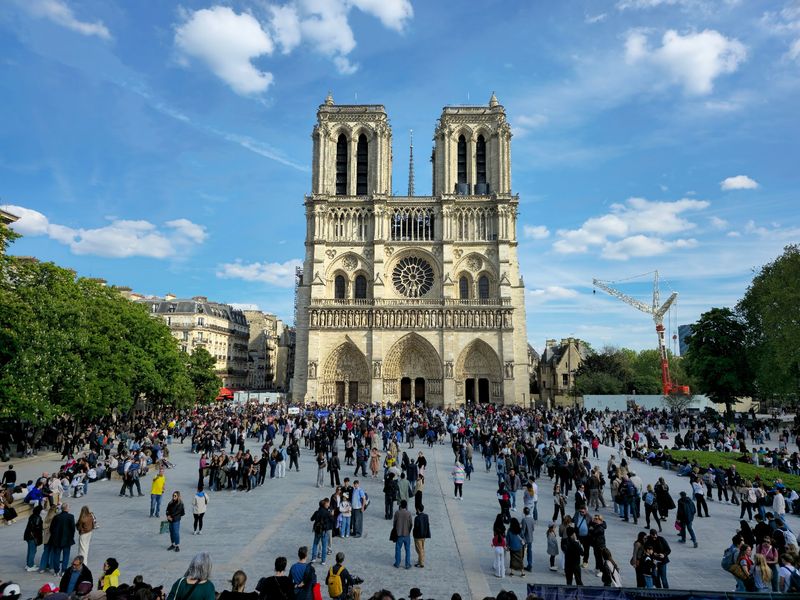
Notre-Dame reopened following years of painstaking restoration after the devastating 2019 fire, and that reopening gives travelers a genuinely unusual reason to visit.
This isn’t simply a chance to see one of Europe’s most famous Gothic cathedrals. It’s a chance to see an 800-year-old building at a specific and meaningful new moment in its long history.
The restoration effort involved craftspeople, architects, and historians from across France and beyond.
Walking through the cathedral today carries a different kind of weight than it did before. You’re standing inside a structure that survived revolutions, wars, shifting governments, and a catastrophic fire, and came through each one.
For travelers who visited Paris years ago, Notre-Dame provides a strong reason to return. France doesn’t treat history as something finished and frozen.
Places like this remind you that heritage is an ongoing story, and sometimes the best time to witness a landmark is right after it has been given new life.
Palace of Versailles in Versailles
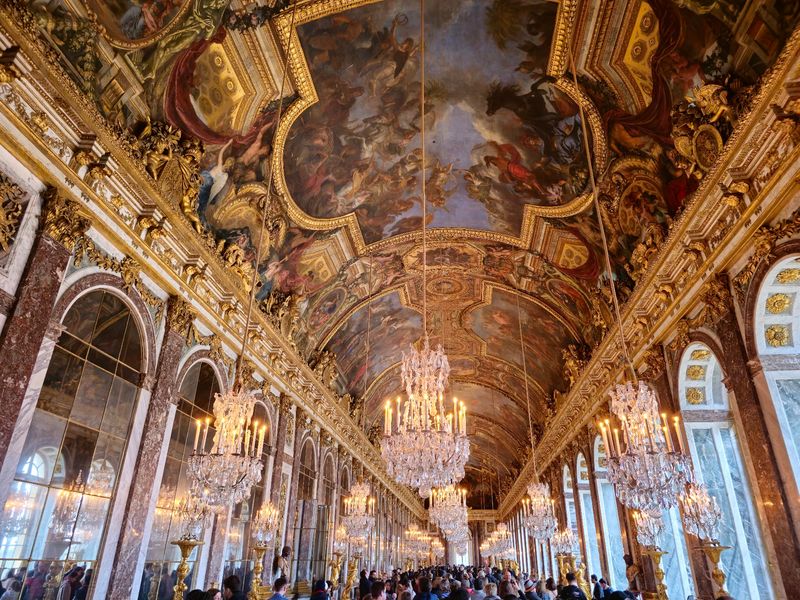
Versailles rewards patience in a way that few other destinations can match. Travelers who rush through the Hall of Mirrors and head straight back to Paris typically leave having seen only a fraction of what makes the estate worth the trip.
The palace, formal gardens, Grand Canal, and Trianon estate all tell different parts of the same story about the scale and ambition of French royal life. Walking the grounds, rather than simply photographing interiors, makes that story far more tangible.
Giving yourself a full day here, rather than a half-morning, changes the experience considerably. The gardens are vast enough to feel genuinely peaceful once you move away from the main palace crowds.
France consistently excels at destinations where slowing down is the actual strategy. Versailles is dramatically better when treated as a leisurely day rather than an obligation squeezed between Paris attractions.
Bring comfortable shoes, arrive early, and let the scale of the place work on you gradually.
Mont-Saint-Michel in Normandy
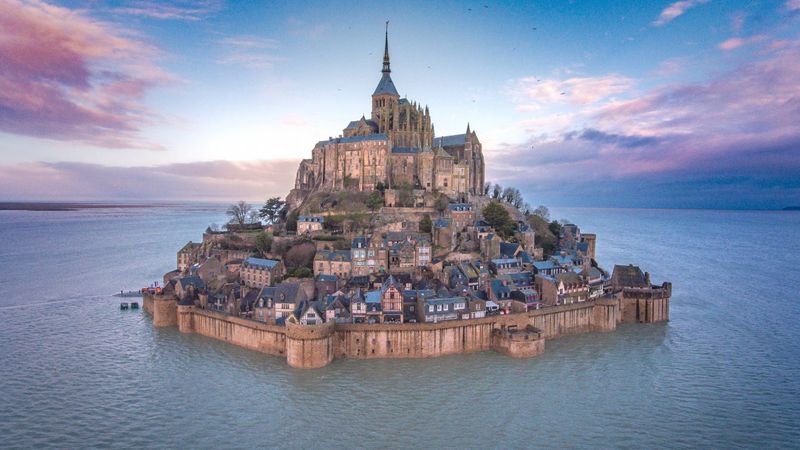
There are very few places in France, or anywhere else, that look as extraordinary in person as they do in photographs. Mont-Saint-Michel is one of them, and it manages to exceed expectations even for travelers who have seen the images hundreds of times.
The medieval settlement rises from its tidal bay in Normandy, crowned by an abbey that developed over roughly a thousand years. What makes it worth more than a glance from the causeway is how much there is to explore inside.
Visitors can walk through the village streets, climb toward the abbey, stand on the ramparts, and watch how dramatically the light and tides reshape the surrounding landscape throughout the day.
Architecture, religious history, geography, and natural spectacle all overlap here in ways that are genuinely difficult to separate. For seasoned travelers who want places that offer real depth rather than just a striking view, Mont-Saint-Michel delivers on multiple levels at once.
Claude Monet’s House and Gardens in Giverny
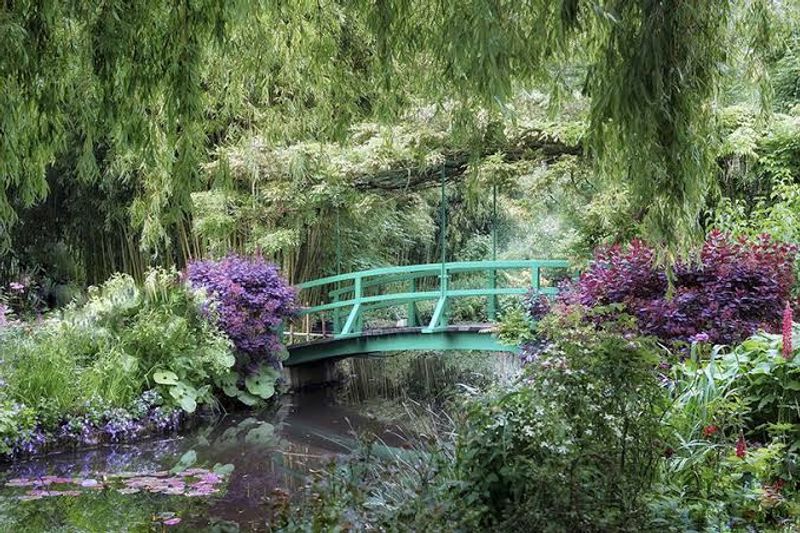
Seeing Monet paintings at the Musee d’Orsay is one thing. Traveling to Normandy and standing in the actual garden that inspired them is something else entirely, and France makes that connection possible in a way few countries can.
At Giverny, visitors can explore Monet’s house and the famous gardens he designed and tended for decades. The flower garden, the Japanese-style bridge, and the water lily pond are all there, immediately recognizable from paintings that have hung in museums and reproductions around the world.
The house itself is open to visitors as well, offering a look at how Monet organized his life and work in this particular corner of Normandy.
For travelers who carry a lifetime of art appreciation into their trips, this kind of connection between a painting and a real place is genuinely moving. It’s the sort of afternoon that stays with you because it closes a loop you didn’t realize had been open.
Chateau de Chenonceau in the Loire Valley
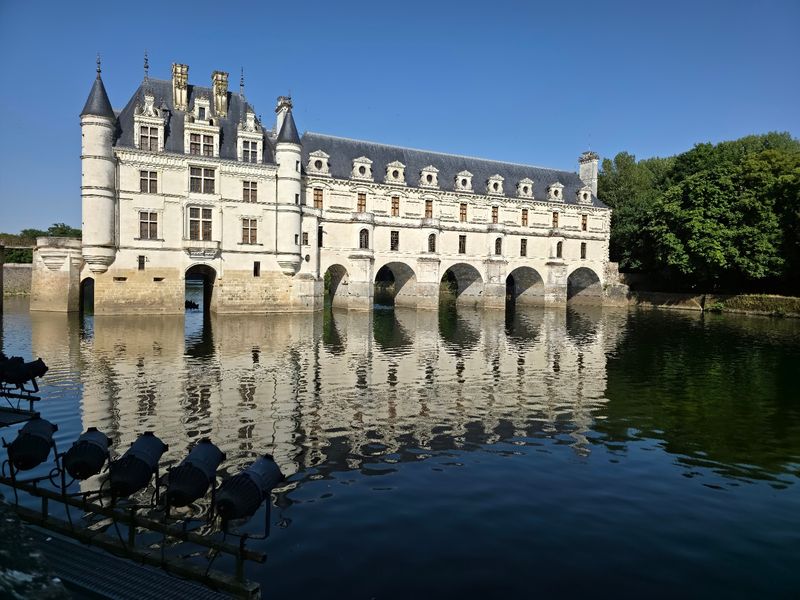
The Loire Valley has no shortage of impressive chateaux, but Chenonceau earns its reputation as a first choice for a specific reason: it spans the River Cher, making it visually unlike almost anything else in France.
Beyond the architecture, the chateau’s history is shaped by a remarkable succession of women who built, expanded, decorated, and protected the property across several centuries. That story adds real texture to what might otherwise be just another elegant building.
Catherine Briconnet, Diane de Poitiers, and Catherine de Medici each left their mark here. Understanding their roles makes the visit feel less like a tour and more like a conversation with history.
The Loire Valley also encourages a slower pace of travel. You can base yourself in a small town nearby, visit one chateau in the morning, take a long lunch, and spend the afternoon exploring the surrounding countryside.
France at this pace is a different experience entirely, and a better one for many travelers.
La Cite du Vin in Bordeaux
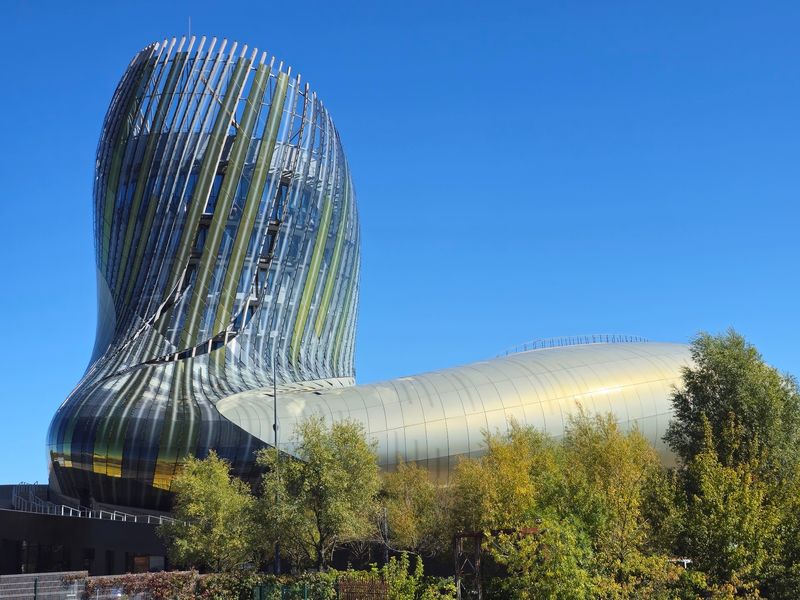
Bordeaux is one of those French cities that has reinvented its waterfront so effectively that the transformation itself becomes part of the reason to visit. La Cite du Vin sits right at the center of that story.
The building’s distinctive curved exterior has become one of modern Bordeaux’s most recognizable landmarks. Inside, the museum-style experience explores wine through history, geography, culture, and civilization rather than simply leading visitors from barrel to barrel.
That approach makes it genuinely engaging for travelers who aren’t wine specialists. You can spend time understanding how different regions developed their identities, how trade shaped entire economies, and how wine became embedded in the cultural life of countries across the world.
A panoramic bar on the upper level offers views across the city and the Garonne River. France has a consistent ability to transform food and drink into real cultural experiences, and La Cite du Vin is one of the most thoughtful examples of that approach anywhere in the country.
Hotel-Dieu Hospices de Beaune in Burgundy
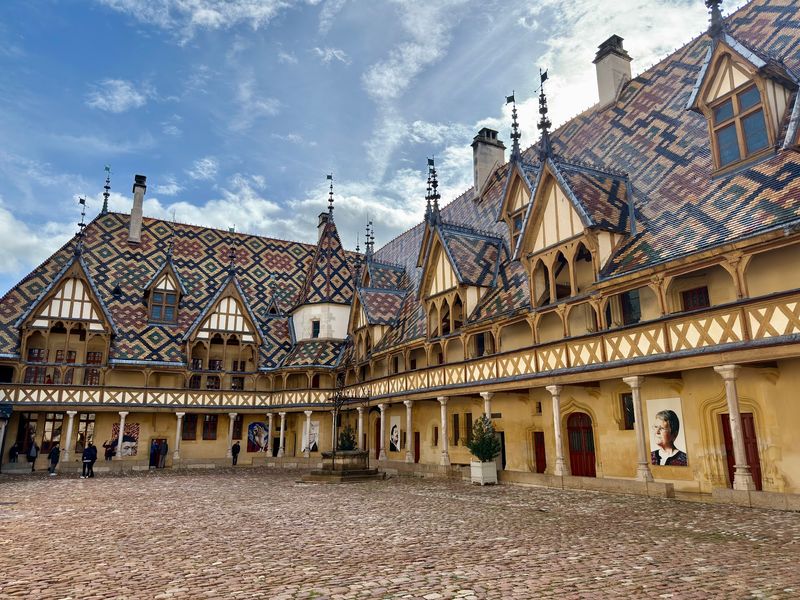
Burgundy is the kind of French region that tends to win over travelers who thought they already had a favorite part of the country. Beaune, the region’s wine capital, is compact, walkable, and full of places that reward a slower pace.
The Hospices de Beaune anchors the town in a way that feels entirely natural. Founded in 1443 as a charitable hospital for the poor, the Hotel-Dieu is best recognized by its extraordinary glazed tile roof, which features geometric diamond patterns in burgundy, gold, green, and black.
Inside, the original Grand’Salle, medical equipment, and period furnishings offer a surprisingly vivid look at 15th-century charitable life. The institution also developed a deep connection with Burgundy’s vineyards, which continues through an annual wine auction that draws international attention.
Beaune represents the France many experienced travelers eventually come to prefer. It offers beautiful architecture, regional cuisine, and vineyards, all within a town that doesn’t require a full itinerary to enjoy properly.
Palais des Papes in Avignon
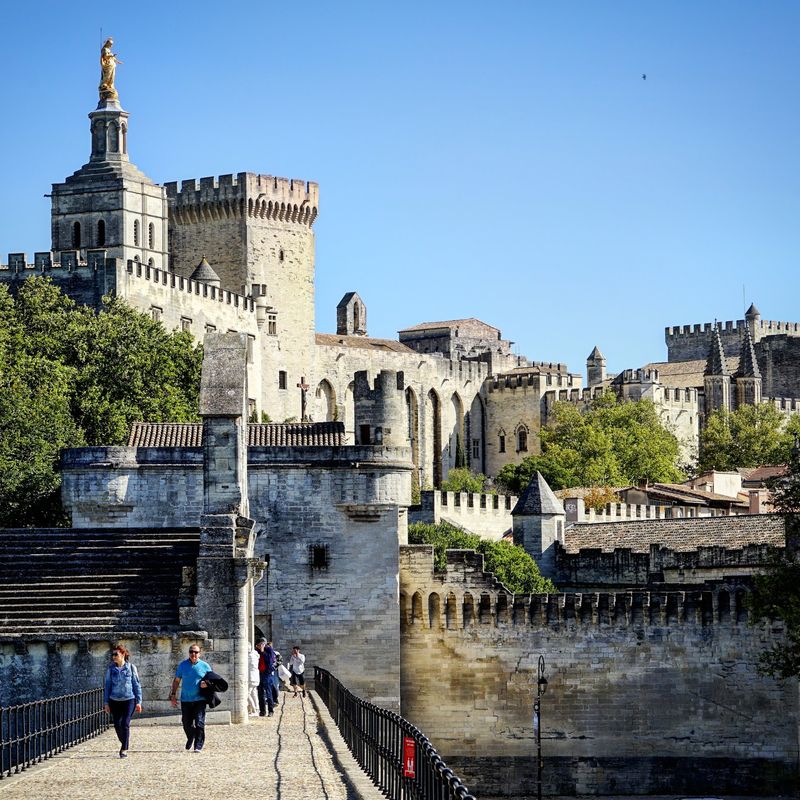
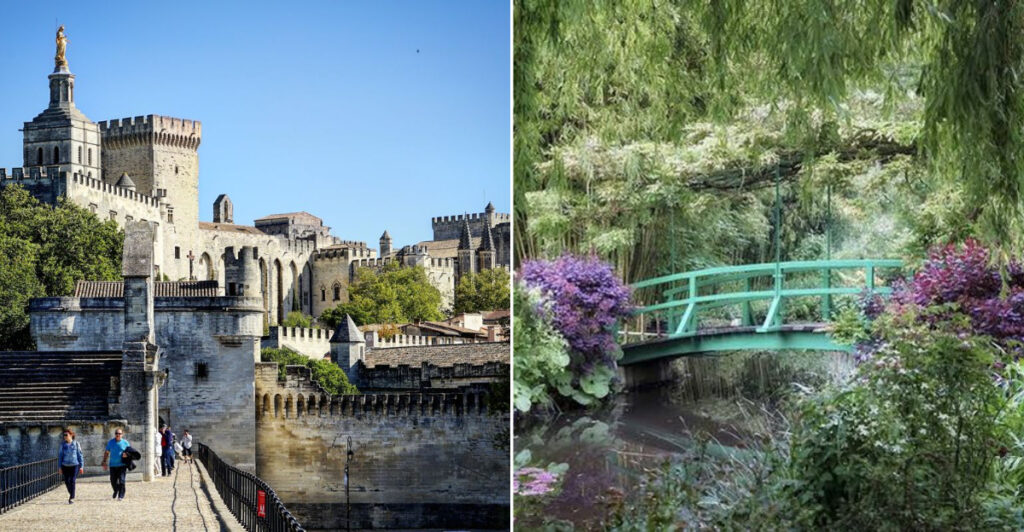
Avignon is one of those medieval cities where history doesn’t feel distant or academic. It feels present in the streets, the architecture, and the scale of the buildings that still dominate the skyline.
At its center stands the Palais des Papes, an immense Gothic complex that served as the papal residence during the 14th century, when Avignon briefly became one of the most important religious and political centers in Europe. Nine popes lived and governed from this building.
The interior offers a genuine sense of that scale, with massive halls, chapels, and towers that convey just how much power was concentrated here during that period.
Avignon also works beautifully as a base for exploring Provence more broadly. After a day of sightseeing, you can simply walk through the old town, find a good restaurant, and enjoy an evening in a place where the setting itself does most of the work.
France consistently rewards travelers who let that happen.
Carrieres des Lumieres in Les Baux-de-Provence
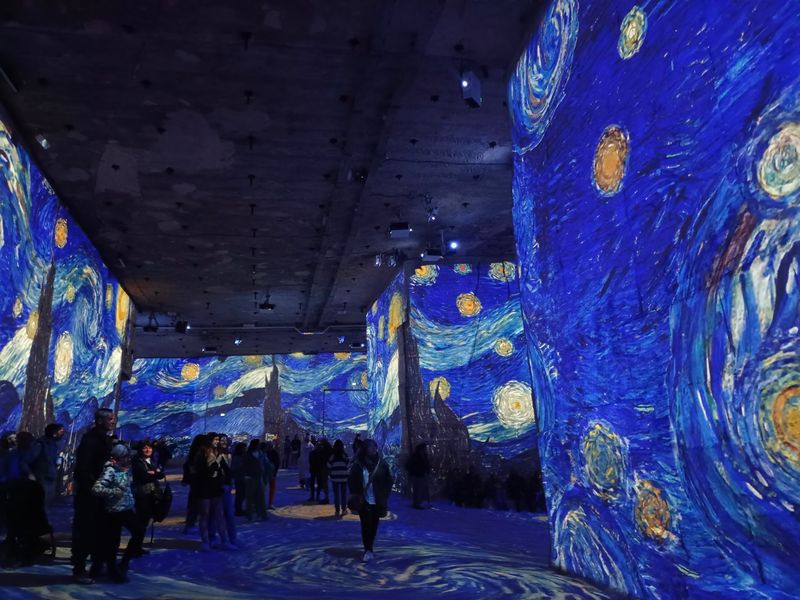
Not every meaningful cultural experience in France involves standing quietly in front of a canvas. Carrieres des Lumieres makes that point in a way that is genuinely hard to forget.
Located inside former limestone quarries near the village of Les Baux-de-Provence, this venue uses large-scale digital projections and music to present art as an immersive environment. The artwork is projected across the quarry walls, ceiling, and floor, surrounding visitors rather than asking them to observe from a polite distance.
Each year features a different program, typically centered on a major artist or artistic movement. The combination of the raw quarry space and the scale of the projections creates something that feels unlike a conventional museum visit.
The location also fits naturally into a Provence trip that combines hilltop villages, open-air markets, and Roman heritage. France continues finding new ways to present art and culture, and Carrieres des Lumieres is one of the more creative examples of that willingness to experiment.
Mucem in Marseille
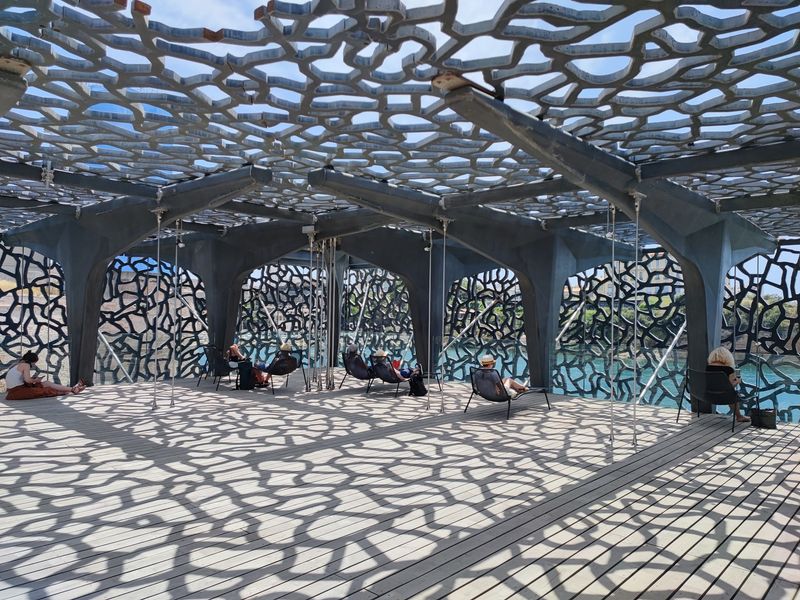
Marseille is a France that operates on its own terms. Mediterranean rather than northern European, it has been shaped over centuries by trade, maritime culture, and deep connections with North Africa and the wider Mediterranean world.
Mucem, the Museum of European and Mediterranean Civilisations, is one of the best places to understand those layers. The museum operates across several locations, including the striking modern J4 building with its latticed concrete facade and the adjacent historic Fort Saint-Jean, connected by a pedestrian bridge over the water.
The collections and exhibitions explore Mediterranean history, culture, and daily life across different periods and civilizations. The building’s setting, right at the edge of the sea near the old port, adds a geographic dimension that feels entirely appropriate.
For travelers who assume France is essentially Paris with regional variations, Marseille corrects that assumption quickly. The country’s culture, food, architecture, and atmosphere shift dramatically from region to region, and Mucem gives that shift real context.
Villa Ephrussi de Rothschild in Saint-Jean-Cap-Ferrat
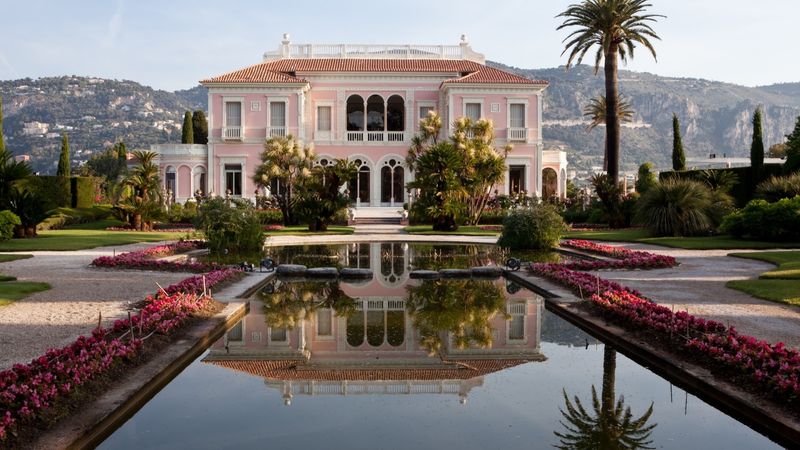
The French Riviera is easy to misread as a destination built entirely around beaches, yachts, and glamorous summer crowds. Villa Ephrussi de Rothschild on the Saint-Jean-Cap-Ferrat peninsula offers a quieter and more considered way to understand the area’s history.
The pink Belle Epoque villa was built in the early 20th century and filled with an extraordinary private collection of art and decorative objects. Nine themed gardens surround the villa, each with a distinct character, and the peninsula’s narrow width means sea views appear in nearly every direction.
The French garden features a musical fountain that operates at regular intervals, adding a theatrical element to what is already a carefully composed setting.
This is a place that rewards taking your time. France does relaxed luxury exceptionally well when it’s grounded in genuine history and craftsmanship rather than just expense.
Villa Ephrussi delivers that combination clearly, and a morning here tends to feel like time genuinely well spent on the Riviera.
Aiguille du Midi in Chamonix-Mont-Blanc
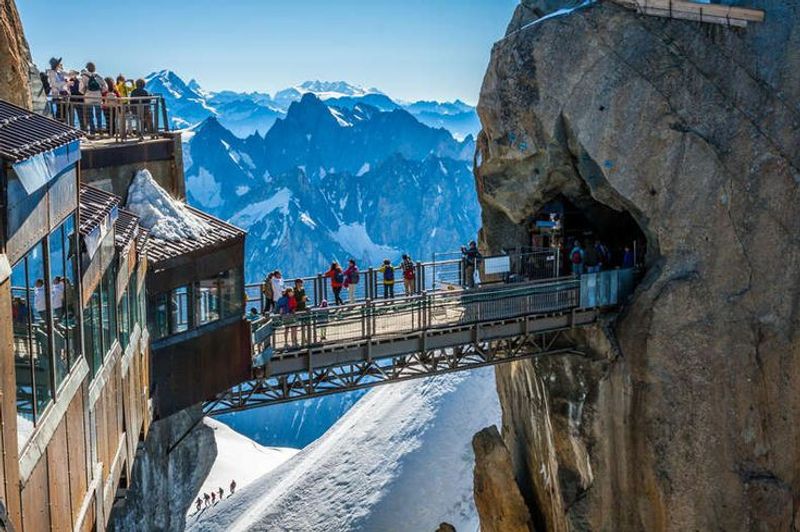
France’s appeal doesn’t end at museum doors or chateau gates. Chamonix-Mont-Blanc makes that point with some of the most dramatic mountain scenery in the entire Alps.
The Aiguille du Midi cable car departs from the center of Chamonix and climbs to 3,842 meters, opening up views across the Mont Blanc massif that are difficult to describe without sounding like a brochure. The journey takes roughly 20 minutes and the elevation change is immediate and striking.
At the top, visitors can walk through tunnels cut into the rock, step onto viewing terraces, and on clear days see across to Switzerland and Italy. The Step into the Void glass structure allows visitors to stand above a sheer drop with unobstructed views straight down.
What makes this particularly valuable for a France itinerary is the variety it represents. Within a single trip, you can experience Parisian museums, Burgundy vineyards, Provencal villages, and Alpine scenery without crossing a single border.
That range is one of France’s most underappreciated strengths.
Share this story