Europe has a long tradition of building clock towers that do far more than just tell time. These structures were often the center of civic life, marking important hours for merchants, travelers, and entire communities for centuries.
Some display the phases of the moon, track astronomical movements, or perform mechanical shows that still draw crowds today. Whether you are planning a trip abroad or simply love history, this list covers fifteen cities where the clock tower is genuinely worth seeking out.
Prague Astronomical Clock, Prague, Czech Republic
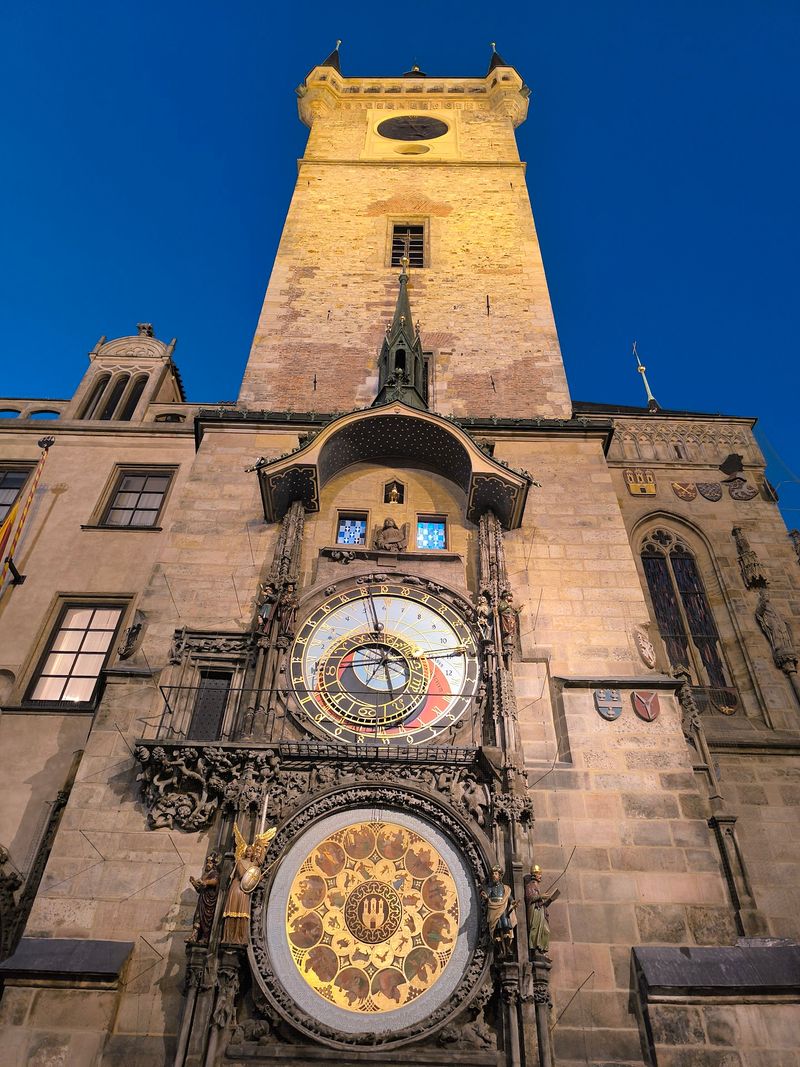
Mounted on the Old Town Hall in the heart of Prague, the Orloj has been marking time since the early 15th century. Prague City Tourism identifies it as the oldest still-functioning astronomical clock in the world, which makes it a genuinely rare landmark rather than just a pretty facade.
The clock’s lower dial is a calendar ring, while the upper astronomical dial tracks multiple forms of time simultaneously. Its complexity is part of what keeps visitors staring long after they expect to walk away.
Between 8 a.m. and 11 p.m., figures of the twelve apostles appear at the top of each hour in a famous mechanical procession. Visitors can also tour the Old Town Hall’s Gothic tower and historic interiors for an even closer look.
Few places in Europe make the simple act of watching a clock strike the hour feel like an event worth planning your entire afternoon around.
Elizabeth Tower and Big Ben, London, England

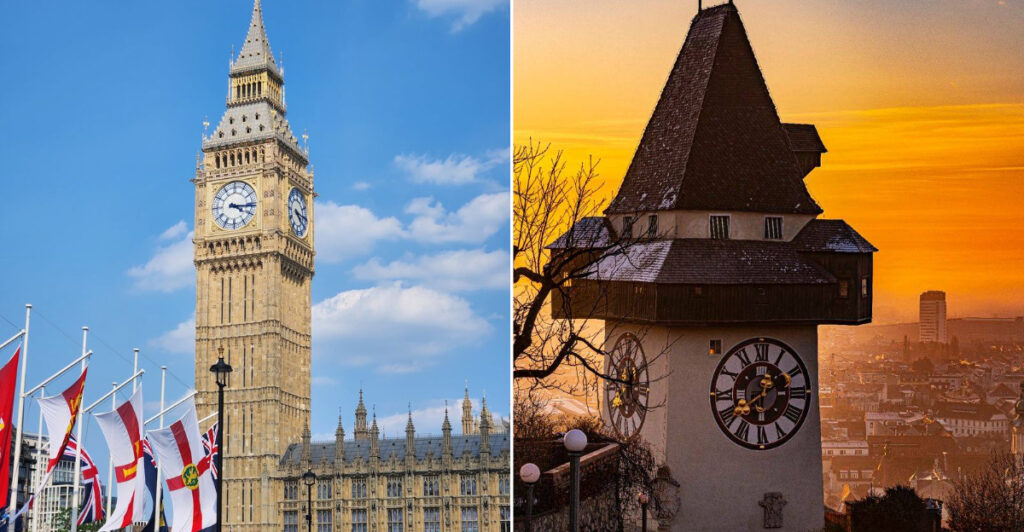
Most people call the whole thing Big Ben, but technically that nickname belongs to the Great Bell housed inside the tower. The structure itself is Elizabeth Tower, and together with the Houses of Parliament, it forms one of London’s most photographed skylines from any angle along the Thames.
Following a major restoration project, guided tours of the tower’s interior are once again available to visitors. Official information describes a roughly 90-minute experience covering 334 steps, passing through the mechanism room, areas behind the enormous clock dials, and the Belfry where the famous bell actually hangs.
The tower is genuinely impressive from the outside as well. Westminster Bridge and the surrounding riverfront offer clear views without requiring a ticket or reservation.
For anyone visiting London for the first time or the tenth time, Elizabeth Tower still manages to feel like a landmark that earns its place on every itinerary.
Zytglogge, Bern, Switzerland
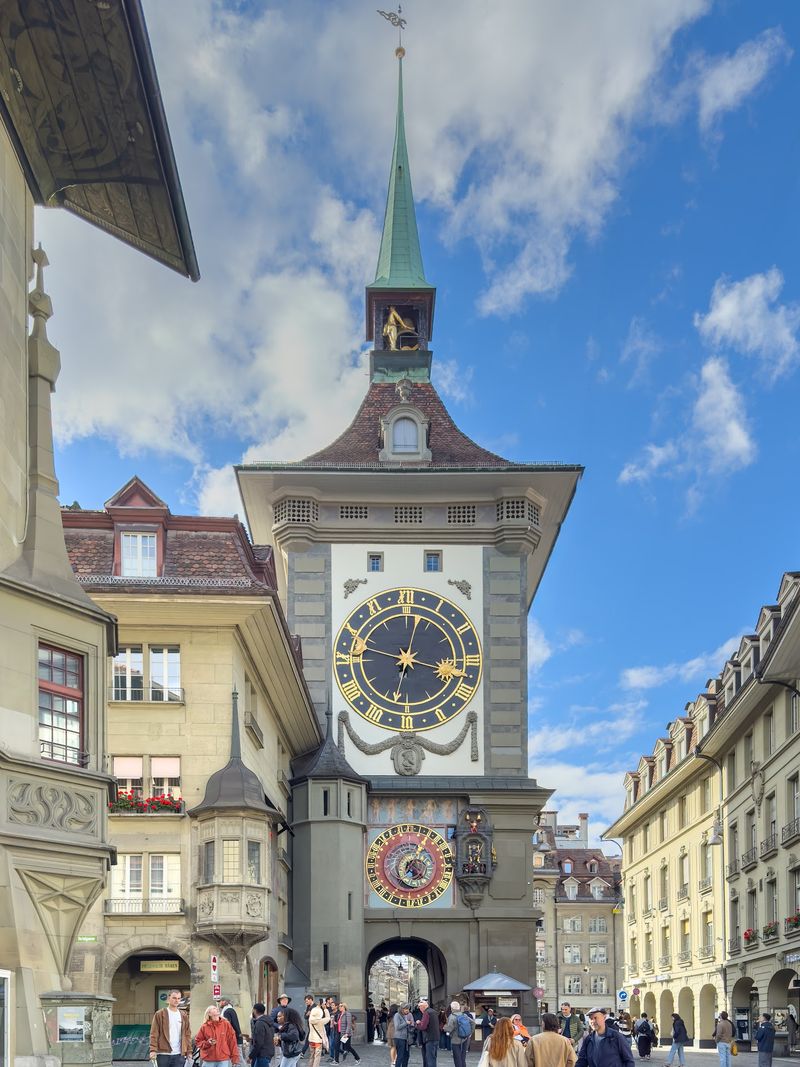
The Zytglogge sits in the center of Bern’s UNESCO-listed old city, and it has served different purposes throughout its long existence, from watchtower to prison to civic clock. Today it is one of the most visited landmarks in the Swiss capital.
Its clockwork mechanism was created by Kaspar Brunner and has been ticking since 1530, according to Bern’s tourism organization. That is nearly five centuries of continuous operation, which puts the Zytglogge in genuinely rare company among European timepieces.
Guided tours take visitors inside the tower, where they can examine the historic gears, moving figures, and mechanical apparatus up close. The experience gives a much clearer sense of how the mechanism actually functions than simply watching from the street below.
Bern’s arcaded streets and medieval fountains surround the tower, making this an especially atmospheric city to explore on foot for anyone interested in medieval European architecture and history.
Torre dell’Orologio, Venice, Italy
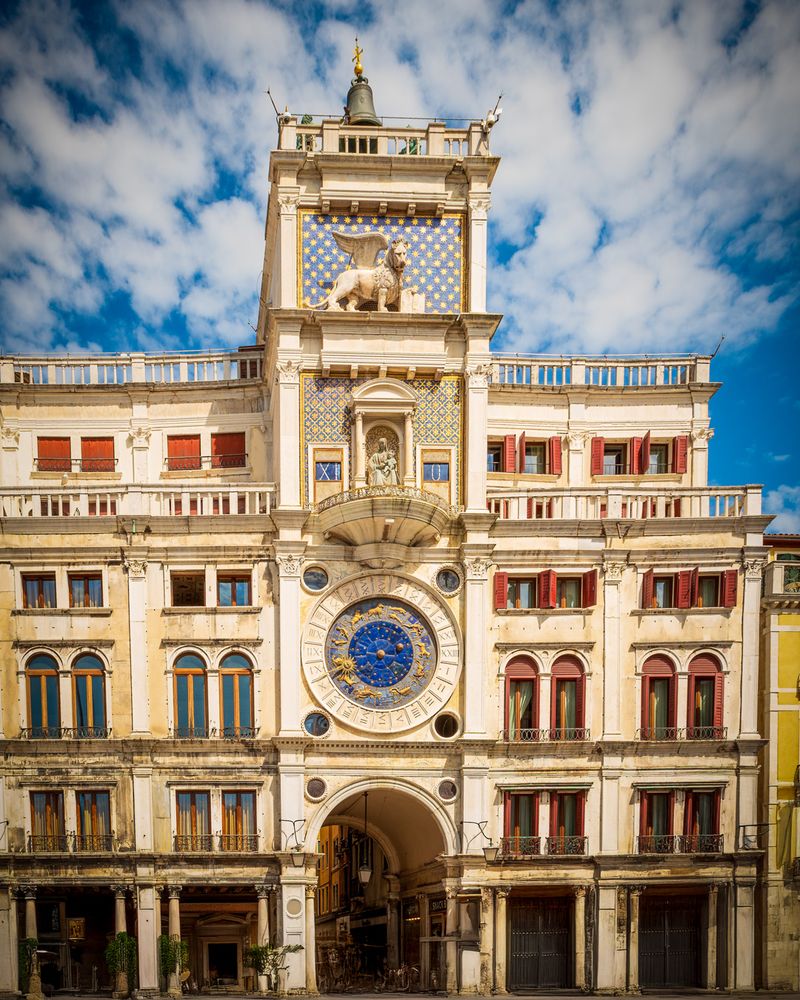
St. Mark’s Square has no shortage of remarkable things to look at, yet Venice’s Clock Tower still manages to hold its own against the competition. The Torre dell’Orologio rises above an archway connecting Piazza San Marco to the historic Merceria shopping streets, and its elaborate clock face is one of the finest Renaissance details in the city.
Unlike many historic towers that visitors can only admire from below, this one can be explored from the inside. Guided visits in Italian, English, and French are currently available, though advance booking is required before arriving.
Inside, visitors get an unusually close view of the complicated network of wheels and mechanical components that keep the clock running. The experience is genuinely informative and quite different from a typical museum visit.
For travelers already planning a day in Venice, adding a booked tour of the clock tower is one of the more rewarding ways to spend an hour away from the main crowds.
Neues Rathaus Glockenspiel, Munich, Germany
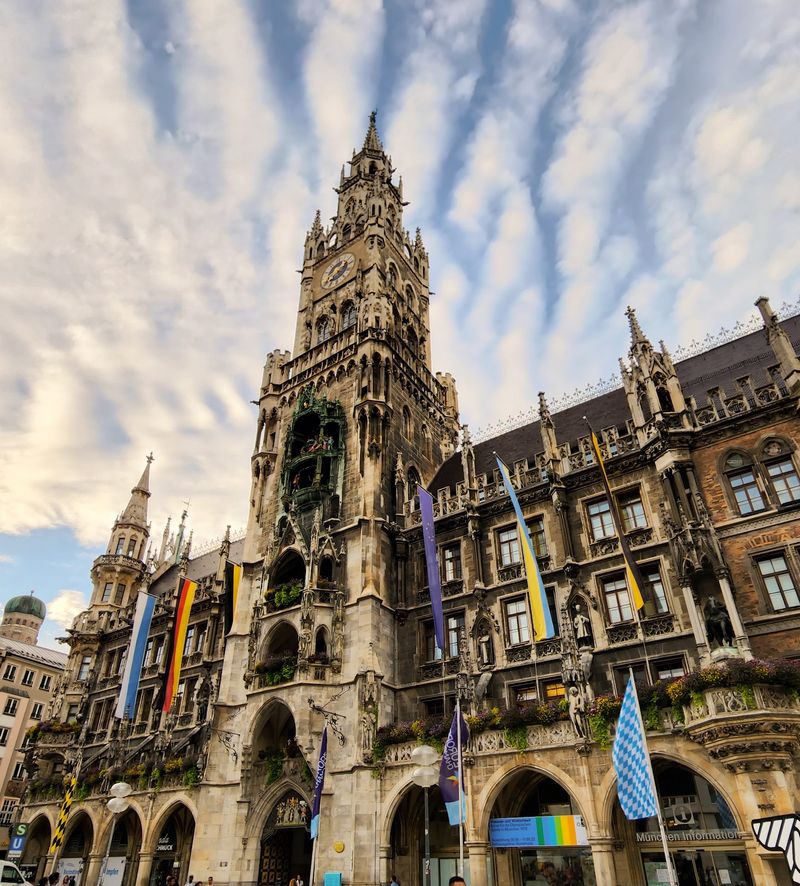
Marienplatz would feel like a completely different square without the Neues Rathaus rising above it. The New Town Hall’s tower contains the famous Glockenspiel, a large mechanical carillon that portrays scenes directly connected to Munich’s history.
The upper section depicts the 1568 wedding celebrations of Duke Wilhelm V and Renate of Lorraine, complete with a jousting sequence. A lower section portrays the traditional Schäffler dance, which has its own historic roots in the city’s past.
According to Munich’s official city website, the Glockenspiel performs every day at 11 a.m. and noon, with an additional performance at 5 p.m. from March through October. Crowds reliably gather beneath the tower before each performance, making it one of the most consistent daily spectacles in central Munich.
Even visitors who have seen it before tend to stop and watch again, which says something about how well the mechanism has held its appeal across generations of travelers.
Schlossberg Uhrturm, Graz, Austria
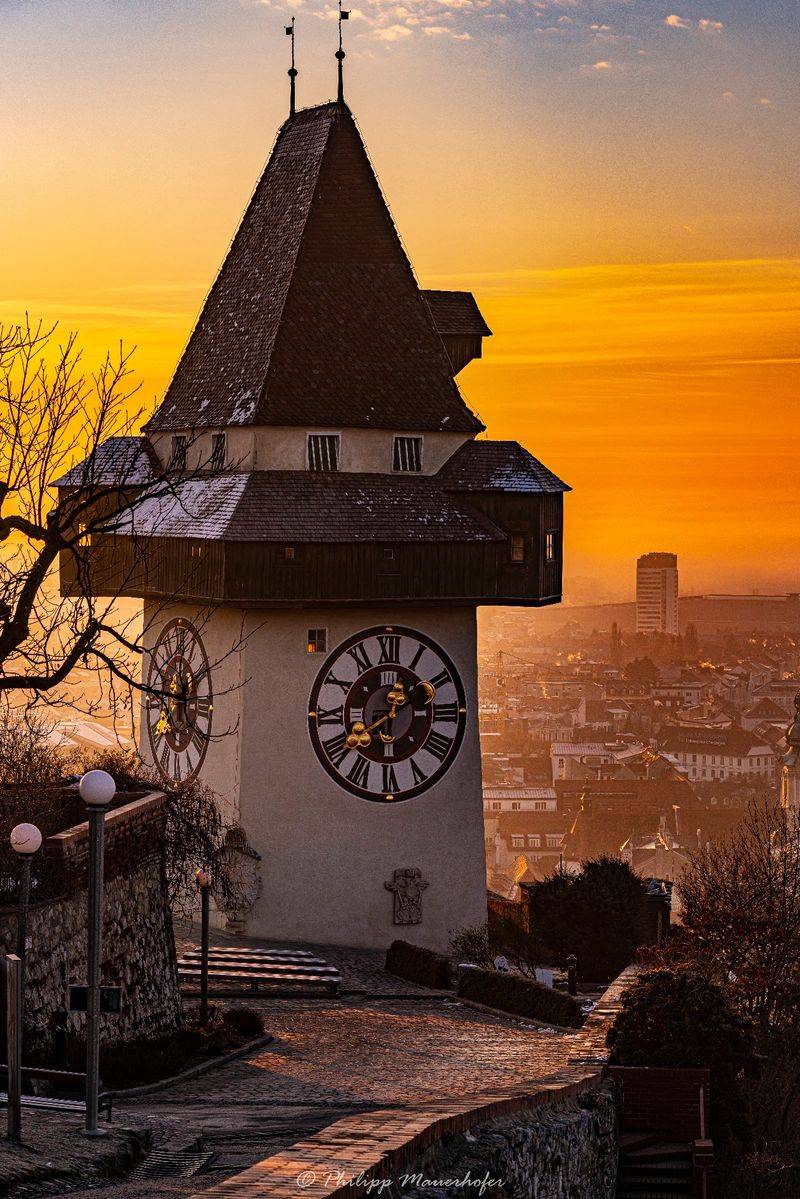
Perched on the Schlossberg hill directly above Graz, the Uhrturm has become one of the defining symbols of the Austrian city. The 29-meter tower is hard to miss, partly because of its enormous clock faces, each measuring more than five meters across.
Look closely and the clock reveals something unexpected. Because of the tower’s historic design, the hands do not operate the way most visitors initially assume, which tends to prompt a second and third look from curious travelers.
The tower and surrounding Schlossberg grounds are freely accessible from the outside throughout the year. During Styrian summer holidays, the interior is scheduled to open Thursday through Sunday from noon to 6 p.m., and guided Schlossberg tours can include interior access outside those periods.
The clock is genuinely impressive, but the panoramic view across the rooftops and streets of Graz below is a strong reason to make the trip up the hill regardless of the season.
Gros-Horloge, Rouen, France
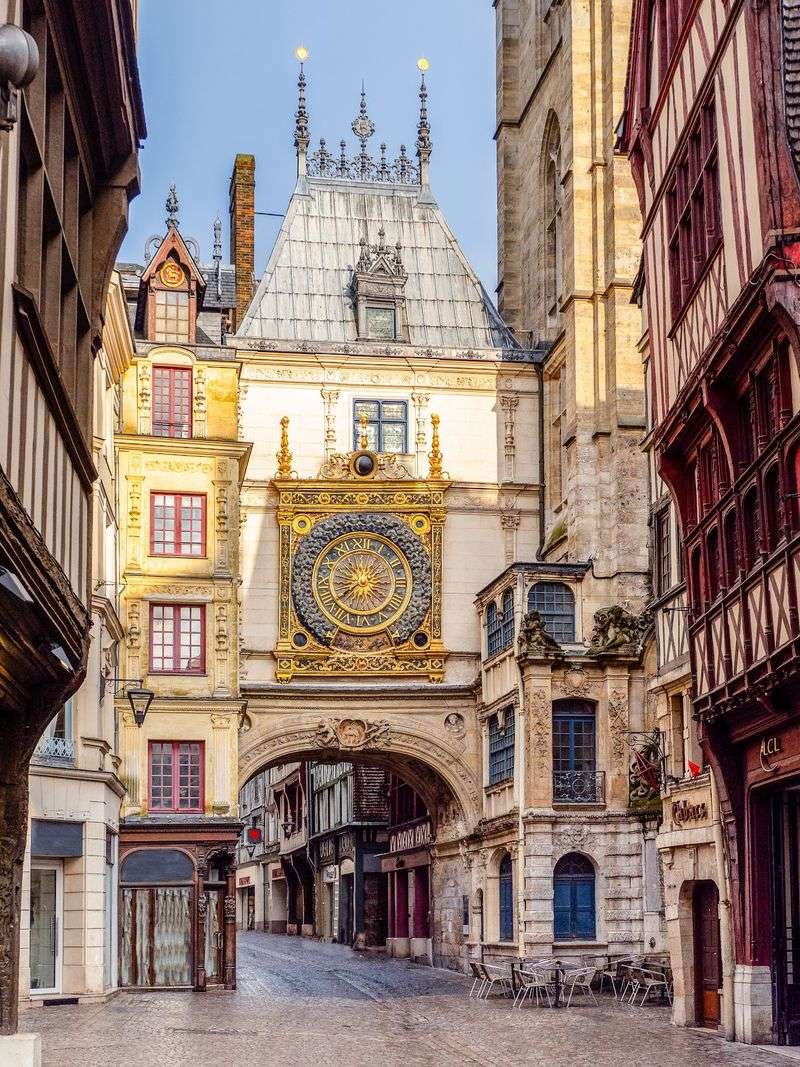
The Gros-Horloge is not simply a clock attached to a wall. It spans an entire pedestrian street beneath a decorative Renaissance arch, making it one of the most architecturally distinctive clock structures in Normandy.
The clock face uses a single hand to indicate the hour, but the dial carries considerably more information than that. A globe tracks the phases of the moon, and a figure beneath the VI changes to represent the day of the week, giving the design a depth that rewards careful observation.
The Gothic belfry attached to the structure contains the historic clock mechanism and the city’s earliest municipal bells. Current schedules list Tuesday through Sunday opening during both high and low seasons.
Interior visits allow guests to see the mechanism directly, enter the clock-face room, explore the belfry, and take in views across Rouen’s rooftops. For travelers passing through Normandy, this is one of the more genuinely rewarding stops in the city center.
Clock Tower, Sighisoara, Romania
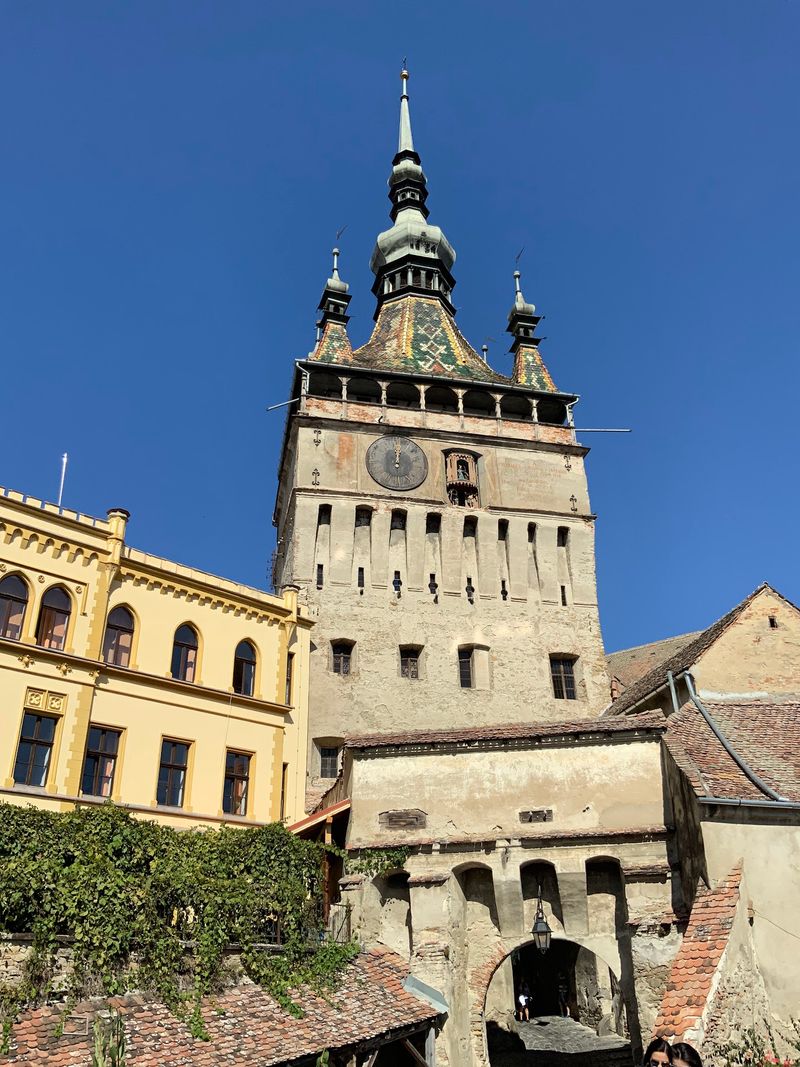
Walking through Sighisoara’s fortified medieval center already feels like a step back several centuries, and the city’s Clock Tower fits that setting perfectly. The 14th-century structure rises over the main entrance to the citadel and has long been considered the defining symbol of this remarkably well-preserved Transylvanian town.
The clock’s most memorable detail is the set of colorful mechanical figures associated with its mechanism, which add a theatrical quality to an already striking tower.
The tower now houses the city’s history museum, and current visitor information lists regular opening hours from Tuesday through Sunday, with Monday generally closed. Visitors can climb through the tower’s interior and reach viewpoints overlooking the old town’s rooftops and surrounding hills.
For travelers interested in medieval European history, few clock towers have a setting that feels this complete. The surrounding citadel, cobblestone lanes, and painted houses make Sighisoara one of the most atmospheric destinations on this entire list.
Torre delle Ore, Lucca, Italy
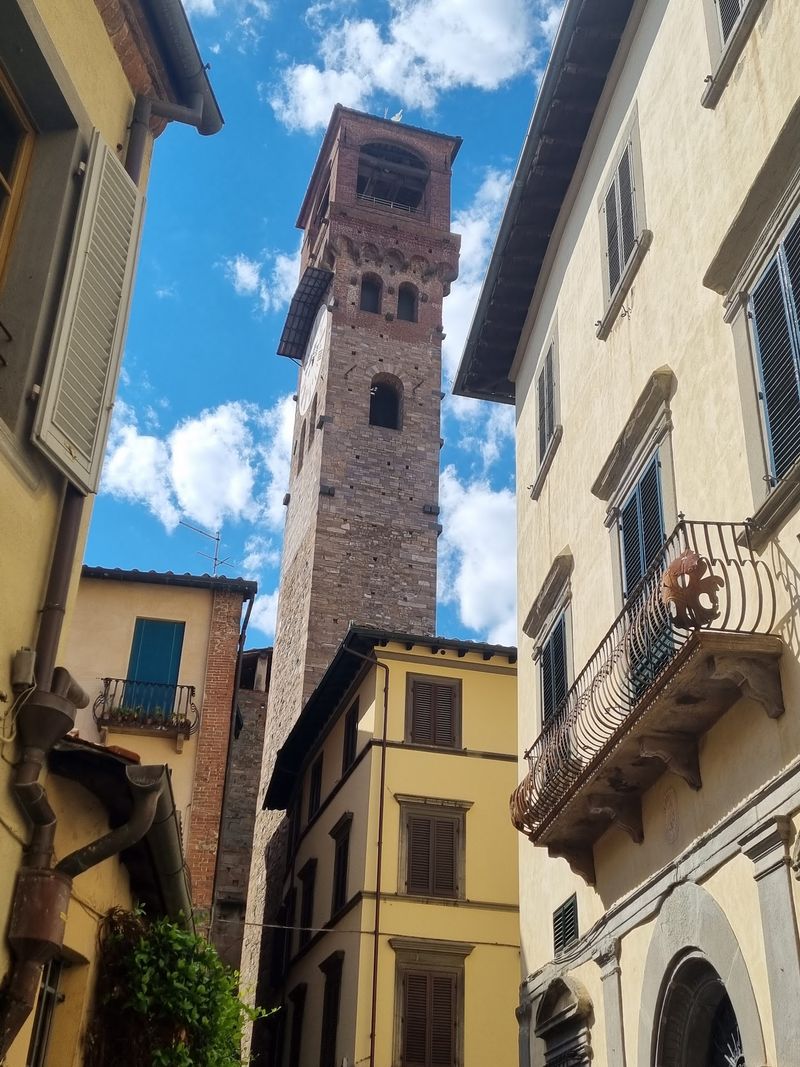
Lucca once had dozens of medieval towers, but the Torre delle Ore holds a particularly important place in the city’s story. Standing approximately 50 meters tall, it is the tallest tower in Lucca, and its role as the city’s public timekeeper became significant enough that the Republic of Lucca purchased it outright in 1490.
The clock continues to mark the hours and quarter hours using bells. Lucca’s official tourism site explains that a precision mechanism near the top of the tower controls each strike, keeping the schedule accurate across the city.
Visitors can enter the tower, though group sizes are kept small because of the narrow internal staircase. That limitation actually makes the experience feel less rushed than many major Italian attractions.
After climbing to the upper level, the reward is an elevated view across Lucca’s terracotta rooftops that stretches well beyond the historic walls. It is a perspective most visitors do not expect when they start at street level.
Torre dell’Orologio, Mantua, Italy
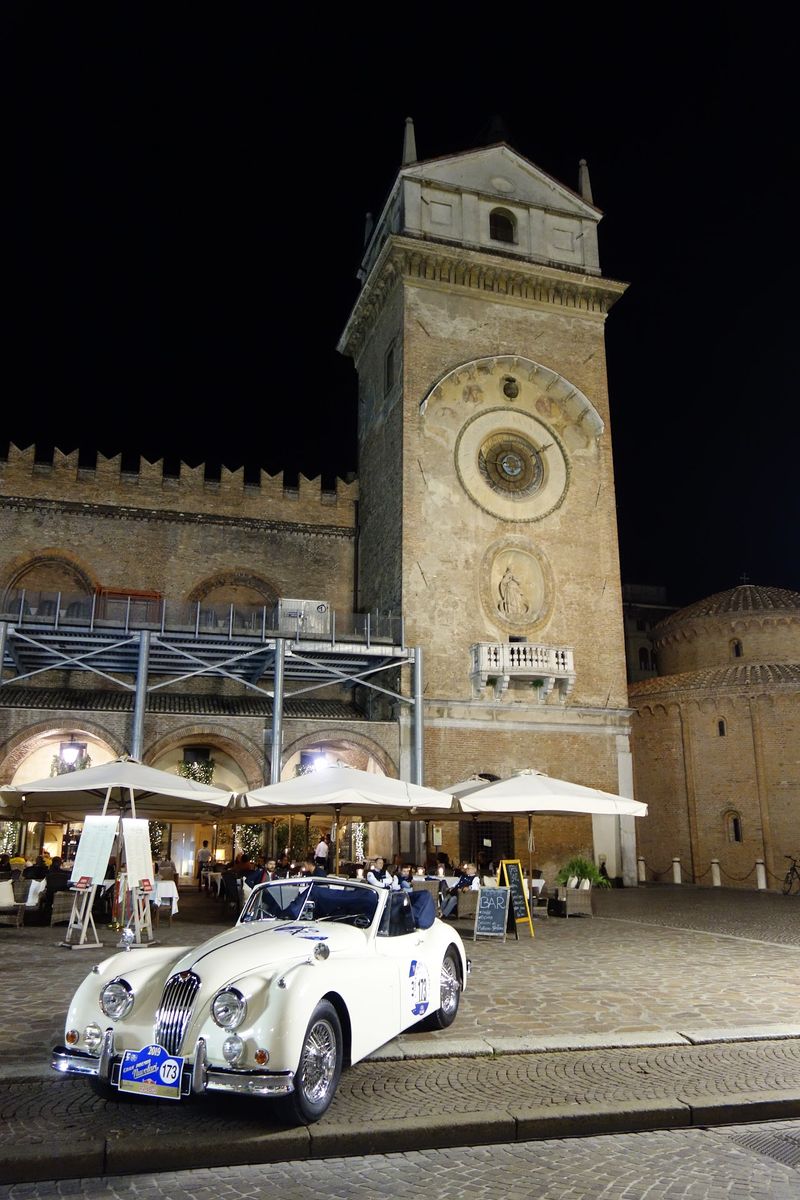
Mantua’s Piazza delle Erbe contains one of Italy’s most elaborate Renaissance timepieces. The Torre dell’Orologio was built in 1472 and 1473, with its astronomical clock created by mathematician and astrologer Bartolomeo Manfredi.
The clock was inaugurated in December 1473, making it one of the older functioning astronomical clocks in Italy.
Rather than simply showing the hour, the dial includes Roman numerals, zodiac symbols, lunar information, planetary hours, and additional astronomical indications. It is the kind of clock that rewards a long, patient look rather than a quick glance.
The tower also houses the Museo del Tempo, or Museum of Time, where visitors can examine historic components and machinery connected with the clock’s long operation. Upper levels provide views over Mantua and the lakes surrounding the city.
Mantua’s municipal website continued to list the tower and its museum as an active visitor attraction through late 2025 and into the current tourism season, confirming it remains open and accessible.
Cathedral Astronomical Clock Tower, Messina, Italy
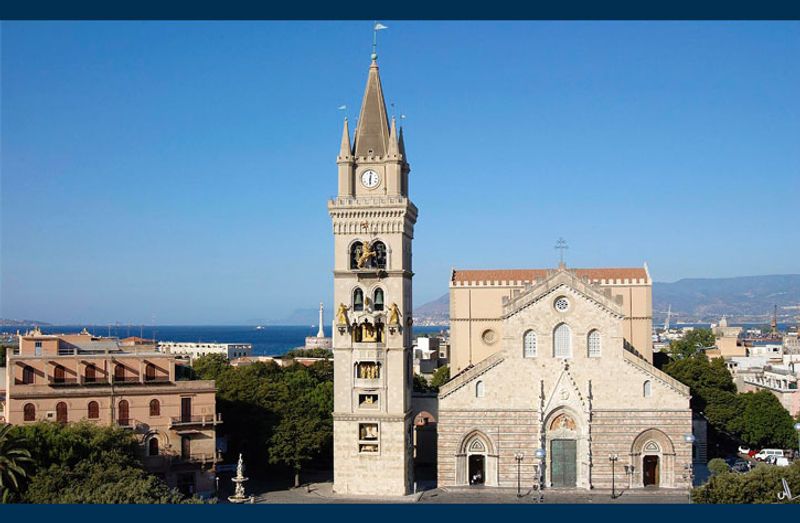
Arriving in Messina around noon puts travelers in a good position to witness one of Sicily’s most unusual daily experiences. The bell tower beside Messina Cathedral houses an enormous astronomical clock fitted with a series of mechanical displays that perform at specific times of day.
Messina’s official tourism portal identifies the cathedral bell tower and its astronomical clock as one of the city’s major architectural attractions. The scale and detail of the mechanism are genuinely impressive, especially for visitors who were not expecting it.
MessinArte, which manages visits to the Cathedral Museum and the astronomical clock tower, continues to publish visitor schedules and opening periods for the attraction. Checking their current calendar before arriving is the most reliable way to plan around the performance times.
Watching the mechanism perform around midday has become a classic sightseeing moment in central Messina. It is the kind of spectacle that tends to stop foot traffic completely and holds attention in a way that photographs rarely capture.
City Clock by the Iron Gate, Split, Croatia
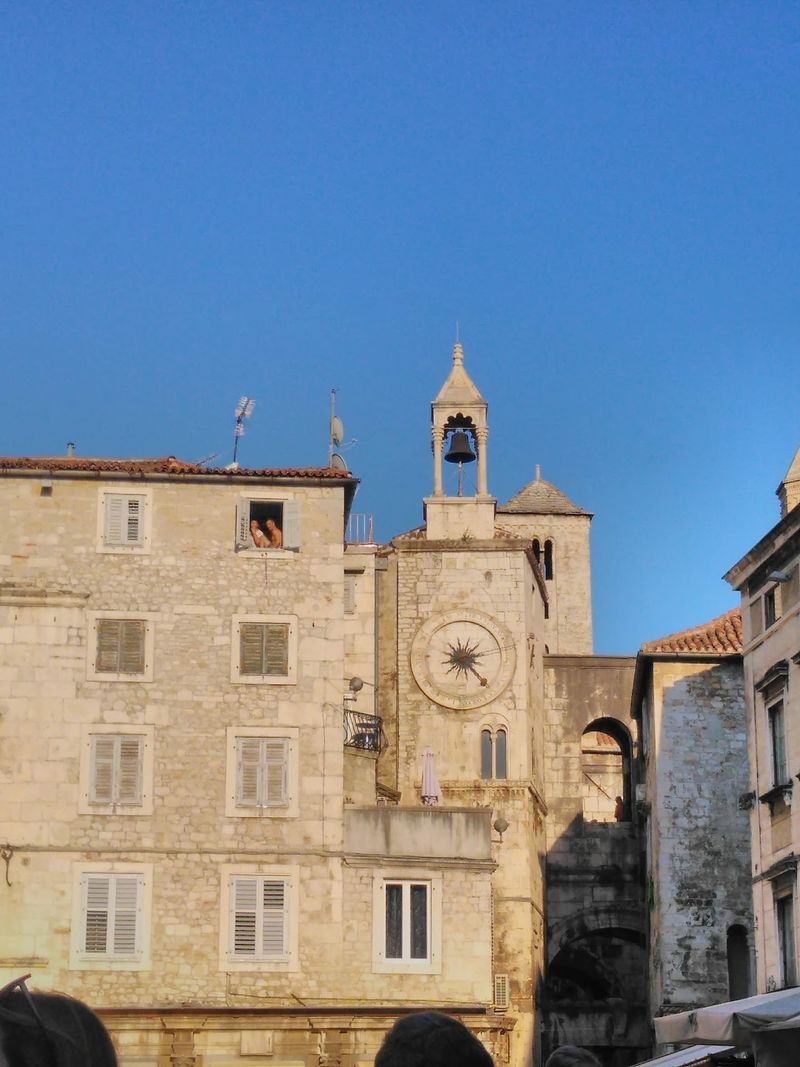
Split’s historic clock has one feature that stops most visitors in their tracks the moment they notice it. Instead of the standard 12-hour face, the dial displays 24 numbers, making it one of the more unusual clocks you will encounter in any European old town.
Located near the Iron Gate of Diocletian’s Palace and Narodni trg, the clock sits within a remarkable layering of architecture spanning many different centuries. The surrounding area alone makes this corner of Split worth exploring slowly.
The Split Tourist Board specifically highlights the clock’s unusual 24-digit face and notes that its Renaissance bells continue to ring for the city and its residents today. That combination of historic detail and ongoing function is part of what makes it genuinely interesting rather than just decorative.
This is a street-level stop rather than a ticketed attraction, which means it fits naturally into any walk through Split’s old center without requiring advance planning or extra time set aside.
Tour de l’Horloge, Auxerre, France
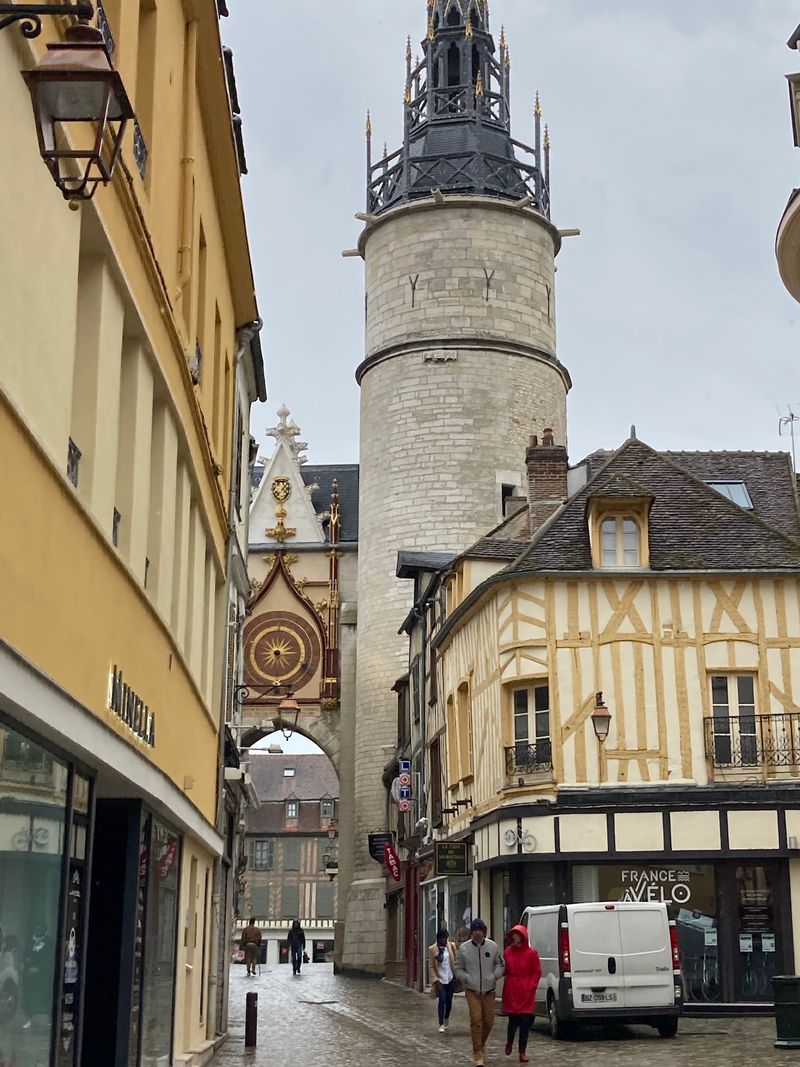
The Tour de l’Horloge in Auxerre is easy to recognize from a distance, but the real interest lies in understanding what its dial is actually tracking. The mechanism has been operating since 1483, according to the Auxerre tourism office, and its two hands display information connected with both solar time and the phases of the moon.
The tower sits directly within the pedestrianized historic center, making it a natural landmark to encounter while walking through the city. No special detour is required to find it.
Regular interior access is limited, but the tourism office organizes special guided visits and private tower tours for those who want a closer look at the mechanism. The exterior and astronomical dial remain among the city’s most prominent historic features regardless of whether a tour is available.
For travelers exploring the Burgundy region, Auxerre offers a genuinely rewarding stop for anyone looking for a French clock tower experience outside the country’s most heavily visited destinations.
Salzburg Carillon, Salzburg, Austria
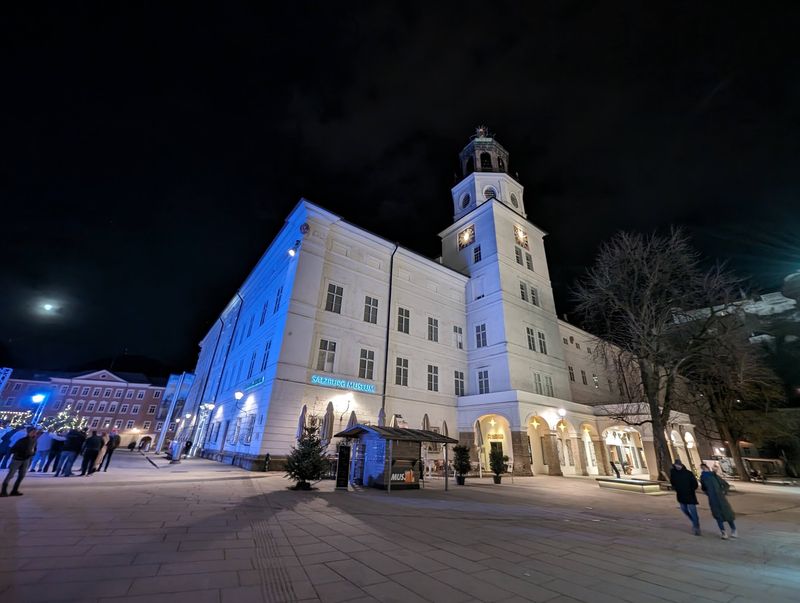
Salzburg has a deep connection with music, so it feels appropriate that one of its historic towers announces the time with a melody rather than a plain bell strike. The Salzburger Glockenspiel occupies the tower of the Neue Residenz in Salzburg’s Old Town and has been a fixture of the city’s soundscape for centuries.
Its historic mechanism includes a large brass cylinder developed in the early 18th century. Thousands of holes in that cylinder control which notes the carillon plays, giving the instrument a mechanical precision that predates modern technology by hundreds of years.
The carillon chimes three times daily and remains one of Salzburg’s most accessible historic traditions for visitors simply walking through the old center. Tower access is seasonal and not available during winter months, but the music itself can still be heard from the surrounding streets and squares.
For travelers who appreciate the connection between music and history, Salzburg’s carillon tower adds a dimension to the city that goes well beyond its famous concert halls.
Astronomical Clock at Saint-Jean Cathedral, Besancon, France
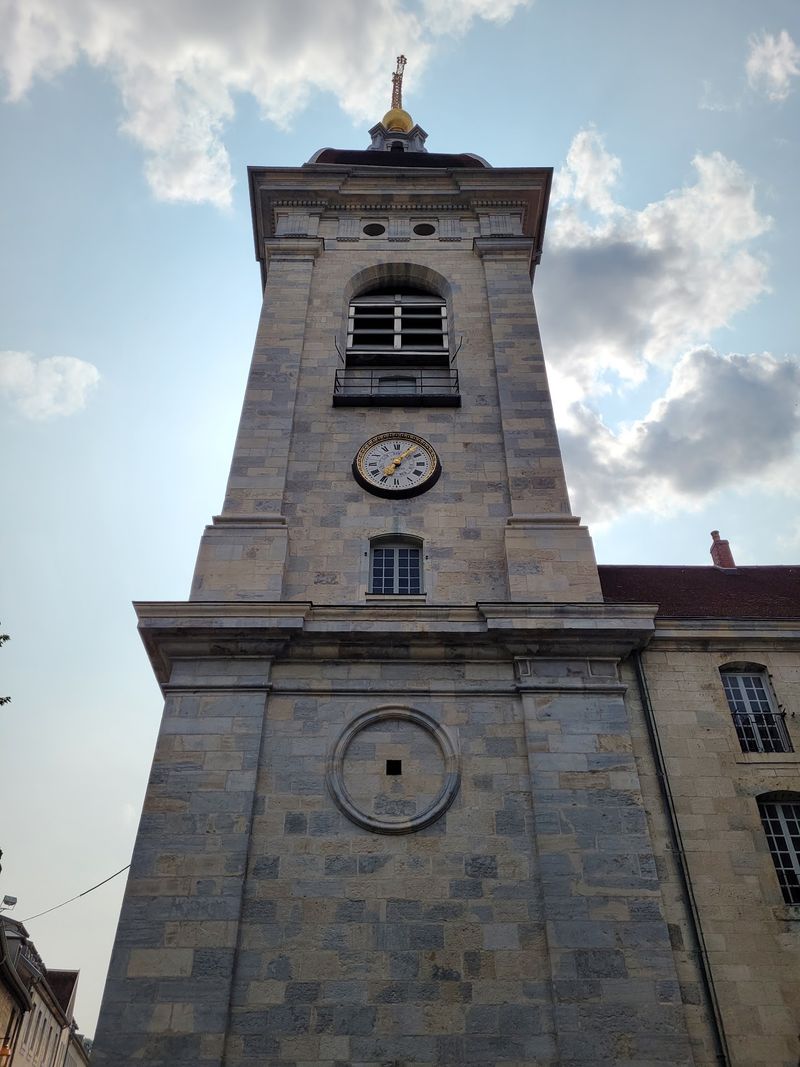
Besancon has been promoted as France’s capital of time, a title tied directly to the city’s long history in watchmaking and precision mechanics. One of its most fascinating timepieces sits inside the bell tower of Saint-Jean Cathedral, where it has been operating since the 19th century.
The astronomical clock was designed between 1858 and 1860 by Auguste Lucien Verite. It is an extraordinarily complicated piece of mechanical engineering containing numerous dials, displays, and animated elements that go far beyond what most visitors expect from a cathedral clock.
The clock occupies one of the lower rooms of the cathedral’s bell tower and is open to visitors during its operating season. Official information currently lists access from April through October, as well as during selected Christmas, winter, and Easter school holidays.
The cathedral itself stays open throughout the year, making Besancon a strong choice for anyone with a genuine interest in the history of European clockmaking and the craft traditions behind it.
Share this story