Long before anyone booked a flight or scrolled through travel apps, people were already crossing mountains, rivers, and entire countries on foot to reach sacred destinations. These journeys could take months, and the dangers along the way were very real.
Yet millions of people made them anyway, driven by faith, hope, and a deep desire for something beyond the ordinary. From Spain to Ireland, Europe is filled with holy places that have welcomed pilgrims for hundreds of years, and many of them still do today.
Santiago de Compostela, Spain
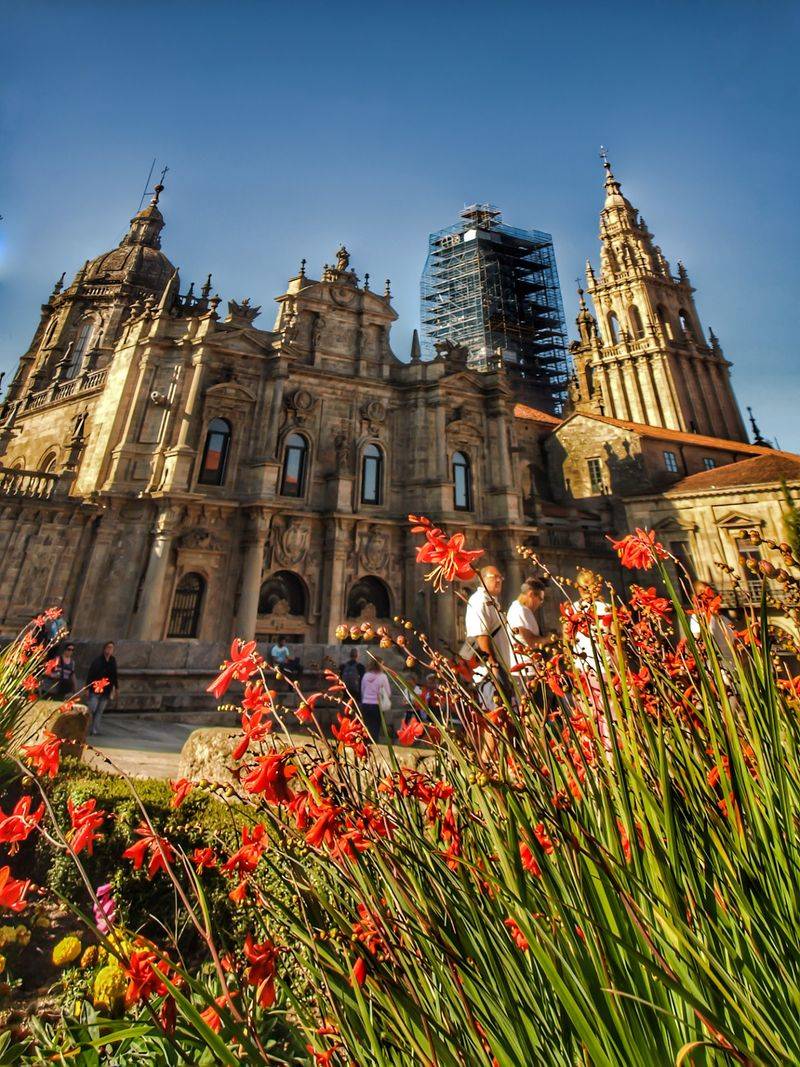
Imagine walking hundreds of miles across mountains and open countryside, all to reach a single cathedral in northwestern Spain. That is exactly what millions of people have done across the centuries on the Camino de Santiago.
The journey leads to the cathedral traditionally linked to the tomb of Saint James the Apostle, one of Christianity’s most revered figures.
UNESCO recognizes not just the destination but an entire network of routes stretching roughly 1,500 kilometers across northern Spain. Towns, bridges, hospitals, and hostels all grew up along these roads specifically to serve the flood of travelers.
The infrastructure of medieval Christian Europe was literally shaped around this pilgrimage.
Today, the mix of people arriving in Santiago is wonderfully diverse. Some carry rosaries and pray at every chapel along the way.
Others come for the physical challenge or simply to clear their heads. Regardless of why they started walking, most pilgrims describe arriving at the Praza do Obradoiro as a genuinely emotional moment.
The Camino has outlasted empires, survived religious upheaval, and grown more popular in recent decades than at almost any point in its long history.
St. Peter’s Basilica, Vatican City
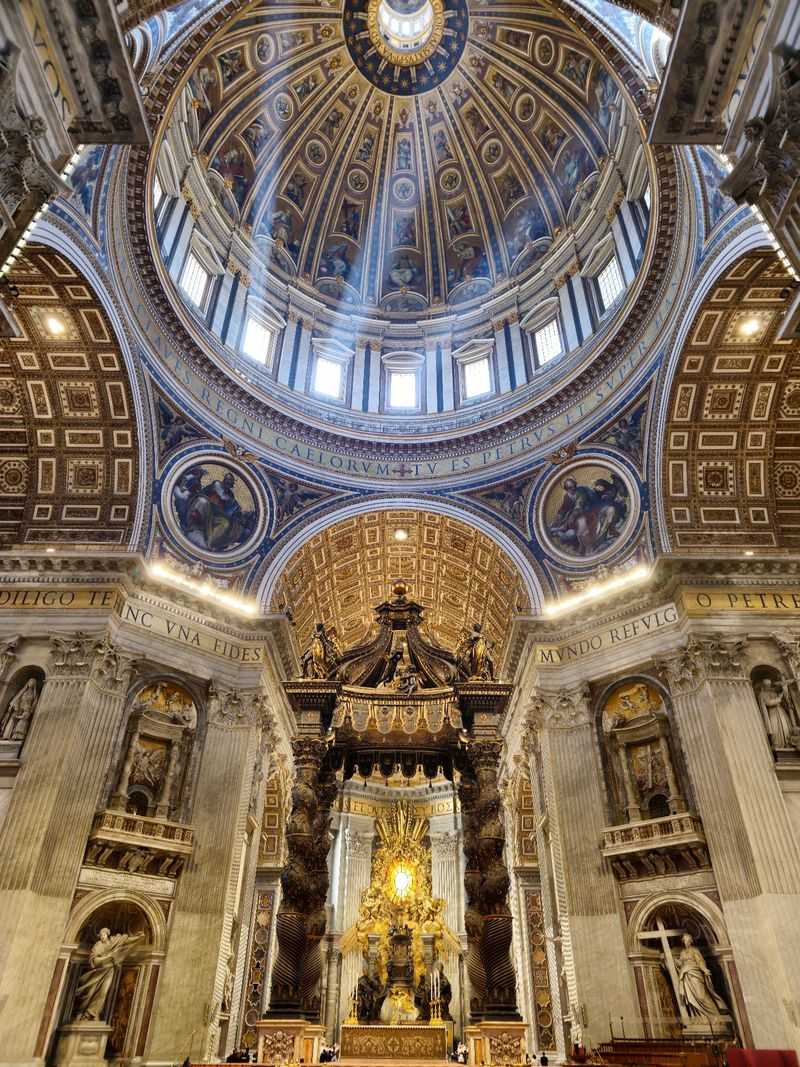
Rome has been pulling pilgrims toward it since the earliest centuries of Christianity, and St. Peter’s Basilica sits at the very heart of that tradition. What makes this building different from other great churches is what lies beneath it.
According to the Vatican, Christians were praying at the site of Saint Peter’s tomb long before any grand basilica existed above it, some even scratching crosses into the surrounding stone.
The current building, with its breathtaking dome and Bernini’s theatrical colonnade, is actually much younger than the pilgrimage itself. Medieval Christians counted Rome alongside Jerusalem and Santiago as one of the three supreme destinations of the Christian world.
People traveled for months just to stand where Saint Peter was believed to be buried.
Visitors today can descend into the archaeological levels beneath the basilica, moving closer to the ancient burial site that started everything. The art overhead by Michelangelo and Bernini is spectacular, but for many pilgrims, the real draw remains far below the marble floors.
Few buildings on Earth carry that kind of layered weight, where a 2,000-year-old act of faith and a Renaissance masterpiece exist in the same address.
Mont-Saint-Michel, France
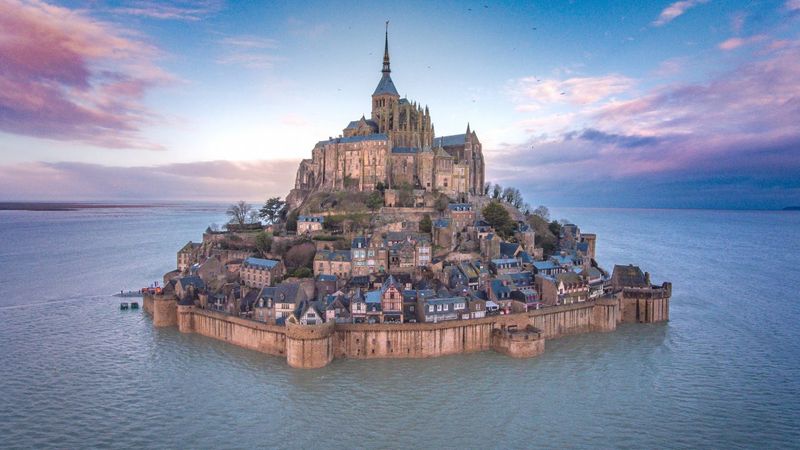
Few sacred places on Earth arrive with such a theatrical entrance. Mont-Saint-Michel surges out of tidal flats off the Normandy coast like something from a storybook, its abbey stacked dramatically upward and topped by a golden spire.
According to tradition, the whole thing started in 708 when the Archangel Michael appeared to Bishop Aubert of Avranches and told him to build a sanctuary on the rocky island.
The site grew over more than 1,300 years into one of France’s most recognizable landmarks and a major Christian pilgrimage center. Medieval pilgrims faced a genuinely dangerous crossing, with tides, fog, and shifting mudflats making the approach part of the spiritual ordeal itself.
Reaching the sanctuary required courage before any prayers were said.
Mont-Saint-Michel also served as a stopping point for pilgrims continuing toward Santiago de Compostela, linking it into the wider network of medieval European pilgrimage routes. UNESCO granted it World Heritage status in 1979.
Today, access is far easier with a modern causeway, but pilgrims still climb the steep cobbled streets toward the abbey, passing shops and cafes before arriving at something that feels genuinely ancient. The drama of the setting never really fades.
Canterbury Cathedral, England
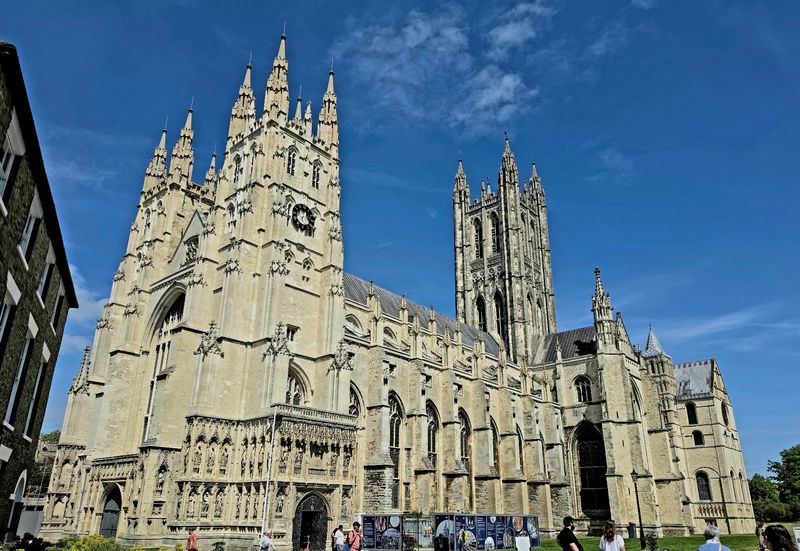
Canterbury became one of medieval Europe’s busiest pilgrimage cities because of a murder. On December 29, 1170, Archbishop Thomas Becket was killed inside the cathedral by four knights following a bitter conflict with King Henry II.
Reports of miracles at his tomb spread quickly, and pilgrims began arriving almost immediately.
The movement grew into something enormous. Canterbury Cathedral’s own records describe thousands of medieval pilgrims traveling there, and the shrine eventually ranked alongside Rome and Santiago among the most important pilgrimage destinations in western Christendom.
Geoffrey Chaucer famously captured the culture of these journeys in his Canterbury Tales, a collection of stories told by a mixed group of pilgrims on their way to Becket’s shrine.
Henry VIII’s government destroyed the original shrine in 1538 during the English Reformation, but the pilgrimage tradition survived in memory and literature. Today, visitors can see the exact spot where Becket was killed, his original burial place in the crypt, and remarkable medieval stained-glass windows depicting miracles attributed to him.
Canterbury proves that even when a physical shrine is destroyed, a story powerful enough can keep the pilgrims coming for centuries afterward.
Basilica of Saint Francis, Assisi, Italy
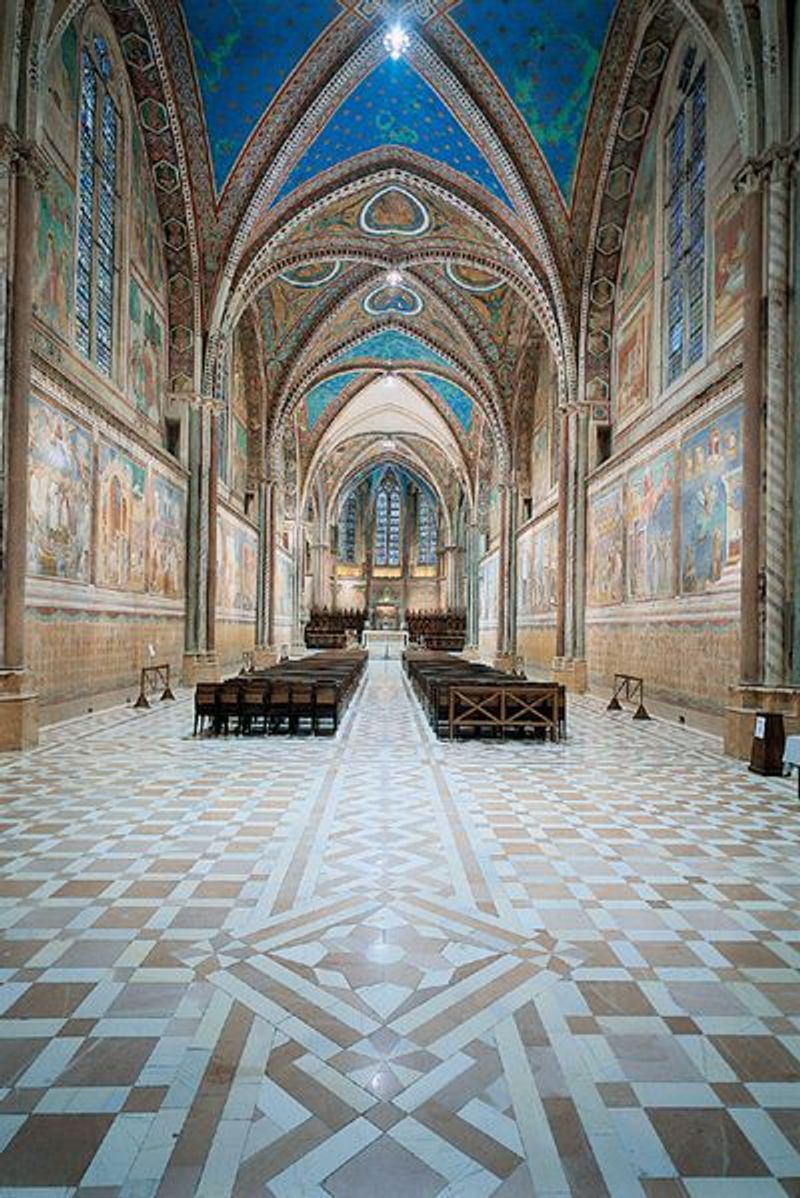
Saint Francis died in 1226, and the pilgrims started arriving almost before the stone was dry on his basilica. He was canonized just two years after his death, and Pope Gregory IX blessed the foundation stone of a church in his honor in 1228.
By 1230, Francis’s remains had been transferred there, and the pilgrimage was officially underway.
What followed was extraordinary. The Basilica of San Francesco became one of the great sacred and artistic monuments of medieval Italy, decorated by artists including Giotto, Cimabue, and Simone Martini.
UNESCO describes Assisi as a fundamental influence on European art and architecture, not just a religious landmark. The frescoes alone could fill days of careful looking.
Assisi’s spiritual landscape stretches beyond the famous basilica. Down in the valley below the hilltop town, Santa Maria degli Angeli contains the tiny Porziuncola chapel, the modest building where Francis and his first followers gathered, and the Chapel of the Transitus, marking the place where he died on October 3, 1226.
For Franciscans and countless other visitors, Assisi feels less like a museum and more like a place where something important is still quietly happening.
Rocamadour, France
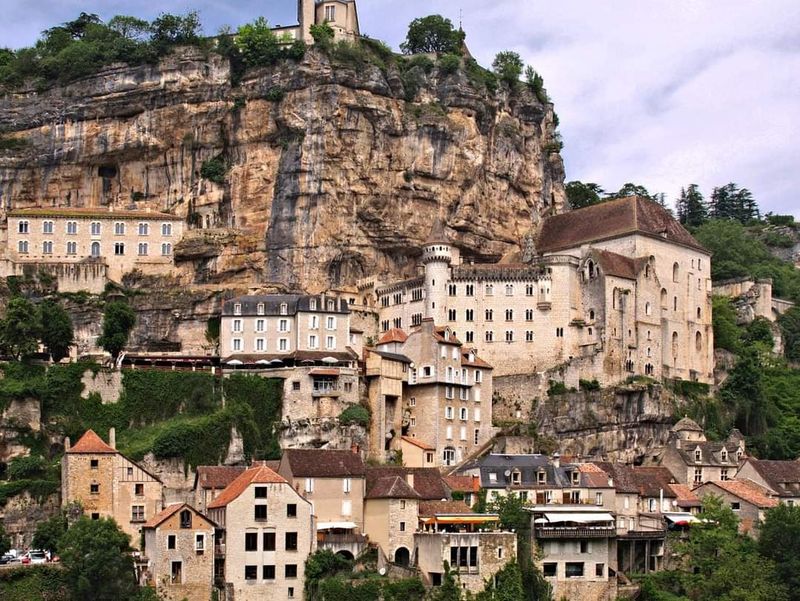
Rocamadour looks like it was designed by someone who wanted pilgrims to feel the effort of getting there. The entire sanctuary is built directly into a cliff face above a dramatic gorge in southwestern France, with chapels stacked up the rock and a long staircase connecting the lower village to the sacred spaces above.
Simply arriving there requires a climb.
Pilgrims have been making that climb since at least the early 12th century. A papal reference from 1105 confirms that the shrine’s reputation had already spread well beyond the local area.
Historical records list remarkable visitors including King Henry II of England, Saint Louis IX of France, Saint Dominic, and Saint Bernard, suggesting that Rocamadour attracted the most prominent figures of medieval Christendom.
The spiritual complex includes several chapels built into the rock, a venerated Black Madonna, and strong connections to the pilgrimage routes leading toward Santiago de Compostela. Penitents traditionally climbed the staircase on their knees, a practice some still observe today.
Rocamadour is one of those rare places where the physical setting and the spiritual tradition feel genuinely inseparable, the landscape itself seems to be part of the devotion.
Aachen Cathedral, Germany
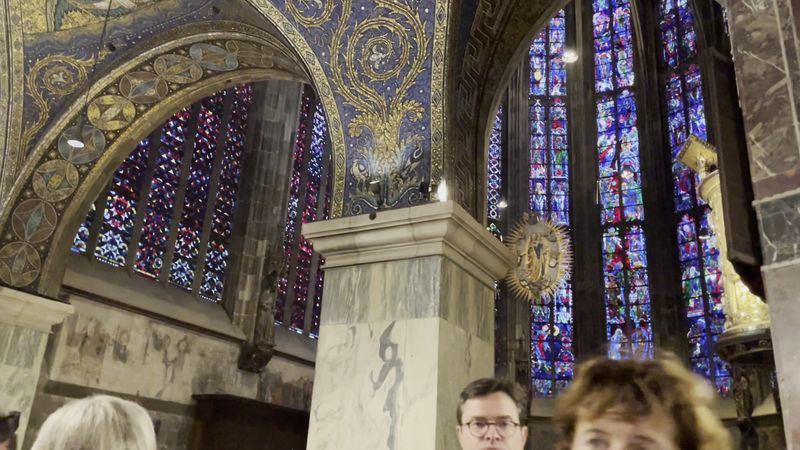
Not every famous pilgrimage destination is famous for the right reasons, and Aachen is a good example of a place that has been somewhat overshadowed by its more glamorous rivals. Yet in the Middle Ages, the cathedral’s own history places Aachen alongside Rome, Jerusalem, and Santiago de Compostela as one of Christendom’s most important pilgrimage sites.
That is extraordinary company.
The tradition centers on four cloth relics associated by tradition with Mary, Jesus, and John the Baptist. Since 1349, these relics have been displayed to pilgrims on a seven-year cycle called the Aachen Pilgrimage.
The next major display is scheduled for 2028, and crowds still gather for it from across Europe and beyond.
Aachen’s significance goes further than the relics. The cathedral grew around Charlemagne’s Palatine Chapel, built at the very beginning of the ninth century, and Charlemagne himself was buried there.
The building later served as the coronation church for German kings, adding layers of imperial history to its religious importance. UNESCO added Aachen Cathedral to the World Heritage List in 1978, making it Germany’s first World Heritage property.
History lovers and pilgrims both find plenty to think about here.
Jasna Gora, Czestochowa, Poland
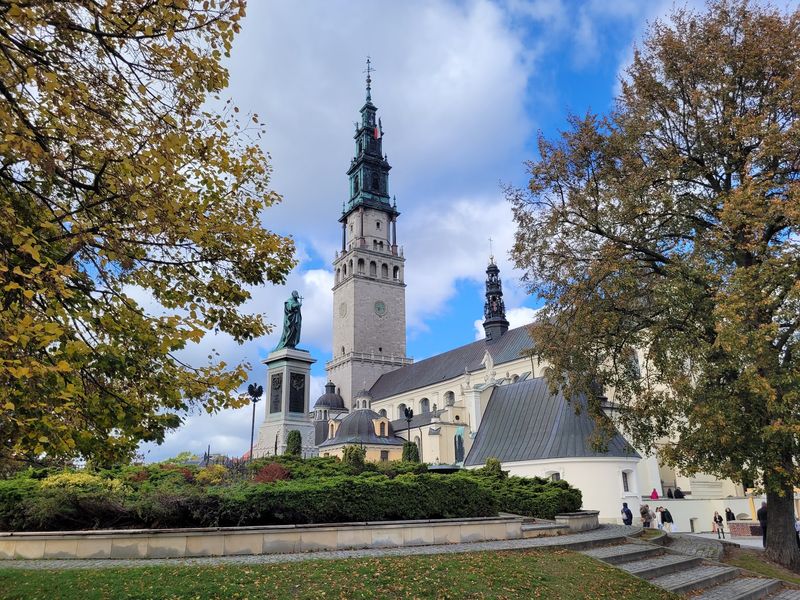
Every August, groups of Polish pilgrims set out on foot from Warsaw and other cities, walking for days across the countryside toward a single destination. They are heading to Jasna Gora, the Pauline monastery in Czestochowa that houses the revered image known as the Black Madonna of Czestochowa.
The walking pilgrimage is not a revival of an old tradition. It never stopped.
The monastery’s history begins in 1382, when Pauline monks arrived on the hill. The image of the Virgin is documented there by 1384, and devotion grew rapidly from those early years.
By 1682, Jasna Gora’s own records describe approximately 140,000 pilgrims gathering for its 300th anniversary, a number that speaks to the scale of medieval and early modern pilgrimage before modern transportation existed.
The site became deeply intertwined with Polish national identity, surviving wars, occupations, and political upheavals that destroyed much else around it. For many Poles, Jasna Gora represents something beyond religious devotion.
Its connection to royal patronage, military history, and national survival has made it a symbol of the country itself. Pope John Paul II visited multiple times, reinforcing a bond between the shrine and Polish Catholic identity that remains very much alive today.
Mariazell Basilica, Austria
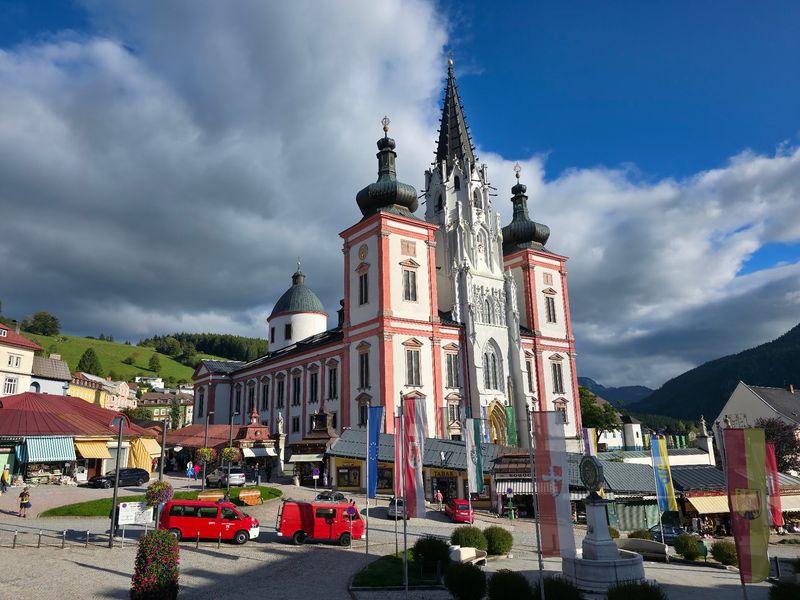
Mariazell is a small mountain town with a population you could fit into a medium-sized school gymnasium, yet its basilica has been pulling pilgrims from across Central Europe for nearly 900 years. The sanctuary traces its foundation to 1157, and documentary evidence confirms it was already a heavily visited pilgrimage church by 1330.
The numbers only grew from there.
By around 1400, enough pilgrims were arriving to support numerous market stalls selling votive objects outside the church. By the following century, Mariazell had become an international destination, drawing people from regions corresponding to modern Austria, Hungary, Germany, Poland, Croatia, Italy, Switzerland, France, and the Czech lands.
The Habsburg monarchy eventually embraced the shrine as particularly significant, deepening its prestige across the empire.
The basilica’s own account estimates that more than one million pilgrims and visitors can arrive in a single year today. Multiple expansions were required over the centuries simply to accommodate the crowds.
For Central Europe, Mariazell occupies a spiritual role comparable to much larger and more internationally famous Marian shrines. The contrast between the quiet Alpine town and the enormous scale of devotion it generates is one of the more surprising things about European pilgrimage geography.
Einsiedeln Abbey, Switzerland
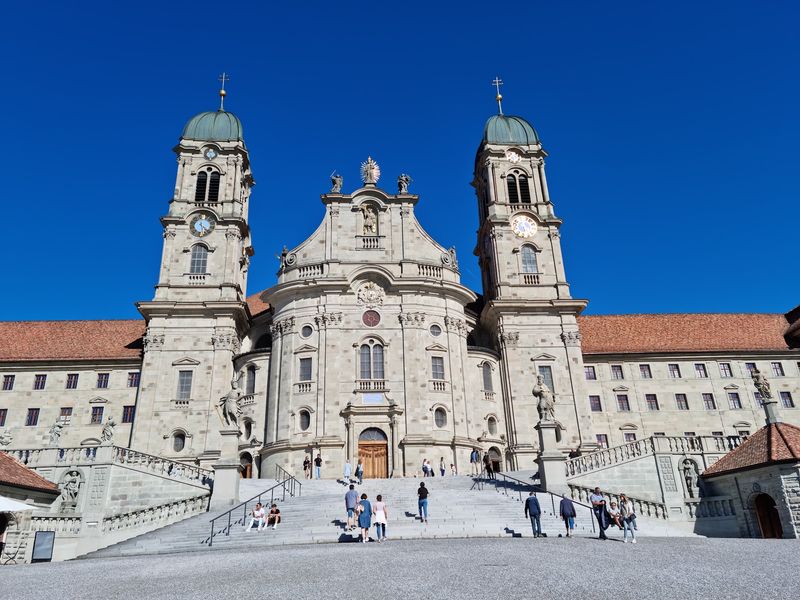
Switzerland’s most important pilgrimage destination started with a man who simply wanted to be left alone. Saint Meinrad settled as a hermit in the forest of what is now the canton of Schwyz in the ninth century and was killed there in 861.
His solitary religious settlement eventually grew into a Benedictine monastery and the country’s most significant Marian pilgrimage center. Solitude, it turns out, can attract a crowd.
The monastery’s own history documents pilgrimage at Einsiedeln from at least the 12th century, with written records from the early 1300s treating it as an already well-established tradition. At the center of devotion is the Chapel of Grace and its Black Madonna, which draws visitors from across Switzerland and neighboring countries throughout the year.
What makes Einsiedeln particularly interesting in the broader history of pilgrimage is how it developed. Unlike famous apparition shrines such as Lourdes or Fatima, Einsiedeln’s pilgrimage grew gradually through centuries of monastic tradition rather than from a single dramatic reported vision.
The abbey itself describes the site as rooted in tradition, which is a quiet but meaningful distinction. For anyone curious about how medieval European religious culture actually functioned, Einsiedeln offers a remarkably well-preserved example.
The Holy House of Loreto, Italy
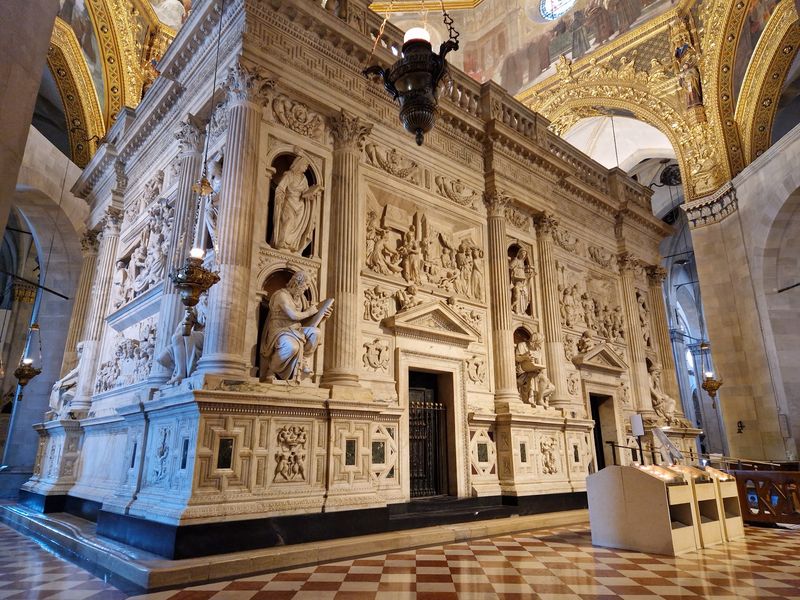
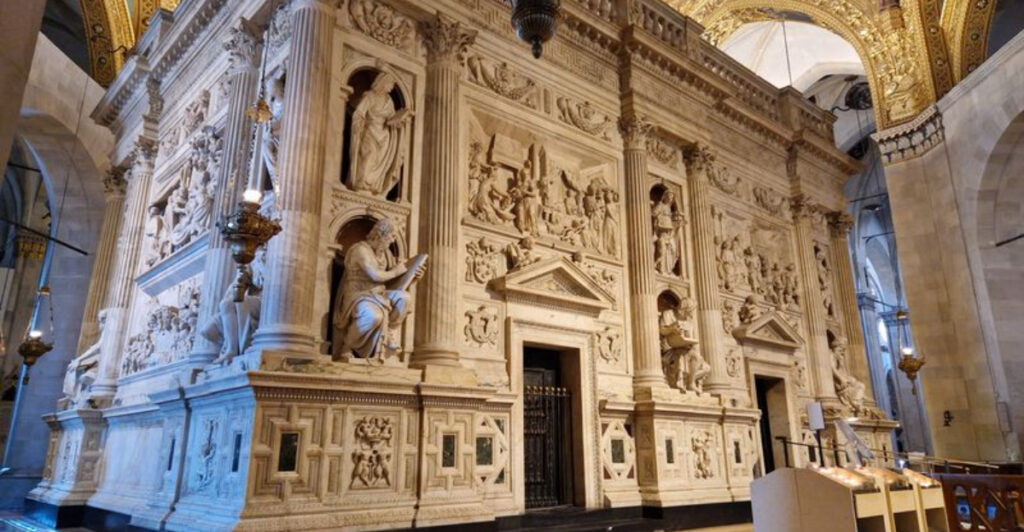
Loreto holds one of the more unusual stories in all of European pilgrimage history. At the center of its basilica sits the Holy House, a structure traditionally believed to contain the actual walls of Mary’s home in Nazareth.
Religious tradition held that angels carried it from the Holy Land to Italy in 1294. A separate historical interpretation connects its arrival with Christians transporting materials from the region after the Crusader period ended.
Whatever the origin, the pilgrimage that followed was undeniably real. The sanctuary’s own history describes sick travelers among the earliest people drawn to Loreto seeking healing.
Devotion spread from the Marche region outward through the Catholic world with remarkable speed. Construction of the enormous basilica surrounding the Holy House began in 1469, reflecting how significant the pilgrimage had already become within roughly 175 years of the structure’s arrival.
Loreto’s influence eventually spread far beyond Italy. Replicas of the Holy House were constructed in other countries, carrying the devotion to places where most people could never afford the journey to the original.
Whether a visitor approaches the site through faith, archaeology, or historical curiosity, Loreto offers a genuinely unusual window into how medieval pilgrimage could reshape a town from the ground up.
Walsingham, England
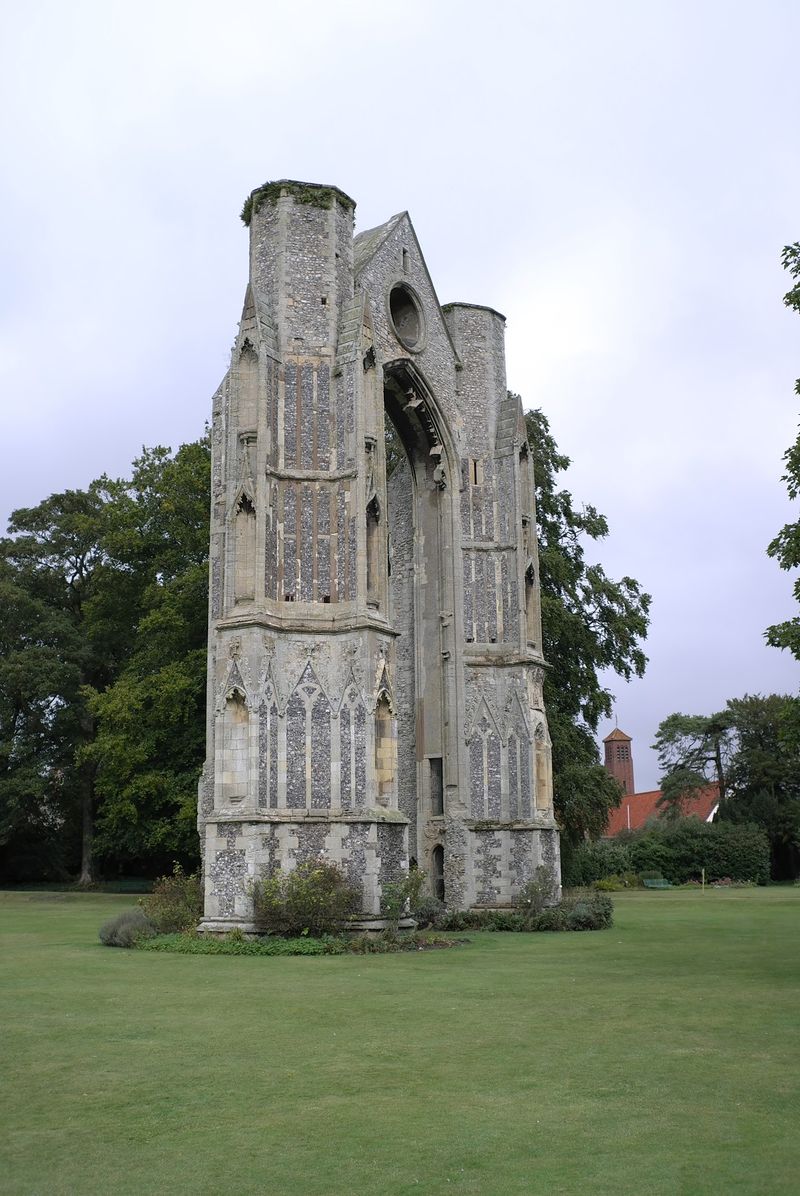
Walsingham’s story involves a vision, a royal court, a reformation, four centuries of silence, and then a comeback. The pilgrimage began in the 11th century when a noblewoman named Richeldis de Faverches reportedly experienced a vision of the Virgin Mary and was instructed to build a replica of the Holy House at Nazareth in Norfolk.
The resulting shrine became one of England’s most visited medieval pilgrimage sites.
The list of royal pilgrims reads like a medieval history textbook. Henry III, Edward II, Edward III, Henry IV, Edward IV, Henry VII, and even Henry VIII all came to Walsingham before his government dismantled the shrine during the Reformation in 1538.
For nearly four centuries, the great pilgrimage effectively vanished from the landscape.
Then, slowly, it returned. Roman Catholic pilgrimage resumed in the late 19th century, while Anglican pilgrimage was consciously revived during the 1920s and 1930s.
Today, Walsingham is a rare example of two different Christian traditions both actively maintaining pilgrimage to the same small Norfolk village. The medieval shrine was destroyed, but the story proved more durable than the stones.
Few places in England carry quite that combination of loss, recovery, and continued devotion.
Lough Derg, County Donegal, Ireland
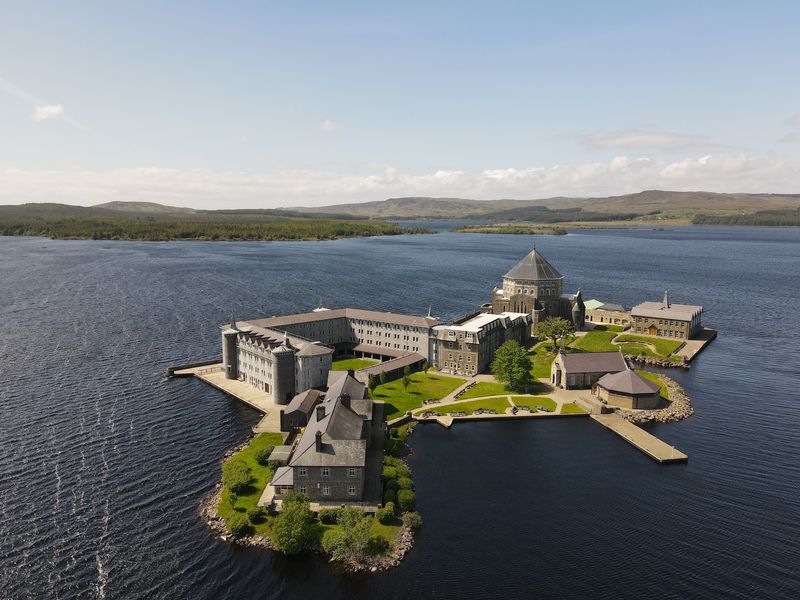
Forget the grand cathedral in the city center. Lough Derg asks pilgrims to get into a boat and cross a lake in County Donegal, and then it asks them to stay for three days with very little sleep and almost no food.
It is arguably the most demanding active pilgrimage in Europe, and people keep coming back to do it again.
The religious history of the site reaches into Ireland’s early Christian period. The shrine’s official history dates a monastery on nearby Saints Island to the fifth century.
The later pilgrimage became associated with St. Patrick’s Purgatory, one of medieval Europe’s most discussed penitential destinations, attracting travelers from across Britain and continental Europe who had heard of its intense spiritual rigors.
Modern pilgrims still travel by boat to Station Island and participate in a structured program of prayer, fasting, and penitential exercises that has remained deliberately austere. No comfortable pilgrim experience has been built around it.
Lough Derg describes itself as a living remnant of Ireland’s early Christian tradition, and that claim is hard to argue with. The combination of physical hardship, remote landscape, and ancient practice creates something that feels genuinely unlike any other pilgrimage destination on the continent.
Share this story