Some towns in the Andes sit above 12,000 feet. One rises to roughly 16,700 feet, high enough that the air contains only about half as much oxygen as at sea level.
These are not seasonal resorts or remote research stations. They are real communities where people raise families, work in mines, shop at markets, attend festivals, and build daily life around extreme elevation.
Some grew from silver and gold booms. Others sit beside sacred lakes, volcanoes, or highland grazing land.
These 12 Andean towns show just how far people have adapted to living where most visitors start feeling the altitude almost immediately.
1. La Rinconada, Ananea, Puno, Peru
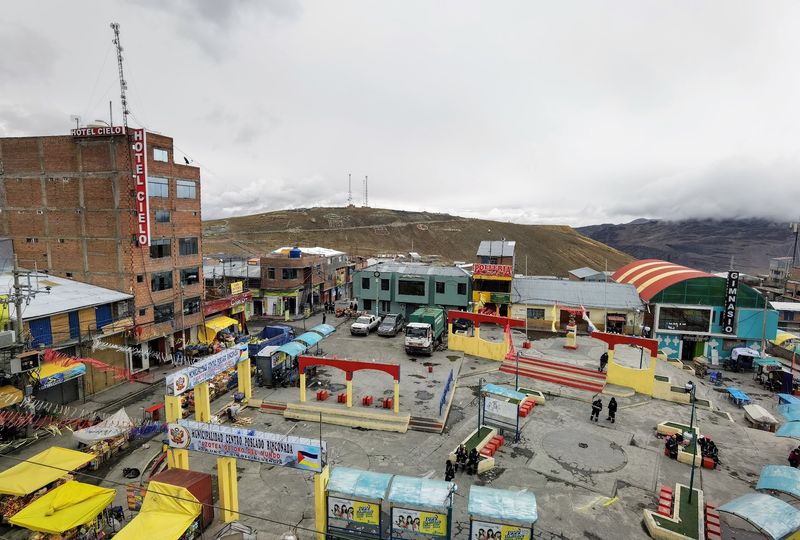
The world record for highest permanent human settlement belongs to this gold-mining outpost, and it is not even a close contest. La Rinconada sits at roughly 16,700 feet above sea level, a figure that makes most other high-altitude towns look like they are practically at the beach.
The town grew almost entirely because of gold buried beneath glacier-covered mountains, and its population surged by 235% between 2001 and 2009 as gold prices climbed. Miners work under a system called “cachorreo,” laboring for 30 days without pay and collecting only what ore they can carry out on a single designated day each month.
Basic services like plumbing and sanitation are largely absent, and the air contains roughly half the oxygen found at sea level. Despite all of this, thousands of people call La Rinconada home, making it one of the most extraordinary examples of human determination anywhere on the planet.
2. Macusani, Carabaya, Puno, Peru
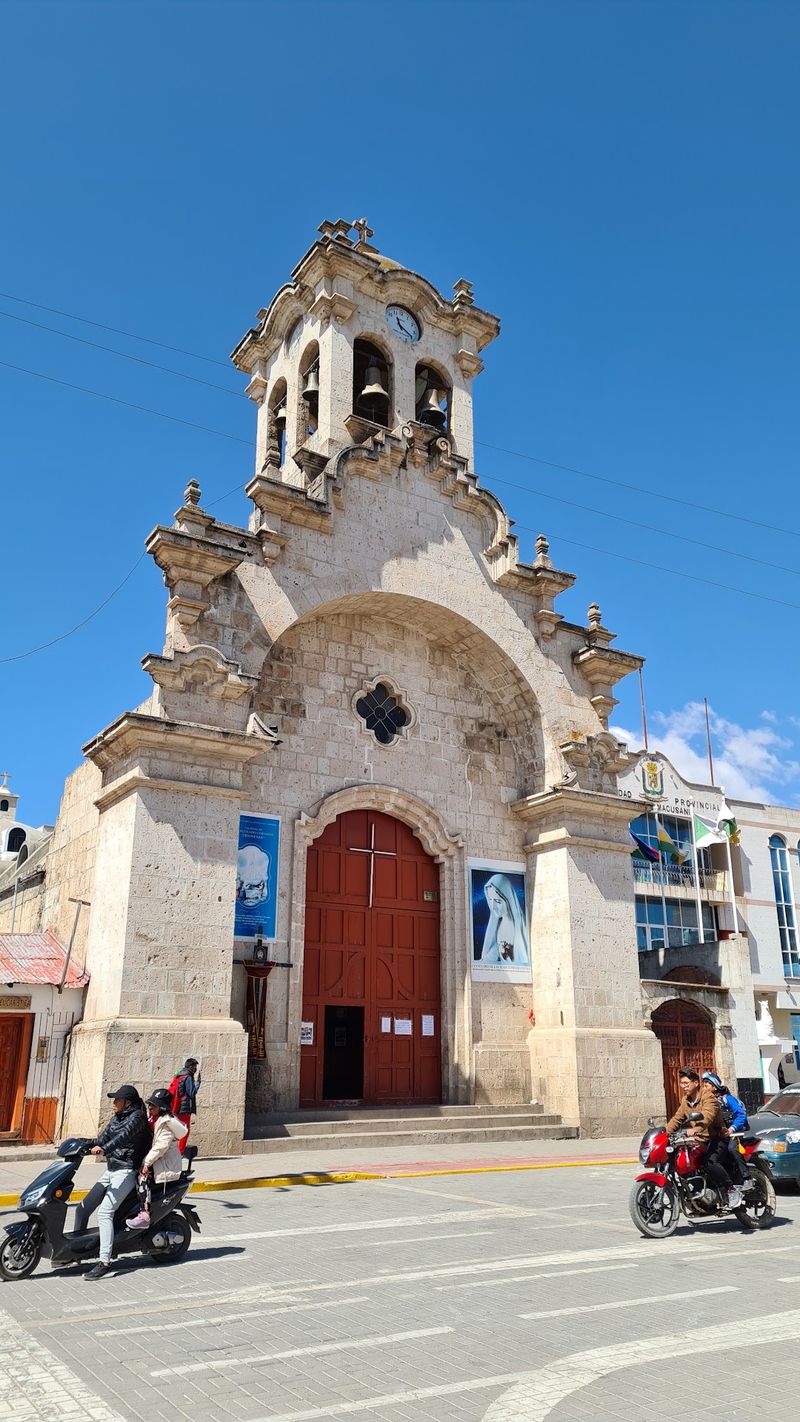
Perched more than 14,000 feet above sea level in Peru’s southern highlands, Macusani carries two very different kinds of wealth: alpacas above ground and lithium below it. The town serves as the capital of Carabaya Province and has earned the nickname “Lithium Capital of Peru” for the enormous deposits discovered in the surrounding terrain.
Long before lithium became a global priority, alpaca breeding was the economic backbone of the region, and it remains central to daily life. An annual alpaca festival draws breeders and traders from across the highlands, celebrating the animals that have sustained Andean communities for centuries.
Macusani rarely appears on standard tourist itineraries, which means visitors who do make the trip get an unpolished, genuine look at highland life. Local markets overflow with traditional textiles and agricultural goods, and the surrounding landscape of open grasslands and sharp mountain ridges provides a backdrop that no postcard could fully capture.
3. Cerro de Pasco, Pasco, Peru
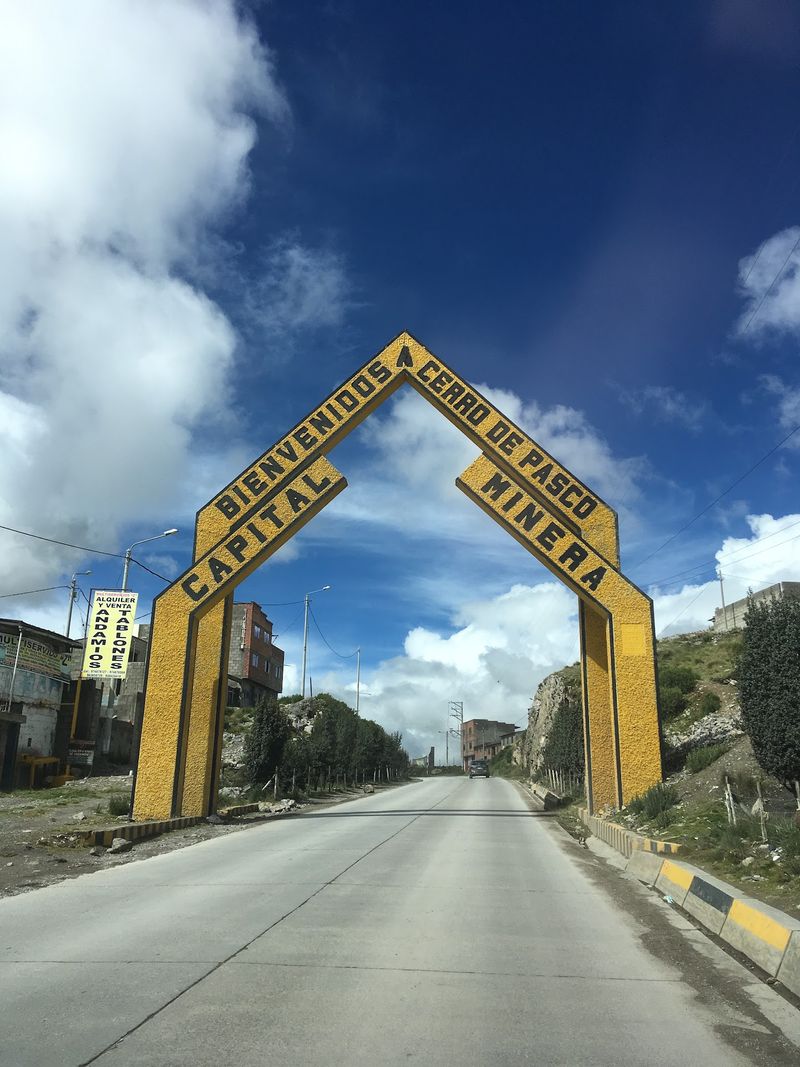
Few cities in the world have a massive open-pit mine eating directly into their urban center, but Cerro de Pasco is not most cities. Rising to about 14,200 feet, it ranks among the highest sizable cities on Earth, and the colossal Tajo Abierto pit serves as a constant, visible reminder of the industry that built the place.
Silver drew Spanish colonizers here in the 1630s, and the city has been extracting value from the earth ever since, transitioning through zinc and lead as silver fortunes faded. The title “Mining Capital of Peru” is worn with a mix of pride and practicality by residents who have structured their entire lives around the mountain’s resources.
The Plaza de Armas and the colonial Santa Rosa Church offer a quieter counterpoint to the industrial scenery, giving the city an unexpected historical layer. Cerro de Pasco is not a conventional destination, but it is genuinely unlike anywhere else in the Andes.
4. Colquechaca, Chayanta, Potosí, Bolivia
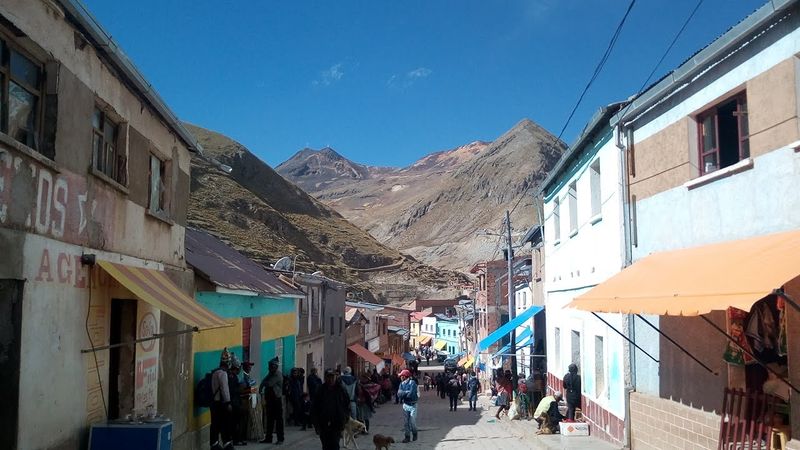
Colonial-era silver mining put Colquechaca on the map, and the rugged character it developed during those centuries has never really left. This small town in northern Potosi Department sits at roughly 13,700 feet, tucked into a landscape where mountains seem to press in from every direction.
At its peak, Colquechaca rivaled larger Bolivian cities in population, fueled entirely by the silver veins running through the surrounding hills. The frenetic boom has long faded, but mining remains part of the local economy, connecting present-day residents to a history that stretches back to the Spanish colonial period.
The San Miguel Church still stands as an architectural reminder of the wealth that once flowed through this remote town. Visitors who make the effort to reach Colquechaca find a place with genuine Andean character, far removed from the polished tourist circuit, where the altitude and the mountains feel impossible to separate from the town’s identity.
5. El Alto, La Paz Department, Bolivia
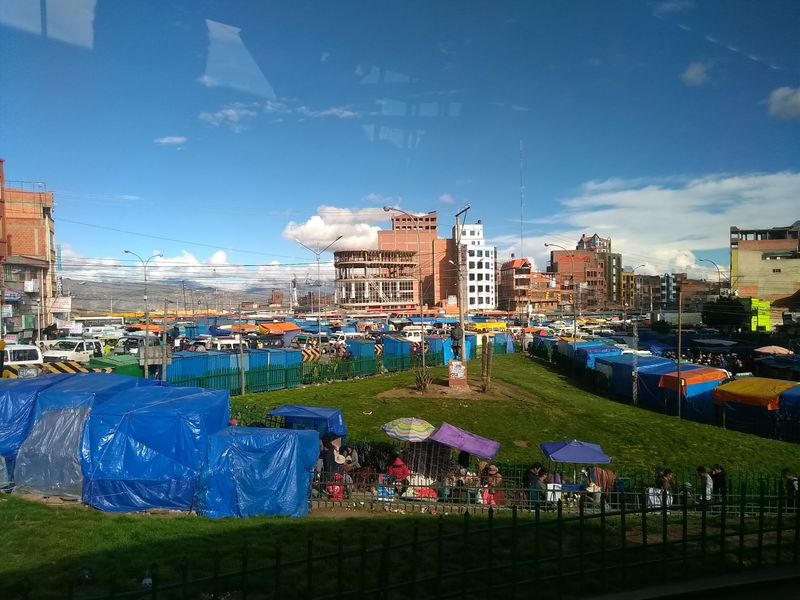
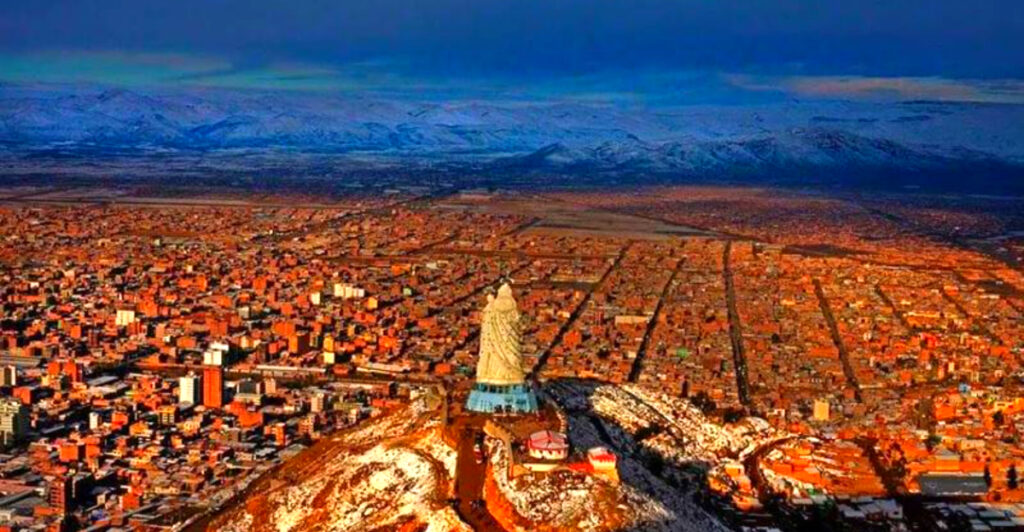
El Alto does not just sit above La Paz; it sprawls across the Altiplano at around 13,600 feet with the kind of urban energy that makes the city feel like it is in constant motion. Markets, traffic, and commerce fill its wide streets, all framed by distant snowcapped peaks that remind everyone exactly where they are.
The city’s most visually striking feature is its Neo-Andean architecture, locally called “Cholets,” designed primarily by architect Freddy Mamani. These multi-story buildings, painted in bold geometric patterns and vivid colors, reinterpret traditional Aymara design in a thoroughly modern format, turning entire neighborhoods into open-air galleries.
The 16 de Julio market, one of South America’s largest open-air markets, is a destination in itself, covering dozens of city blocks with goods ranging from electronics to traditional herbal remedies. El Alto is not a side trip from La Paz; it is a city with its own distinct personality and an elevation that means business.
6. Potosí, Tomás Frías, Potosí, Bolivia
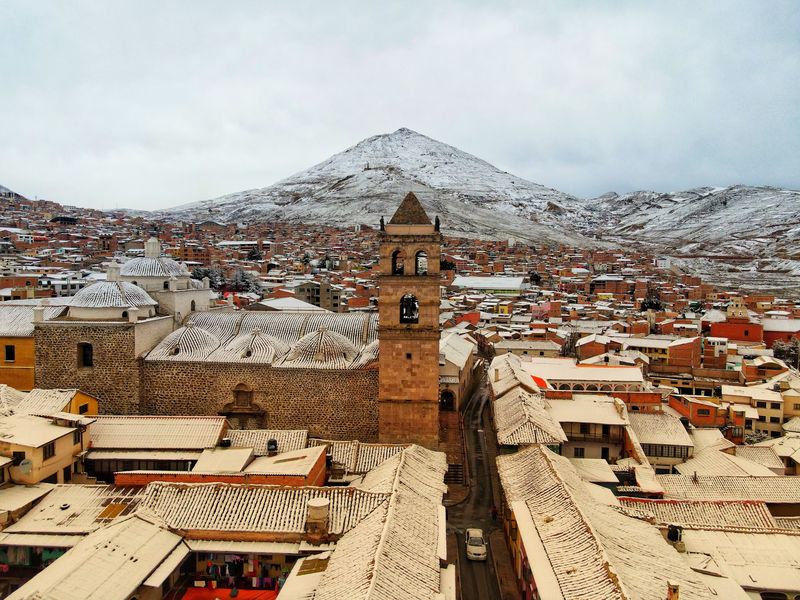
The phrase “worth a Potosi” was once a global expression for extraordinary wealth, and the city earned that reputation by producing roughly 60% of the world’s silver supply in the late 16th century. At about 13,100 feet, it sits beneath the unmistakable cone of Cerro Rico, the mountain that made and defined it.
The historic center is a UNESCO World Heritage Site, packed with colonial churches, civic buildings, and the monumental Casa Nacional de Moneda, where silver coins were struck for the Spanish Empire. Walking the steep, cobblestone streets means moving through one of the best-preserved colonial urban environments in the Americas.
Mining continues today on Cerro Rico, giving the city a living connection to its foundational industry rather than just a museum-piece relationship with the past. Potosi manages to be simultaneously a working Bolivian city and one of the most historically significant places on the continent, all at an altitude that keeps visitors pleasantly humbled.
7. Juliaca, San Román, Puno, Peru
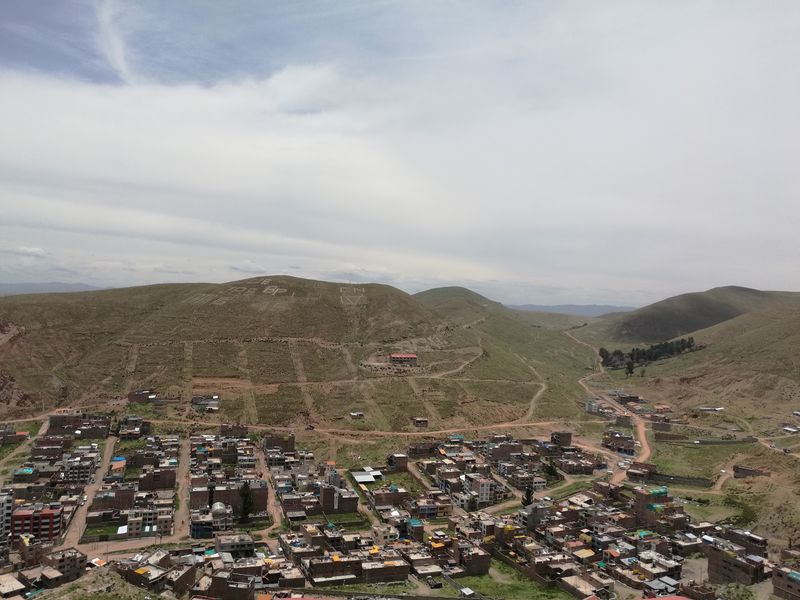
Juliaca earned its nickname “City of Winds” honestly, sitting at roughly 12,550 feet on the open Collao Plateau where breezes sweep across with nothing to stop them. It also goes by “Knitting City” for its robust alpaca and wool textile industry, which supplies markets across Peru and beyond.
The Inca Manco Capac International Airport features one of Latin America’s longest runways, a practical engineering solution to the challenge of generating enough lift in thin high-altitude air. That detail alone says a lot about how seriously Juliaca takes the logistical realities of its elevation.
The 17th-century Santa Catalina Church, built in an indigenous baroque style, adds historical texture to a city that otherwise operates at full commercial speed. Juliaca’s Carnaval is one of the region’s most energetic celebrations, filling the streets with elaborate costumes and traditional Andean music in a display that contrasts dramatically with the quiet, windswept plateau just beyond the city limits.
8. Puno, Peru
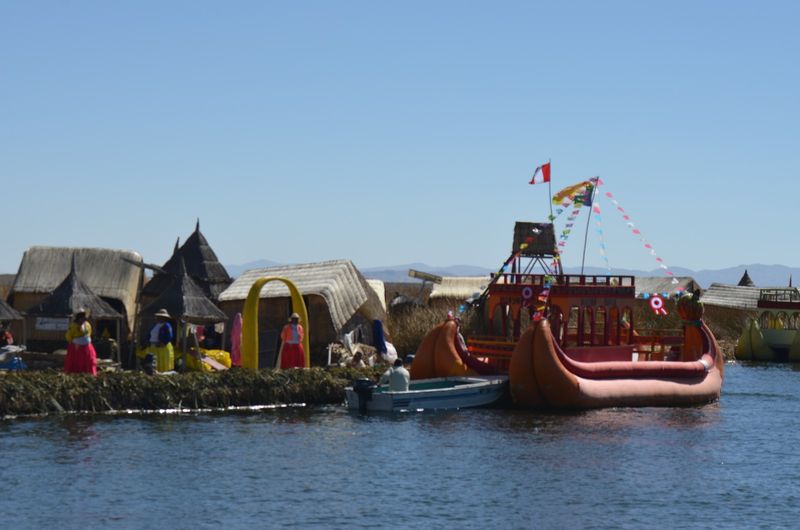
Puno holds the title of “Folklore Capital of Peru,” a designation backed by more than 300 traditional dances and a calendar packed with festivals that draw participants from across the region. At about 12,560 feet beside Lake Titicaca, the city occupies a setting that Andean mythology considers the birthplace of Manco Capac and Mama Ocllo, the founding figures of the Inca Empire.
Lake Titicaca, the highest navigable lake in the world, is the obvious draw, and from Puno’s waterfront, boats depart regularly for the famous Uros Floating Islands, built entirely from totora reeds. Taquile Island, reachable by a longer boat ride, is recognized by UNESCO for the distinctive textile tradition practiced there by men.
The 17th-century Cathedral of Puno on the Plaza de Armas blends Spanish Baroque architecture with Andean decorative elements, a combination that appears repeatedly throughout the city. Puno rewards visitors who take the time to look beyond the lake and engage with the cultural depth surrounding it.
9. Putina, San Antonio de Putina, Puno, Peru
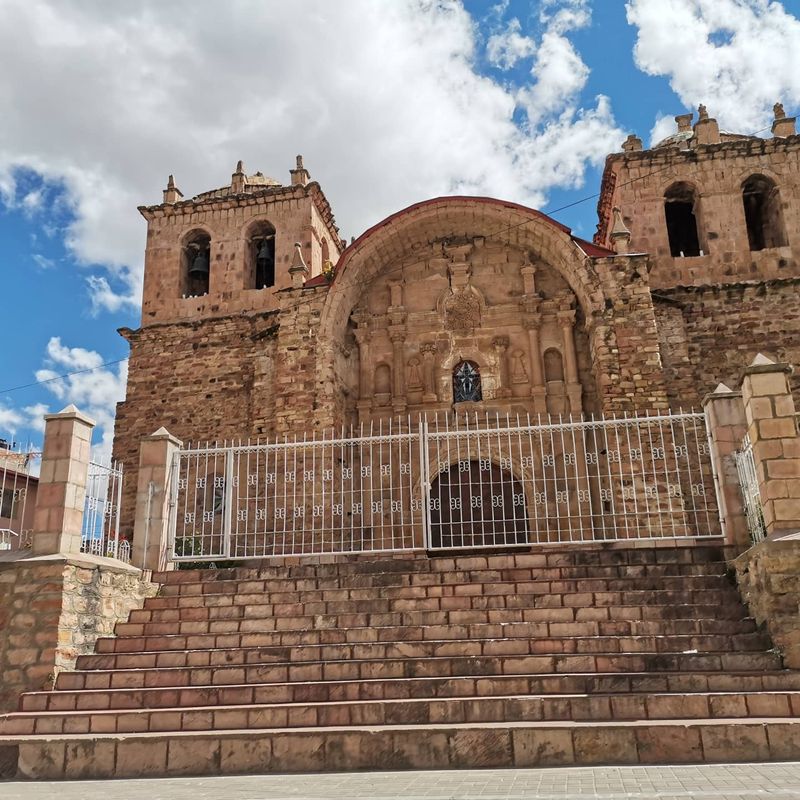
Putina sits on the Peruvian Altiplano at close to 12,700 feet, far enough from the main tourist routes that the town retains a calm, unhurried pace that feels genuinely earned rather than manufactured for visitors. The surrounding highland scenery is vast and uninterrupted, with cold grasslands extending toward distant mountain ridges in every direction.
Long before modern travelers discovered the area, Putina was already a regional draw for its thermal waters, warm springs produced by the same geological activity that shapes much of the Andes. These springs have historically offered relief to travelers and locals navigating the cold, demanding conditions of the high plateau.
The Church of San Antonio de Putina stands at the center of town as a modest colonial landmark, its facade a quiet marker of centuries of community life. Local markets trade in alpaca wool goods and agricultural products that sustain the town’s economy, giving visitors an honest look at how daily life functions at nearly 13,000 feet above sea level.
10. Chucuito, Puno, Peru
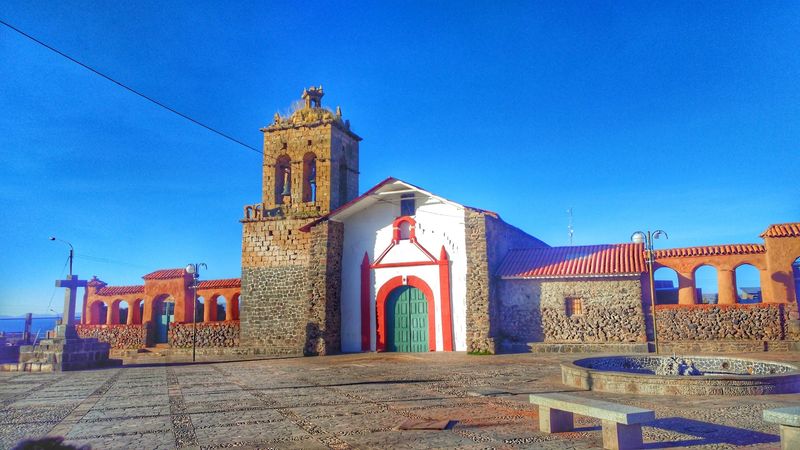
Chucuito sits quietly near the shores of Lake Titicaca at roughly 12,700 feet, close enough to Puno to be considered its neighbor yet far enough removed to feel like a different world entirely. Stone streets, colonial churches, and a noticeably slower pace give it the atmosphere of a town that has never felt the need to rush.
The Temple of the Asuncion and the Santo Domingo Church are the town’s most prominent colonial landmarks, both well-preserved examples of Spanish religious architecture that arrived in the Andes centuries ago. The Inca Uyo, an ancient fertility temple with distinctive stone carvings, adds a pre-Columbian layer that makes Chucuito historically richer than its small size suggests.
Trout farms operating near the lake provide a local food source that connects the town directly to its aquatic surroundings. For travelers who find Puno too busy, Chucuito offers the same high-altitude lake setting with considerably more quiet and a historical depth that rewards a slower, more attentive visit.
11. Oruro, Cercado, Oruro, Bolivia
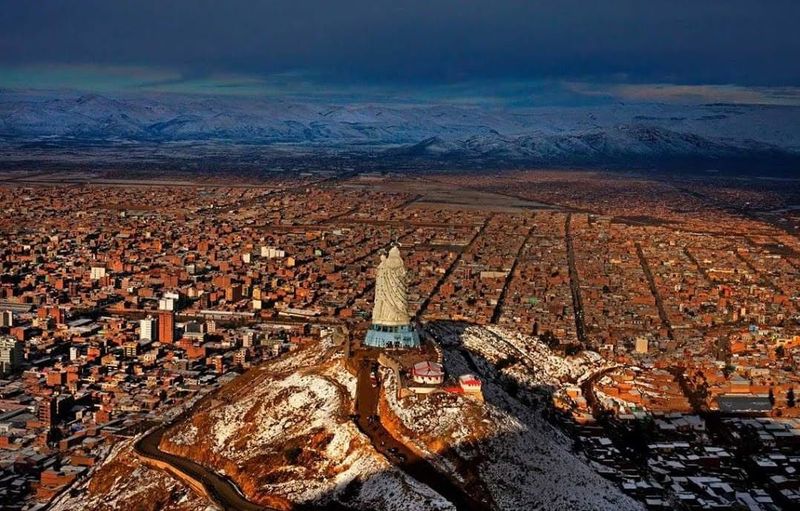
Founded in 1606 as Real Villa de San Felipe de Austria, Oruro built its early identity around silver mining before transitioning to tin in the 20th century. Today it carries two official titles that reflect its dual personality: “Mining Capital of Bolivia” and “Folklore Capital of Bolivia,” which is quite a combination for a city at 12,250 feet.
The pre-Lenten Carnival is the event that puts Oruro on international radar, a 10-day celebration inscribed on UNESCO’s Intangible Cultural Heritage list in 2008. Dancers in elaborate costumes honor the Virgen del Socavon, blending indigenous Aymara traditions with Catholic observance in a way that is entirely specific to this city and its history.
Outside Carnival season, Oruro functions as a major railway hub connecting Bolivia to neighboring countries, giving it a practical importance that outlasts any single festival. The Aymara and Quechua cultural presence shapes daily life here, and the dry mountain landscape surrounding the city adds a geographic seriousness that the altitude only reinforces.
12. Sajama, Sajama Province, Oruro, Bolivia
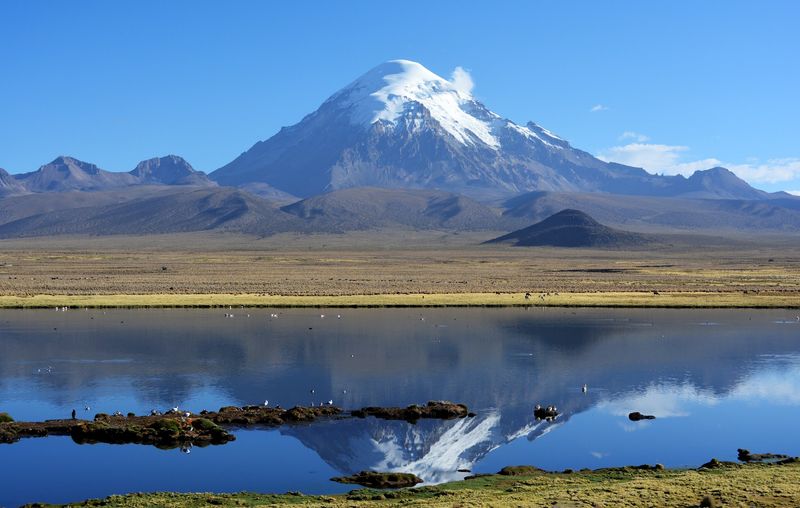
Bolivia’s oldest national park takes its name from this small village, and the towering Nevado Sajama, the country’s highest mountain, provides a backdrop that makes even a walk through the compact settlement feel like a significant geographic event. At more than 13,000 feet, the village streets sit higher than many celebrated mountain passes elsewhere in the world.
The Aymara communities living here consider the Sajama volcano an apu, a sacred living mountain they affectionately call “el doctorcito” (the little doctor), crediting it with protective and healing qualities. This spiritual relationship with the landscape shapes daily life in ways that outside visitors can observe but rarely fully grasp without extended time in the community.
The national park surrounding the village contains Queñua forests growing at up to 16,400 feet, among the highest woodlands on Earth, along with geysers and thermal springs that provide warmth in a persistently cold climate. Llama and alpaca herding remain the primary economic activities, connecting residents to a way of life that has defined this corner of the Andes for generations.
Share this story