Dragonflies have been around for roughly 300 million years, making them older than the dinosaurs. Yet some of their rarest descendants now depend on small, specialized wetlands that most people pass without ever noticing.
Across England, Scotland, Singapore, Wisconsin, and Bosnia and Herzegovina, these reserves protect everything from the endangered Hine’s emerald to the Norfolk hawker and elusive northern emerald.
Some species need spring-fed alkaline wetlands. Others survive in peat bogs, mangroves, or shallow pools with exactly the right chemistry.
These 13 wetlands offer a glimpse at the remarkably specific habitats keeping some of the world’s rarest dragonflies alive.
1. Hickling Broad, Hickling, Norfolk, England
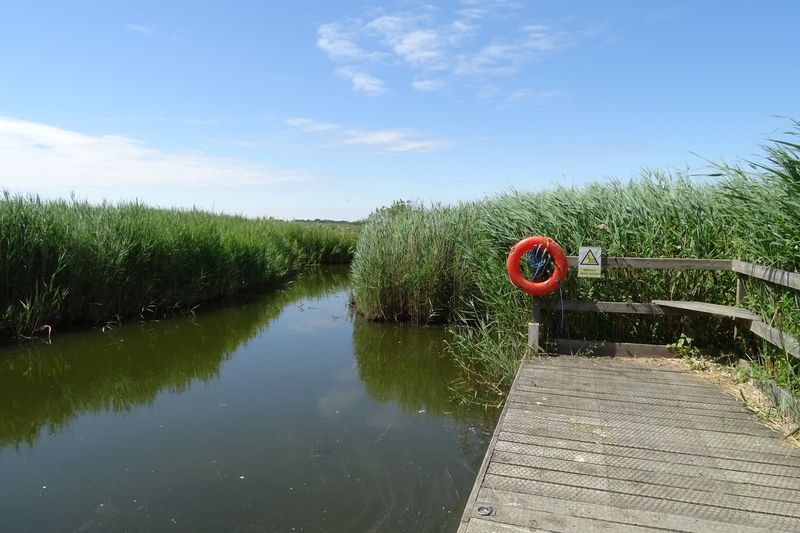
Reed beds stretching to the horizon and skies wide enough to make you feel genuinely small: Hickling Broad delivers the full Norfolk Broads experience without any of the tourist crowds you find elsewhere.
The reserve is best known among dragonfly enthusiasts for the Norfolk hawker, a rare and legally protected British species that is almost impossible to find outside of the Broads area. It is recognizable by its vivid green eyes and completely clear wings, which set it apart from most other hawkers at a glance.
Boardwalks cross the wetter sections of the reserve, and waterside trails connect a series of well-placed wildlife viewpoints. Early summer is the peak window for Norfolk hawker sightings, typically from late May through June.
The reserve is managed by the Norfolk Wildlife Trust and is open to visitors year-round, making it one of the most accessible places in Britain to watch genuinely rare dragonflies.
2. Thursley National Nature Reserve, Thursley, Surrey, England
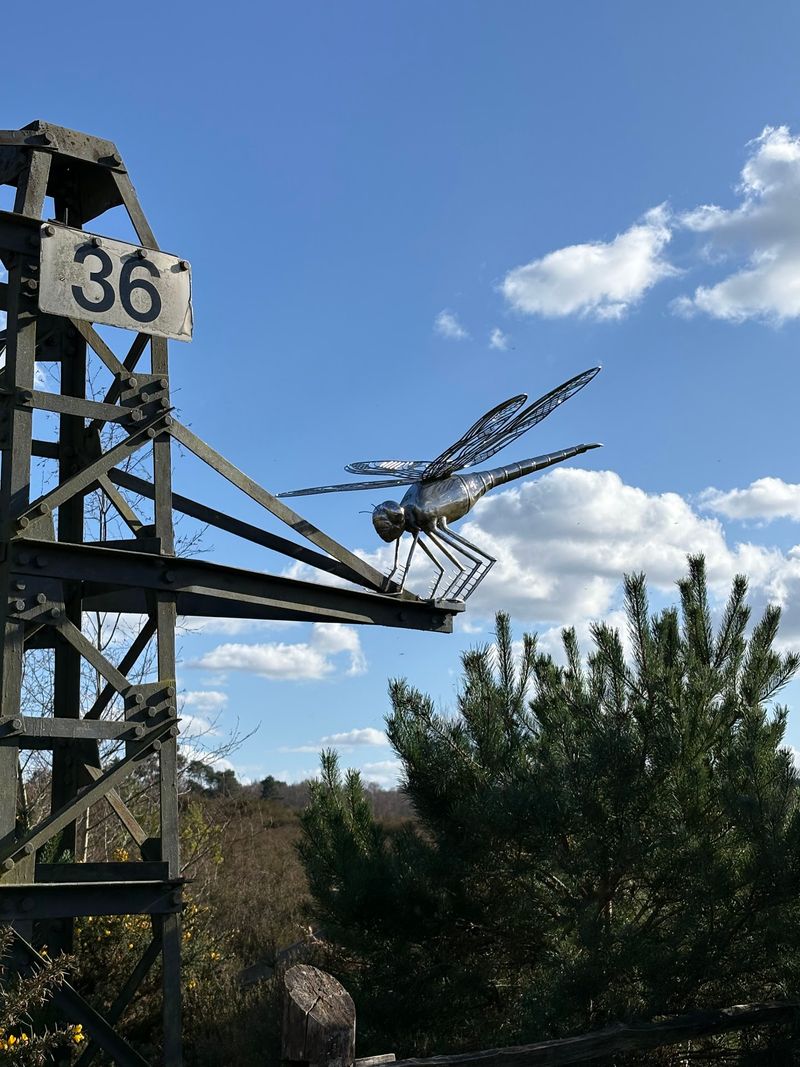
A 1.2-meter dragonfly sculpture mounted on a former electricity pylon greets visitors to Thursley, which is arguably the boldest piece of public art in Surrey and a very clear statement about what this reserve takes seriously.
Spanning 325 hectares of peat bog, acidic pools, ditches, and heathland, Thursley is one of the finest remaining fragments of lowland heath in southern England. Twenty-six dragonfly and damselfly species have been recorded here, and the nationally rare brilliant emerald is the headline act.
Hobbies, a small falcon with a taste for fast-flying insects, are regularly spotted hunting dragonflies over Pudmore Pond in late spring.
A 1.3-kilometer boardwalk with viewing platforms crosses the soggiest parts of the reserve, keeping boots dry while delivering excellent sightlines across the bog pools. Common lizards also bask on the boardwalk timbers on warm mornings, adding a pleasant bonus to any visit.
3. Shapwick Heath, Meare, Somerset, England
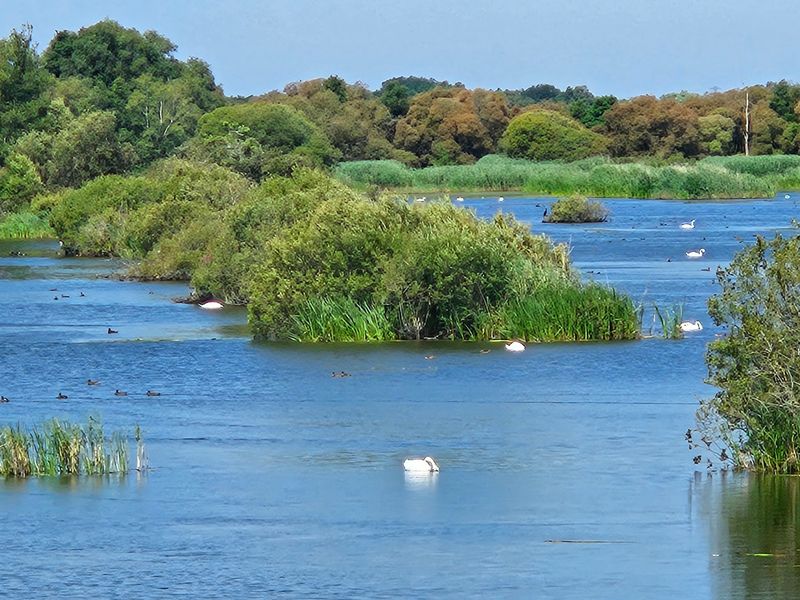
Roughly 6,000 years ago, people were already building wooden causeways across the Somerset Levels, and a replica section of one of those ancient tracks, the Sweet Track, is still visible along the walking path at Shapwick Heath today.
The reserve covers more than 500 hectares within the Avalon Marshes, combining wildflower meadows, damp fens, wet woodland, water-filled rhynes, and open lakes formed from flooded former peat workings. Natural England highlights the hairy dragonfly as one of the reserve’s rarer species, and scarce chasers and variable damselflies are also reliably present in late spring and early summer.
Ruddy darters extend the dragonfly season well into October, which is unusually late for Britain. A network of tracks, observation hides, and viewing areas makes the reserve navigable for most visitors.
The surfaced paths have a noticeably springy quality underfoot, a reminder that the ground here is built on centuries of compressed peat.
4. WWT Steart Marshes, Bridgwater, Somerset, England
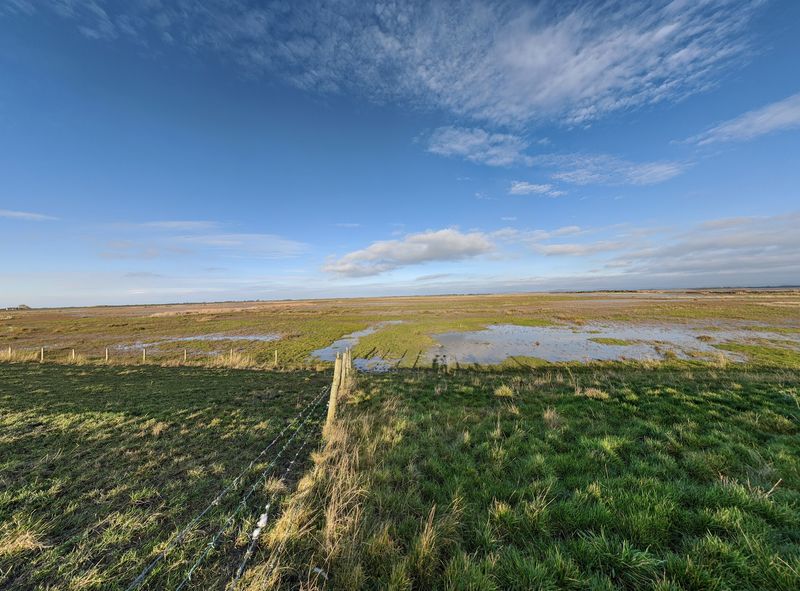
Steart Marshes was essentially built from scratch to compensate for coastal habitats lost to rising sea levels, which makes its rapid transformation into a nationally important dragonfly site one of the more satisfying conservation success stories in recent British history.
The reserve was designated a National Nature Reserve in 2022 and recognized as a dragonfly hotspot by the British Dragonfly Society that same year. Between 18 and 19 dragonfly and damselfly species have been recorded here, including the scarce chaser, a species of conservation concern, which uses the freshwater pools and wet areas around the site.
Visitors can explore gravelled trails on raised ground, access several bird hides, and use a recently completed boardwalk that crosses wetter sections of the reserve. A dragonfly-themed bridge, completed in March 2026, adds a cheerful nod to the site’s insect credentials.
A mobile cafe and toilet facilities are available on site, making a full day visit very manageable.
5. Sungei Buloh Wetland Reserve, Singapore, Singapore
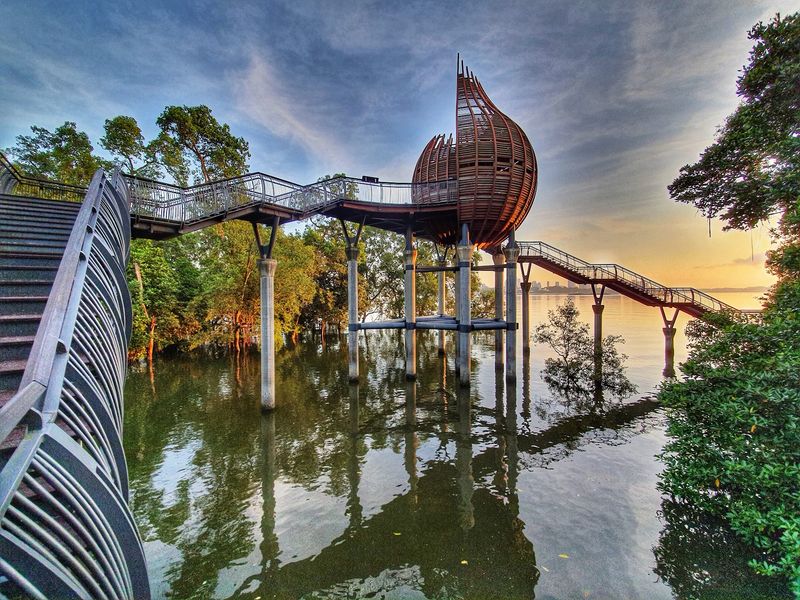
Twenty-seven of the world’s 70 known mangrove species grow at Sungei Buloh, which gives this compact Singapore reserve a biodiversity density that most nature areas four times its size would struggle to match.
Singapore’s National Parks Board has documented the Blue Adjudant dragonfly here, a species classified as locally rare, making Sungei Buloh notable for insects as well as its better-publicized migratory birds. The Junior Wetland, a re-established freshwater pond near the Visitor Centre, is the most reliable spot for dragonfly watching within the reserve.
Elevated wooden boardwalks allow visitors to move through the mangroves without disturbing the habitat, and trails range from a 150-meter mid-canopy walk to a 3-kilometer mangrove boardwalk. Most paths are suitable for strollers and wheelchairs.
Free guided tours run regularly, and the reserve is open daily from 7 AM to 7 PM with no admission charge, making it one of the most accessible tropical wetland experiences anywhere in Southeast Asia.
6. Shivering Sands Preserve, Sturgeon Bay, Wisconsin
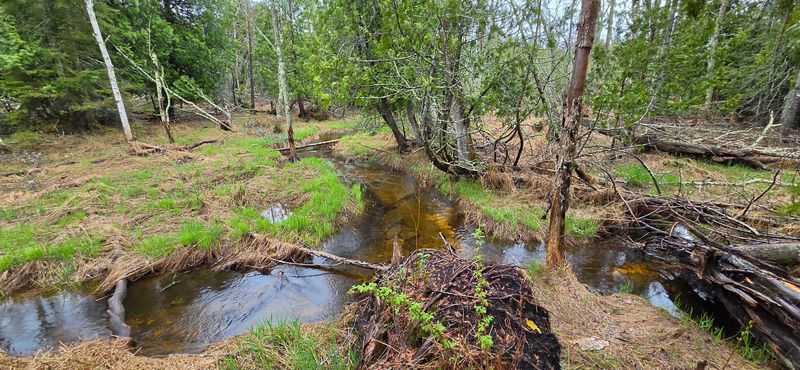
The name alone deserves some credit for honesty: Shivering Sands Preserve is cold, wet, and spring-fed, and those exact conditions are precisely why it matters so much for one of North America’s rarest insects.
This 3,400-acre complex in Door County protects three lakes, multiple streams, sedge meadows, alkaline fens, and forested sand dunes, all underlain by dolomite bedrock that produces slightly alkaline spring water. That chemistry is non-negotiable for the federally endangered Hine’s emerald dragonfly, which requires groundwater-fed wetlands over dolomite or limestone to breed successfully.
Larvae spend four to five years developing underground, sheltering in crayfish burrows during dry periods and winter.
Door County holds the largest global population of this dragonfly, and Shivering Sands is one of four Nature Conservancy preserves on the peninsula that support it. Visitors can walk a flat one-mile loop trail, though sections are frequently wet.
Canoeing and kayaking on Dunes Lake offer an alternative way to explore the preserve.
7. North Bay-Mud Lake Preserve, Baileys Harbor, Wisconsin
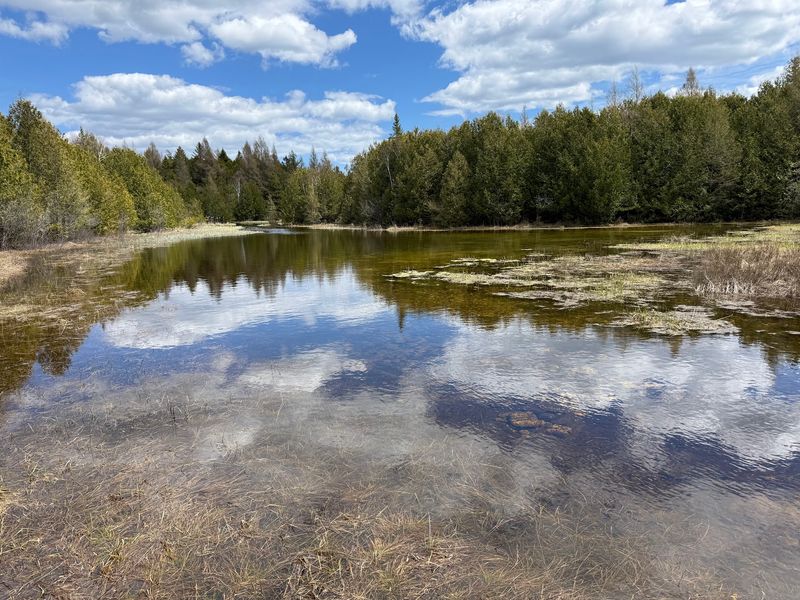
Almost a mile of undeveloped Lake Michigan shoreline sits within this preserve, which is a remarkable fact in a region where lakefront land is among the most competed-for real estate in the Midwest.
North Bay-Mud Lake covers more than 1,300 acres and combines cold springs, coastal wetlands, boreal forests of white spruce and balsam fir, calcareous fens, and spring-fed creeks into a habitat mosaic that supports the federally endangered Hine’s emerald dragonfly. The Nature Conservancy manages the site specifically to protect the groundwater recharge areas that the dragonfly’s larvae depend on during their multi-year underground development.
A gently graded walking trail connects two parking areas, though it can be wet underfoot in places. The preserve is open for hiking, bird-watching, cross-country skiing, snowshoeing, and photography throughout the year.
Compared to some of Door County’s busier attractions, North Bay-Mud Lake offers a noticeably quieter experience, which suits both wildlife and the visitors who come to find it.
8. The Ridges Sanctuary, Baileys Harbor, Wisconsin
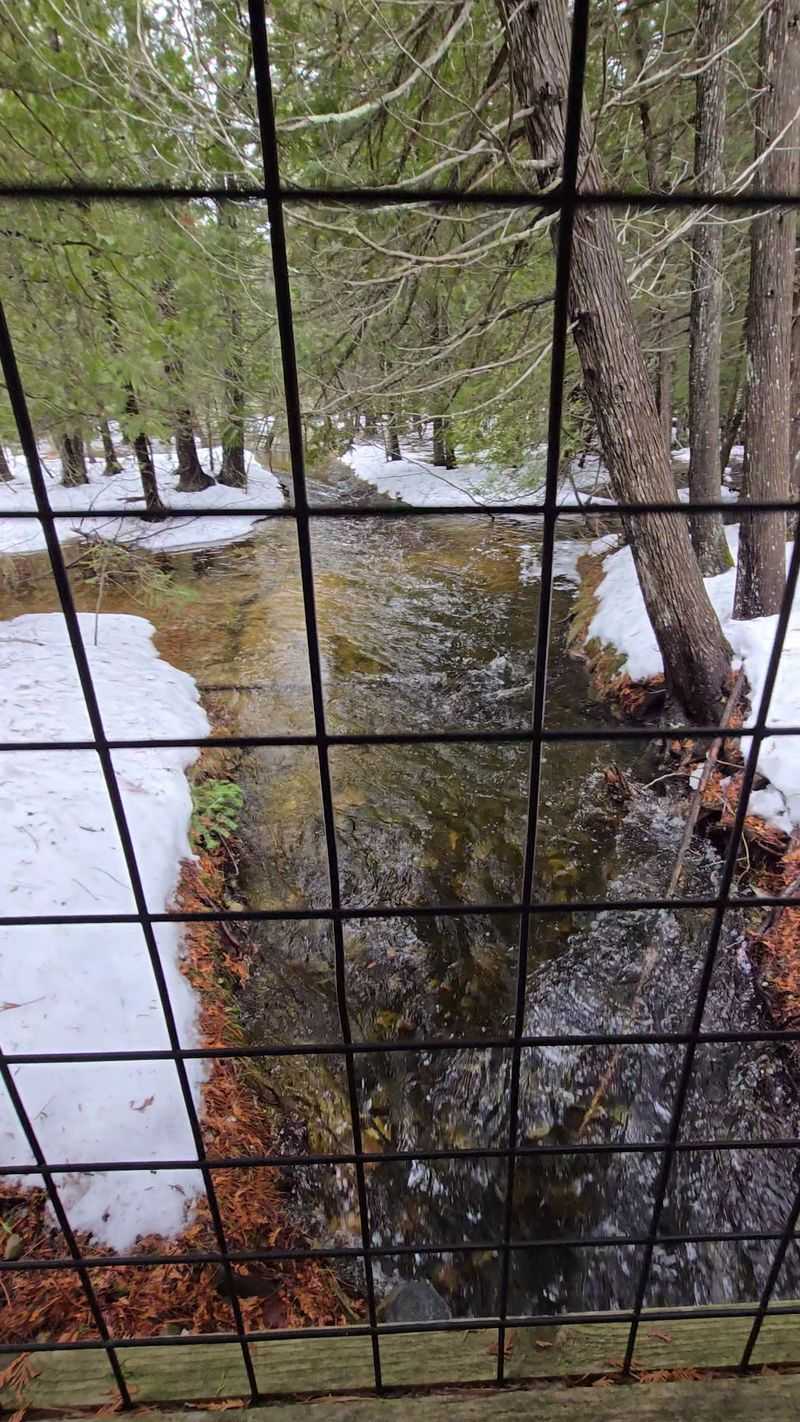
Seventy-one dragonfly and damselfly species recorded in a single sanctuary is the kind of statistic that stops most entomologists mid-sentence, and The Ridges Sanctuary in Door County has earned every one of them.
The sanctuary’s distinctive landscape of alternating sandy ridges and water-filled swales creates one of Wisconsin’s rarest wetland types and has earned recognition as a Ramsar Wetland of International Importance. The federally endangered Hine’s emerald dragonfly appears over the swales during its adult season, which runs from late June through August.
Adults measure around 2.5 inches in length and carry vivid emerald green eyes that make identification straightforward once you know what to look for.
A nature center provides interpretive exhibits and trail access via boardwalk, and daily guided hikes are available alongside independent exploration. An observation platform built in 1976 remains one of the better vantage points for dragonfly watching on the peninsula.
The sanctuary functions as both a conservation area and an active education site for visiting schools and naturalist groups.
9. Three Springs Nature Preserve, Sister Bay, Wisconsin
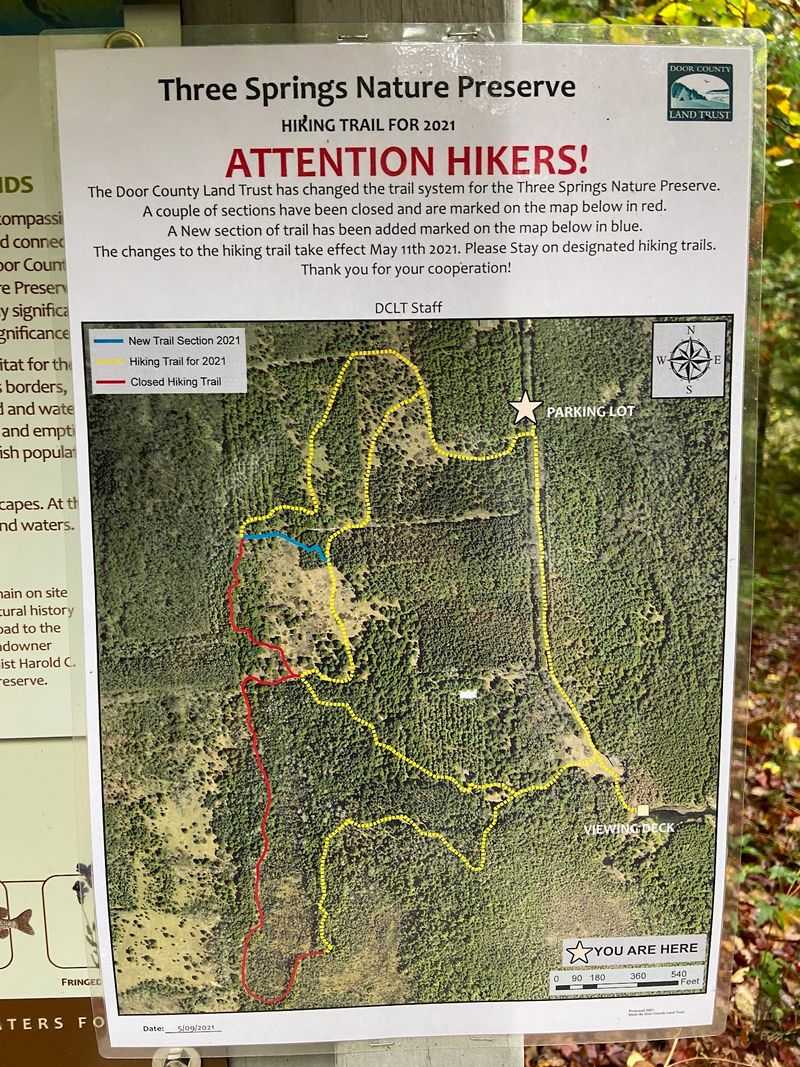
Just two miles from the village of Sister Bay, Three Springs Nature Preserve sits quietly within a much larger wildlife corridor that stretches across the Door County peninsula, connecting habitats that individually would be too small to sustain a population of the rarest dragonfly in North America.
The preserve is specifically identified as a breeding site for the federally endangered Hine’s emerald dragonfly, which depends on groundwater-fed wetlands underlain by dolomite bedrock. That combination of geology and hydrology is rare enough that protecting every remaining example of it has become a conservation priority in the Great Lakes region.
Beyond the flagship dragonfly, the spring-fed landscape supports other uncommon species that require consistently cold, clean, alkaline water to survive. Trails wind through a mix of wet ground and woodland, offering a more personal and less visited alternative to the region’s popular scenic lookouts.
The preserve rewards patience and a slow pace far more than a quick walk-through ever would.
10. NWT Upton Fen, Upton, Norfolk, England
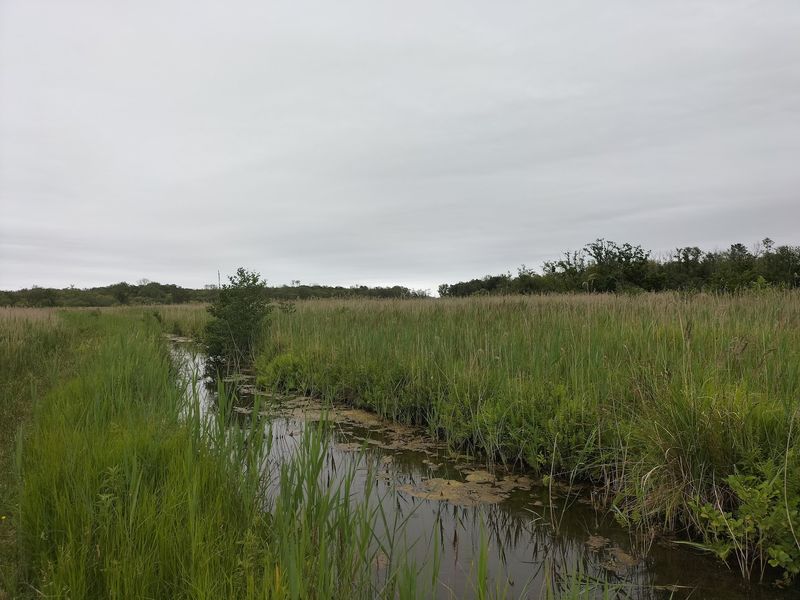
Few places in Britain make a narrow ditch feel as important as Upton Fen does, where a single ribbon of water running through fenland can support a genuinely rare dragonfly population that conservation organizations actively monitor each season.
The reserve is one of the most reliable sites in England for the Norfolk hawker, a protected species whose range in Britain is almost entirely confined to the Norfolk Broads. Hairy dragonflies, variable damselflies, and a rotating cast of hawkers and darters fill out the species list across the summer months, keeping the waterways busy from May through September.
A walk through Upton Fen in summer delivers an old-fashioned Broadland atmosphere complete with reeds, boardwalks, and distant windpumps visible across the flat landscape. The reserve is managed by the Norfolk Wildlife Trust and sits within easy reach of several other Broads nature reserves, making it a natural addition to any multi-site dragonfly excursion in the county.
11. Mar Lodge Estate National Nature Reserve – (National Trust for Scotland), Braemar, Aberdeenshire, Scotland
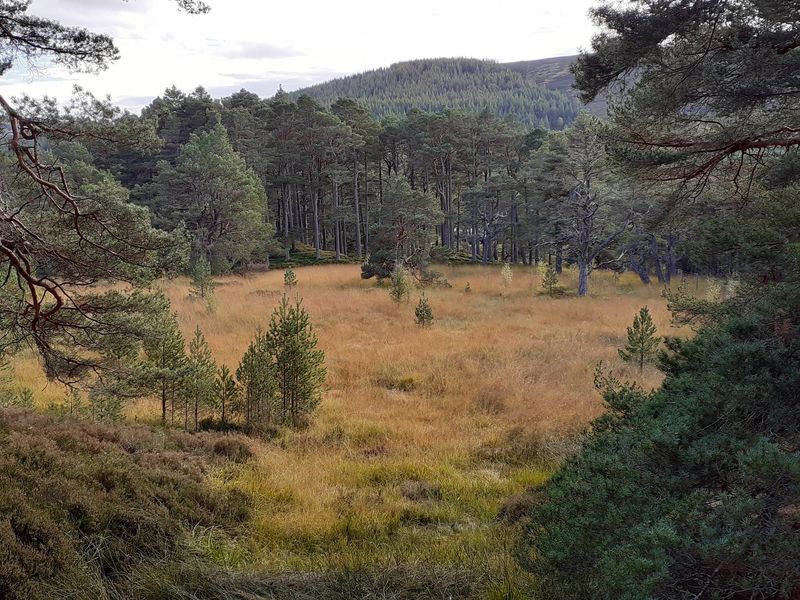
Most British nature reserves measure their area in hectares. Mar Lodge Estate operates on a scale that makes that unit feel almost inadequate, covering a sweeping section of the Cairngorms where peatland, mountain, and river valley combine into one of Scotland’s most ambitious conservation landscapes.
Dragonfly surveys on the estate have confirmed two particularly notable species: the vulnerable azure hawker and the near-threatened northern emerald. Both are associated with the upland bog pools and peatland habitats that Mar Lodge is actively restoring at large scale, making the dragonfly records a direct measure of how well that restoration is progressing.
The azure hawker is a genuinely striking insect, with blue patterning that stands out against the dark peat and heather. The northern emerald is considerably harder to spot and is one of Britain’s least-studied dragonflies.
Finding either species at Mar Lodge is the kind of wildlife encounter that dedicated naturalists plan entire Scottish trips around, and the estate’s sheer size means there is always more ground to explore.
12. Hutovo blato, Capljina, Bosnia and Herzegovina
Bosnia and Herzegovina might not be the first country that comes to mind when planning a dragonfly trip, but Hutovo Blato has been quietly accumulating conservation credentials for years and now holds one of the more significant dragonfly records in southeastern Europe.
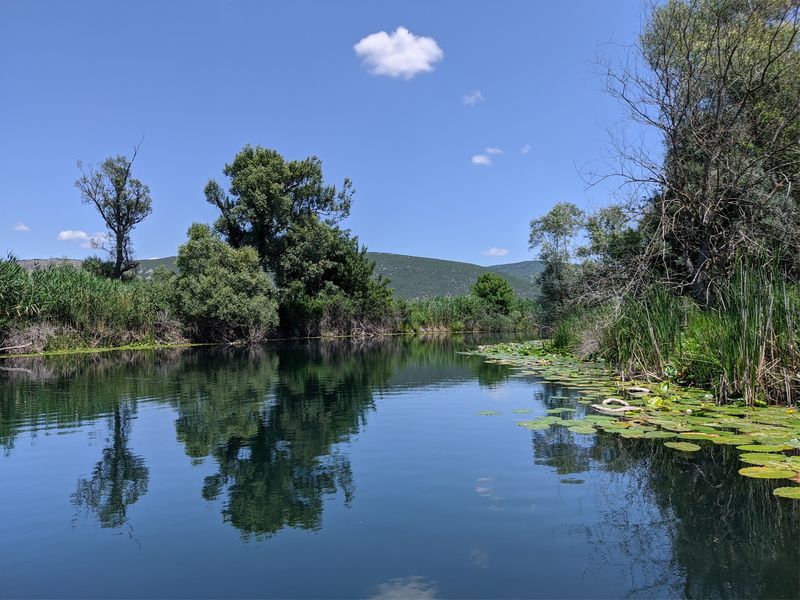
The reserve is a complex network of shallow lakes, reed beds, spring-fed channels, and karst waterways in the lower Neretva valley. Researchers have confirmed breeding by Lindenia tetraphylla, a dragonfly of European conservation concern, with Deransko Lake identified as particularly critical habitat for the species.
Lindenia tetraphylla is one of the larger European dragonflies and has a patchy, declining distribution across the continent, which makes confirmed breeding populations genuinely significant from a conservation standpoint. Mountains rise beyond the wetland margins, and the combination of open water, dense reed beds, and dramatic backdrop gives the reserve a visual character that few other dragonfly sites in Europe can match.
Visitor access is available, and the site also attracts birdwatchers in considerable numbers.
13. Breney Common, Luxulyan, Cornwall, England
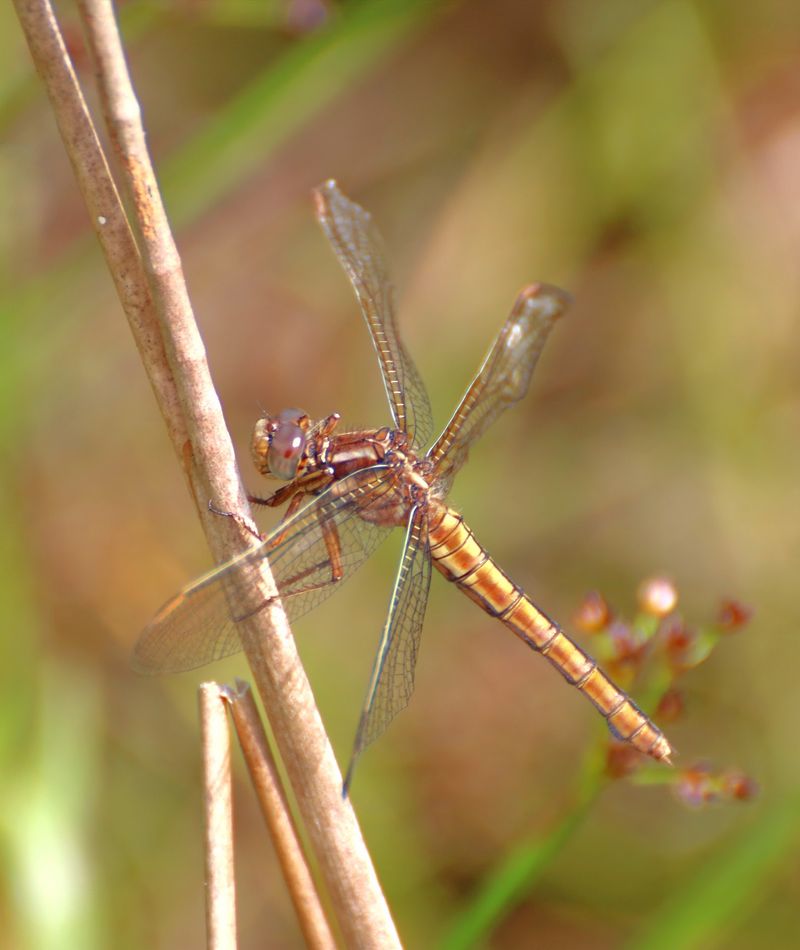
Tin mining is not usually credited with creating wildlife habitat, but at Breney Common in Cornwall, centuries of industrial activity left behind an irregular patchwork of wet heath, mire, shallow pools, and damp hollows that dragonflies and damselflies now use to excellent effect.
The reserve supports a varied community of odonata, and the small red damselfly is its most notable specialist. This compact, vividly colored insect is a recognized indicator of high-quality acidic wetland, and its presence at Breney Common reflects how well the reserve’s bog habitat has been maintained.
Finding one perched on a rush stem is a satisfying reward for a slow, careful walk.
Boardwalks cross the wetter sections of the site, and open heath stretches between the pools, giving the reserve a rugged, unmanicured quality that feels genuinely different from Cornwall’s crowded coastal spots. The reserve is managed by the Cornwall Wildlife Trust and sits within the wider mid-Cornwall moors landscape, which contains several other notable wetland and heath sites within a short drive.
Share this story