Ernest Hemingway had a talent for finding places that seemed to hold their breath and wait for something to happen. Old hotels with creaking elevators, waterfront restaurants where fishermen compared their catches, and grand cafes where writers argued over manuscripts were all part of his world.
The good news is that many of those places still exist today, and they are open for business. This list covers 13 real destinations across Cuba, Spain, the United States, France, and Italy that carry the kind of history and character Hemingway gravitated toward.
Some of them appear directly in his novels. Others were simply his favorite spots to eat, write, or watch the world go by.
Either way, each one offers a genuine connection to the man and the era he helped define. Read on to find out which of these places might deserve a spot on your next travel itinerary.
1. La Bodeguita del Medio, Havana, Cuba
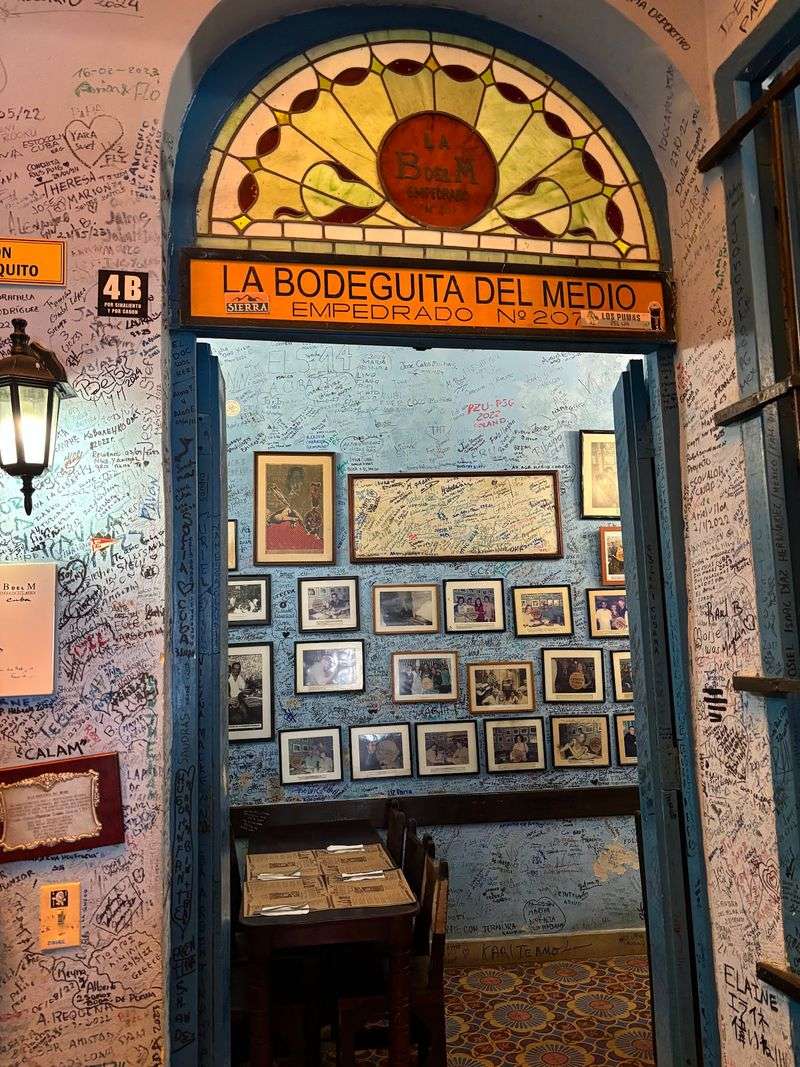
Every inch of wall space at La Bodeguita del Medio tells a story, literally. The bar opened in 1942 as a modest grocery store called Casa Martínez, and its walls have been accumulating signatures, personal notes, and photographs from visitors ever since.
The spot is famous for its association with the Mojito, which many claim was popularized here in its modern form. A quote often attributed to Hemingway reads: “My mojito in La Bodeguita, my daiquiri in El Floridita.” Scholars debate whether he actually wrote it, but the legend has stuck firmly to the walls alongside everything else.
Notable visitors over the decades include Nat King Cole, Pablo Neruda, Gabriel García Márquez, and Gabriela Mistral, giving the place a cultural weight that goes well beyond its narrow rooms. Live Cuban music plays regularly, and the restaurant operates daily.
Even without the Hemingway connection, this is a place with genuine character packed into a very small space.
2. Hotel Ambos Mundos, Havana, Cuba
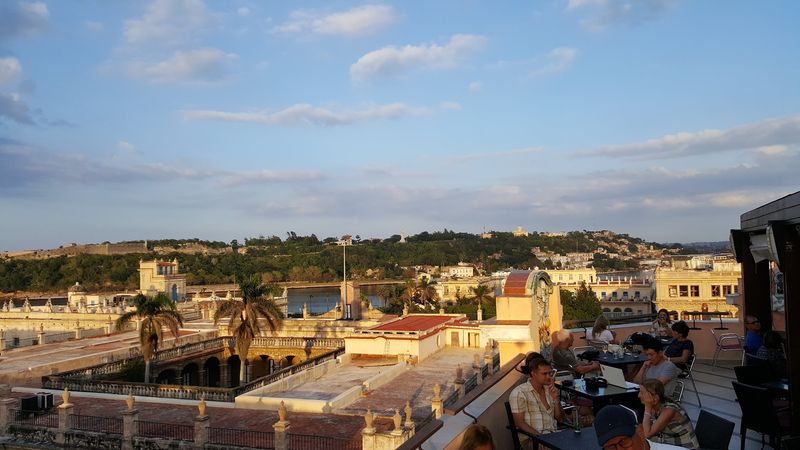
Room 511 at Hotel Ambos Mundos is not just a hotel room. It is a preserved museum space where Hemingway lived and worked between 1932 and 1939, and where he began writing “For Whom the Bell Tolls.”
The hotel itself was built in 1924 at the intersection of Calle Obispo and Mercaderes in the heart of Old Havana. Its five floors, eclectic 20th-century architecture, and original Otis screen-cage elevators give it the kind of faded elegance that no modern renovation could replicate from scratch.
Room 511 is open to visitors and contains photographs, books, a typewriter, and other personal artifacts connected to Hemingway’s years here. A rooftop terrace offers panoramic views of the old city, and the lobby regularly hosts art exhibitions and live music.
The hotel still operates as a working hotel today, meaning guests can book a room and stay in the same building where some of his most significant work took shape.
3. Finca Vigía, Havana, Cuba
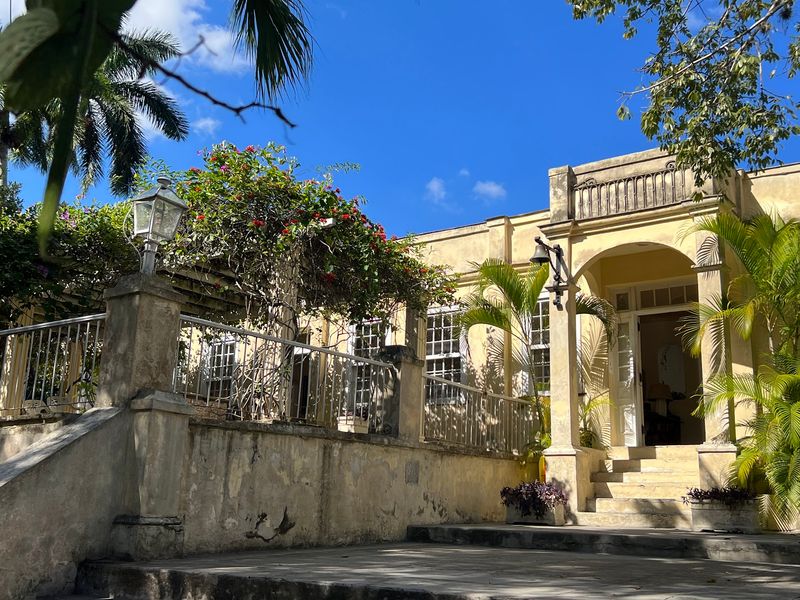
Perched on a hilltop about 20 kilometers east of central Havana, Finca Vigía was built in 1886 and purchased by Hemingway in 1940 for $12,500. He lived and worked here until 1960, making it the longest-held home of his adult life.
The property is where he completed “For Whom the Bell Tolls” and wrote the entirety of “The Old Man and the Sea.” Two posthumously published novels, “Islands in the Stream” and “Garden of Eden,” are also connected to his years at Finca Vigía.
Now operating as the Museo Ernest Hemingway, the estate keeps the house largely as Hemingway left it. Visitors cannot enter the interior but can view it through the open windows, which gives the experience an oddly respectful intimacy.
His famous fishing boat, the Pilar, sits on the grounds and is open for viewing. The back terrace offers a distant view of Havana and the Gulf, which is exactly the kind of vantage point a writer would choose.
4. Restaurante La Terraza de Cojímar, Cojímar, Cuba
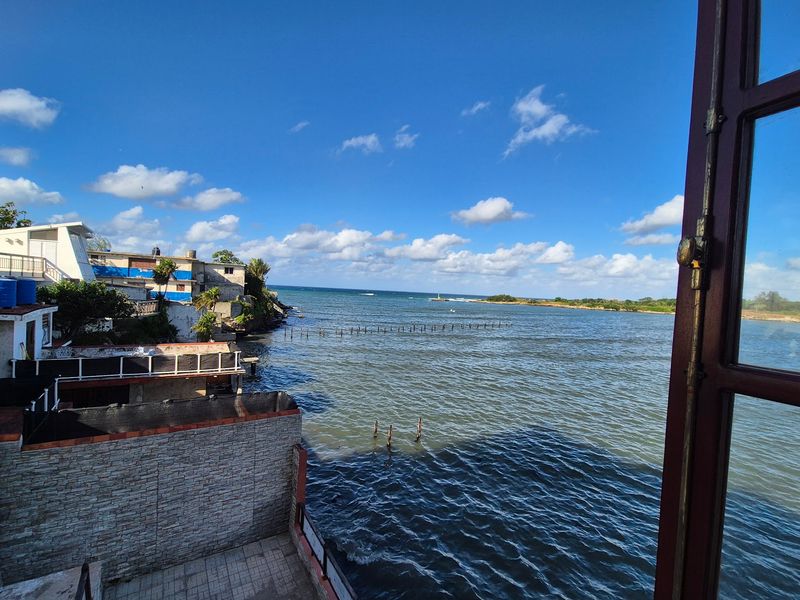
Cojímar is a small fishing village east of Havana, and its connection to Hemingway runs deeper than most literary landmarks. This was the port where Hemingway kept his boat, the Pilar, and the community that directly inspired the setting of “The Old Man and the Sea.”
La Terraza sits right at the waterfront, giving diners an unobstructed view of the bay and the fishing boats that still work these waters. The restaurant has operated here for decades and remains one of the most historically significant dining spots in Cuba for anyone interested in Hemingway’s life outside of Havana.
The village itself is compact and walkable, with a small monument to Hemingway erected by local fishermen near the waterfront. Lunch at La Terraza, with the bay stretched out in front of you and the story of Santiago fresh in your mind, is about as close as a traveler can get to the world Hemingway was describing.
The connection here feels earned rather than manufactured.
5. Sloppy Joe’s Bar, Key West, Florida
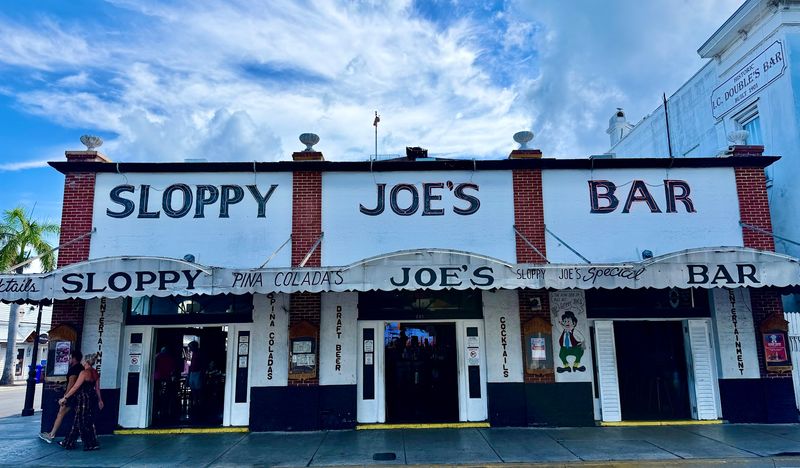
Sloppy Joe’s opened on December 5, 1933, the same day Prohibition ended, which means the bar has been operating legally for as long as it legally could. Founder Joe Russell was a fisherman, former rum runner, and one of Hemingway’s closest friends during his Key West years.
The name itself came from a Havana bar that Russell and Hemingway frequented, known for its perpetually wet floor from melted ice. The current Duval Street location dates to 1937, when a rent dispute prompted an overnight move of the entire bar’s contents down the street.
Hemingway met his future third wife, Martha Gellhorn, within these walls, which gives the place a biographical detail that most bars can only dream about. A 119-pound sailfish Hemingway caught once hung on the wall here.
Today the bar hosts live music 365 days a year and holds an annual Hemingway Look-Alike Contest each July. It was listed on the National Register of Historic Places in 2006.
6. El Floridita, Havana, Cuba
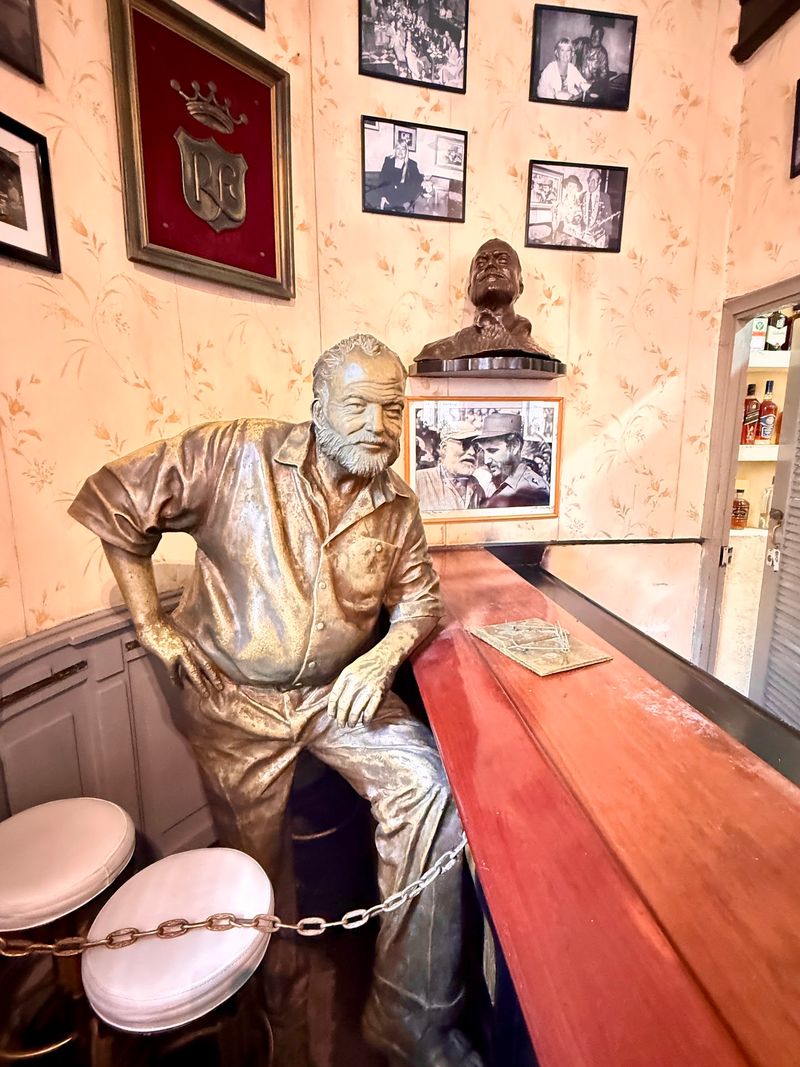
Originally a small bodega called La Piña de Plata when it opened in 1817, El Floridita has had nearly two centuries to perfect its reputation. The bar was renamed in 1914 and eventually became one of the most recognized drinking establishments in the world.
Hemingway was such a devoted regular that head bartender Constantino Ribalaigua Vert created a custom sugar-free Daiquiri just for him, now known as the Hemingway Daiquiri. After the author’s passing, a life-sized bronze statue was installed at his preferred end of the bar, where it still stands today.
The guest list over the decades has included Graham Greene, F. Scott Fitzgerald, Ezra Pound, and even Fidel Castro, making the bar a crossroads of political and literary history.
Bartenders still wear their signature red jackets, and live Cuban music plays throughout the day. Some visitors note the tourist pricing, but the historical setting is genuinely hard to argue with.
7. The Hemingway Home and Museum, Key West, Florida
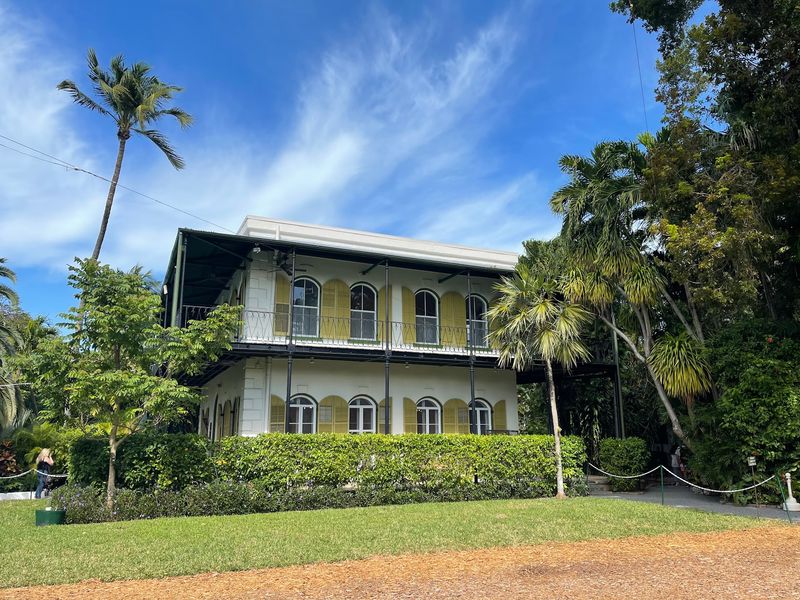
Built in 1851 and purchased by Hemingway and his second wife, Pauline, in the 1930s, the house on Whitehead Street is where he wrote some of his most celebrated work, including “To Have and Have Not.” He lived here from 1931 to 1939 and retained ownership until 1961.
The property features lush tropical gardens and shaded verandas that soften the Key West climate. Its in-ground swimming pool, constructed in the 1930s, was considered a remarkable luxury at the time and is believed to be the first residential pool in Key West.
The home is now famously inhabited by dozens of polydactyl, or six-toed, cats descended from Hemingway’s original pet, Snow White. Each cat on the property is named after a famous person, continuing a tradition that has become as well-known as the literary history of the house.
The museum opened in 1964 and was designated a National Historic Landmark in 1968. Guided tours begin every 15 minutes and cover personal artifacts, his writing desk, and original manuscripts.
8. Café Iruña, Pamplona, Navarre, Spain
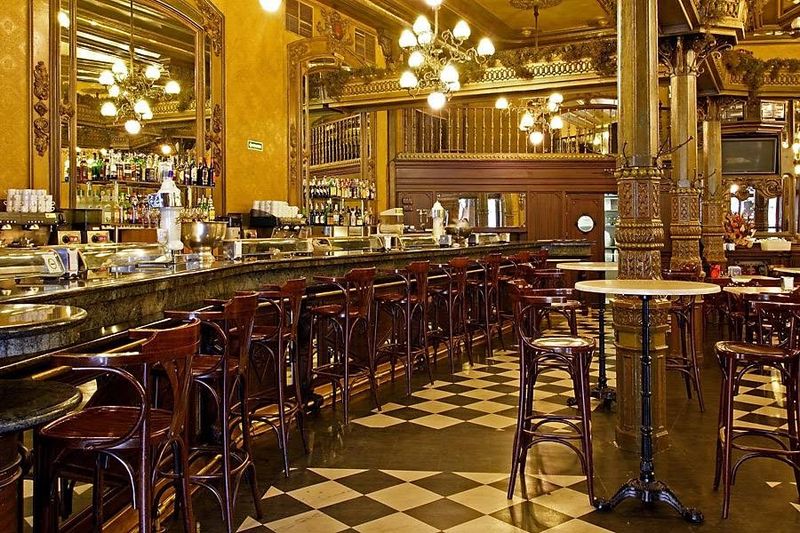
Café Iruña opened in July 1888 on Plaza del Castillo, making it Pamplona’s oldest café. Its opening night coincided with the first public display of electrical lighting in the city, a detail reflected in its decor of mirrors and elaborate lamps that still fill the interior today.
The café underwent a major renovation in the early 20th century that produced its current Art Nouveau design, complete with marble tables, ornate woodwork, and large mirrors. As a protected heritage building, that design cannot be altered, which means the space looks remarkably close to what Hemingway would have encountered during his visits.
He featured Café Iruña directly in “The Sun Also Rises,” where characters regularly meet in its arcaded surroundings on the plaza. A dedicated corner of the café now holds photographs and a statue commemorating his connection to the place.
Other notable visitors over the years have included Ava Gardner and Charlie Chaplin. The café serves coffee, pastries, tapas, and a full menu throughout the day.
9. Gran Hotel La Perla, Pamplona, Navarre, Spain
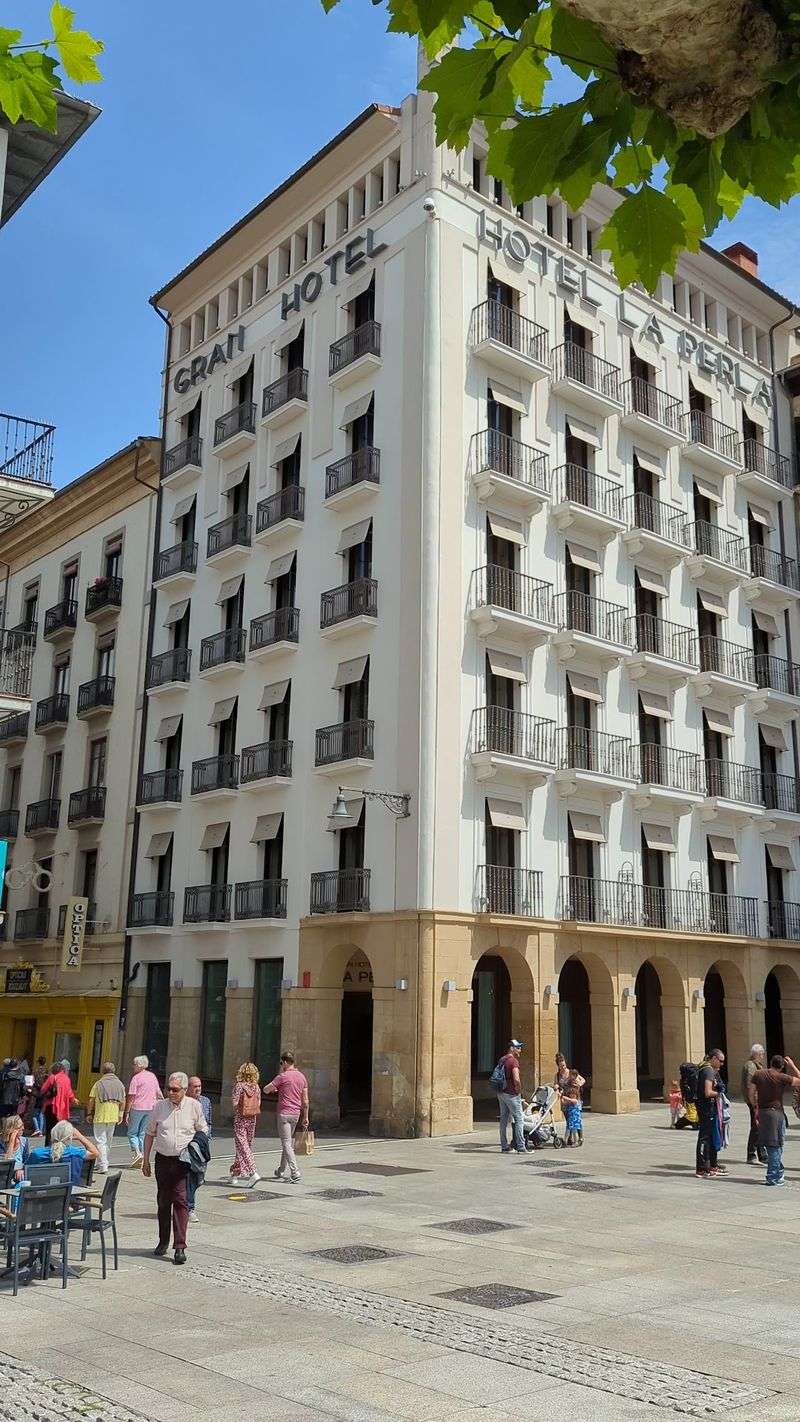
Gran Hotel La Perla first opened as Fonda La Perla on June 5, 1881, which makes it the oldest hotel in Pamplona and one of the longest continuously operating hotels in all of Spain. Its position directly on Plaza del Castillo gives certain rooms a front-row view of Calle Estafeta, the famous route used during the Running of the Bulls.
Hemingway stayed here during the San Fermín festivities in 1923 and 1924, and he even wrote about his booking experience in an article published in the Toronto Star Weekly. The hotel maintains a dedicated Hemingway Suite, Room 201, with furnishings arranged as he would have known them.
A full renovation in 2007 brought the property to five-star status, and a Michelin-starred restaurant, Zurita Barra y Mantel, was added in late 2024. The hotel’s distinguished guest history includes multiple members of the Spanish Royal Family as well as more recent visitors like Woody Allen and Charlie Sheen.
The balconies during San Fermín remain among the most sought-after views in Pamplona.
10. Restaurante Botín, Madrid, Spain
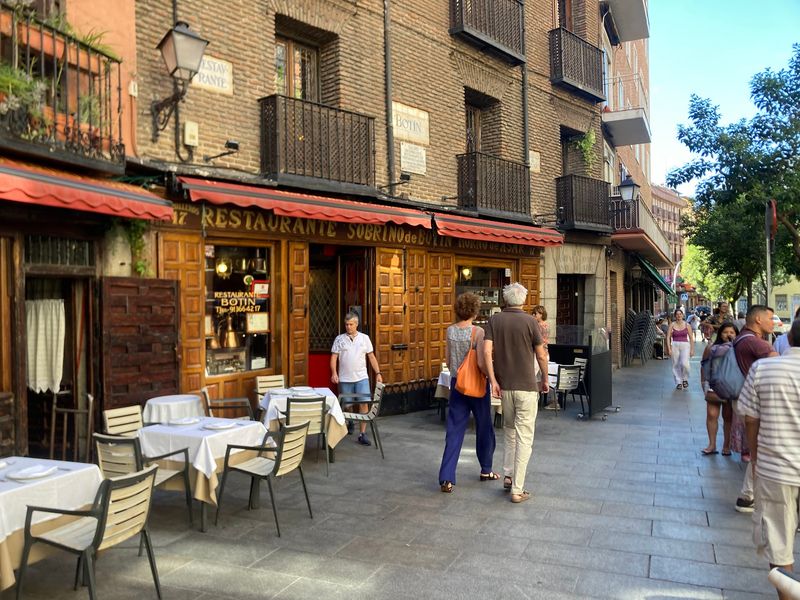
No restaurant on earth has been open longer than Botín. Founded in 1725 in Madrid’s historic Austrias district near Plaza Mayor, it holds the Guinness World Record as the world’s oldest continuously operating restaurant, and it has never once moved or closed in three centuries.
The González family has owned and managed Botín since 1930 and is now in its fourth generation of operation. The kitchen’s centerpiece is the original wood-fired oven from 1725, which remains in daily use and is responsible for the restaurant’s signature dishes: roast cochinillo asado (suckling pig from Segovia) and lechazo (roast baby lamb).
Hemingway featured Botín near the end of “The Sun Also Rises” and was known to praise its roast suckling pig specifically. Francisco Goya and Graham Greene are also among its historical patrons.
The restaurant spans four floors, with a medieval cellar featuring arched brick walls and wooden beams that make the age of the place feel entirely real. Guided tours of the historic interior are available for those who want more than just the meal.
11. La Closerie des Lilas, Paris, France
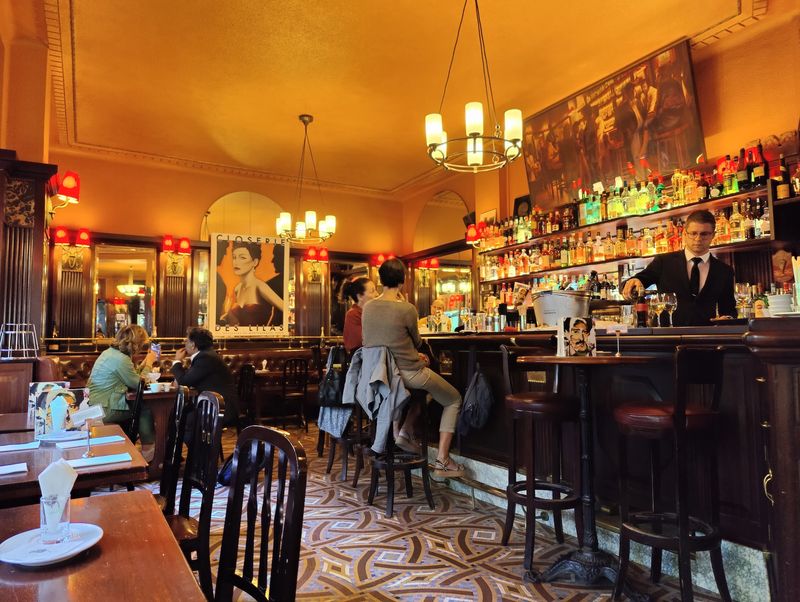
La Closerie des Lilas has been a gathering point for Paris’s creative community since 1847, when it began as an open-air guinguette in the Montparnasse district. The name refers to the lilac trees planted in its garden, and the establishment has since grown into a full restaurant, brasserie, and piano bar.
Hemingway worked here regularly during his Paris years and described it as “one of the best cafés in Paris.” He appreciated it in winter for its warmth and in other seasons for the appeal of its terrace. His usual table in the bar is marked with an engraved brass plaque bearing his name.
F. Scott Fitzgerald reportedly shared the manuscript of “The Great Gatsby” with Hemingway at this very location.
The broader list of famous regulars includes Émile Zola, Pablo Picasso, Oscar Wilde, James Joyce, Gertrude Stein, and Jean-Paul Sartre. Today the establishment also awards annual literary prizes to female writers, which means it has managed to turn its historic reputation into an ongoing cultural contribution rather than just a talking point.
12. Bar Hemingway, Paris, France
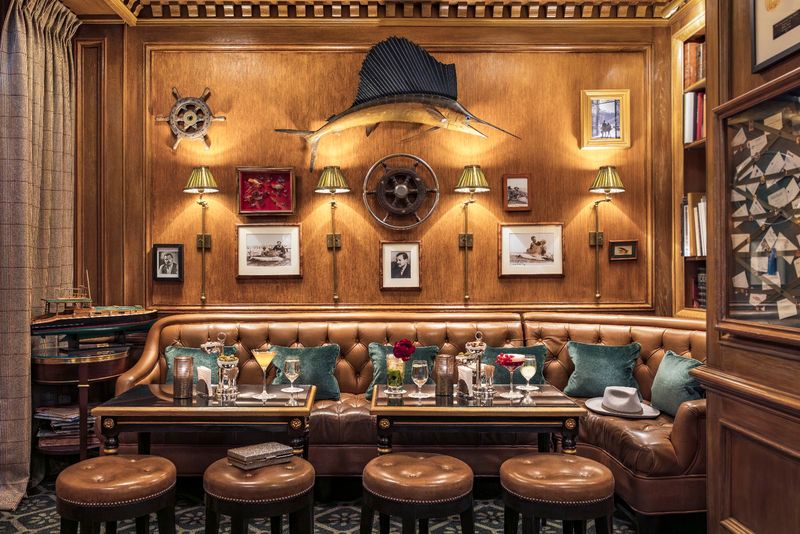
Hidden inside the Ritz Paris, Bar Hemingway seats only 25 people, which gives it the feel of a private club rather than a public bar. The space was originally called Le Petit Bar and holds the distinction of being the first upscale bar in Paris to welcome unaccompanied women.
Hemingway was a frequent visitor during his Paris years, often arriving with figures like F. Scott and Zelda Fitzgerald.
The bar’s most famous legend involves Hemingway arriving near the end of World War II and reportedly running up a significant tab as part of what he described as liberating the Ritz from occupying forces.
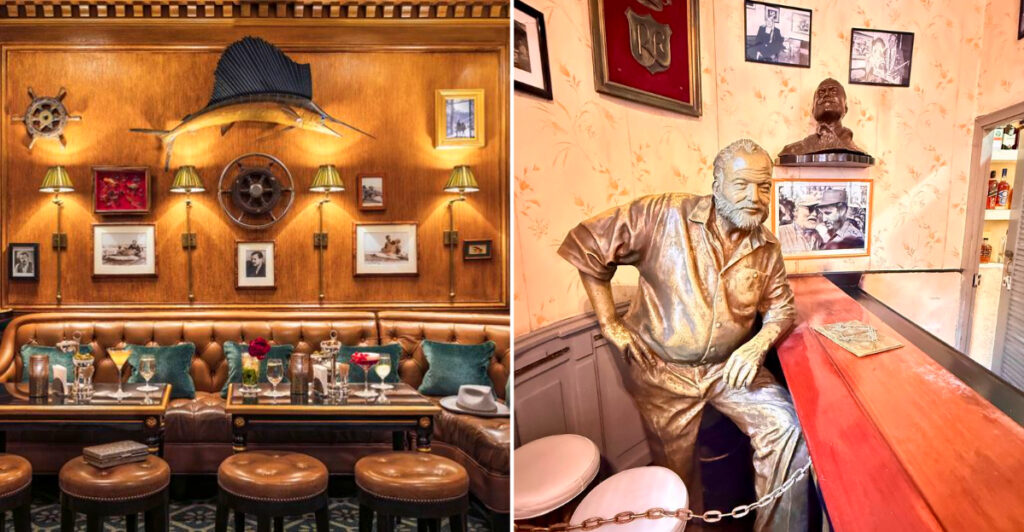
Today the interior features rich wood paneling, plush leather seating, and a carefully curated collection of black and white photographs and memorabilia connected to the writer. No reservations are accepted, and appropriate attire is required.
Signature cocktails are a specialty, and ladies are traditionally presented with a decorative rose alongside their order. The bar’s intentional quietness makes it a sharp contrast to the busier Hemingway landmarks elsewhere in the world.
13. Harry’s Bar, Venice, Italy
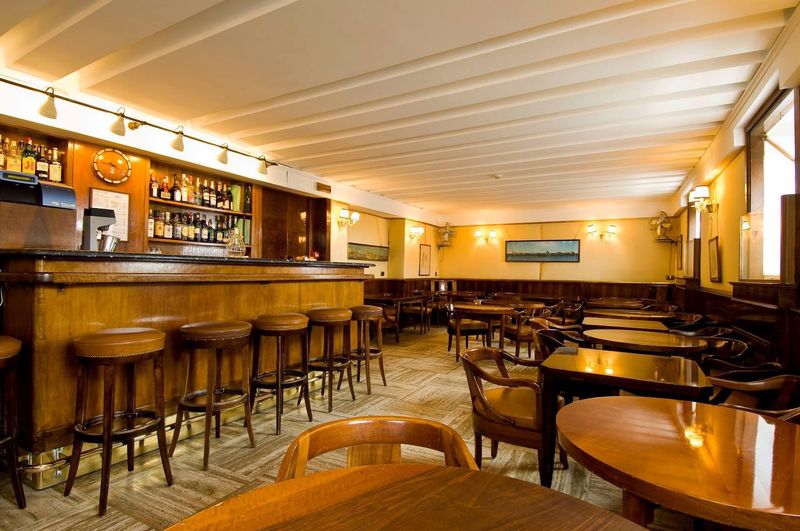
Giuseppe Cipriani opened Harry’s Bar on May 13, 1931, using funds partly provided by a young American named Harry Pickering, whose loan Cipriani had generously extended years earlier. Pickering repaid the debt and then some, and Cipriani honored him by naming the bar in his memory.
Hemingway became one of the bar’s most devoted regulars during the winter of 1949, when he had a reserved table and was working on “Across the River and into the Trees,” in which Harry’s Bar appears prominently. The Italian Ministry for Cultural Affairs declared it a national landmark in 2001.
The bar is credited with inventing two widely replicated creations: the Bellini cocktail in the 1940s and Beef Carpaccio Alla Cipriani. Arrigo Cipriani, Giuseppe’s son, now manages the establishment, maintaining its simple brasserie-style decor and reputation for precise service.
Historical patrons include Arturo Toscanini, Charlie Chaplin, Orson Welles, Peggy Guggenheim, and Truman Capote. More recently, George Clooney and Woody Allen have been spotted here, proving the bar’s appeal crosses generations with no apparent effort.
Share this story