Europe is full of old towns that reward the curious traveler who slows down and wanders without a plan. Some of these places have been frozen in time by geography, careful preservation, or sheer good fortune.
Others carry centuries of layered history in every stone, alley, and archway. Whether you have a map or not, these 15 European old towns are best experienced one wrong turn at a time.
Tallinn, Estonia
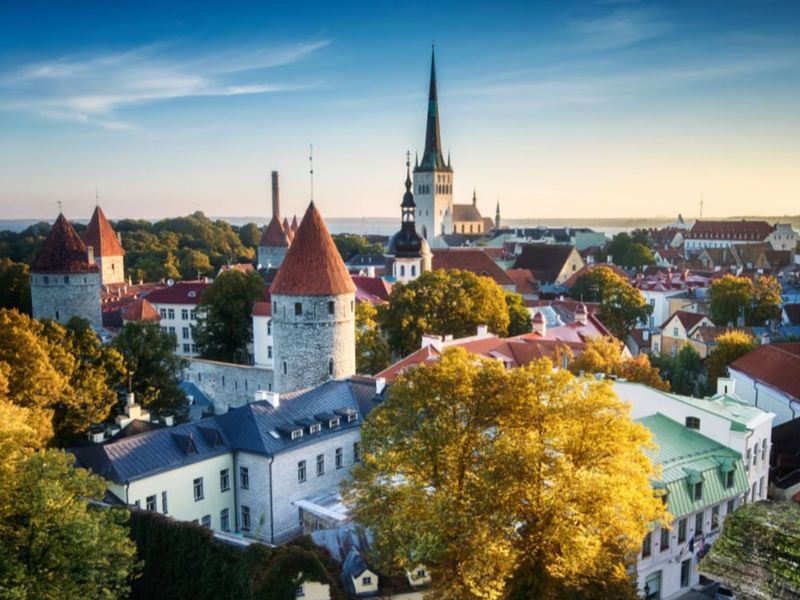
Medieval cities rarely survive as completely as Tallinn has, and that is precisely what makes wandering its old streets feel like stepping into a living history book. The historic center split between upper Toompea and the lower merchant quarter gives every walk a natural rhythm of climbing and descending.
Church spires, defensive towers, and glimpses of the Baltic skyline appear around corners you did not expect.
Tallinn became a key Hanseatic trading hub from the 13th century onward, and its guild halls, merchant houses, and winding lanes reflect that commercial golden age. The medieval street network is so well preserved that UNESCO recognized it as exceptional among northern European cities.
Walking toward a church tower is genuinely reliable navigation here.
Town Hall Square tends to pull everyone back eventually, but the real fun happens in the passages and courtyards between the square and the old city walls. Try ducking through an arched gateway and following whatever lane looks narrowest.
Tallinn rewards that kind of low-effort curiosity with cobblestoned surprises at almost every turn.
Dubrovnik, Croatia
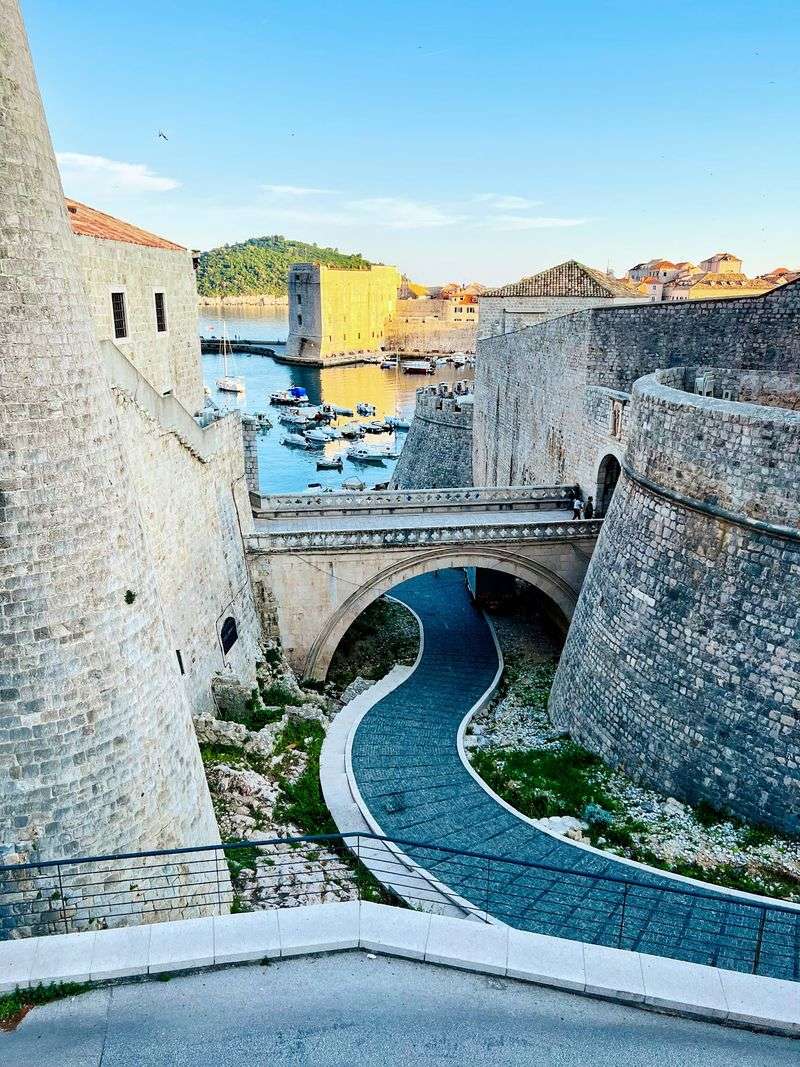
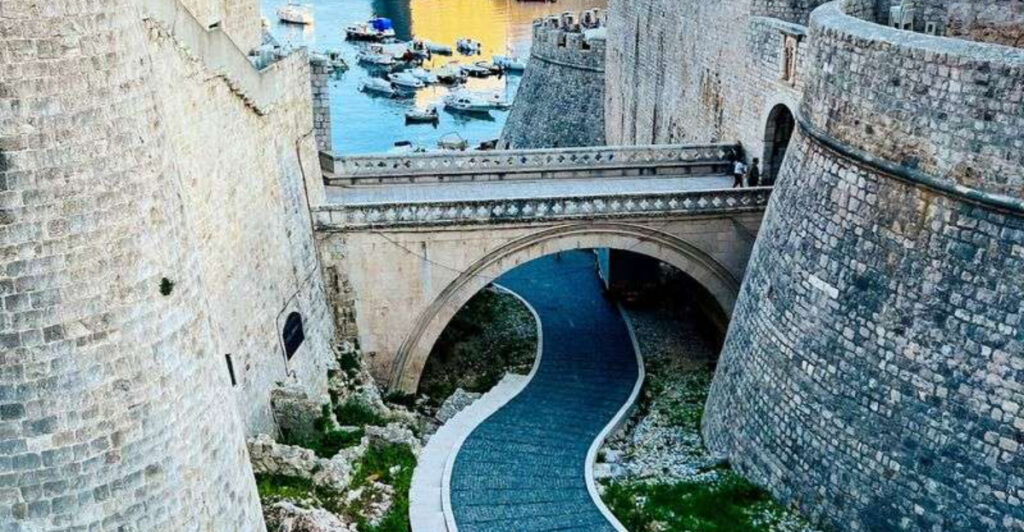
Sunlight bouncing off polished limestone streets is the first thing most people notice about Dubrovnik, and it sets the tone for everything that follows. The walled old city of the former maritime Republic of Ragusa has survived a catastrophic 1667 earthquake and wartime shelling, yet its Gothic, Renaissance, and Baroque layers remain remarkably coherent.
That resilience is part of what makes walking here feel so meaningful.
The Stradun cuts a clean line through the center, but the streets branching away from it are where the real character lives. Stone staircases climb steeply into residential neighborhoods where laundry hangs between buildings and cats pick sunny spots on ancient walls.
Glimpses of the Adriatic appear between buildings just often enough to remind you where you are.
Walking the city walls gives you the bird’s-eye view that photographers dream about. Getting lost in the lanes below gives you the city that locals actually inhabit.
Dubrovnik fills up fast during summer afternoons, so arriving early in the morning or exploring after dinner transforms the experience completely. The old town feels almost magical when the tour groups have gone home.
Bruges, Belgium
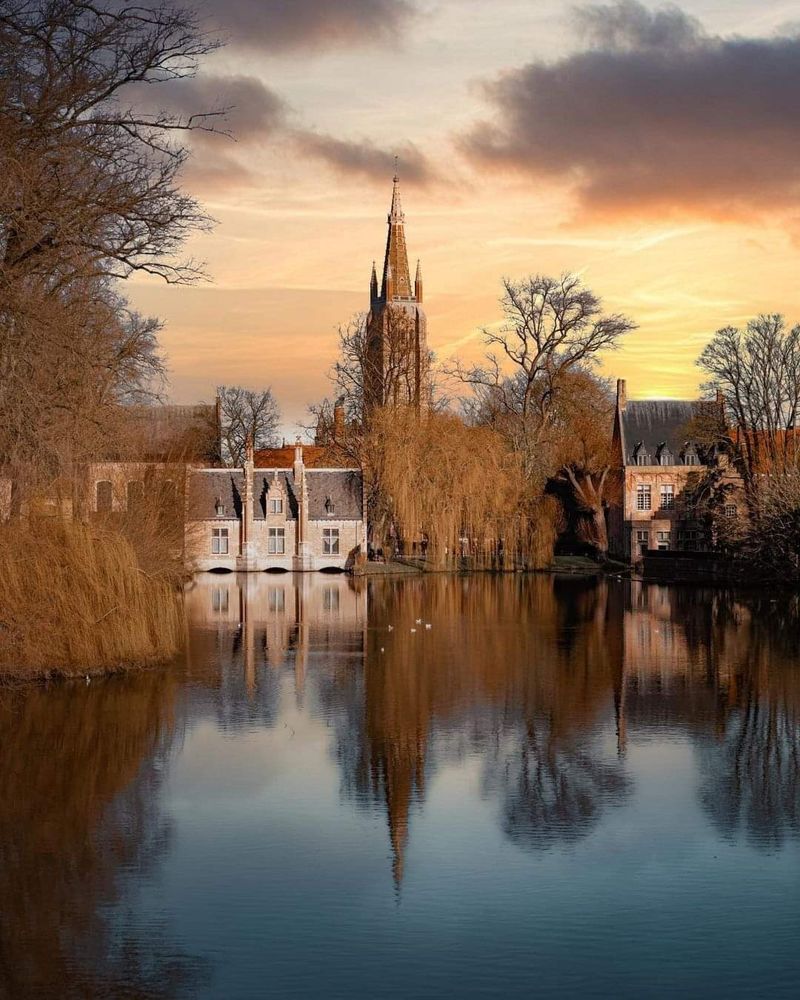
Bruges operates like a riddle wrapped in a canal. Its medieval street pattern, brick Gothic architecture, and waterways have survived so completely that the city looks almost suspicious in its perfection.
UNESCO specifically notes how strongly the old street network and canal system reflect Bruges’ days as one of medieval Europe’s most powerful trading centers.
Most visitors begin around the Markt and the famous Belfry, which is a perfectly reasonable place to start. The city becomes more interesting the moment you follow a canal instead of a street.
Cross whichever small bridge catches your eye, drift toward the Begijnhof, and the crowds thin out almost immediately.
Water is what makes Bruges genuinely different from other well-preserved medieval towns. The same buildings that look pleasant from a cobbled street become something else entirely when reflected in a canal below a church tower.
Crossing a bridge here is never a neutral act. It changes your angle, your light, and your whole understanding of the street you just left.
Bruges is not particularly hard to navigate, but it is very easy to lose yourself happily within it for an entire afternoon.
Cesky Krumlov, Czechia
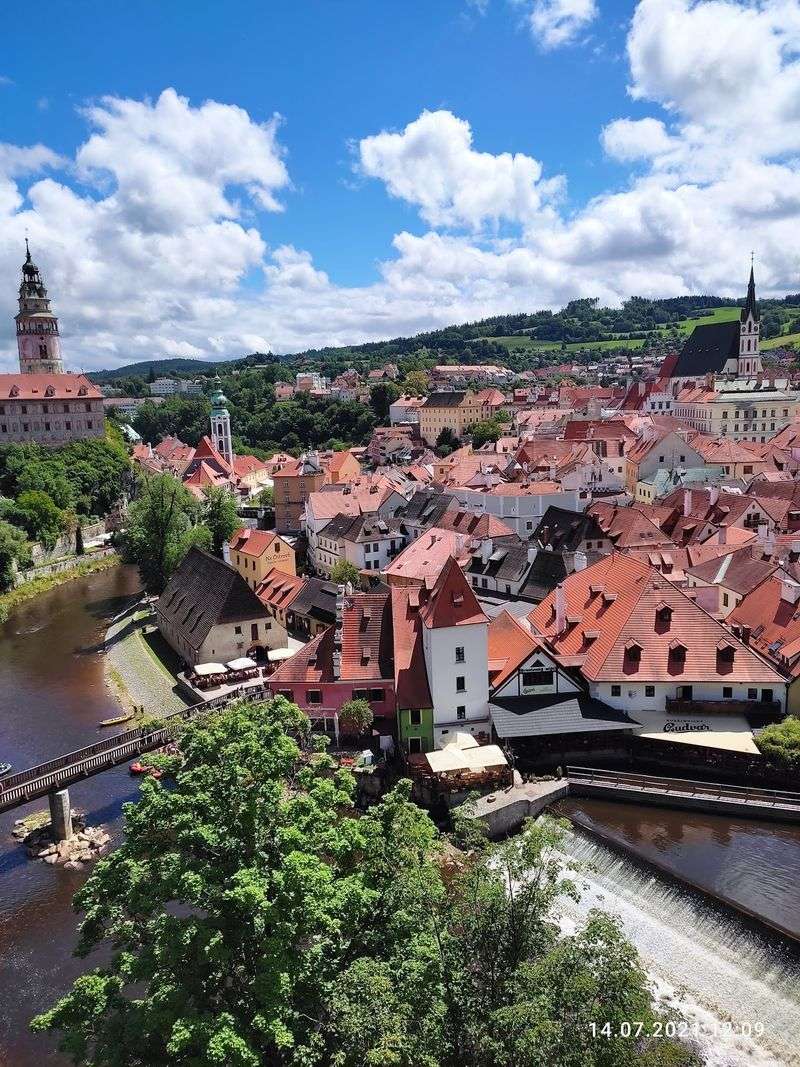
A river that nearly wraps itself around an entire town is not something you see every day. Cesky Krumlov developed inside a dramatic loop of the Vltava River, with a 13th-century castle rising above the opposite bank and a tightly packed historic center filling the space below.
UNESCO describes it as an outstanding example of a small Central European medieval town whose architectural heritage remained remarkably intact across several centuries.
The streets inside the river loop climb and fall between Gothic, Renaissance, and Baroque buildings in a way that makes every walk feel slightly unpredictable. Crossing the river repeatedly is not just scenic, it is often the most logical way to get anywhere.
The castle complex on the far bank is enormous and worth exploring slowly, especially the terraced gardens above the town.
Day-trippers can make the center feel crowded during peak hours, but staying overnight changes everything. Once the buses leave, the cobbled lanes quiet down and the town takes on a completely different mood.
The rooftops glow in the evening light, and the sound of the river becomes the dominant soundtrack. That is when Cesky Krumlov feels most like the place people keep telling you about.
Siena, Italy
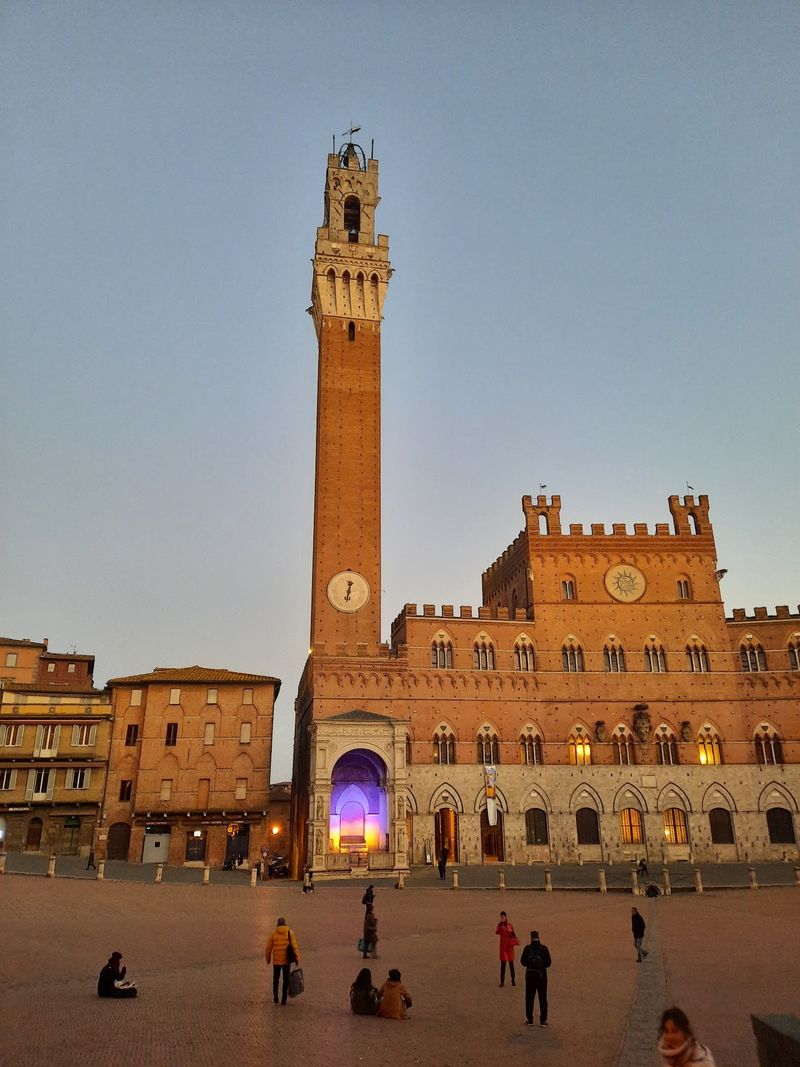
Piazza del Campo is one of those public spaces that genuinely stops people in their tracks the first time they see it. The shell-shaped square slopes gently toward the Palazzo Pubblico, and the surrounding medieval brick architecture frames it so precisely that the whole thing looks almost staged.
UNESCO describes Siena’s historic center as an embodiment of the medieval city, with a Gothic identity developed largely between the 12th and 15th centuries.
Getting there indirectly is the point. Siena spreads across three hills, which means streets constantly rise, dip, curve under arches, and suddenly open onto views of the Tuscan countryside rolling away in the distance.
The city’s traditional neighborhood districts, the contrade, give different areas distinct personalities and add another layer of local identity to the architecture.
Florence often gets described as the definitive Tuscan city, but Siena operates on a more human scale. Its brick facades, narrow lanes, Gothic palaces, and tucked-away fountains feel lived-in rather than curated for visitors.
A quick wrong turn can lead you to a neighborhood fountain, a medieval gate, or a viewpoint over terracotta rooftops that no guidebook bothered to mention. That is Siena doing exactly what it does best.
Prague, Czechia
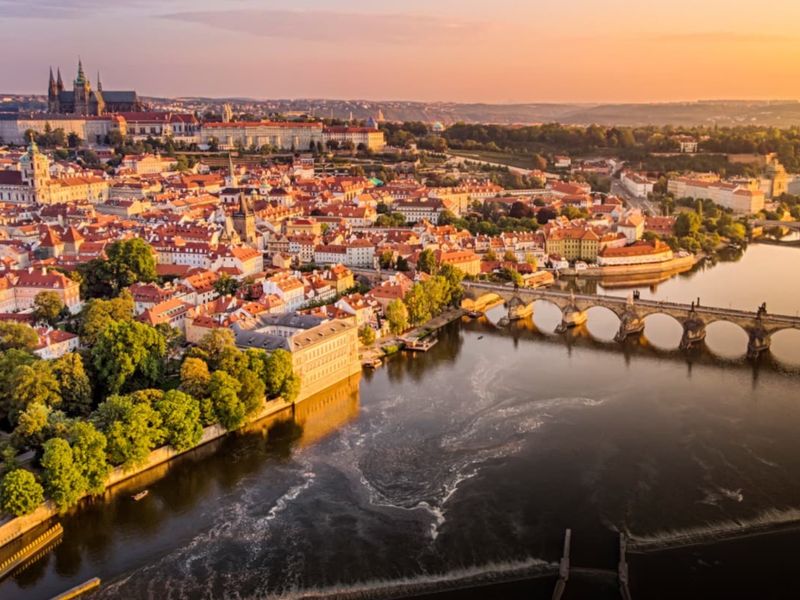
Few European cities have a skyline as instantly recognizable as Prague, and walking beneath it feels like moving through a city that never quite decided which architectural century it preferred. The UNESCO-protected area covers the Old Town, Lesser Town, and New Town, with layers stretching from Romanesque foundations through Gothic, Baroque, and early modernist buildings.
That variety is exactly why wandering here never gets repetitive.
Charles Bridge and Old Town Square are the obvious landmarks, and yes, you should see them. Then put the map away.
Streets running parallel to the tourist spine lead through quieter neighborhoods where the architecture is just as extraordinary and the coffee shop is not full of people taking selfies. The Jewish Quarter deserves slow exploration, and Mala Strana below the castle rewards anyone willing to climb its residential lanes.
Prague’s towers, domes, and castle structures work as a surprisingly reliable navigation system. Even when a street takes an unexpected turn, something tall and recognizable usually appears above the rooftops to reorient you.
The city is large enough that you can wander for hours without retracing your steps, and compact enough that you are never truly lost for long. That is a rare combination.
Salzburg, Austria
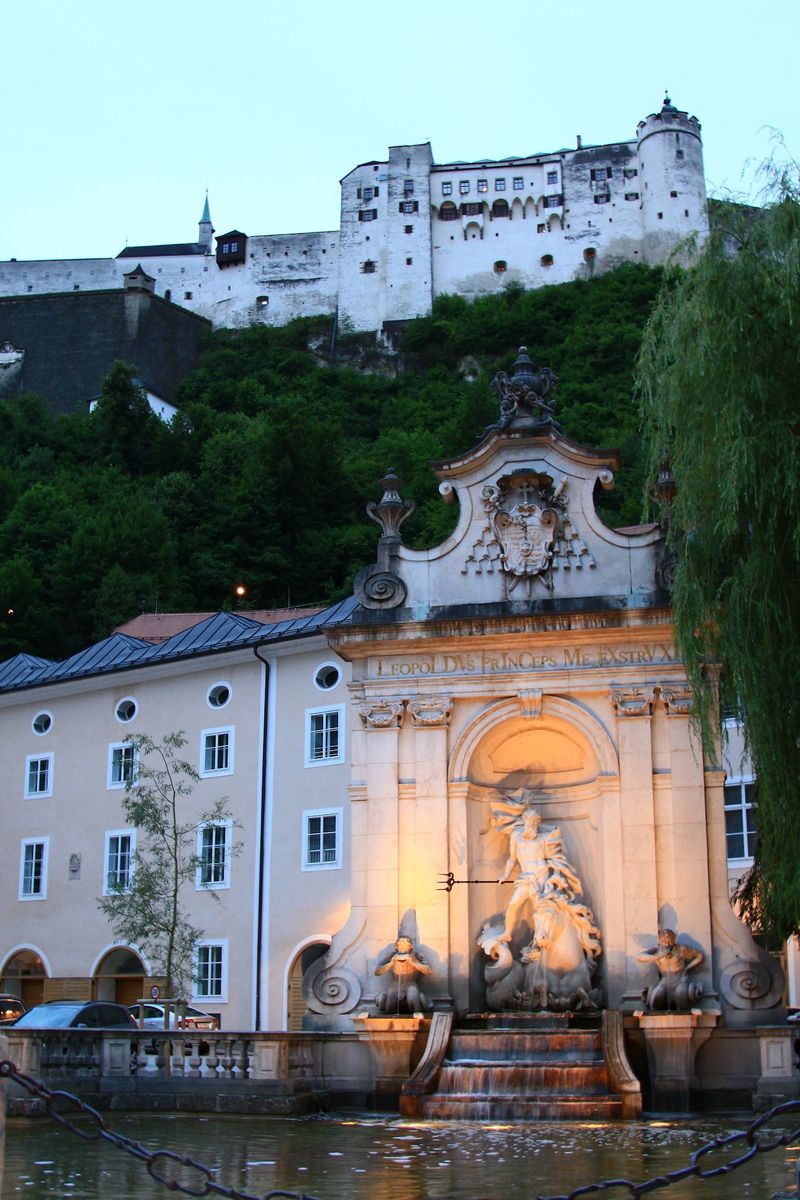
Salzburg has a backdrop that most cities would have to paint onto a stage set. The Baroque historic center sits at the foot of a rock topped by Hohensalzburg Fortress, with the Alps rising behind the whole picture.
UNESCO notes that the historic urban fabric reflects an exceptional meeting of Italian and German cultural influences developed from the Middle Ages through the 19th century. That blend shows up in every street, courtyard, and facade.
Getreidegasse gets most of the attention for its wrought-iron shop signs and narrow passage buildings, and it earns the fame. But many of those passages lead through inner courtyards into parallel streets and quieter squares that most visitors miss entirely.
Following an archway simply because it looks interesting is a reliable strategy in Salzburg. You may emerge somewhere completely unexpected and entirely worth finding.
The fortress above the rooftops acts as a constant compass point, which removes most of the anxiety from wandering. Look up and you always know roughly where you are relative to the hill.
That freedom makes it easier to follow curiosity rather than a route. Salzburg also has the advantage of being genuinely beautiful at almost every angle, which means wrong turns rarely feel like mistakes.
Toledo, Spain
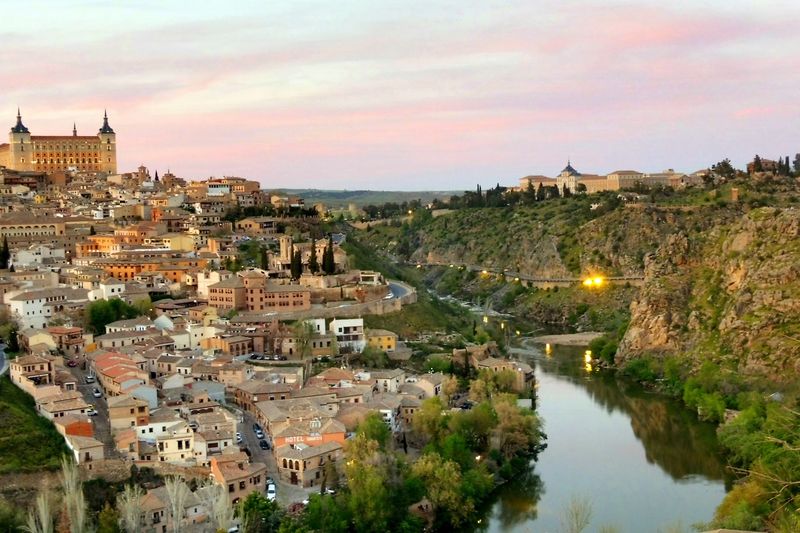
Standing on the bridge below Toledo and looking up at the entire city stacked on a rocky hill above the Tagus River is a genuinely dramatic experience. The city carries more than 2,000 years of layered history, shaped by Roman, Visigothic, Islamic, Jewish, and Christian civilizations in succession.
UNESCO recognizes that cultural accumulation as something rare, and the architecture reflects every chapter of it.
Synagogues sit near churches. Mudejar stonework appears beside Gothic facades.
The narrow streets inside the defensive walls twist and split in ways that feel less like a city plan and more like centuries of improvisation. Toledo may be the easiest old town in Europe to get genuinely turned around in, and that is not a complaint.
The disorientation is part of the experience.
Streets here narrow suddenly, pass beneath buildings, split unexpectedly, and occasionally dead-end in small courtyards that seem to have no purpose except being charming. The cathedral is unmissable, but the smaller parish churches, old city gates, and hidden plazas are what give Toledo its depth.
Spend a full day here without a fixed itinerary and the city will show you more than any tour could cover in a week.
Porto, Portugal
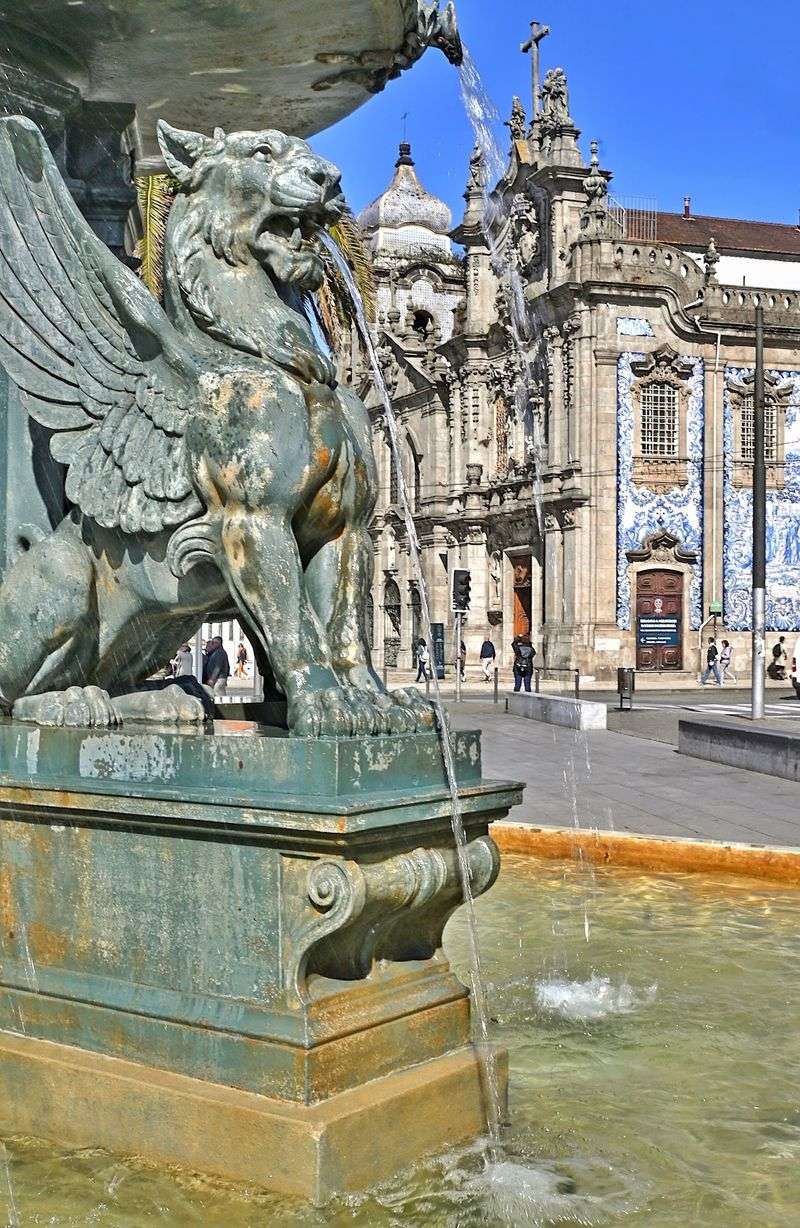
Gravity plays a central role in Porto’s character. The city climbs steeply above the Douro River in a way that makes every walk feel slightly athletic, and the views that open up as you gain elevation are genuinely spectacular.
UNESCO describes the historic core as an exceptional urban landscape shaped by around 2,000 years of history, which is a polite way of saying the place has accumulated an enormous amount of personality.
Ribeira along the riverfront gets the famous photographs, with its stacked colorful buildings reflected in the Douro. Walk uphill from there and Porto becomes far more interesting.
Steep lanes, azulejo-tiled church facades, narrow stairways, hidden courtyards, and small taverns connect the river level with the cathedral and the upper city in a network of routes that no map fully captures.
The irregular topography means you constantly lose visual contact with where you started. Then the river reappears below you, and suddenly everything makes sense again.
Porto is the kind of city where comfortable shoes are not a suggestion but a genuine requirement. Spend a morning climbing without a destination and the city rewards you with tiled staircases, crumbling grandeur, and viewpoints that are rarely crowded even in high season.
Ljubljana, Slovenia
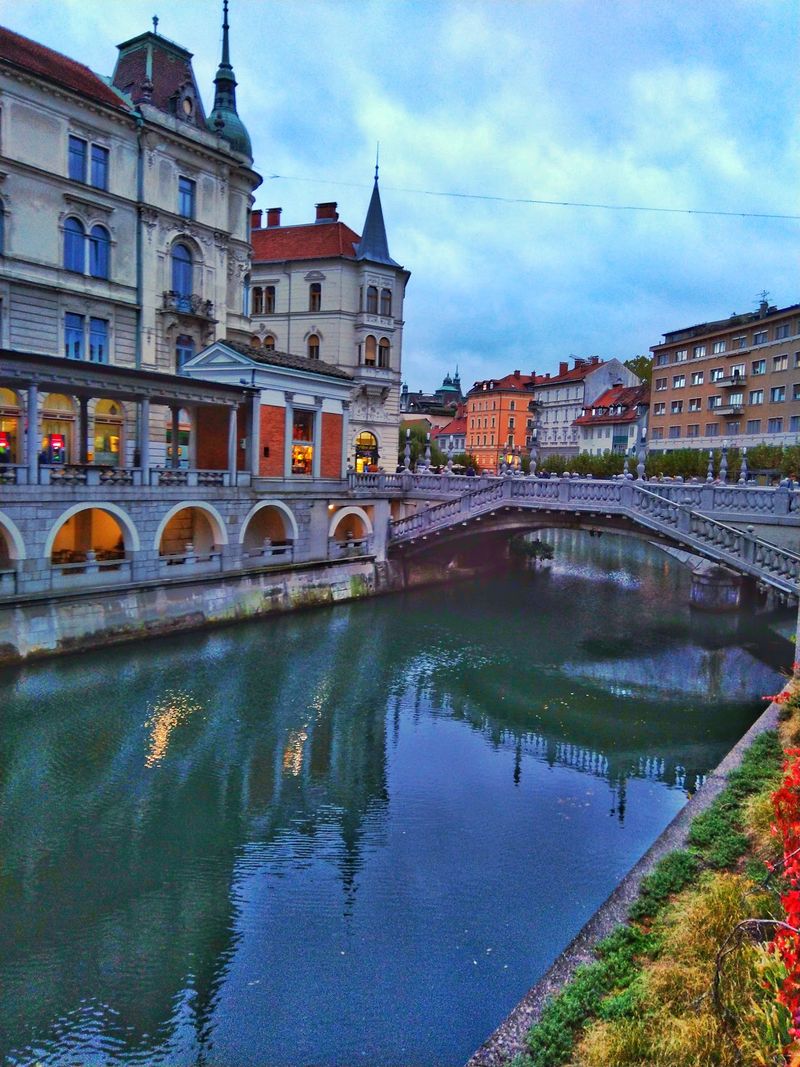
Ljubljana has a quality that is harder to find than it sounds: it feels genuinely pleasant to walk around, not just impressive to look at. The historic core stretches along the Ljubljanica River beneath a castle-topped hill and blends medieval street patterns, Baroque facades, and the distinctive civic architecture of Joze Plecnik into something that feels cohesive rather than chaotic.
The result is a city that invites slow exploration rather than demanding it.
Preseren Square and the Triple Bridge provide the natural starting point. From there, the market along the river, the Cobblers Bridge, and the older streets climbing toward Castle Hill offer a logical but unhurried route.
Gornji trg is especially atmospheric, with a medieval layout and 16th-century houses lining a cobbled street that feels like it has barely changed in centuries.
Ljubljana does not try to overwhelm you with sheer scale. Its appeal comes from how naturally historic architecture, riverside cafes, open-air markets, and ordinary local life coexist in the same small area.
The castle above the old town provides great views and a useful sense of orientation. The streets below it provide everything else.
For a European capital, Ljubljana remains surprisingly unhurried and easy to enjoy at your own pace.
Kotor, Montenegro
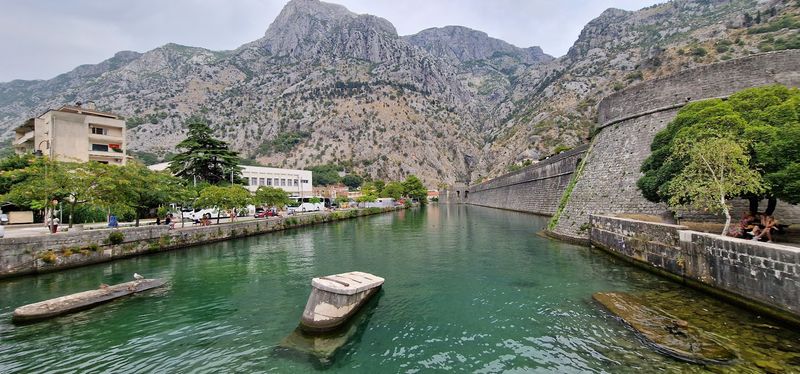
Kotor is what happens when a medieval city planner looks at a narrow strip of land between a sheer mountain and a deep Adriatic bay and decides that is exactly enough space. The old town is enclosed within thick defensive walls, with additional fortifications climbing almost vertically up the rocky slope above.
The wider Natural and Culturo-Historical Region of Kotor has been UNESCO-listed since 1979, recognizing the extraordinary relationship between the historic settlement and its dramatic landscape.
Inside the walls, Kotor organizes itself around a series of small squares connected by narrow stone lanes. There is no obvious main boulevard directing foot traffic.
Cats own the sunny spots, churches appear without warning, and former palaces stand beside ordinary residential buildings in a mix that feels genuinely medieval rather than reconstructed for tourism.
Looking upward from inside the old town is a small shock every time. The mountains rise almost vertically beyond the rooftops, creating a visual effect that no photograph quite captures accurately.
Climbing the fortifications above the town takes real effort but delivers views over the bay that justify every step. Coming back down into the maze of lanes and promptly losing your bearings again is not a failure.
It is the entire point of visiting Kotor.
Edinburgh, Scotland
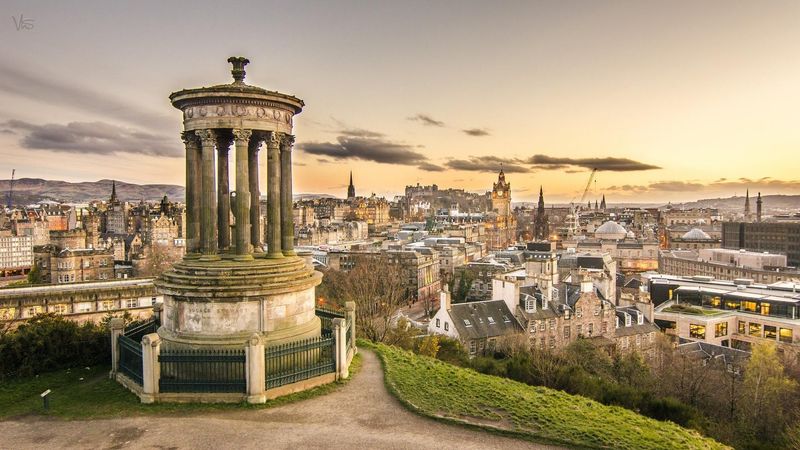
Edinburgh’s Old Town has a brooding, theatrical quality that sets it apart from most historic European city centers. The medieval street network descends from the Royal Mile through steep lanes called closes, while tall stone tenements create an unusually vertical urban environment that channels wind and shadow in equal measure.
UNESCO highlights the dramatic topography and the powerful contrast it forms with the elegant Georgian geometry of the adjacent New Town.
The Royal Mile is the spine of the old town, running between the castle and the Palace of Holyroodhouse. The closes branching off it are the real adventure.
Walk through one simply because the entrance looks interesting. Some open into hidden courtyards, others drop steeply downhill via stone staircases, and a few lead to viewpoints that most visitors walk straight past without noticing.
Edinburgh Castle watches over everything from its volcanic perch, and Arthur’s Seat rises beyond the palace at the other end of the Mile, giving the whole historic area a rugged, almost theatrical framing. The city has plenty of grand monuments and famous museums.
Its most memorable spaces are often the smallest ones: a close that opens unexpectedly onto a view, or a courtyard that has been quietly there since the 16th century.
Valletta, Malta
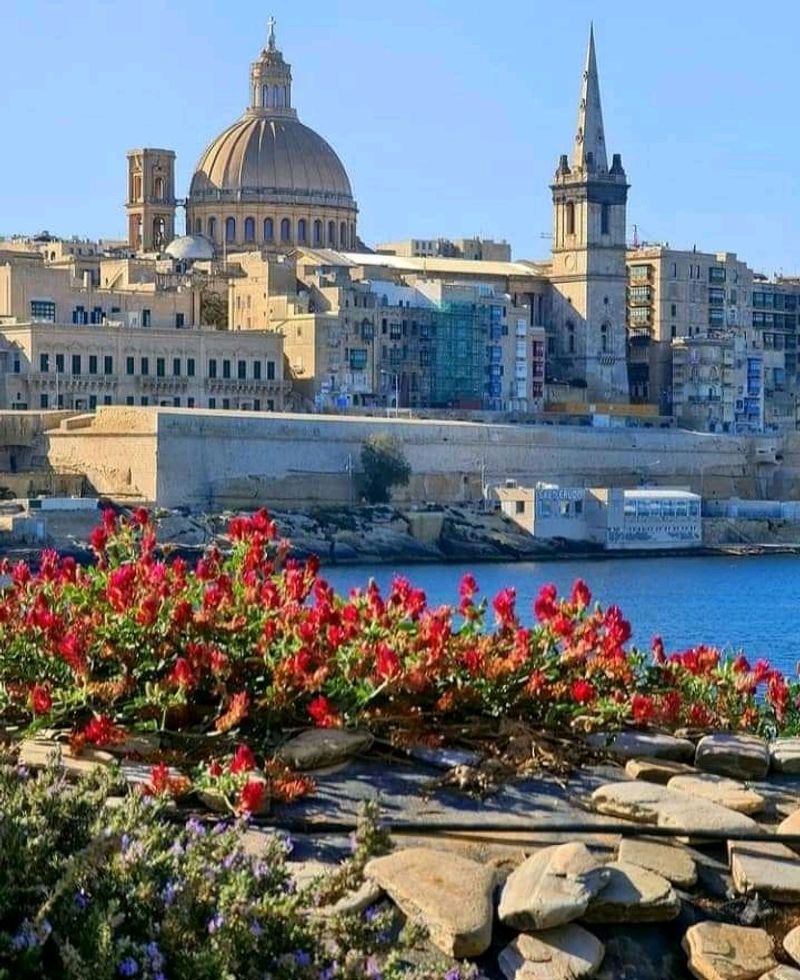
Valletta holds a quirky distinction among European old towns: it was largely planned from scratch in the 16th century by the Knights of St. John rather than growing organically over centuries. Yet walking its streets still delivers the pleasure of discovery, which says something about how well the plan was executed.
The fortified city occupies a peninsula between two natural harbors, with honey-colored limestone buildings lining streets that run in a loose grid down toward the water on both sides.
The grid makes navigation easier than in Toledo or Porto, but the topography complicates things in the most enjoyable way. Walk toward the edge of the peninsula in almost any direction and an ordinary street will suddenly end with a harbor view that stops you completely.
The city is compact enough to cross on foot in minutes, yet detailed enough to spend hours examining without running out of things to notice.
Baroque churches, ornate balconies, hidden gardens, and the Grand Master’s Palace give Valletta serious architectural credentials. The smaller details are equally rewarding: a carved doorway, a tiny chapel tucked between buildings, or a viewpoint over the Grand Harbour where historic fortifications stretch across the water.
Valletta is the smallest EU capital, but it punches well above its weight for old-town wandering.
Rothenburg ob der Tauber, Germany
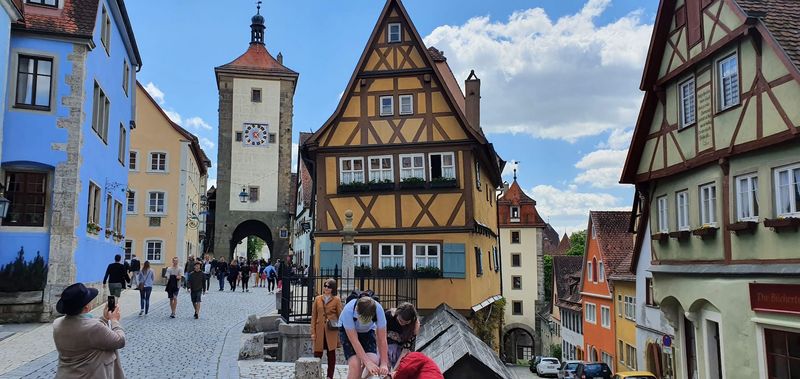
There is a moment in Rothenburg ob der Tauber when you turn a corner, see a half-timbered house framed by a medieval gate tower and a cobbled lane stretching into the distance, and genuinely wonder if the whole town is a very convincing film set. It is not.
The walls, towers, gates, steep rooftops, and narrow lanes are the real thing, which is why Rothenburg has become one of Germany’s most recognizable historic town images. The challenge is seeing past the postcard version.
The central streets fill with visitors during daytime hours, especially in summer and around Christmas. The solution is straightforward: walk away from the most photographed corner.
Follow the town wall circuit, explore residential lanes away from the main market square, or look through old gateways toward the Tauber Valley below the town. The difference in atmosphere between the tourist center and the quieter periphery is considerable.
Staying overnight is the most reliable way to experience Rothenburg as something more than a backdrop. Return after dinner when the day visitors have cleared out and the streets belong to guests staying in the town’s old inns.
The fairy-tale reputation is well earned. Experiencing it without an audience makes it far more convincing and considerably more enjoyable.
Colmar, France
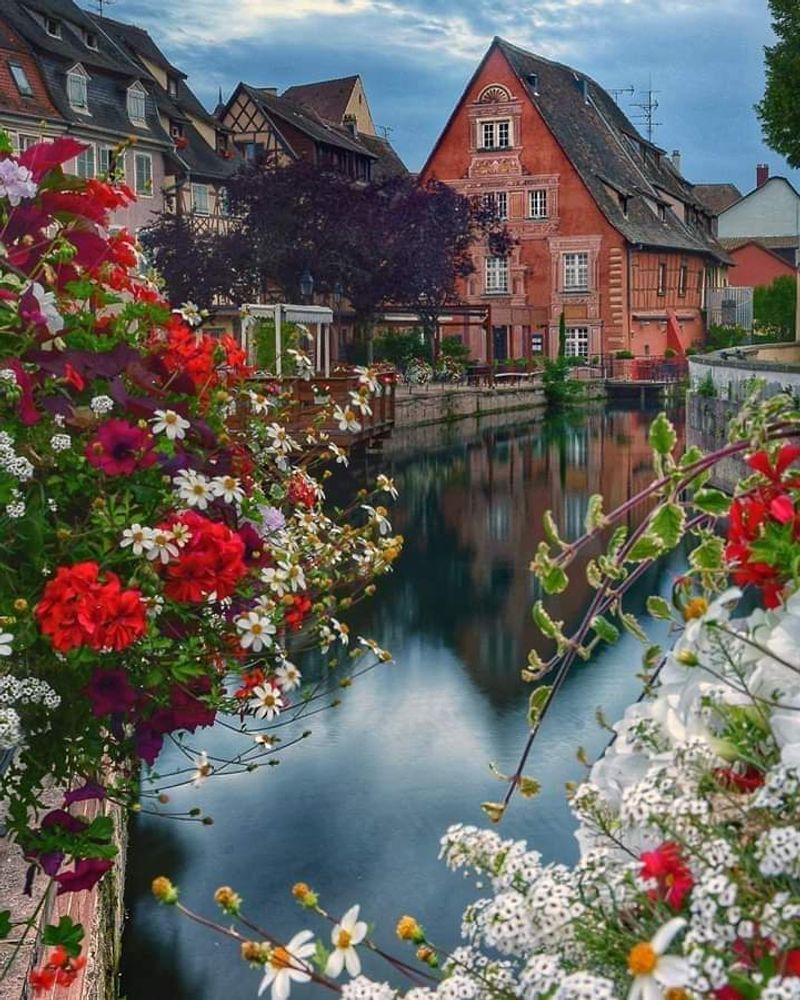
Colmar feels like the product of two cultures negotiating cheerfully across a border for several centuries and eventually producing something neither France nor Germany could have invented alone. The old center combines colorful half-timbered houses, canals, Gothic and Renaissance churches, and flower-filled facades that reflect the Alsace region’s position between French and German cultural worlds.
The architecture is exuberant in a way that feels earned rather than performed.
Petite Venise, the canal quarter, collects most of the cameras, and it is genuinely photogenic enough to justify the attention. Wandering beyond it into quieter residential streets reveals a different pace entirely.
Medieval and Renaissance buildings dominate the townscape away from the main tourist circuit, and the streets are narrow enough that two people with shopping bags have to negotiate passage past each other.
Colmar is compact enough that almost every wrong turn eventually leads somewhere attractive, which makes it an ideal place for aimless exploration. The surrounding Alsace wine route adds another dimension to any visit: spend the morning getting lost in the old town lanes, then spend the afternoon getting equally pleasantly lost among vineyards and half-timbered wine villages.
The region rewards that kind of unhurried, unplanned approach just as much as the town itself does.
Share this story