Ever wondered which European countries actually pay their workers the most? Salaries across Europe vary wildly, and finding a fair way to compare them means looking beyond just the numbers on a paycheck.
This ranking uses the OECD’s 2025 average gross wage expressed in U.S. dollars adjusted for purchasing power, so the figures reflect what money can actually buy in each country. From tiny Luxembourg punching above its weight to powerhouse Germany, the results might surprise you.
Switzerland
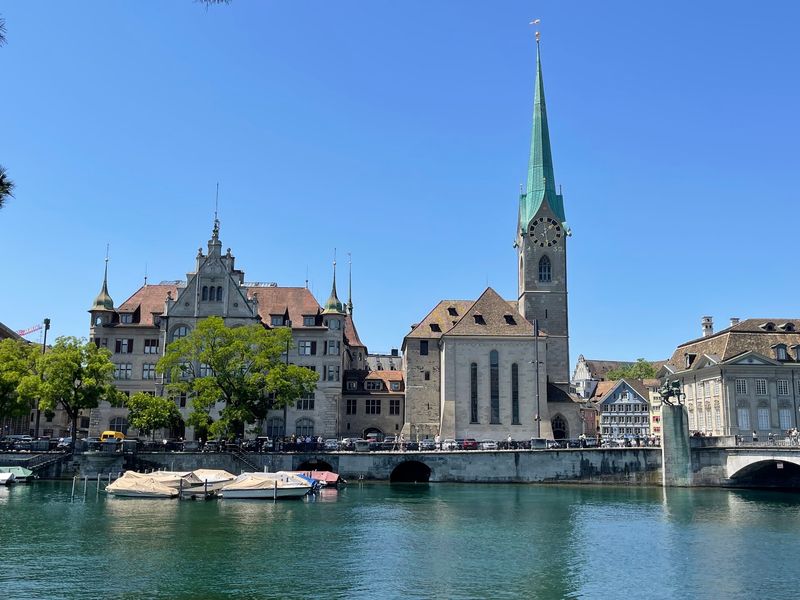
Switzerland sits at the very top of the European salary ladder, and the numbers back it up without any argument. With average 2025 gross wage earnings of about $106,532 in purchasing-power-adjusted terms, it is the only European country in the OECD table to clear the $100,000 mark.
That alone makes it a category of one.
Finance, pharmaceuticals, precision manufacturing, technology, and professional services are the industries most closely tied to those impressive figures. Workers in Zurich, Geneva, and Basel regularly command salaries that would raise eyebrows almost anywhere else on the continent.
The demand for highly skilled professionals keeps competition fierce and compensation high.
One pleasant surprise is the relatively modest tax bite. A single average worker without children paid roughly 18.1% of gross earnings in income tax and employee social-security contributions, which is noticeably lower than many European neighbors.
Housing, healthcare, and everyday costs can still be steep, but for top earners the overall package remains hard to beat.
Germany
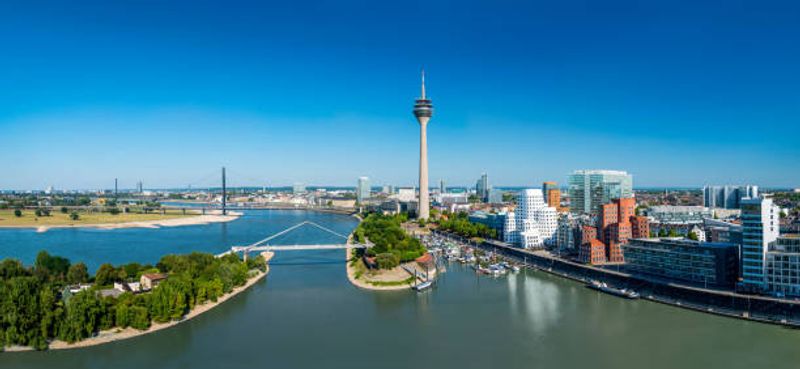
Second place belongs to Germany, and the country earned it through sheer industrial muscle. Average gross wage earnings reached approximately $93,985 at equal purchasing power in 2025, powered by one of the most diverse and productive economies on the planet.
Automotive manufacturing, engineering, chemicals, pharmaceuticals, technology, and advanced machinery all contribute to that figure.
A quick note worth keeping in mind: the purchasing-power adjustment does not mean German workers receive nearly $94,000 converted directly into dollars. The adjustment is a tool for comparing wages across countries with different price levels, making the number more meaningful than a raw currency conversion.
Context matters a lot when reading salary data.
Taxes, however, take a significant chunk. The OECD calculated income tax and employee social-security contributions at about 38.7% of gross earnings for a single average worker, one of the heavier employee burdens among the top 10.
Even so, Germany’s combination of job security, strong workers’ rights, and generous benefits makes it an attractive destination for skilled professionals across Europe and beyond.
Luxembourg
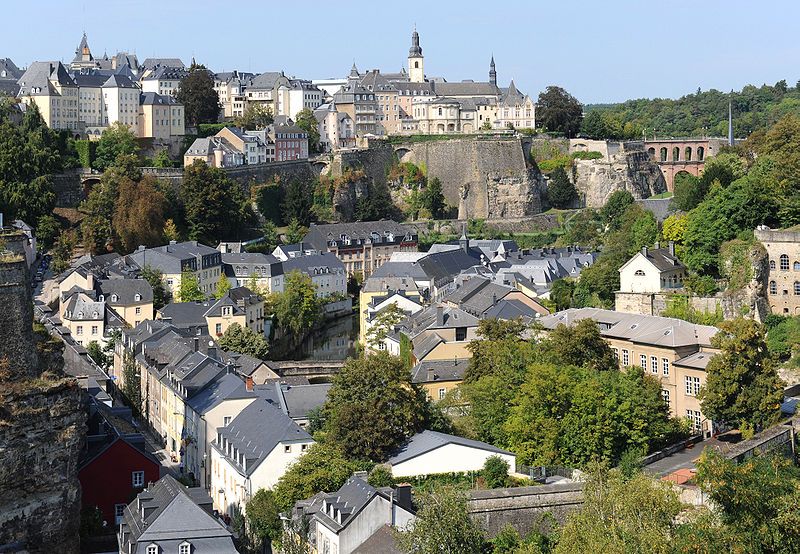
Do not let the small size fool you. Luxembourg competes with countries many times its population when it comes to worker pay, landing third with average 2025 gross wage earnings of around $93,203 in purchasing-power-adjusted dollars, only a whisker behind Germany.
For a country of roughly 660,000 people, that is a remarkable achievement.
Eurostat’s separate EU measure tells a similar story. Luxembourg recorded the highest average annual full-time adjusted salary in the EU in 2024 at about 83,000 euros, compared with an EU average of 39,800 euros.
Finance and international services are the backbone of this outsized performance, and EU institutions add another layer of well-compensated employment to the mix.
One quirky feature of Luxembourg’s labor market is how many of its workers do not actually live there. Thousands of people commute daily from neighboring France, Belgium, and Germany, crossing the border just for work and heading home in the evening.
This unusual setup reflects just how attractive Luxembourg’s wages are relative to the cost of living in surrounding regions.
Netherlands

Few countries pack as much economic variety into such a compact geography as the Netherlands. Ranking fourth with approximately $92,905 in average 2025 gross wage earnings adjusted for purchasing power, it combines world-class logistics, financial services, advanced technology, chemicals, agriculture, and multinational corporate headquarters into one highly productive package.
Rotterdam operates one of Europe’s most important ports, handling cargo volumes that most countries can only dream about. Meanwhile, the Eindhoven region has quietly become a global hub for semiconductor and high-tech industries, attracting engineering talent from across the world.
These two poles help explain why Dutch wages remain so competitive.
The numbers also show meaningful growth. OECD data reveal the average gross wage climbing from 66,190 euros in 2024 to approximately 69,028 euros in 2025, a gain of 4.3%.
That kind of wage growth, combined with a purchasing-power figure that places the Netherlands narrowly behind Luxembourg and Germany, signals a labor market that is both strong and improving. Workers here are clearly not standing still.
Denmark

Something quietly remarkable happens in Denmark’s labor market: employee social-security contributions are effectively zero under the OECD’s standard model. That structural quirk sets Denmark apart from most of its neighbors and makes the fifth-place finish with average gross earnings of about $88,454 at equal purchasing power feel even more rewarding for workers who keep more of what they earn.
Income tax does step in to fill that gap, landing at roughly 35.3% of gross earnings for a single average worker in 2025. Still, the absence of employee social contributions is a meaningful difference that changes the real-world math compared with countries like Belgium or Germany.
Knowing exactly where the deductions come from helps workers plan more effectively.
Denmark’s economy is built on a sturdy mix of pharmaceuticals, shipping, renewable energy, engineering, food production, and technology. Eurostat’s EU-focused data also confirm the country’s strong standing, with a 2024 average annual full-time adjusted salary of 71,600 euros, placing Denmark second only to Luxembourg within the EU.
Strong wages and a reputation for excellent work-life balance make this Scandinavian nation genuinely hard to overlook.
Norway
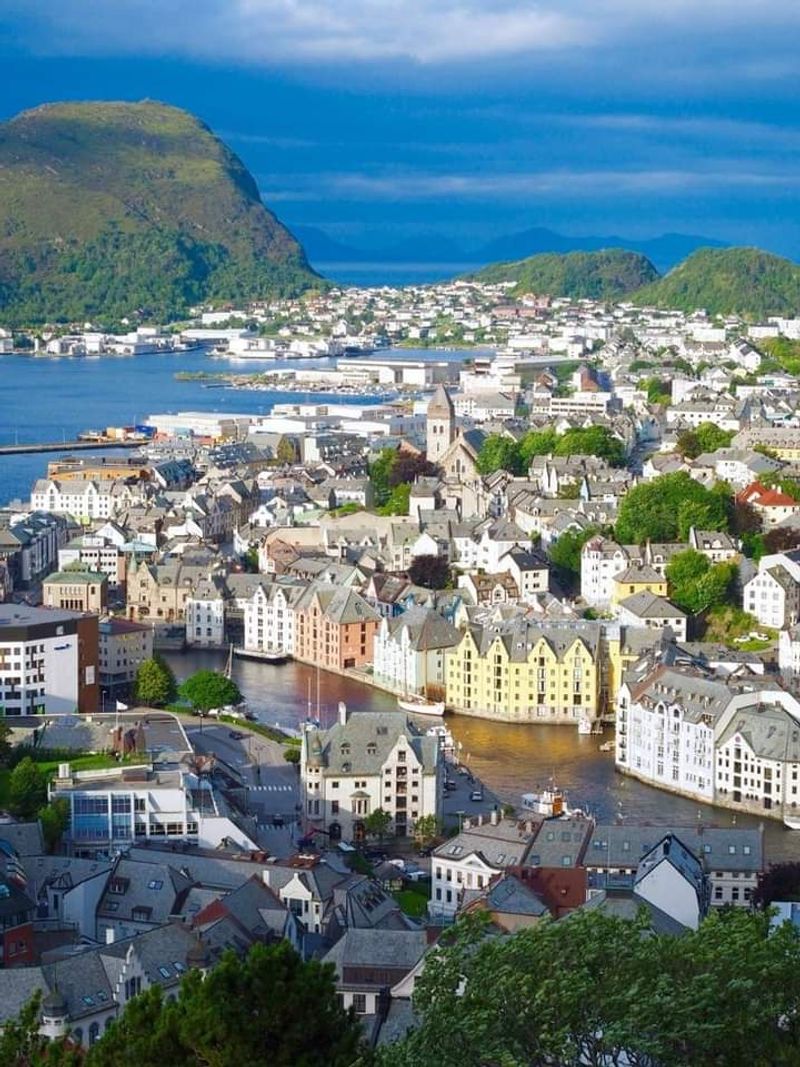
Norway has a well-earned reputation for being expensive, but the wages that come with living there do a solid job of keeping pace. Ranking sixth with average 2025 gross wage earnings of approximately $87,722 in purchasing-power-adjusted terms, Norway proves that high prices and high pay often travel together in the same economy.
Oil and natural gas built much of the country’s wealth, but Norway’s labor market has grown well beyond the energy sector. Maritime industries, aquaculture, engineering, technology, and a large public sector all provide well-compensated employment across the country.
Diversification has made the economy more resilient than a pure oil-dependent model would allow.
OECD figures show the average wage jumping from NOK 769,476 in 2024 to about NOK 801,695 in 2025, a nominal rise of 4.2%. After accounting for inflation, real wages before tax grew an estimated 1.2%.
That modest real increase reflects the ongoing challenge of rising living costs, but Norwegian salaries remain high enough to stay competitive even after adjusting for famously steep prices on food, restaurants, and housing.
Belgium

Belgium holds seventh place with average 2025 gross wage earnings of about $87,530 when adjusted for purchasing power, but the real conversation starter here is what happens after the government takes its share. Brace yourself: the OECD calculated income tax and employee social-security contributions at approximately 39.5% of gross earnings for a single average worker without children in 2025.
That is the highest employee tax rate among the 10 countries in this ranking, and employer contributions push the broader tax wedge even higher. Belgium’s gross compensation looks strong on paper, but the gap between what employers pay and what workers take home is one of the widest in Europe.
Knowing this distinction matters enormously for anyone evaluating a job offer in Brussels or Antwerp.
On the positive side, the sectors driving those high gross wages are genuinely impressive. Pharmaceuticals, chemicals, logistics, financial services, manufacturing, and international administration centered around Brussels all contribute to above-average pay.
Belgium is also home to major EU institutions and multinational headquarters, which consistently pull average wages upward. The gross figure is real; the net figure just requires a careful read.
Austria

Austria trails Belgium by the slimmest of margins, landing eighth with average gross earnings of approximately $86,370 at equal purchasing power in 2025. The gap is small enough that a single good year of wage growth could shuffle the order, which says a lot about how tightly bunched the top earners in Europe actually are at this level.
The Austrian economy blends machinery, automotive suppliers, chemicals, tourism, banking, energy, and specialized manufacturing into a productive whole. OECD figures show the average national-currency wage rising from about 60,749 euros in 2024 to 63,054 euros in 2025, an increase of 3.8%.
Inflation was estimated at 3.6%, which left only a sliver of real wage growth before tax.
Employee deductions are meaningful but not punishing. Income tax and employee social-security contributions accounted for approximately 32.5% of gross earnings for the standard single worker, landing Austria in the middle of the pack among these 10 countries.
That balance, combined with strong gross pay and a high quality of life, keeps Austria firmly in the conversation for skilled workers weighing their European options.
Iceland

Iceland defies expectations at every turn. A country with a population smaller than many mid-sized cities manages to rank ninth among Europe’s highest-paying nations, with average 2025 gross wage earnings worth about $83,563 in purchasing-power-adjusted terms.
Geography has never stopped Iceland from punching well above its weight class.
Fishing and seafood remain culturally and economically important, but the labor market has diversified considerably over the past two decades. Tourism, renewable energy, technology, finance, and specialized services have all grown into meaningful employers, reducing the economy’s dependence on any single sector.
That broader base helps keep wages competitive across a range of industries.
Wage growth in 2025 was one of the strongest in this group. The OECD recorded a 5.3% nominal increase, with average gross wages climbing from ISK 11.808 million to approximately ISK 12.434 million annually.
Inflation absorbed a large portion of that gain, leaving estimated real wage growth before tax at about 1.2%. Iceland’s cost of living is famously high, so workers and prospective movers alike should factor that into any salary comparison before packing their bags.
United Kingdom

Rounding out the top 10 with average 2025 gross wage earnings of approximately $82,329 when adjusted for purchasing power, the United Kingdom holds its ground despite the economic turbulence of recent years. London’s financial and professional-services industries carry much of the weight, but strong pay is far from exclusive to the capital.
Technology, pharmaceuticals, engineering, energy, and aerospace all contribute well-paid employment across England, Scotland, Wales, and Northern Ireland. The spread of high-earning sectors beyond London is a relatively recent development, and it has helped lift the national average in ways that a purely finance-driven economy could not sustain alone.
The wage growth story for 2025 is also one of the more encouraging in this group. OECD figures show the average gross wage rising 6.4% from 2024 to 2025, reaching approximately 55,983 pounds annually in national-currency terms.
With inflation estimated at 3.5%, real wages before tax grew about 2.8%, a genuinely positive outcome. Employee income tax and social-security contributions sat at roughly 23.1% for a single average worker, leaving a take-home figure that compares favorably with several higher-taxing neighbors on this list.
Share this story