A roller coaster’s first drop might grab the headlines, but it rarely tells the whole story. The rides that coaster fans talk about for decades are the ones that keep surprising you long after that first plunge.
From a 1979 wooden giant winding through Ohio forest to a Japanese machine whose seats spin independently of the track, these coasters have earned their legendary status through sheer personality, clever engineering, and moments that no statistic can fully capture. Buckle up, because the best part of each of these rides has nothing to do with how tall the first hill is.
Steel Vengeance – Cedar Point, Ohio
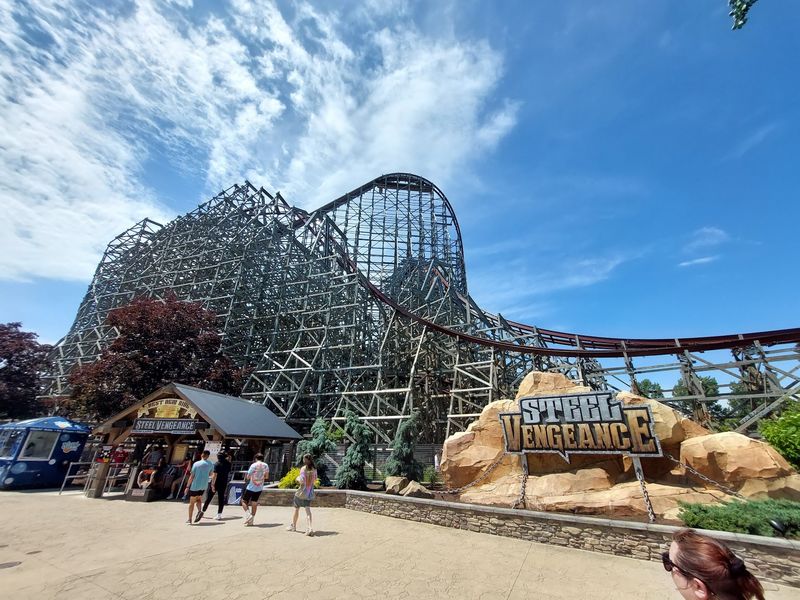
Thirty seconds of airtime sounds like a made-up number until you actually ride Steel Vengeance. Rocky Mountain Construction took Cedar Point’s aging wooden coaster, Mean Streak, and rebuilt it with steel track, turning a sluggish ride into something genuinely wild.
At 205 feet tall and 74 mph, the stats are respectable on their own.
But the real story is what happens across 5,740 feet of track after that 90-degree first drop. Four inversions, rapid direction changes weaving through the original wooden structure, and relentless airtime hills keep riders guessing at every turn.
Cedar Point claims it offers more airtime than any other roller coaster on the planet.
The hybrid coaster category was not exactly new when Steel Vengeance opened in 2018, but this ride gave it a serious upgrade in credibility. Enthusiasts who expected a one-trick pony left talking about the sustained chaos of the back half instead.
It is less a coaster with a great drop and more a coaster that simply refuses to slow down.
Jurassic World VelociCoaster – Universal Orlando, Florida
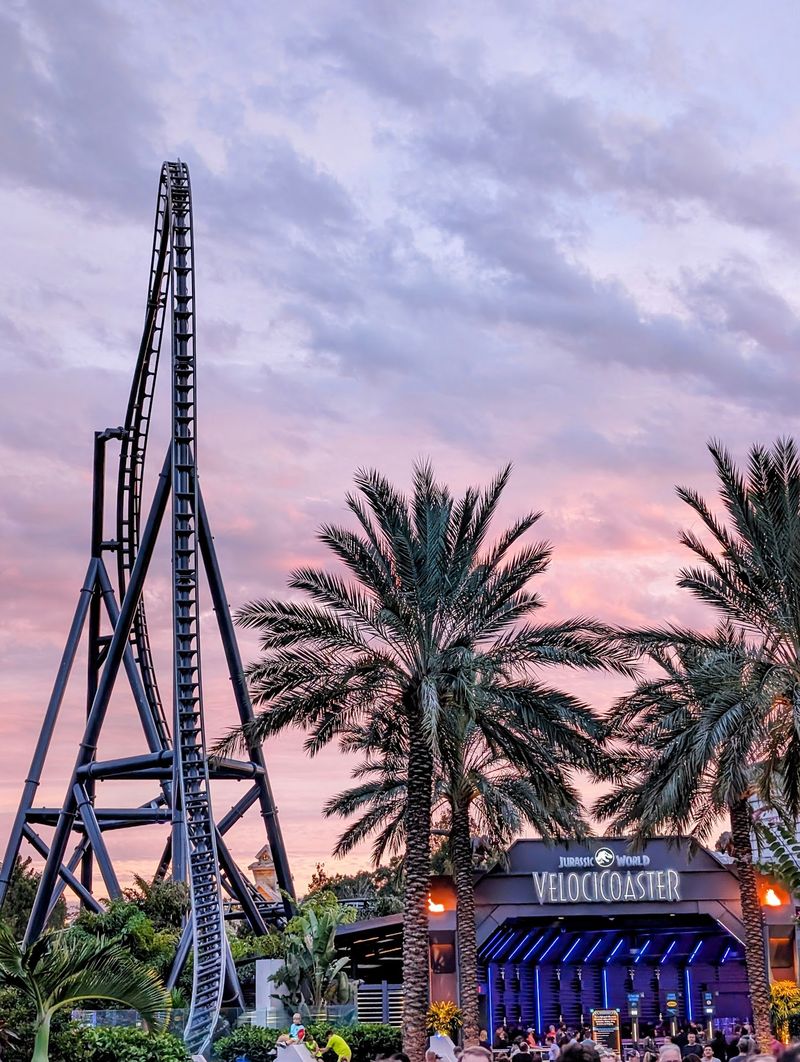
Launching from 0 to 70 mph in 2.4 seconds is the kind of thing that rearranges your thoughts mid-sentence. VelociCoaster at Universal’s Islands of Adventure uses two launches to keep energy high across its entire layout, with the second being the one that really pins you to your seat.
A 155-foot top hat and 80-degree drop set the stage, but they are not the headline act.
The barrel roll directly above the Islands of Adventure lagoon has become one of the most photographed coaster moments in the world. Riders hang upside down over open water, which is exactly as thrilling as it sounds.
A 100-foot inverted stall earlier in the layout gives the ride another memorable anchor point that most coasters would happily claim as their signature moment.
Universal wrapped everything in Jurassic World theming, complete with rockwork, animatronic dinosaurs, and a raptor enclosure visible from the queue. About 12 seconds of total airtime rounds out the experience.
VelociCoaster proves that a well-designed layout with strong theming can outshine almost any height record on paper.
The Beast – Kings Island, Ohio
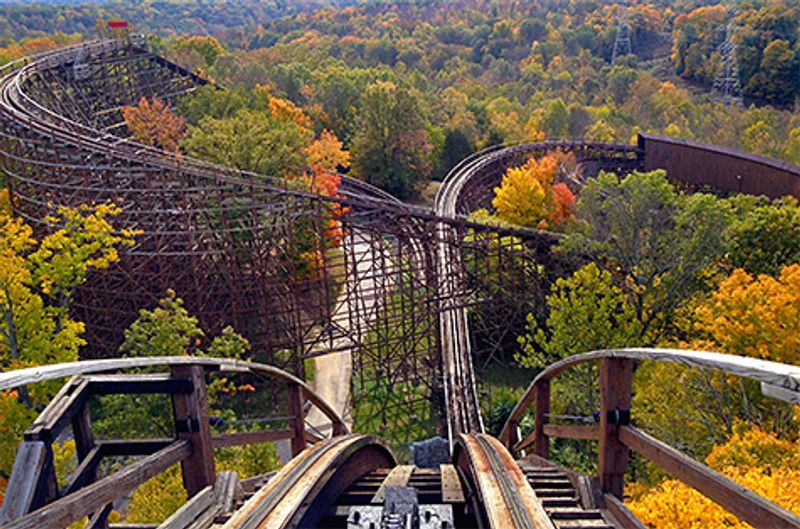
No other wooden roller coaster on Earth has more track than The Beast, and that record has held since 1979. Seven thousand three hundred sixty-one feet of timber winds through 35 wooded acres at Kings Island, giving the ride a sense of geography that most coasters cannot match.
You are not just riding a coaster; you are traveling through a forest.
Two lift hills, tunnels, and a massive 540-degree helix at the end make the layout feel like a genuine journey rather than a quick thrill. Trains disappear into tree cover for long stretches, which gives The Beast an atmosphere that newer, flashier coasters rarely replicate.
At night, that effect becomes genuinely eerie in the best possible way.
Kings Island replaced more than 1,600 feet of track ahead of the 2025 season, a signal of how seriously the park takes preserving this particular attraction. Newer coasters have surpassed its height and speed records many times over, but none have touched its length.
The Beast remains proof that sometimes more track is simply more ride, and that is enough.
X2 – Six Flags Magic Mountain, California
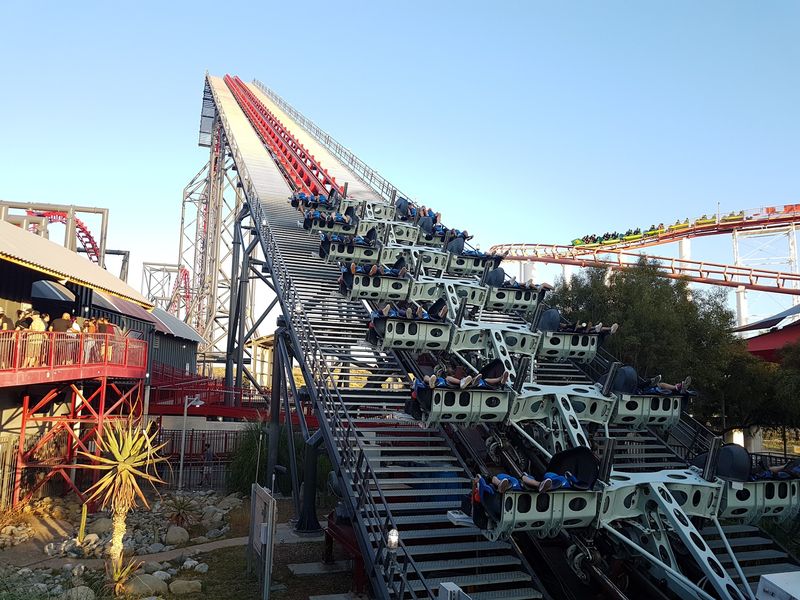
Riding X2 is a bit like losing your internal compass entirely, which is honestly part of the appeal. The coaster’s wing-mounted seats rotate 360 degrees independently of the track, meaning riders can face head-first downward while the train is actually climbing.
Six Flags calls it a fifth-dimension coaster, and the name earns its keep.
The drop is around 200 feet and top speed hits 76 mph, but those numbers barely scratch the surface of what makes X2 disorienting. Two raven turns and fire effects near the end add sensory layers that most coasters skip entirely.
Your eyes tell you one thing, your body tells you another, and your brain is left to sort it out somewhere on the way home.
The ride originally opened in 2002 as simply X before a major overhaul introduced the fire effects and the X2 name. That history gives it extra credibility among coaster fans who have watched it evolve.
Even decades after its debut, the rotating seating system remains the element that makes X2 instantly recognizable and genuinely hard to forget after a single ride.
Voltron Nevera – Europa-Park, Germany
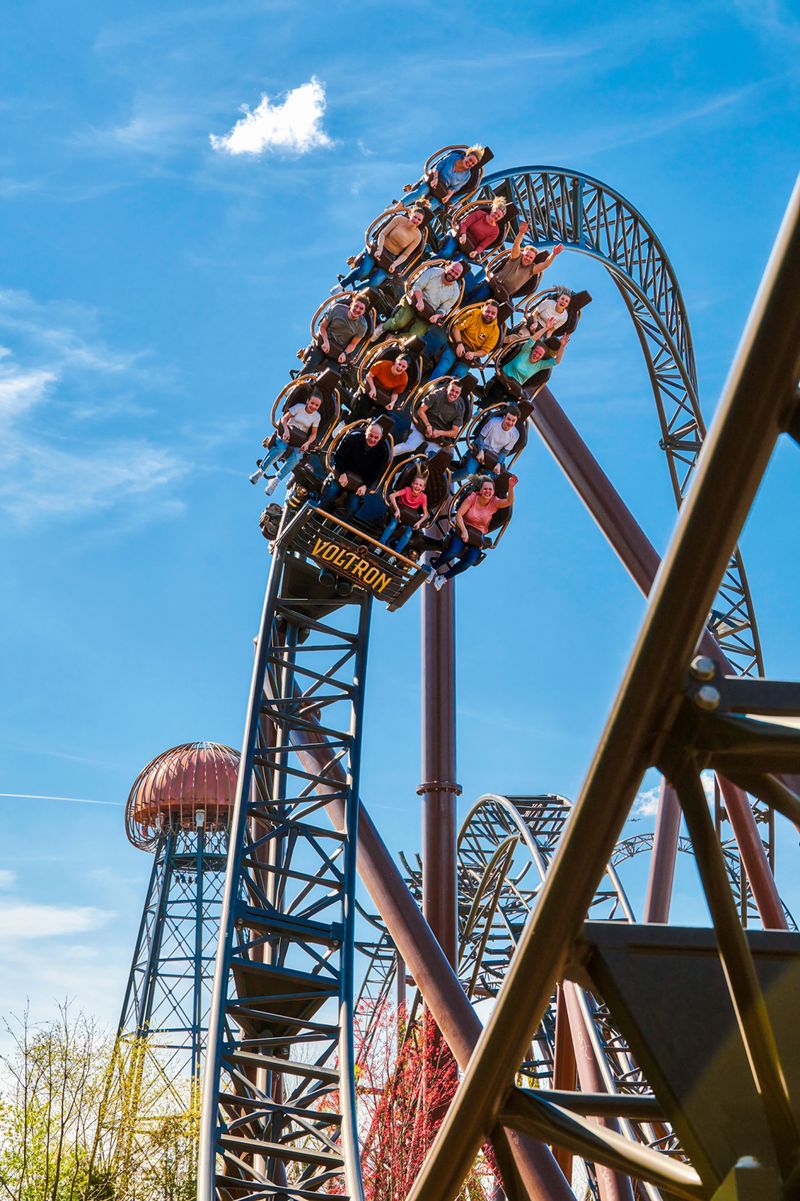
Voltron Nevera showed up in 2024 and immediately started collecting awards, which is impressive for a coaster that had not even completed its first full season. Europa-Park built it as the centerpiece of a Croatia-themed area inspired by inventor Nikola Tesla, and the theming is layered enough to compete with the ride itself.
A 28-meter tower dominates the station entrance and sets the mood before anyone boards a train.
Four launches and seven inversions across 1,385 meters of track give the ride a relentless quality that single-launch coasters simply cannot match. The most unusual element is a launch angled 105 degrees beyond vertical, which sends riders past the top of a spike while already tilted backward.
A 2.2-second inverted stall adds another moment where time seems to stretch uncomfortably in the best way.
Top speed reaches 100 km/h, and Voltron holds the title of Europe’s longest launch coaster. Winning the Golden Ticket Award for Best New Roller Coaster within months of opening confirmed what early riders already suspected.
Voltron Nevera is not chasing a height record; it is building a reputation on sheer variety of sensation and exceptional surrounding design.
El Toro – Six Flags Great Adventure, New Jersey
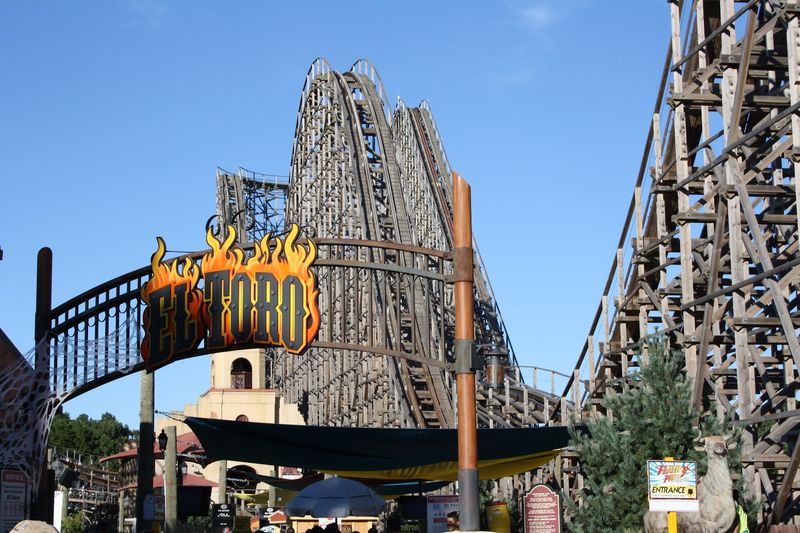
El Toro looks traditional from the parking lot, all wooden beams and classic silhouette, but the ride it delivers is anything but old-fashioned. Intamin used prefabricated wooden track technology to push the structure to speeds and angles that older construction methods simply could not achieve safely.
A 176-foot first drop at 76 degrees gets the ride moving fast, and it stays fast.
Nine airtime moments across 4,400 feet of track are what built El Toro’s devoted following. The hills are aggressively shaped, producing the kind of sustained negative G-force that launches riders out of their seats and keeps them there long enough to actually notice.
USA Today’s 10Best awards named it the top roller coaster in the country in 2022, which surprised no one who had ridden it.
Six Flags replaced substantial sections of track ahead of the 2026 season to sharpen the ride’s smoothness without dulling its intensity. That kind of investment tells you how seriously the park values what El Toro represents.
Plenty of wooden coasters are taller, but very few deliver airtime this consistently aggressive across their entire layout.
Eejanaika – Fuji-Q Highland, Japan
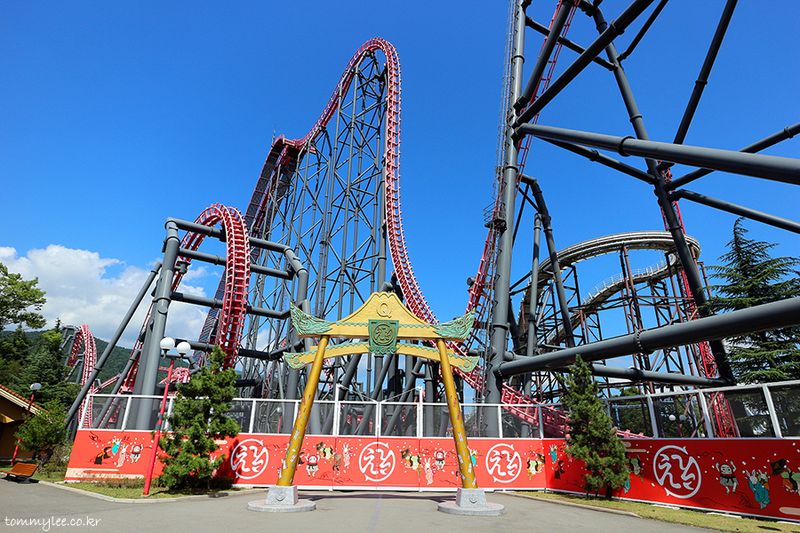
Fourteen total revolutions is the number that defines Eejanaika, and it sounds alarming even before you understand how it works. Fuji-Q Highland’s fourth-dimension coaster combines the rotations of the track itself with the independent spinning of each seat, and the result holds a world record the park is very happy to advertise.
Riders board facing backward, which sets the tone immediately.
The coaster climbs 76 meters and reaches 126 km/h, but those figures feel almost secondary once the seat starts rotating on its own schedule. Because riders’ feet hang freely and the rails stay outside their direct line of sight, even straightforward coaster maneuvers become completely unpredictable.
Familiar sensations arrive from unexpected directions throughout the 1,153-meter layout.
Eejanaika opened in 2006 and was built by S&S Worldwide as a follow-up to X at Six Flags Magic Mountain. The Japanese version added more rotations and refined the concept further.
Riders who have experienced both often say Eejanaika pushes the disorientation further, which is a remarkable thing to say about a ride that already seemed to have found the limit. Mount Fuji visible from the queue is a surreal bonus.
Taron – Phantasialand, Germany
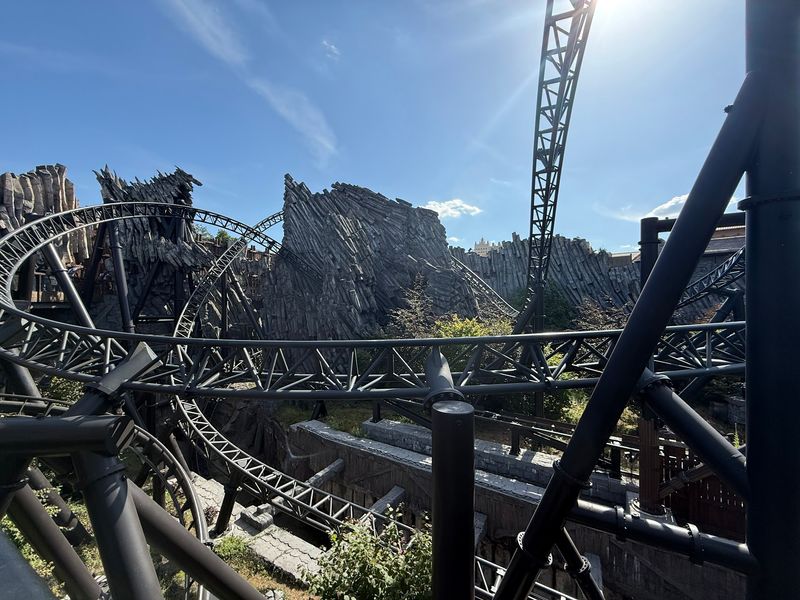
Speed through tight spaces is Taron’s whole personality, and Phantasialand built an entire themed village just to make that speed feel more intense. The Klugheim area surrounds the coaster with artificial rock formations, narrow passages, and buildings that the track threads between at full velocity.
You are not just riding a coaster; you are racing through a place that feels genuinely inhabited.
Two launches keep energy levels up across the layout, and the park counts 116 points where the rails cross each other during the ride. That tangled, overlapping track design earned Phantasialand’s own nickname for it: rail spaghetti.
It is the kind of layout that makes onlookers stop and stare as much as riders scream.
Taron has collected German and European coaster awards consistently since opening in 2016, including Germany’s Best Roller Coaster in the Parkscout Audience Awards for 2025/26. The coaster reaches 117 km/h and runs 1,110 meters of track, but neither number captures why enthusiasts rank it so highly.
The real answer is that Taron makes every meter of track feel urgent, surprising, and deeply connected to the world built around it.
The Ride to Happiness by Tomorrowland – Plopsaland, Belgium
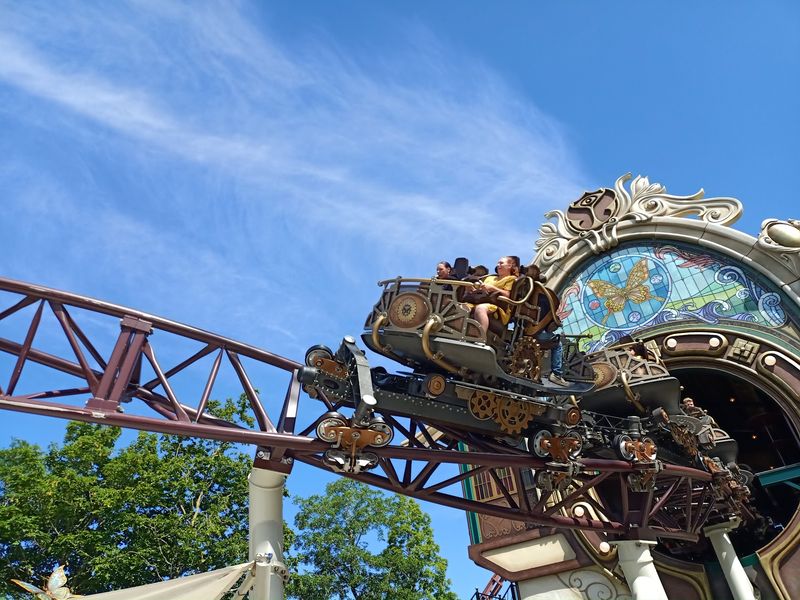
Combining launches with freely spinning cars sounds like a recipe for chaos, and honestly, that assessment is accurate. The Ride to Happiness at Plopsaland takes two already disorienting coaster concepts and runs them simultaneously across 920 meters of track.
Riders accelerate twice to speeds up to 90 km/h while their individual vehicles rotate independently through five inversions.
Because the spinning is not locked to a programmed sequence, the same section of track can feel completely different on back-to-back rides. That unpredictability gives the coaster remarkable replay value that fixed-seat rides struggle to match.
A Tomorrowland festival soundtrack and elaborate theming wrap everything in a sensory package that goes well beyond what the hardware alone provides.
Plopsaland says The Ride to Happiness was voted Europe’s best roller coaster in 2025 and placed fifth worldwide in the Golden Ticket Awards that same year. The coaster’s highest point is only 35 meters tall, which makes those results particularly striking.
A ride that could be described simply as short and spinning has somehow built a global reputation, which is a testament to how much a clever concept and strong execution can outperform raw height.
Nemesis Reborn – Alton Towers, England
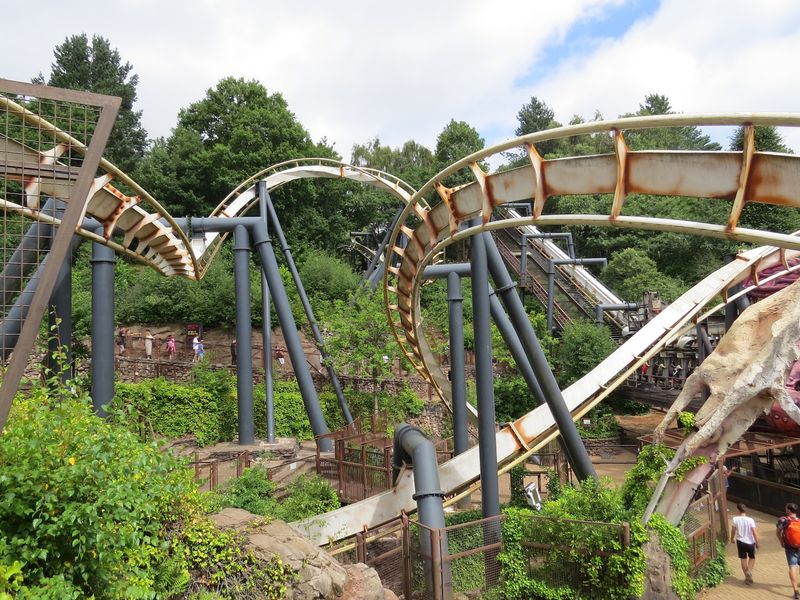
Alton Towers cannot build tall coasters above the surrounding landscape due to local planning restrictions, so the original Nemesis designers went downward instead. Excavating deep trenches into the ground allowed the 1994 version to place its track at eye level with the landscape while still delivering genuine intensity.
That creative constraint produced one of the most influential coaster layouts in European history.
The original Nemesis was Europe’s first inverted roller coaster, a milestone that gave it immediate historical significance. After nearly three decades of operation, the entire 716-meter track was replaced and the attraction reopened as Nemesis Reborn in 2024.
The rebuilt version reaches about 81 km/h, delivers up to roughly 3.5G, and passes through four inversions woven tightly around rockwork and themed structures.
Alton Towers also used the rebuild as an opportunity to introduce elaborate new creature theming, including lighting, audio, and a large animated eye that has become a new visual centerpiece for the attraction. The combination of historical importance, terrain-integrated layout, and fresh presentation makes Nemesis Reborn more than a renovation.
It is a reminder that a coaster designed around its limitations can outlast almost anything designed without them.
Fury 325 – Carowinds, North and South Carolina
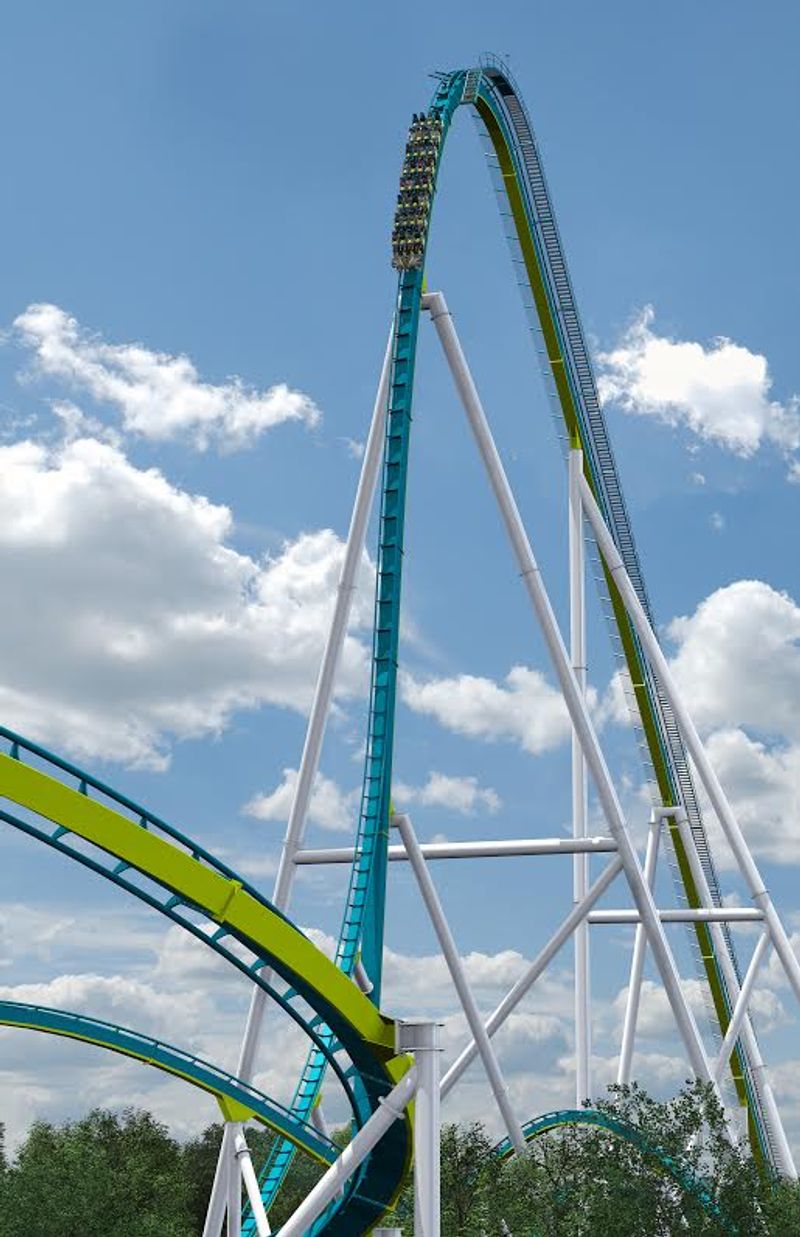
Fury 325 rises 325 feet and drops at 81 degrees before hitting 95 mph, and if that were the whole story, it would still be impressive. But Carowinds built something with much more range than a simple tall-and-fast coaster.
Six thousand six hundred two feet of track gives the ride enough room to develop a full personality after the opening descent.
High-speed banked turns, airtime hills, an overbanked horseshoe, and a swoop beneath the pedestrian bridge at the park’s main entrance keep the layout engaging from start to finish. The track even crosses the North Carolina and South Carolina state line during its roughly three-and-a-quarter-minute run, which is a geographic quirk that no other coaster can claim.
Riders technically visit two states without leaving their seats.
Since opening in 2015, Fury has won the Golden Ticket Award for Best Steel Coaster nine times, according to Carowinds in 2025. That sustained recognition over a decade is rarer than any single opening-year award.
Giga coasters are not uncommon anymore, but Fury 325 has maintained a consistency of excellence that keeps it relevant long after newer and taller rides have appeared elsewhere.
Hagrid’s Magical Creatures Motorbike Adventure – Universal Orlando, Florida
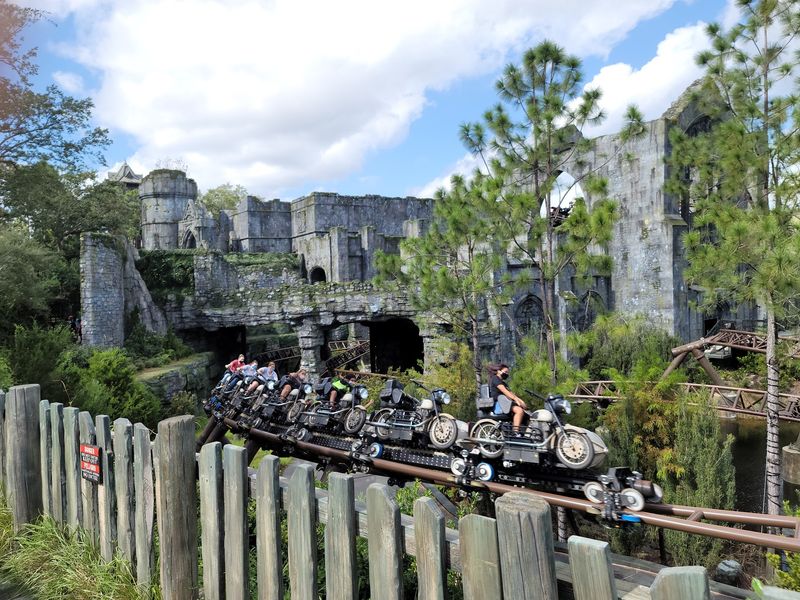
Seven launches, a backward section, a vertical free-fall track drop, and a nearly mile-long track through a Forbidden Forest populated with magical creatures: Hagrid’s coaster at Universal Orlando is basically four different rides stitched into one. Universal deliberately avoided a single enormous first drop, choosing instead to spread surprise across the entire 5,053-foot layout.
That decision makes it feel unlike anything else in a major theme park.
Riders choose between motorcycle or sidecar seating before entering the forest, where the train encounters Fluffy the three-headed dog, Devil’s Snare, Cornish pixies, and other creatures from the Wizarding World. Speeds reach 50 mph across seven launches, and one section sends the train rolling backward up a track before the next surprise arrives.
The nearly 17-foot vertical free-fall track drop was the first of its kind in the United States when the ride opened in 2019.
The queue itself winds through a detailed recreation of Hagrid’s hut and surrounding grounds, meaning the experience starts well before boarding. Guest satisfaction surveys have repeatedly placed Hagrid’s among the highest-rated theme park attractions worldwide.
Its reputation rests entirely on storytelling and variety rather than any single statistic.
Zadra – Energylandia, Poland
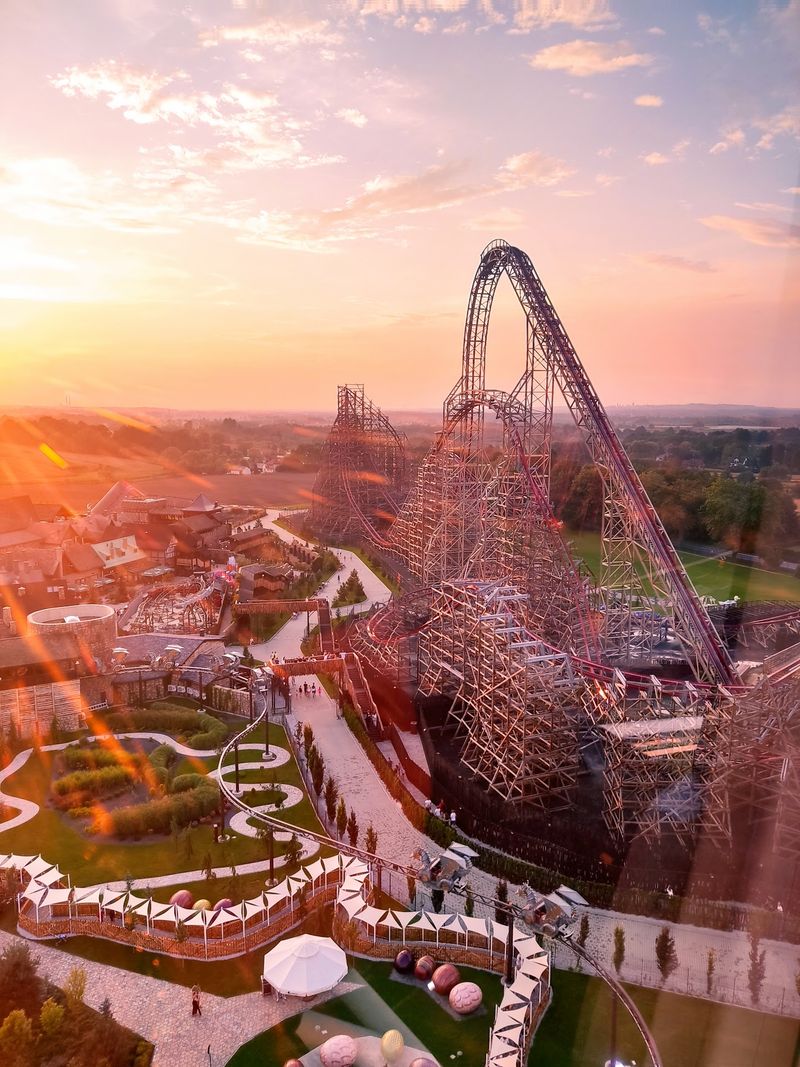
Zadra looks exactly like what it is: an enormous wooden structure housing a coaster that behaves nothing like a wooden coaster should. Rocky Mountain Construction built it with steel track layered over a traditional timber frame, which means the visual scale of a classic wooden giant comes paired with inversions and precision that wooden construction alone cannot deliver.
The contrast is striking from the moment you see it.
The first drop falls at a full 90 degrees from 63.8 meters up, and the train reaches 121 km/h before the layout introduces three inversions across 1,316 meters of track. Energylandia also incorporated vibration-isolation technology into the structure to reduce high-frequency vibration through certain sections, a technical detail that shows how seriously the park approached the engineering.
The Dragon Zone themed area surrounding the coaster gives it a visual context that raw statistics cannot provide.
Zadra opened in 2019 and quickly drew international attention from enthusiasts who had not expected Poland to host a coaster of this caliber. Its combination of wooden aesthetic, steel performance, and aggressive layout places it in a small group of rides that genuinely challenge assumptions about what hybrid coasters can accomplish.
Energylandia has kept expanding, but Zadra remains the crown jewel.
Hyperia – Thorpe Park, England
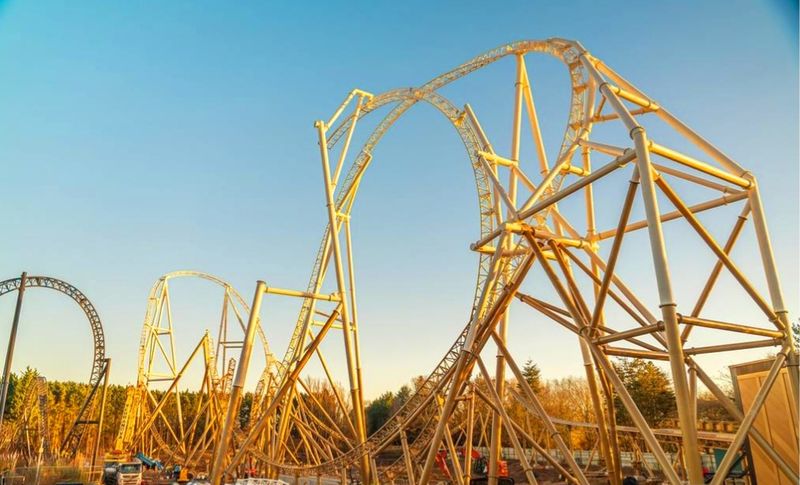
Britain’s tallest coaster opened in 2024 and Thorpe Park chose to advertise it not primarily by its height but by its weightlessness. Hyperia stands 236 feet tall, reaches 81 mph, and delivers approximately 14.8 seconds of airtime, according to the park.
That airtime figure is the number the marketing team clearly fell in love with, and it is easy to understand why.
The layout converts its height into a sequence of twisting, floating elements rather than spending all its energy on a single dramatic descent. A 168-foot inversion that Thorpe Park identifies as Europe’s tallest sits mid-layout alongside a world-first outer-banked airtime hill that sends riders sideways and weightless at the same time.
The gold track color and prominent position over the park have made it an instant visual landmark.
Hyperia was built by Mack Rides, the same manufacturer behind Voltron Nevera, and it carries a similar philosophy of spreading sensation across the full layout. Opening-year reviews praised the sustained pace and the unusual combination of inversion height and airtime quantity in the same ride.
For a country where planning restrictions have historically limited coaster ambition, Hyperia represents a genuine leap forward in scale and engineering.
Baron 1898 – Efteling, Netherlands
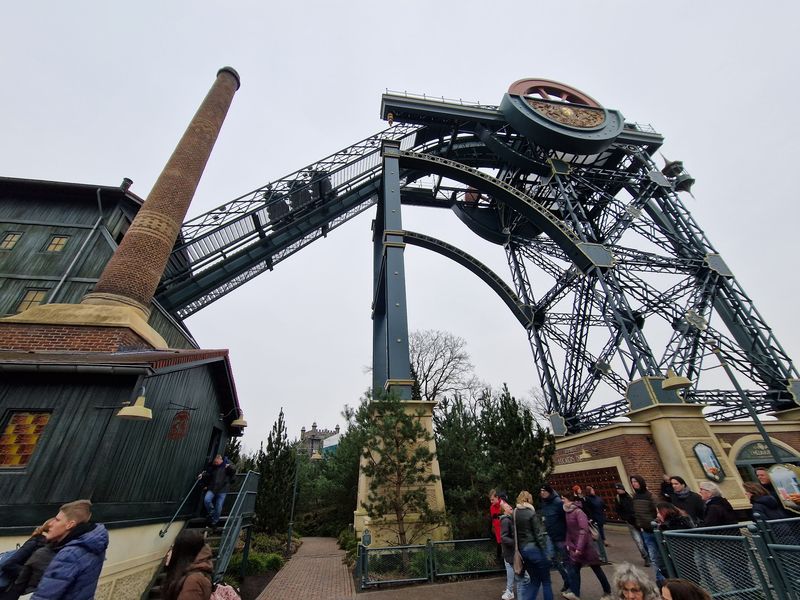
Baron 1898 drops only 37.5 meters and tops out around 90 km/h, which puts it well below the top tier of modern coasters by raw numbers. Efteling knew that going in and built the ride around a different kind of appeal entirely.
The experience is framed as a 19th-century mining expedition gone wrong, and the story starts long before the train reaches the top of the lift hill.
Riders enter an elaborate mining complex styled after the industrial Victorian era, complete with detailed sets and atmospheric audio. The train is lifted above the themed mineshaft, pauses at the edge with real dramatic intent, and then drops underground before an Immelmann, a zero-G roll, and a closing spiral.
That underground section after the drop is where the ride earns its reputation among enthusiasts who appreciate creative use of terrain.
When Baron 1898 opened in 2015, Efteling noted it was only the ninth dive coaster in the world, and the park spent approximately 18 million euros on the attraction. The investment shows in every detail of the queue and station design.
Baron 1898 is proof that a modest drop can feel genuinely thrilling when the anticipation surrounding it is built with enough care and craft.
Share this story