Europe is home to some of the world’s most beloved cuisines, but not every dish looks appetizing at first glance. From fermented shark in Iceland to blood-filled sausages in Sweden, the continent has a long history of turning unusual ingredients into genuine local treasures.
Many of these foods have been enjoyed for centuries and carry deep cultural meaning for the people who make and eat them. If you are feeling adventurous, you might be surprised by just how good some of these strange dishes actually taste.
1. Verivorst (Estonia)
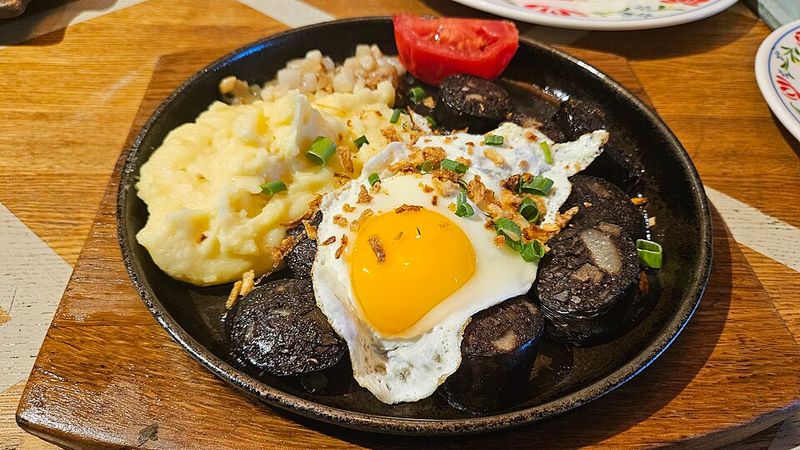
Every Estonian Christmas table would feel incomplete without verivorst, a dark, dense blood sausage that has been a holiday staple for generations. Made from pig blood, barley, onions, and spices stuffed into natural casings, this sausage has a rich, earthy flavor that surprises most first-time tasters.
The barley gives it a hearty texture that sets it apart from other blood sausages around Europe.
Verivorst is usually served alongside sauerkraut and a generous spoonful of tangy lingonberry jam, which cuts through the richness beautifully. The combination might sound odd, but the sweet and sour contrast makes the whole dish work.
Estonian families often prepare large batches during the winter holidays, and the smell of verivorst cooking is strongly tied to warm childhood memories for many locals. If you visit Estonia in December, trying this dish is a genuine cultural experience worth having.
2. Sanguinaccio Dolce (Italy)
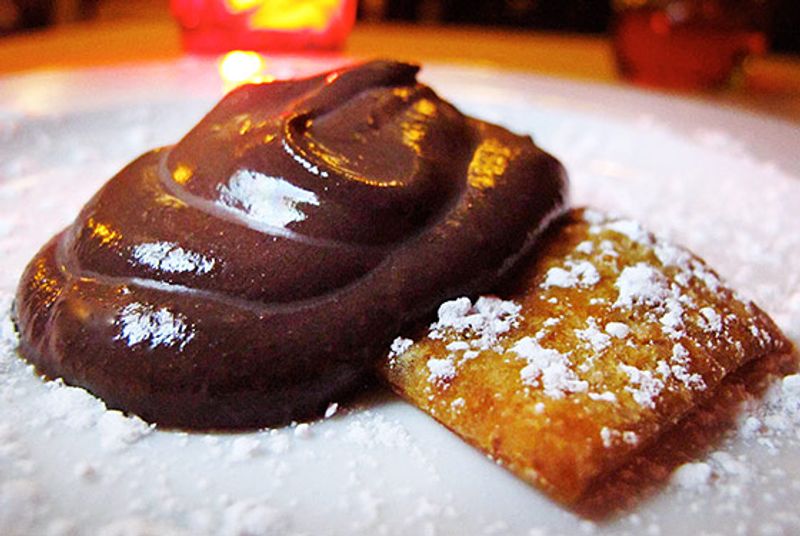
Chocolate and pig blood might not sound like a natural pairing, but sanguinaccio dolce has been winning over sweet tooths in southern Italy for centuries. This thick, velvety pudding blends fresh pig blood with dark chocolate, sugar, cinnamon, and sometimes pine nuts or candied fruit.
The blood adds richness and body without any strong metallic taste, making the final result surprisingly smooth and indulgent.
Originally popular during carnival season when pigs were slaughtered and nothing was wasted, sanguinaccio dolce is a perfect example of Italian cucina povera, or peasant cooking. Today it is harder to find in restaurants because food safety laws in Italy now restrict the sale of fresh pig blood.
However, home cooks in regions like Campania and Calabria still prepare it the traditional way. Spread on toasted bread or eaten with a spoon, it tastes more like a luxurious chocolate mousse than anything unusual.
3. Andouillette (France)
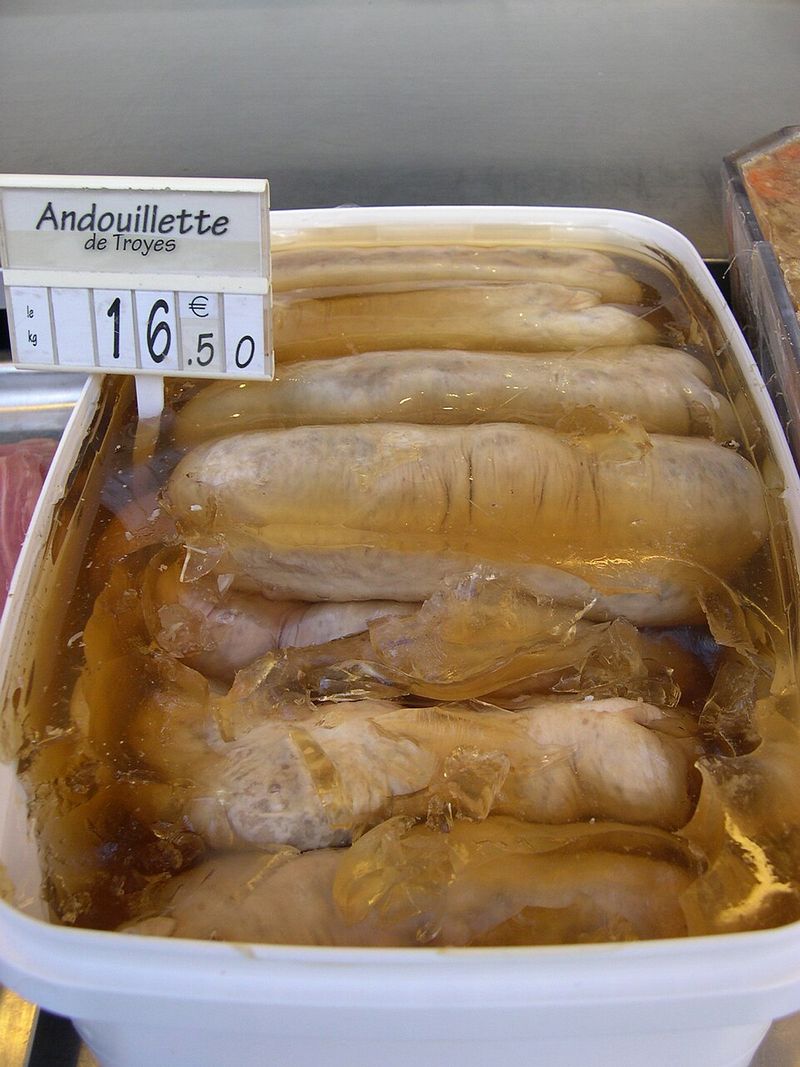
France is famous for elegant cuisine, so it might come as a shock that one of its most beloved regional sausages smells, well, very funky. Andouillette is a coarse-textured sausage made from pork intestines and stomach, and its aroma is unmistakably strong and barnyard-like.
Yet devoted fans across France, particularly in Lyon and Troyes, consider it an absolute delicacy.
The key is how it is prepared. Grilled or pan-fried and served with a sharp Dijon mustard sauce or a splash of white wine, andouillette takes on a deeply savory, complex flavor that rewards the brave.
The texture is chunky and satisfying rather than smooth like a typical sausage. There is even an unofficial club called the AAAA (Association Amicale des Amateurs d’Andouillette Authentique) dedicated to rating the best versions in France.
Getting past the smell is the hardest part, but most people who do are genuinely glad they tried it.
4. Blodpudding (Sweden)
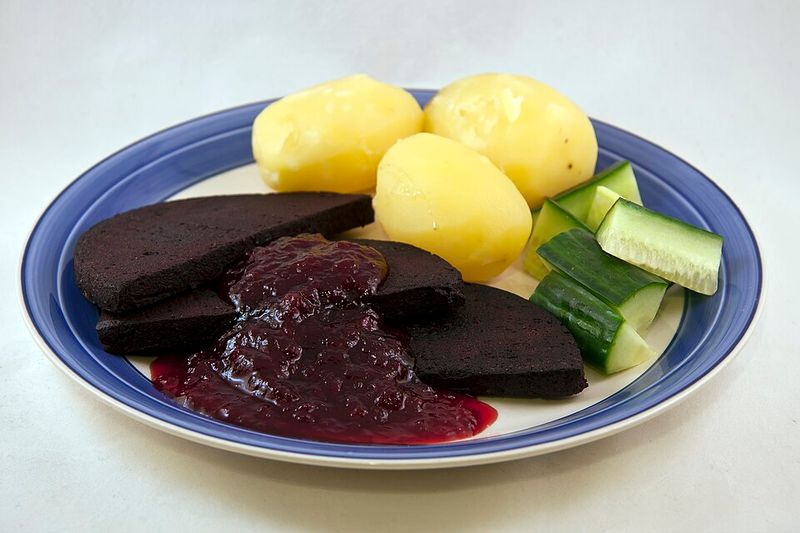
School cafeterias across Sweden have been serving blodpudding for decades, making it one of the few strange foods that many Swedes ate as children without a second thought. This soft, sliceable blood pudding is made from pig blood, flour, onion, butter, and warming spices like marjoram and ginger.
Fried in butter until the outside crisps up slightly, it develops a satisfying crust that contrasts nicely with the tender interior.
The classic way to eat blodpudding is with lingonberry jam and strips of fried bacon on the side, a combination that balances the savory richness of the pudding with bright, tart sweetness. Nutritionally, it is actually quite impressive, packed with iron and protein, which is partly why it became a school lunch staple.
Visitors to Sweden who try it in a traditional setting often find that it tastes far milder and more pleasant than its dark appearance suggests.
5. Lampredotto (Italy)
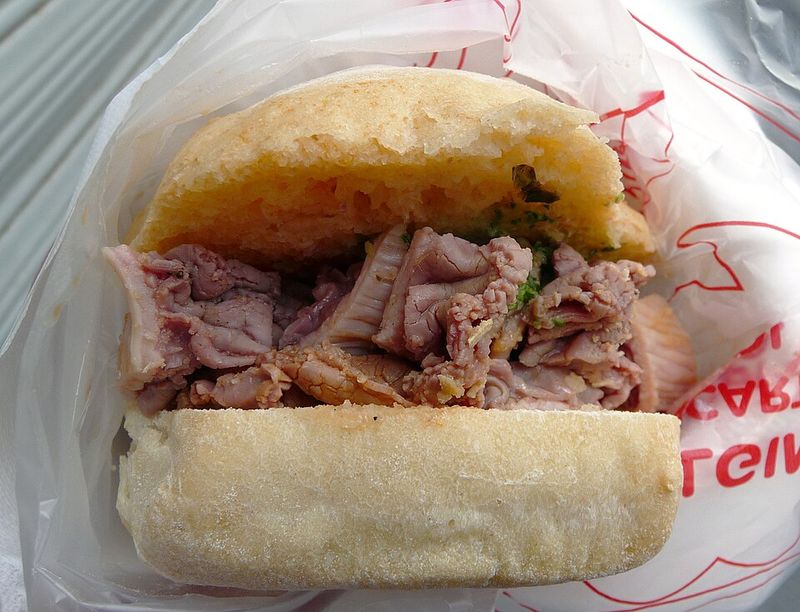
Florence has one of Italy’s most beloved street foods, and it comes from a part of the cow that most people would rather not think about. Lampredotto is the fourth stomach of a cow, slow-braised in a broth of tomatoes, onion, celery, and parsley until it becomes tender and deeply flavorful.
It is then piled into a crusty bread roll called a semelle and topped with a vibrant green herb sauce called salsa verde.
The bun is often dipped into the cooking broth before serving, making it soft and soaked with flavor. Florentines have been eating lampredotto from street carts called trippaio for centuries, and it remains a point of serious local pride.
The taste is savory, slightly gelatinous, and rich without being heavy. Food travelers who visit Florence and seek out a traditional lampredotto sandwich at the Mercato Centrale often call it one of the best things they ate in all of Italy.
6. Kokoretsi (Greece)
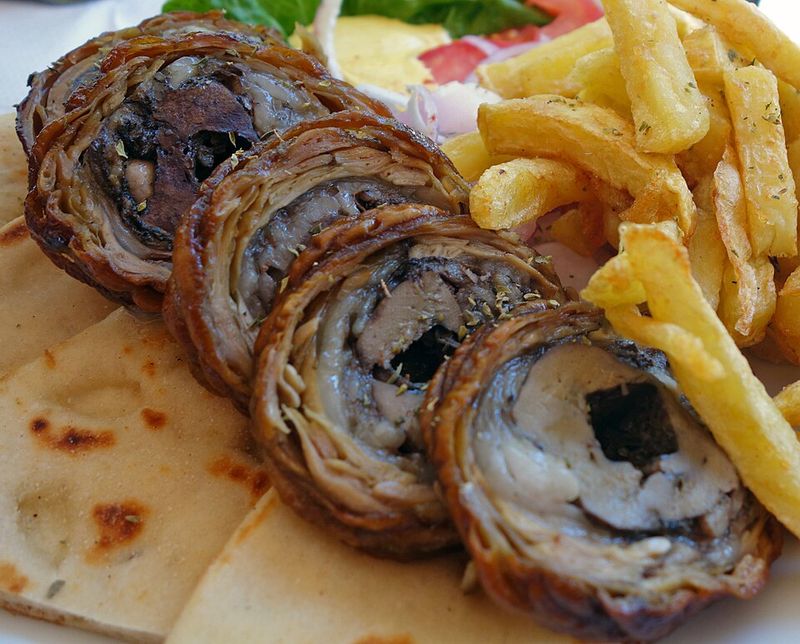
Easter Sunday in Greece is not complete without the smoky, crackling spectacle of kokoretsi roasting over an open fire. This traditional dish is made by wrapping seasoned lamb or goat offal, including lungs, heart, kidney, and liver, around a long metal skewer, then winding the whole thing tightly with intestines to hold it together.
It roasts slowly over charcoal for several hours, basting in its own juices the entire time.
The result is crispy on the outside, juicy and herbaceous on the inside, with a flavor that is smoky, garlicky, and deeply satisfying. Kokoretsi has been a part of Greek Easter traditions for so long that skipping it would feel almost unthinkable to most Greek families.
The European Union actually tried to ban it due to food safety concerns in the early 2000s, but Greece successfully fought to keep it legal. One bite explains exactly why.
7. Morcilla de Burgos (Spain)
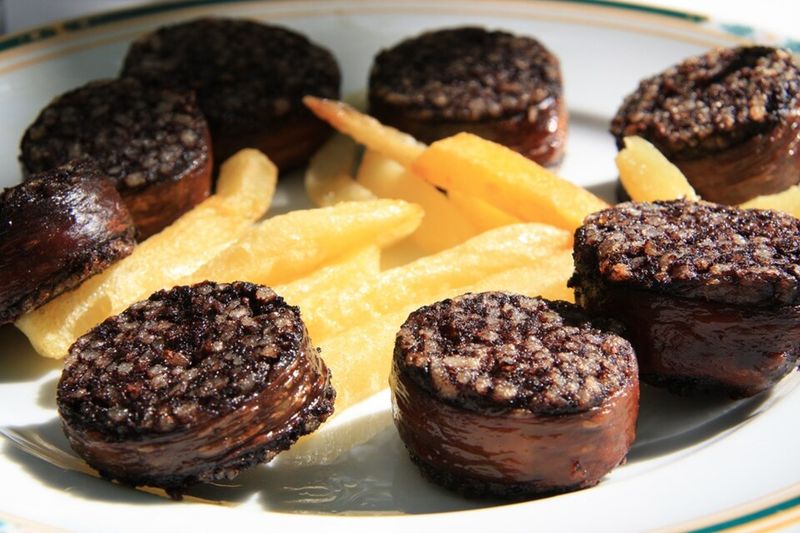
Spain takes its blood sausages seriously, and the version from the city of Burgos in Castile is considered by many to be the finest of all. Morcilla de Burgos is made from pig blood, rice, onion, lard, and a generous blend of spices including pimentón, oregano, and cloves.
Unlike blood sausages that use grain fillers, the rice gives this one a uniquely soft, almost creamy texture from the inside out.
It can be eaten sliced cold, fried in rounds, or crumbled into stews and rice dishes where it melts into a rich, spiced sauce. The flavor is earthy and warming, with a sweetness from the onion and a mild heat from the paprika.
Locals in Burgos are fiercely proud of their morcilla, and it is protected by a specific quality designation. Paired with a glass of Ribera del Duero red wine, it is one of the most satisfying tapas experiences in all of Spain.
8. Jellied Eels (England)
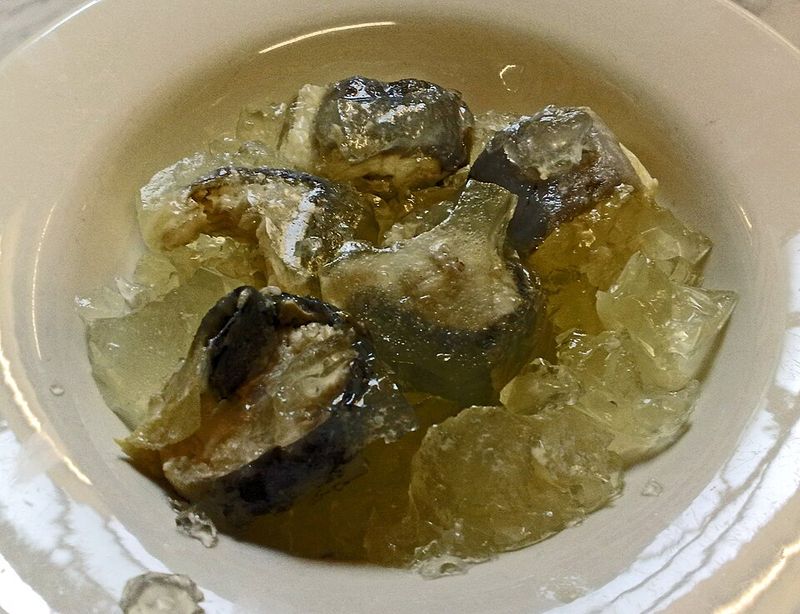
Walk into an old-school pie and mash shop in East London and you will likely find jellied eels on the menu, a dish that has been feeding working-class Londoners since at least the 18th century. Chunks of freshwater eel are simmered in a spiced court bouillon until tender, then left to cool in their own gelatin-rich cooking liquid, which sets into a wobbly, savory jelly around the fish.
The eels are served cold, often with a splash of chilli vinegar, and eaten straight from a small white china bowl. The texture is firm and slightly slippery, and the flavor is clean and mildly fishy with a pleasant herbal note.
Jellied eels were once the fast food of the Thames riverside, cheap and plentiful when eels were abundant in the river. Today they are a niche taste, but devoted fans say nothing else captures the spirit of old London quite like a bowl of jellied eels.
9. Hakarl (Iceland)
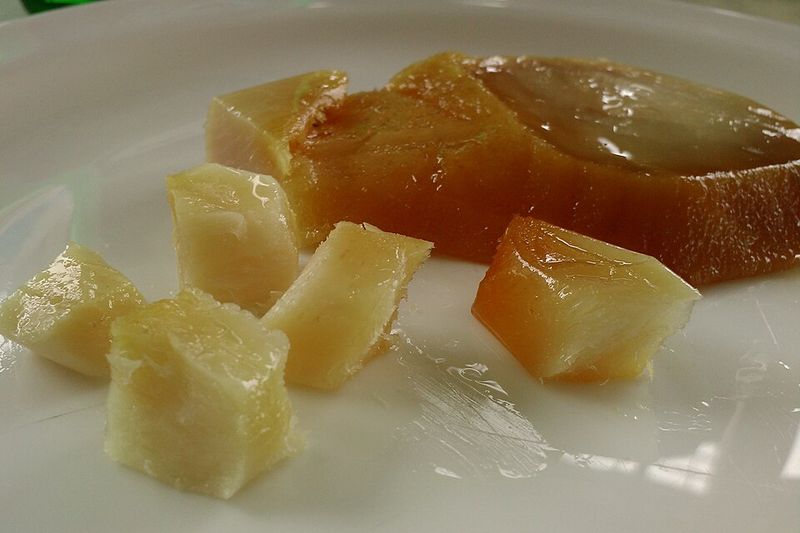
Few foods in the world come with as many warnings as hakarl, Iceland’s infamous fermented shark. Made from Greenlandic shark, which is toxic when fresh due to high levels of uric acid, the meat must be buried underground or hung to ferment and dry for several months before it becomes safe to eat.
The result is a pale, chewy cube of fish with an ammonia-heavy smell so intense that even seasoned travelers have been known to gag at first whiff.
Yet Icelanders eat it with quiet pride, especially during the midwinter festival called Thorrablot. The flavor, once you push past the smell, is pungent and sharp but not entirely unpleasant, similar to a very strong aged cheese.
It is almost always paired with a shot of brennivín, a local caraway schnapps nicknamed Black Death. Hakarl is less about the taste and more about connecting with a centuries-old Viking survival tradition that shaped Icelandic identity.
10. Escargots de Bourgogne (France)
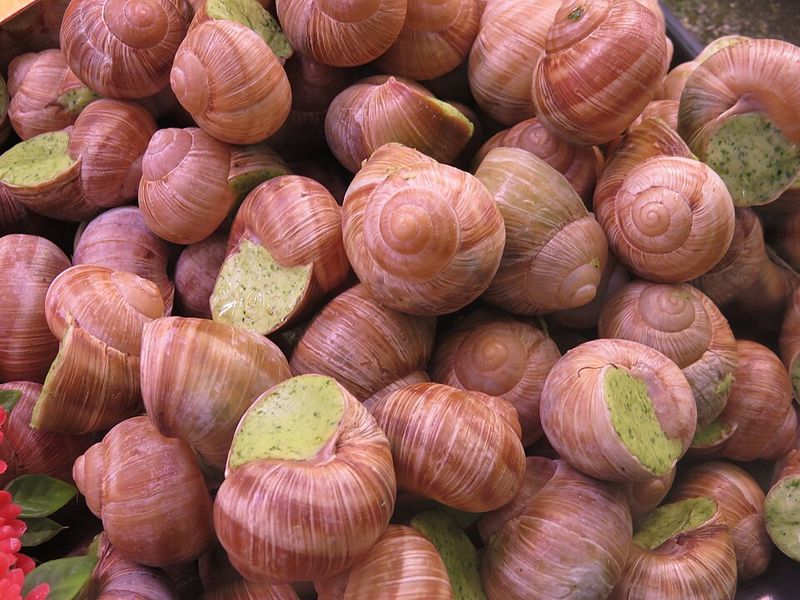
Snails cooked in garlic butter might be the most elegant entry on this list, but they still make plenty of people squeamish when they hear what they are eating. Escargots de Bourgogne are land snails baked in their shells with a filling of softened butter, garlic, shallots, and fresh parsley until sizzling hot and fragrant.
They have been a fixture of French fine dining and bistro culture for well over two centuries.
The texture is tender and slightly chewy, not unlike a small clam or mussel, and the flavor is almost entirely dominated by that glorious garlic herb butter rather than any strong snail taste. The best part might be soaking up the leftover butter with a torn piece of crusty baguette.
France produces and consumes more snails than any other country in Europe, and the Burgundy region is considered the gold standard for this dish. Most people who try them are surprised by how much they enjoy them.
11. Zurek (Poland)
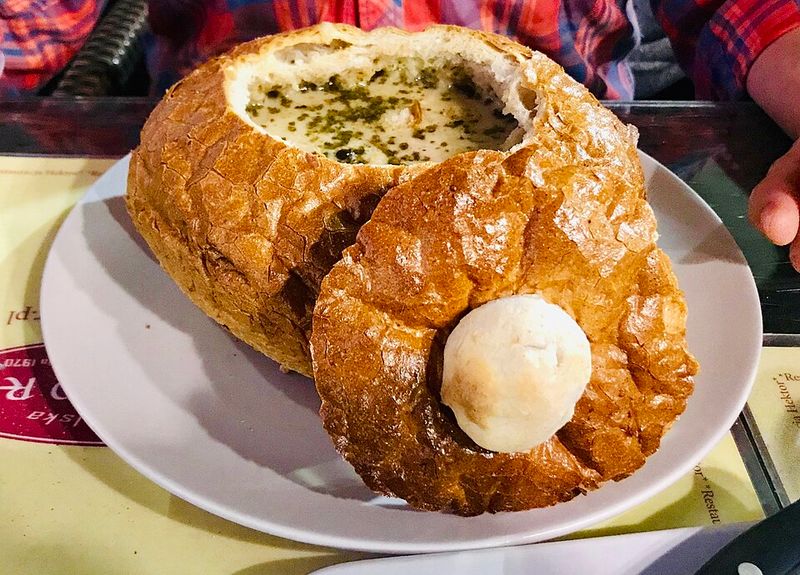
Poland’s most beloved soup is built on a base that sounds more like a science experiment than a recipe. Zurek is a sour rye soup made from a fermented rye flour starter called zakwas, which gives the broth a tangy, slightly sour flavor that is unlike any other soup in Europe.
The fermentation process takes several days, and the result is a cloudy, pale broth with a satisfying depth of flavor.
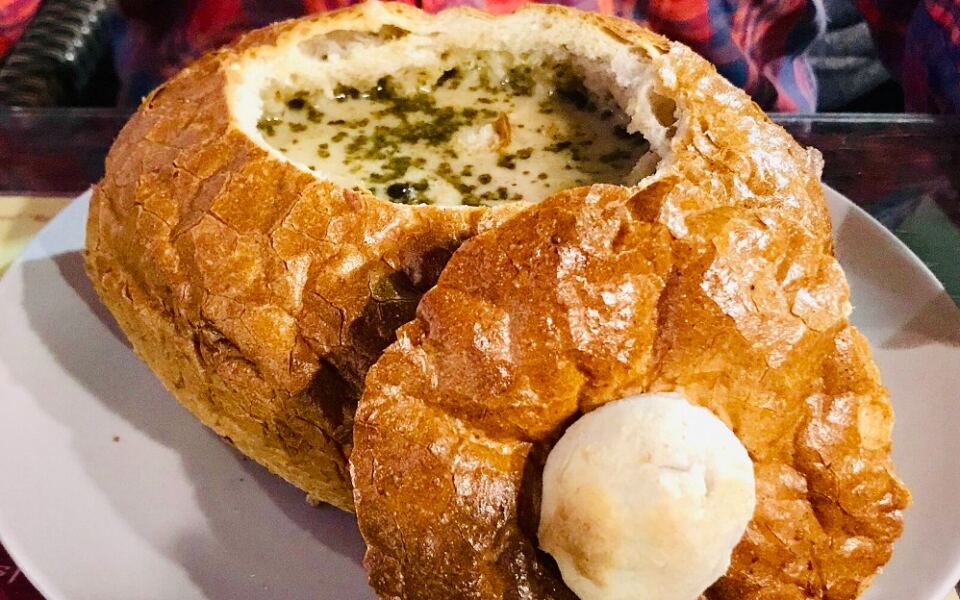
Served with slices of kielbasa sausage, a hard-boiled egg, and sometimes bits of smoked bacon or horseradish, zurek is hearty enough to be a full meal. It is especially popular during Easter, when it is often served inside a hollowed-out bread bowl, which slowly absorbs the soup and becomes part of the dish itself.
Poles grow up eating zurek and consider it pure comfort food. Visitors who try it for the first time are almost always won over by its warming, complex sourness.
12. Black Pudding (United Kingdom and Ireland)
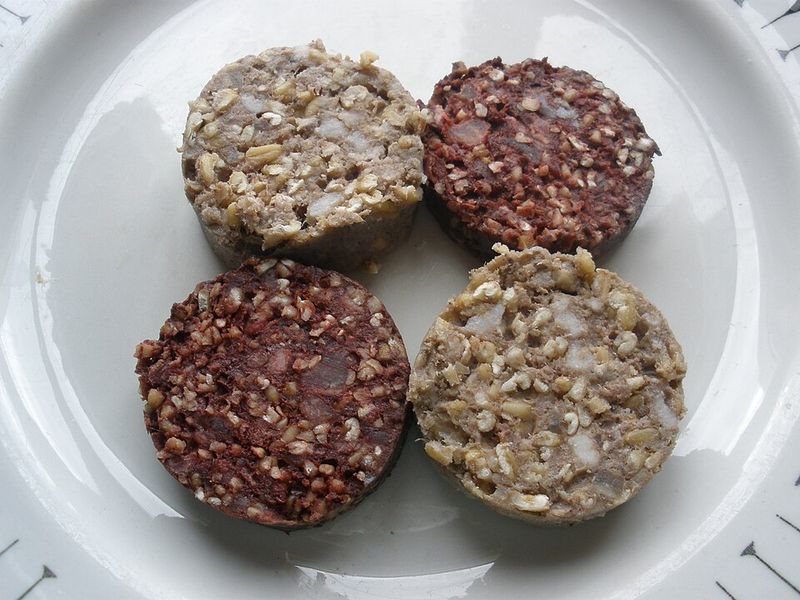
Black pudding is one of those foods that has been eaten in Britain and Ireland for so long that most people there barely think of it as unusual at all. Made from pig blood, pork fat, oatmeal or barley, and spices packed into a casing, it is sliced and fried until the outside crisps up while the inside stays dense and rich.
It is a cornerstone of the full English and full Irish breakfast, sitting comfortably next to eggs and bacon on the plate.
The flavor is savory and slightly spiced, with a meaty depth that comes from the blood without tasting strongly of iron. Regional variations are passionate topics of debate, with towns like Bury in England and Clonakilty in Ireland fiercely proud of their local recipes.
Black pudding has also found its way into fine dining menus in recent years, paired with scallops or used as a crust for lamb. Its recent food trend revival shows that strange and delicious are not mutually exclusive.
13. Casu Marzu (Sardinia, Italy)
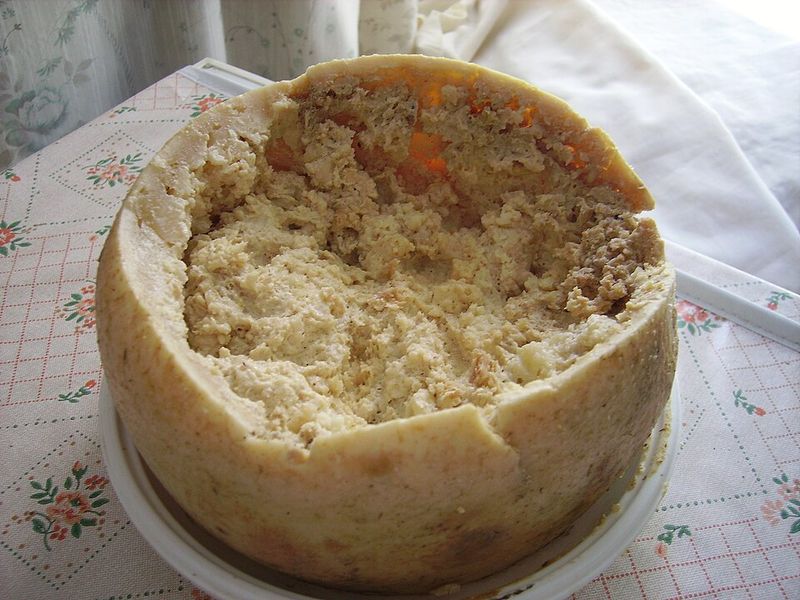
Casu marzu might be the most controversial food on this entire list. This Sardinian sheep milk cheese is intentionally left to ferment beyond normal aging, with live cheese fly larvae introduced to break down the fats and create an ultra-soft, almost liquid interior.
Yes, the cheese contains living maggots when it is eaten, and yes, Sardinians consider it a genuine delicacy.
The flavor is described as intensely pungent and creamy, far sharper and more complex than standard pecorino, with a heat that lingers at the back of the throat. Locals typically eat it with flatbread and a glass of strong red Cannonau wine.
Casu marzu is technically illegal to sell commercially under European Union food safety regulations, which has made it even more of a prized underground tradition in Sardinia. Finding it usually requires a local connection.
Those who have eaten it say the taste is extraordinary, if you can get past the visual experience of eating it.
14. Francesinha (Portugal)
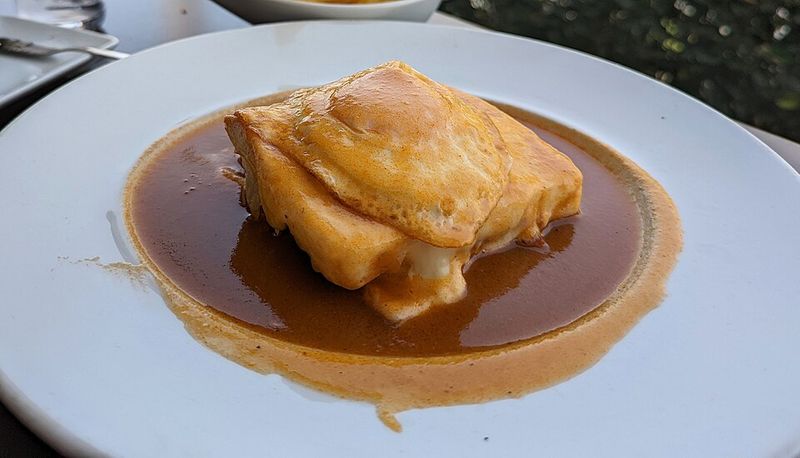
Porto’s signature sandwich looks like it was designed by someone who wanted to fit an entire meal between two slices of bread. The francesinha is built from layers of cured ham, linguica sausage, and fresh sausage, all sandwiched between thick white bread, then covered in melted cheese and drowned in a hot, spiced tomato and beer sauce.
It is served with a fried egg on top and a side of french fries, often soaking in the same sauce.
The sauce is the secret weapon, simmered for hours with tomatoes, beer, brandy, and a blend of spices that every restaurant in Porto guards like a family secret. The result is rich, smoky, slightly spicy, and deeply comforting in a way that is hard to describe until you taste it.
Francesinha was invented in Porto in the 1950s and has never really left the city in spirit. Porto locals are so proud of it that ordering one feels like a genuine rite of passage.
Share this story