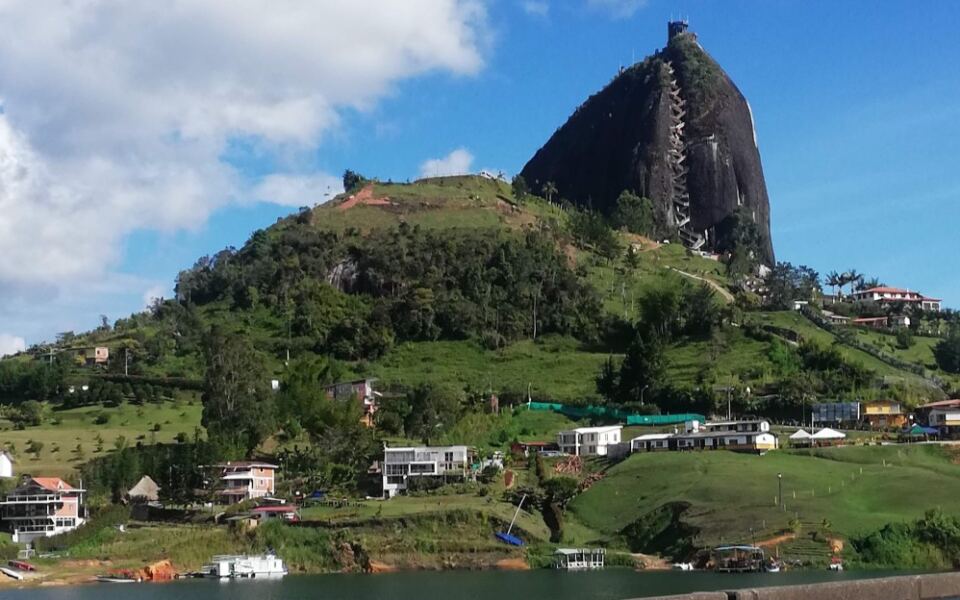
Picture a small town in the Colombian mountains where every house wears a bright coat of paint. Add a huge lake and a granite rock as tall as a skyscraper, and you have Guatapé.
Visitors come for the photos but stay for the views, the food, and the friendly vibe. Here are ten ways to fall for this Andean gem.
Piedra del Peñol: The Giant Rock
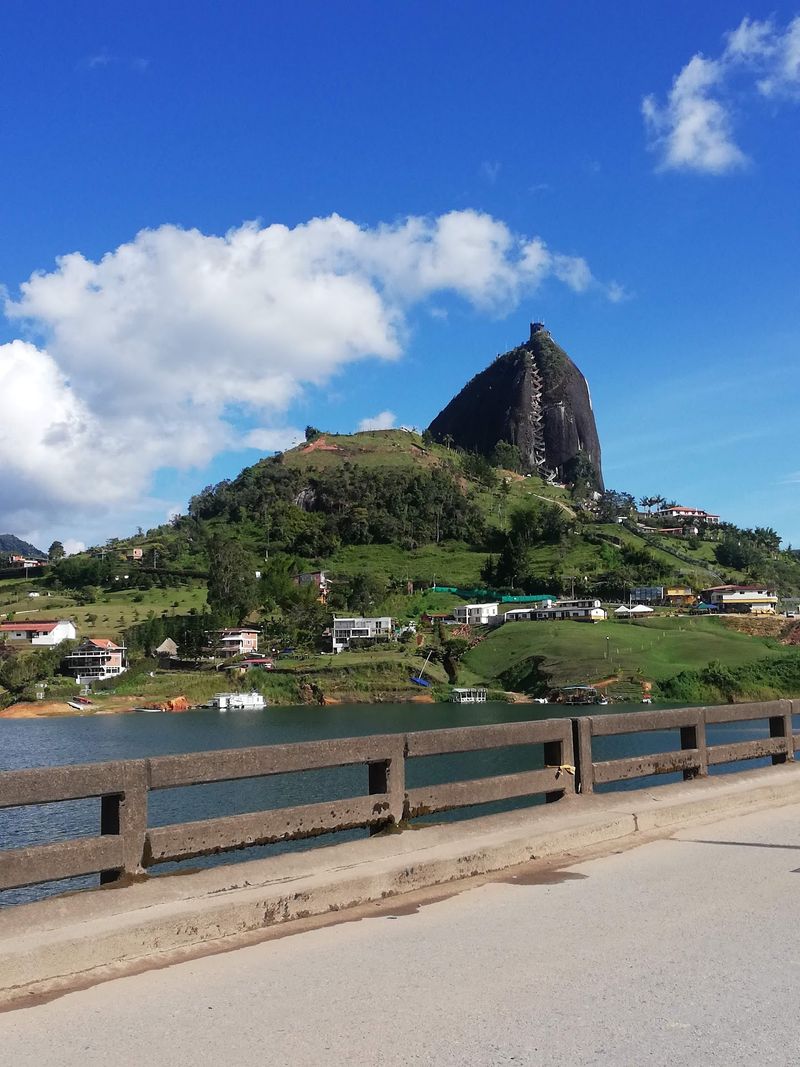
Rising about 200 meters from the ground, El Peñol looks like a giant dropped a boulder in the countryside. Locals call it La Piedra, and it has been a landmark for ages.
The rock is mostly one single piece of granite.
Getting a good look at it from far away is half the fun. Drive in from Medellín and you can spot it long before you arrive.
Its smooth gray sides glow gold at sunrise, so an early start pays off.
Bring a camera with plenty of space. Every angle makes a new postcard, from the base to the lake views around it.
Wear shoes with grip, since the ground near the entrance can be slippery after rain.
Fun fact: the rock is sacred to the Tahamí people, who lived in the area long before the town existed. Some call it the Stone of Life.
Take a moment to read the signs near the entrance and learn a bit of that history before you begin your climb.
The 740 Steps to the Top
Your legs will have opinions about this climb. Around 740 steps zigzag up a crack in the rock, and each one has a number painted on it so you can track your progress.
That is a bit of a tease, honestly.
Most people finish in 20 to 30 minutes. Go slowly, drink water, and use the little rest platforms along the way.
Early morning is best because lines are shorter and the air is cooler.
The stairs are fairly narrow, so a friendly attitude helps when people pass in both directions. Kids can do it with patience and snack breaks.
Skip flip-flops and pack light.
At the top, a small shop sells cold drinks and snacks, and a tower gives you a few extra steps for an even higher view. Keep a little energy for the walk down.
Your knees will thank you for taking it easy.
Views From the Summit
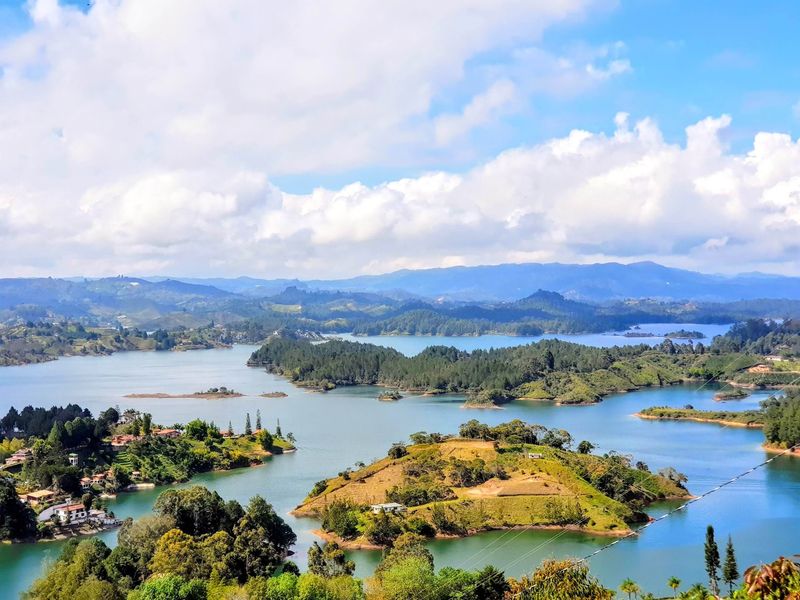
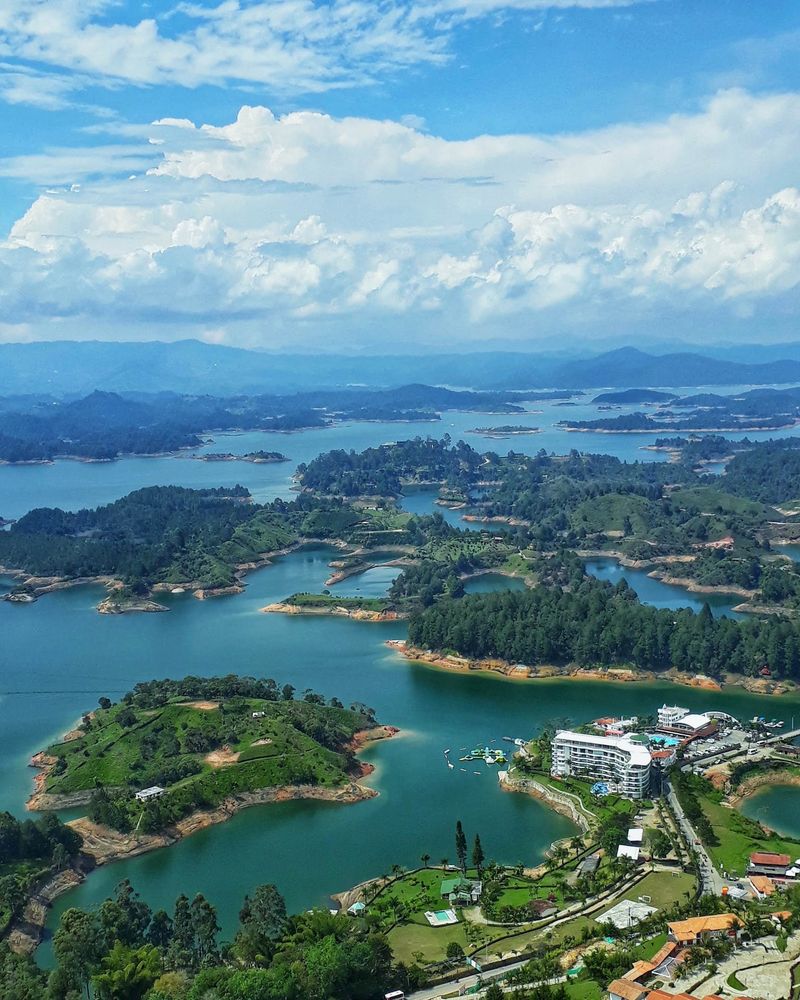
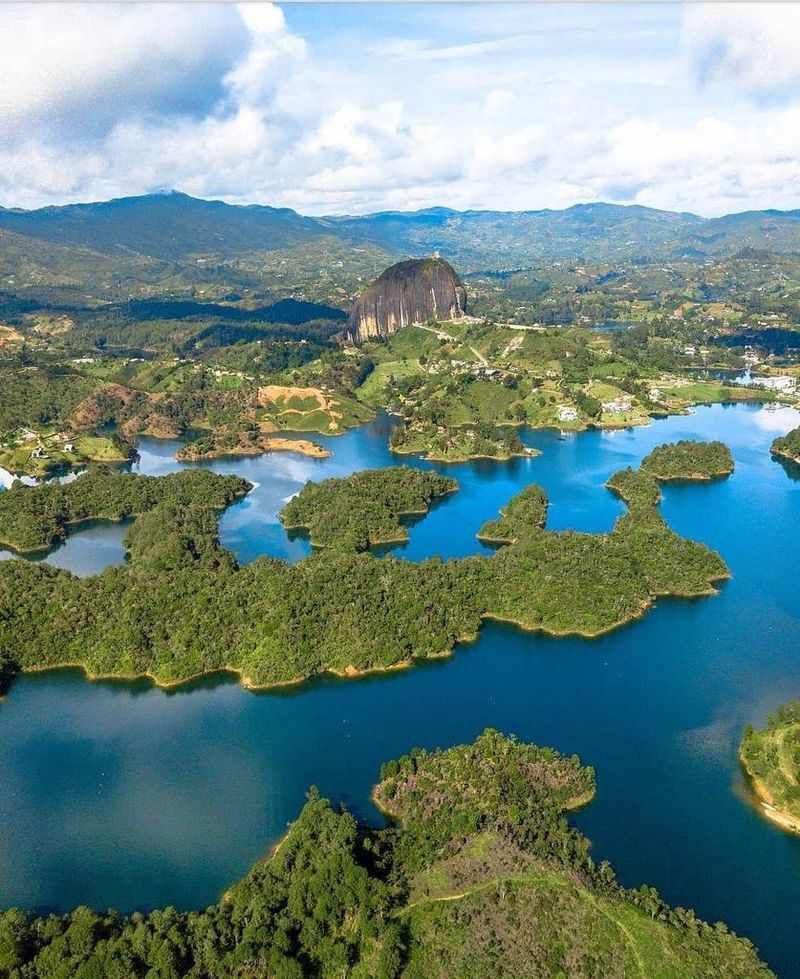
Reach the top and the world suddenly looks like a puzzle in blue and green. Water twists around hundreds of tiny islands, and the hills roll off into the haze.
Most visitors go quiet for a second before reaching for their phones.
The reservoir was created in the 1970s when a dam flooded the valley. What was once farmland and hills became a maze of waterways.
From above, you can see how the shapes of the land became peninsulas and islets.
Clear mornings give the sharpest views, while afternoon clouds can roll in fast. Check the sky before you start climbing.
A light jacket helps because the wind up there can surprise you.
Walk around the full platform instead of staying at the first railing. Each side shows a different slice of the lake.
Take your time, sip a drink, and let the scenery do the talking.
Zócalos: The Colorful Bas-Reliefs
Look down at the bottom of the walls. Those painted panels are called zócalos, and they are the town’s signature trick.
Each one is a raised design made of plaster or cement and then painted in bold colors.
The story goes that they began as a way to protect walls from mud and splashes. Over time, families turned them into art.
Now you will see boats, flowers, farm tools, animals, and tiny scenes of daily life.
Every house has its own theme, often tied to the family’s work or history. A fishing family might show a boat, while a farm family might show a plow or a rooster.
Reading them is like flipping through a picture book.
Walk slowly and look closely, because the details are easy to miss. Be polite when taking photos, since people live and work behind these walls.
A smile and a quick hello go a long way.
Calle del Recuerdo
Cobblestones, balconies, and splashes of paint make this street a favorite. Calle del Recuerdo, or Street of Memory, sits near the lakefront and runs downhill toward the water.
It is short, but it packs plenty of charm.
Shops here sell handmade bags, hats, and sweet treats. Cafes set tables right outside, so you can enjoy a cup of coffee while watching people stroll by.
Some days, colorful decorations hang overhead and make the photos even better.
Go early if you want empty shots. Weekends and holidays bring crowds from Medellín, and the narrow lane fills up quickly.
Weekday mornings are calmer and more relaxed.
Keep an eye out for the small details, like painted doors, potted plants, and old wooden window frames. Each one adds a bit of personality.
Wear comfy shoes, because the stones can be uneven.
Plaza de los Zócalos
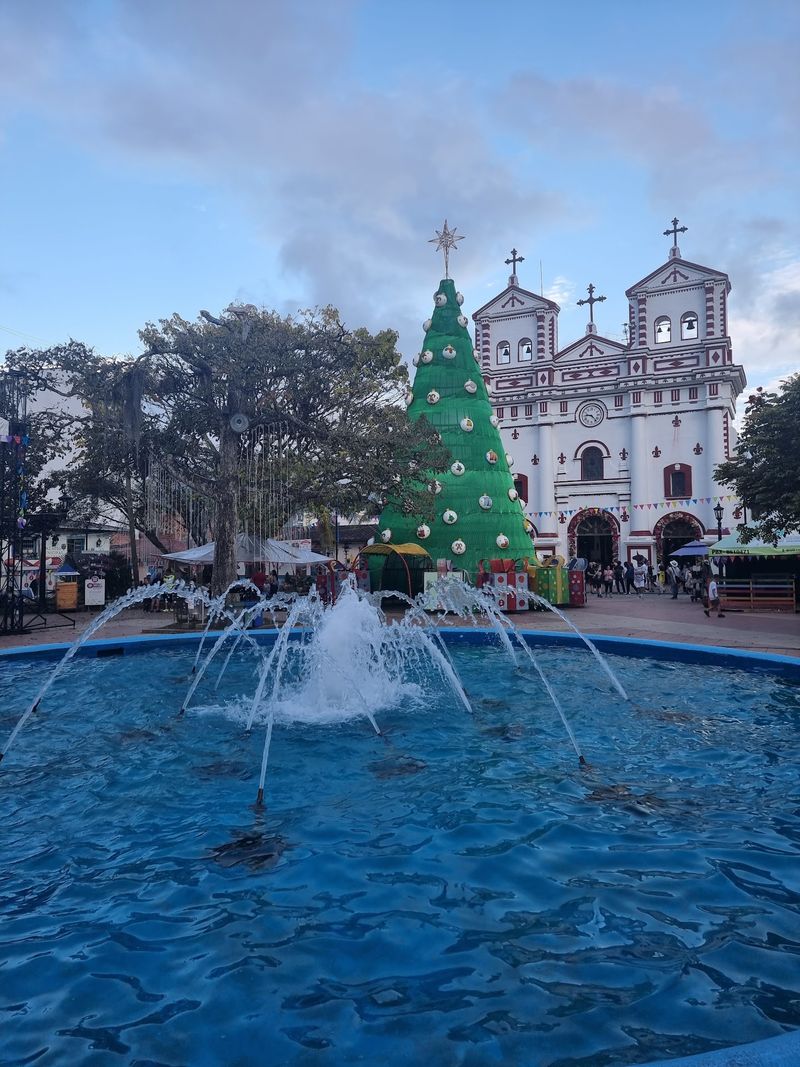
If Guatapé had a living room, this would be it. The main plaza is where locals meet, kids play, and visitors catch their breath.
Colorful buildings circle the square like a ring of crayons.
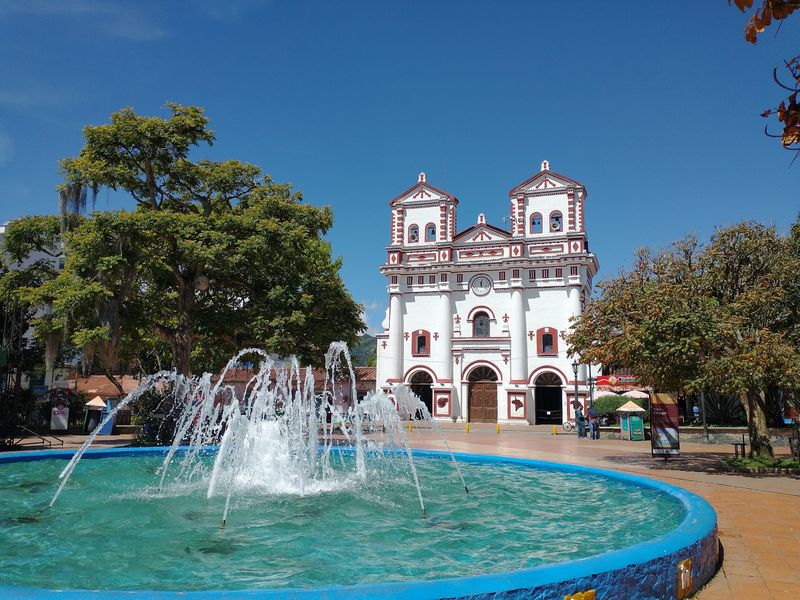
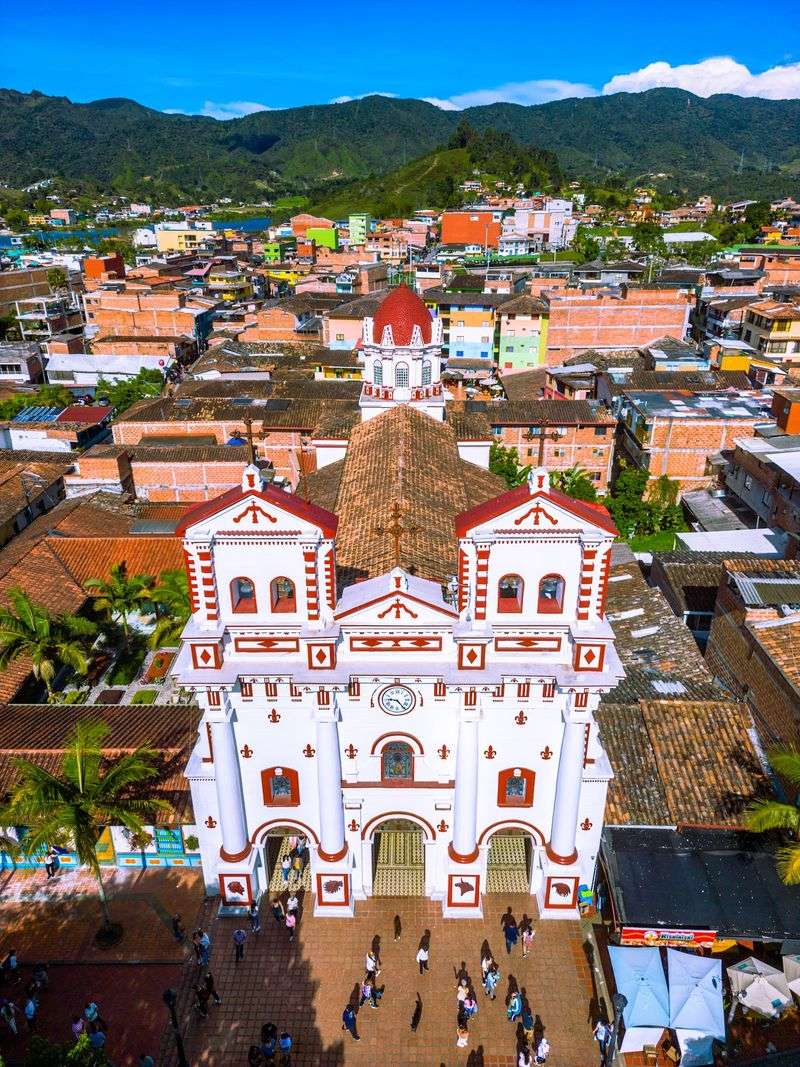
The church of Our Lady of Carmen stands nearby, with a calm look that contrasts the bright houses. Benches offer shade, and vendors sell fresh juice and snacks.
It is an easy place to relax between sights.
Try visiting in the evening, when the lights come on and the mood turns cozy. Families come out for dinner, and music drifts from the cafes.
The air cools down, so it feels nice to wander.
Take a seat and simply watch the town go by. You might spot a horse-drawn cart or a group of students in uniform.
Small moments like these make a trip memorable.
Boat Rides on the Reservoir
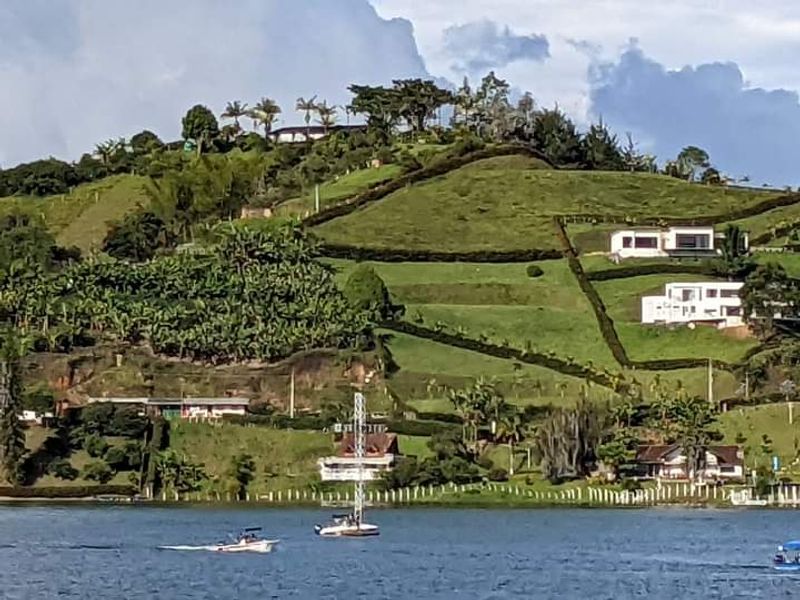
Salt spray is missing, but the splash is real. Boat tours on the Peñol-Guatapé Reservoir let you glide past islands, luxury villas, and quiet coves.
The breeze alone is worth the ticket.
Most tours leave from the town’s dock and last about an hour or two. Guides share stories about the flooded valley and point out homes on the shore.
Some tours stop at spots with a view of the big rock.
Sit on the upper deck if you can. You get better photos and a cooler breeze.
Bring sunscreen and a hat, since the sun at this height is strong.
Ask about the old church tower that still pokes above the water in some areas. It is a reminder of the village that was moved when the dam was built.
Tours can be lively, with music playing and snacks available onboard.
Water Sports and Lake Fun
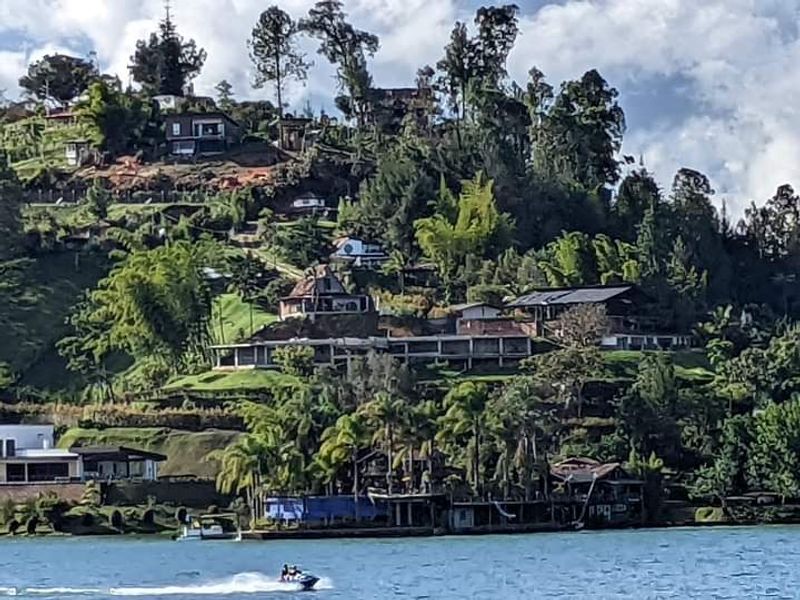
Adrenaline fans, this one is for you. The reservoir is a busy water-sports center, with jet skis, kayaks, wakeboards, and paddleboards for rent.
You can zip across the water or float along at a lazy pace.
Jet ski tours take you around islands and past famous villas. Kayaks are better for quiet corners where birds hang out.
Paddleboarding is a good test of balance, and falling in is part of the experience.
Most rental shops are near the waterfront, and prices vary by activity and time. Ask about safety gear and listen carefully to the instructions.
Morning hours usually have calmer water.
Bring a change of clothes and a waterproof bag for your phone. The water is cool, so it feels great on a hot day.
Take breaks and drink plenty of water, even when you are having too much fun to notice.
Piedra Marial: The Other Giant Rock
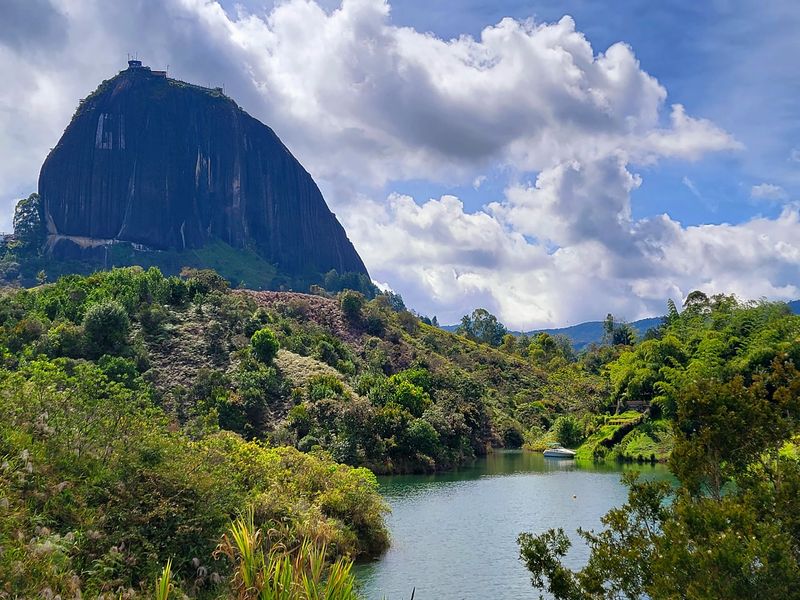
Not many places can claim two giant rocks, but Guatapé comes close. Marial Stone sits nearby, with a dramatic overhang that looks like a giant stone wave.
It draws fewer crowds than its famous cousin.
A hiking trail leads to the base and the lookout points. The walk is moderate, with some uphill stretches and a few steps.
Good shoes help, especially after a rainy day.
Many visitors come for the quiet and the views of the valley. It is a nice spot for photos because the rock frames the landscape.
Local guides can share legends and tell you about the plants along the path.
Plan to spend an hour or two here. Pack water and a snack, since options can be limited.
If you like places that feel a bit more hidden, this one is a keeper.
Paisa Food and Local Flavors
Hungry? Good, because the plates here are huge.
The star is bandeja paisa, a mountain of beans, rice, pork, egg, plantain, avocado, and arepa. Share one if you want to avoid a nap on the spot.
For something lighter, try trout from the nearby waters, often fried or grilled with lemon. Many restaurants by the lake serve it with patacones, which are crispy smashed plantains.
The fish is fresh and simple.
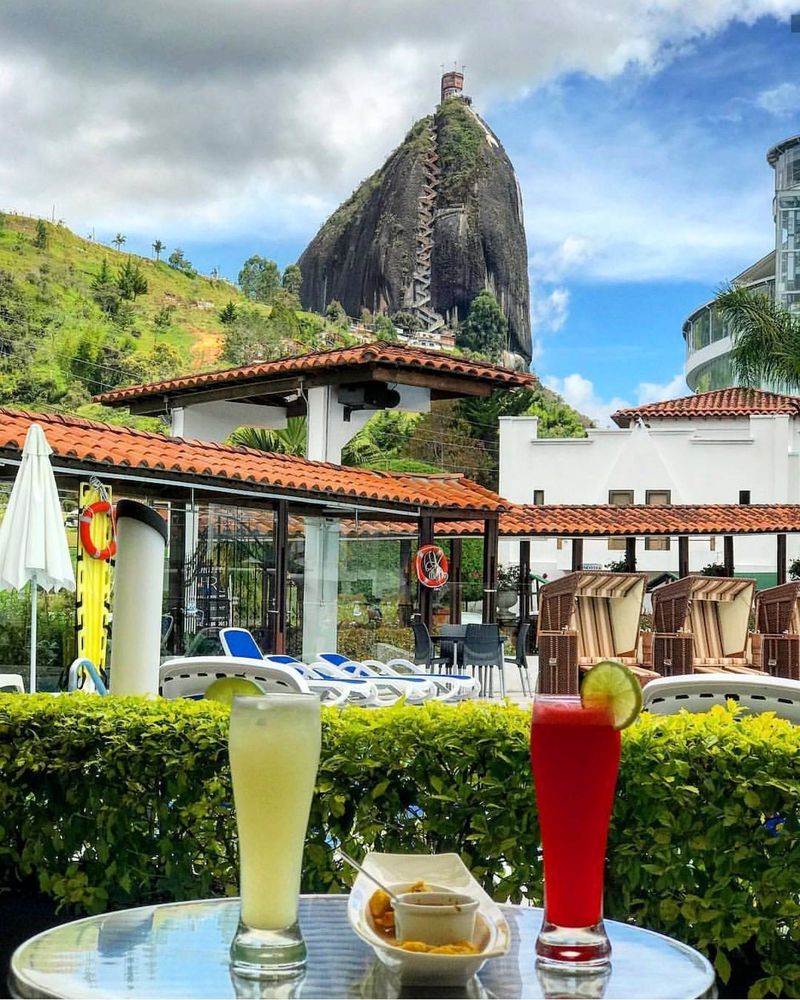
Do not skip the drinks. Fresh fruit juices, hot chocolate with cheese, and strong Colombian coffee are everywhere.
Small bakeries also sell buñuelos and sweet treats for a quick snack.
Lunch spots near the plaza are handy, but side streets often have better prices. Ask locals for their favorite spot.
Cash is useful in smaller places, so keep a few bills handy.
Getting There and Planning Your Day
The trip from Medellín takes around two hours, and the ride is part of the show. Buses leave from the Terminal del Norte throughout the day.
Tickets are cheap, and the road winds through green mountains.
Many people visit as a day trip, but staying overnight is a smart move. You get quiet evenings and fewer crowds in the morning.
Hotels and hostels range from budget rooms to lakeside lodges.
Start with El Peñol early, then head into town for lunch and a stroll. Save the afternoon for a boat ride or a coffee in the plaza.
Tuk-tuks and small jeeps called motocarros connect the rock and the town.
Bring cash, sunscreen, and a light rain jacket, since the weather changes quickly. Dry season, from December to March, tends to give clearer skies.
Whenever you go, leave extra time for photos.
Share this story