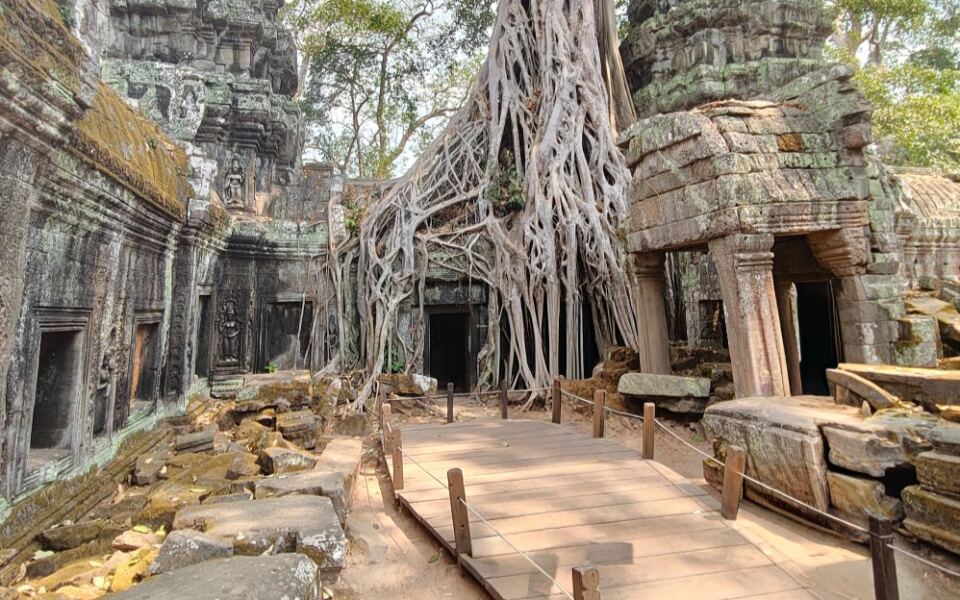
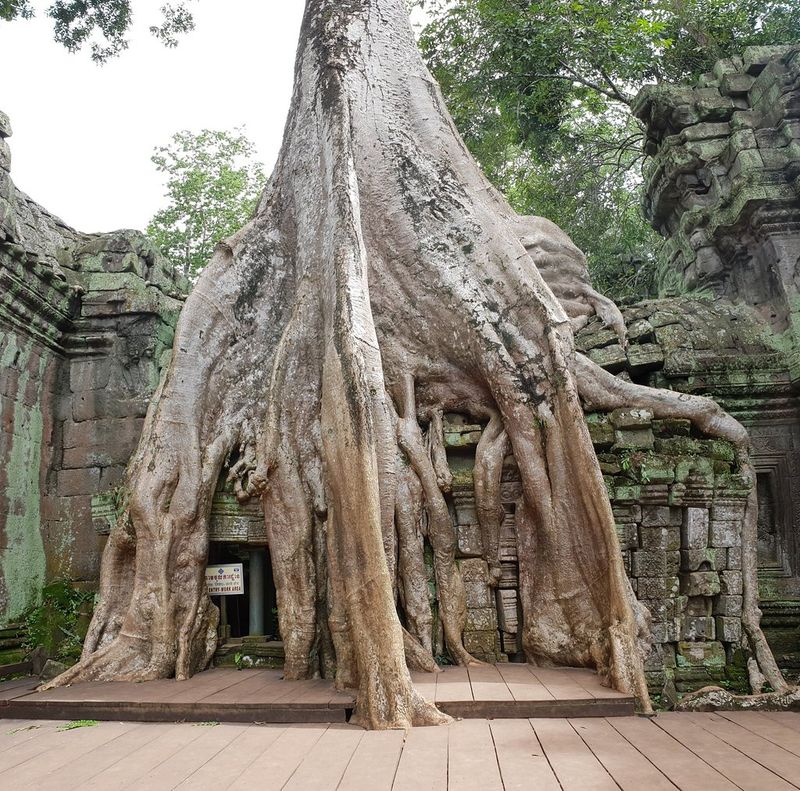
Giant tree roots pour over the stone walls of Ta Prohm like frozen waterfalls. This 12th-century temple in Siem Reap was left wild on purpose, so the jungle still looks like it is winning.
Visitors say it feels like stepping into an adventure movie. Here are ten things that make this place so strange and so special.
Roots That Swallow Stone
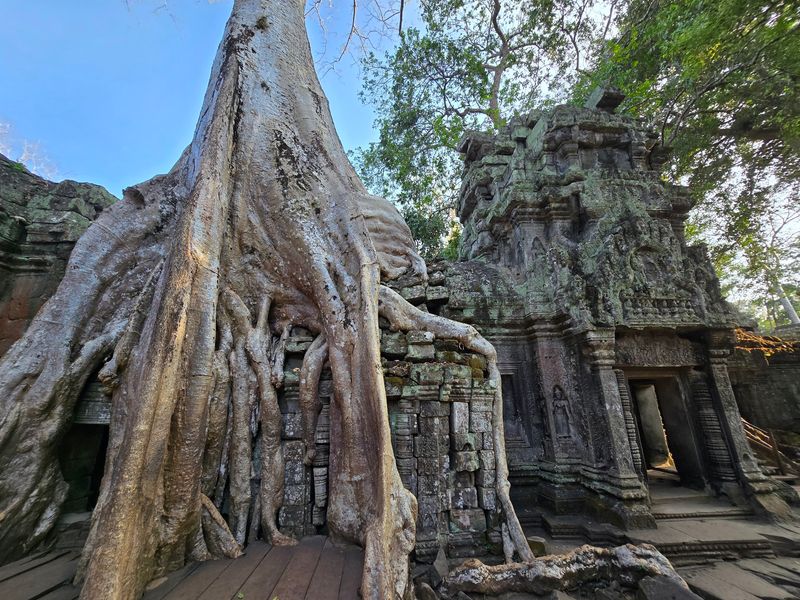
Stone walls here look like they are being slowly hugged to death. Thick roots pour over doorways, crawl across rooftops, and sink into every crack they can find.
One visitor said the trees looked like an octopus wrapped around its prey. That is a fair picture, and it is hard to forget once you see it.
The roots are not just for show. They grip the temple so tightly that nobody is sure if they are wrecking the walls or holding them up.
Some blocks have toppled because of the growing trees, while other sections seem to stand only because roots clamp them in place.
Take your time at the spots where trunk and wall meet. Look for the places where roots split around a window or flow down a staircase.
Photos help, but they cannot show how huge these roots feel when you stand beside them.
Bring a little patience too. Crowds gather at the best root scenes, but a short wait usually gets you a clear view.
A Temple Left Wild on Purpose
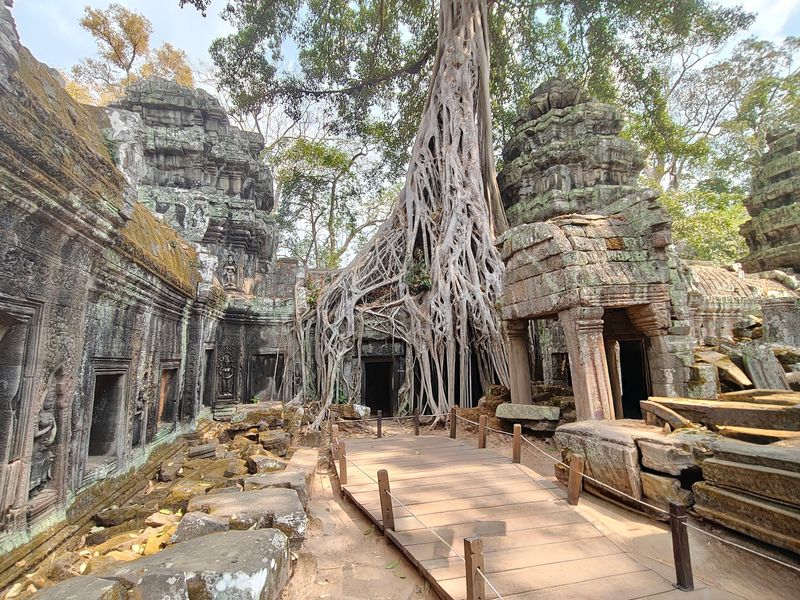
Most Angkor temples got a tidy makeover. Ta Prohm did not, and that is the whole point.
Conservators chose to keep it close to how explorers found it about 150 years ago. They support shaky parts and clear safe paths, but they let the jungle stay in charge.
That choice gives the site a raw, moody feel. Walkways are quiet, stones lean at odd angles, and moss softens every corner.
A reviewer called it the place where nature and old buildings have totally merged.
Some travelers wish for more upkeep, and one visitor felt the site was not well maintained. Even so, the rough look is exactly what draws people in.
Wear shoes with good grip. Stone steps can be uneven, and a few spots need a little careful climbing.
Nothing is too tiring, but you will be glad you paid attention to your feet.
Built for a King’s Mother
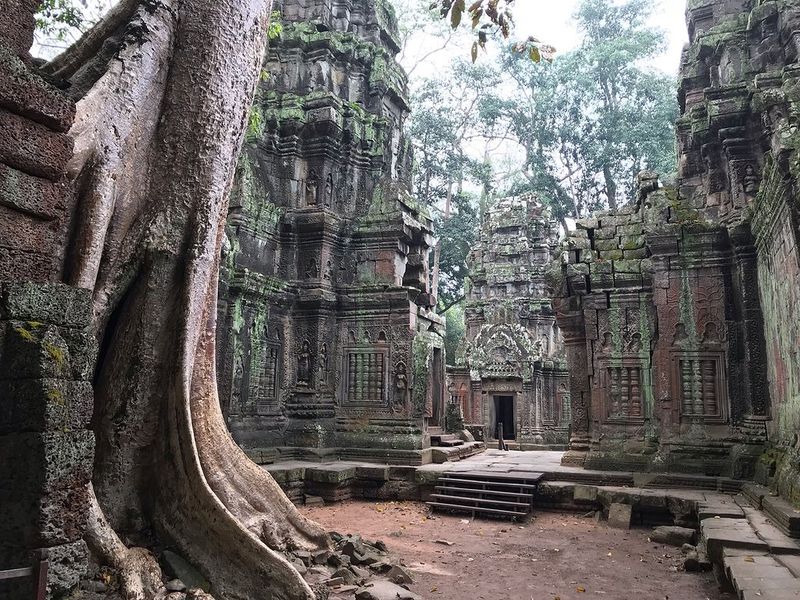
King Jayavarman VII built Ta Prohm in the late 12th century as a gift to his mother. It was a Buddhist monastery and a university, not just a pretty monument.
Thousands of monks, priests, and scholars once lived and worked here. Records say the temple held huge treasures, and hundreds of villages helped support it.
Imagine the bustle in those halls. Chanting, teaching, and daily chores filled spaces that are now silent and green.
Look closely at the carvings as you walk. Dancing figures, doorways, and detailed patterns still show up on many walls, even where roots have crept across them.
Hiring a guide pays off here. Several visitors called the local guides friendly and helpful, and they can point out small details you would walk right past.
Knowing the story of the king and his mother makes every corner feel more personal.
The Tomb Raider Connection
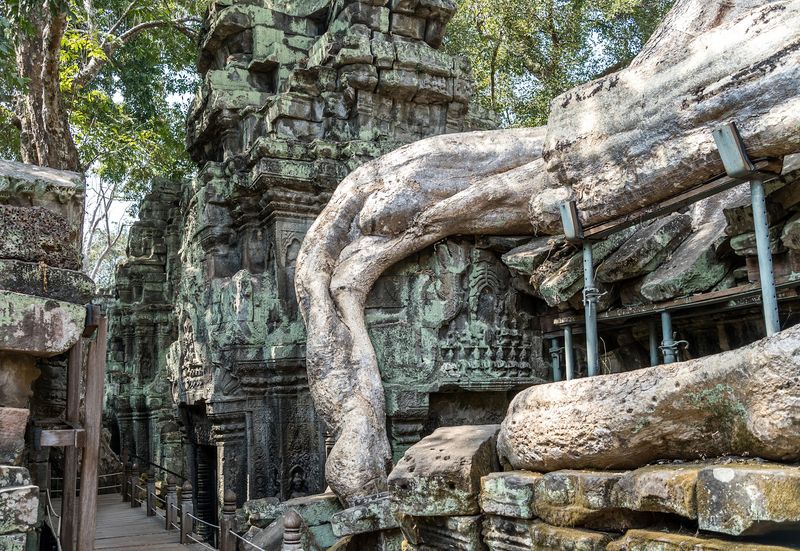
Lara Croft once strolled through these ruins. In 2001, parts of Tomb Raider with Angelina Jolie were filmed at Ta Prohm, and the temple has been tied to the film ever since.
Many visitors say they instantly understood why. Every corner looks like an adventure scene, especially when sunlight slips through the leaves.
You do not have to be a fan to enjoy it. One traveler said the place is a must visit whether or not you care about Lara Croft.
There is a popular tree spot where people line up for photos. Go with a plan, and be ready to take turns.
Pack a little movie spirit. Try a dramatic pose, a mysterious glance, or a pretend treasure hunt.
Your photos will have far more personality than a simple smile.
Fig and Kapok Giants
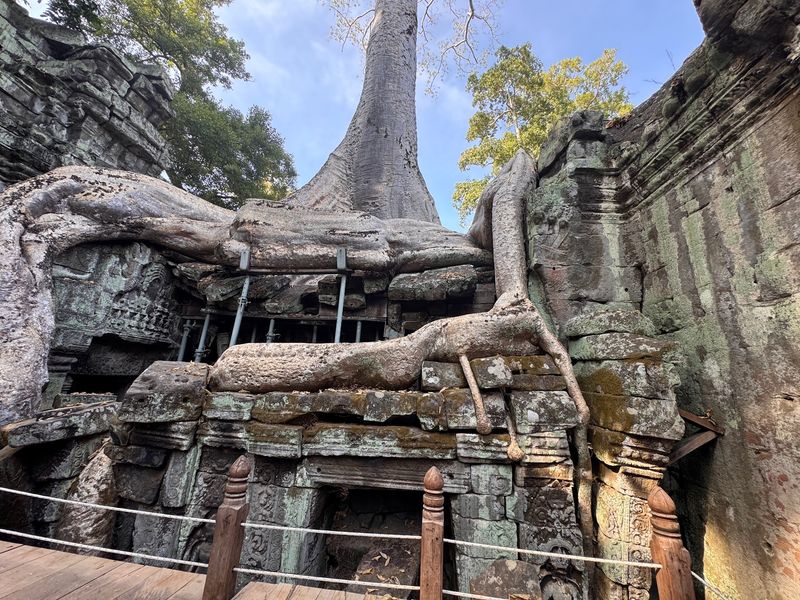
Some of these trees reach higher than the temple towers. Reviewers noted that many are fig and kapok trees, famous for wide, snaking roots.
Kapok trunks look smooth and pale, almost like stone themselves. Strangler figs take a different path, starting small and then wrapping everything in reach.
Birds drop seeds into tiny cracks in the walls. Over many decades, those seeds grew into the giants you see now.
Tilt your head back and look up. The leafy canopy filters the light into a soft green glow, which makes the whole site feel hushed and cool.
Stay on marked paths and never climb on the roots. The trees are old, the stones are fragile, and a little respect keeps the scenery safe for the next group of visitors.
Dark Corridors and Hidden Corners
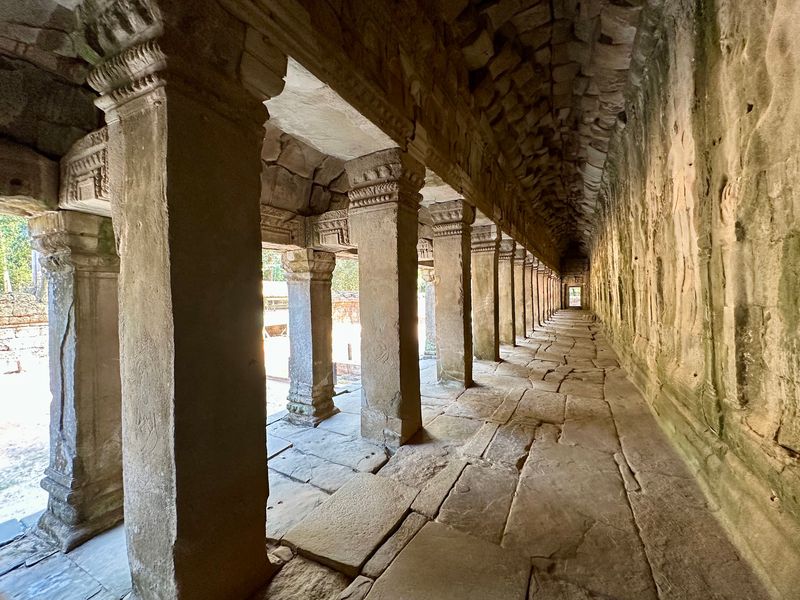
Whispers carry strangely in the shadowy halls. One visitor noted that you can hear people murmuring even in a crowd.
Long passages run through the ruins, lined with crumbling stone and slanted doorways. Light drops in through gaps in the roof, creating bright patches on the floor.
Every turn reveals something different. A courtyard might open up, or a carved wall might peek out from behind a curtain of leaves.
Spend a little time wandering without a plan. A traveler said they spent a wonderful time meandering through the passages before stepping out to views of old trees on older walls.
Bring a small flashlight or use your phone light in the darkest spots. Watch for loose stones, and move slowly.
The best finds are often tucked into the quietest corners.
Early Morning Magic
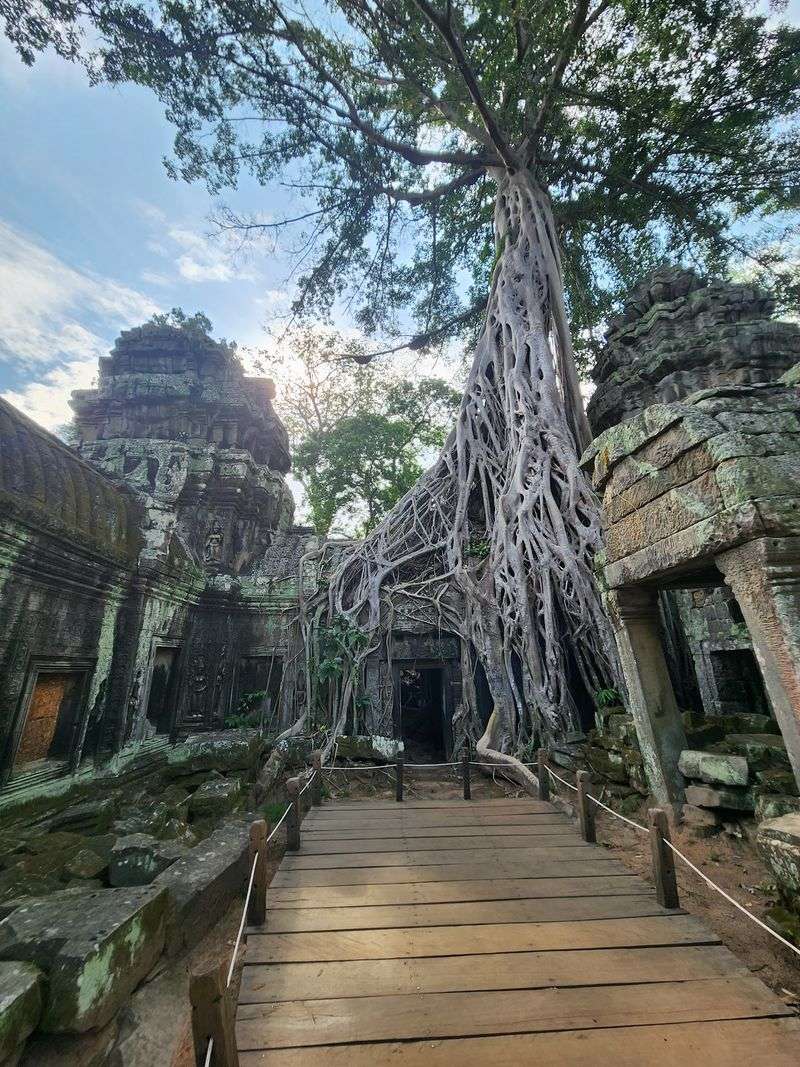
Arrive at opening time and you may feel like the temple is yours. The gates open at 7:30 AM, and the early hours bring softer light and thinner crowds.
Photographers love this window. Gentle sunbeams brush the roots, and the stone glows warm instead of harsh.
Later in the day, tour groups arrive and popular spots fill up fast. One visitor went on a weekend and found it busy but still manageable.
Rain can be a surprise bonus. A traveler who came on a rainy evening found almost no one around, which made the place feel wonderfully eerie.
Plan around the heat as well. Mornings are cooler, which makes the walking easier.
The temple closes at 5:30 PM, so late-day visits need a bit of timing.
What to Wear and Bring
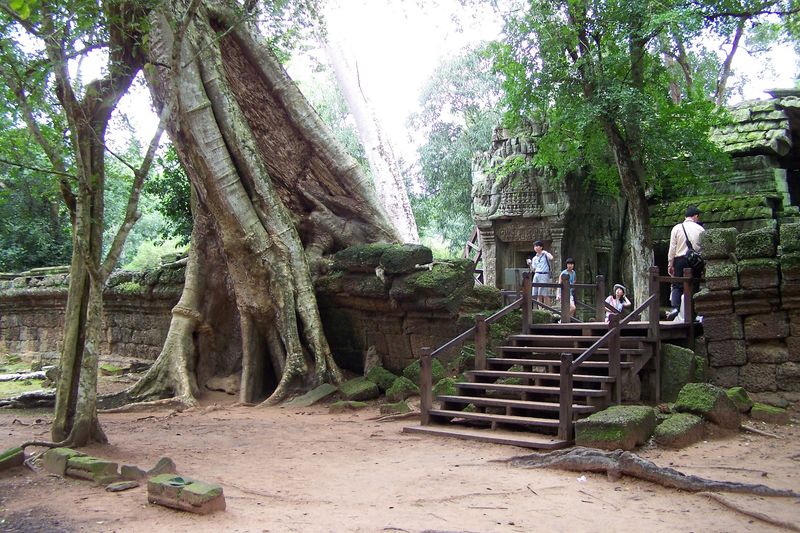
Comfort beats fashion here. You will be walking on uneven stone, so sturdy shoes are your best friend.
This is a Buddhist temple, so cover your shoulders and knees. Light, loose clothing keeps you cool while staying respectful.
Bring a cap, sunglasses, and a water bottle. One reviewer said these made the visit easier, since the walk is moderate and Cambodia gets hot.
A little bug spray can help in shady, leafy areas. A small bag is better than a big one, because tight passages can be tricky.
Keep your phone or camera ready, but do not forget to look up from the screen. Some of the best moments happen when you simply stand still and take in the scene.
Tickets, Time, and Crowds
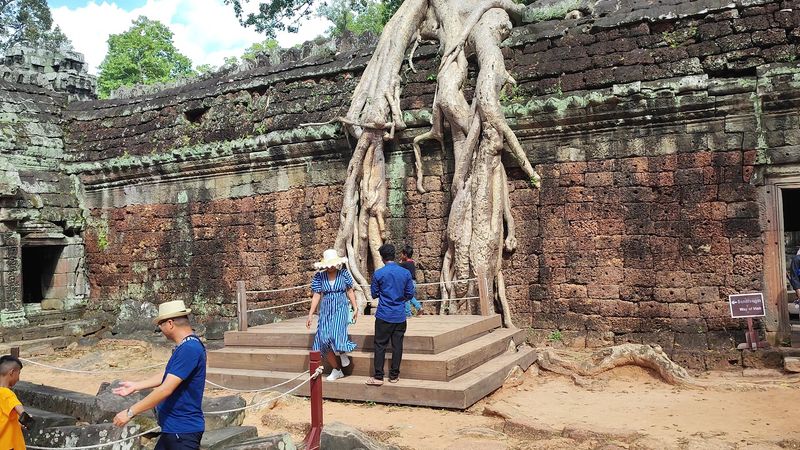
Plan on at least two hours. A reviewer suggested this much time, and it gives you space to wander, climb a bit, and take photos without rushing.
Your Angkor pass covers the temple, so keep it handy. Visitors say the same pass used for Angkor Wat works for the other temples in the area.
Ta Prohm is one of the busier stops in the park. That makes sense, since it is often listed among the top temples to see.
The temple is open every day, from 7:30 AM to 5:30 PM. Weekends can bring more people, so a weekday visit may feel calmer.
Be patient at the famous spots, and be kind when sharing space. A little friendliness goes a long way when everyone wants the same photo.
Why It Earns Five Stars
With a 4.8 rating from more than 14,000 reviews, Ta Prohm is a crowd favorite. Almost every traveler calls it unforgettable.
Some describe it as a lost temple swallowed by the jungle. Others say the trees are almost more beautiful than the buildings.
One visitor remembered seeing pictures as a child and thinking wow. Seeing it in person went beyond their hopes.
The mix of history, nature, and mystery sets it apart from every other stop in Angkor. Few places show so clearly how time and plants can reshape human work.
If you are in Siem Reap, make room for it. A group of 45 travelers all loved it, which says a lot.
Go with curiosity, move slowly, and let the roots do the talking.
Share this story