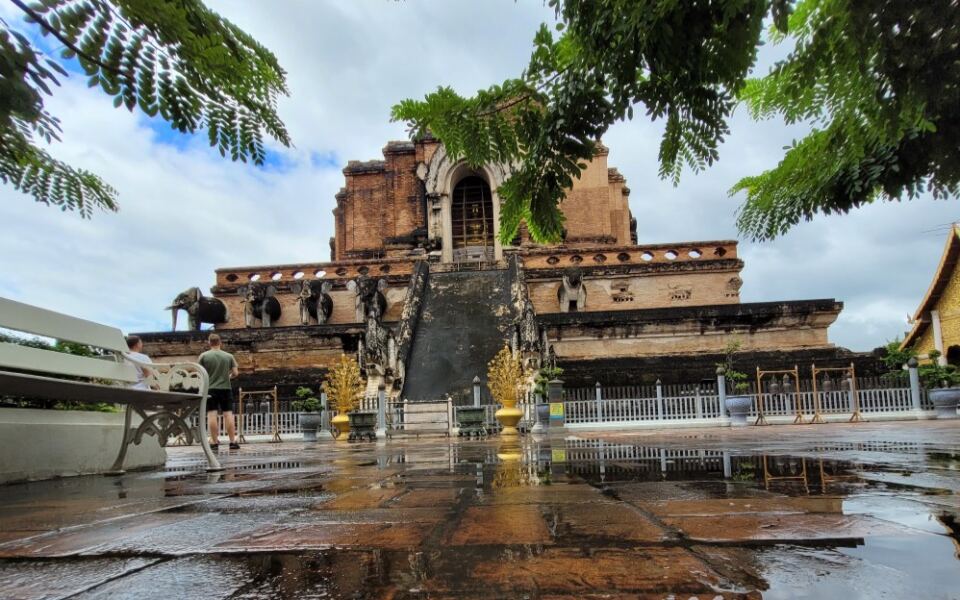
Wat Chedi Luang in Chiang Mai is a temple with a giant broken tower at its heart. Long ago, that tower stood about 82 meters tall, the highest building in the city.
An earthquake shook off its top, yet the ruin still takes your breath away. Here are ten things that make this old temple so special.
A Tower That Once Touched the Clouds
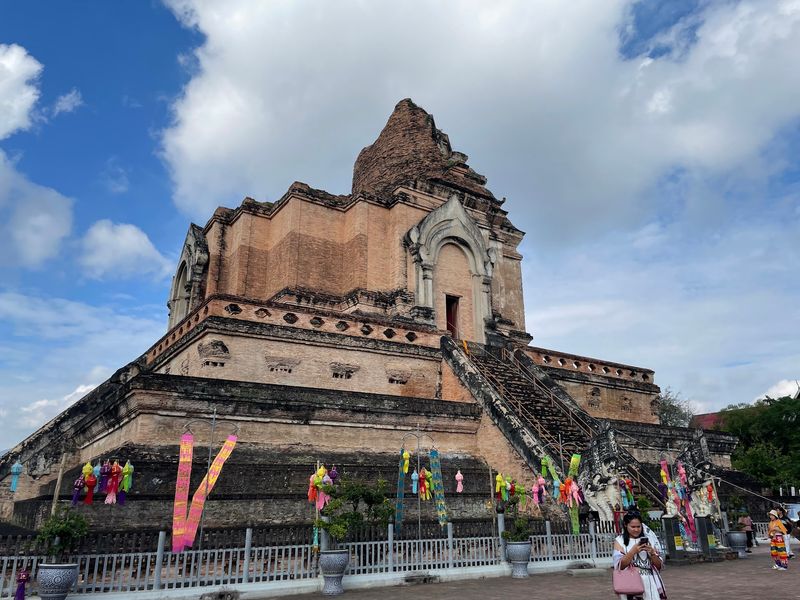
Picture a building so tall that everyone in town could spot it from their doorstep. That was the great chedi, which reached about 82 meters when it was finished in the 15th century.
It was the tallest structure in Chiang Mai.
Work on it began in the late 1300s and took many decades. Several rulers of the Lanna Kingdom added to it, and each wanted it bigger and grander than before.
Over time it became a symbol of the kingdom’s power and faith.
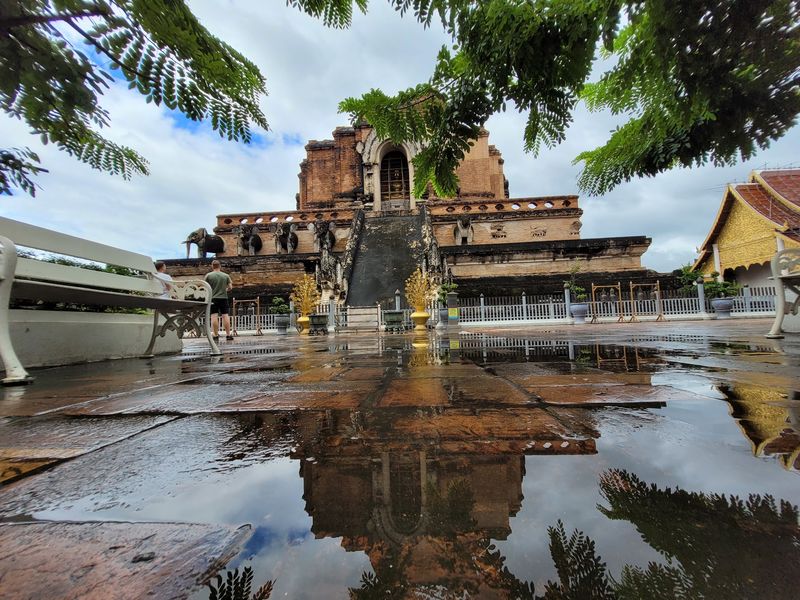
Today, the tower is shorter, but it still feels enormous when you stand at its base. Tilt your head back and the old bricks seem to stretch on forever.
Many visitors say photos cannot capture the size, and that it feels even better in person.
Walk all the way around it slowly. Each side shows a slightly different view, with weathered stone, small alcoves, and tall steps.
Give yourself time here, because this tower is the main star of the whole temple complex.
The Earthquake That Took a Bite
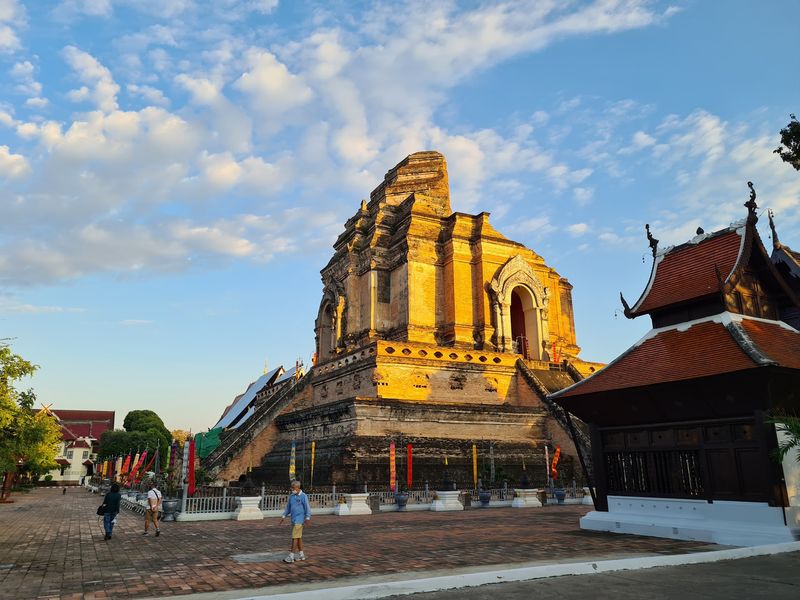
In 1545, the ground shook and the top of the chedi tumbled down. About 30 meters vanished in a flash.
What remained is the rugged, broken shape you see now.
Many people expect a ruin to feel sad, but this one feels powerful instead. The jagged crown tells a story of time, nature, and survival.
Travelers often say the damage gives the site more character than a perfect tower ever could.
Later rulers tried to fix it, but the tower never got its full height back. A restoration in the 1990s added some new parts to help keep it standing.
Some people like the repairs, while others prefer the raw, crumbled look.
Look closely at the brick textures, where moss and cracks tell their own tale. In late afternoon, the sunlight turns the stone golden.
That is a great moment to snap a photo and think about how long this tower has been standing.
Elephants Guarding the Walls
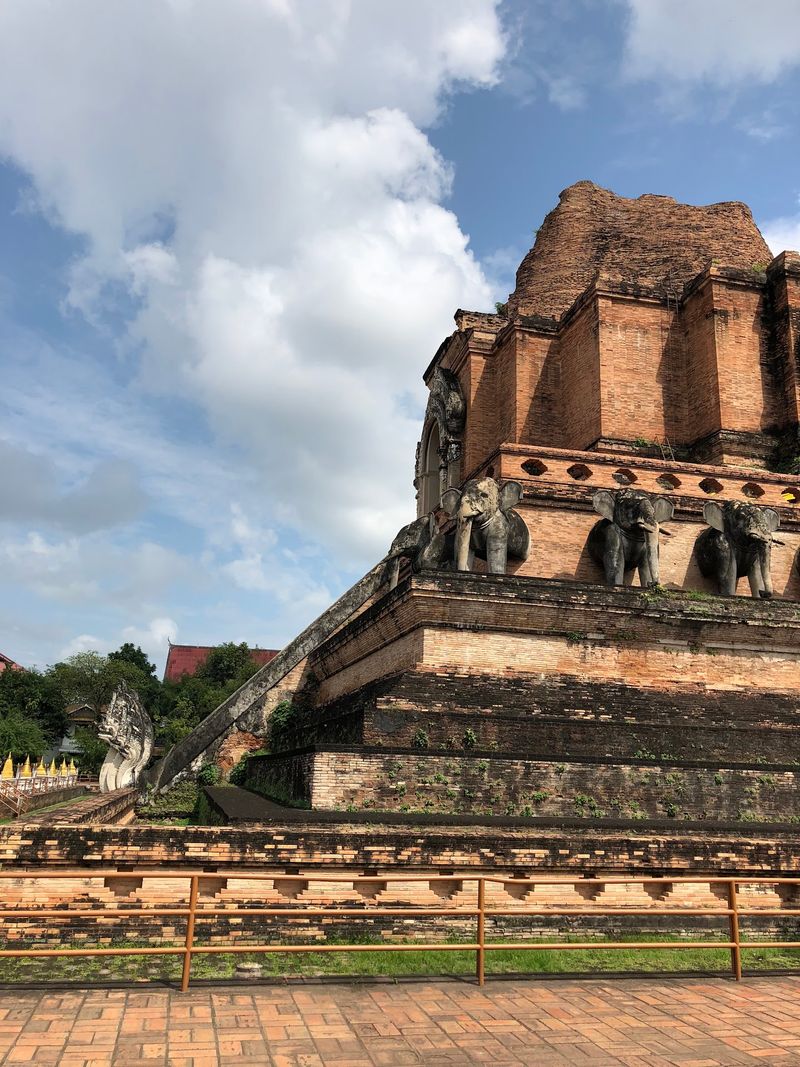
Keep an eye out for the elephants, because they are easy to love. Carved elephant figures stick out from the base of the chedi as if they are holding it up.
Elephants have long stood for strength and royalty in Thai culture.
Some of the statues have been rebuilt, and a few look quite new next to the old brick. Even so, they add a playful touch to a very serious monument.
Kids and adults alike enjoy spotting each one.
High above them, small alcoves hold golden Buddha figures. One visitor said these were their favorite details, along with the elephants below.
The mix of gold and brick makes a lovely picture.
Try circling the chedi and counting the elephants as you go. It turns a simple walk into a mini treasure hunt.
Bring a camera, since the stone faces look great in soft morning light.
Home of the Emerald Buddha, For a While
Here is a fun bit of trivia: Thailand’s most treasured Buddha image once lived in this very chedi. The Emerald Buddha stayed here for many years in the 1400s.
Later it traveled to Luang Prabang, then on to Bangkok, where it sits today.
A replica now rests in the eastern niche of the chedi, so you can still see where it used to be. The little shrine is easy to miss if you rush by.
Slow down and look for it.
The story shows how important this temple was long ago. Kings and monks cared for it, and pilgrims traveled far to pray here.
That history still hangs in the air today.
When you visit, picture the statue arriving in a grand parade. It makes the old bricks feel much more alive.
Sharing this story with your travel buddies is a great way to make the visit stick in memory.
The City Pillar Shrine
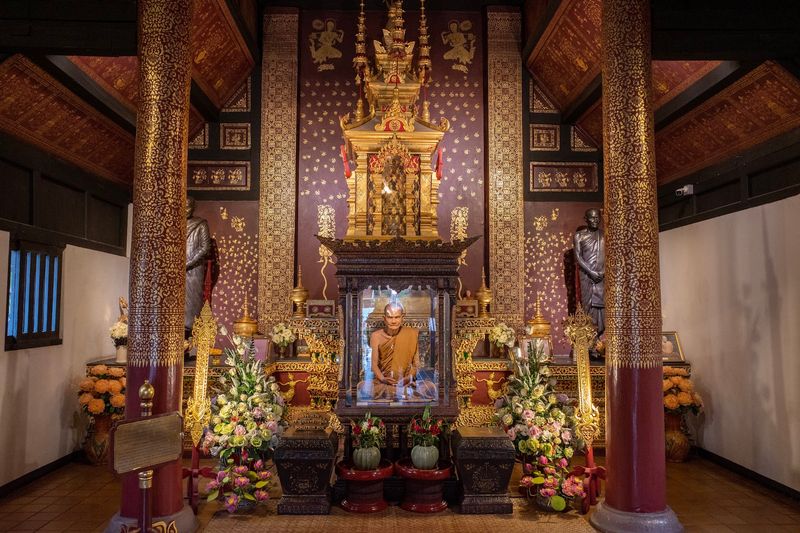
Deep beneath a small building near the entrance sits Chiang Mai’s city pillar, known as Inthakhin. Locals believe it guards the whole city and its people.
It is a place of quiet respect.
Each year in late May, people gather here for a flower offering ceremony. Candles glow, blossoms pile up, and even light rain does not stop the crowd.
Visitors who have joined in call it moving and peaceful.
There is one rule to know. Women are not allowed inside the pillar building, and a sign explains the old tradition.
Some travelers feel uneasy about the reason, so it helps to read up before you go and decide how you feel.
Even from outside, the shrine is worth a look. Notice the offerings, the gentle hush, and the way locals stop to pray.
It shows that this temple is not only a ruin but a living part of daily life.
Chat With a Monk
Want to practice your people skills? Young monks here are happy to talk with visitors.
They use the chats to improve their English, and you get to ask real questions.
Topics can range from daily temple life to Buddhism and Thai culture. Many travelers say these talks were the highlight of their day.
Keep your questions friendly and curious, and you will get warm answers.
Ask about their routines, what they study, or how they chose this path. Remember to be polite and follow temple manners.
Women should avoid touching a monk, and everyone should keep a respectful tone.
Check the signs near the grounds for chat times, because schedules can change. A short conversation can stay with you far longer than a souvenir.
It is a simple way to meet the people who keep this place alive.
Golden Hour Magic
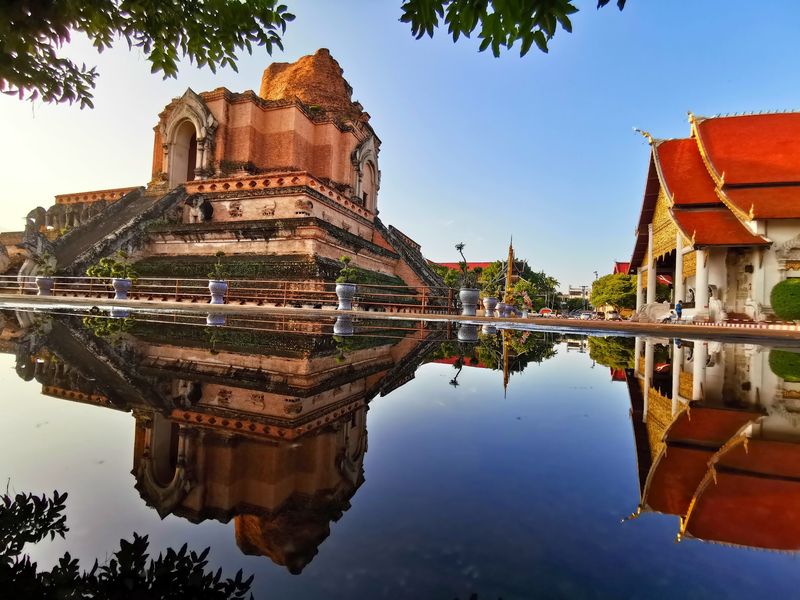
Late afternoon is when the old bricks start to glow. The light turns them a warm gold, and the crowds thin out.
Several visitors say sunset was the best time they could have picked.
Monks sometimes chant during this hour. The sound drifts across the grounds and mixes with the soft light.
It feels calm and a bit magical.
Benches near the chedi let you sit and soak it all in. You do not need to rush or follow a tight plan.
Just look up and enjoy the view while the sky changes color.
Bring a bottle of water and wear light clothes that still cover your shoulders and knees. The temple is open from early morning until late evening, so you have plenty of choices.
Photographers in particular love this time for rich, glowing shots.
Night Lights and Laser Shows
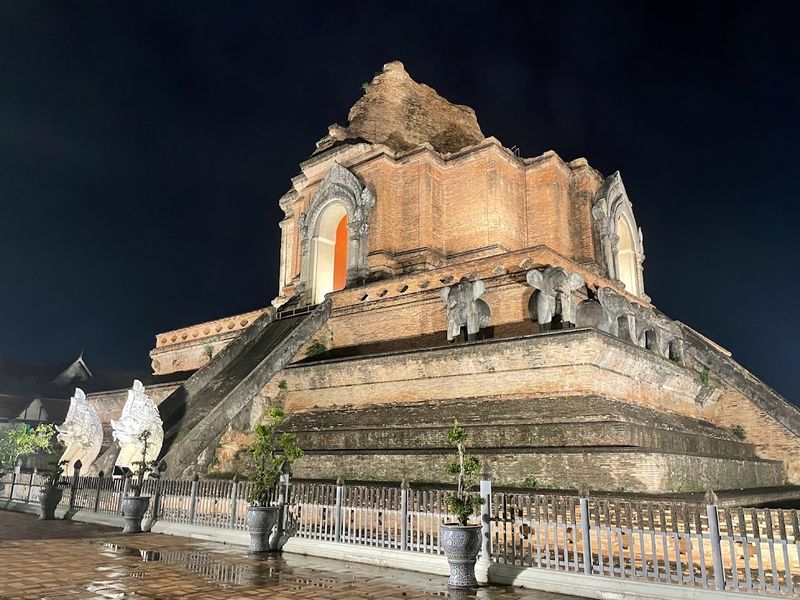
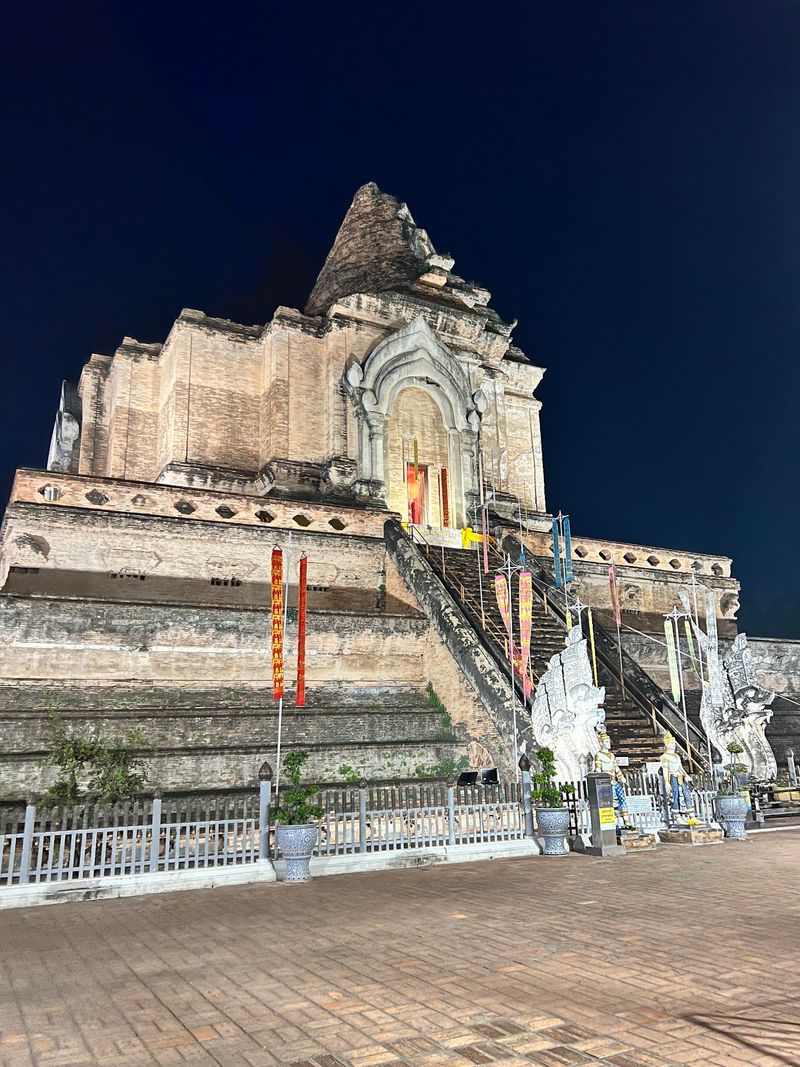
After dark, the ruin gets a whole new look. Soft lights wash over the brick, and the broken top stands out against the night sky.
Many guests say it is even more stunning than in daylight.
Some evenings include colorful laser light shows. Each segment lasts about five minutes, and visitors found them fun and surprising.
It is a modern twist on a very old place.
The grounds stay calm in the evening, which is lovely for a slow stroll. One traveler visited around 7 pm and enjoyed the quiet benches around the pagoda.
It is a great spot to unwind after a busy day of sightseeing.
Plan to stay a bit longer than you first think. One reviewer stopped by for a short visit and ended up lingering for hours.
Take a light jacket if the breeze picks up, and bring your camera for night shots.
Ornate Halls and Golden Buddhas
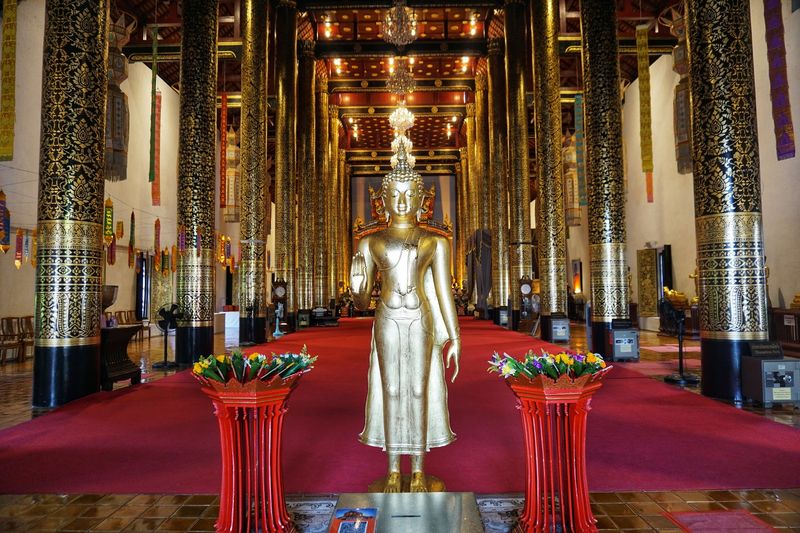
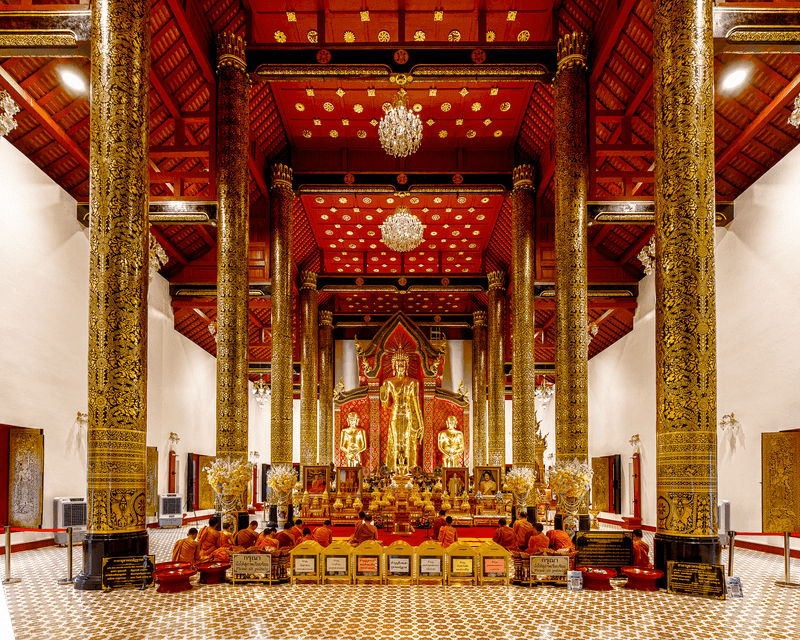
Not everything here is ruined. In front of the old chedi stands a bright, richly decorated viharn, or assembly hall.
Its gold and red details look stunning against the weathered tower behind it.
Inside, a large golden Buddha sits in calm stillness. Monks pray here, and the room often feels hushed.
Take off your shoes, keep your voice low, and enjoy the details.
Look at the carved wood, painted walls, and delicate Lanna patterns. Reviewers praised the artwork both inside and outside the buildings.
One said the contrast between new and old was their favorite part.
Several other halls sit around the grounds, so give yourself time to peek into each one. A small museum and manuscript library near the entrance share more history.
Most visitors need about an hour to see everything comfortably.
Handy Visitor Tips
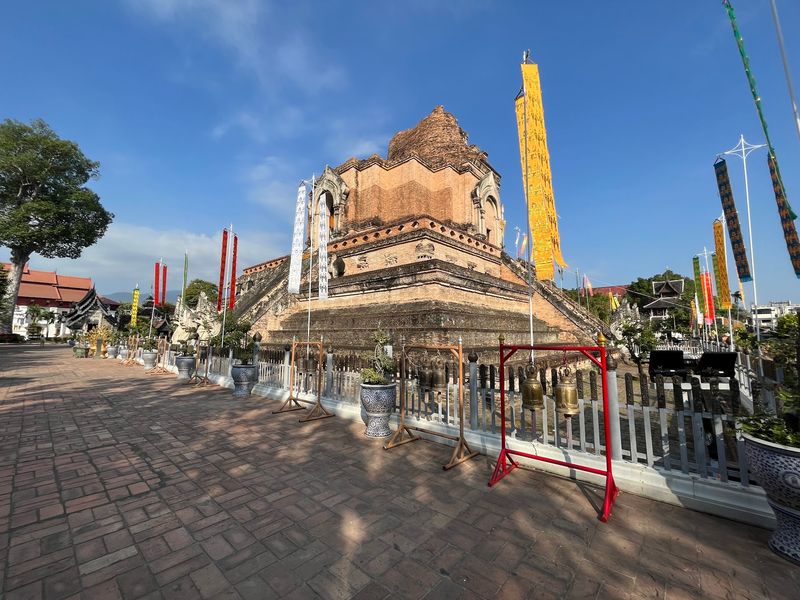
Before you go, here is a quick checklist. The temple sits on Prapokklao Road in the Old City and opens daily from 5 am to 10:30 pm.
Entry has been around 50 to 100 baht, so bring a little cash.
Dress modestly, with shoulders and knees covered. Locals and monks appreciate the respect, and some halls may turn you away if you are not covered.
A light scarf in your bag solves the problem.
Go early or late to dodge the biggest crowds. One visitor arrived early on a Saturday and found it peaceful.
Restrooms are on the left side of the grounds.
Know that the sleeping Buddha hall is often closed, which disappointed one traveler. Do not waste time circling looking for it.
Instead, spend that time at the museum, under the giant shady trees, or on a bench admiring the chedi.
Save It for Your Grand Finale
One traveler gave surprising advice: do not make this your first temple. Treat it as the grand finale of your Chiang Mai trip.
After seeing its size, other temples can feel small by comparison.
That reviewer described Indiana Jones vibes and said they would have happily paid ten times the ticket price. The place feels ancient, mysterious, and a little wild.
It left them with a new favorite temple in Thailand.
There is some sense in this plan. Starting with smaller temples helps you learn the customs and build your excitement.
Then this giant ruin lands with extra impact.
Whenever you visit, leave time to simply sit. Find a bench, look up at the steps, and let the quiet sink in.
You might even daydream about racing up those stairs, movie style, before remembering that climbing is not allowed.
Share this story