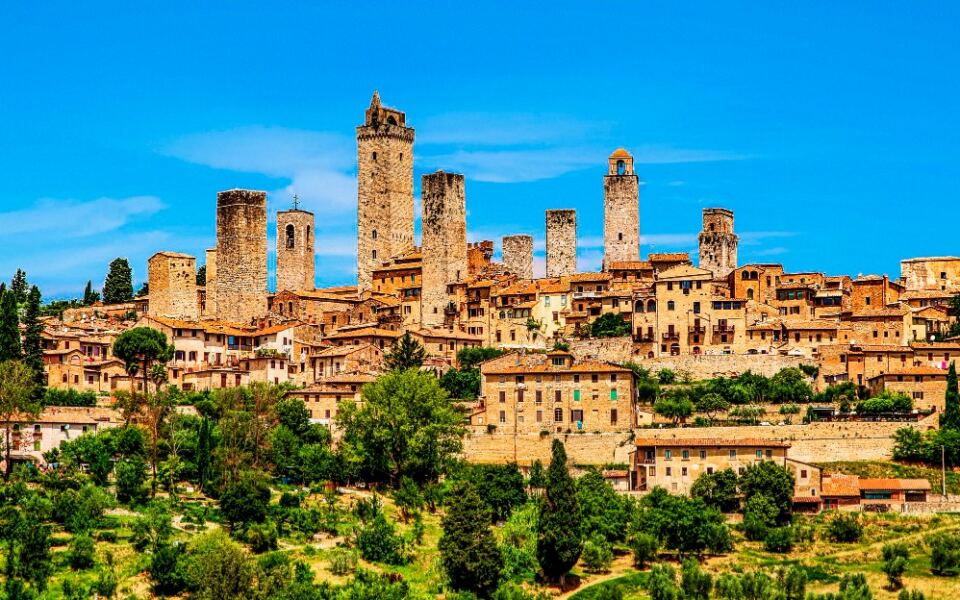
Some towns seem to have been drawn by an artist with a big imagination. They sit on cliffs, ridges, and rocky spurs, with stone lanes, old walls, and views that stretch for miles.
This list gathers 14 hilltop towns across Europe and Morocco, each with its own look and its own story. You will find a village reached only by a footbridge, a town split by a deep gorge, and a blue-painted medina in the mountains.
Some are famous for towers, some for castles, and some for dark night skies. Read on to see which ones belong on your travel wish list, and which one you might send to a friend who loves a good view.
Civita di Bagnoregio, Italy
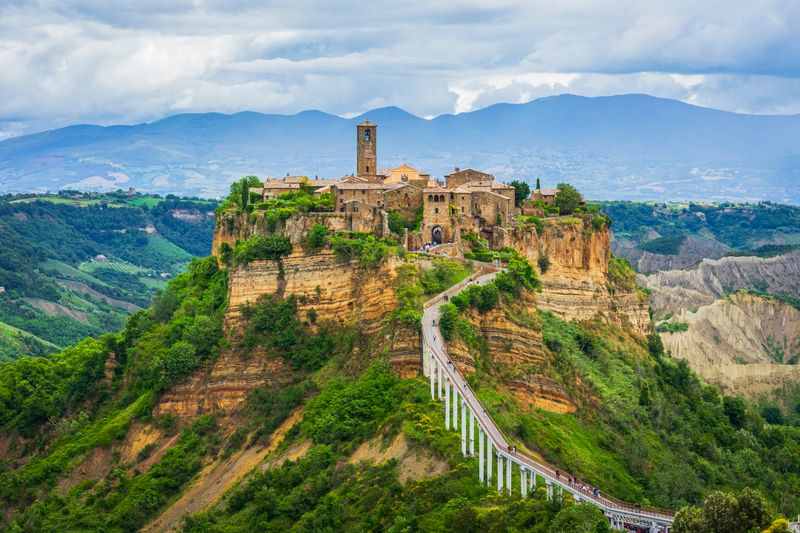
Here is a town you can only enter on foot. Civita di Bagnoregio stands on a fragile tufa spur above the eroded Valle dei Calanchi in Lazio, and a pedestrian bridge about 300 meters long is the way in.
The village goes back more than 2,500 years to the Etruscans. That is a very long time for a small hilltop to hang on, especially one surrounded by crumbling badlands.
After the bridge, visitors pass through Porta Santa Maria and step into a quiet maze of stone houses, medieval lanes, and small squares. The Church of San Donato sits in the heart of the village and gives the walk a natural stopping point.
Because the landscape drops away on every side, the settlement looks almost suspended above the valley. Wear shoes with good grip, since the bridge is a bit of a climb and the lanes are old and uneven.
Give yourself time to walk slowly, because the whole village is small and the views change around every corner.
Gordes, France
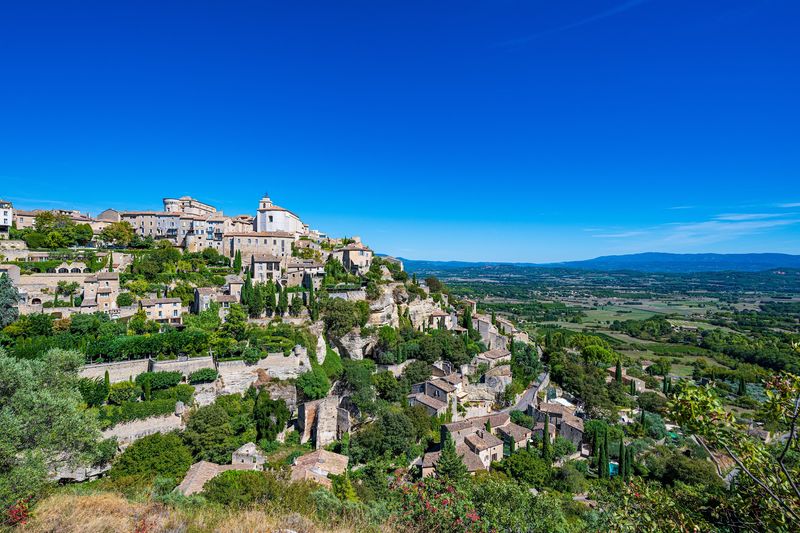
Stack a village up a rocky hillside and you get Gordes. This classic perched village in Provence’s Luberon region has stone buildings rising in layers toward its historic center.
Viewpoints around town look out across the countryside and toward the Luberon mountains, so photo stops are easy to find.
Nearby, the Village des Bories gathers traditional dry-stone structures, a fun detour for anyone curious about how people built without mortar. North of the village, Sénanque Abbey is known for its lavender fields, which makes the area a favorite for summer road trips.
Current regional tourism information confirms that visitor facilities, accommodation, restaurants, and attractions continue to operate in and around Gordes. That makes it easy to plan a half day or a longer stay.
If you like to travel by car, think of Gordes as one stop in a larger Luberon loop. The hillside streets are steep, so comfortable shoes are a smart choice for exploring the center.
Ronda, Spain
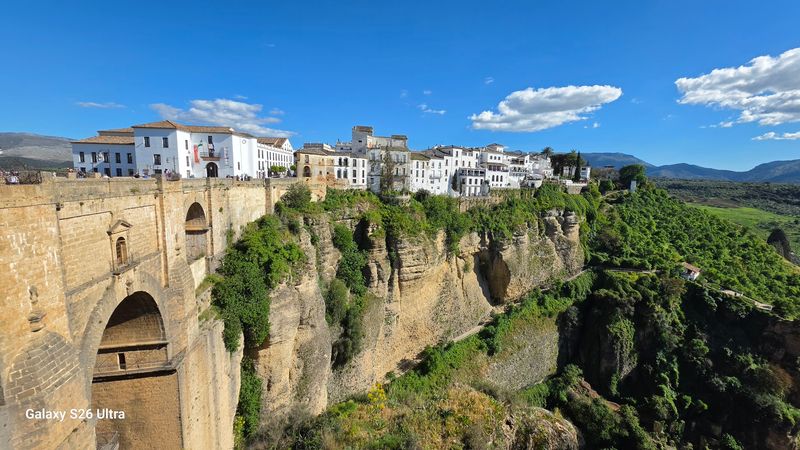
Ronda does not simply sit on a hill. Large parts of the town stand beside the El Tajo gorge, which is more than 100 meters deep, and the drop is part of the town’s identity.
The Guadalevín River divides the historic and newer sections, and several bridges connect them. The most famous is Puente Nuevo, a landmark that shows up on nearly every postcard.
Still, Ronda has plenty beyond one bridge. The old quarter keeps medieval and Arab influences, so a slow walk through its streets feels like moving through layers of history.
Viewpoints around the edge of town look out over the mountains and countryside of Andalusia’s Serranía de Ronda. Those wide views are the reason many visitors linger longer than planned.
I would save this one for a day when you can cross a few of the bridges and look at the gorge from different sides. Each angle gives a different sense of how dramatic the setting really is.
Oia, Santorini, Greece
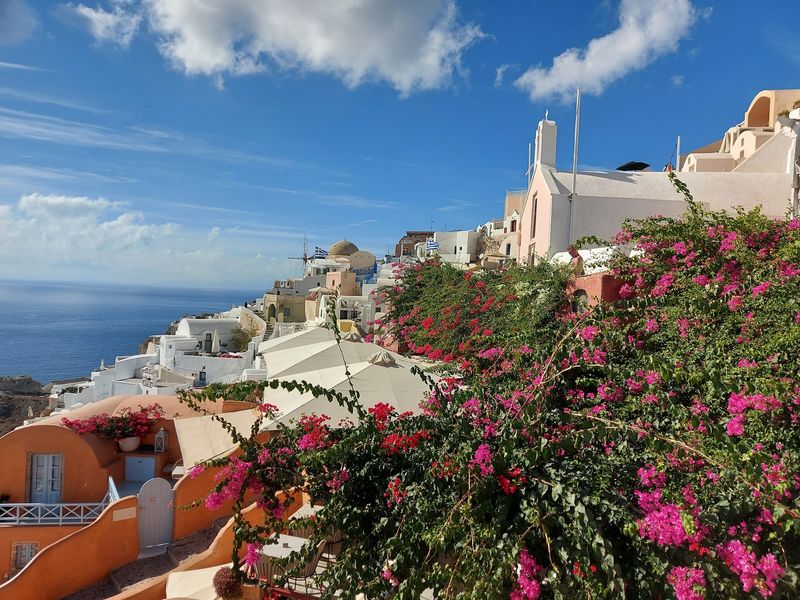
Sunset is the main event in Oia, and the town is arranged to make the most of it. Whitewashed buildings, churches, terraces, and narrow lanes cascade down the steep rim of Santorini’s volcanic caldera toward the Aegean.
Greece’s official tourism organization describes Oia as one of Santorini’s historic settlements. It highlights the position along the caldera rim and the internationally famous sunsets.
Visitors will find shops, restaurants, accommodation, and visitor facilities all operating, so the town is set up for both short stops and longer stays.
Because the lanes are narrow and the views are so popular, a little planning helps. Walking the main paths early in the day gives more room for photos and a calmer pace.
The steep layout means stairs are part of the experience. Comfortable shoes make the climbs and descents easier, and they let you spend more energy on the scenery than on your feet.
San Gimignano, Italy
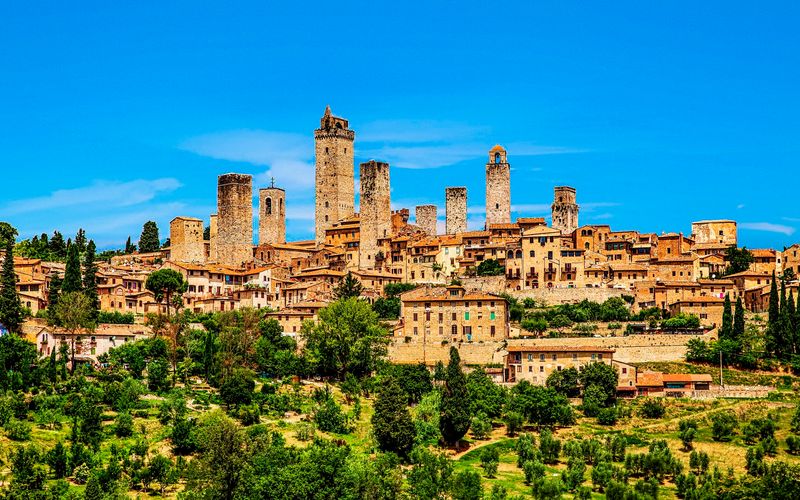
Count the towers and you get fourteen. That is how many medieval towers survive in San Gimignano, and from a distance they make the Tuscan skyline instantly recognizable.
Wealthy local families once built towers as symbols of power and prestige, so the skyline is really a record of old rivalries.
The fortified town lies between Florence and Siena and is part of a UNESCO World Heritage Site. That makes it a handy stop on a Tuscany road trip.
Inside, visitors can wander stone lanes and relax in Piazza della Cisterna and Piazza Duomo. For a higher view, Torre Grossa provides elevated looks over the town and the surrounding countryside.
Walking is the best way to see it, since the historic center is compact and made for strolling. Bring a camera, but also leave time to simply look up at the stone towers and think about how long they have stood there.
Montepulciano, Italy
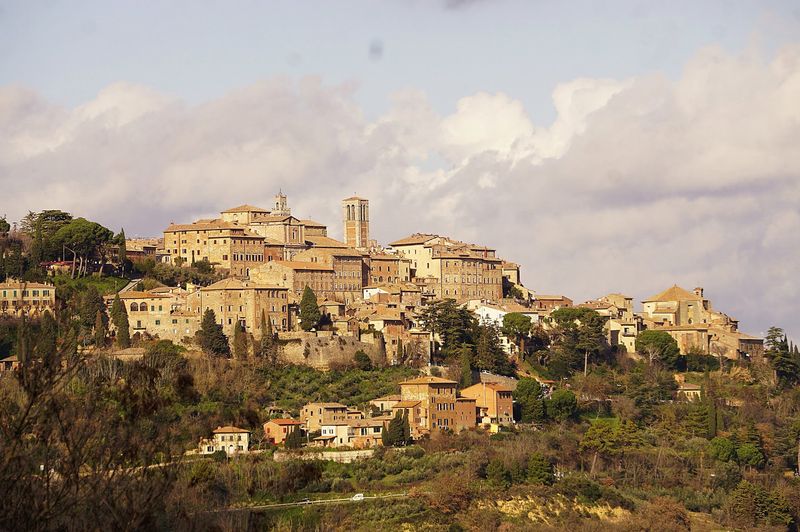
Get ready for a climb. Montepulciano runs along the crest of a hill between Val d’Orcia and Valdichiana, and its streets head steadily upward toward Piazza Grande at the highest part of the historic town.
The route is lined with Renaissance palaces, churches, wine cellars, and artisan workshops, so there is always something to peek into along the way.
At the top, the Town Hall tower offers views stretching toward Monte Amiata, Siena, and Lake Trasimeno. On a clear day, that is a lot of Tuscany in one look.
The mix of Renaissance architecture and sweeping scenery gives Montepulciano a different feel from some of its more tower-heavy neighbors.
A good plan is to take the uphill walk slowly, stopping at workshops and side lanes, then save the tower view for the end. That way the reward arrives after the effort, and the town unfolds in a nice order.
Albarracín, Spain
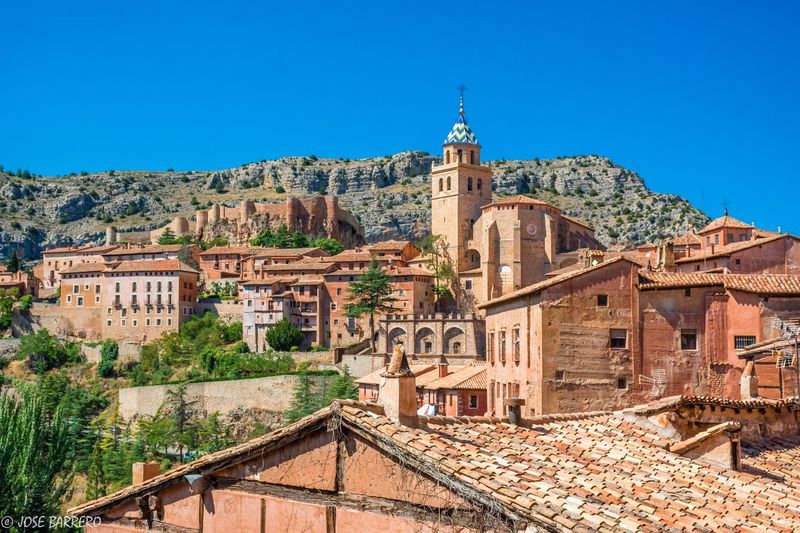
At about 1,182 meters, Albarracín sits higher than many people expect for a historic town. It rises along the side of a mountain in Aragón, and its reddish medieval buildings give it a color all its own.
Steep streets and fortified walls add to the look, which is why it counts among Spain’s most distinctive historic towns.
The town was once the capital of a Taifa kingdom. Traces of its Islamic and medieval past remain throughout the old quarter, so the history is part of the walk rather than something behind glass.
Wandering the lanes leads to unexpected viewpoints over the Guadalaviar River and the landscape around it. Many turns bring a new angle on the rooftops and walls.
This is the kind of place to visit when you want a quieter pace and a lot to look at. Bring shoes for slopes and stairs, and let the lanes decide your route.
Óbidos, Portugal
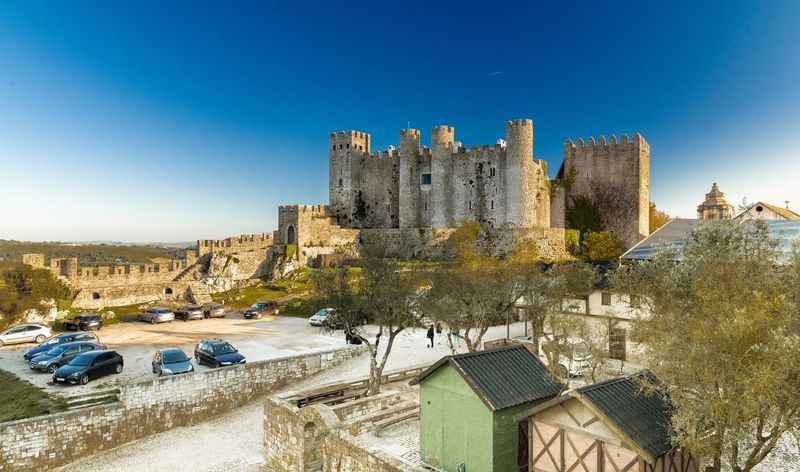
Walls come first in Óbidos. The town occupies high ground near Portugal’s Atlantic coast and is still surrounded by medieval fortifications, which makes entering it feel like stepping into another era.
Inside is a remarkably preserved maze of whitewashed houses, churches, flower-filled streets, and historic architecture.
The castle, later transformed into a pousada, dominates the fortified settlement. It is a good reminder that old buildings can find new lives.
Visitors can explore the narrow lanes and climb sections of the walls for a look over the rooftops. Along the way, many stop for the town’s famous ginjinha cherry liqueur, often served in a small chocolate cup.
Because the walled area is compact, a short visit still covers a lot. If you have more time, walking the wall sections and then drifting through the side streets is a nice way to see the town from above and below.
Monsaraz, Portugal
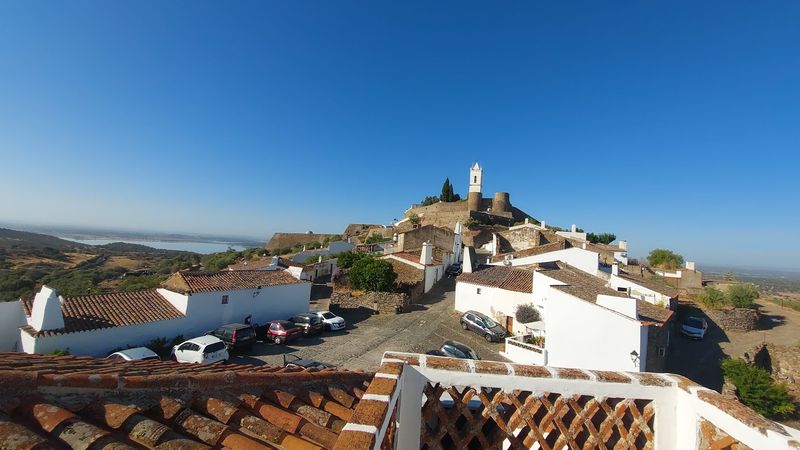
Open plains stretch out below Monsaraz, and the village makes the most of them. White houses and medieval walls crown this elevated spot in Portugal’s Alentejo region, giving enormous views across the land and Lake Alqueva.
Within the walls are a medieval castle, the Church of Nossa Senhora da Lagoa, historic streets, and remnants of the old Jewish quarter.
That mix of sites makes a short walk feel full of history. Each lane has something worth a pause, whether it is a doorway, a wall, or a view.
Night is just as interesting as day here. The Alqueva area is internationally recognized for its exceptionally dark skies, which is great news for anyone who likes stargazing.
A road trip through Alentejo could build a whole evening around this idea: explore the village while it is light, then stay for the sky. It is a simple plan with a big payoff.
Chefchaouen, Morocco
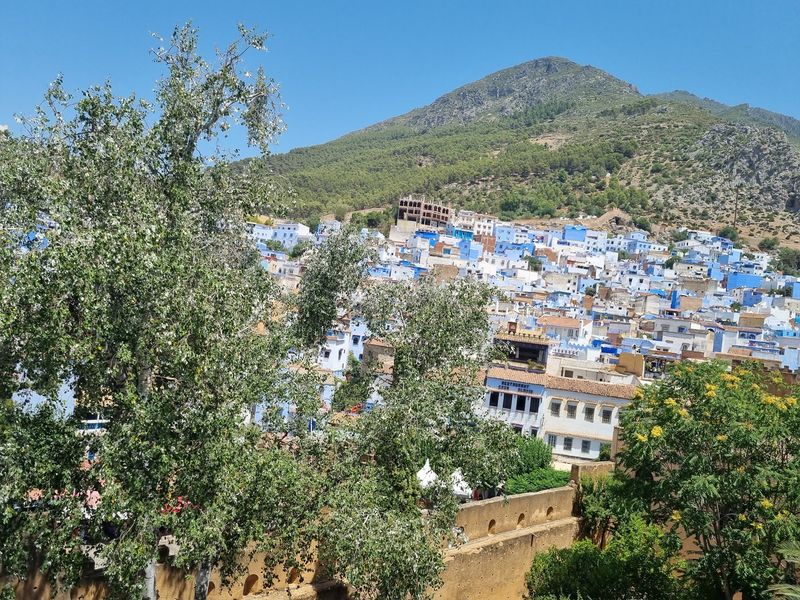
Blue is the signature here. Chefchaouen is built into a mountainside in northern Morocco and is famous for the blue-painted buildings and narrow lanes of its medina.
Morocco’s national tourism office describes the city as a mountainside destination surrounded by dramatic scenery, and the backdrop certainly supports that.
The historic center holds the Kasbah, gardens, traditional craft workshops, cafés, and winding streets filled with shades of blue. It is easy to lose track of time just following the lanes.
The mountains around town also make Chefchaouen a popular base for walking and exploring the countryside. That gives visitors a reason to stay more than a quick afternoon.
If photos are on your mind, wander without a strict route and keep an eye out for craft workshops along the way. The medina rewards slow walking, and the color changes from lane to lane.
Motovun, Croatia
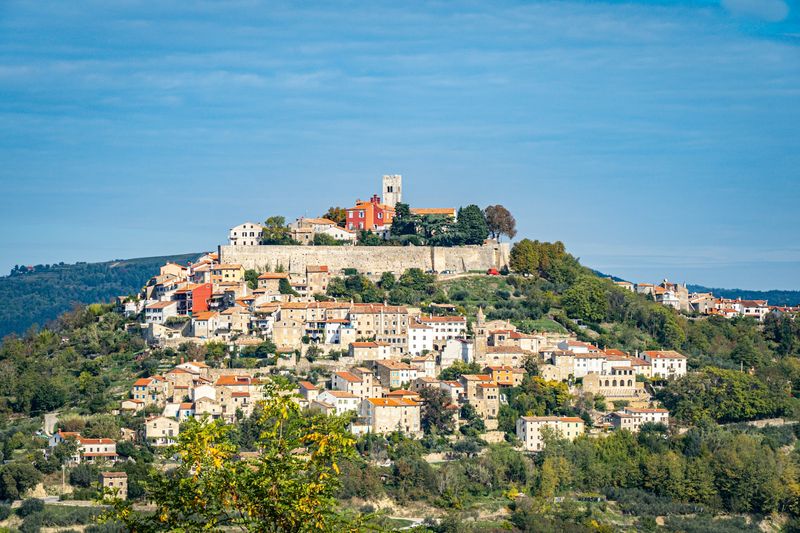
Exactly 277 meters above sea level, Motovun stands out in inland Istria. It is one of Croatia’s most recognizable hilltop settlements, and medieval walls encircle the historic core.
From the top, the view takes in vineyards, countryside, and the Mirna River valley, a wide green landscape that explains the town’s popularity.
Highlights include old gates, paved lanes, the Church of St. Stephen, and a Romanesque-Gothic bell tower. They give a short walk plenty of variety.
The surrounding Motovun Forest is particularly famous for truffles, a detail that gives the area a food angle as well as a scenic one.
Current Istria tourism information lists visitor services, accommodation, and seasonal tourist-office hours in the town. Checking those hours before you go is a smart move if you want help with maps or local tips.
Moustiers-Sainte-Marie, France
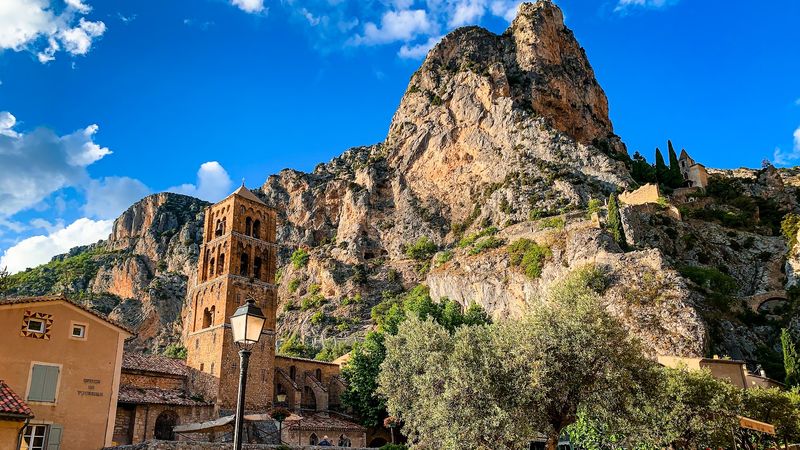
A star hangs above the village, strung on a chain between two cliffs. It is one of the most recognizable views in the region, and it greets visitors to Moustiers-Sainte-Marie.
The village sits beneath steep limestone cliffs near the entrance to the Gorges du Verdon in Provence, so the setting is dramatic before you even start walking.
Visitors can climb the staircase to the 12th-century Notre-Dame de Beauvoir chapel for a closer look at the cliffs and rooftops.
Back in the village, cafés, shops, and traditional faience pottery workshops fill the streets. Pottery is a nice souvenir idea if you like keepsakes with local roots.
The regional tourism authority confirms that Moustiers remains an active visitor destination with accommodation, restaurants, shops, and a tourist office. Pairing the village with a trip toward the Verdon gorge makes for a full day.
Èze, France
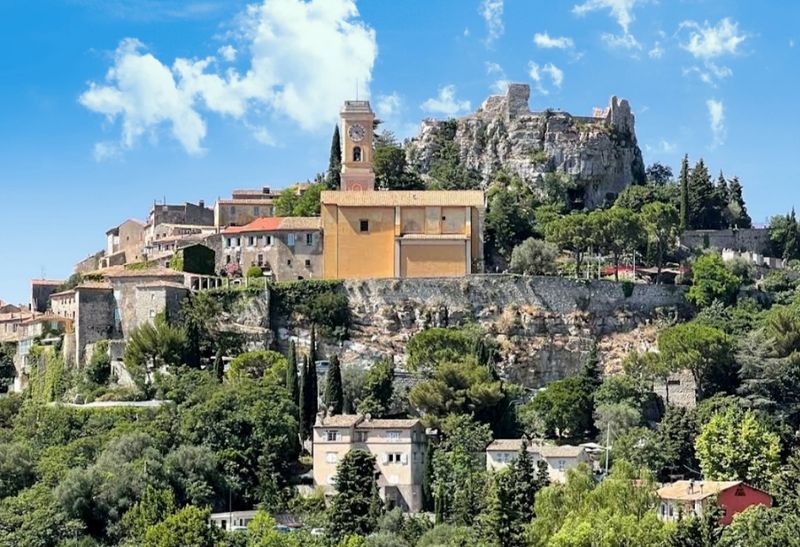
Eagles would feel at home in Èze. High above the Mediterranean on the French Riviera, it has the classic look of a medieval eagle’s-nest village.
Steep lanes climb between stone buildings, boutiques, and galleries toward the remains of an old fortress.
At the summit, the exotic garden occupies part of the former fortress site and offers expansive Mediterranean views. It is a rewarding finish to the uphill walk.
France’s official tourism site also notes the village’s artisan shops, perfume industry, hotels, and restaurants, so there is plenty to browse before or after the climb.
For a relaxed visit, wander the lanes slowly and stop in the galleries and shops as you go. The path is steep in places, so shoes with good support are a practical choice, and the view at the top makes the effort feel well spent.
Castellabate, Italy
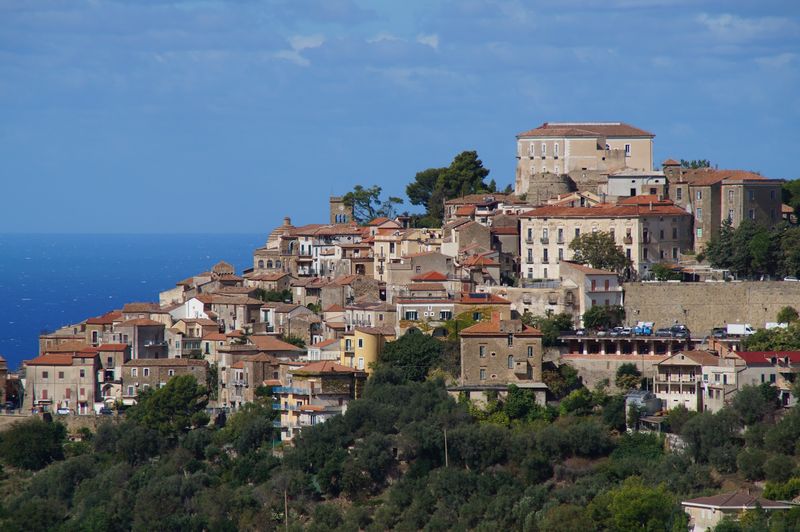
Sea views meet stone stairways in Castellabate. The town rises above Italy’s Cilento coast in Campania, with a medieval historic center spread across the hillside.
The old center is a maze of stone houses, stairways, small squares, and narrow alleys. Following them upward is the main activity, and it is a good one.
At the top stands Castello dell’Abate, whose construction began in the 12th century. It anchors the town and gives the climb a clear goal.
The San Costabile viewpoint provides particularly impressive looks at the coastline and surrounding countryside. Plan to pause there, since the view takes in both the sea and the land.
This is a good pick for travelers who like to combine history with coastal scenery. The hillside layout means plenty of steps, so take it slowly, and let the small squares serve as resting spots along the way.
Share this story