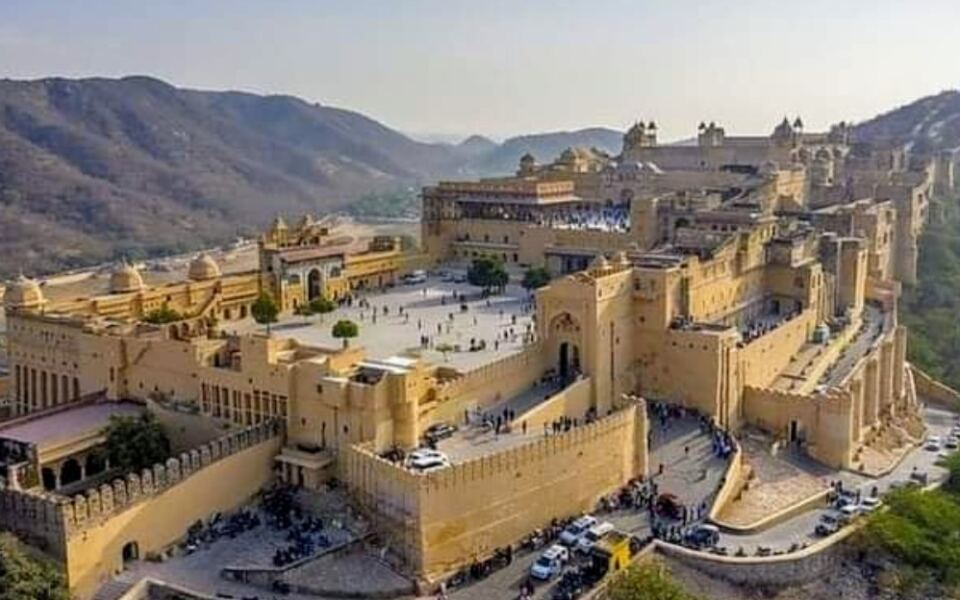
Amber Palace sits high on a rocky hill near Jaipur, and from far away it looks like a fortress built to stop armies. Step through its gates, though, and you find mirrored halls, painted doors, and quiet gardens made for kings and queens.
Here are ten spots that show how this palace mixes strength with pure royal comfort.
A Hilltop Fortress With Serious Muscle
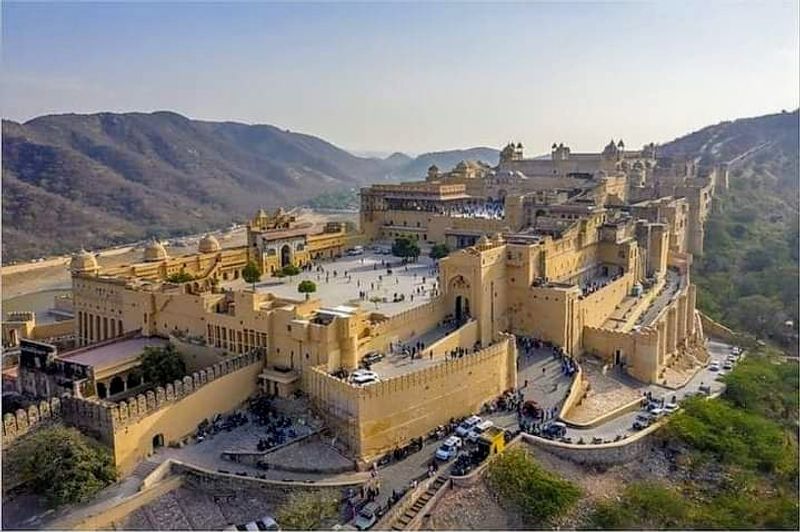
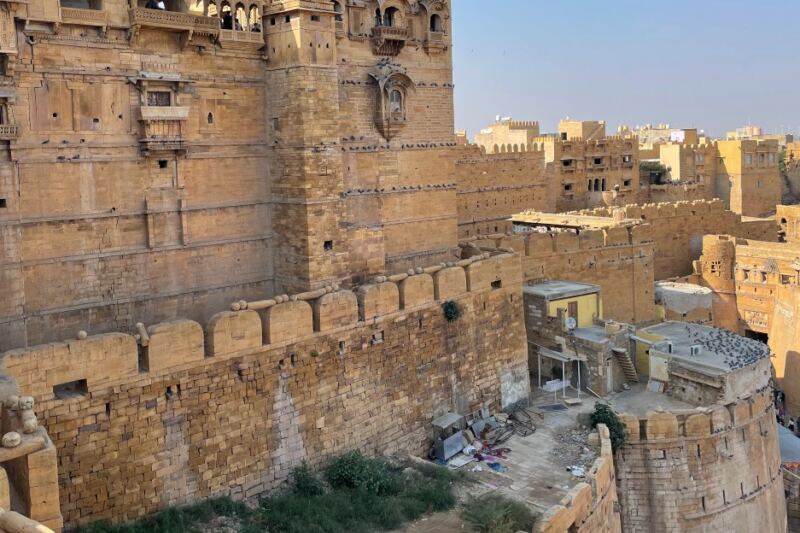
Picture a wall that snakes along a ridge like a stone dragon with no plans to nap. That is the first look at Amber Palace, which Raja Man Singh I began building in 1592.
Its thick ramparts and watchtowers were made to spot trouble from miles away.
The builders used red sandstone and white marble, so the whole hill glows in warm shades at sunrise. The hill itself is part of the defense, since steep slopes made attackers think twice.
Visitors often say the view from the walls feels like standing inside an old war movie.
Amber was the capital of the Kachwaha rulers until 1727, when the court moved to Jaipur. That means kings, guards, and servants lived here for generations.
Every corner has a story about who passed through it.
Bring comfortable shoes, because the paths are steep and the stones are old. Arrive early to beat the heat and the crowds.
In 2013 UNESCO added the hill forts of Rajasthan, including Amber, to its World Heritage list, so the place is now officially a global treasure.
The Elephant Ride to the Top
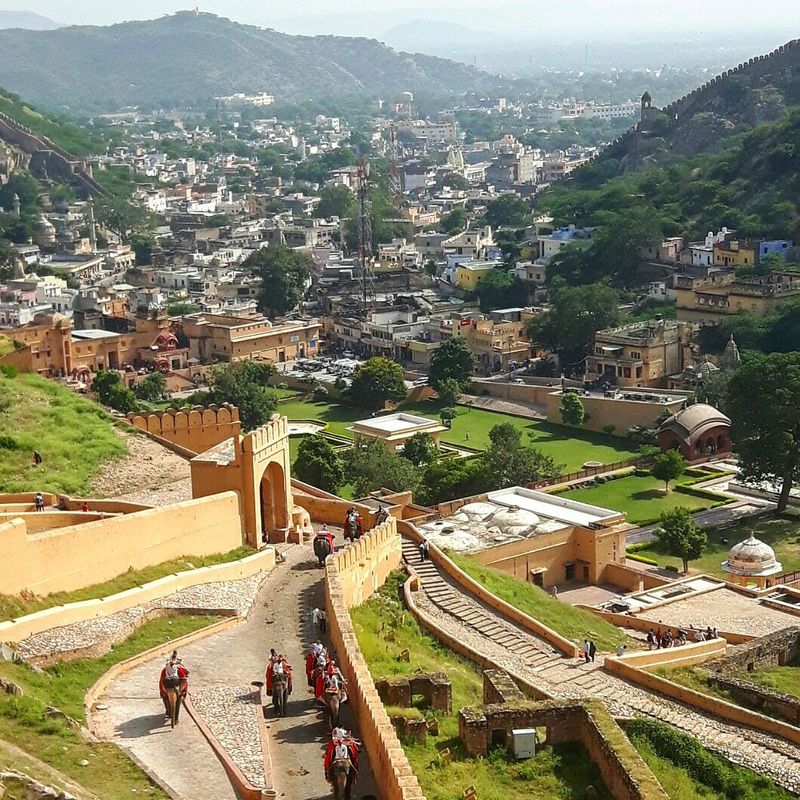
Nothing says royal arrival like swaying uphill on a painted elephant. For years, this ride has been the most famous way to reach the palace gates.
Riders sit on a cushioned seat while a guide keeps the slow, steady pace.
The path winds up a stone ramp lined with old walls. Along the way, you can watch the fort grow larger with every step the elephant takes.
Many travelers admit they spent half the ride grinning and the other half taking photos.
Animal welfare is now a big topic here. Rules limit how many trips each elephant can make and how much weight it can carry.
Some visitors choose to skip the ride and think about how the animals are treated.
If you prefer your own feet, you can walk up the ramp or take a jeep. Walking lets you notice small details like carved arches and old lookout points.
Whatever you pick, go early, because the morning light is kind and the lines are short.
Suraj Pol, the Sun Gate
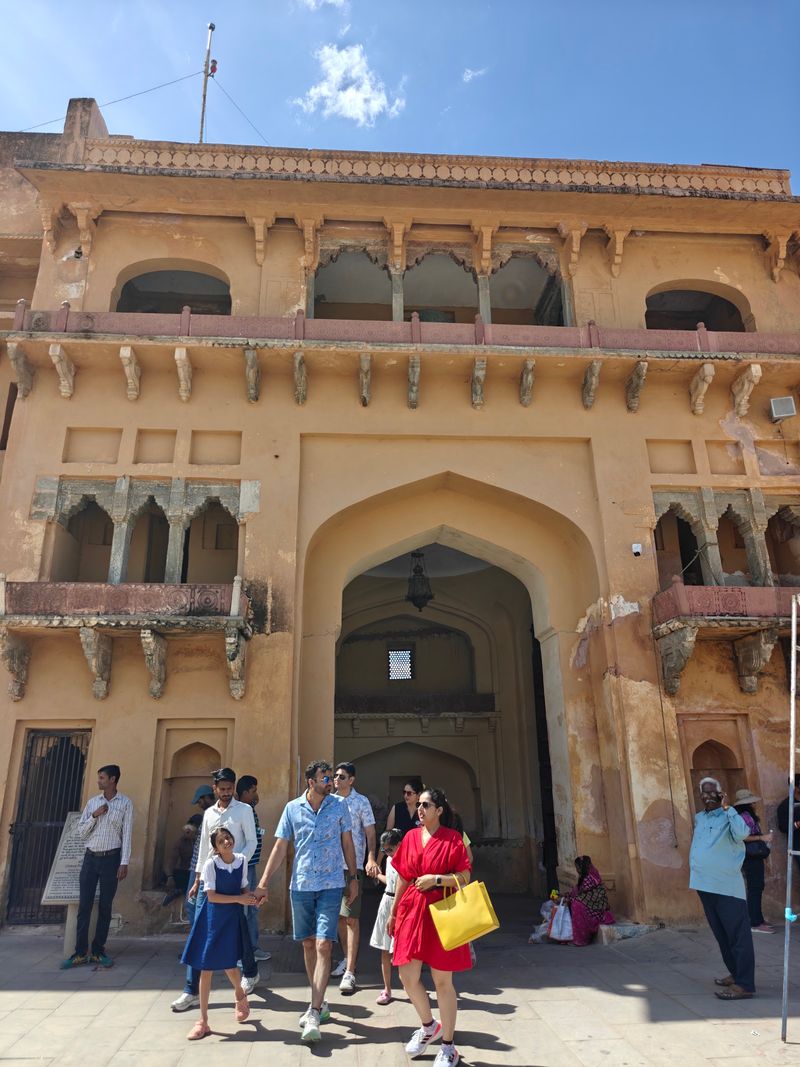
Facing east, the Suraj Pol catches the first rays of dawn and turns them into a golden welcome. The name means Sun Gate, and it was the main doorway for royal processions.
Imagine trumpets, banners, and horses all squeezing through this arch.
The gate opens into Jaleb Chowk, a big courtyard. Its design is simple on purpose, because the palace saves its fancy side for the rooms ahead.
Guards once watched everyone who walked through.
Look closely at the stone and you will notice how thick the walls are. That thickness helped slow down intruders and kept the courtyard cool.
Smart planning, even before air conditioning was a dream.
Visitors today pass through the same gate to buy tickets and gather for tours. Audio guides are available, and they add stories you might miss on your own.
Stop for a moment under the arch and listen, because the echoes of footsteps make the place feel alive.
Jaleb Chowk, the Grand Courtyard
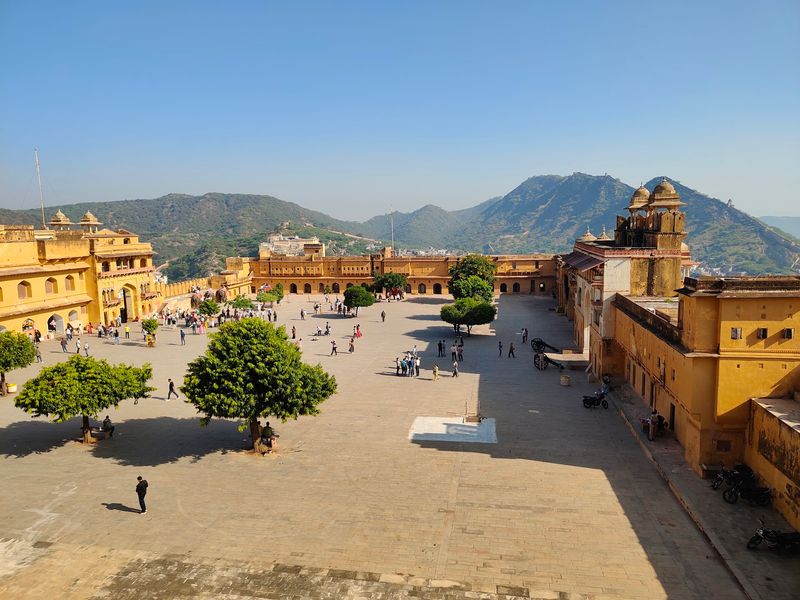
Soldiers once marched here after winning battles, carrying prizes and tired smiles. Jaleb Chowk was the parade ground where armies gathered and returned.
Women of the court watched the show from windows high above, hidden behind carved screens.
The courtyard is wide and open, which makes it easy to catch your breath after the climb. Stairs on one side lead up to the main palace halls and a small temple.
Shila Devi Temple stands nearby, and locals still visit it to pray.
Ponder the scale for a second. Hundreds of people could fill this space for ceremonies and festivals.
Today it hosts tour groups, photographers, and the occasional pigeon with strong opinions.
Take a slow lap and look up at the balconies. Their small details, like jali screens and arched windows, show how much care went into every wall.
Come in the morning if you want empty frames for your photos.
Diwan-i-Aam, the Hall of Public Audience
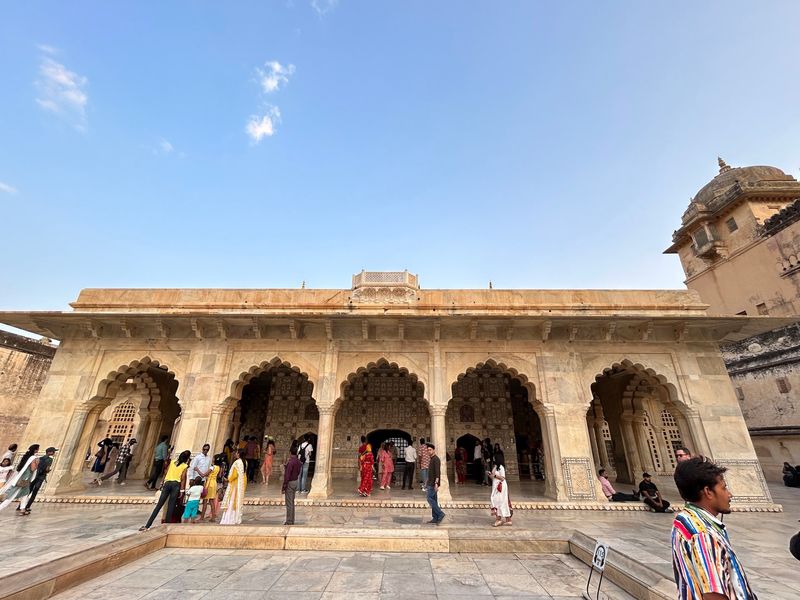
Forty columns hold up the roof of this hall, and each one has a tale to tell. Diwan-i-Aam was where the ruler met ordinary people and listened to their troubles.
It stays open on the sides, so breezes drift through like polite guests.
The pillars are made of red sandstone and marble, and the tops are carved with elephant shapes. Kings sat on a raised platform while petitioners stood below.
That setup made it clear who was in charge.
Here is a quirky fact: the hall was built for talking, but today it is mostly used for photographing. Its wide arches frame the valley below beautifully.
Many visitors say the view from here is the best free postcard in town.
Stand near the edge and look out at the hills and Maota Lake. Guides will point out the old walls snaking across the ridge.
Spend a few minutes here before heading deeper into the private palace.
Ganesh Pol, the Painted Doorway
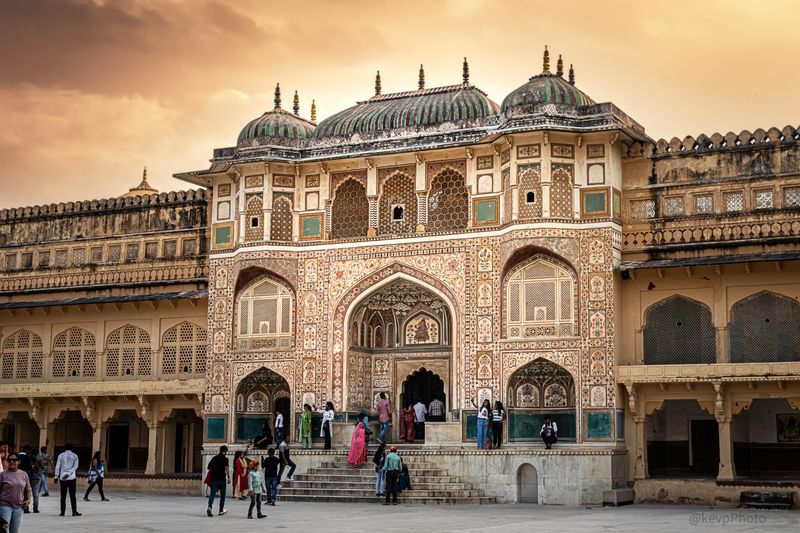
Blink and you might think someone stole a rainbow and glued it to a doorway. Ganesh Pol is the gate that leads to the royal living quarters, and it is covered in colorful frescoes and mosaics.
Above the arch sits an image of Ganesha, the elephant-headed god of good beginnings.
Built in the early 1600s, the gate was made to impress guests and keep outsiders guessing. Patterns of flowers, leaves, and geometric lines cover almost every inch.
Artists used natural pigments, so some colors have lasted for centuries.
Above the gate, small latticed windows let the royal women watch ceremonies unseen. It was a clever way to be present without being seen.
Visitors love spotting those tiny openings.
Go slowly here, because the details reward patience. Stand back for the big picture, then step close for the fine lines.
Photographers should try to visit when the crowd thins, as the narrow space fills quickly.
Sheesh Mahal, the Palace of Mirrors
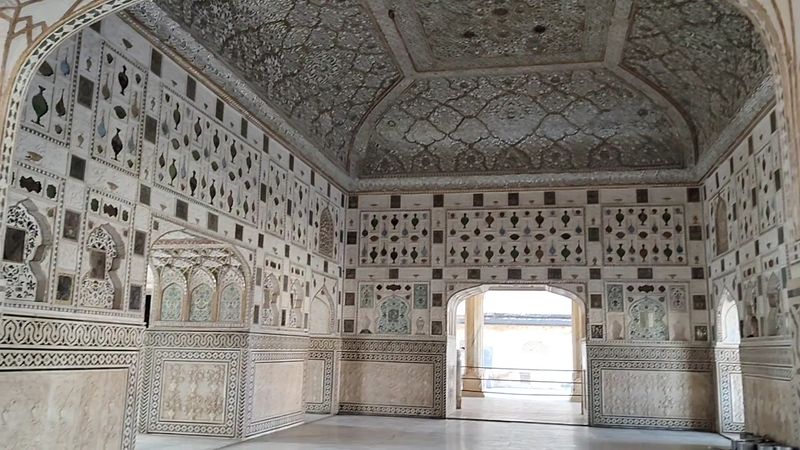
Light one candle in this room and the ceiling answers with a thousand tiny stars. Sheesh Mahal is covered in small mirrors and colored glass set into plaster, and it is the sparkling heart of the palace.
Legend says a few candles were enough to light the whole chamber at night.
The room was part of the Jai Mandir, the hall of victory, built by Mirza Raja Jai Singh I in the 1600s. Craftsmen pressed each piece of glass into place by hand.
The result is a glittering pattern that still dazzles today.
Look for carved marble panels with flowers and vines. They sit low on the walls, as if the room wanted to keep a little modesty.
Above them, the mirrors do all the showing off.
Rules keep visitors from touching the walls, so oils from fingers do not harm the glass. Slow down and look up, because the best parts are overhead.
A small flashlight beam from a guide can show the trick.
Sukh Niwas, the Original Cool Room
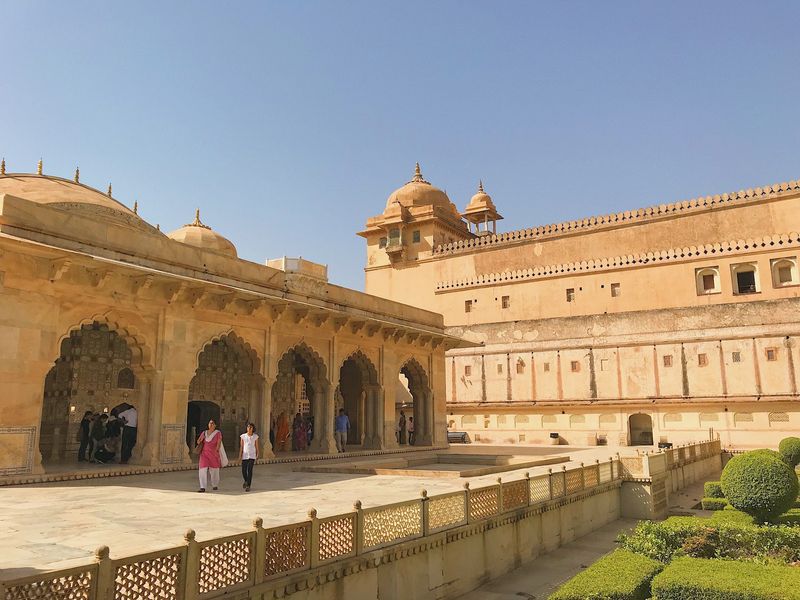
Long before fans and air conditioners, kings had to beat the desert heat some other way. Sukh Niwas, the Hall of Pleasure, used flowing water as its cooling system.
A channel ran through the room, and breezes passing over it chilled the air.
The doors are carved from sandalwood and inlaid with ivory in old designs. Water came from the nearby lake and was carried up through clever pipes.
The palace planners clearly liked comfort as much as they liked defense.
Across from the hall sits a small garden courtyard with a fountain. Royals once relaxed here during hot afternoons, probably sipping something cold.
Their summers sounded a lot nicer than most.
Today the room is quiet and calm, even when the rest of the palace buzzes. Visit in the afternoon heat and you will feel why it worked.
Take a moment to stand still and let the cooler air settle around you.
Maota Lake and the Saffron Garden
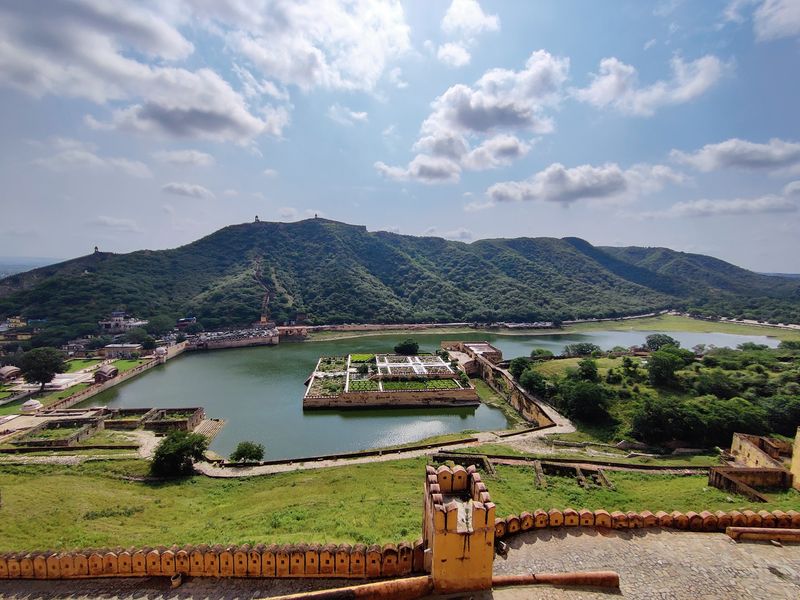
Right below the palace, a lake mirrors the fort so neatly that you may forget which one is real. Maota Lake was the main water source for the palace, and it also made the view prettier.
In the middle sits Kesar Kyari Bagh, a star-shaped garden once planted with saffron flowers.
The garden is reached by small paths and looks best from above. Palace guests would stroll or sit there while enjoying the scent of blossoms.
Saffron was a rare and prized crop, so growing it showed wealth.
Water from the lake was lifted up to the palace using ingenious systems. Rainwater harvesting was part of the plan, too.
Rajasthan is dry, so every drop mattered.
For the best photo, stop at the roadside viewpoint near the entrance. Sunrise gives soft light and fewer people.
Birds often gather near the shore, so keep your eyes open for splashes.
Secret Tunnel and Evening Light Show
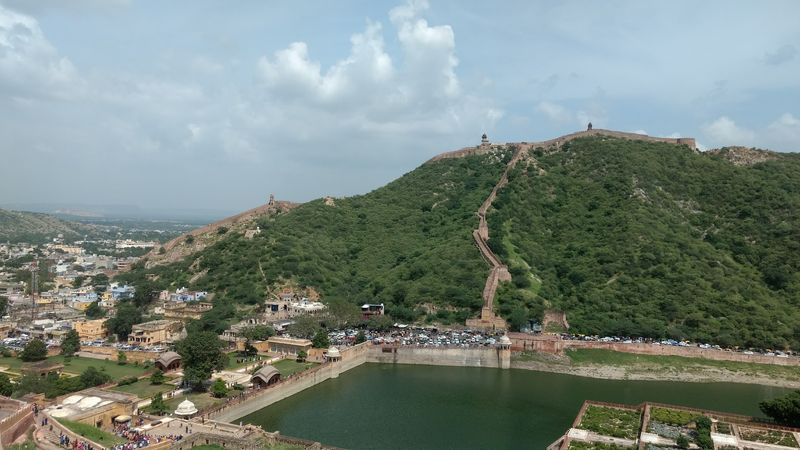
Whispers say a hidden passage links this palace to Jaigarh Fort on the hill above. A tunnel really does exist, and it was meant as an escape route in times of danger.
Guides love telling this story with a dramatic pause.
The two forts worked as a team. Jaigarh guarded the heights, and Amber served as the grand home below.
Together they made a pair that few enemies dared to test.
After sunset, the palace gets a second act with a sound and light show. Colored beams play across the walls while a narrator tells the history of the Kachwaha rulers.
It lasts around an hour, and tickets are sold at the gate.
Plan ahead, since the show is held outdoors and nights can get cool in winter. Pack a light jacket and arrive early for a good seat.
Language options vary by evening, so check the schedule before you go.
Share this story