Some people plan trips around museums. I plan mine around lunch.
France makes that habit easy, because almost every town has a market where locals shop, gossip, and grab a bite before noon. The surprise is how much the menu changes as you travel.
A snack in Brittany looks nothing like a snack in Nice, and a cheese counter in the north will hand you something very different from one in Burgundy. Each region guards its specialties with real pride, and many recipes have barely changed in a hundred years.
Below you will find thirteen foods worth crossing a map for, along with the exact markets and counters where they shine. You will also get practical tips on market days, timing, and what to order first.
Bring an appetite, a tote bag, and a little patience for lines. The first stop is a Saturday ritual that locals treat almost like a sport.
1. Galette-Saucisse at Marché des Lices, Rennes, Brittany, France
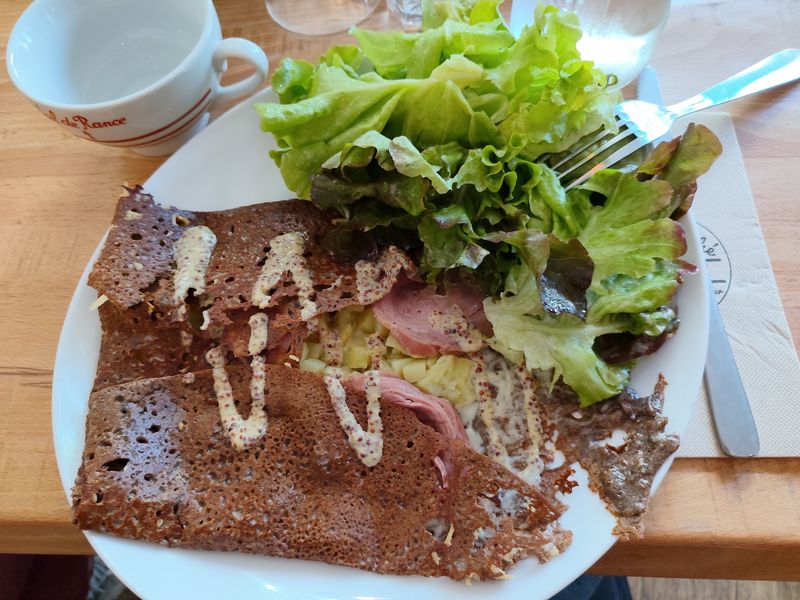
Saturday morning in Rennes comes with its own unofficial uniform: a tote bag in one hand and a galette-saucisse in the other.
The snack is simple. A grilled pork sausage gets rolled inside a thin buckwheat galette, the savory crepe that Brittany is famous for.
Locals love it so much that a fan club and a song exist in its honor. That is real devotion for a sausage in a wrap.
Marché des Lices is one of the largest markets in France, with hundreds of traders around the historic Halles Martenot. Stalls sell seafood, produce, cheese, flowers, and Breton butter.
Arrive before 10 a.m. to beat the biggest crowds. The galette stands often have lines, but they move quickly.
Eat your galette-saucisse while browsing, as locals do. Plates and forks are not part of the tradition.
The market runs every Saturday morning and usually wraps up around 1:30 p.m., so plan your sleep-in accordingly.
2. Socca at Chez Thérésa, Nice, Provence-Alpes-Côte d’Azur, France
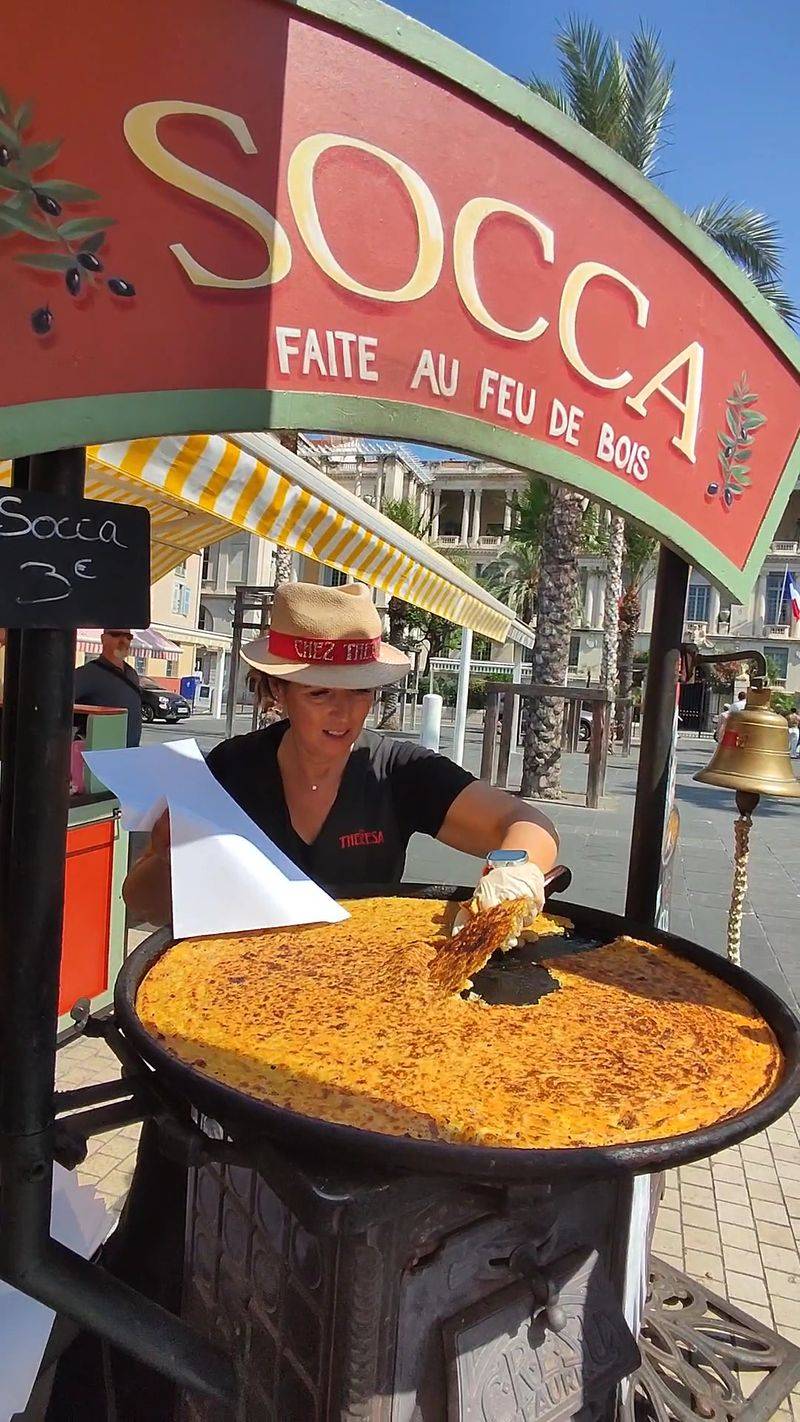
Chickpea flour, water, olive oil, and salt. That short list is the entire recipe for socca, and Nice has been eating it for generations.
The batter is spread thin on a large round pan and baked in a very hot oven. The result is a flat pancake with crisp edges and a soft middle.
Chez Thérésa has served socca in Old Nice for decades. Its stall near Cours Saleya is a favorite stop for market visitors.
Servings are usually cut into rough pieces and handed over on paper. Ask for a sprinkle of black pepper, which is the classic finishing touch.
Socca is best eaten right away, so skip the idea of saving some for later.
A portion costs only a few euros, making it one of the cheapest good meals on the Riviera. It is also naturally gluten-free.
Go in the late morning, then wander the narrow lanes of Vieux Nice with your snack.
3. Lyonnais Charcuterie at Les Halles de Lyon Paul Bocuse, Lyon, Auvergne-Rhône-Alpes, France
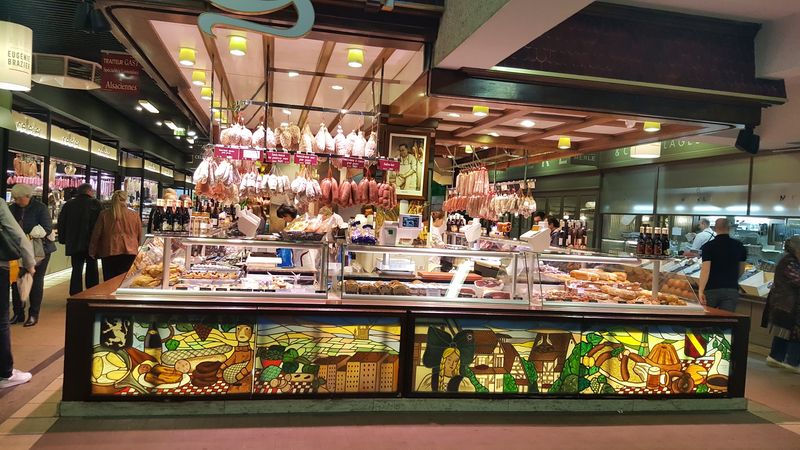
Lyon calls itself the food capital of France, and nobody in town seems eager to argue.
Les Halles de Lyon Paul Bocuse is the covered market that backs up that claim. It holds dozens of specialist merchants under one roof, named after the legendary local chef.
The charcuterie counters deserve the most attention. Look for rosette, a dry-cured pork sausage, and jésus, a larger and thicker cousin.
Saucisson brioché is another Lyon favorite. It is sausage baked inside a soft brioche loaf.
Many vendors let you buy small amounts, so you can build a sampler without buying a whole sausage. Sliced portions also travel well for a picnic later.
The market has small sit-down counters serving lunch, which turns shopping into a full meal.
It is closed on Mondays. Sunday mornings are busy with local families, so weekdays are calmer for slow browsing.
4. Fresh Oysters at Marché des Capucins, Bordeaux, Nouvelle-Aquitaine, France
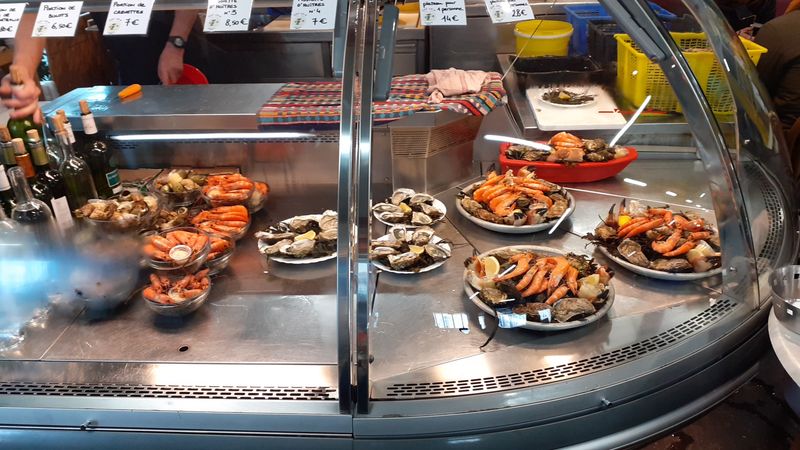
Breakfast oysters might sound unusual, yet at Marché des Capucins it is a weekend habit.
Locals call this covered market the belly of Bordeaux. It has fed the city since the 18th century.
The oysters mostly come from the Arcachon Bay, about an hour away by car. That short trip is why they reach the counters so fresh.
Several seafood bars inside the market will open a dozen for you on the spot. Lemon and a little bread are usually served alongside.
Prices are often lower than in city restaurants. You also get to watch the shuckers work at impressive speed.
Saturday and Sunday mornings are the liveliest times. Expect shared tables and friendly elbow bumping.
After the oysters, browse the cheese stalls and produce stands. A small market lunch here gives a better picture of daily Bordeaux life than any fancy reservation.
5. Toulouse Sausage at Marché Victor Hugo, Toulouse, Occitanie, France
Toulouse sausage has its own official guidelines, which tells you how seriously the city treats it.
The traditional recipe uses coarsely chopped pork, salt, and pepper. That is about it, and fans prefer it that way.
The sausage is famous as a key ingredient in cassoulet, the slow-cooked bean dish of southwestern France. It is also excellent simply grilled.
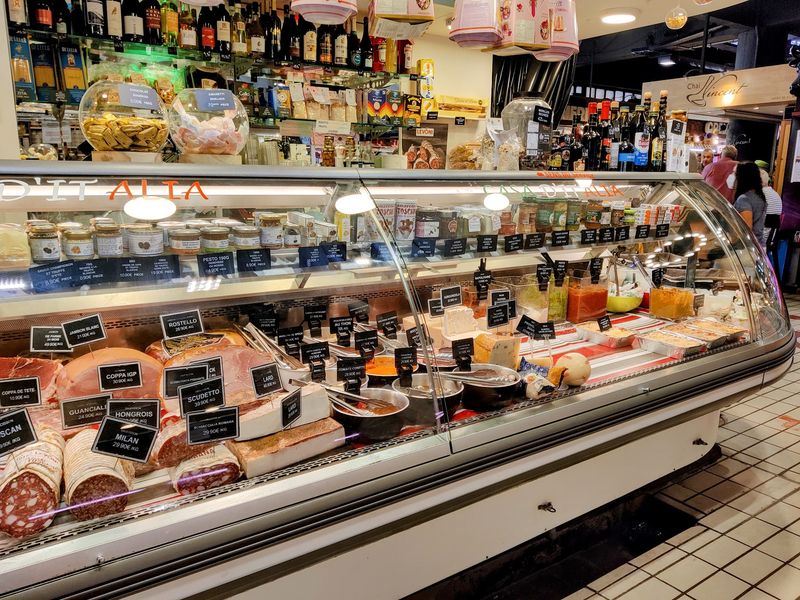
Marché Victor Hugo is the best place in town to find it. The covered hall holds busy butchers, cheese sellers, and specialty grocers.
Look for long coils sold by weight at the butcher counters. Vendors will happily cut the length you need.
Here is the real secret: climb the stairs. The upper floor has small restaurants that cook with ingredients from the market below.
Lunch there fills up fast, so arrive before noon. The market is closed on Mondays.
6. Burgundy Cheese at Les Halles Centrales, Dijon, Bourgogne-Franche-Comté, France
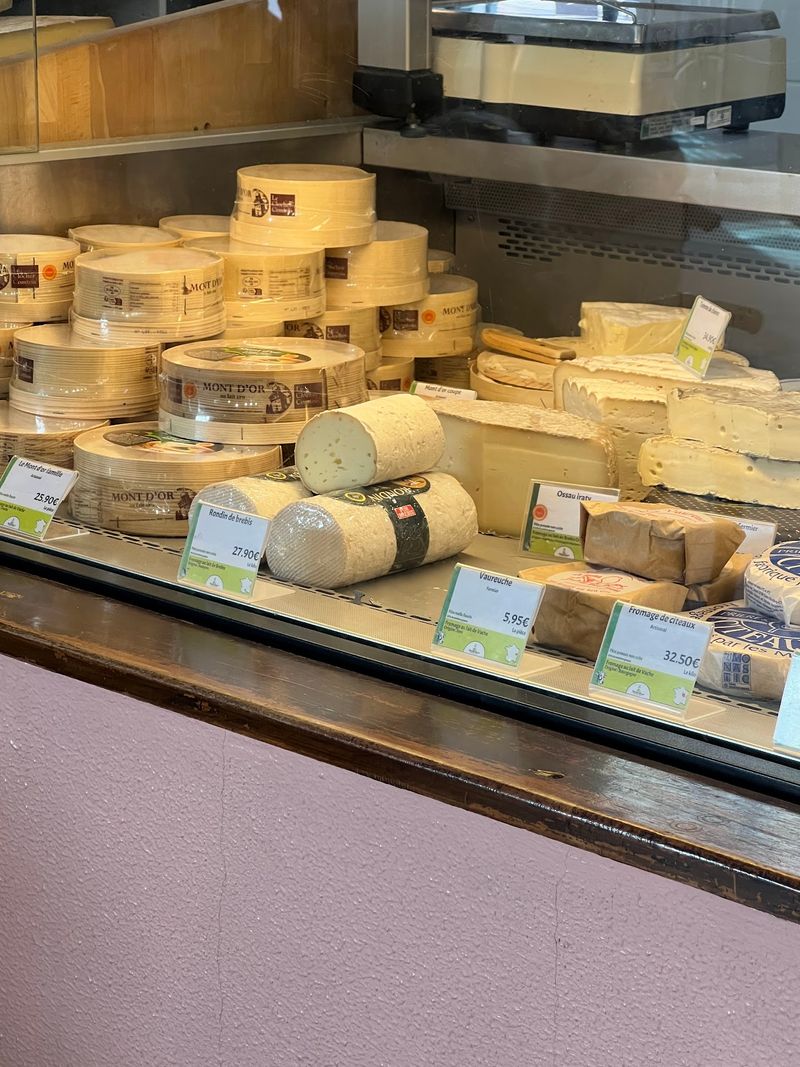
Mustard gets the headlines in Dijon, but the cheese counters quietly steal the show.
Les Halles Centrales is a 19th-century market hall with an iron frame. Some say the Eiffel company was involved in its design, which gives it some bragging rights.
The star cheese to find is Époisses. It has an orange rind and a creamy center, and it is washed during aging.
Look also for Cîteaux, made by monks at a nearby abbey. It is milder and harder to find outside the region.
Fromagers are usually glad to offer a taste before you buy. A small piece of three different cheeses is a smart way to compare.
The market runs Tuesday, Thursday, Friday, and Saturday mornings. Saturday is the busiest day.
Pair your cheese with bread from a nearby bakery and a jar of local mustard for a very Dijon picnic.
7. Pissaladière at Marché du Cours Saleya, Nice, Provence-Alpes-Côte d’Azur, France
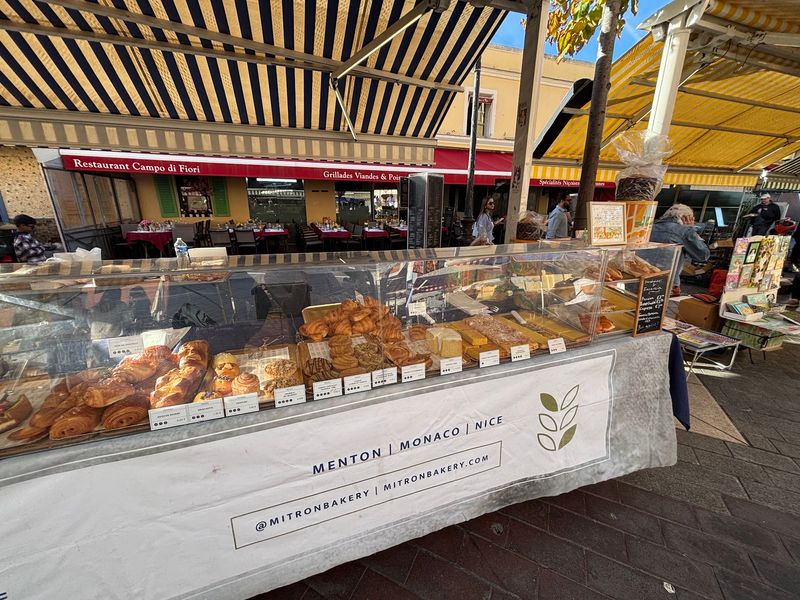
Call it pizza in Nice and someone may gently correct you.
Pissaladière is a savory tart with a bread-like base. It is topped with slowly cooked onions, anchovies, and small black Niçoise olives.
No tomato sauce and no cheese are involved. The name comes from pissalat, an old local anchovy paste.
Cours Saleya is the perfect place to try it. The long market street is known for its flower stalls and produce sellers.
Bakeries and snack stands around the market sell pissaladière by the square slice. It is easy to carry and costs very little.
The food market runs every morning except Monday. On Mondays, the space turns into an antiques market instead.
Buy one slice of pissaladière and one portion of socca. Comparing two classic Nice snacks in one morning counts as cultural research.
8. Black Truffles at Marché de Sarlat, Sarlat-la-Canéda, Nouvelle-Aquitaine, France
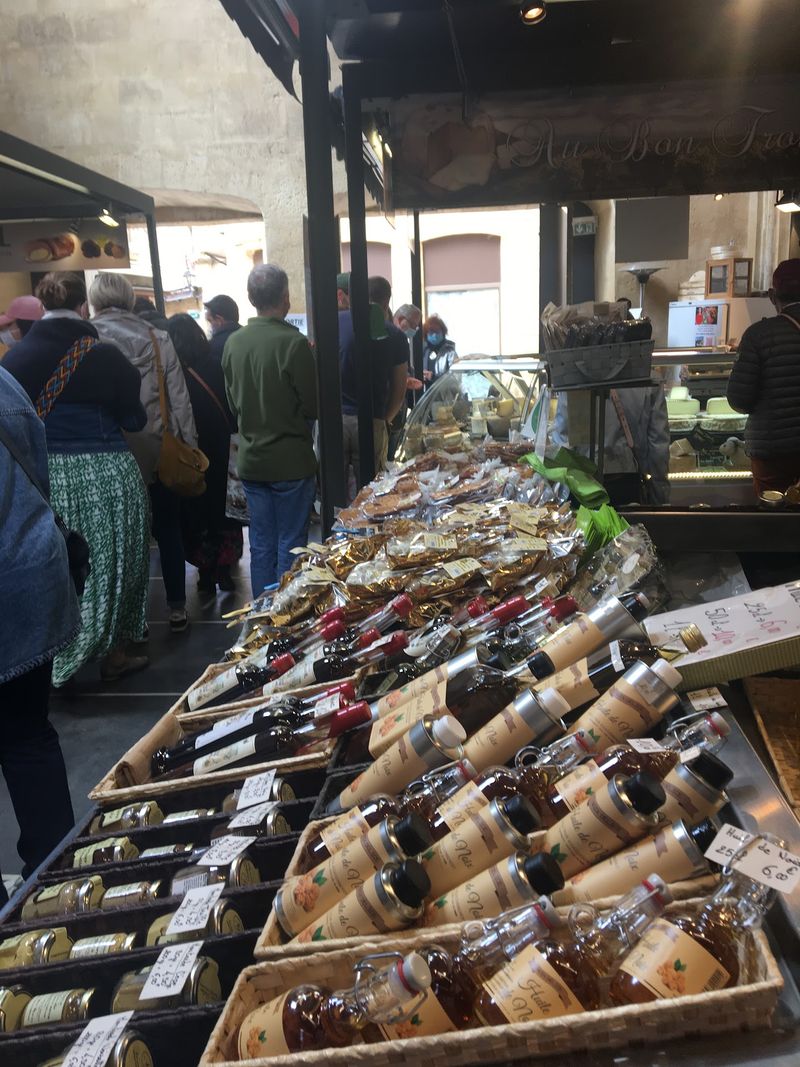
Few ingredients can cost more per kilo than many smartphones, but the black Périgord truffle manages it.
Sarlat-la-Canéda sits in the heart of truffle country. Its medieval center is one of the best preserved in France.
From December to February, the town hosts dedicated truffle markets. Growers bring their harvest, and buyers inspect each one closely.
Sarlat also holds a truffle festival in January. It includes tastings, cooking demonstrations, and plenty of curious visitors.
Outside truffle season, the regular market is still worth the trip. It runs Wednesday and Saturday, with Saturday being the larger one.
Stalls sell walnuts, duck products, local cheese, and preserved truffle goods in jars. Those jars make good gifts and survive the flight home.
Fresh truffles are sold by weight. Even a small one can flavor several meals, so there is no need to buy a giant.
9. Kougelhopf at Marché Couvert Colmar, Colmar, Grand Est, France
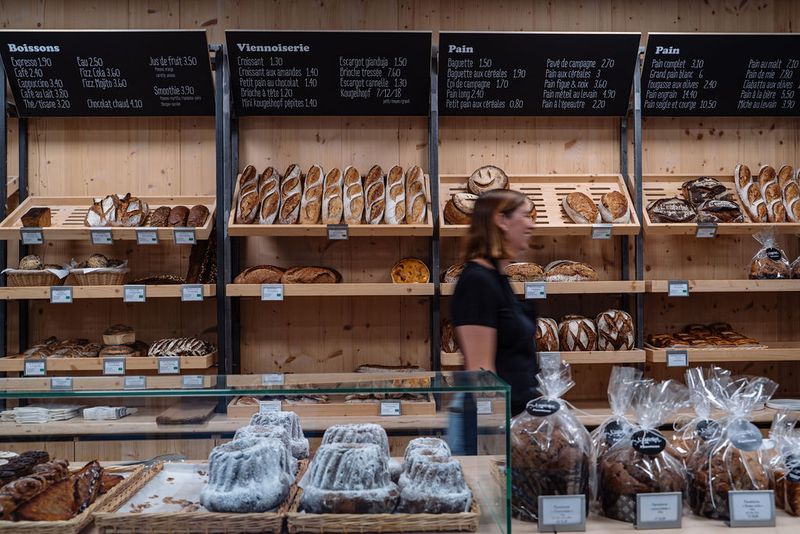
Alsatian grandmothers have strong opinions about kougelhopf, and most of them involve the mold.
The cake is baked in a tall, fluted ring pan, usually made of glazed clay. Many families pass these molds down through generations.
Kougelhopf uses a yeast dough, so it is closer to bread than sponge cake. Raisins go inside, and whole almonds sit on top.
Locals often eat it for Sunday breakfast. There are savory versions too, made with bacon and walnuts.
Colmar’s Marché Couvert is a covered market from the 1860s. It sits right beside the canals of Petite Venise.
Inside, stalls sell baked goods, regional cheeses like Munster, and local produce. You can buy a small kougelhopf if a full one feels ambitious.
The market is closed on Sundays and Mondays. Ceramic kougelhopf molds are also sold around town for anyone planning to bake at home.
10. Jambon de Bayonne at Les Halles de Bayonne, Bayonne, Nouvelle-Aquitaine, France
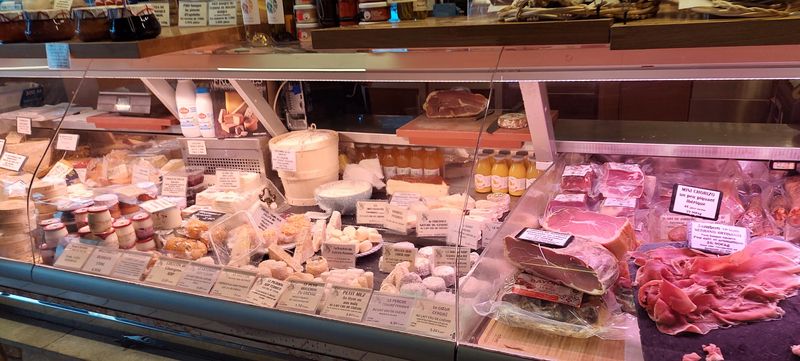
Patience is the main ingredient in Jambon de Bayonne.
The ham is salted with salt from the Adour basin, then air-dried for many months. Curing usually lasts at least seven months, and often longer.
It holds protected status, so producers must follow strict rules. Look for the Bayonne stamp on the rind.
Les Halles de Bayonne sits along the Nive River in the historic center. The market sells Basque cheeses, peppers, fish, and plenty of ham.
Ask the vendor to slice it thin. Thicker cuts are used for cooking, but thin slices are best for snacking.
Pair it with Ossau-Iraty sheep cheese and black cherry jam for a classic Basque plate.
Bayonne holds a ham fair every spring, near Easter. It has been running for centuries and is a fun reason to time your visit.
11. Maroilles Cheese at Marché de Wazemmes, Lille, Hauts-de-France, France
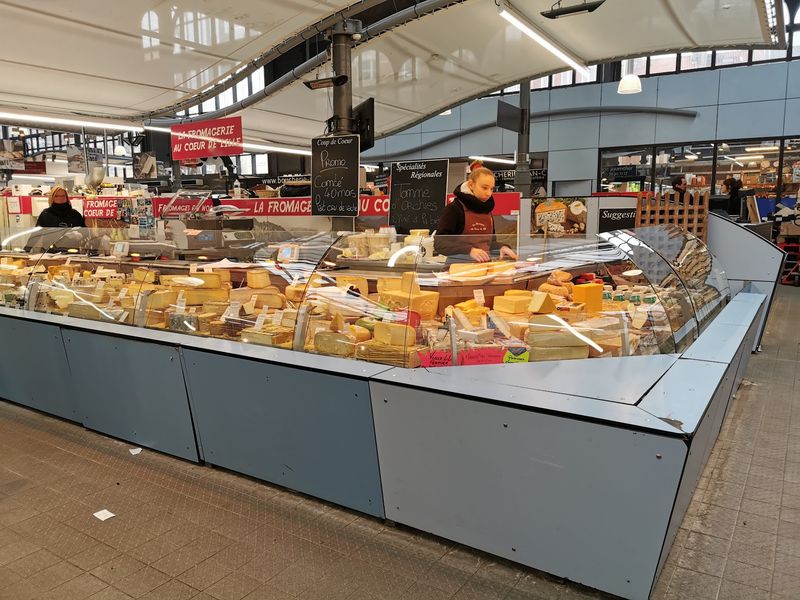
Monks created Maroilles around the 10th century, and northern France has been defending its strong reputation ever since.
The cheese is square, with an orange washed rind. Its aroma is famously bold, but the taste is milder than most first-timers expect.
Locals bake it into flamiche, a savory tart. It also shows up melted over potatoes in a dish called tartiflette au Maroilles.
Marché de Wazemmes is Lille’s most popular market. It mixes northern French food with stalls selling North African, Asian, and other world cuisines.
Sunday mornings are the big event. The surrounding streets fill with shoppers, buskers, and families.
A smaller covered hall operates most days of the week. It is a calmer option for cheese shopping.
Ask the vendor to wrap Maroilles well. Your hotel neighbors will appreciate the effort.
12. Provençal Olives at Marché Place Richelme, Aix-en-Provence, Provence-Alpes-Côte d’Azur, France
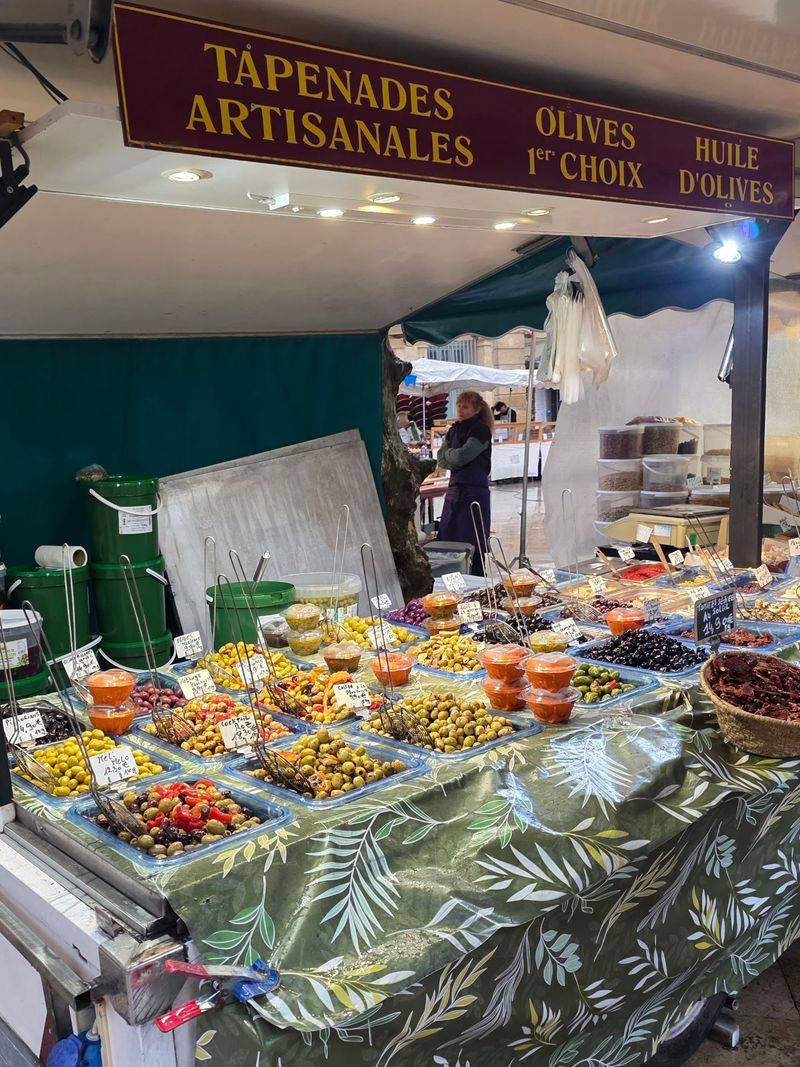
Green, black, purple, cracked, herbed, or stuffed, the olive stalls in Aix make choosing just one nearly impossible.
Provence grows many local varieties. Look for picholine, a slim green olive, and the small black Nyons olive.
Vendors also sell tapenade, a spread made from olives, capers, and olive oil. It works great on bread for a quick snack.
Place Richelme hosts a food market every morning. It is one of the oldest market squares in town, shaded by plane trees.
The surrounding cafés give you a place to rest between purchases. Historic buildings frame the square on every side.
Most sellers let you mix several olive types in one container. Ask for a small scoop of each to taste the differences.
Add local goat cheese, fruit, and fresh bread for a picnic. The nearby Cours Mirabeau is a fine place to eat it.
13. Grilled Duck Breast at Chez Bébélle, Narbonne, Occitanie, France
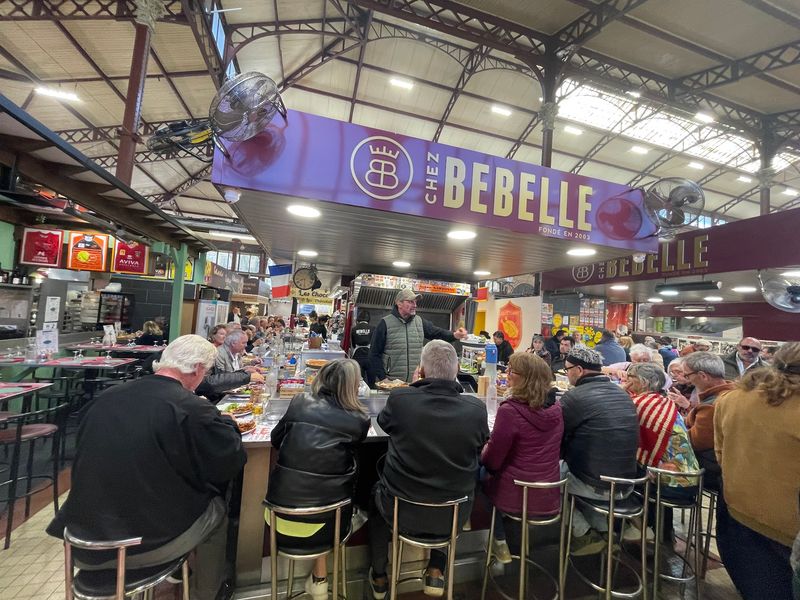
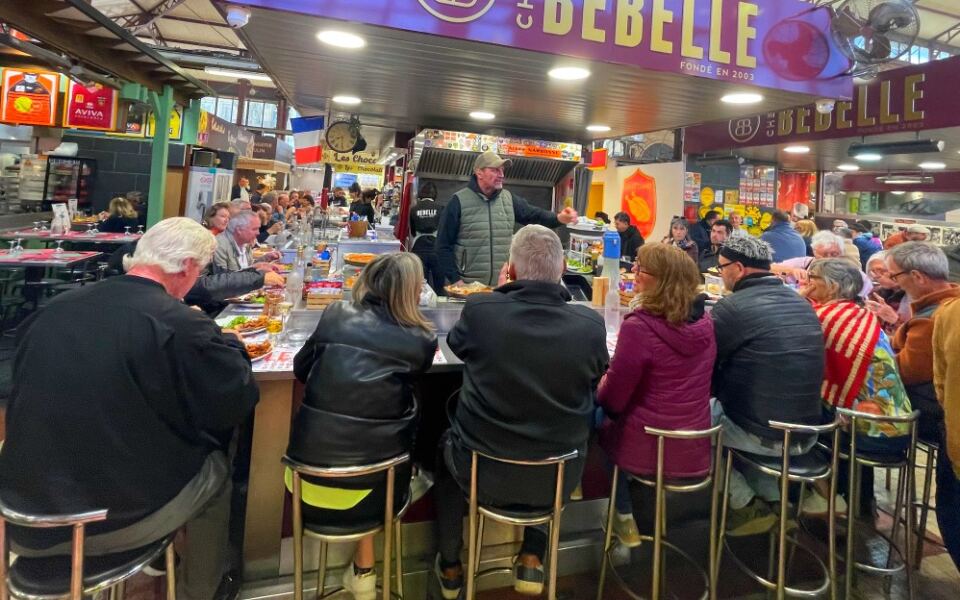
At Chez Bébélle, your steak may arrive with a little rugby flair.
The restaurant sits inside Les Halles de Narbonne, a covered market from 1901. The owner became famous for shouting orders and tossing meat from the butcher across the aisle to the grill.
Service is loud, fast, and friendly. Seating is at the counter, shoulder to shoulder with locals.
Order the magret de canard, the duck breast that southwestern France loves. It is grilled to order and usually served with simple sides.
Chez Bébélle serves lunch only, and seats disappear quickly. Arrive early or expect a wait.
The market is open every day of the year. Its stalls offer seafood, cheese, charcuterie, and pastries.
Leave time to browse after lunch. Ending a French food trip here, with the butcher and the grill working side by side, feels like a fitting final course.
Share this story