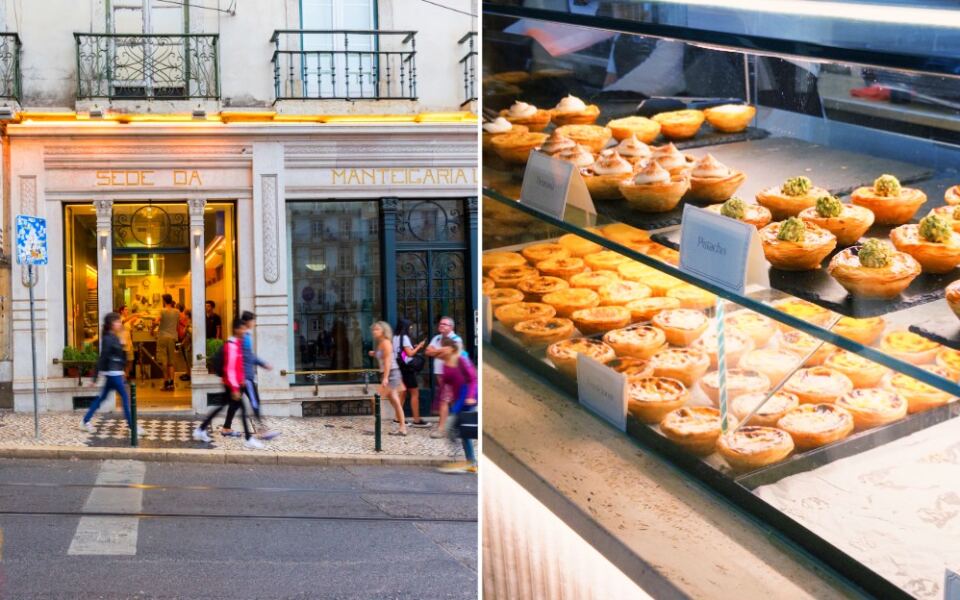
Some Lisbon bakeries let you watch custard tarts being made behind glass. Others serve unusual versions topped with Biscoff or crème brûlée, while one even teaches visitors how to make the Portuguese classic themselves.
The city also has pastry shops with century-old interiors, award-winning recipes, and counters filled with everything from traditional éclairs to regional Portuguese sweets.
You can stop for a quick coffee and tart, spend an afternoon in a historic tearoom, or book a hands-on baking class.
These 12 Lisbon bakeries offer more than another pastel de nata. Each has something different to try, see, or experience.
1. Pastéis de Belém, Lisbon, Portugal
The takeaway line at Pastéis de Belém can stretch along the sidewalk, but there is another way to enjoy Lisbon’s most famous custard tarts. Walk inside and ask about table service.
The bakery has several large dining rooms, so finding a seat can sometimes be quicker than waiting outside.
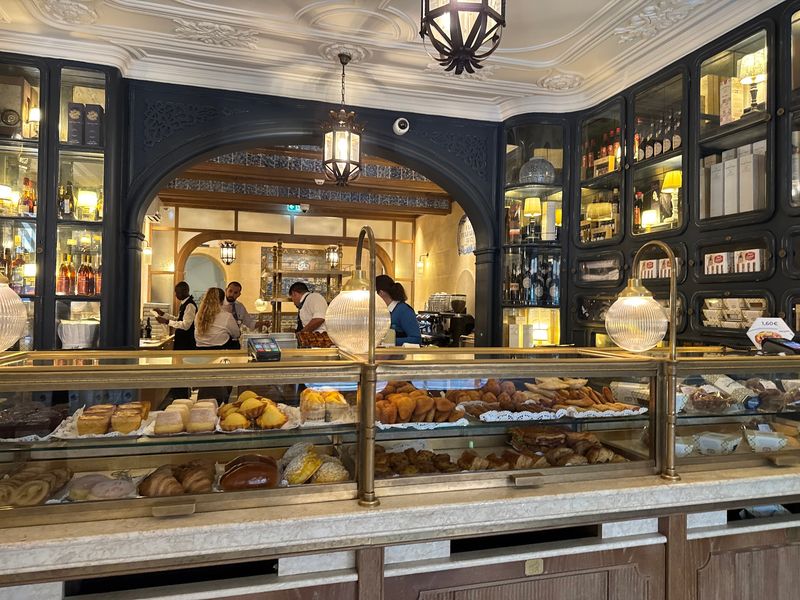
The interior is part of the experience. Blue and white Portuguese tiles cover the walls, and the rooms extend much farther into the building than the modest storefront suggests.
It is easy to underestimate just how large this bakery is from the street.
Order a couple of pastéis de Belém with a bica, the Portuguese version of espresso. Cinnamon and powdered sugar are available for sprinkling over the tarts, so you can adjust them to your liking.
The bakery has operated in Belém since 1837, and its original recipe remains closely guarded. Unlike many popular Portuguese pastry brands, Pastéis de Belém has not expanded into a chain of branches around Lisbon.
The location also makes it easy to combine a pastry stop with sightseeing. Jerónimos Monastery is nearby, and the surrounding Belém district has several major attractions within walking distance.
If you have time, choose table service rather than treating this as a quick takeaway stop. The historic dining rooms are one of the reasons this bakery offers something different from the city’s smaller pastry counters.
2. Manteigaria, Lisbon, Portugal
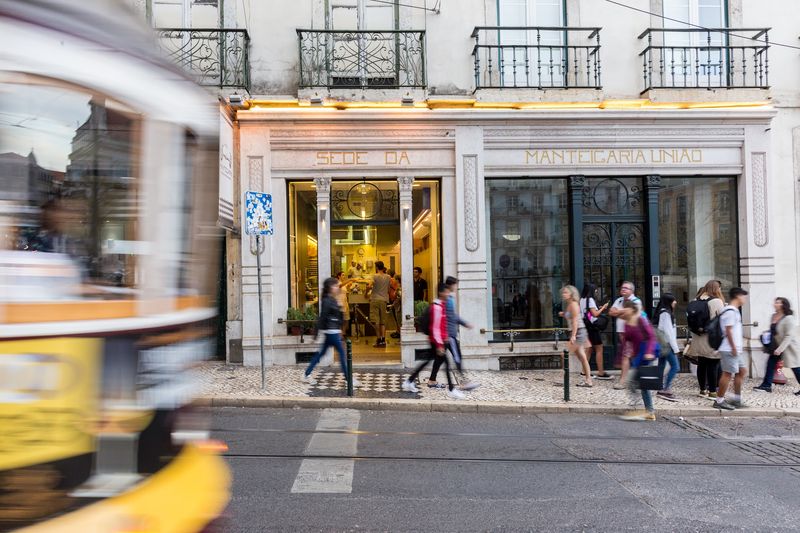
Listen for the bell. At Manteigaria, a small bell rings every time a new tray of tarts comes out of the oven, and the counter fills up fast.
The name means butter shop. The Chiado location sits inside a building from 1900 that once held a butter company serving all of Lisbon, and the old Art Nouveau front is still there.
Pastry chef Rogério Loupas opened the shop in 2014 with one firm idea. Make only pastel de nata and make it very well.
Behind glass walls, bakers roll dough on marble workbenches and fill the shells by hand. Kids and grown-ups alike tend to stand there longer than planned.
Seating is limited, so do what locals do. Eat your tart standing at the counter with a quick coffee, then keep walking.
The brand has grown to Porto, Paris, Madrid, and even Hong Kong. Still, the Chiado shop near Praça Luís de Camões keeps its original charm.
Go in the morning for shorter lines and the freshest batches of the day.
3. Confeitaria Nacional, Lisbon, Portugal
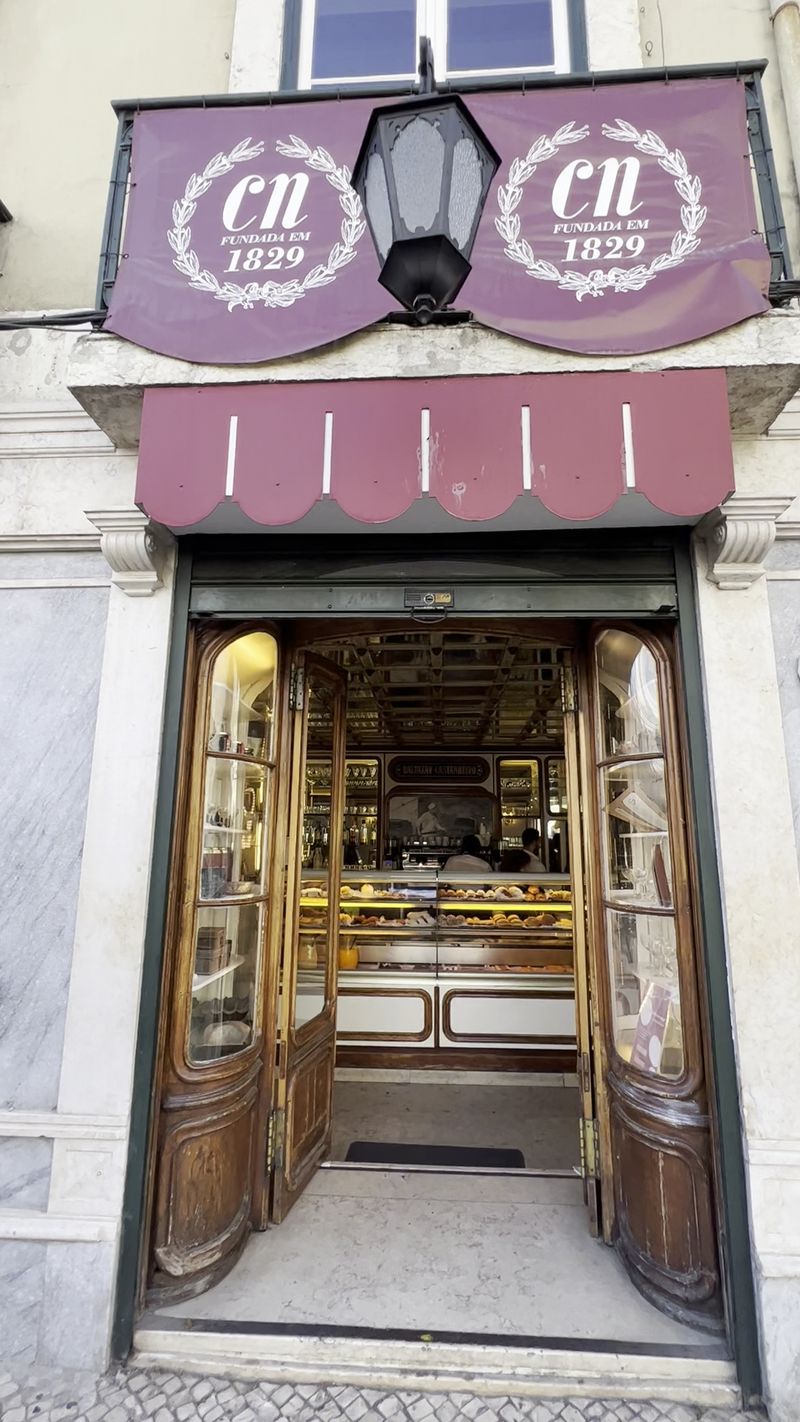
Confeitaria Nacional offers something increasingly difficult to find in central Lisbon: a historic pastry shop where visitors can sit upstairs and enjoy traditional Portuguese sweets in a setting that has changed relatively little over generations.
The bakery opened in 1829 on Praça da Figueira, making it one of the city’s longstanding confectionery businesses. Its interior includes decorative mirrors, ornate details, and an upstairs tearoom that provides a different experience from the busy ground-floor counter.
Most people associate Confeitaria Nacional with bolo-rei, the traditional Portuguese Christmas cake. But there is no need to visit during the holiday season to find something interesting.
The pastry selection includes Portuguese classics such as bolo de arroz, a rice-flour cake commonly served with coffee. Pastéis de nata and other traditional sweets also make this a convenient stop for visitors exploring the Baixa district.
The downstairs counter works well for a quick purchase, while the upstairs seating is better suited to anyone who wants to spend more time inside the historic building.
Its location is another advantage. Praça da Figueira sits close to Rossio Square and several of Lisbon’s busiest pedestrian streets, making the bakery easy to include in a walking itinerary.
Rather than rushing through with a takeaway box, consider sitting down for coffee and a pastry. The opportunity to experience a traditional Lisbon tearoom is what makes this stop different from the city’s newer custard tart shops.
4. Pastelaria Aloma, Lisbon, Portugal
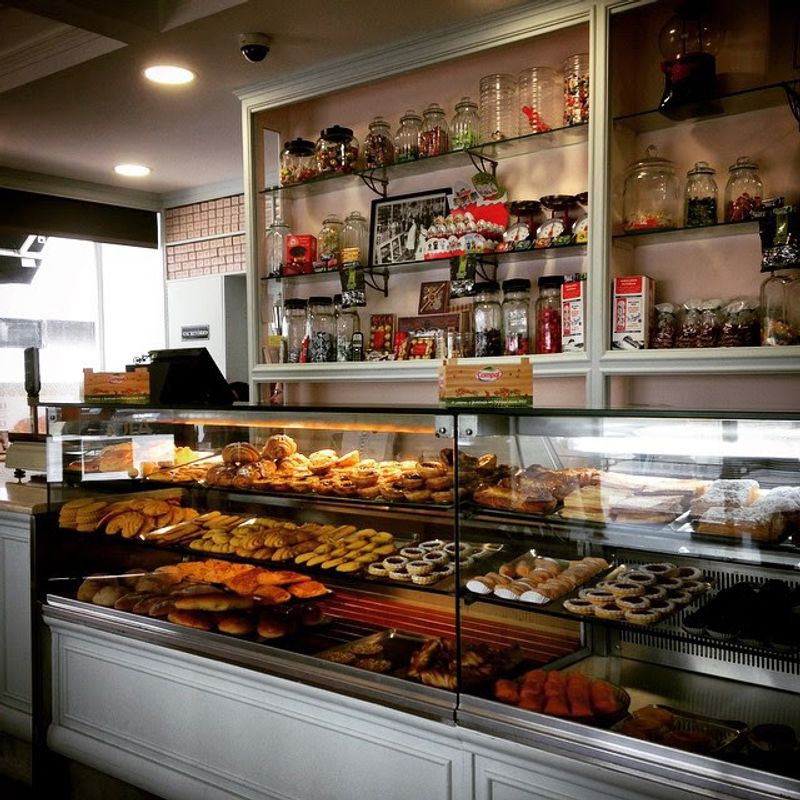
Awards pile up at Aloma like tarts on a Saturday morning. No bakery has won Lisbon’s Best Pastel de Nata contest more often.
Its wins include 2012, 2013, 2015, 2024, and 2025. Judges taste the tarts blind, so fame alone cannot sway them.
The shop opened in Campo de Ourique in 1943. Its odd name comes from a 1941 movie called Aloma of the South Seas, which played at a nearby cinema.
Owner João Castanheira keeps things simple. His motto is about doing it well, again and again, with good ingredients.
Most customers here are locals, which is a nice sign. The tarts also stay crisp when cold, so a box to go makes sense.
Aloma also won Best Bolo-Rei of Portugal in 2025. Try the Pão de Deus too, a soft bun topped with coconut.
Getting there is half the fun. Ride tram 28 to the Prazeres stop and stroll a few minutes to Rua Francisco Metrass 67.
Short on time? Branches at Time Out Market and the airport will do in a pinch.
5. Pastelaria Versailles, Lisbon, Portugal
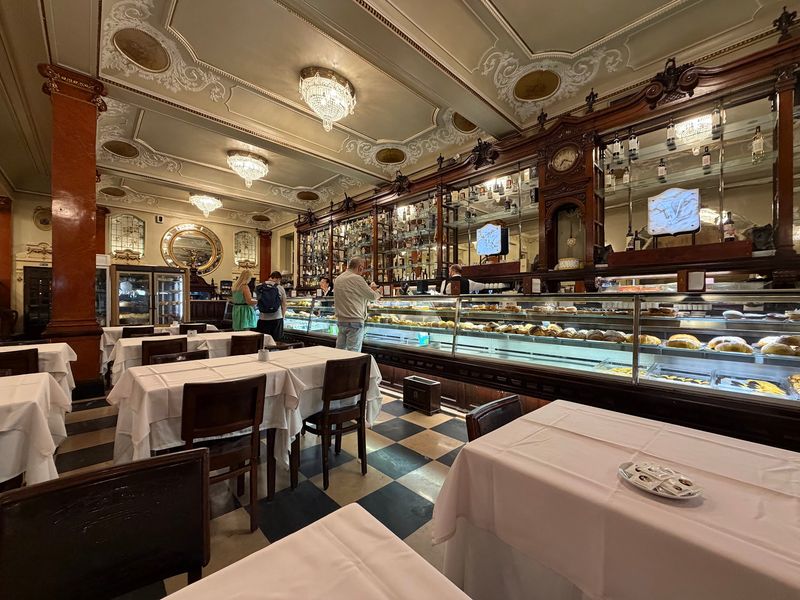
Locals call it the great lady of Lisbon, and she has kept her manners since November 25, 1922. Confectioner Salvador Antunes opened Pastelaria Versailles with a love for French pastry.
The building on Avenida da República is listed as a Public Interest Building. Inside you will find crystal chandeliers, stained glass, tall mirrors, and black and white marble floors.
Waiters in matching uniforms still serve guests at the tables. Some even bring tea in silver-plated sets.
More than 50 kinds of pastries fill the long counter. Start with a chocolate or vanilla éclair, since those are house classics.
Duchesses are another favorite here, made with choux pastry and whipped cream. The Versailles Cake is a small chocolate treat named after the shop.
Hungry for something salty? Codfish cakes, croquettes, and soups are also on the menu, along with full meals.
The thick hot chocolate has loyal fans. Pair it with Mozambique black tea for a historic touch.
Expect older regulars reading newspapers and chatting for hours. That is part of the show.
6. Alcôa, Lisbon, Portugal
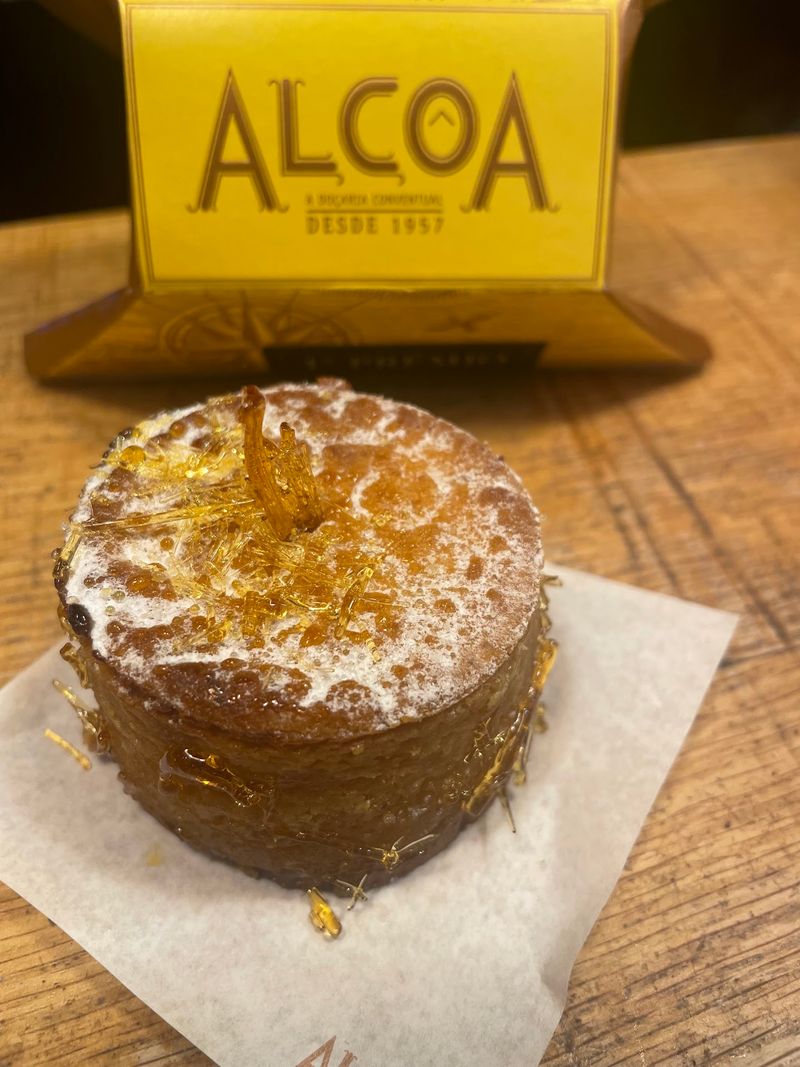
Nuns’ Bellies, Angel’s Chin, and Abbess’s Crown are among the unusual names associated with Portugal’s traditional convent sweets. At Alcôa’s Lisbon shop, visitors can explore this lesser-known side of Portuguese baking without leaving the city.
The bakery has its origins in Alcobaça, but its Chiado location on Rua Garrett brings a selection of regional specialties to one of Lisbon’s busiest shopping districts.
The display counter is a good place to start. Many of the sweets feature combinations of egg yolks, sugar, and almonds, although their shapes and preparations vary considerably.
One of Alcôa’s signature pastries is the cornucópia, a cone-shaped pastry filled with sweet egg cream. Its distinctive appearance makes it easy to recognize among the other traditional desserts.
Alcôa also makes pastéis de nata, but ordering only a custard tart would miss much of what makes this shop interesting. The selection gives visitors an opportunity to try pastries that are less commonly found in Lisbon’s standard cafés.
Space for sitting is limited, so this works particularly well as a short stop during a walk through Chiado. Ask about the different sweets before choosing, especially if the names are unfamiliar.
For anyone who has already tried several custard tarts around Lisbon, Alcôa offers a useful change of pace. It introduces regional Portuguese desserts that many visitors might otherwise overlook.
7. Pastelaria Santo António, Lisbon, Portugal
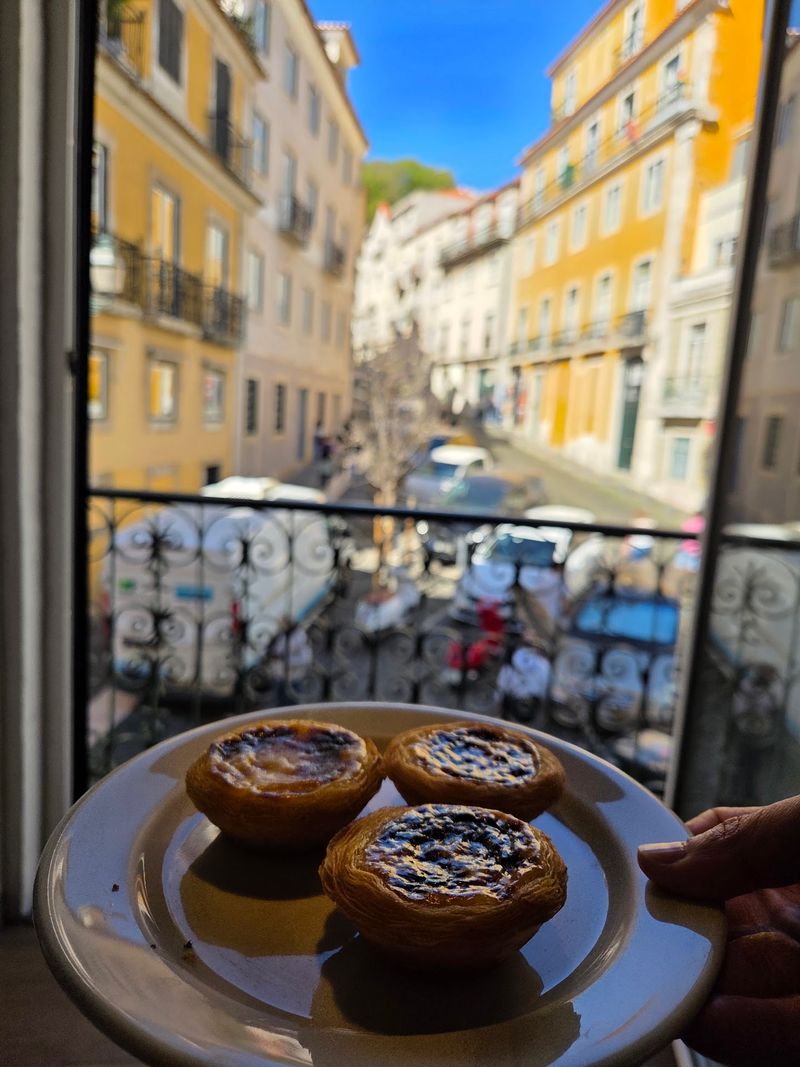
Beginner’s luck can taste amazing. Pastelaria Santo António opened in June 2017 and won Lisbon’s Best Pastel de Nata contest in 2019 on its very first try.
The shop sits at Rua do Milagre de Santo António 10, on the climb toward São Jorge Castle. A blue and white tiled front makes it easy to spot.
Fans point to a slightly stronger vanilla note in the custard. The pastry is worked by hand, so the layers come out a little uneven in a good way.
A glass kitchen lets you watch fresh batches being made. Some people call it the aquarium.
Seating spreads across two floors. Grab a table upstairs for a view of the street below.
The menu goes beyond tarts with Berlin doughnuts, waffles, crepes, and plenty of ice cream flavors. On Tuesdays and Saturdays, look for traditional Alentejo bread.
Staff speak several languages and keep the line moving. A tart and coffee here make a fair reward before the last uphill stretch to the castle.
8. Fábrica da Nata, Lisbon, Portugal
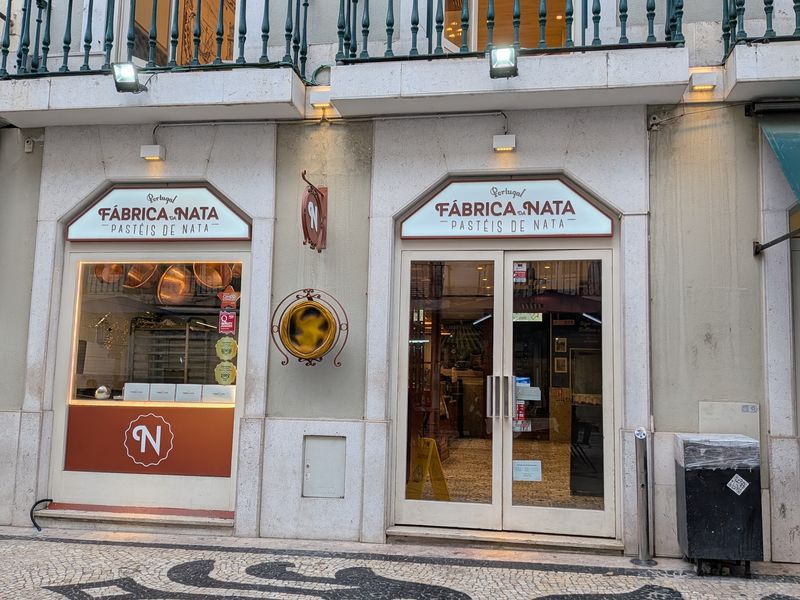
Custard tart milkshake might sound like a dare, yet it sells well at Fábrica da Nata. The menu mixes old favorites with playful new ideas.
The first shop opened in March 2016 at Praça dos Restauradores. It sits inside a century-old building that once held a restaurant.
The recipe is said to come from the Moia family, passed down through generations. Today the brand also has shops on Rua Augusta, in Porto, and in Sintra.
An open kitchen shows bakers rolling dough and filling shells. Some locations even use a ceiling rail to move baking trays around.
Breakfast is a strong choice here. Baguette sandwiches, croissants, and codfish cakes sit beside the sweets.
Look for quiche made with a custard tart crust. Or try a scoop of tart-flavored ice cream on top of a warm pastel de nata.
Plenty of indoor seats and outdoor tables make it great for groups. The Piquenata picnic menu feeds two and travels well to a nearby park.
Delivery through Uber Eats and Glovo is also available.
9. Castro – Atelier de Pastéis de Nata, Lisbon, Portugal
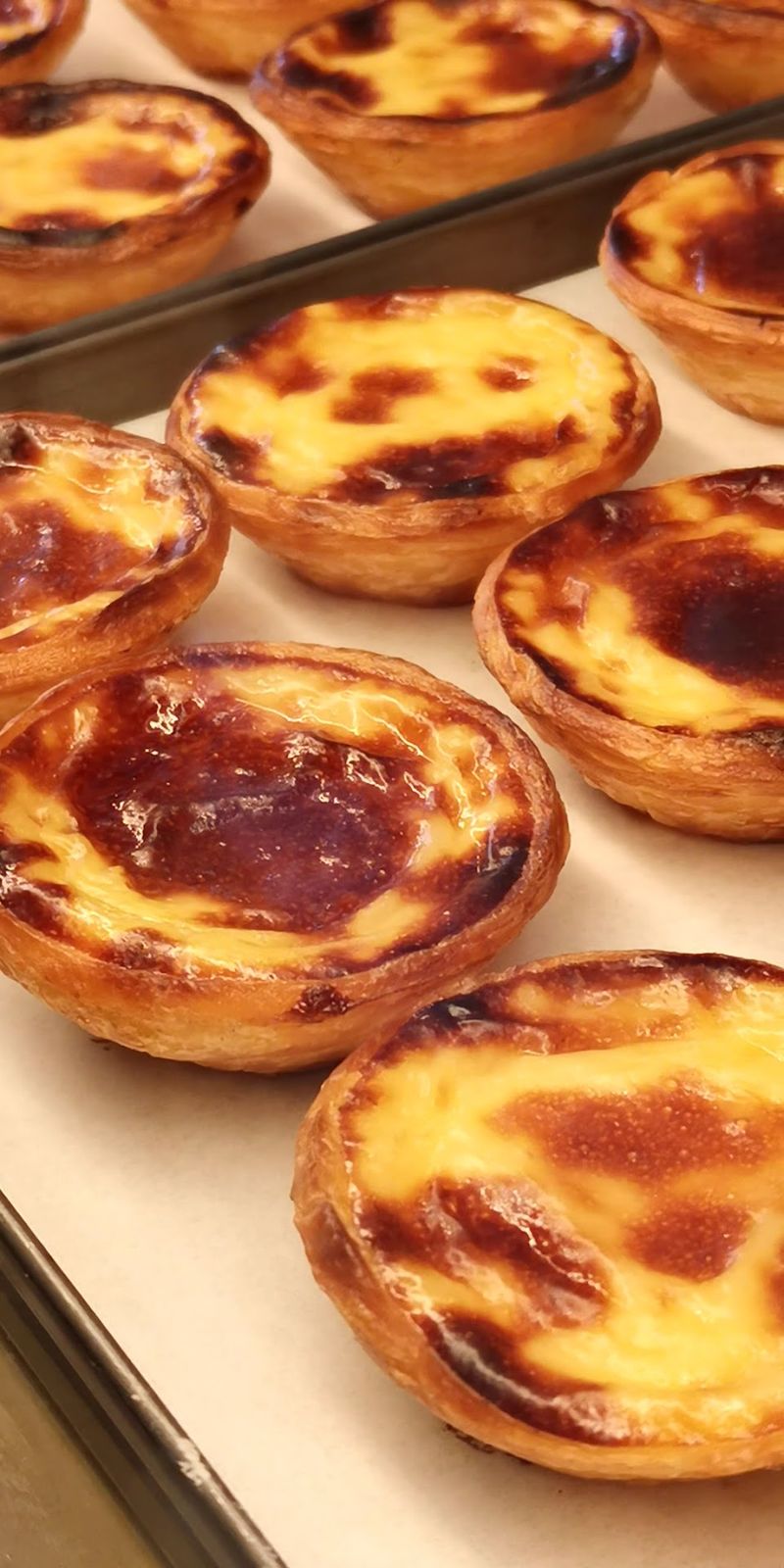
One pastry, many hours of effort. Castro calls itself an atelier, a word for an artist’s workshop, and it focuses almost entirely on the pastel de nata.
The brand started in Porto. Its first Lisbon shop took over the old Casa Pereira store at Rua Garrett 38 in Chiado.
Chef Daniel Seixas created the recipe. The custard rests for 24 hours before baking, which gives it a smooth finish.
Expect a less sugary filling with a light hint of citrus. Fans who find other tarts too sweet often pick this one.
The Chiado window is worth a photo. Artist Joana Astolfi designed it with oversized shapes inspired by Alice in Wonderland.
A second shop opened on Rua Áurea in July 2023, near the Santa Justa Lift. Workers there uncovered a 1935 mural by painter Maria Keil hidden behind old mirrors.
Plates are made with famous porcelain brand Vista Alegre. Gold-lettered boxes make tidy gifts for friends back home.
Seats are few, so treat it as a quick, classy stop.
10. Casa São Miguel, Lisbon, Portugal
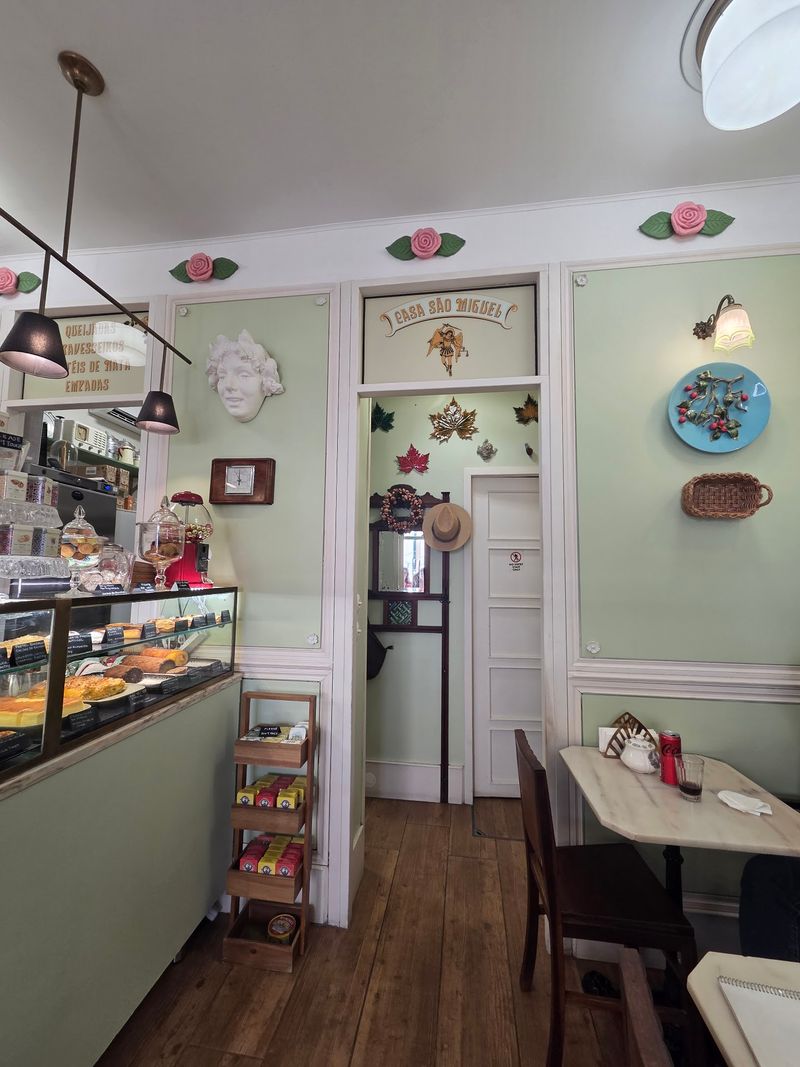
Opening a bakery on April 1, 2020 was no joke for this family. Casa São Miguel launched right at the start of the pandemic and still found loyal fans.
Its goal is to bring back Portugal’s taste memories. The owner loves the 1920s to 1940s and fills the shop with her own antique china.
Mint green walls, stained glass, lace doilies, and old teapots set the scene. Coffee is even served in vintage Portuguese porcelain.
About 30 handmade sweets sit in the case on a typical day. Many come from regions you may never visit.
Try carob tarts from the Algarve or bean tarts. The Pastel Bordallo, made with chickpeas and lemon, is a shop specialty.
Since 2023, the team has worked to represent every Portuguese region. Space is small, so the lineup changes often.
The pastel de nata is excellent too, but be curious. Staff happily suggest something new.
Find it on Rua de São Miguel in Alfama, an area that survived the great 1755 earthquake.
11. Casa Piriquita, Lisbon, Portugal
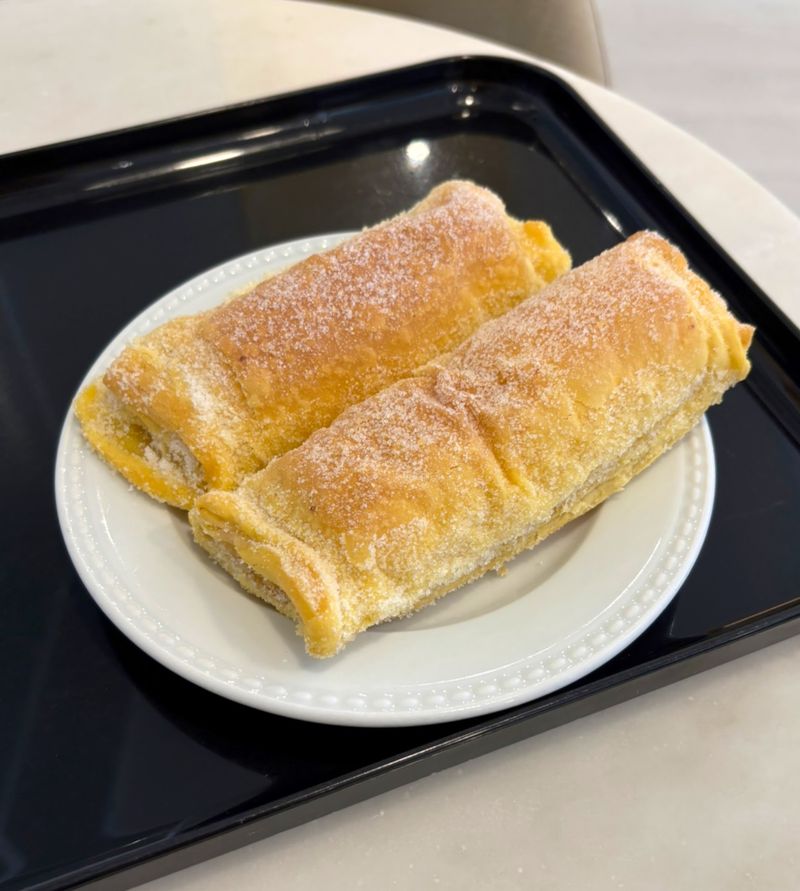
You do not have to take a train to Sintra to try one of the town’s most recognizable pastries. Casa Piriquita has a Lisbon location on Avenida de Roma, bringing its famous travesseiros and traditional queijadas to the capital.
The travesseiro is the main reason to visit. Its name means pillow in Portuguese, a reference to the pastry’s elongated shape.
Inside the puff pastry is a filling made with almonds and egg cream, finished with a coating of sugar.
Another specialty is the queijada de Sintra. These small cheese-based tarts are quite different from Lisbon’s familiar pastéis de nata, making them an interesting option for visitors who want to sample more than one Portuguese pastry tradition.
Casa Piriquita originally opened in Sintra in 1862, and its reputation remains closely connected to that town. The Lisbon branch, which opened in 2022, makes the bakery’s specialties accessible to people who are not planning a separate Sintra excursion.
The Avenida de Roma location also offers a different setting from the crowded tourist streets of central Lisbon. It can be a convenient pastry stop for visitors staying in the surrounding neighborhoods.
Try ordering one travesseiro and one queijada to compare the bakery’s two signature products. They represent different sides of Sintra’s pastry tradition, and both are closely associated with Casa Piriquita.
The biggest advantage here is convenience. Visitors can experience a well-known Sintra bakery without rearranging their Lisbon itinerary around a day trip.
12. Nat’elier, Lisbon, Portugal
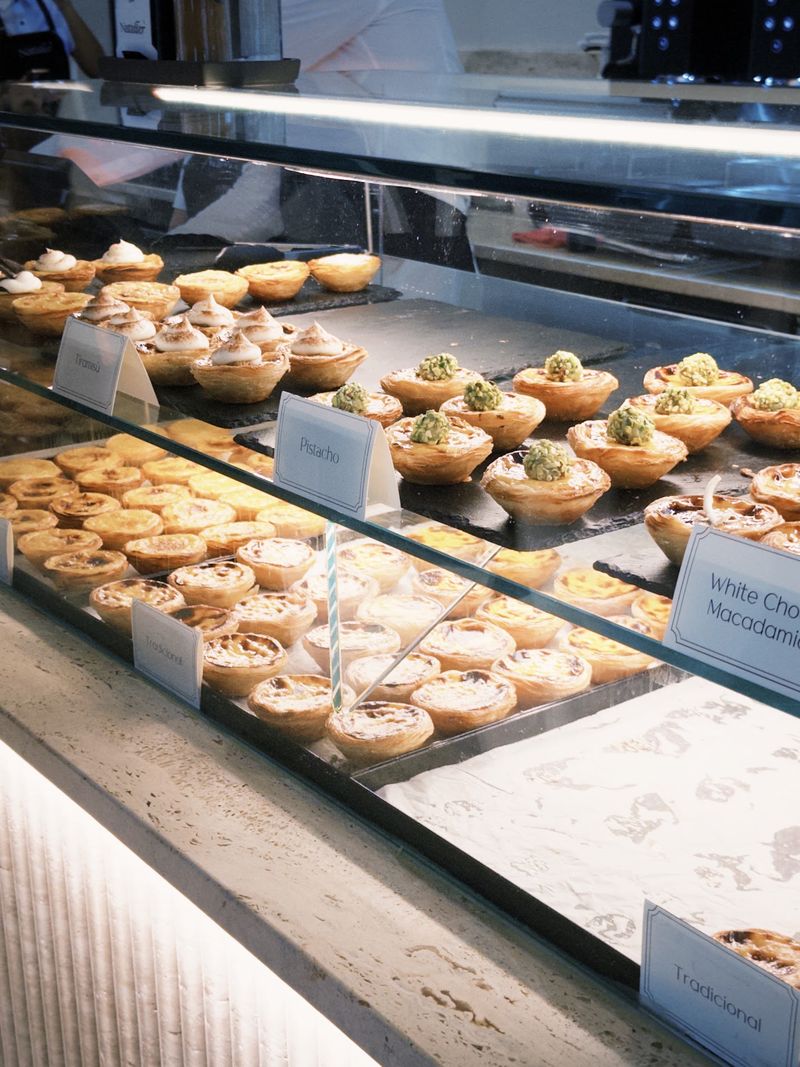
Crème brûlée, Biscoff, and Dubai chocolate all show up as custard tart flavors at Nat’elier. Purists may gasp, but curious eaters line up.
Chef João Batalha, a fifth-generation pastry chef, co-founded the bakery with Nando Duarte. It sits at Rua de Santa Justa 87, steps from the Santa Justa Lift.
Vegan tarts are a big draw here. They use only plant-based ingredients, so more friends can share the fun.
The real highlight is the two-hour masterclass. You learn to roll pastry, cook custard, and fill the molds yourself.
No baking skills are needed. Classes run in English and Portuguese, and kids 8 and up can join group sessions.
At the end, you eat your warm tarts with a drink. You also take home a certificate and the full recipe as a PDF.
The class ranked 22nd among world cooking classes in the Tripadvisor Travellers’ Choice Awards 2026. Book ahead, since spots fill quickly.
Look up at the lights shaped like tarts. It makes a sweet final stop.
Share this story