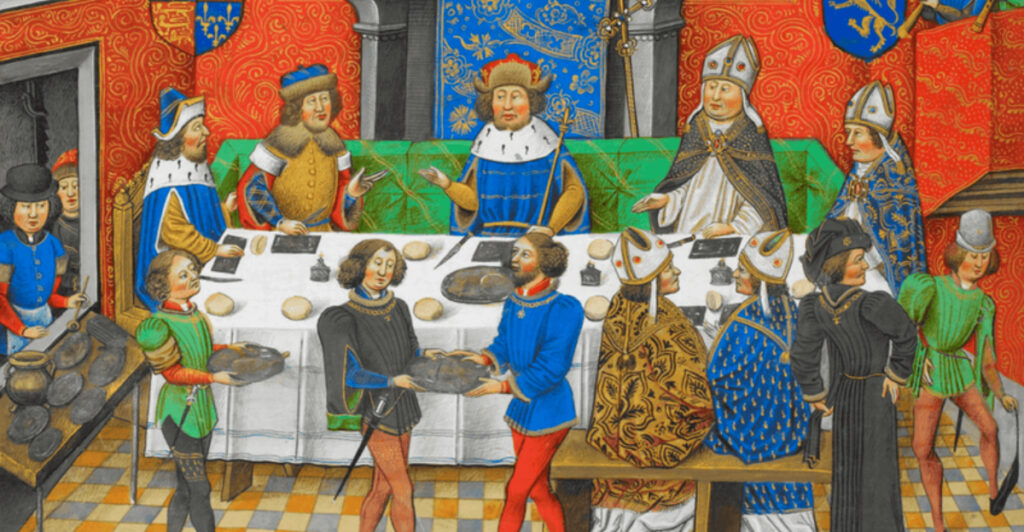
Most people assume that being rich in the Middle Ages meant a life of ease, feasts, and fine clothes. The reality was far more complicated. Noble families and wealthy merchants carried obligations, risks, and pressures that ordinary villagers rarely faced. From military duties to political traps, medieval prosperity came bundled with problems that could undo a family’s fortune in a single season.
If you think a castle sounds like a great place to live, read on, because the full picture is far more interesting than the fairy tale version.
1. You Were a Prime Target for Kidnapping
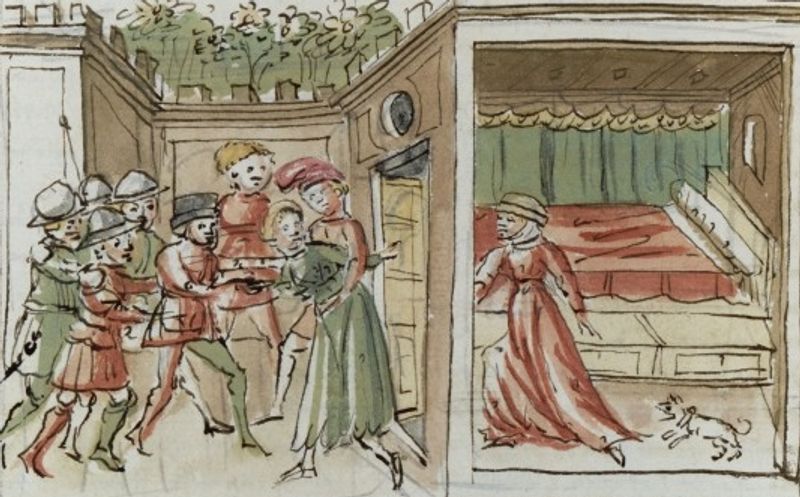
Few things made a person more vulnerable in medieval Europe than being visibly wealthy. A high-ranking noble with lands, titles, and a recognizable coat of arms was essentially a walking financial opportunity for anyone bold enough to act on it.
Capturing a rich lord during a conflict was not considered dishonorable. It was treated as a practical military strategy. The captured individual would be held, sometimes in surprisingly comfortable conditions, until a ransom was negotiated and paid.
King Richard I of England was held captive by Duke Leopold of Austria in 1192 and released only after England paid roughly 100,000 pounds of silver, a sum equal to about two or three years of the entire kingdom’s royal income. John II of France was ransomed for three million gold crowns after his capture at Poitiers in 1356. Wealth did not protect these men. It made them the target in the first place.
2. The King Could Demand Costly Military Service
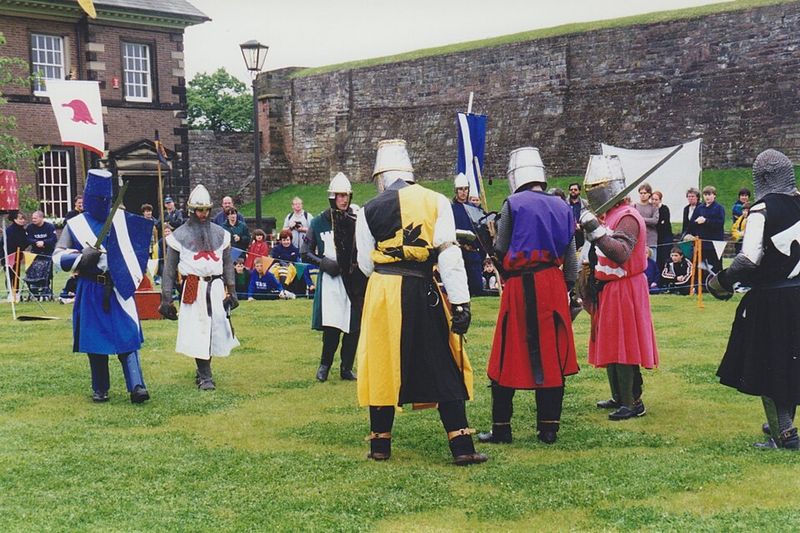
Land ownership in medieval Europe was never truly unconditional. Every acre came attached to obligations, and the most expensive one was military service owed to a feudal lord or the Crown.
When the king called his nobles to war, a wealthy landowner was expected to arrive with a fully equipped fighting force. That meant trained knights, warhorses, weapons, armor, and enough supplies to sustain the group for weeks or months. A single warhorse could cost as much as a small farm.
The standard service period was around 40 days per year, but real campaigns stretched far longer, burning through a noble’s finances at a punishing rate. Some estimates suggest that fielding even a modest force for a three-month campaign could cost thousands of pounds. When nobles paid a fee called scutage instead of serving personally, the Crown simply used the money to hire mercenaries, so the financial drain continued either way.
3. Powerful Rivals Wanted Your Estate

Owning a prosperous estate in medieval Europe meant constantly watching your back. Land was the foundation of all power, and where there was power, there were rivals eager to claim it.
Inheritance rules like primogeniture, where the eldest son inherited everything, were meant to create order. In practice, they created arguments. Around one quarter of noble family lines failed to produce a clear male heir each generation, which threw estates into open competition among daughters, nephews, and distant cousins.
When legal disputes failed to resolve a claim, nobles sometimes resorted to organized feuds, deliberately targeting a rival’s crops, livestock, and property to weaken them economically. Neighboring lords, ambitious relatives, and even the monarch could challenge ownership of a valuable estate, sometimes for years. Royal courts offered little guarantee of fairness, since kings themselves often had a financial interest in the outcome and could absorb disputed lands into Crown holdings if no clear heir was recognized.
4. Castles Were Expensive to Build and Maintain

A castle announced your status to the entire region, but it also announced to your treasury that it was about to take a serious beating. Building one from scratch was among the most expensive projects a medieval lord could undertake.
Construction costs for major royal castles often ran to tens of thousands of pounds, with projects like Caernarfon Castle in Wales taking nearly half a century to complete. The materials alone were staggering: stone, timber, iron, lead, and lime all had to be sourced and transported, often over difficult terrain, at costs that frequently exceeded the price of the materials themselves.
Once built, a castle demanded continuous investment. Roofs needed replacing, mortar required repointing, wooden drawbridges rotted, and wells had to be maintained. A permanent garrison of soldiers, plus a full domestic staff, added year-round payroll costs. The income generated from tolls and mill fees rarely covered these ongoing expenses, leaving many noble families in a state of managed financial stress.
5. Your Wealth Made You a Political Target
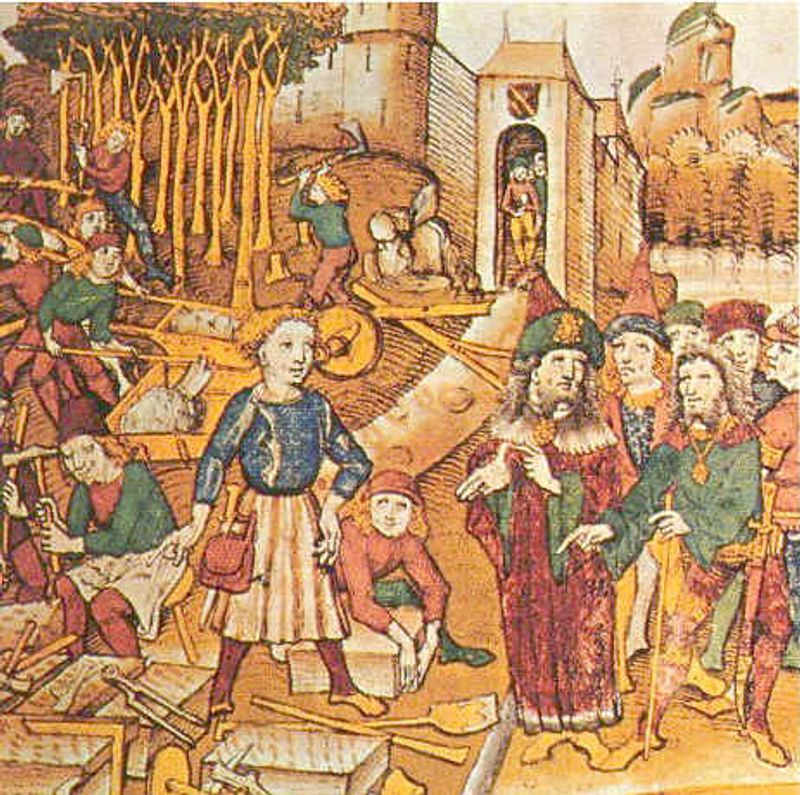
Medieval courts were not simply places of ceremony and celebration. They were competitive arenas where alliances shifted constantly and a single accusation could unravel years of careful social climbing.
A wealthy noble with extensive lands and influence naturally attracted attention from rivals who wanted those resources for themselves. Accusing a powerful lord of treason, heresy, or disloyalty to the Crown was a recognized political weapon, and it did not always require solid evidence to be effective.
Edward II of England saw several powerful nobles stripped of their lands and titles through court proceedings that were as much about politics as justice. In France, wealthy merchants and minor nobles were periodically targeted by the Crown when royal finances ran short, with accusations providing a convenient legal cover for confiscation. The higher a person climbed in medieval society, the more visible they became to those looking for an opportunity. Wealth created influence, but influence created enemies with both the motive and the means to act.
6. Hosting Important Guests Could Ruin Your Finances
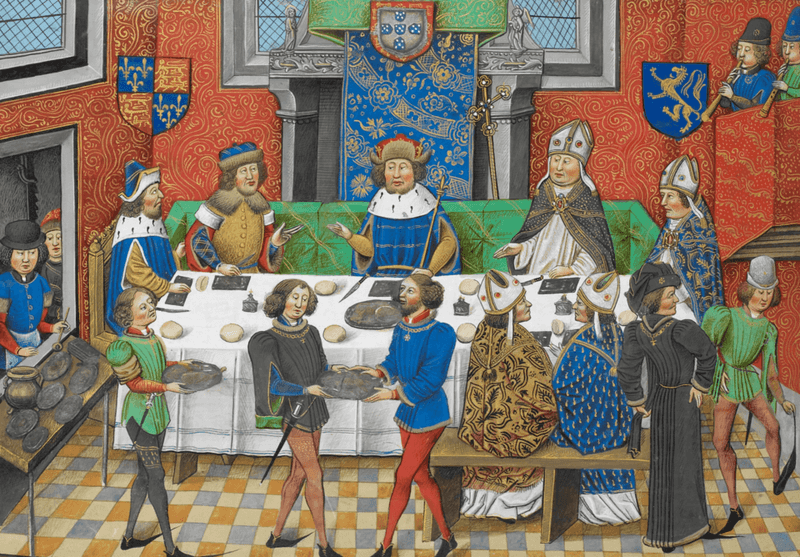
Medieval hospitality was not a casual gesture. When a king, bishop, or powerful lord came to visit, the host was expected to provide food, lodging, entertainment, and gifts for the entire traveling party, which could easily number in the hundreds.
Royal progresses, where a monarch traveled through the kingdom staying at noble estates along the route, were a deliberate strategy. They allowed the Crown to shift the cost of maintaining the royal household onto the nobility for weeks at a time. A single visit from the English king could cost a noble family the equivalent of months of estate income.
The obligation extended beyond food and beds. Hosts were expected to stage impressive feasts, provide hunting opportunities, and sometimes offer expensive gifts to the visiting dignitary and key members of their entourage. Refusing or providing inadequate hospitality was a serious social offense that could damage a family’s reputation and standing at court for years. Generosity was not optional.
It was a form of political performance.
7. Taxes and Extraordinary Levies Fell Heavily on the Rich
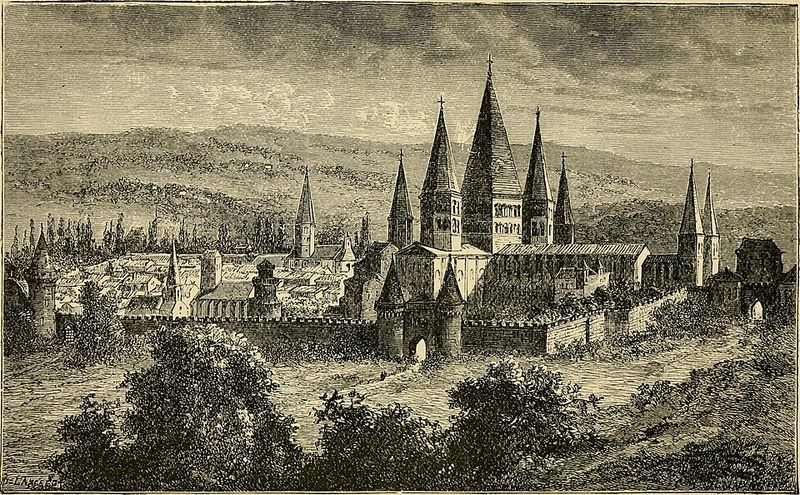
Peasants paid rents and labor dues, but wealthy landowners faced a different category of financial extraction from the Crown. When a king needed funds quickly, his wealthiest subjects were the most efficient source.
Medieval monarchs regularly imposed extraordinary levies on the nobility, often framed as emergency measures for military campaigns or diplomatic needs. England’s “tallage” system, along with various parliamentary taxes, targeted those with the most property. The more land and assets a noble held, the larger their assessment.
Crusading campaigns created some of the most dramatic examples. The Saladin Tithe of 1188, imposed across England and France to fund the Third Crusade, demanded one tenth of every person’s income and movable property. For wealthy landowners with large estates and valuable goods, this was a genuinely significant financial hit. Unlike peasants, who had little to extract, nobles offered tax collectors a worthwhile target.
High status meant high visibility, and high visibility meant the Crown always knew exactly where to look when the treasury ran low.
8. You Could Lose Everything by Falling Out of Favor

Royal favor in the Middle Ages was not a stable foundation to build a fortune on. It could be granted quickly and withdrawn even faster, often for reasons that had more to do with court politics than actual wrongdoing.
When a king decided a noble had become too powerful, too independent, or simply inconvenient, the legal tools available to strip that noble of everything were well established. Charges of treason were particularly effective because a conviction meant full forfeiture of lands, titles, and assets to the Crown.
Thomas of Lancaster, one of the most powerful nobles in early 14th-century England, lost his lands, his freedom, and ultimately his life after falling out with Edward II. Roger Mortimer, who had briefly dominated English politics during the minority of Edward III, was arrested in 1330 and his vast accumulated estates were redistributed. These were not isolated cases. Across medieval Europe, noble families understood that their wealth existed at the pleasure of the monarch, and that pleasure was never guaranteed.
9. You Were Expected to Display Your Status

Medieval society ran on visible hierarchy, and wealthy individuals had no choice but to participate in it publicly and expensively. Rank was not just a legal category. It was something you were expected to perform every single day.
Sumptuary laws, which regulated what different social classes could wear, actually reinforced this pressure. Nobles were expected to dress in materials like silk, velvet, and fur, which were reserved for the upper classes. Appearing in modest clothing could be read as a sign of weakness or financial decline, both of which invited unwanted attention from rivals.
The obligations extended well beyond clothing. Wealthy families were expected to maintain large households with many servants, host regular feasts, support local churches with donations and building projects, and patronize artists and craftsmen. Each of these was a form of public statement about family power and prestige. Cutting back on any of them risked sending a signal that the family’s fortunes were slipping, which could trigger exactly the kind of opportunistic behavior from rivals that the spending was meant to prevent.
10. Managing Large Estates Was a Full-Time Job

Owning vast stretches of land in medieval Europe was not a passive income arrangement. It was a complex administrative operation that required constant attention, skilled staff, and careful oversight to function without falling apart.
A large estate might include multiple villages, dozens of tenant farmers, mills, fishponds, woodlands, and pastures spread across a wide area. Each element generated income but also required management. Rents had to be collected, disputes between tenants had to be settled, harvests had to be supervised, and accounts had to be reviewed regularly to prevent fraud by estate officials.
Nobles employed stewards, bailiffs, and reeves to handle day-to-day operations, but absentee management created its own problems. Dishonest officials could skim profits for years before being caught. A lord who spent too much time at court or on military campaigns risked returning to an estate that had been poorly managed and financially drained. Medieval wealth was not something you could simply sit back and enjoy.
It demanded active, informed oversight to preserve it.
11. Family Marriages Were Often Political Deals

For a wealthy medieval family, marriage had very little to do with personal preference and almost everything to do with strategic calculation. A well-arranged marriage could secure alliances, consolidate land, and strengthen a family’s political position for generations.
Noble children, particularly daughters, had almost no say in the matter. By the time a girl reached her early teens, her family had likely already begun negotiations with potential husbands. The groom’s family would assess her dowry, her family’s political connections, and the lands she might eventually inherit. Romantic compatibility was not part of the evaluation.
Boys from wealthy families fared somewhat better in terms of agency, but not by much. A son’s marriage was equally tied to family strategy, and refusing a match arranged by a powerful parent or feudal lord carried real consequences. In some cases, feudal lords held the legal right to arrange marriages for the heirs of their vassals, a privilege that was sometimes sold to the highest bidder, turning a young noble’s future into a commercial transaction.
12. Wars Usually Came to Your Doorstep
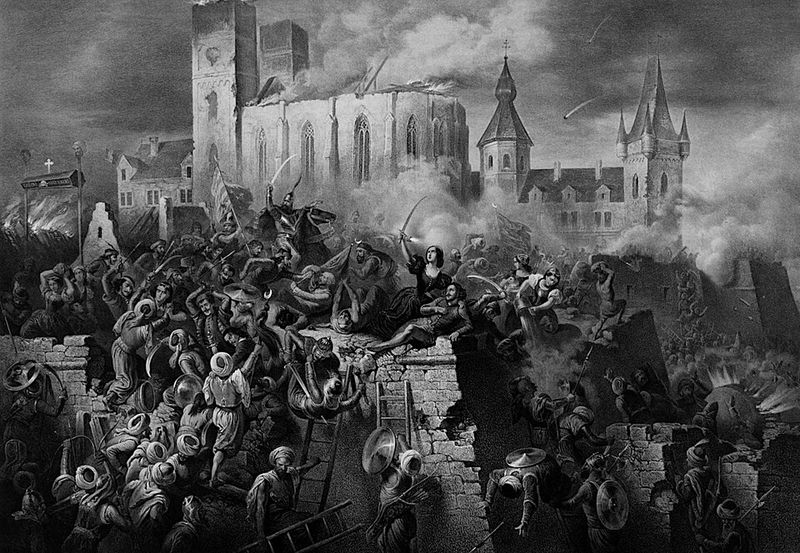
Ordinary medieval villagers could sometimes survive a conflict by simply staying out of the way. Wealthy landowners with castles and estates did not have that option. Their properties were strategic objectives, not just homes.
A castle or fortified manor house was a military asset that any invading force needed to neutralize or capture. This made wealthy landowners direct participants in conflicts whether they wanted to be or not. Besieging a castle was a standard military operation, and the surrounding lands were routinely stripped of crops and livestock by both attacking and defending armies to deny resources to the enemy.
The Hundred Years War between England and France, which ran from 1337 to 1453, saw extensive deliberate destruction of noble estates across French territory. English forces used a strategy called chevauchee, which involved systematically burning villages, farms, and manor houses to weaken the French nobility’s economic base. Wealthy landowners in contested regions faced the very real possibility of watching their accumulated assets reduced to rubble as a calculated act of military strategy.
13. More Wealth Meant More Enemies
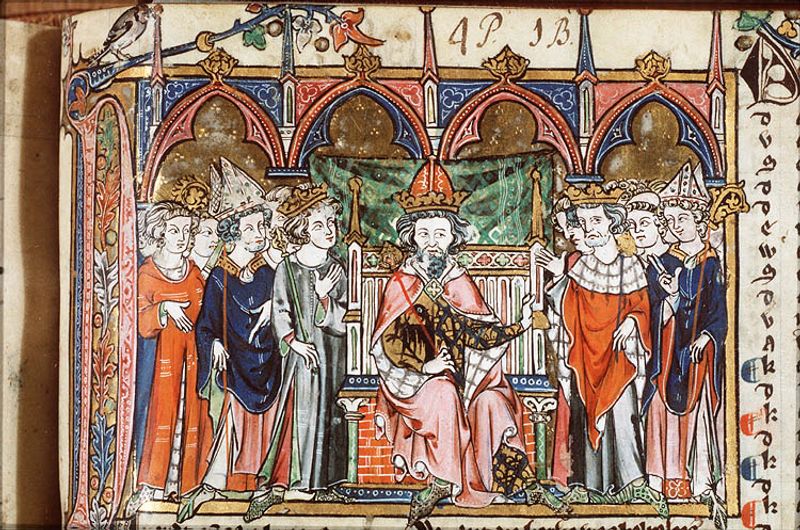
There is a certain point in medieval social climbing where accumulating more wealth stopped being purely advantageous and started generating proportionally more opposition. The richer a noble became, the more people had a concrete reason to see that fortune transferred elsewhere.
Ambitious rivals at court watched for signs of vulnerability. Neighboring lords tracked the growth of a family’s land holdings with close attention. Royal officials noted which estates were profitable and which nobles might be worth pressuring. Even trusted household members could be tempted by the prospect of personal gain at their employer’s expense.
The more extensive a noble’s network of lands and relationships, the more points of potential conflict existed. A dispute over grazing rights with one neighbor, a delayed debt repayment to another, a perceived slight at court, any of these could escalate into a serious challenge to a family’s position. Medieval prosperity was real, but it operated within a social system where everyone around you was also calculating their own interests, and your fortune was always part of their math.
Share this story