Spain has more Roman history than most people realize. Beneath modern cities and beside quiet beaches, ancient theatres, temples, and walls still stand where Roman citizens once gathered, worked, and lived.
Some of these sites are world-famous, while others sit in small towns that rarely make the top travel lists. All of them offer something genuinely worth seeing.
Whether you are planning a road trip through Andalusia, exploring the meseta, or just curious about how far Rome’s reach actually extended, this list covers fourteen Spanish towns where Roman ruins are not just present but truly impressive. From a coastal amphitheatre facing the Mediterranean to a three-arched gateway in a hilltop village, each stop tells a different piece of the same long story.
Keep this list handy because a few of these sites may surprise you.
Roman Theatre and Amphitheatre, Mérida
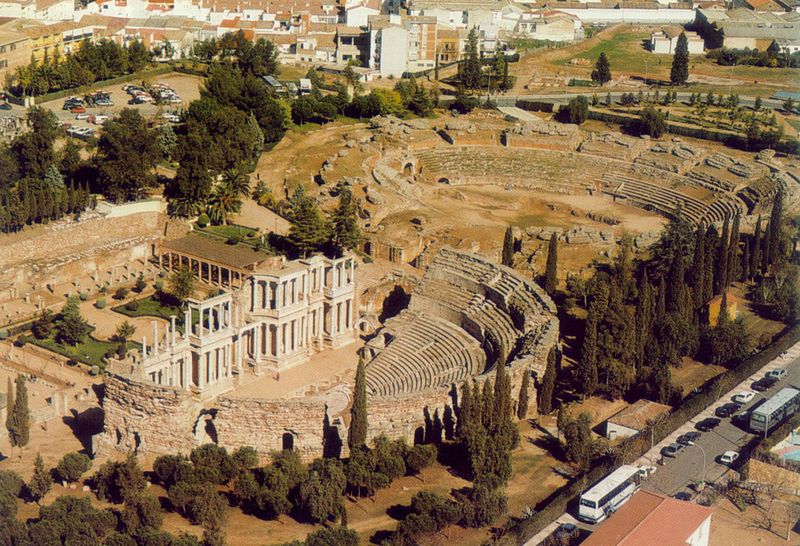
Mérida might be the single most rewarding Roman destination in all of Spain. Founded as Emerita Augusta in 25 BC, the city served as the capital of the Roman province of Lusitania, and the remains it preserves reflect that importance.
The theatre, the amphitheatre, a circus, aqueducts, temples, and private houses all survive in varying degrees of completeness.
The Roman Theatre dates to the first century BC and is especially striking because of its towering reconstructed stage colonnade. What makes it stand out further is that it still functions as a performance venue during Mérida’s annual classical theatre festival, held each summer.
Sitting in those ancient stone seats while watching a live production is a genuinely rare experience.
Both the theatre and amphitheatre are open to visitors under seasonal schedules throughout 2026. The site is managed as part of the Consorcio de la Ciudad Monumental, and combined tickets cover multiple monuments across the city.
Roman Amphitheatre, Tarragona
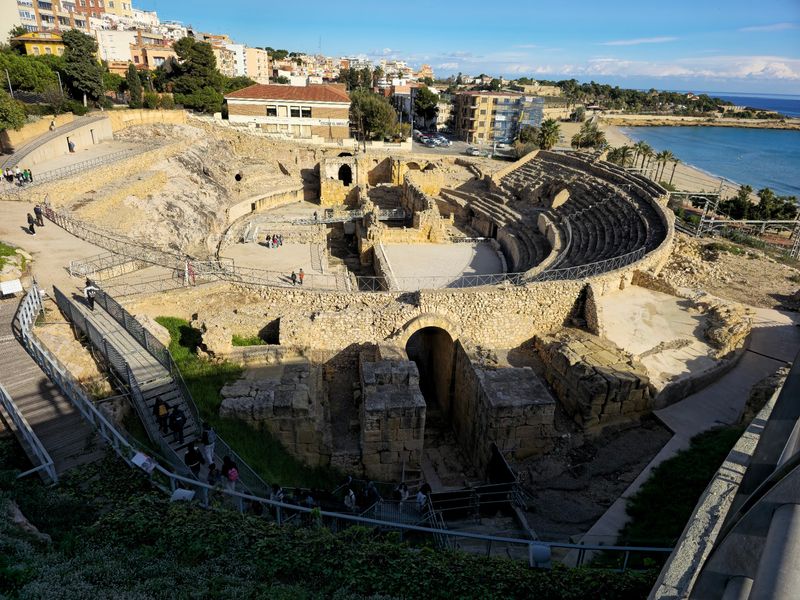
Tarragona’s Roman Amphitheatre has one of the most dramatic locations of any ancient structure in Europe. Built in the early second century AD, it sits close to the Mediterranean coastline, and from certain angles the sea forms a direct backdrop behind the arena floor.
That combination of ancient stone and open water is not something you forget easily.
The structure retains portions of its original seating, the arena itself, and underground service passages. Inside the arena floor, the ruins of a later basilica church are also visible, adding another layer of history to an already complex site.
Tarragona, known in Roman times as Tarraco, was the capital of the province of Hispania Citerior and offers far more than just the amphitheatre. The city’s Roman circuit also includes a circus, praetorium tower, city walls, and a forum.
Access to parts of the amphitheatre stands is currently restricted for preservation, but the overall site remains open to visitors.
Itálica Archaeological Site, Santiponce
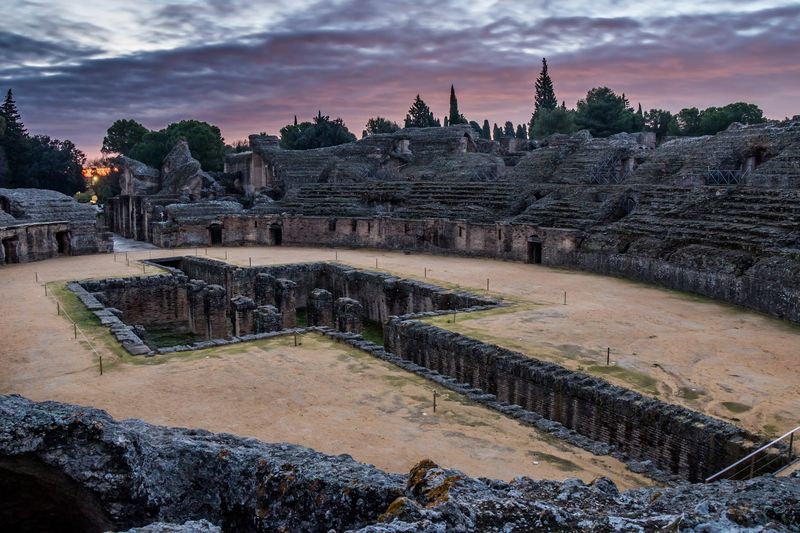
Just a short drive from Seville, the small town of Santiponce sits beside one of Roman Spain’s most significant archaeological sites. Itálica was founded around 206 BC and later expanded into a grand city, notable for being the birthplace of emperors Trajan and Hadrian.
That imperial connection influenced how ambitiously the city was built.
Visitors can walk along the original Roman street grid, peer into the remains of elaborate townhouses with well-preserved mosaic floors, and stand at the edge of one of the largest Roman amphitheatres ever constructed. The scale of that amphitheatre is genuinely surprising, ranking among the biggest in the Roman world by seating capacity.
The archaeological complex is officially listed as open and maintains seasonal visiting hours throughout 2026. Admission is managed by the Junta de Andalucía, and EU citizens may qualify for reduced or free entry on certain days.
The site is accessible from Seville by bus, making it a practical half-day trip.
Baelo Claudia Archaeological Site, Tarifa
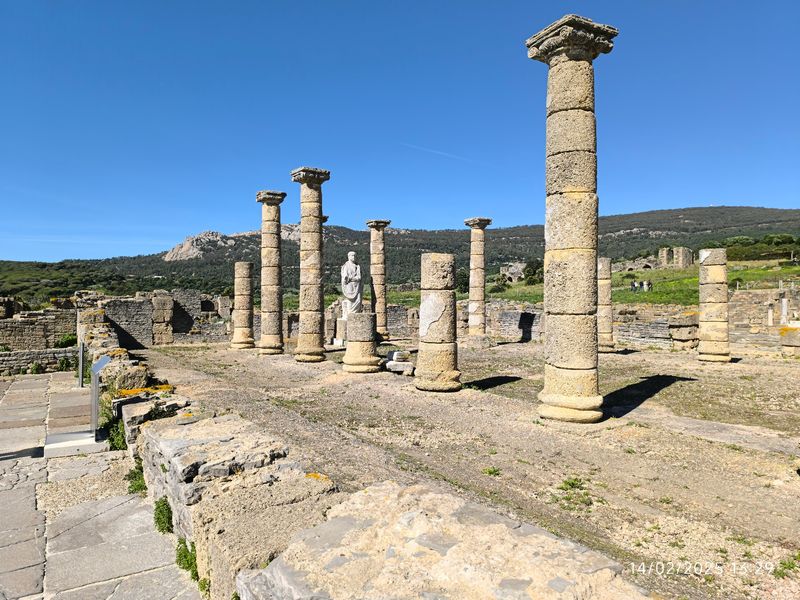
Few Roman sites anywhere combine archaeology and scenery as naturally as Baelo Claudia. Located near Bolonia Beach in the municipality of Tarifa, the ancient settlement sits on a flat coastal plain with the Strait of Gibraltar and the silhouette of the African coast forming a backdrop that no museum exhibit can replicate.
Baelo Claudia was a prosperous town during the Roman period, largely because of its fish-processing industry. The remains of large vats used to produce garum, a fermented fish sauce central to Roman cooking, are among the most distinctive features on the site.
Beyond the industry, visitors can also explore remains of the forum, basilica, three temples, a theatre, baths, and a market.
The Junta de Andalucía currently lists the complex as open with seasonal hours through 2026. An on-site interpretation center provides useful context before you walk the ruins.
The nearby beach makes this an easy stop to extend into a longer afternoon.
Segóbriga Archaeological Park, Saelices
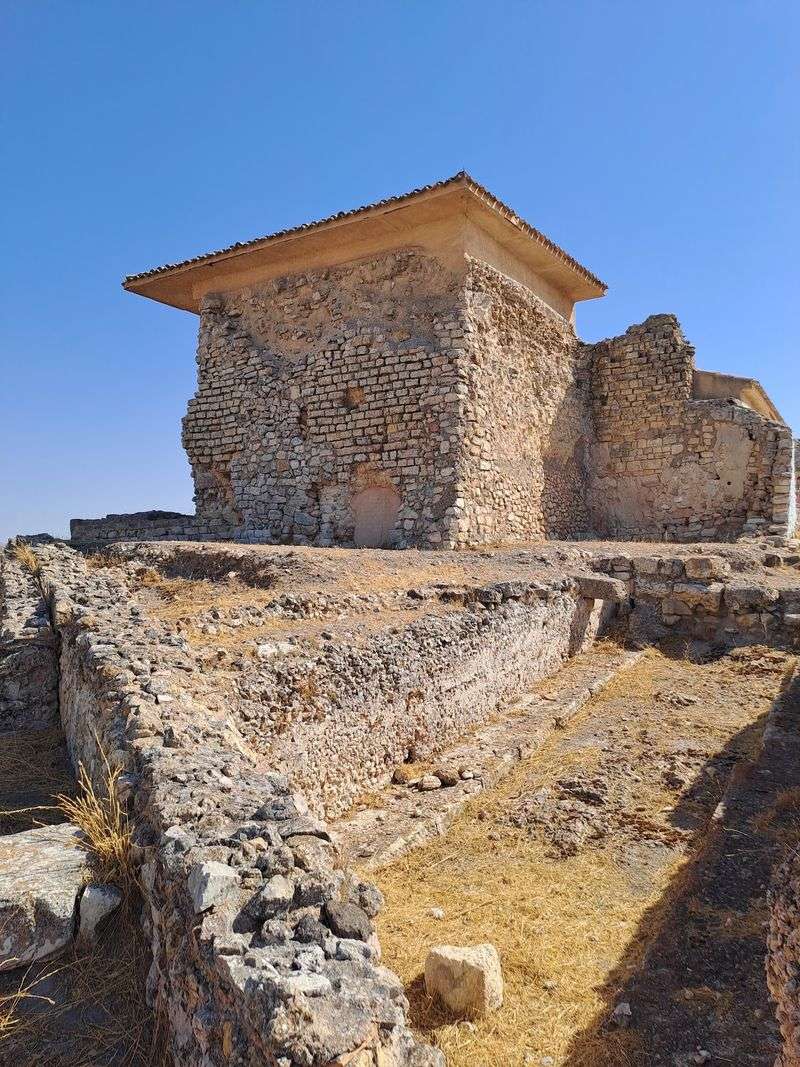
Segóbriga does not get as much attention as Mérida or Tarragona, but for visitors who want a thorough Roman city experience in central Spain, it earns its place on any serious list. The archaeological park near Saelices preserves a theatre, amphitheatre, forum, baths, city walls, and streets, giving a clear sense of how a mid-sized Roman settlement was organized and used.
The city was an important producer of lapis specularis, a transparent form of gypsum that Romans used similarly to glass, and that economic role helped fund its ambitious public buildings. The theatre and amphitheatre are both in good enough condition to read their original layouts clearly, which is not always the case at smaller sites.
The park is actively maintained and opens Tuesday through Sunday for most of the year, with seasonal hours. An on-site museum displays finds from the excavations.
For anyone driving between Madrid and Valencia, Saelices makes a genuinely worthwhile detour off the A-3 motorway.
Roman Theatre, Cartagena
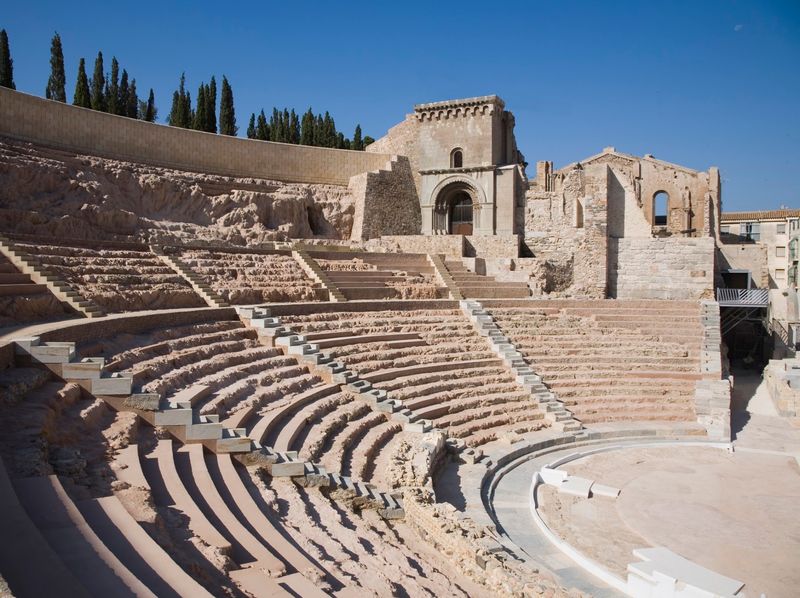
Cartagena’s Roman Theatre spent centuries buried beneath later construction, essentially unknown to the modern city above it. Its rediscovery during late twentieth-century urban works turned out to be one of the most significant archaeological finds in Spain’s recent history.
The theatre originally dates to the first century BC and could seat an estimated six thousand spectators.
What makes a visit here different from most Roman sites is the way the museum is integrated into the experience. Visitors enter through a purpose-built museum that guides them through exhibits on Carthago Nova’s Roman history before tunnels lead directly into the ancient structure.
Stepping out into the open theatre after walking through those underground passages is a well-designed moment.
The Roman Theatre Museum currently operates Tuesday through Sunday with extended hours during the summer season. The museum is located in the heart of Cartagena’s historic center, making it easy to combine with other nearby attractions.
Admission is reasonably priced and the visit runs about ninety minutes at a comfortable pace.
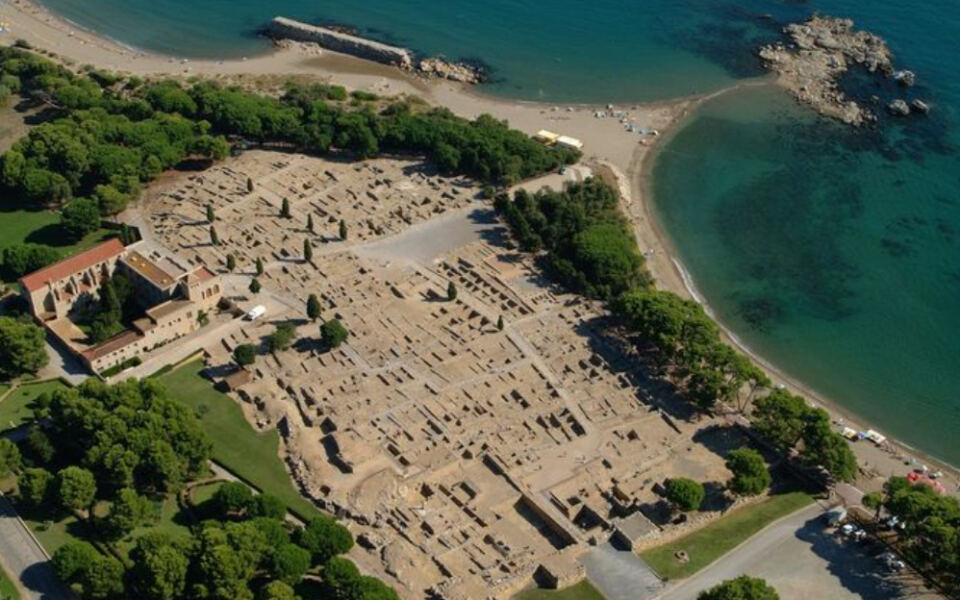
Empúries Archaeological Site, L’Escala
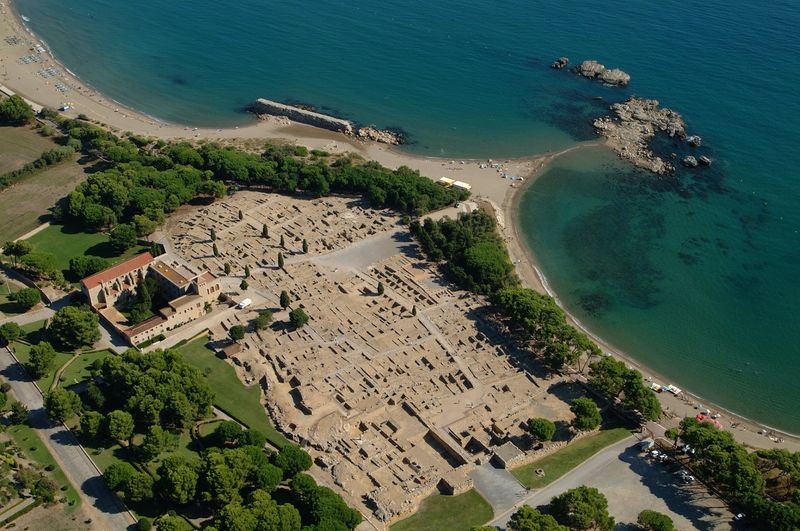
Empúries is genuinely one of a kind in Spain. It is the only place in the country where visitors can explore both a Greek colonial town and a Roman city within the same archaeological complex.
That layered history, spanning roughly from the sixth century BC through the Roman period, gives the site a depth that single-culture sites simply cannot match.
The Roman section includes grid-planned streets, large houses with mosaic floors, the outline of a forum, and defensive walls. The adjacent Greek settlement, known as Emporion, preserves its own agora, temples, and residential areas.
Walking between the two sections takes only a few minutes but covers several centuries of Mediterranean history.
Located near L’Escala on the Costa Brava, Empúries sits close to the sea with views that remind you why this coast attracted settlers for so long. The site is currently open daily during much of the year, guided visits are available, and the on-site museum provides strong context for what you are seeing on the ground.
Clunia Roman City, Peñalba de Castro
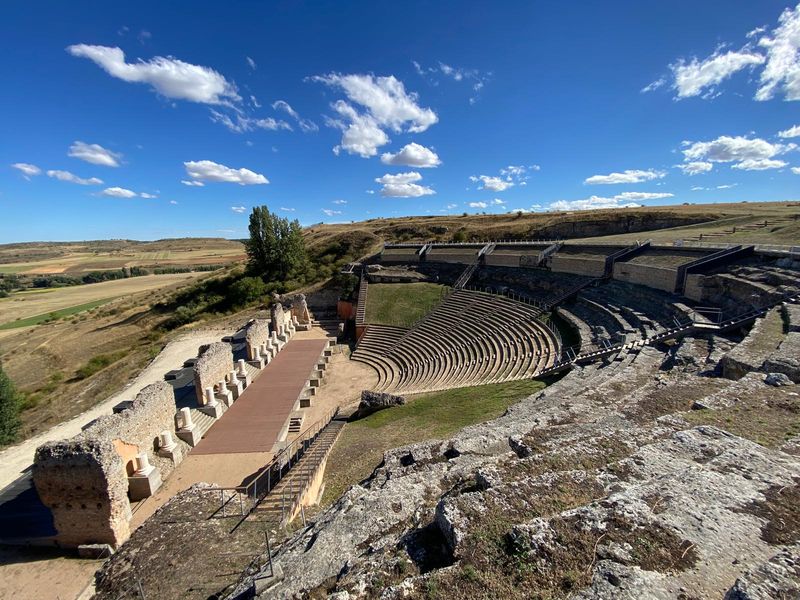
Clunia is the kind of site that rewards travelers who venture off the main routes. Perched on a high plateau near the small village of Peñalba de Castro in Burgos province, it was once one of the most important cities in northern Roman Hispania, serving at various points as a regional capital and administrative center.
Among its surviving structures, the theatre stands out for its sheer size. Archaeological studies suggest it could hold somewhere around ten thousand spectators, which would make it one of the largest Roman theatres ever built on the Iberian Peninsula.
The forum, baths, temples, and several houses with mosaic floors are also visible across the excavated area.
The archaeological site remains open throughout the year except on Mondays and several designated holidays. Because Clunia sits on an elevated plateau with wide views over the surrounding Castilian landscape, the setting adds a geographic drama that complements the ruins themselves.
An on-site museum provides finds and context from decades of excavation work.
Complutum Roman City, Alcalá de Henares
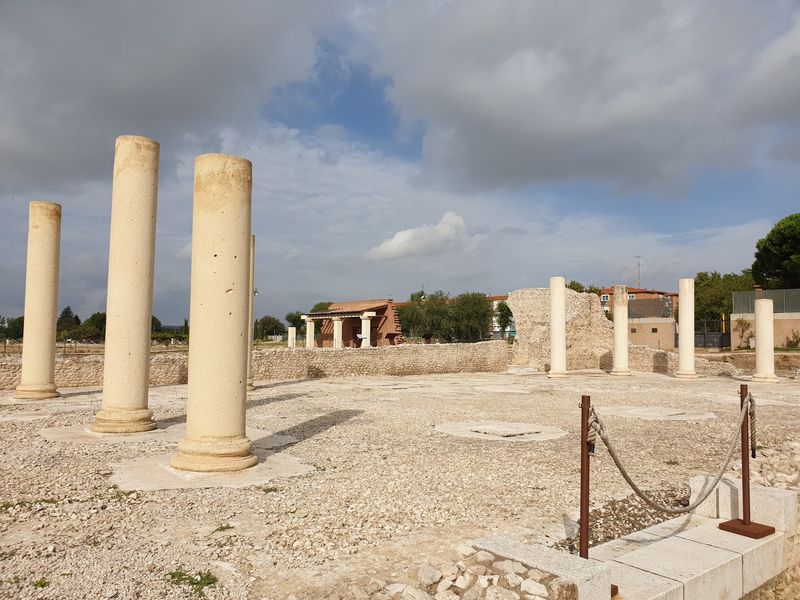
Alcalá de Henares is internationally recognized as the birthplace of Miguel de Cervantes and home to a historic university, but the Roman city of Complutum adds another dimension to its already layered history. The ancient settlement developed near the Henares River and eventually grew into a prosperous city during the Imperial period.
Visitors today can explore part of the forum area and the remains of Roman townhouses, including floor mosaics that have survived in good condition. The nearby House of Hippolytus, a separate section of the archaeological complex, preserves particularly fine mosaic work and is considered one of the more important late Roman mosaic ensembles in central Spain.
Complutum is currently open Tuesday through Sunday and on public holidays, with free admission making it an accessible stop for families and budget travelers. Seasonal visiting hours apply, so checking current schedules before arriving is practical.
Given Alcalá’s easy rail connection to Madrid, Complutum fits naturally into a day trip from the capital without requiring a car.
Roman Walls, Lugo
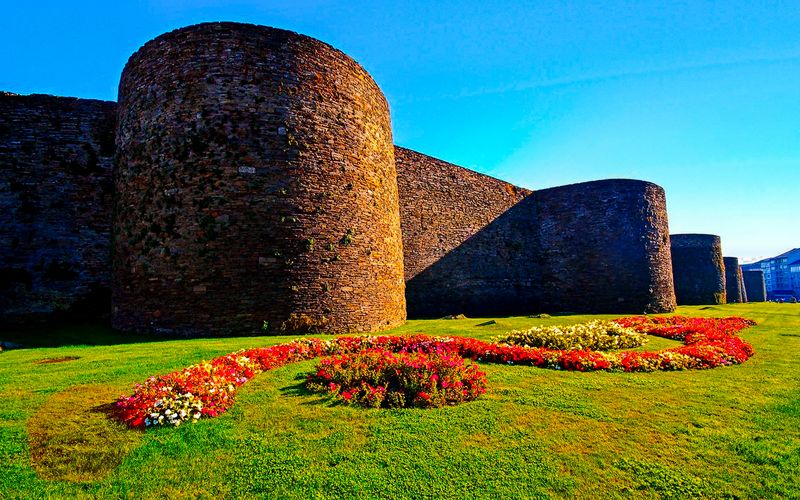
Most Roman walls survive only in fragments, but Lugo is a rare exception. The walls encircling its historic center have remained essentially complete since they were constructed during the late Roman period, likely in the third or fourth century AD.
That unbroken circuit stretches for more than two kilometers and stands as a continuous, walkable structure to this day.
UNESCO recognized the walls as a World Heritage Site, describing them as one of the finest surviving examples of late Roman military fortification in the world. Seventy-one towers and ten gates punctuate the circuit, and visitors can walk the full perimeter along the top of the wall, looking out over both the historic city and the surrounding landscape.
Access to the wall walk is free, and no tickets or reservations are required. That openness makes Lugo’s walls genuinely different from most major archaeological sites in Spain.
The city itself, in Galicia, is worth a longer visit, but even a few hours on the walls is time well used.
Caesaraugusta Route, Zaragoza
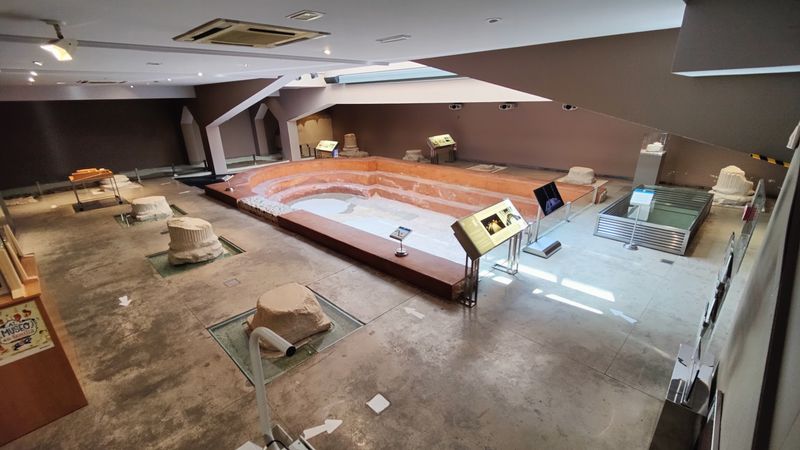
Zaragoza does not always appear on Roman heritage itineraries, but it probably should. The modern city sits directly on top of ancient Caesaraugusta, one of the most important Roman settlements in Hispania, and significant sections of that city have been excavated and turned into a connected museum experience.
The Caesaraugusta Route links four separate museums, each covering a different aspect of Roman urban life. The forum museum addresses politics and commerce, the theatre museum covers entertainment and performance, the river port museum examines trade and infrastructure, and the baths museum reconstructs daily social life.
Together, they build a surprisingly complete picture of how the city functioned.
All four museums are currently open Tuesday through Sunday. Because they are distributed across the city center, visiting all four works well as a walking route through Zaragoza’s historic neighborhoods.
Combination tickets are available and offer better value than paying separately at each location. The theatre museum, built around actual excavated remains, tends to be the most visually striking of the four.
Cáparra Roman City, Oliva de Plasencia
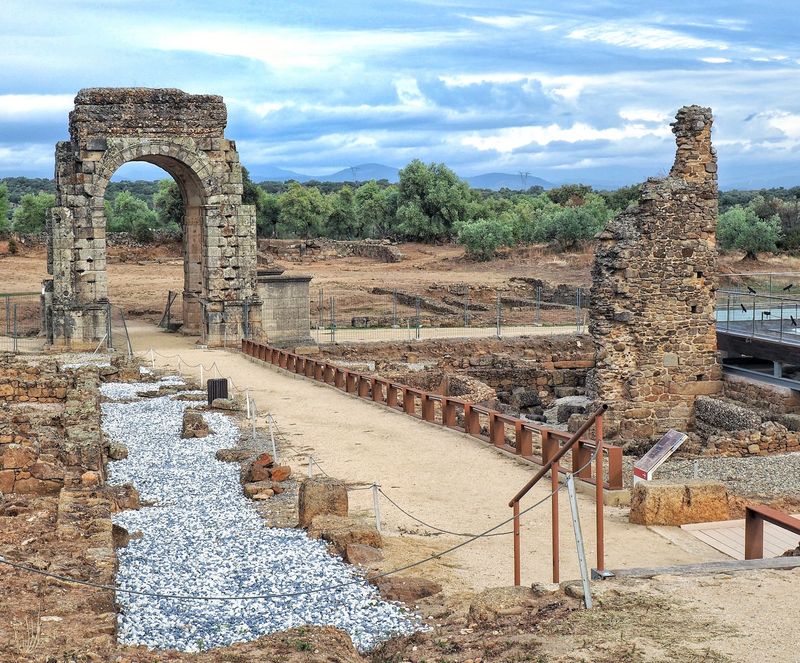
Cáparra’s most famous feature is immediately visible from the road, and it stops people in their tracks. The four-sided Roman arch, known as a tetrapylon, stands largely intact in an open field, and its unusual form, four archways meeting at a central point, is rare in surviving Roman architecture anywhere in the world.
Spain has only one, and this is it.
The arch marked the intersection of two major roads within the ancient city, which sat along the Vía de la Plata, the important Roman route connecting the south of the peninsula with the northwest. Beyond the arch, the archaeological site contains forum remains, baths, streets, and other building foundations spread across a quiet rural setting in Extremadura.
Current regional tourism information lists the complex and its interpretation center as accessible with seasonal hours and free admission. The rural location near Oliva de Plasencia means crowds are rarely an issue, and the open landscape surrounding the ruins gives the site a peaceful, unhurried atmosphere that larger sites sometimes cannot offer.
Roman Arch, Medinaceli
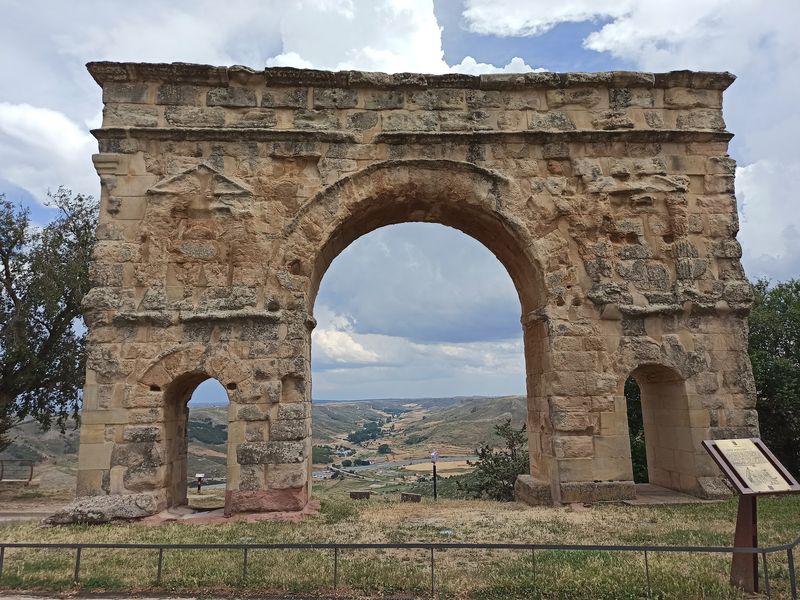
Medinaceli’s Roman arch stands at the edge of a hilltop town in Soria province, and its presence there feels almost unexpectedly grand for such a quiet place. The structure dates to the Roman period and is particularly notable for its three archways arranged side by side, a configuration that is extremely rare among surviving Roman arches in Spain and uncommon across the wider Roman world.
Most Roman triumphal arches have a single central opening or occasionally two lateral arches flanking a larger center span. Medinaceli’s three equal arches set it apart architecturally, and that distinction has drawn the attention of researchers and architectural historians for generations.
The arch is constructed from local limestone and has weathered the centuries in reasonable condition.
The structure stands outdoors in the open air, freely accessible at any time, and forms part of a walking route through Medinaceli’s historic center promoted by the local tourism office. The town itself, perched on a ridge with panoramic views over the surrounding plateau, is worth the drive up from the A-2 motorway on its own terms.
Share this story