Britain has a long and proud tradition of being wonderfully, unapologetically strange. From underground shell caves to museums dedicated to lawnmowers and poo, the country has quietly built a collection of attractions that defy easy explanation and reward curious visitors.
These are not the usual castles and cathedrals found on every travel shortlist. This article rounds up 15 genuinely odd, fascinating, and surprisingly fun places scattered across England, Scotland, and Wales that prove Britain is at its most interesting when it stops trying to be conventional.
Whether you are planning a road trip, a family day out, or simply looking for something to bookmark and share, this list has plenty to spark your curiosity.
The Forbidden Corner, North Yorkshire, England
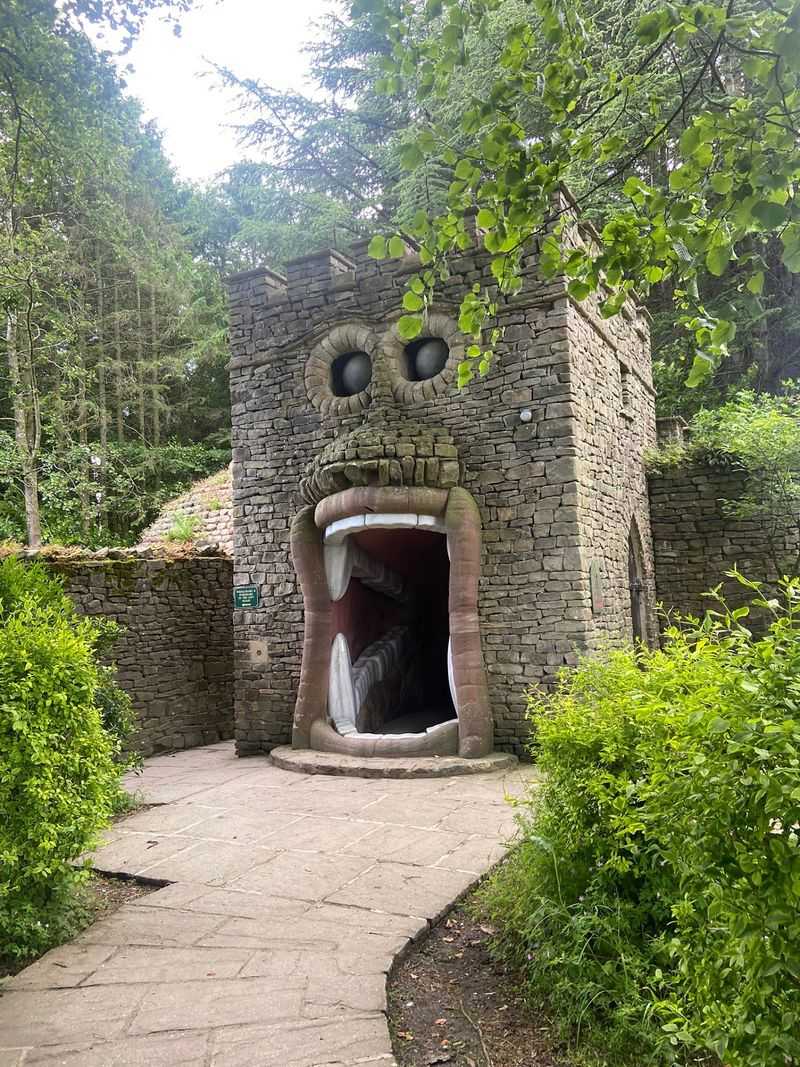
Calling The Forbidden Corner a garden does not quite capture what is actually waiting inside. Spread across four acres on the Tupgill Park Estate in North Yorkshire, this attraction is part garden, part puzzle, and part fever dream built from stone, creativity, and a genuine love of the bizarre.
Follies, statues, underground passages, hidden doors, towers, grottoes, and deliberately confusing paths all compete for your attention at once.
Getting lost is not a side effect here. It is essentially the whole point.
The paths are designed to confuse, the doors are designed to surprise, and the creatures lurking around corners are designed to make you question your choices.
The attraction runs from March 28 through October 31 in 2026, followed by weekend openings into December. Tickets must be booked in advance, so planning ahead before heading into the Yorkshire countryside is genuinely important, not just a polite suggestion.
The National Poo Museum, Ryde, Isle of Wight
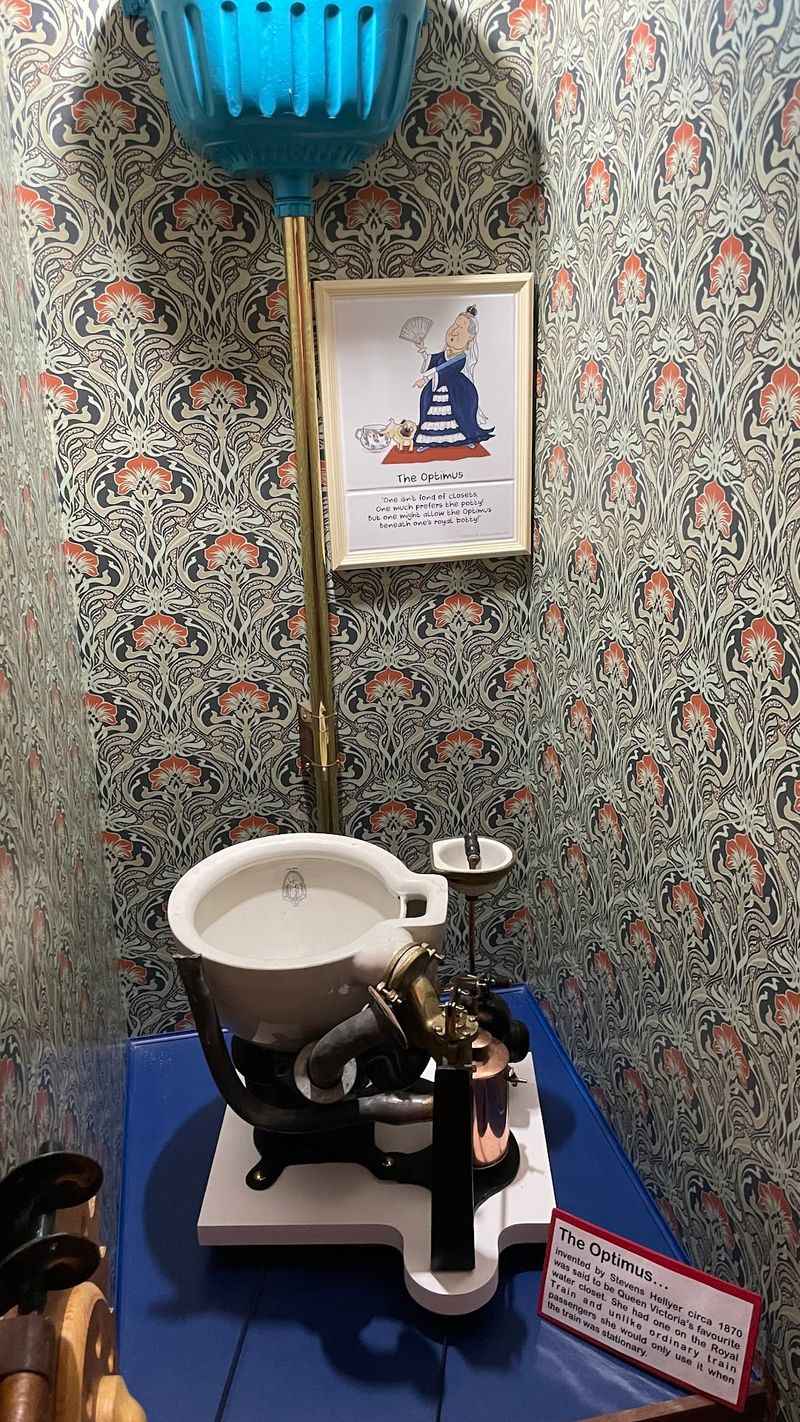
Few museums announce their subject with quite this much confidence. The National Poo Museum on the Isle of Wight takes one of humanity’s most avoided topics and turns it into something genuinely educational, family-friendly, and oddly compelling.
Preserved animal droppings, interactive exhibits, gut biome science, and a healthy sense of humor all share the same space.
After spending time as a traveling exhibition, the museum settled into the Department arts centre in Ryde for the 2026 summer season. Its collection features specimens from a wide range of species, and the exhibits are thoughtfully designed to replace awkwardness with curiosity.
Kids tend to find this place immediately hilarious, which makes it a clever entry point for real conversations about biology, ecosystems, and how the natural world actually works. It is the kind of museum that parents quietly enjoy just as much as their children do, even if they will not admit it.
The Shell Grotto, Margate, Kent

Walk down a staircase beneath an ordinary Margate street and the world becomes considerably stranger. The Shell Grotto consists of roughly 70 feet of underground passages covered with around 4.6 million shells arranged into detailed mosaics and symbols.
The craftsmanship is extraordinary, and the scale of it underground makes the whole place feel slightly unreal.
The biggest mystery is that nobody knows who built it or why. Discovered in 1835 and opened to paying visitors in 1838, the grotto has inspired theories ranging from a religious sanctuary to a secret meeting place to a wildly expensive personal folly.
No single explanation has ever been confirmed.
That unresolved mystery is a large part of what makes a visit so satisfying. The grotto continues welcoming visitors in 2026, generally Wednesday through Sunday with additional seasonal openings.
It is a short walk from Margate’s seafront and well worth the detour from the main tourist trail.
The British Lawnmower Museum, Southport, England
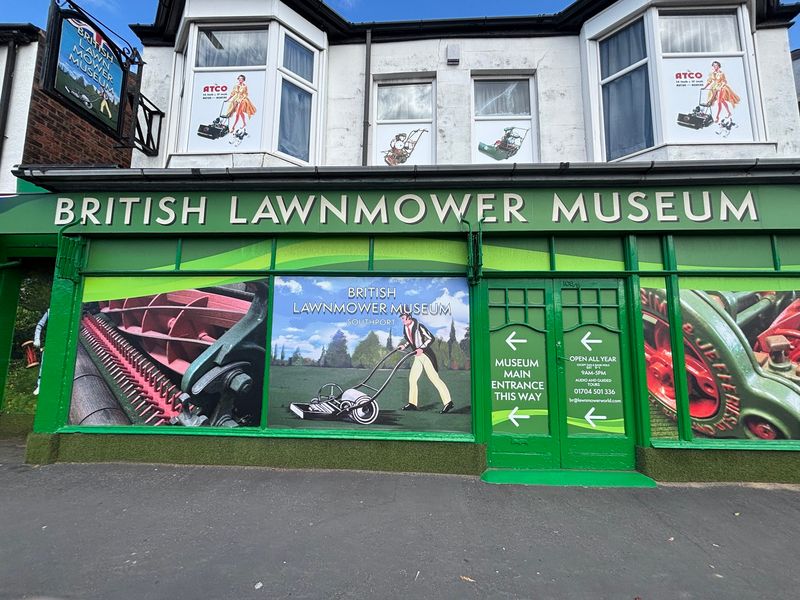
A museum dedicated entirely to lawnmowers sounds like the punchline to a very British joke, but the British Lawnmower Museum in Southport is completely serious about its subject, and that commitment is exactly what makes it so entertaining.
The collection covers the history of grass-cutting technology from Victorian and Edwardian engineering right through to more recent innovations. Some of the machines on display were made by manufacturers far better known for cars, motorcycles, and aircraft, which adds an unexpected layer of industrial history to what might otherwise seem like a niche hobby collection.
Seeing how much engineering ambition went into something as ordinary as cutting a lawn is genuinely surprising. The museum remains open Monday through Saturday, though checking ahead before visiting is recommended.
For anyone building a tour of Britain’s most specific and lovably eccentric museums, Southport absolutely earns a place on that route.
The Smallest House in Great Britain, Conwy, Wales
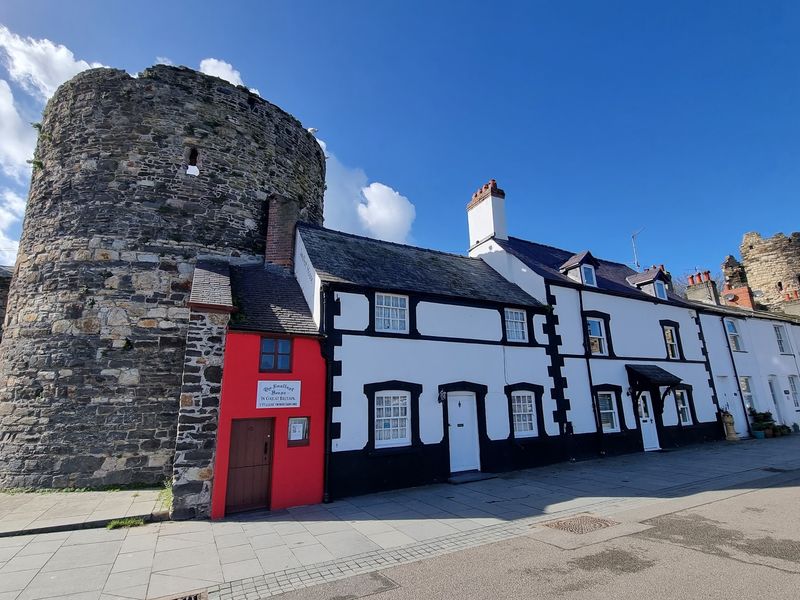
Wedged into a row of buildings beside Conwy’s harbor is a bright red house that looks as though someone accidentally built it at half scale and never corrected the mistake. At just 72 inches wide and 122 inches tall, the Smallest House in Great Britain is exactly what its name claims, and it was genuinely inhabited as a home until 1900.
Stepping inside makes the dimensions feel even more dramatic. The rooms are real rooms, not miniature displays, which means visitors can directly experience just how little space the house’s last resident, a local fisherman, actually had to work with.
The contrast between a functioning home and its impossible scale is what makes the visit stick in your memory.
The attraction confirmed it would reopen in spring 2026 after its regular winter closure. With Conwy Castle looming nearby and the harbor providing a scenic backdrop, combining both sites in a single visit makes easy sense.
Derwent Pencil Museum, Keswick, England
Pencils rarely get the museum treatment, but Keswick has a genuinely strong case for giving them one. The Derwent Pencil Museum explores the Lake District town’s centuries-old connection with graphite mining and pencil manufacturing, telling a story that turns out to be far more layered than expected.
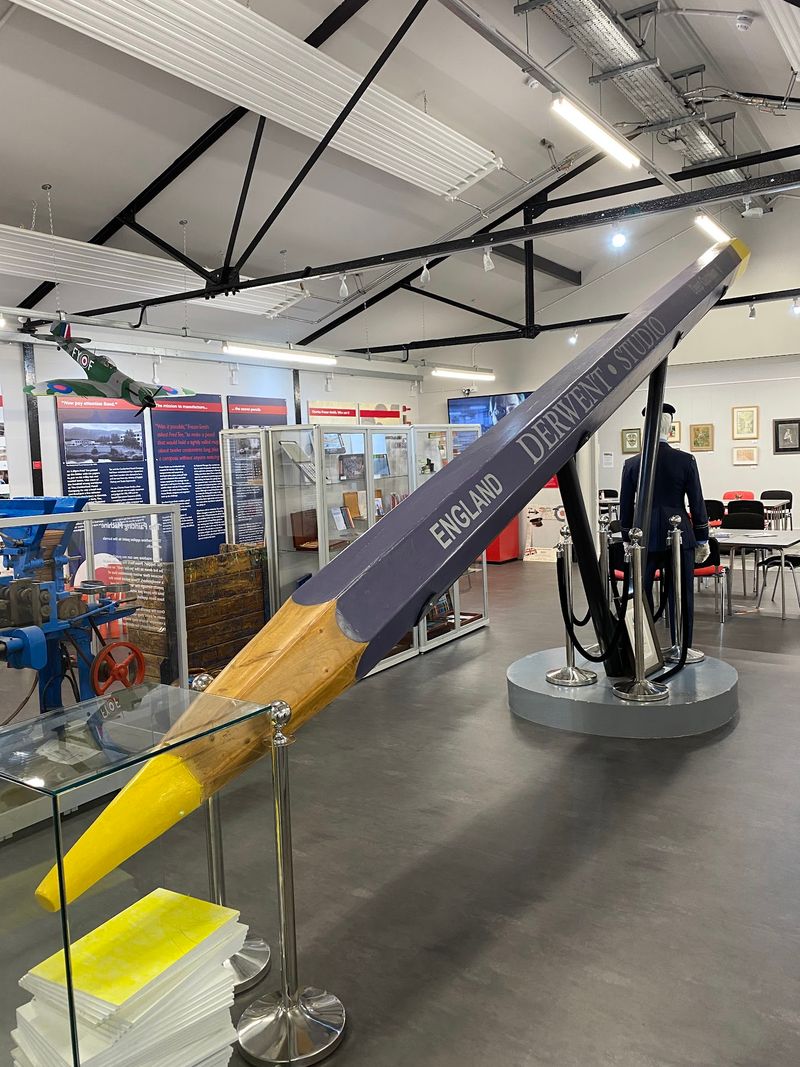
Visitors enter through a reconstruction of an old graphite mine before moving into exhibits that cover everything from the mechanics of pencil production to some genuinely surprising wartime history. Secret World War II pencils containing hidden maps are among the standout displays, alongside miniature pencil sculptures and an enormous colored pencil measuring almost eight meters long.
Britain has a real talent for making highly specific museums feel worthwhile, and this one fits that tradition perfectly. For the 2026 summer season, Derwent lists daily opening from April 1 through November 1.
Keswick itself is a lovely base for exploring the wider Lake District, making the museum a natural addition to any visit.
Camera Obscura and World of Illusions, Edinburgh, Scotland

Edinburgh already has one of the most dramatic skylines in Europe, but Camera Obscura and World of Illusions finds a way to make the city feel even stranger. Spread across five floors near the top of the Royal Mile, the attraction packs in more than 100 interactive exhibits that play with perception, physics, and the reliability of your own senses.
Visitors can stumble through a rotating Vortex Tunnel, get thoroughly confused inside a Mirror Maze, and experiment with optical illusions that refuse to behave the way logic suggests they should. The centerpiece is the historic camera obscura itself, which projects a live view of Edinburgh’s streets and rooftops onto a circular table in real time.
It is one of the Royal Mile’s most genuinely playful stops and operates throughout 2026, with opening hours extending well into the evening on many dates. The combination of science, history, and hands-on fun makes it work for a wide range of visitors.
The Museum of Witchcraft and Magic, Boscastle, Cornwall

Boscastle’s Museum of Witchcraft and Magic is a long way from the polished galleries found in most major British cities, and that distance is entirely to its credit. This independent museum explores witchcraft, folk magic, ritual traditions, and related beliefs through one of the most extensive collections of objects and historical material dedicated to the subject anywhere in the world.
The Cornwall setting adds a layer of atmosphere that no purpose-built attraction could manufacture. The walk down toward Boscastle’s dramatic harbor before or after a visit gives the whole experience a memorable sense of place.
This is not a seasonal Halloween gimmick. It is a serious museum devoted to an unusual subject, and in 2026 it is open seven days a week from Easter through October 31, aside from a scheduled June closure.
For anyone drawn to folklore, local history, or simply the stranger corners of British culture, this museum is genuinely rewarding.
The MAD Museum, Stratford-upon-Avon, England
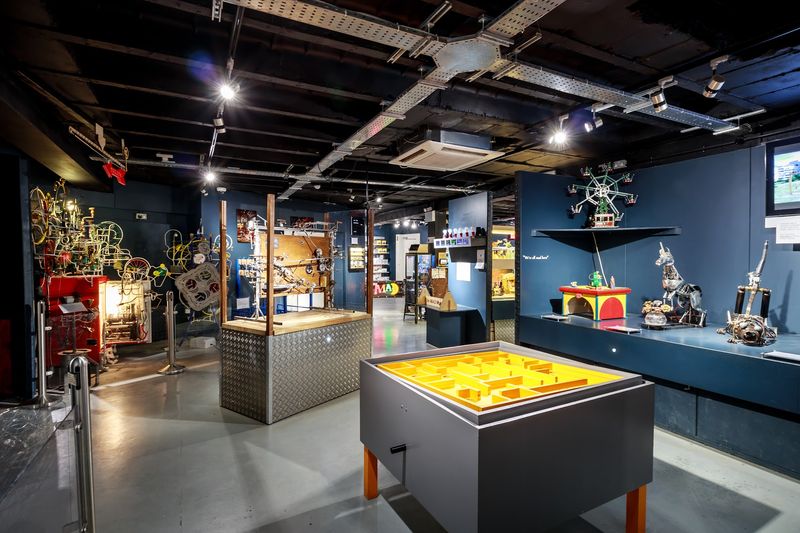
Shakespeare gets most of the attention in Stratford-upon-Avon, but a few streets away, a collection of whirring, spinning, rolling machinery is quietly competing for visitors and putting up a respectable fight.
The Mechanical Art and Design Museum, known as MAD, specializes in kinetic sculptures, automata, marble runs, and mechanical artworks that visitors can actually interact with rather than simply observe. In summer 2026 the museum advertised more than 90 interactive exhibits, covering everything from delicate clockwork pieces to large-scale mechanical installations that take over entire sections of the gallery.
The appeal is genuinely broad. Young children tend to gravitate toward the marble runs, while older visitors often find themselves spending unexpected amounts of time watching automata repeat their precise mechanical sequences.
The museum normally operates throughout the year, though occasional maintenance closures are scheduled. September 7, 2026 is listed as one such maintenance day, so checking the calendar before visiting is a sensible move.
Wookey Hole, Somerset, England

Wookey Hole manages to combine geology, folklore, caves, and a legendary witch into one wonderfully layered attraction that feels both ancient and lively at the same time. The underground cave system is the centerpiece, and the chambers are genuinely impressive, with limestone formations and underground rivers that have been shaping the landscape for thousands of years.
Generations of local storytelling have turned the Witch of Wookey Hole into an attraction in her own right, adding a layer of folklore to the geology that makes the whole experience more memorable. The site now combines cave exploration with family-friendly entertainment and seasonal performances, including circus shows during selected periods.
Wookey Hole operates in 2026 with separate peak and off-peak schedules, plus events including a Halloween program and a redesigned Winter Wonderland experience later in the year. The caves themselves are the reason to come, but the surrounding site gives families plenty of reasons to stay longer.
House of Marbles, Bovey Tracey, Devon
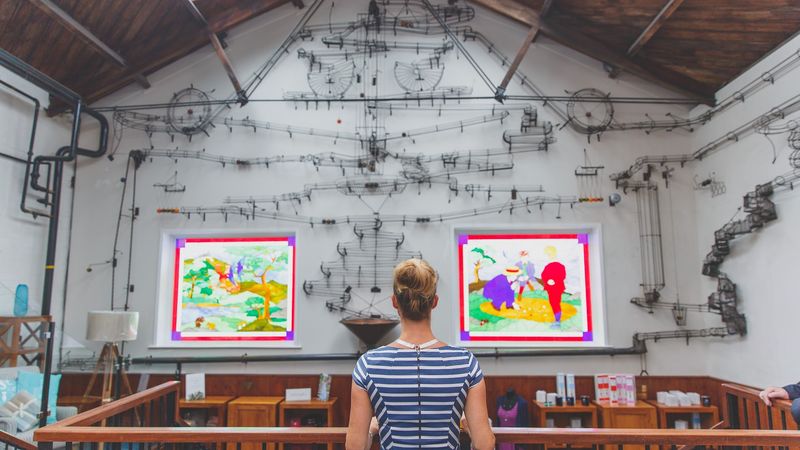
Anyone who once spent childhood hours sending marbles down homemade tracks may find themselves losing an entire afternoon at House of Marbles in Devon, and not feeling remotely sorry about it.
The attraction combines museums devoted to marbles, traditional games, glass, and pottery with enormous working marble runs and a live glassworks where visitors can watch craftspeople shaping molten glass into finished objects. The whole site occupies a historic pottery building in Bovey Tracey, which gives the place a grounded, authentic character that purpose-built attractions often lack.
Perhaps the most practically appealing detail is that admission is free. House of Marbles remains open throughout most of 2026, closing only on New Year’s Day, Easter Sunday, Christmas Day, and Boxing Day.
For families building a Devon itinerary that goes beyond beaches and moorland, this is an easy addition that costs nothing to walk through and tends to hold attention far longer than expected.
The Devil’s Porridge Museum, Eastriggs, Scotland
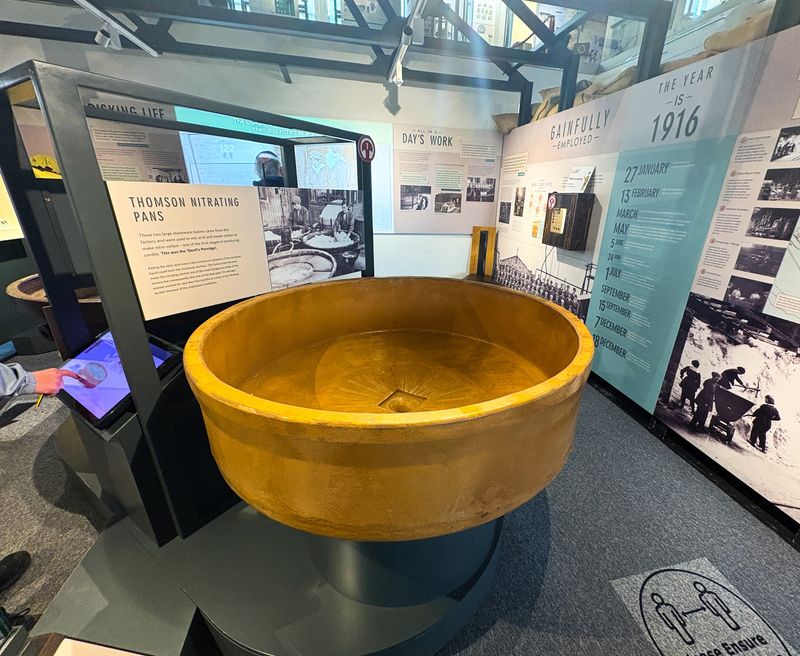
The name sounds like something served in a haunted roadside pub, but Devil’s Porridge was actually a nickname given to the cordite paste mixed by hand during World War I munitions production. The phrase is credited to Sir Arthur Conan Doyle, who visited the site and described the dangerous work in those terms.
This museum tells the remarkable story of HM Factory Gretna, an enormous wartime operation stretching across the Scottish border region and employing roughly 30,000 workers. Around 12,000 of those workers were women, and their contribution to the war effort sits at the center of the museum’s most compelling exhibits.
The unusual name makes the museum easy to remember, but the history behind it reveals an important chapter of Britain’s industrial, military, and social past that does not always receive the attention it deserves. The Devil’s Porridge Museum operates daily in 2026, normally from 10 a.m. until 4:30 p.m.
Diggerland, Multiple Locations in England

Most theme parks have a firm rule about not touching the machinery. Diggerland builds its entire identity around doing exactly that, which is either a brilliant idea or proof that some people never stop being five years old.
Probably both.
Its parks transform real construction equipment, including diggers, dumpers, and other heavy machinery, into supervised rides and hands-on activities that visitors of various ages can actually operate. There are locations in Kent, Devon, Durham, and Yorkshire, making it accessible from several different parts of England.
The combination of a family theme park and a working construction site is genuinely unusual, and the appeal of sitting in the cab of a real machine tends to override any initial skepticism fairly quickly. All four locations have confirmed 2026 operating calendars.
The parks run seasonally rather than daily year-round, with September weekend openings and an October half-term period before the winter closure begins.
Bekonscot Model Village and Railway, Beaconsfield, England
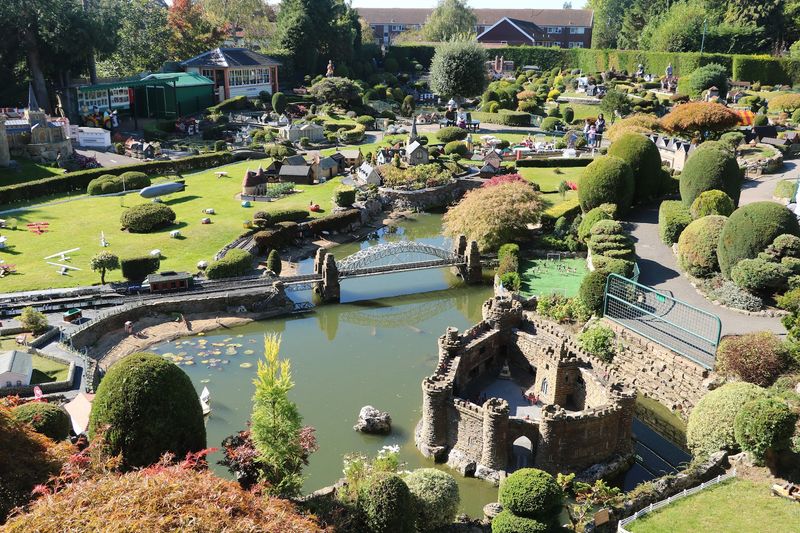
There is something irresistibly strange about standing beside an entire British town small enough to look down on from above. Bekonscot Model Village in Beaconsfield recreates an idealized slice of 1930s England across approximately 1.5 acres, complete with tiny buildings, landscaped gardens, streets, and a working miniature railway that loops through the whole scene.
The charm here does not come from futuristic technology or flashy spectacle. It comes from obsessive detail and the quietly surreal feeling that visitors have temporarily become giants wandering through a world that belongs to someone else.
Bekonscot is the oldest model village in the world, having first opened to the public in 1929, which adds a layer of genuine history to what might otherwise seem like a charming novelty.
The site remains open in 2026, with its published season running from February 14 through December 24. It is a straightforward trip from London, sitting just off the M40 in Buckinghamshire.
Puzzlewood, Forest of Dean, England

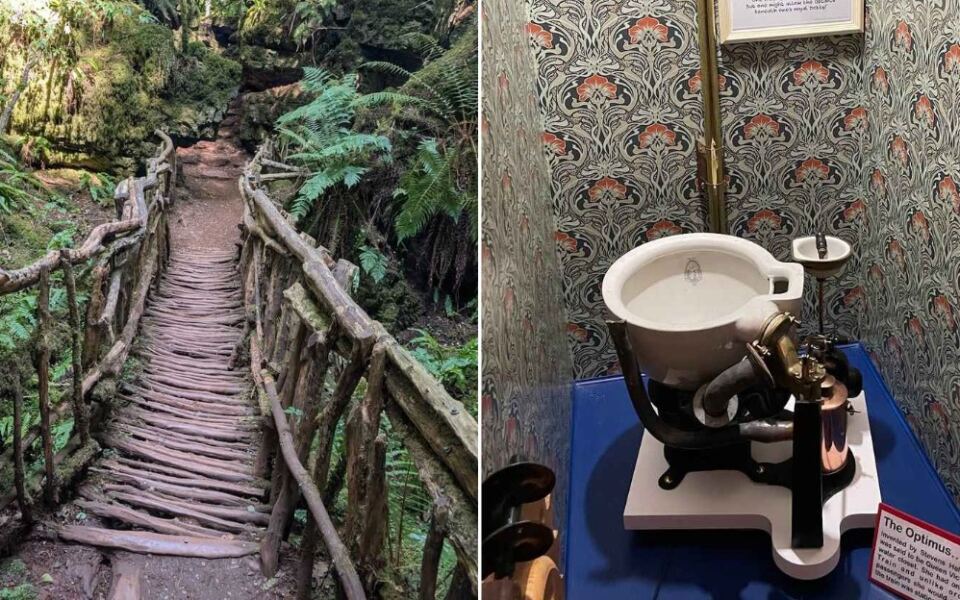
Puzzlewood feels less like a conventional day-out destination and more like someone discovered a forgotten landscape and quietly started selling tickets. The ancient woodland in the Forest of Dean is filled with twisting pathways, moss-covered rocks, unusual tree formations, wooden bridges, and more than 200 narrow and uneven steps that take visitors through terrain that genuinely looks like it belongs in a fantasy film.
That impression is not entirely wrong. Puzzlewood has served as a filming location for several productions drawn to its distinctive landscape, including scenes for major television and film projects.
Walking through it without any prior knowledge still produces the same effect, which says a lot about how atmospheric the place is on its own terms.
The attraction operates in 2026, opening daily from March 28 through much of the season before switching to selected November days and closing for winter. Good footwear is strongly recommended because the paths can become slippery, particularly after rain.
Share this story