Most people planning a European beach trip reach for the same short list: the Amalfi Coast, Santorini, the Algarve hotspots. Those places are beautiful, but they are also packed, expensive, and increasingly difficult to enjoy at a relaxed pace.
The good news is that Europe has a long coastline with dozens of towns that offer great beaches, good food, and genuine atmosphere without the resort-scale congestion. From Portugal’s fishing villages and Greece’s Peloponnese shores to the Baltic coasts of Finland, Latvia, and Lithuania, this list covers 17 real places worth considering for your next coastal trip.
Some are warm and sunny, some are cool and breezy, and a few will completely change what you think a European beach vacation can look like.
Salema, Portugal
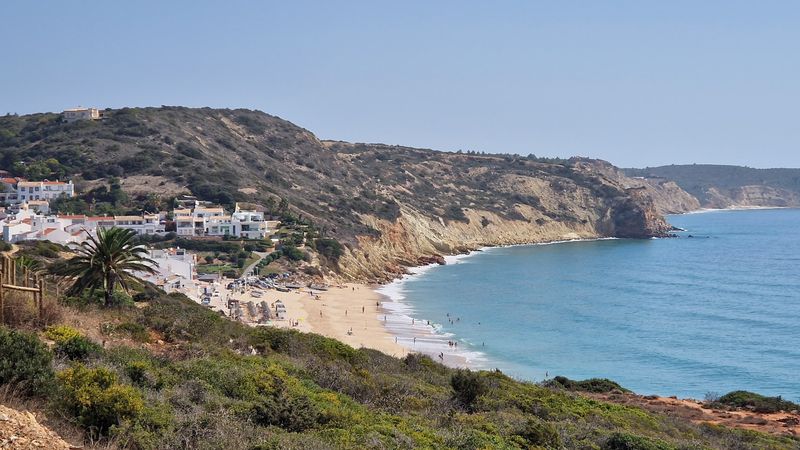
Few places in the Algarve manage to feel this genuinely unhurried. Salema is a small fishing village tucked between Lagos and Sagres, where whitewashed houses step down toward a broad sandy beach and fishing boats still appear near the shoreline in the early morning hours.
The beach itself, Praia de Salema, comes with restaurants, bars, showers, and seasonal sunshade rentals, so a quieter destination does not mean giving up practical comforts. One of its most unusual features is right beside the sand: dinosaur footprints preserved in coastal rock formations, which gives Salema a detail most Algarve resorts simply cannot match.
Portugal’s official tourism site recognizes Salema as a village that has held onto its fishing traditions despite growing visitor interest. For anyone wanting Algarve sunshine without the scale of its biggest resort centers, this small village is a genuinely appealing alternative worth planning around.
Vila Nova de Milfontes, Portugal
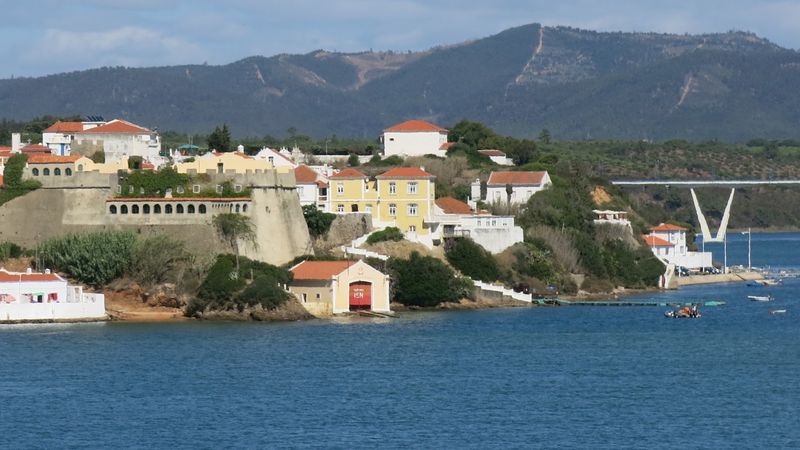
Where the Mira River meets the Atlantic Ocean, Vila Nova de Milfontes creates something rare: a coastal town with both river beaches and ocean-facing shores in the same postcode. That variety gives visitors real choices depending on conditions and mood.
Praia da Franquia hugs the riverbank near town and offers calmer water, while Praia do Farol faces the river mouth and open Atlantic. Across the Mira, Praia das Furnas provides another spacious option.
Bars, restaurants, water sports, and beach facilities are spread across the main beaches throughout summer.
The town sits within the Costa Vicentina area, a stretch of coastline known for retaining large sections of natural scenery rather than continuous resort development. Vila Nova de Milfontes draws plenty of Portuguese vacationers, but the experience remains noticeably different from Portugal’s heavily built southern strips.
The combination of river, ocean, and natural surroundings makes it worth the longer drive north.
Cudillero, Spain
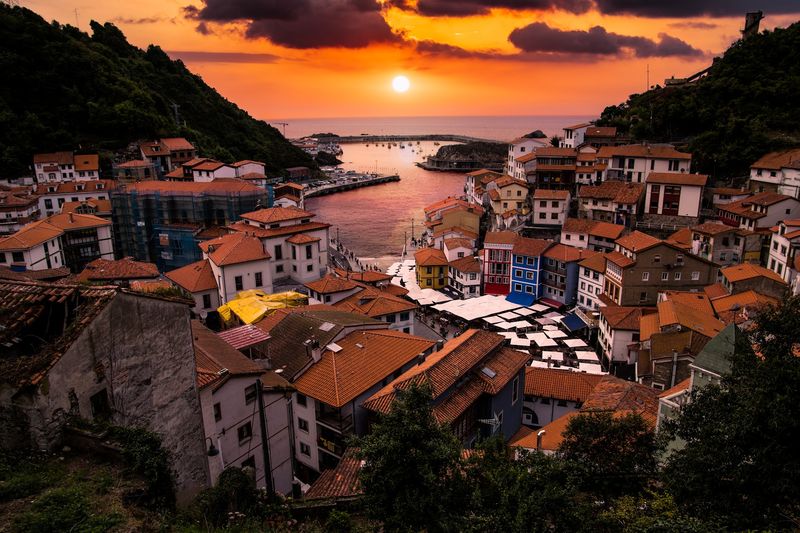
Cudillero looks nothing like the Mediterranean beach towns that fill most European travel guides. This Asturian fishing settlement rises steeply above its harbor on Spain’s green northern coast, with brightly colored houses packed tightly into the surrounding hills in a way that makes the whole town feel almost theatrical from a distance.
Exploring on foot is the only real option here. Viewpoint routes climb above the harbor for wide coastal panoramas, while seafood taverns occupy the cobbled streets near the waterfront below.
The surrounding coastline adds serious variety.
Playa del Silencio is a 500-meter pebble beach enclosed by dramatic rocky scenery, and Las Rubias is classified as an isolated beach with genuinely low visitor numbers. For travelers who prefer dramatic cliffs, fishing-village character, and coastal walks over rows of sun loungers and high-rise hotels, Cudillero makes a compelling case for the north.
The green hills alone are worth reconsidering your itinerary.
Maratea, Italy
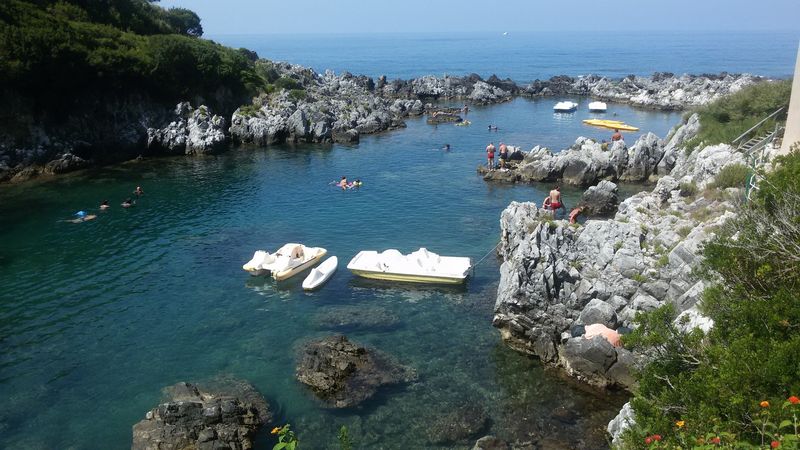
Italy’s coastline is famously competitive for attention, yet Maratea quietly goes about its business in Basilicata on the Tyrrhenian Sea with far less international traffic than Positano or Cinque Terre. That relative anonymity is the point.
The town combines a hillside historic center with a rugged coastline of coves, cliffs, beaches, and smaller coastal settlements. Some beaches come equipped with facilities and easy road access, while others can only be reached by boat.
Cala Jannita stands out for its unusually dark sand, a detail that tends to stop visitors mid-scroll when they first see photos of it.
Beyond the beaches, Maratea’s medieval street plan, numerous historic churches, and the large Christ the Redeemer statue overlooking the coast give the area real sightseeing depth. It functions well as a base for travelers who want genuine beach time alongside cultural exploration, without the reservation pressure that defines Italy’s most famous coastal destinations in peak summer.
Sperlonga, Italy
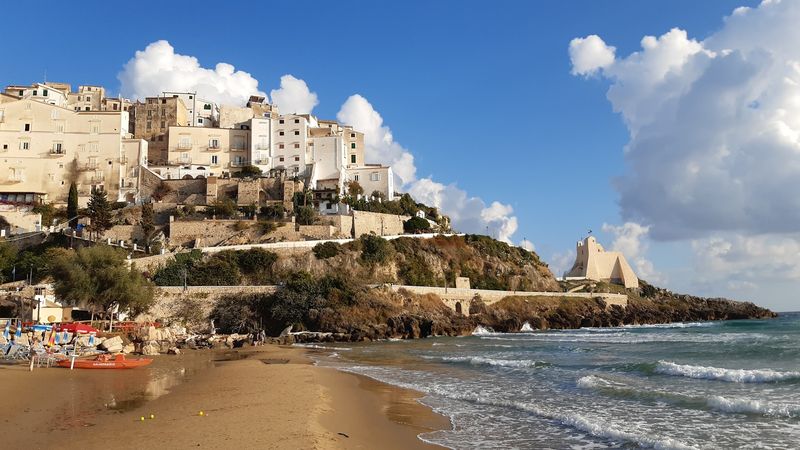
Not every rewarding Italian beach trip requires heading deep into the south. Sperlonga sits between Rome and Naples on Lazio’s Riviera di Ulisse, combining a whitewashed historic center perched above the sea with sandy coastline that gets significantly less attention than its quality deserves.
The surrounding Riviera di Ulisse includes cliffs, coves, dune-backed beaches, and archaeological attractions. Italy’s official tourism site promotes the area specifically for a slower beach experience away from major crowds, which is a useful endorsement for first-time visitors trying to decide whether the detour is worth it.
History adds another layer. Emperor Tiberius built a villa here in the first century AD, and the remains are still accessible today.
July and August bring more visitors, particularly Italian summer travelers, so the experience shifts noticeably outside the peak holiday weeks. Arriving in June or September gives you the same blue water and attractive streets with considerably more breathing room and easier parking.
Koroni, Greece
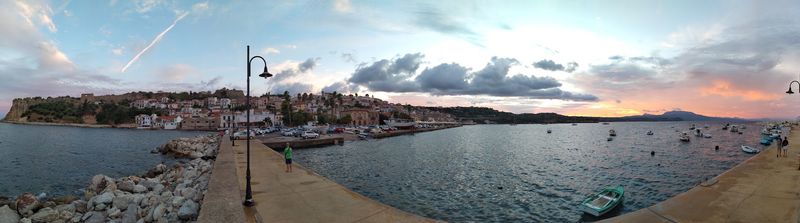
Koroni brings together several things travelers look for in a Greek coastal escape without requiring a ferry ticket to a crowded island. The town sits on the Messinian Gulf in the Peloponnese, and its enormous Venetian castle dates largely from the 13th century, still containing houses and churches inside its original walls.
Below the fortress, an active harbor supplies local tavernas with fresh fish, and the waterfront retains a working character rather than purely tourist-facing infrastructure. Nearby Zaga and Peroulia beaches offer clear water for swimming, while the streets climbing toward the castle are lined with traditional buildings and flower-filled balconies.
The Peloponnese mainland setting is part of the appeal. Travelers who want a classic Greek seaside atmosphere but prefer to avoid competing for space on Greece’s busiest islands will find Koroni a more manageable and arguably more authentic experience.
The castle alone justifies building an afternoon around it.
Methoni, Greece
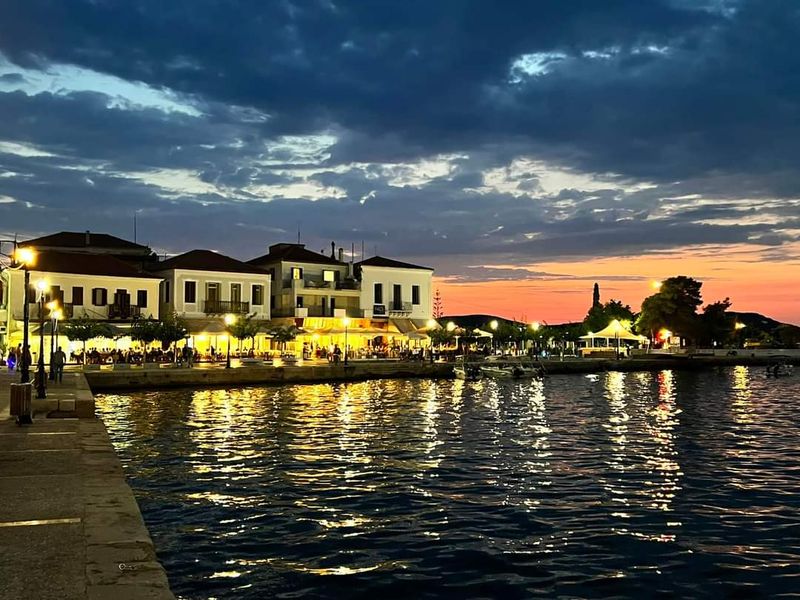
A short drive around the coast from Koroni leads to a place with one of the most dramatic seaside fortifications in all of Greece. Methoni’s enormous Venetian castle occupies a sea-surrounded promontory and is reached across a long stone bridge, with the small octagonal Bourtzi fortress standing almost alone in the water beyond the main walls.
The setting is genuinely striking, and it would be easy to spend an entire morning exploring the castle grounds without feeling rushed. But Methoni is not purely an archaeological stop.
Visitors can swim at the beach directly beside the castle or explore nearby shores including Mavrovouni, Anemomylos, and Loutsa.
That combination of beach and accessible history makes Methoni particularly well-suited for travelers who get restless spending an entire vacation on a sun lounger. The town provides a relaxed base for exploring southwestern Messinia without the scale or price tag of Greece’s major resort destinations.
It rewards travelers who plan a few extra days in the region.
Petrovac, Montenegro
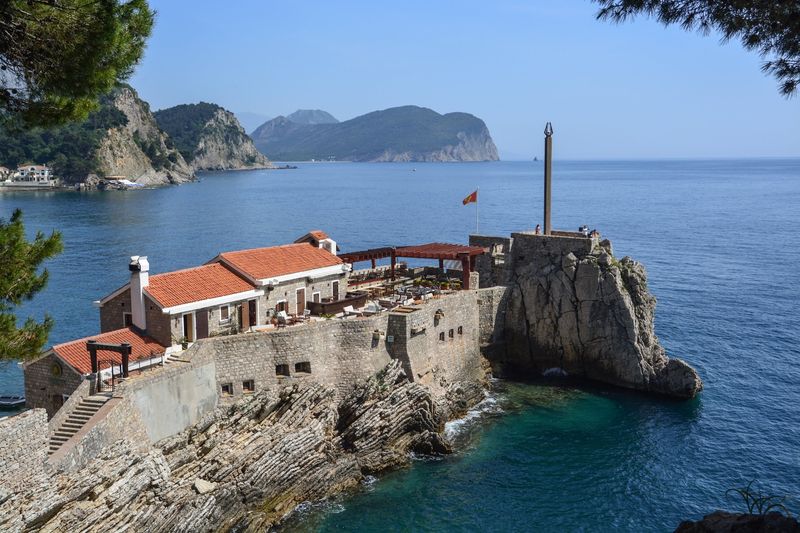
Montenegro’s Adriatic coast draws serious summer crowds around Budva, but Petrovac offers a noticeably smaller-scale experience along the same shoreline. The town curves around a roughly 600-meter beach backed by restaurants and a walkable waterfront that feels proportional rather than overwhelming.
Offshore, the small islands of Katič and Sveta Nedelja give the bay a particularly scenic backdrop that photographs well from almost any point along the shore. Montenegro’s national tourism organization highlights Petrovac Beach for its slightly reddish sand and island views, which sets it apart visually from the more uniform beaches nearby.
Using Petrovac as a base for exploring smaller coastal bays and coves is a practical way to extend the stay beyond the main beach. It should not be mistaken for a completely undiscovered village, since it is an established destination.
However, its compact scale and more measured atmosphere can feel considerably easier to navigate than the most congested sections of the Budva Riviera during peak season.
Izola, Slovenia
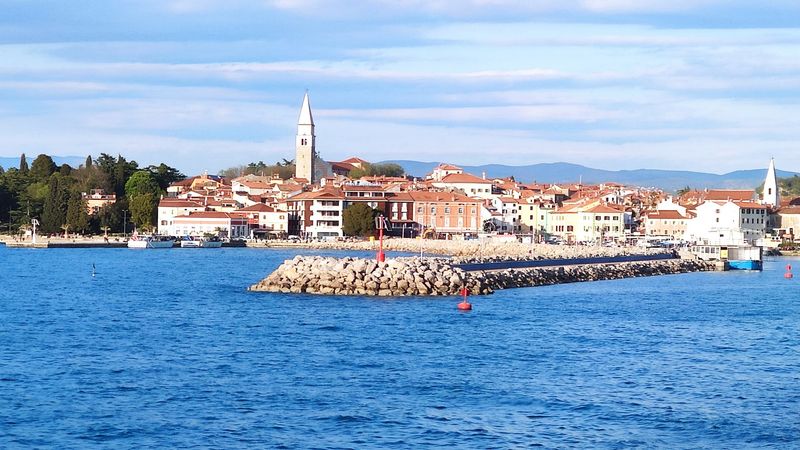
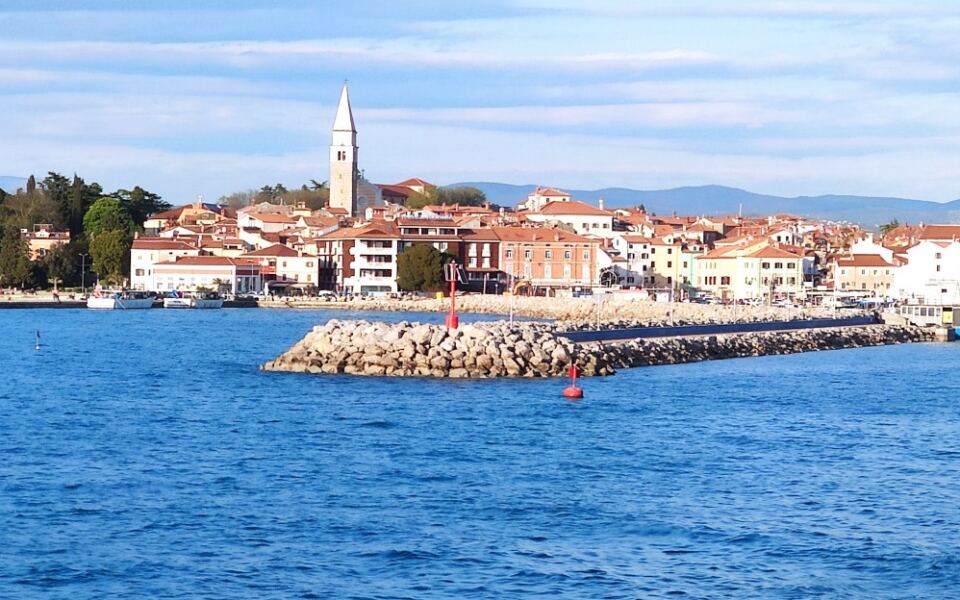
Slovenia’s Adriatic coastline is short, but Izola makes the most of every kilometer. The town was once an actual island, and its history as a fishing, winemaking, olive-growing, and maritime trading settlement gives it more layers than its modest size might suggest.
The historic center has narrow streets, Mediterranean architecture, and a working harbor alongside restaurants and cafes. Eight beaches spread across roughly five kilometers of coastline offer variety in surface and setting, including pebble, concrete, and more natural swimming areas.
Slovenia’s tourism board specifically describes Izola as less crowded than some neighboring coastal destinations and notes its more relaxed overall pace.
That variety makes Izola work well for travelers who want to combine swimming with cycling, coastal walks, local food, and day trips rather than committing to a single resort beach for the whole stay. If you have been skipping Slovenia’s coast in favor of Croatia’s, this town makes a reasonable argument for reconsidering your route entirely.
Polis and Latchi, Cyprus
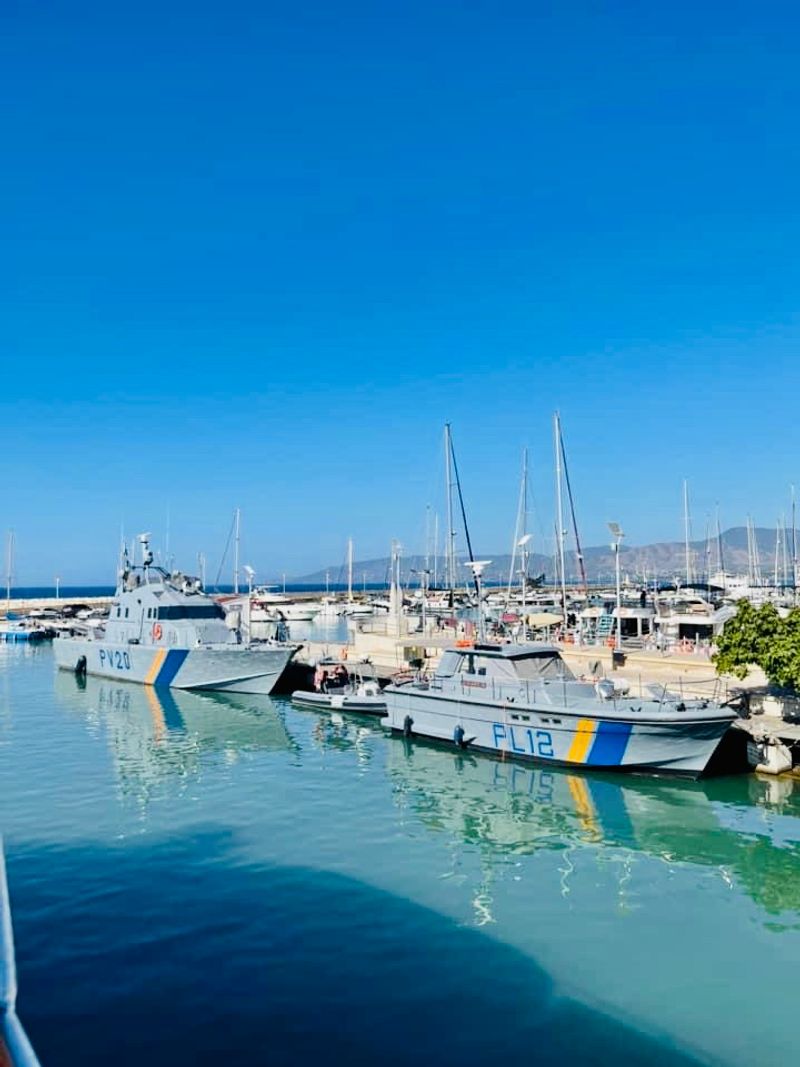
Northwestern Cyprus operates at a different pace from the island’s larger resort zones. Polis Chrysochous and the neighboring fishing port of Latchi together form a coastal area that combines beach access, seafood, and natural scenery without the scale of Limassol or Ayia Napa.
Polis sits close to a Blue Flag pebble beach backed by eucalyptus trees, and a waterfront walking route connects it to Latchi Harbour, where seafood restaurants line the dock. Nearby Souli Beach stretches for around 800 meters with showers, changing rooms, sunbeds, umbrellas, restaurants, and seasonal lifeguards covering the basics comfortably.
The proximity to the Akamas Peninsula adds real value to a stay here. Boat trips and hiking routes into the protected peninsula are accessible from Latchi, making it practical to mix beach days with natural exploration.
Cyprus tourism authorities describe this western corner of the island as a quieter area of seaside scenery compared with the more heavily developed sections of the coast.
Hanko, Finland
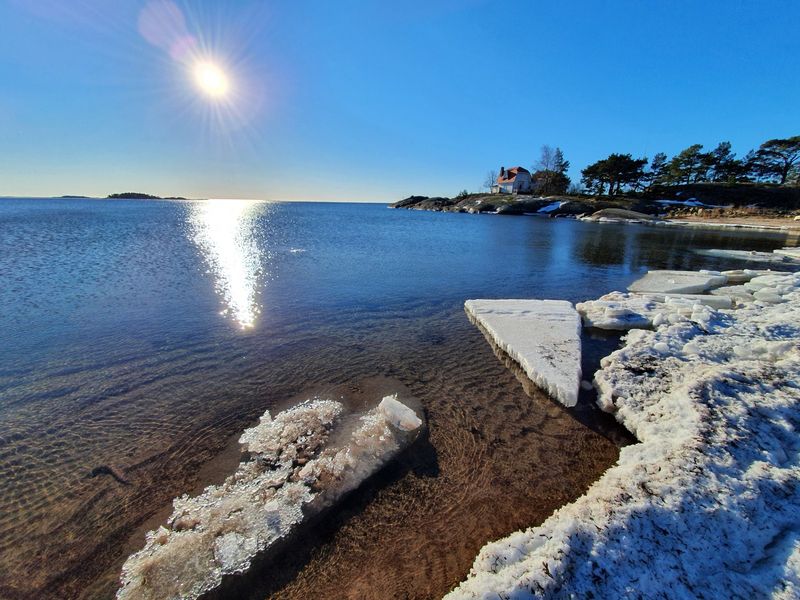
A European beach vacation does not require a Mediterranean flight. At Finland’s southernmost point, Hanko has approximately 130 kilometers of shoreline, including long sandy stretches, rocky coves, and beaches close enough to reach on foot from the town center.
Visit Finland notes around 30 kilometers of sandy beaches here and describes Hanko as one of the country’s classic summer destinations. Beyond swimming, the town has restaurants, sailing events, cycling routes, lighthouse excursions, and boat trips to fill several days comfortably.
Wandering among the historic wooden villas left from Hanko’s earlier days as a fashionable spa resort adds a distinct architectural layer that most beach towns cannot offer. The Baltic is obviously cooler than the Mediterranean, so Hanko makes most sense during Finland’s summer months when long northern evenings stretch well past dinner.
For travelers willing to trade tropical heat for spacious coastline and genuine quiet, it delivers a very different kind of European beach experience.
Nida, Lithuania
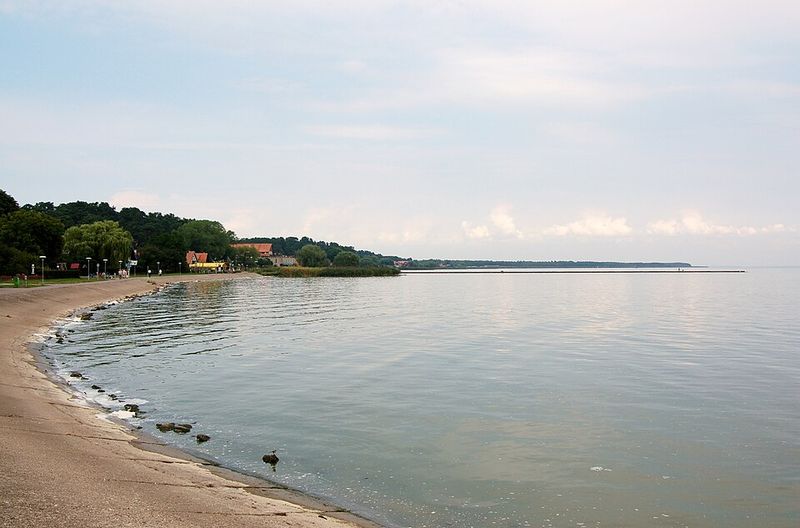
Few places in Europe produce a coastal landscape quite like the Curonian Spit. Nida sits on Lithuania’s section of this narrow UNESCO-listed peninsula, positioned between the Baltic Sea and the Curonian Lagoon with pine forests and enormous dunes forming the scenery in between.
The town is the largest settlement on the Lithuanian side of the spit but remains small enough to explore comfortably on a bicycle. Cycling, hiking, swimming, and birdwatching are among the main draws, and the combination keeps the stay active without requiring any particular planning effort.
Getting here is part of the experience. Visitors generally reach the Curonian Spit by ferry from Klaipeda before continuing south through forested roads toward Nida, which creates a sense of genuine separation from ordinary city tourism.
For travelers who think a beach vacation should include dunes, forests, cool Baltic air, and a landscape that genuinely looks unlike anywhere else, Nida is a strong and underrated choice.
Liepaja, Latvia
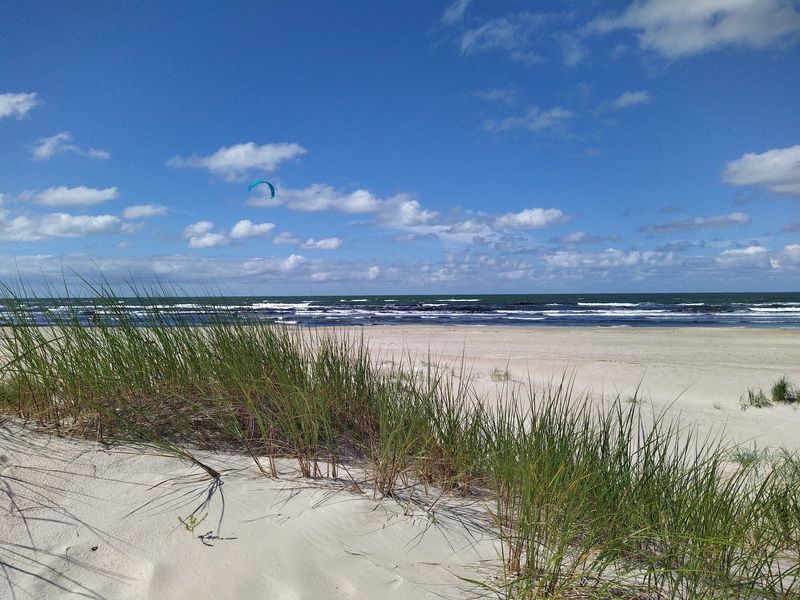
Liepaja delivers something many Mediterranean resorts genuinely struggle to offer during summer: an enormous amount of beach space per person. The Latvian city sits directly on the Baltic Sea with a broad sandy coastline and a large seaside park, and the Blue Flag beach can reach roughly 50 to 80 meters in width depending on conditions.
The wider beach extends for several kilometers, which means the kind of overcrowding common at smaller resort bays is rarely an issue here. Away from the sand, Liepaja has restaurants, spas, architecture, theaters, concerts, and museums to support a longer stay.
The city has been named European Capital of Culture for 2027, which adds a cultural dimension that most purely beach-focused destinations cannot match. Liepaja is a substantial city rather than a quiet fishing village, so the experience feels urban alongside coastal.
During warm Baltic summer weather, that combination of wide open shoreline and city-level amenities makes it an appealing and practical destination for beach travelers.
Haapsalu, Estonia
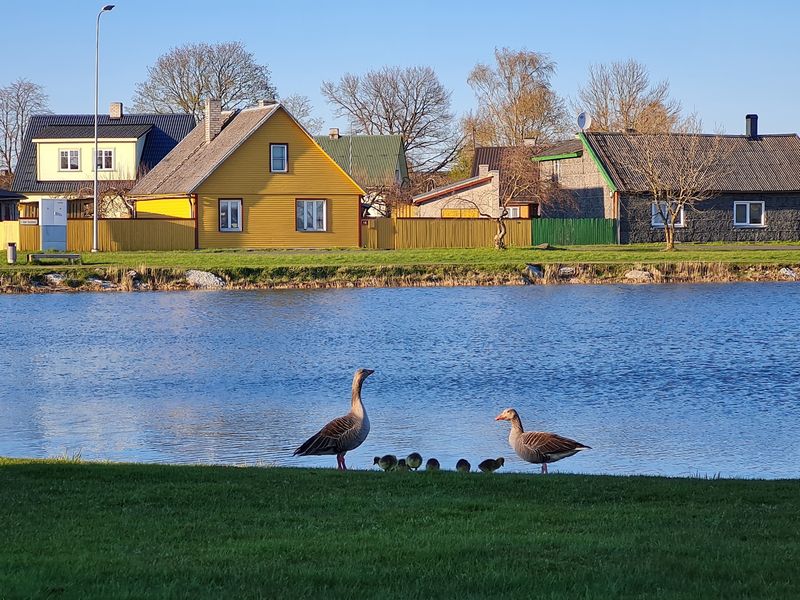
Haapsalu has been drawing seaside visitors for generations, but it rarely turns up on widely circulated lists of European beach destinations. The Estonian town built its reputation as a spa resort and still carries that identity through waterfront promenades, cafes, spa hotels, and the impressive ruins of a large medieval castle sitting near the town center.
Tallinn is less than two hours away by road, which makes Haapsalu accessible without losing its small-town pace. For actual beach time, Paralepa Beach has changing cabins, a playground, volleyball facilities, and seasonal lifeguards, with an official swimming season running from June through August.
The appeal here is specifically for travelers who want their seaside holiday to include historic streets, slow cafe afternoons, and genuine quiet rather than nonstop resort entertainment. The Baltic swimming season is short, making midsummer the practical window for beach-focused visits.
Outside that window, Haapsalu works as a pleasant day trip from Tallinn with strong architectural and historical interest.
Svaneke, Denmark
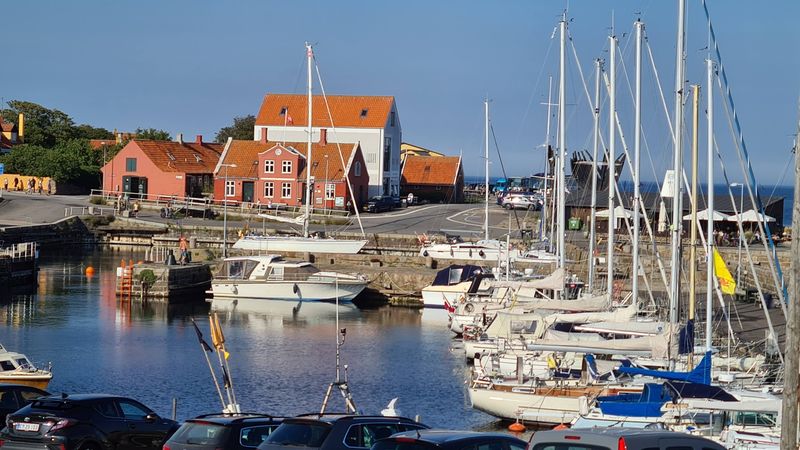
Bornholm is already one of Scandinavia’s more interesting island destinations, and Svaneke is arguably its most charming base. The small coastal settlement on the island’s eastern side is defined by half-timbered houses, winding lanes, an active harbor, local food producers, and a fishing-town character that feels genuinely lived-in rather than staged for tourism.
Denmark’s tourism board recommends Svaneke specifically as a place to slow down and engage with island life, which is a fair description of what it actually delivers. For swimming, Hullehavn is a small sandy beach tucked between rocky cliffs near town, with water access, a diving platform, and a seasonal kiosk keeping things simple.
Bornholm has larger and more expansive beaches elsewhere, particularly the famous sands around Dueodde on the southern tip, so travelers using Svaneke as a base can combine a quiet harbor-town stay with beach day trips around the island. That flexibility makes it a more interesting choice than booking directly into a larger resort town.
Mandal, Norway
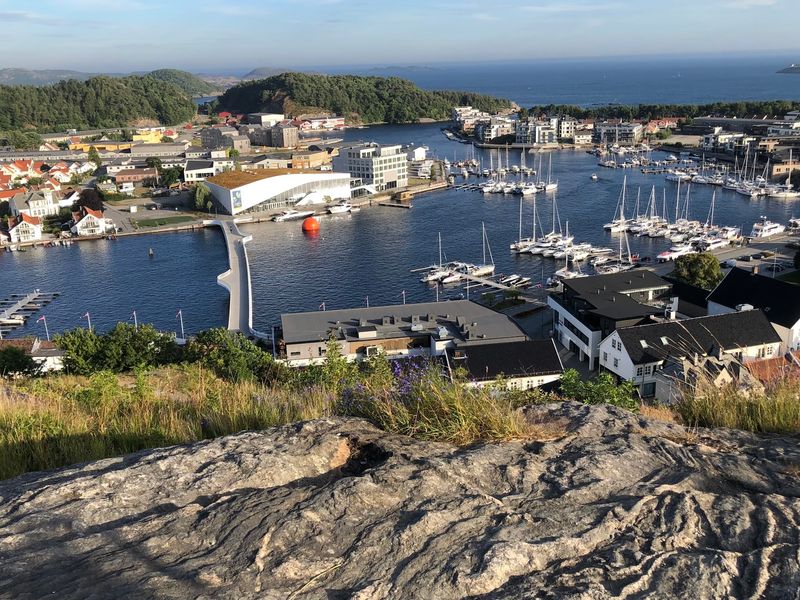
Norway is associated with fjords far more than beaches, but Mandal makes a persuasive case for looking south. Just outside the town center, Sjosanden stretches for approximately 800 meters within the Furulunden nature park, and the surrounding park includes several additional beaches and rocky swimming areas alongside walking paths and recreational facilities.
That means a stay in Mandal is not limited to a single stretch of waterfront. Beaches including Kanelstranda, Lordens, Lille Banken, Store Banken, and Spidsbo provide alternatives depending on weather and wind direction on any given day, which is a practical advantage for a week-long stay.
Southern Norway receives its best beach weather during summer, though sea temperatures stay cooler than farther south in Europe. For travelers more interested in uncrowded sand, long Scandinavian summer evenings, coastal scenery, and walking than intense Mediterranean heat, Mandal offers something genuinely refreshing.
The natural park setting also means the beach access feels more like a landscape experience than a resort transaction.
Aberaeron, Wales
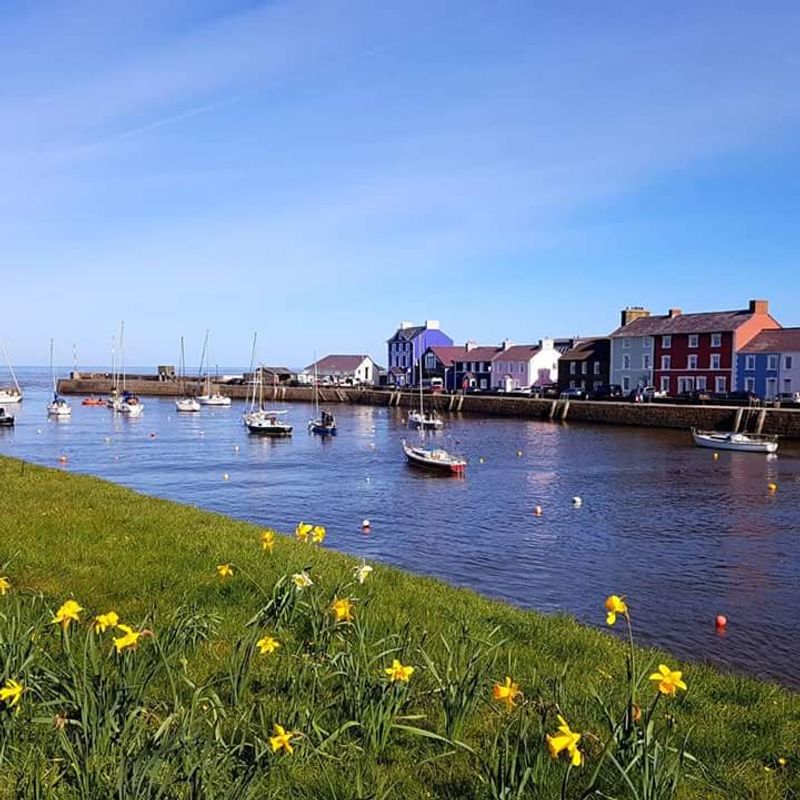
The harbor at Aberaeron is almost as much of an attraction as the beach itself. Located on Cardigan Bay in west Wales, the town is known for its colorful Georgian houses arranged around a compact tidal harbor, independent shops, seafood cafes, and a coastal scenery that rewards slower exploration rather than quick passing visits.
Aberaeron sits directly on the Wales Coast Path, making it a natural stop for travelers who like to combine seaside time with walking. Visitors can spend part of the day on the beach before returning to town for food and harbor views without needing a car to connect those experiences.
Cardigan Bay is also known for its resident population of bottlenose dolphins, which adds wildlife watching to the list of genuine reasons to visit beyond sunbathing. Aberaeron will not offer Mediterranean temperatures, and that is genuinely part of its character.
Walking, scenery, fresh sea air, local food, and a harbor that actually functions matter as much here as any stretch of sand.
Share this story