Spain has a lot more going on beyond its two most famous cities. From medieval hilltop towns in Extremadura to fishing villages along the Atlantic coast, the country is packed with places that rarely show up on a typical tourist itinerary.
These 15 destinations offer real history, striking scenery, and the kind of atmosphere that makes you slow down and actually look around. Whether you are planning a road trip or just dreaming about your next trip abroad, this list is worth saving.
Albarracín, Teruel, Aragón
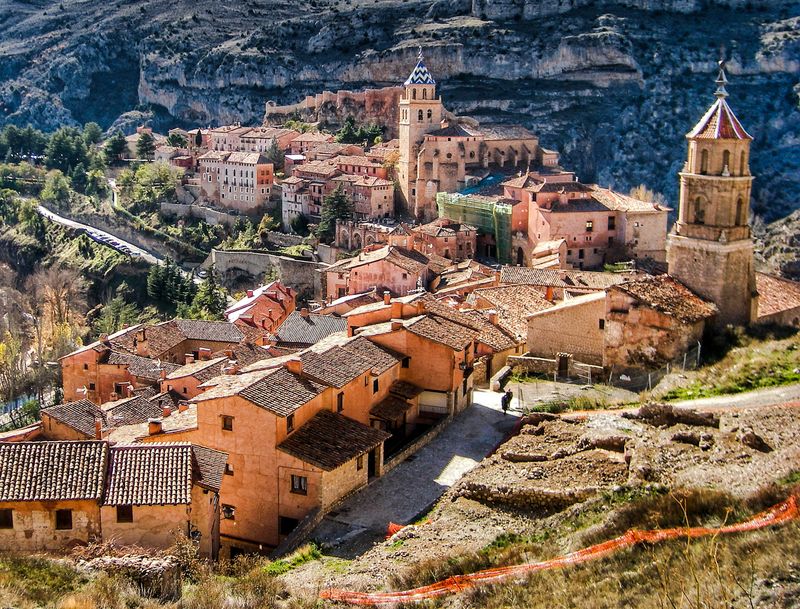
Albarracín looks almost as if someone built a medieval film set in the mountains and then simply forgot to take it down. The reddish and pink-toned houses crowd together on a hillside while the old defensive walls climb dramatically above the rooftops, creating one of the most striking skylines in inland Spain.
Its historic center carries an official designation as a Property of Cultural Interest, and its story stretches from Islamic rule through the medieval Christian period. Visitors can wander the steep lanes around Plaza Mayor, walk sections of the fortified walls, and visit the Cathedral of El Salvador.
The surrounding cultural park adds another layer, preserving prehistoric rock art that has survived for thousands of years. Albarracín is one of those rare places where simply walking without a plan tends to become the highlight of the entire day.
There are no crowds pushing you forward here.
Cudillero, Asturias
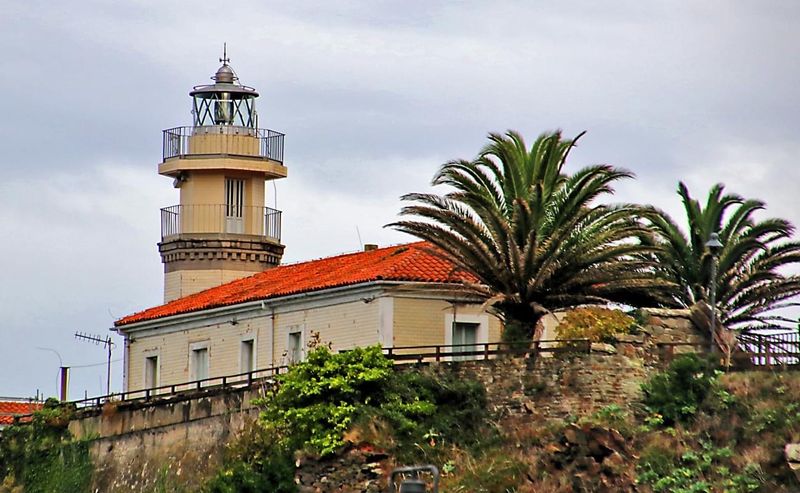
Few fishing villages in northern Spain photograph quite like Cudillero. Colorful houses appear to tumble down a natural amphitheater toward the harbor, producing one of the most recognizable village scenes along the entire Asturian coast.
Narrow lanes rise behind the waterfront and lead toward viewpoints and a lighthouse, while seafood restaurants keep the town’s maritime identity very much alive. The surrounding coastline adds serious appeal, with Cape Vidio and Silencio Beach among the nearby wild stretches worth exploring.
Cudillero remains a fully functioning destination with a tourist office listed as open throughout the year, although hours vary by season. The village feels busiest in summer, but spring and early autumn offer a quieter, more relaxed experience.
For travelers making their way along the Cantabrian coast, Cudillero is one of those stops that tends to stretch from a quick look into an unplanned afternoon.
Frigiliana, Málaga, Andalusia
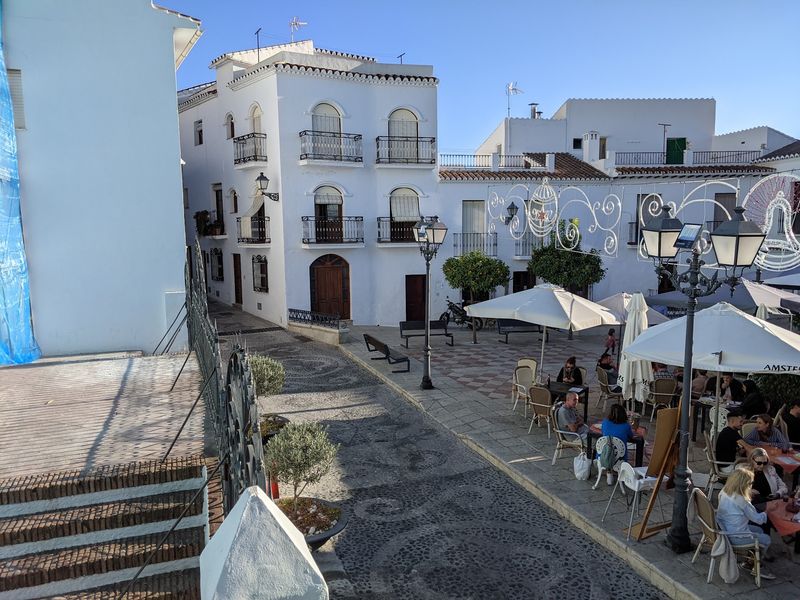
Sitting on the slopes of the Almijara mountains above the Costa del Sol, Frigiliana offers something the busy beach resorts below simply cannot. Its historic quarter retains a street layout shaped by the town’s Arab past, complete with winding passages and covered sections once connected to its old defensive system.
Decorative ceramic panels placed throughout the old town recount episodes from the conflict between Moors and Christians, turning a casual walk into something closer to an open-air history lesson. The 16th-century Palace of the Counts of Frigiliana, later adapted for sugar production, is one of the more notable individual buildings in town.
What makes Frigiliana most rewarding, though, is its overall atmosphere rather than any single landmark. Climbing slowly through the old quarter while catching views toward the Mediterranean and the surrounding mountains is an experience that stays with you.
It is genuinely one of Andalusia’s most beautiful villages.
Morella, Castellón, Valencian Community
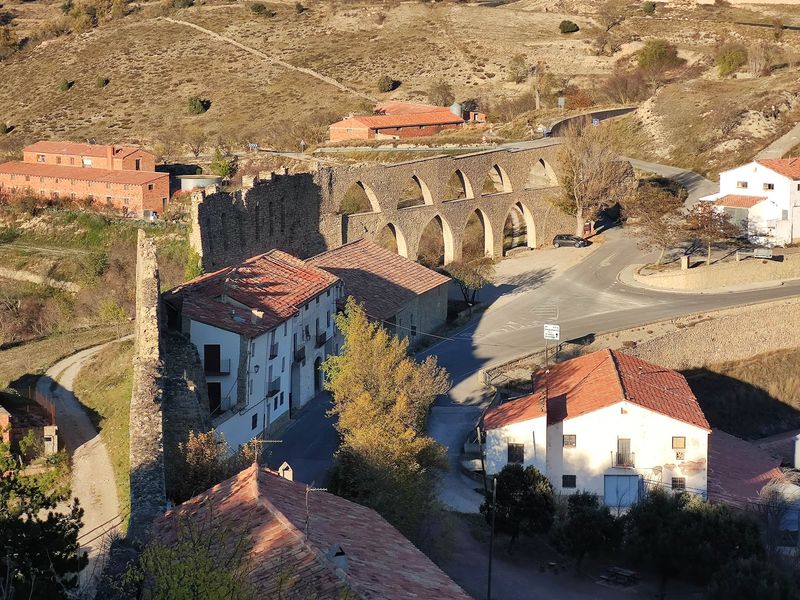
Morella makes a dramatic first impression before you even reach the town gate. A medieval fortress rises sharply above the settlement while substantial defensive walls wrap around the slopes beneath it, giving the whole place the appearance of something that should not still be standing after all these centuries.
The historic town is recognized as a Property of Cultural Interest and contains Gothic churches, old convents, medieval streets, arcaded passages, historic houses, and sections of a medieval aqueduct. The 14th-century walls alone stretch for roughly 2.5 kilometers and include towers and gateways that are still walkable today.
Climbing toward Morella Castle is one of the best ways to understand the town’s strategic position. From higher ground, the dense collection of tiled roofs appears completely enclosed by the surrounding mountains.
Travelers looking for medieval Spain without relying on the country’s most famous historic cities will find plenty of reasons to linger here.
Besalú, Girona, Catalonia
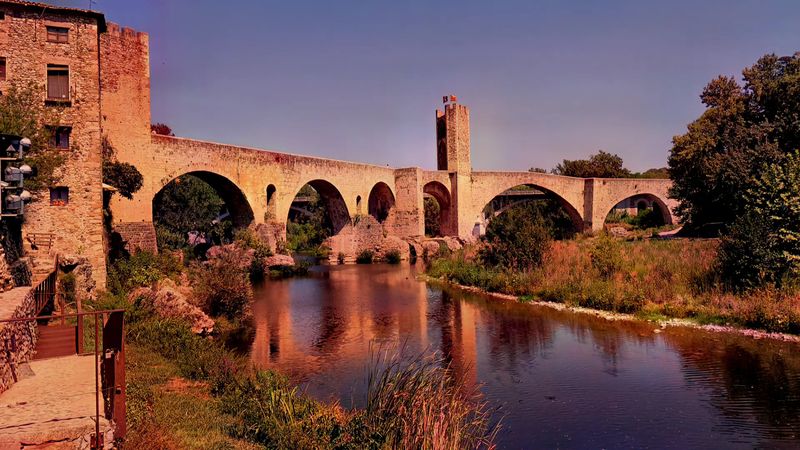
The stone bridge crossing the Fluvià River provides an entrance to Besalú that is difficult to forget. It is one of those arrivals that sets the tone immediately, and the town itself does not disappoint once you cross over.
Besalú is considered one of the most important surviving examples of medieval Catalonia. Cobbled streets lead between Romanesque and Gothic buildings, while remnants of a historic Sephardic community add another dimension to the town’s layered past.
Among its notable sights are the Romanesque bridge, the churches of Sant Pere and Sant Vicenç, and medieval Jewish ritual baths that are rare survivors in Spain.
Its location in La Garrotxa also makes Besalú a practical base for exploring a landscape shaped by extinct volcanoes. Despite its extraordinary architecture, the town feels intimate and unhurried.
Early morning and evening are particularly rewarding times to visit, when the stone lanes are quieter and the light falls well on the old buildings.
Trujillo, Cáceres, Extremadura
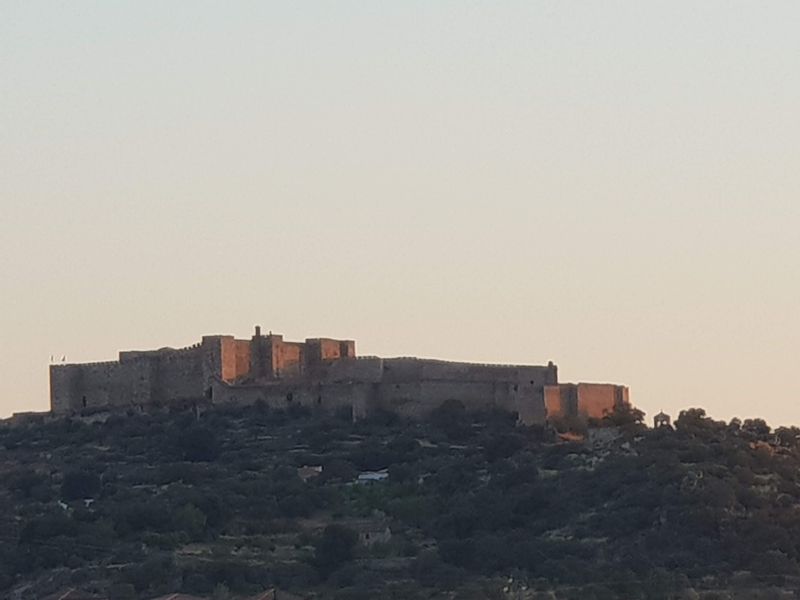
Golden stone buildings surround an impressive Plaza Mayor in Trujillo, making it one of the more visually striking town squares in all of Extremadura. The collection of castles, churches, palaces, and manor houses spread across the town has been recognized as a Property of Cultural Interest.
Trujillo also carries a notable historical connection to 16th-century Spanish expeditions to the Americas. Several prominent historical figures associated with that period were born here, and the architecture of the Renaissance residences and towers reflects the wealth that connection eventually brought back to the region.
Visitors can climb through the old quarter toward the castle, passing layers of history on the way up. Beyond the town itself, Trujillo sits within easy reach of Monfragüe National Park, giving travelers a straightforward option for combining historic streets with one of Extremadura’s most celebrated natural landscapes.
The combination of culture and nature makes this town particularly well-rounded as a travel stop.
Vejer de la Frontera, Cádiz, Andalusia
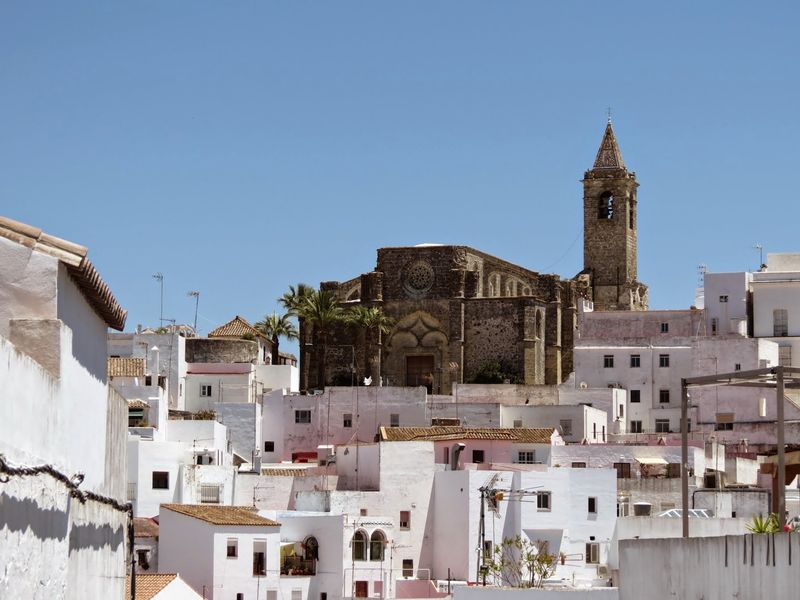
Perched on a hilltop just inland from Spain’s southern Atlantic coast, Vejer de la Frontera has the kind of setting that makes you want to pull over and stay longer than planned. Whitewashed houses press against narrow lanes inside the historic center, while traces of medieval walls and Andalusian architectural traditions remain visible throughout the town.
Vejer was officially declared a Historic-Artistic Site in 1976. Highlights include its 11th-century castle, the old Jewish quarter, the Arco de la Segur gateway, and the Church of Divino Salvador.
The elevated position also creates broad views across the surrounding countryside that stretch toward the coast on clear days.
The town offers a noticeably different experience from the coastal resorts nearby. Travelers can spend a morning exploring centuries-old streets, then head toward the Atlantic beaches only a short drive away.
That flexibility makes Vejer a smart base for anyone exploring the Cádiz region without wanting to stay directly on the coast.
Comillas, Cantabria
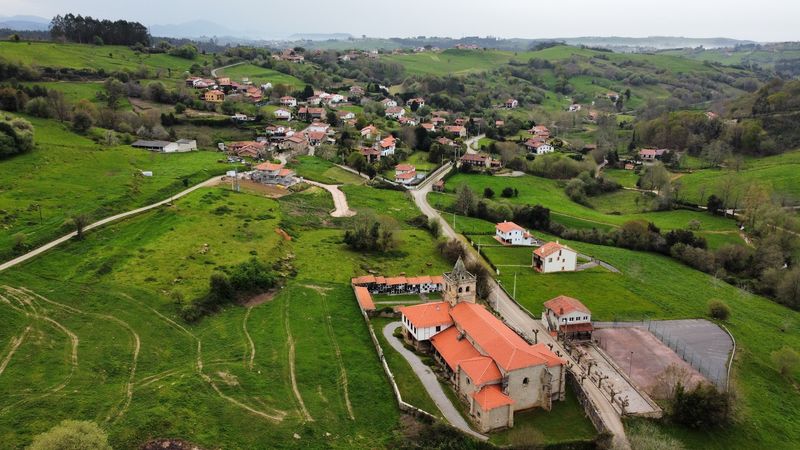
Comillas is the kind of small Cantabrian town that surprises travelers who arrive expecting only beaches. The town has been designated a historic-artistic site, and its streets contain aristocratic houses, towers, Neo-Gothic landmarks, and striking Modernist architecture that feels completely out of place in the best possible way.
Its best-known building is El Capricho, designed by Antoni Gaudí and covered with distinctive ceramic ornamentation. Nearby stand the Sobrellano Palace and the Pontifical University, both adding to a concentration of notable architecture that would be impressive in a much larger city.
The contrast between the grand buildings and the quiet surrounding streets is part of what makes Comillas so interesting to explore.
Nature is equally close. The surrounding coastline connects with Oyambre Natural Park, an area of beaches, cliffs, dunes, wetlands, and estuary landscapes.
That combination of cultural sightseeing and northern Spain’s greener, more rugged coastal scenery makes Comillas a genuinely well-rounded stop on any Cantabrian itinerary.
Aínsa, Huesca, Aragón
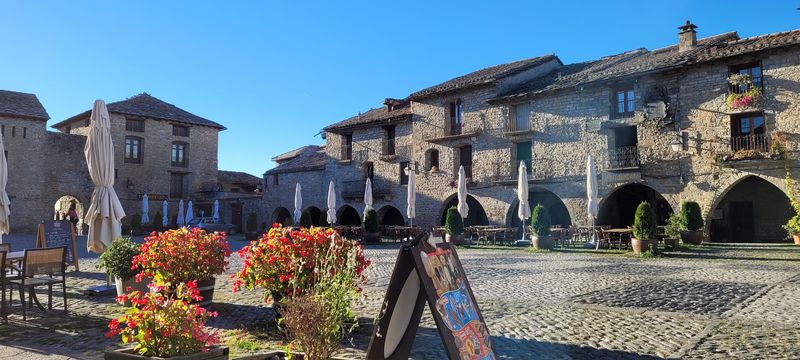
Mountains rise behind Aínsa on nearly every side, which tells you immediately that this is not just another historic town stop. The old settlement sits near the meeting point of the Ara and Cinca rivers and is classified as a Historic-Artistic Site, with much of its character centered around a broad, arcaded Plaza Mayor that feels almost theatrical in its proportions.
Nearby stand the Romanesque Church of Santa María and the remains of Aínsa Castle. The castle complex also houses a Pyrenean wildlife ecomuseum, which is a practical bonus for families traveling with children who need a reason to care about the history surrounding them.
Hiking opportunities begin almost immediately beyond town, connecting Aínsa to the wider landscapes of the Sobrarbe region and the Pyrenees. For travelers who cannot decide between a mountain trip and a cultural escape, Aínsa solves that problem neatly.
Spend part of the day in the stone lanes and the rest outside exploring the terrain.
Cadaqués, Girona, Catalonia
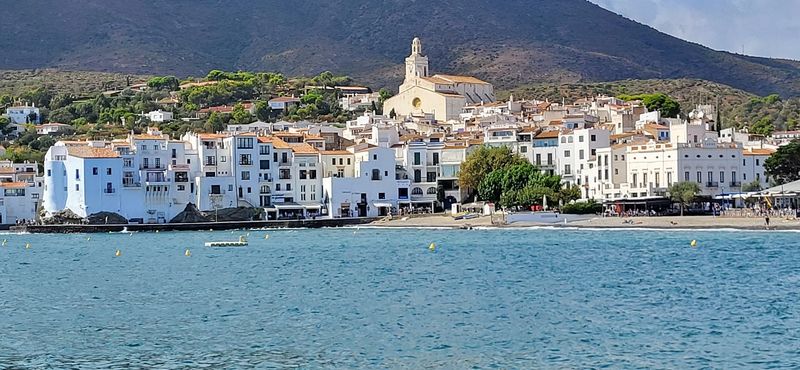
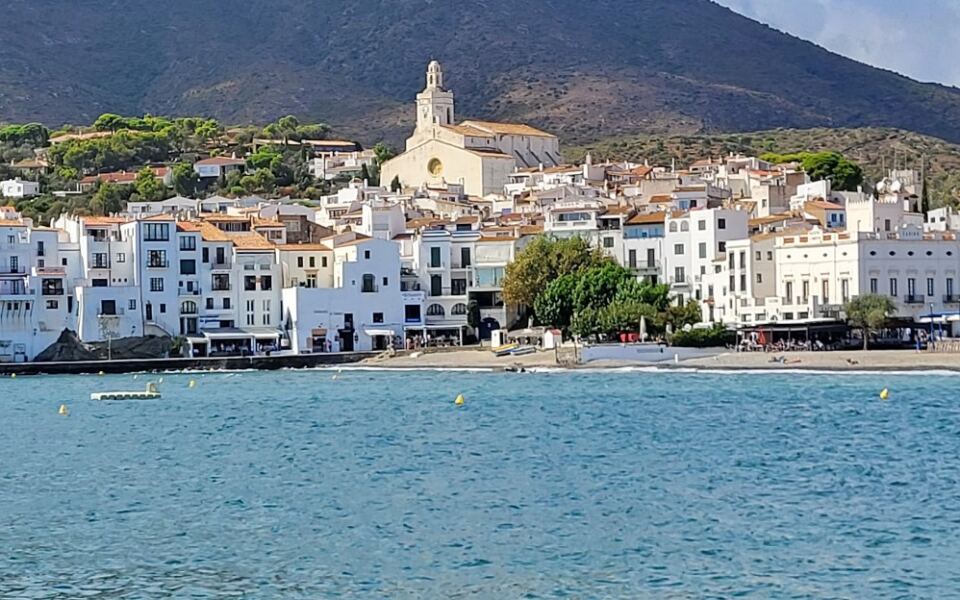
White buildings surrounding a sheltered Mediterranean bay give Cadaqués an appearance quite unlike the high-rise resorts found elsewhere on Spain’s coast. Located on the Cap de Creus peninsula, the town is surrounded by rocky coastline, secluded coves, and the unusual landscapes of Cap de Creus Natural Park.
Cadaqués also carries a long artistic association that sets it apart from similar coastal towns. Salvador Dalí lived nearby at Portlligat, where his former residence became the Salvador Dalí House-Museum, which remains open to visitors today.
Art galleries continue to play a visible role in the town’s cultural life.
The historic center is a maze of cobbled lanes and white houses climbing toward the Church of Santa María. Getting there requires navigating a winding mountain road, which actually helps keep the crowds more manageable than at comparable spots on the Costa Brava.
The combination of art history, Mediterranean scenery, and rugged coastline makes Cadaqués genuinely memorable.
Almagro, Ciudad Real, Castilla-La Mancha
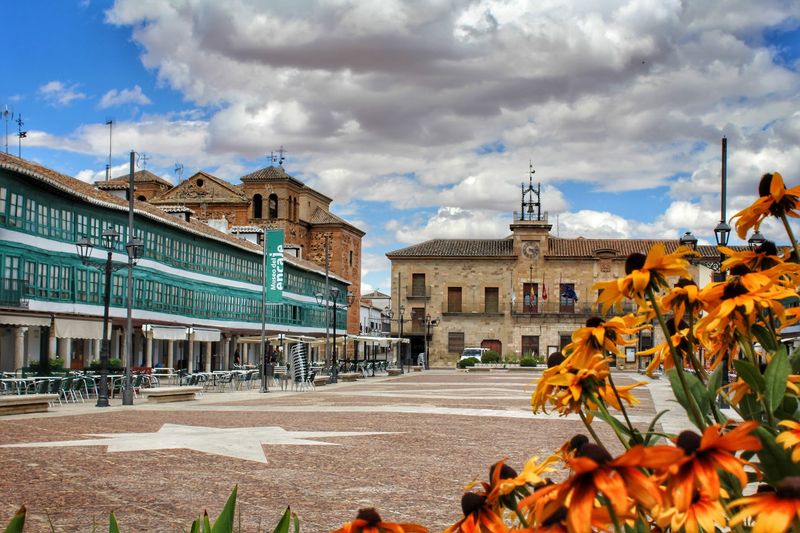
Theater lovers who have never heard of Almagro are in for a real discovery. The town’s history is closely linked with the performing arts, most notably through the Corral de Comedias, a historic open-air theater associated with Spain’s Golden Age of drama and one of the best-preserved examples of its kind anywhere in the country.
Almagro also houses the National Theatre Museum and hosts an international classical theater festival that draws visitors from well beyond the region. Away from its theatrical heritage, the town has an impressive Plaza Mayor bordered by distinctive buildings and galleries that reflect a prosperous past tied to powerful families and European bankers who settled here during the reign of Emperor Charles V.
Nearby natural attractions include Tablas de Daimiel National Park and Lagunas de Ruidera Natural Park, giving the area a broader appeal beyond its historic streets. Almagro works well as a base for exploring the less-traveled interior of Castilla-La Mancha.
Pedraza, Segovia, Castilla y León
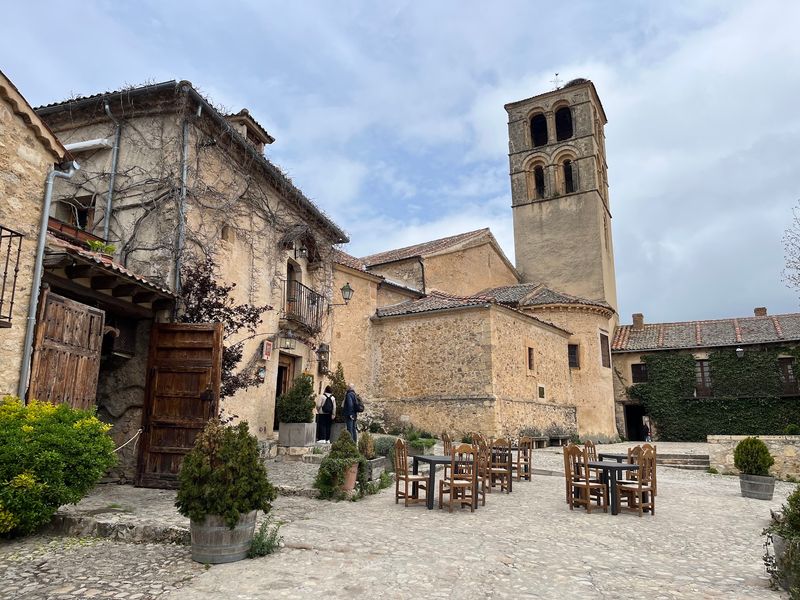
Walking through the old town gate at Pedraza genuinely feels like crossing into a different century. The entire village was declared a Historic-Artistic Site in 1951, and the designation feels justified the moment you step inside.
Cobbled streets, stone houses decorated with coats of arms, a remarkably preserved Plaza Mayor, and a hilltop castle create a compact medieval setting that holds together unusually well.
Visitors can explore the old prison, the Church of San Juan, and the castle complex, whose tower became associated with painter Ignacio Zuloaga and now contains a museum dedicated to his work. The castle itself has a long history as a defensive structure and later as a private residence.
Pedraza is small enough to explore at an unhurried pace, which is actually part of its appeal. Rather than working through a long checklist of attractions, the experience here comes from the remarkably coherent appearance of the entire village taken as a whole.
It photographs beautifully in any season.
Hervás, Cáceres, Extremadura
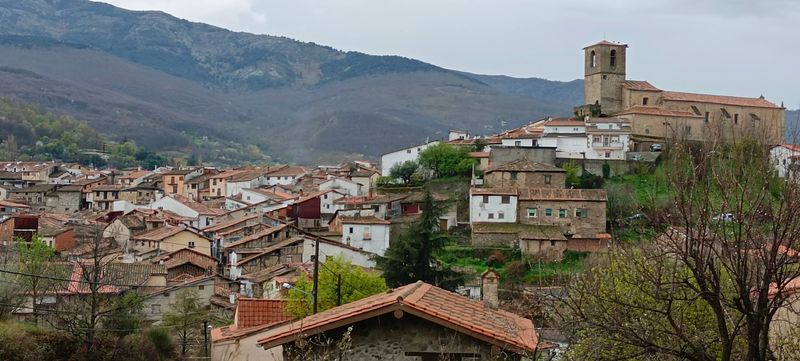
Hervás holds one of Extremadura’s most distinctive historic quarters, and the Jewish neighborhood at its heart is the reason most travelers make the journey. Steep, narrow streets weave between traditional houses built using materials including adobe and chestnut timber, preserving evidence of the Jewish community that once played a central role in the town’s commercial and cultural life.
Historic buildings elsewhere in town include the Church of Santa María, several hermitages, and the 18th-century Dávila Palace, which together fill out a broader picture of Hervás beyond its medieval quarter. The town is compact enough to explore on foot without much planning.
The surrounding Ambroz Valley adds strong natural appeal, with woodland landscapes that become especially colorful in autumn. Spain’s official tourism calendar continues to promote seasonal events in Hervás, including the valley’s autumn celebrations, which draw visitors looking for a quieter, more local experience.
Hervás rewards travelers who are willing to look beyond the obvious stops in Extremadura.
Chinchón, Madrid Region
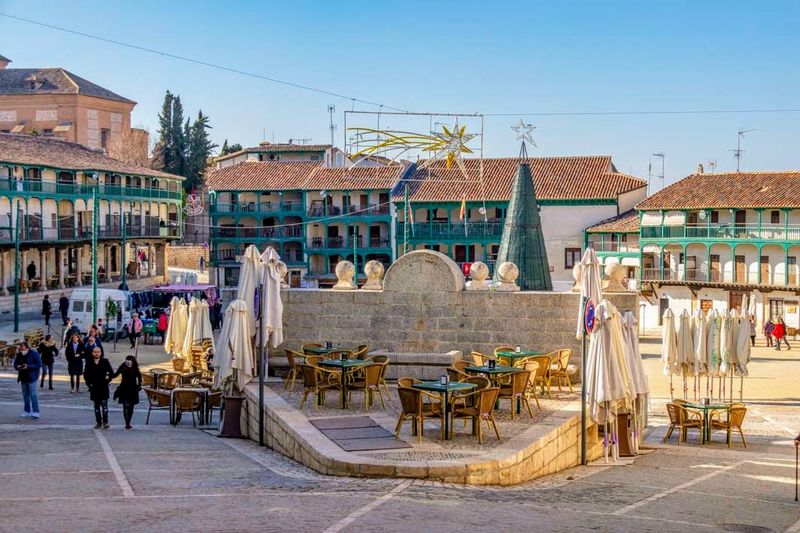
You do not have to travel far from Madrid to find a place that feels entirely removed from the capital. Chinchón lies just outside the city and centers around one of Spain’s most unusual Plaza Mayors, an irregular medieval square surrounded by multi-story buildings with long wooden balconies that have overlooked markets, celebrations, and performances for centuries.
Other landmarks include the Church of Nuestra Señora de la Asunción, which contains a painting by Goya, along with the Clock Tower, a former convent, historic noble houses, and the remains of a castle on the edge of town. The mix of art history and civic architecture makes the square more interesting than it might first appear.
Spain’s national tourism portal currently lists both Chinchón and its tourist information office as active visitor destinations. For anyone based in Madrid who wants a half-day trip that feels genuinely different from the city, Chinchón delivers a complete change of atmosphere with minimal travel time required.
Santillana del Mar, Cantabria
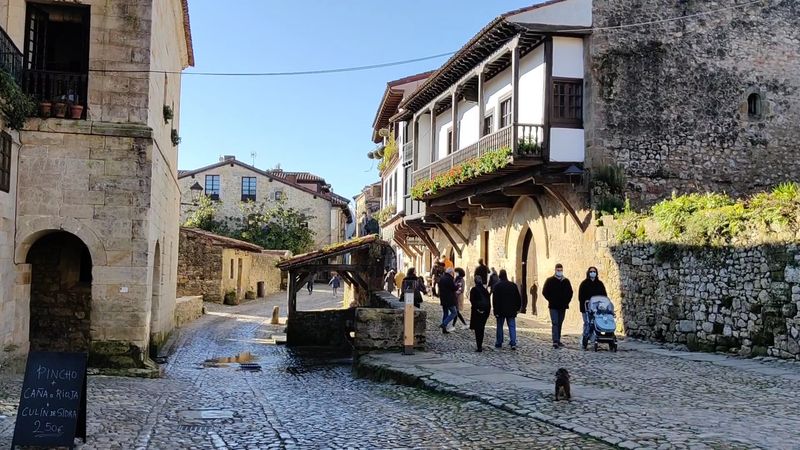
Santillana del Mar packs an extraordinary amount of history into a relatively small area. Its medieval center developed around the Collegiate Church of Santa Juliana, while defensive towers, Renaissance palaces, Baroque mansions, and cobbled streets help create one of Cantabria’s best-preserved historic settings.
The entire town feels like a single coherent monument rather than a collection of individual buildings.
Just outside town lies an even older attraction. The Altamira Cave complex is associated with some of Europe’s most celebrated Paleolithic art.
Access to the original cave is highly restricted for conservation purposes, but visitors can explore the Altamira National Museum and its full-scale recreated cave experience, which gives a genuine sense of the artwork without risking further damage to the original site.
Santillana del Mar works well as an overnight base for exploring the broader Cantabrian coast. The combination of medieval architecture in town and prehistoric art just outside it is a pairing you will not find many other places in Spain.
Share this story