Scandinavian food has been quietly shaped by centuries of cold weather, long winters, and the constant challenge of keeping people fed through seasons when almost nothing grows. The result is a cuisine that developed some genuinely unusual solutions, from fermenting fish in ways that raise eyebrows worldwide to turning whey into a caramel-sweet block that Norwegians happily slice onto waffles.
These are not gimmicks or modern food experiments. Many of these dishes trace back hundreds of years, rooted in the practical realities of northern survival.
Some have become beloved national traditions, while others remain strongly regional or tied to specific holidays. What connects them is a set of ingredients and techniques that feel genuinely foreign to most visitors, even those who consider themselves adventurous eaters.
Whether you are curious about food history, Nordic culture, or simply what people actually ate in places where winters lasted half the year, these 13 dishes offer a vivid and honest look at one of the world’s most distinctive culinary traditions.
1. Karelian Pies, Finland
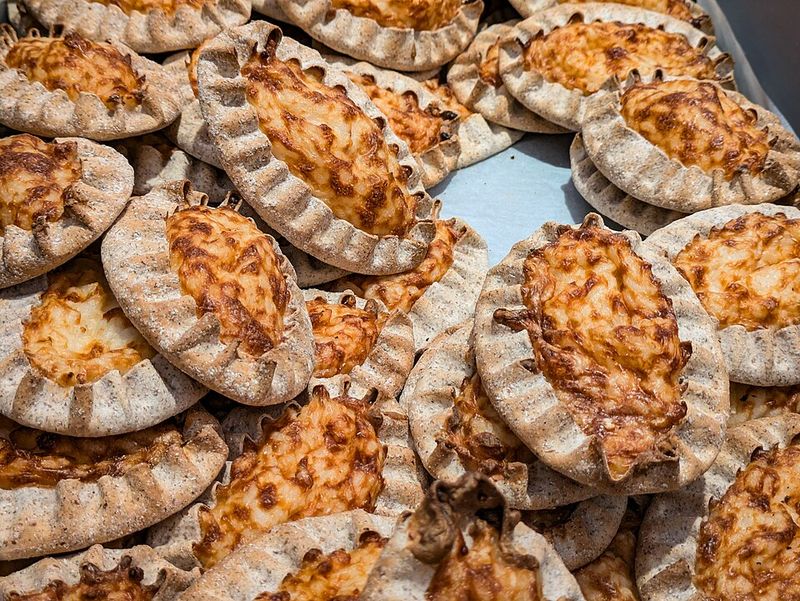
Rye has been central to Finnish food culture for over a thousand years, and nowhere is that more visible than in karjalanpiirakka. These small oval pies originate from the Karelia region, and their thin, firm rye crust sets them apart immediately from the soft wheat pastries common in most of the world.
The traditional filling is rice porridge, though older versions used barley or mashed potato depending on what was available. They are almost always served warm alongside munavoi, a simple mixture of chopped hard-boiled egg and butter.
That combination of dense rye, creamy filling, and rich topping is distinctly northern European in character. Rye thrived in the cool Finnish climate when other grains struggled, making it a reliable foundation for generations of home cooking.
The pie looks modest, but it carries a remarkable amount of regional food history in a very small package.
2. Renskav, Sweden
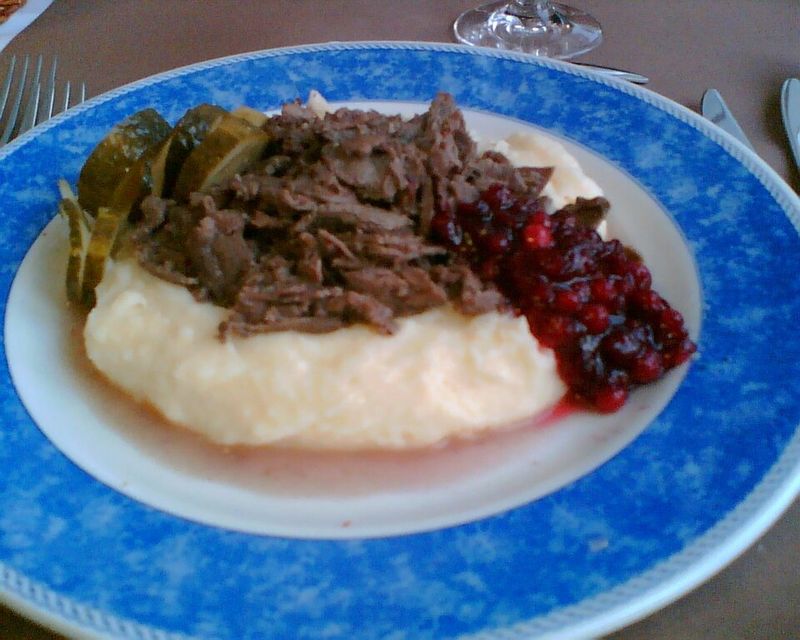
Reindeer has been a food source in northern Scandinavia for thousands of years, and renskav puts it at the center of a simple, satisfying meal. The dish consists of thinly sliced reindeer meat cooked quickly with onions, sometimes with mushrooms added, and served alongside potatoes, gravy, and lingonberries.
Historically, Sami people would sauté frozen reindeer meat rapidly over open fire, a practical method that has since evolved into the cream-enriched preparations common today. The meat itself is lean, dark, and noticeably stronger in flavor than beef, which can surprise first-time eaters.
Reindeer herding carries deep cultural and economic significance for Sami communities, so this dish is not just food. It connects directly to a way of life that has defined northern Scandinavia for centuries.
For anyone used to standard supermarket cuts, renskav represents a genuinely different idea of what a meat-centered comfort dish can be.
3. Kjøttkaker With Brunost Gravy, Norway
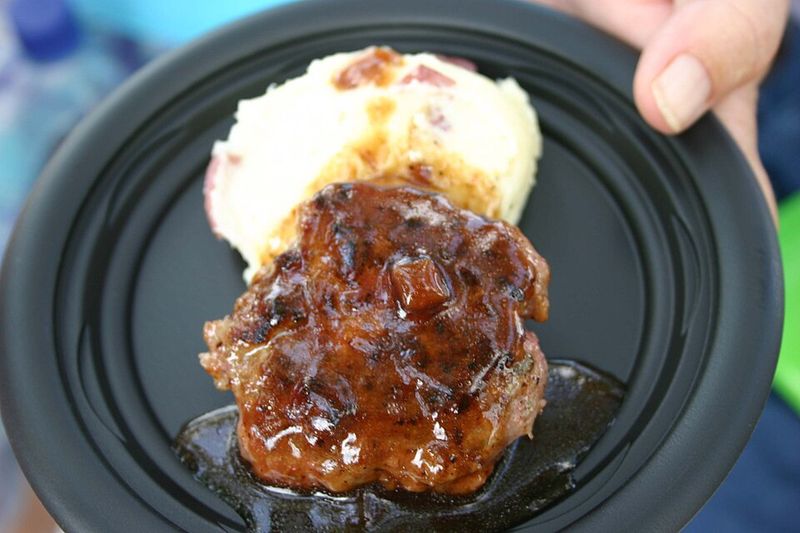
Brunost is one of Norway’s most unusual culinary exports, and it earns that distinction through a production method unlike ordinary cheese. It is made by boiling down whey, milk, and cream until the milk sugars caramelize, producing a firm, brown block with a flavor that blends sweet, salty, and tangy notes in equal measure.
Anne Hov is credited with developing a commercially successful brunost recipe in 1863, and it has been a Norwegian staple ever since. When used in gravy over kjøttkaker, Norwegian meat cakes, it adds a subtle sweetness and depth that ordinary cheese or cream sauce simply cannot replicate.
The ingredient puzzles many visitors who expect cheese to behave like cheese. Brunost looks the part, slices like the part, but tastes like something operating by its own rules entirely.
That unpredictability is exactly what makes it one of the more memorable encounters in Norwegian food culture.
4. Surströmming, Sweden
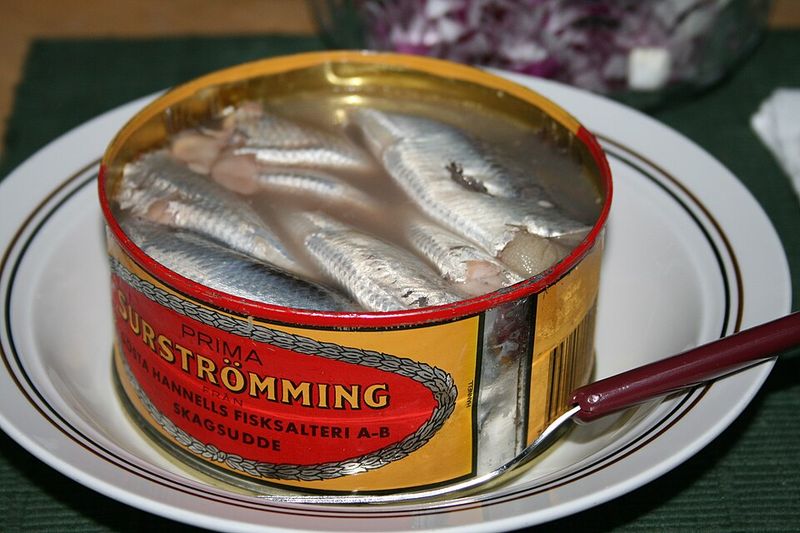
Sweden has been producing surströmming since at least the 16th century, making it one of northern Europe’s oldest documented preservation techniques still actively practiced today. Baltic herring is lightly salted and fermented, with the process continuing even after the fish is sealed in cans, sometimes causing them to bulge visibly.
Experienced eaters strongly recommend opening the cans outdoors. The aroma is extraordinary by any standard, though people who push past it often find the taste itself far more manageable than expected: salty, tangy, and complex.
Traditional serving involves tunnbrod, thin Swedish flatbread, with boiled potatoes, chopped onion, and sour cream. The dish developed because full salt-brining was expensive in earlier centuries, and fermentation offered a cheaper preservation alternative.
Surströmming has shifted from everyday working-class food to a seasonal tradition, but it remains one of the clearest surviving examples of how northern food culture once operated before refrigeration changed everything.
5. Hákarl, Iceland
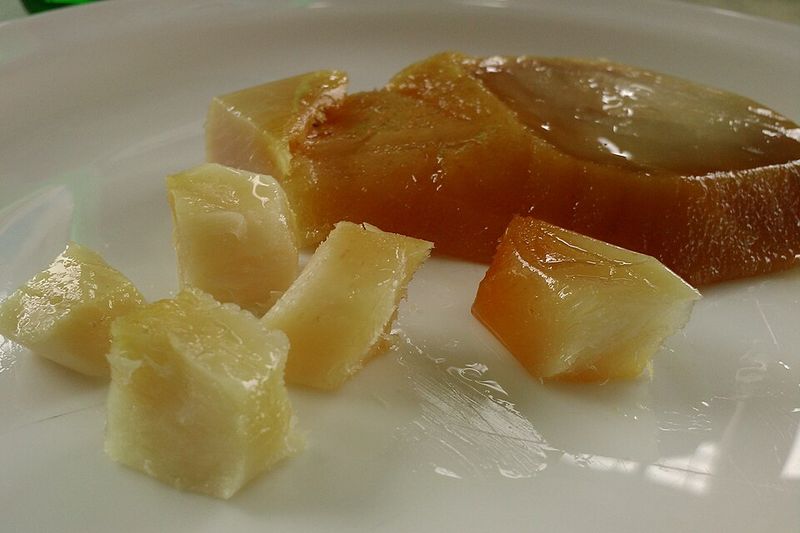
Greenland shark contains high concentrations of urea and trimethylamine oxide in its fresh flesh, making it toxic without processing. Early Icelandic settlers turned this problem into a food source through a method that is equal parts ingenious and extreme: burying the shark in gravelly sand for six to twelve weeks, then hanging the meat to dry for several more months.
The result is safe to eat and carries a famously intense aroma often described as ammonia-forward. Small cubes are the standard serving size, which tells you something about the experience.
Hákarl features prominently in the midwinter festival Thorrablot, which celebrates traditional Icelandic preservation foods.
In a landscape where agriculture was severely limited and every available resource mattered, turning an otherwise unusable marine animal into edible food was a genuine achievement. Today hákarl functions more as cultural identity than daily nutrition, but few dishes communicate Iceland’s historical relationship with its environment more directly.
6. Blodpudding, Sweden
Using animal blood as a food ingredient was standard practice across many cultures before modern supply chains made it easy to be selective. Sweden’s blodpudding reflects that older logic without apology.
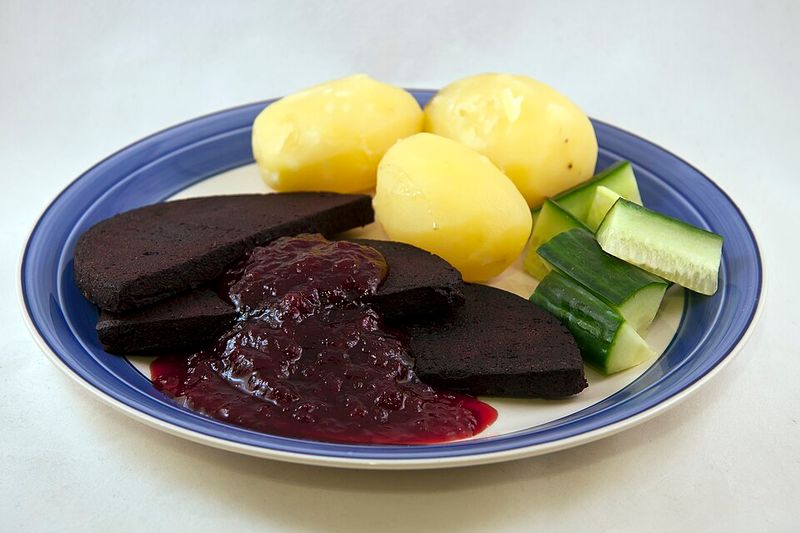
The dish is made from pig’s blood combined with milk, rye or barley flour, diced lard, and spices including allspice and marjoram, then baked into a dense dark loaf.
Slices are fried and served alongside lingonberry jam and boiled potatoes. The lingonberries are not decorative.
Their sharp sweetness provides real balance against the richly savory pudding, and the combination has become genuinely beloved in Swedish household cooking.
What makes blodpudding particularly notable is how unremarkable it remains in Sweden today. It appears in supermarkets, school lunches, and weekday dinners without ceremony.
A dish rooted in the practical need to waste nothing after slaughter has simply become comfort food, which is perhaps the most honest evolution any traditional recipe can undergo.
7. Kalakukko, Finland
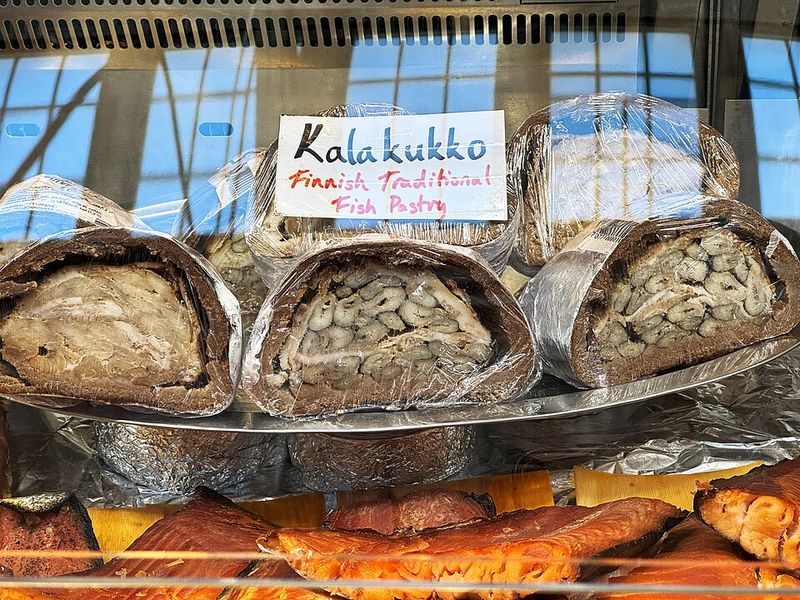
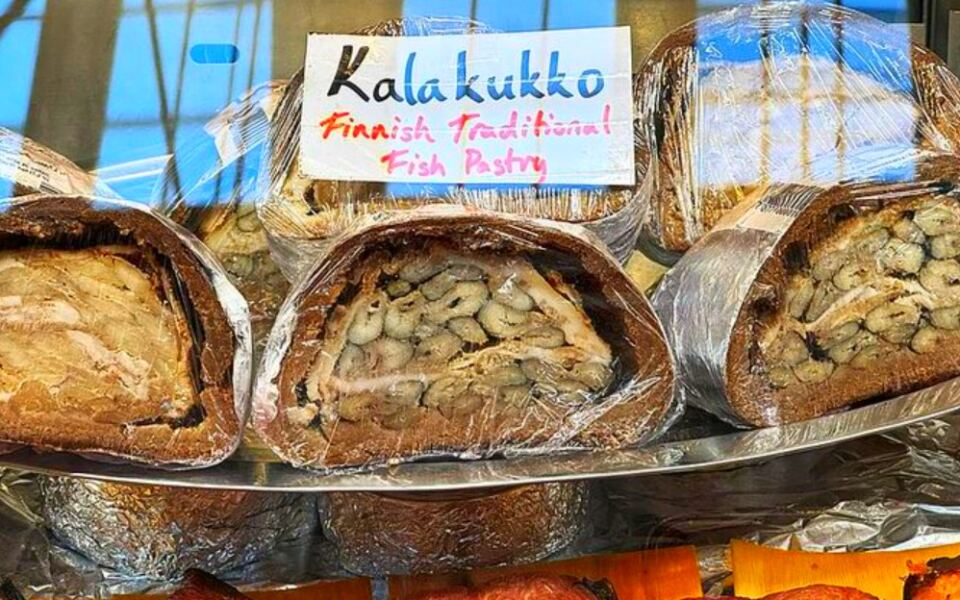
Kalakukko received Traditional Speciality Guaranteed status from the European Union in 2002, a recognition that reflects just how specific this dish is to its region. Originating in Savonia in central Finland, it looks like a solid loaf of dark rye bread until you cut it open and find an entire filling of fish and pork inside.
Small freshwater fish, typically vendace or perch caught from local lakes, are packed together with fatty bacon inside a thick rye crust and baked slowly for several hours. The bread absorbs the cooking juices from the filling, so every component finishes the process connected to the others.
The design was deliberately practical. Workers and travelers needed food that was portable, protected, and filling.
The rye shell functioned as edible packaging. Kalakukko brings together the two ingredients most central to Finnish food history, freshwater fish and rye, in a format that solved a real logistical problem for people who needed to eat on the move.
8. Svið, Iceland
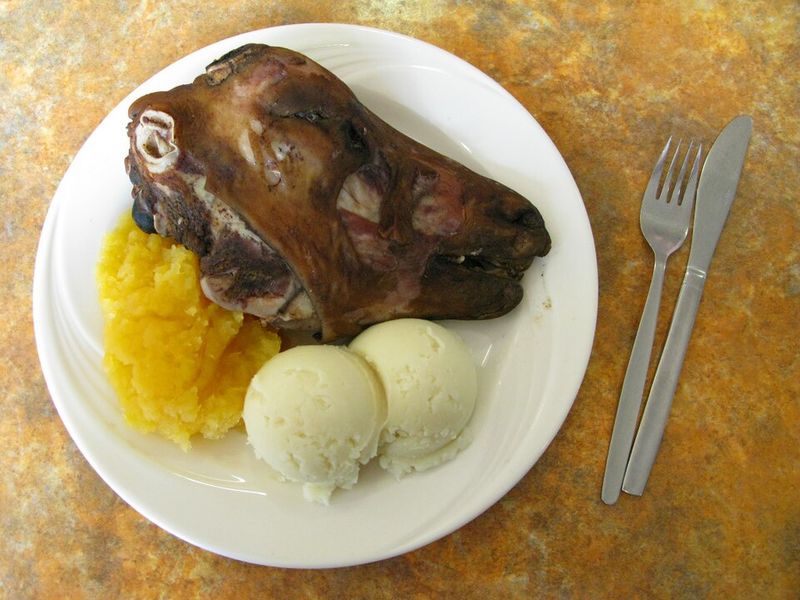
An intact sheep’s head on a dinner plate is not a common sight in most modern restaurants, but svið has been part of Icelandic food culture for centuries for straightforward reasons. In a country where agriculture was difficult and animal husbandry was one of the most reliable food sources, discarding edible parts of an animal was simply not an option.
The head is singed to remove wool, cleaned thoroughly, halved, and boiled with the brain removed. It is typically served with mashed potato and rutabaga.
Different sections of the head carry different textures and flavors, and experienced diners often have strong opinions about which portions they prefer most.
Svið appears regularly during Thorrablot, the midwinter festival that celebrates traditional Icelandic preservation foods. Its continued presence at these gatherings is less about nostalgia than about maintaining a direct connection to a food system built on using resources fully and thoughtfully, which remains a meaningful value in Icelandic culture.
9. Cloudberry Cream, Norway
Vikings reportedly carried preserved cloudberries on long sea journeys because of their high vitamin C content, which helped prevent scurvy during extended voyages. That historical detail gives multer, the Norwegian name for cloudberries, a status that goes well beyond being a pretty wild berry.
Cloudberries grow in boggy northern terrain and resist commercial cultivation, which keeps them genuinely scarce outside the far north. Their flavor combines tartness, sweetness, and a floral quality that does not map neatly onto raspberries or any other common berry.
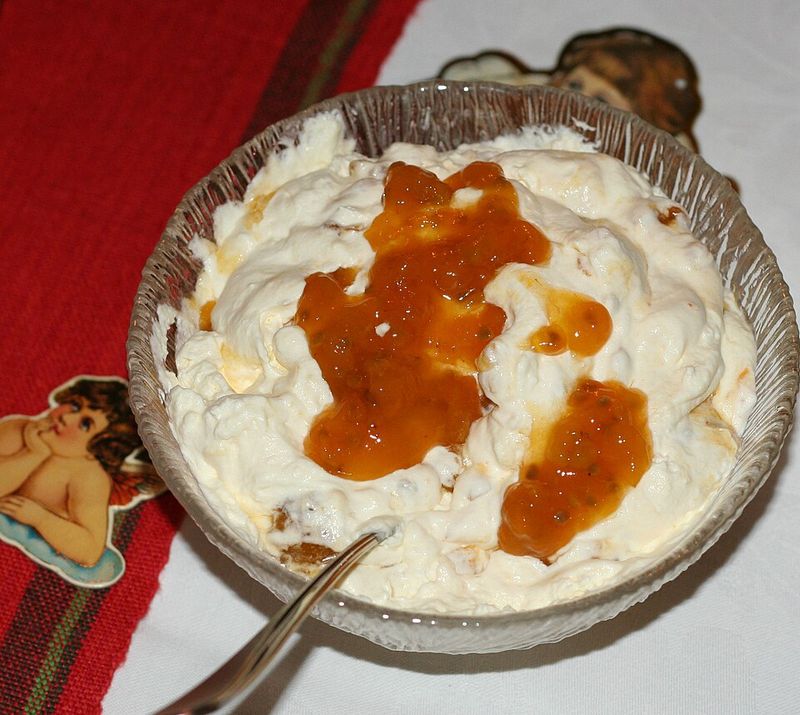
Multekrem, the classic Norwegian dessert, combines these berries with whipped cream and sugar. The dish is strongly associated with Christmas and festive occasions, partly because the berries are prized enough to feel celebratory.
Fresh cloudberries rarely appear in ordinary grocery stores outside Scandinavia and parts of northern Finland and Sweden, which means encountering them in their natural culinary context remains one of the more genuinely rare experiences Nordic food can offer.
10. Lutefisk, Norway
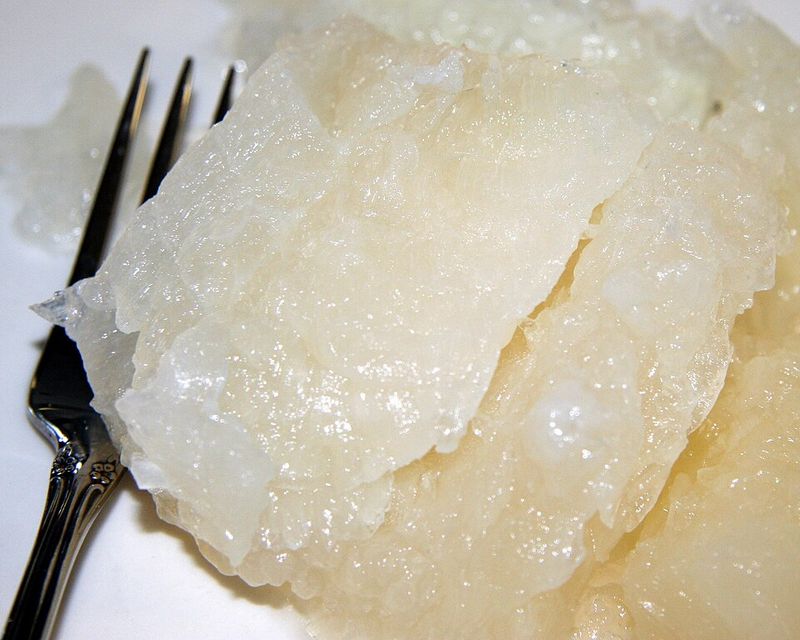
The practice of treating dried fish with lye to rehydrate and process it has been documented in Scandinavia since at least 1555, making lutefisk one of the region’s oldest recorded preparation methods still connected to living tradition. The process involves soaking dried whitefish in water, treating it with a lye solution, and then soaking it again extensively in fresh water before it becomes safe and palatable to eat.
The result is a soft, almost gelatinous texture that divides opinion sharply, even among Norwegians. It is typically served at Christmas with boiled potatoes, peas, bacon, and mustard, though accompaniments vary by family and region.
Norwegian-American communities have kept lutefisk traditions alive across generations in places like Minnesota and Wisconsin, sometimes more enthusiastically than communities in Norway itself. The dish is no longer a survival necessity, but preparing and eating it preserves a tangible link to centuries of northern food history that few other dishes can claim.
11. Salmiakki, Finland

Ammonium chloride was originally used in Finnish pharmacies during the 1930s as a cough remedy, valued for its mucus-breaking properties. Pharmacists mixed it with licorice root to make it easier to take, and somewhere along the way, the combination migrated from medicine cabinet to candy jar and never looked back.
Today salmiakki is one of Finland’s most culturally distinctive tastes. The candy delivers a sharp, mineral, salty punch that lands very differently from ordinary sweet licorice.
First-time tasters often pause, reconsider, and either commit fully or decide once was enough.
The flavor appears well beyond basic candy. Salmiakki ice cream, chocolate, and beverages are all common in Finland.
It has become something of an informal test for visitors, a quick way to gauge how adventurous someone’s palate actually is. Few ingredients in European candy culture are as polarizing, as specific to one region, or as genuinely beloved by the people who grew up with it.
12. Smalahove, Norway
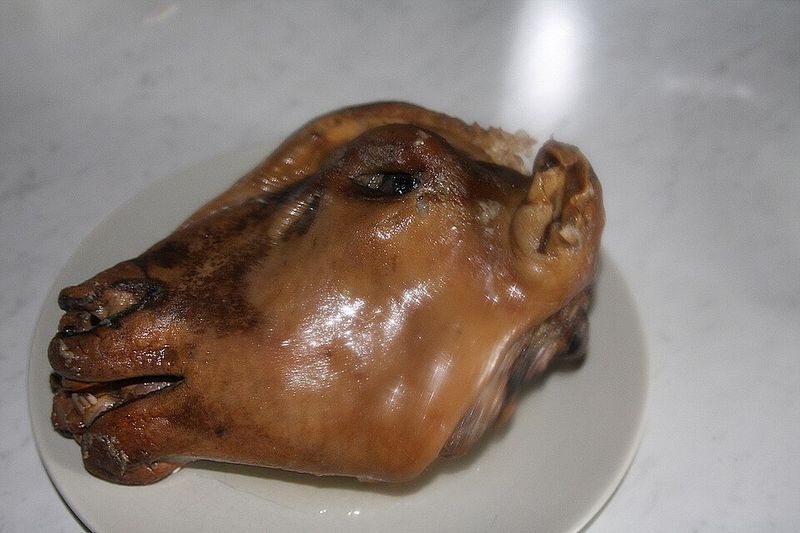
Western Norway’s Voss region has long been associated with smalahove, a dish that began as practical rural cooking and has since transformed into a seasonal cultural event. The preparation involves removing wool and skin from a sheep’s head, salting it and sometimes smoking it, then cooking it by boiling or steaming until tender.
Historically, smalahove was associated with poorer households rather than celebration. Using every edible portion of an animal was economic necessity, not culinary ambition.
That context matters when understanding why the dish exists and why it persisted long after it stopped being strictly necessary.
Today smalahove is often enjoyed around Christmas and draws visitors specifically interested in experiencing traditional Norwegian food. Locals tend to focus less on the appearance of the dish and more on the specific textures and flavors of different sections of the head.
What strikes outsiders as unusual was, for generations, simply a reliable winter meal built around respect for available resources.
13. Rømmegrøt, Norway
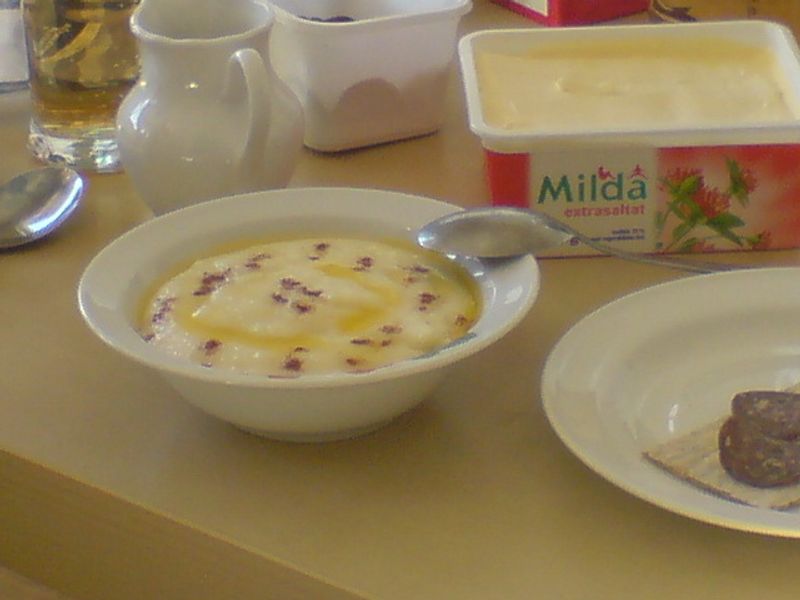
Some food historians believe rømmegrøt may be one of Norway’s oldest dishes, with connections reaching back to Viking-era dairy traditions. That long history is reflected in its continued presence at some of Norway’s most significant celebrations: midsummer festivals, weddings, confirmations, births, and Christmas all have traditional associations with this porridge.
The recipe is built on sour cream as its primary ingredient, combined with flour and milk, then served topped with melted butter, sugar, and cinnamon. The result is thick, tangy, sweet, and filling in a way that makes immediate sense in a dairy-farming culture where calorie-dense food had real value.
What makes rømmegrøt quietly remarkable is that none of its ingredients are particularly rare. Sour cream exists in many cuisines.
But using cultured high-fat cream as the structural foundation of a ceremonial porridge is a specifically Norwegian idea, one that reflects how dairy farming shaped not just the food supply but the social fabric of communities across the country.
Share this story