Potatoes have been feeding families across the world for centuries, and they became a cornerstone of everyday cooking in the United States long before supermarkets existed. By the mid-1800s, potatoes were already appearing in American cookbooks in dozens of forms, from simple boiled preparations to layered casseroles that could feed a large household on a modest budget.
What makes these recipes so enduring isn’t just convenience or cost. Many of them carry the culinary fingerprints of immigrant communities, regional traditions, and practical kitchen habits that passed from one generation to the next.
Some of these dishes were once considered humble weeknight staples, while others were reserved for Sunday dinners or community gatherings. All fifteen of them are still being cooked today, often with the same basic techniques used a hundred years ago.
If you’ve ever wondered which old-fashioned potato recipes have genuinely stood the test of time, this list covers exactly that.
1. Scalloped Potatoes
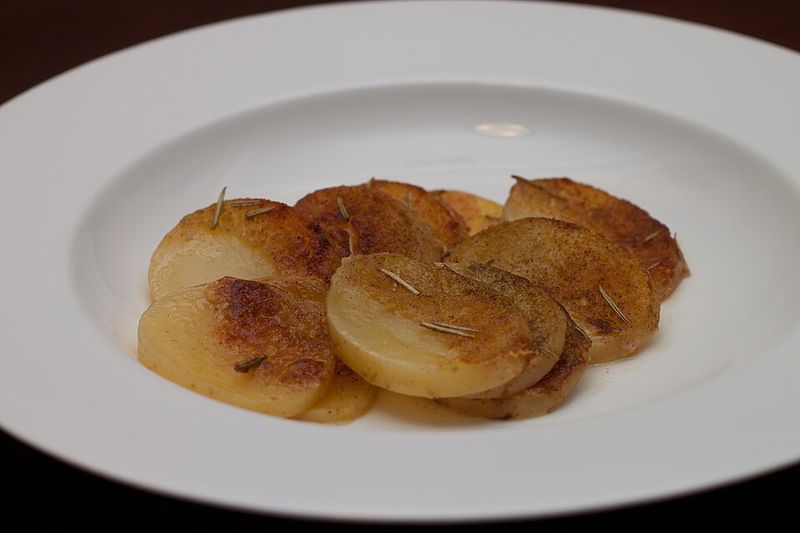
Before recipe blogs turned casseroles into elaborate productions, scalloped potatoes were already holding their own with just a few pantry staples. Thin potato slices are layered in a baking dish with milk or cream, butter, flour, and basic seasonings, then baked until the top turns golden and the inside becomes tender.
Traditional versions skip the cheese entirely, which is the key difference between scalloped potatoes and potatoes au gratin. That distinction matters to anyone who grew up with a specific family version of the recipe.
The dish became a reliable companion for Sunday roasts and holiday hams throughout the 20th century. Its simplicity is part of the appeal.
A small number of inexpensive ingredients, arranged in layers and left to bake, produces a result that feels considerably more substantial than the recipe suggests.
2. Potato Pancakes
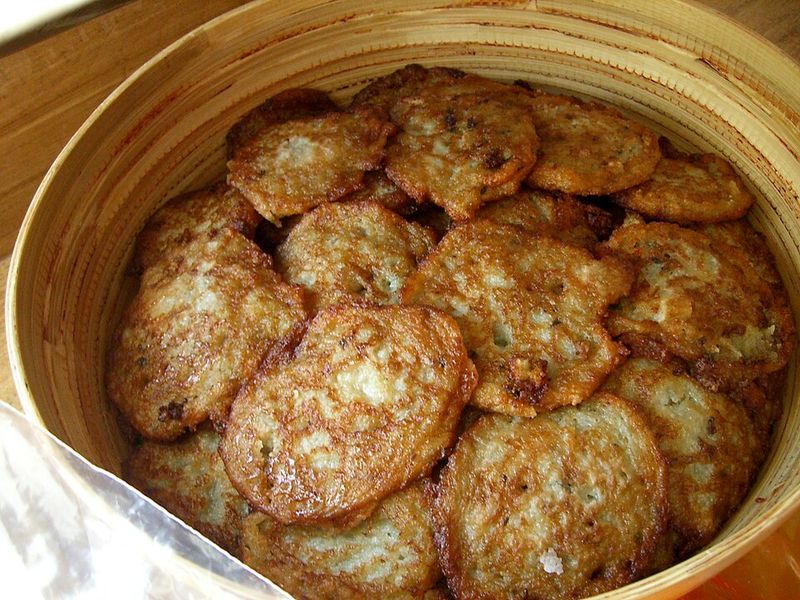
Few dishes have traveled as far, across as many borders, as the humble potato pancake. Whether made from grated raw potatoes or leftover mashed ones, the basic idea remained consistent: bind the potato with egg, onion, and a little flour or breadcrumbs, then fry it until the edges turn crisp.
German Kartoffelpuffer, Jewish latkes, and various Eastern European versions all share this foundation while differing in texture, thickness, and traditional accompaniments. As immigrant families settled across the United States throughout the late 19th and early 20th centuries, their potato pancake recipes became part of regional American cooking.
The appeal is straightforward. A crispy exterior with a soft center requires no elaborate technique, just the right ratio of ingredients and a hot pan.
That combination has kept potato pancakes relevant across every generation that encountered them.
3. Funeral Potatoes
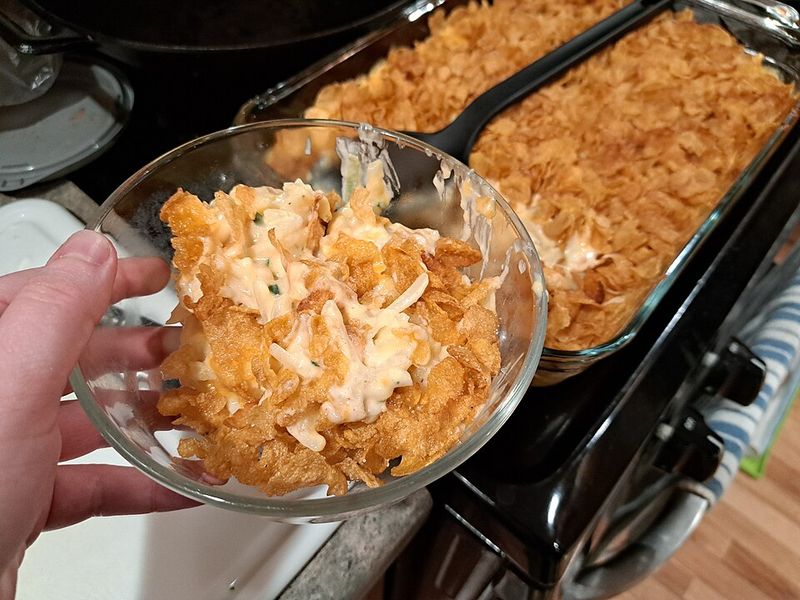
The name is striking, but the dish itself is straightforward comfort food with a well-documented community history. Funeral potatoes became closely associated with the Intermountain West, particularly Utah, where large casseroles were regularly prepared for post-funeral luncheons and church gatherings organized by members of the Church of Jesus Christ of Latter-day Saints.
The standard version combines diced or shredded potatoes with cheddar cheese, a creamy soup base or sauce, sour cream, and a crunchy topping of crushed cornflakes or potato chips. The reliance on affordable, widely available ingredients made it practical for feeding large groups quickly.
By the time the 2002 Winter Olympics arrived in Salt Lake City, the dish was recognizable enough to appear on a souvenir collector pin. Today it shows up at potlucks, holiday tables, and family reunions far outside its original geographic and cultural context.
4. Colcannon
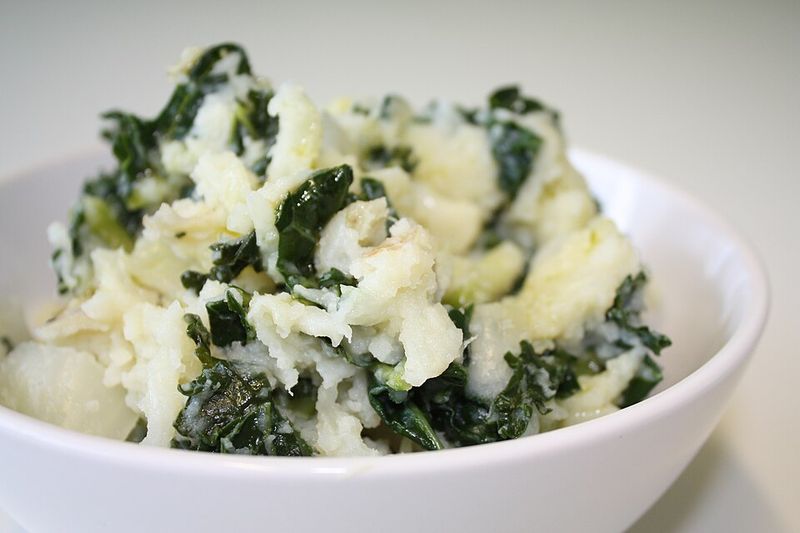
Irish cooks were stretching mashed potatoes with vegetables long before food writers started calling it smart cooking. Colcannon combines mashed potatoes with kale or cabbage, along with butter and milk or cream.
The name comes from the Gaelic term “Cal Ceannann,” meaning white-headed cabbage.
Scallions, leeks, or chives frequently appear in the recipe depending on regional preference. The dish carries a well-known connection to Halloween traditions in Ireland, where small charms or rings were sometimes hidden inside portions as a way of predicting the future, particularly regarding marriage prospects.
Colcannon is also associated with Saint Brigid’s Day in February. Outside of those traditions, it remains a practical and filling side dish that turns basic mashed potatoes into something with considerably more nutritional value and flavor.
Its longevity comes from that combination of simplicity and substance.
5. Potatoes O’Brien
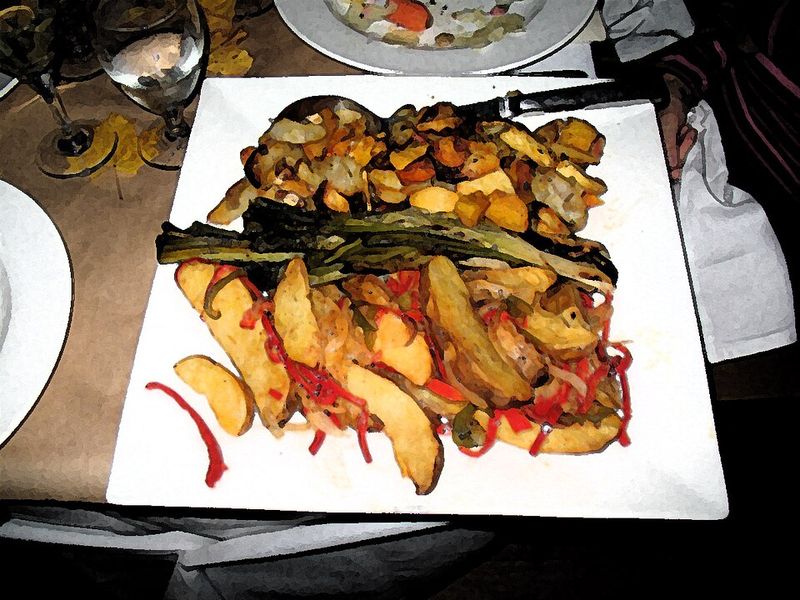
American diner culture produced a lot of lasting dishes, and Potatoes O’Brien ranks among the most quietly persistent. The recipe combines diced potatoes with chopped onions and bell peppers, all cooked in a skillet until the potatoes develop browned, crispy surfaces.
The exact origin of the name is disputed. Early 20th-century accounts connect the dish to restaurants in both New York and Boston, but no single source has definitively settled the question.
What’s clear is that the recipe moved quickly from restaurant menus into American home kitchens.
Frozen versions became available in grocery stores, which expanded the dish’s reach considerably. Still, the fundamental preparation hasn’t changed.
Potatoes, peppers, and onions cooked together in a hot skillet until the edges crisp up remains the standard approach, whether at a roadside diner in 1940 or a home kitchen today.
6. Potato Soup
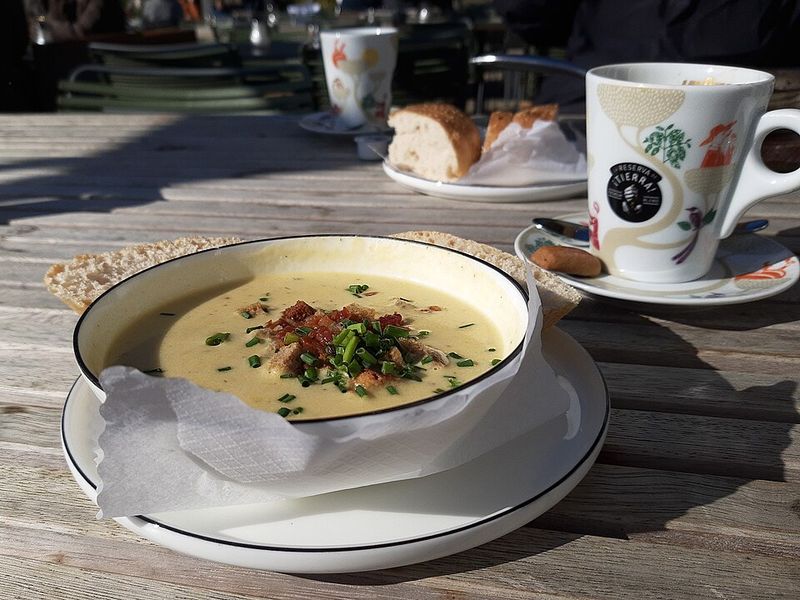
Potato soup has always been a reliable answer to the question of what to make when the pantry is nearly empty. The most basic version requires potatoes, onions, milk, butter, and a little flour for thickening.
Every additional ingredient, whether bacon, ham, celery, or cheese, reflects whatever happened to be available.
That flexibility turned potato soup into a staple for households where food economy was a practical necessity rather than a lifestyle choice. It was common in rural American kitchens throughout the 19th and early 20th centuries, and it remained a weeknight standard well into the postwar era.
Modern loaded versions pile on toppings and turn the soup into something closer to a liquid baked potato. The older, simpler preparation still holds up on its own merits.
A straightforward pot of potato soup made from a short ingredient list remains one of the more honest meals a kitchen can produce.
7. German Potato Salad
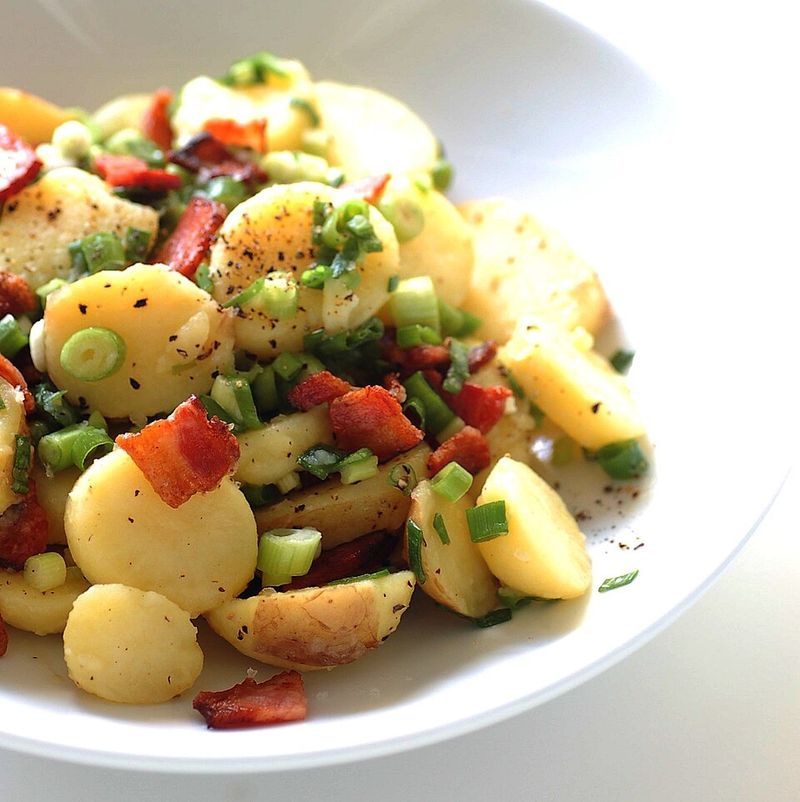
Not every potato salad requires mayonnaise, and German-style potato salad made that case long before cold, creamy versions became the default at American cookouts. The dressing here is built on vinegar, bacon drippings, onions, and a measured amount of sugar, producing a tangy, savory result that works best when the potatoes are still warm.
German immigrants brought this preparation to the United States throughout the 19th century, and it took firm root in communities across the Midwest and Pennsylvania. The dish remained distinctly regional for decades before wider exposure helped it find a broader audience.
Bacon typically appears in the finished dish, not just in the dressing, which adds texture alongside the sharpness of the vinegar. Put a warm bowl of German potato salad next to a chilled mayonnaise version at the same gathering, and both will likely disappear at roughly the same rate.
8. Hash Browns
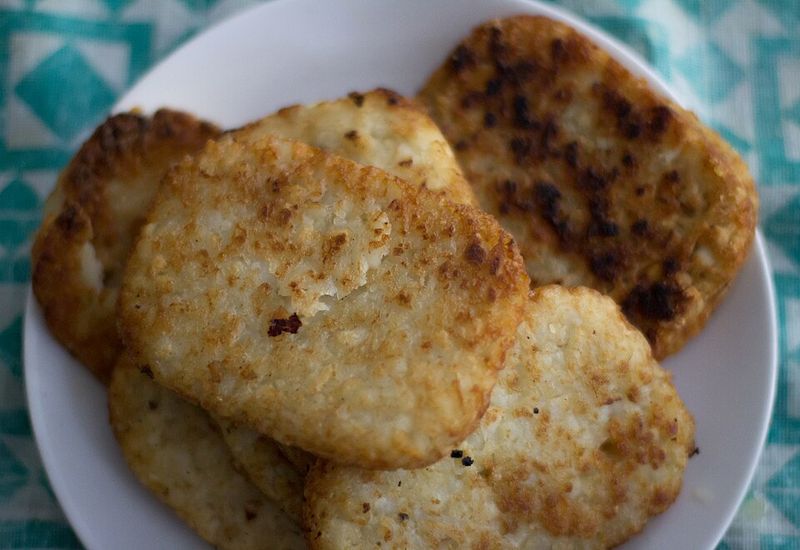
Hash browns are one of those dishes that seem too simple to have a documented history, but they do. The term “hashed brown potatoes” appeared in American cookbooks during the 1880s, referring to boiled potatoes that were chopped and fried until browned.
The word “hash” traces back to the French verb “hacher,” meaning to chop.
The dish gained considerable traction through hotel breakfasts and diners in New York City during the 1890s. Early versions often used whole boiled potatoes pressed into a large cake rather than shredded raw potato.
The shredded style that most people recognize today became more common over time, and the name was gradually shortened to “hash browns” around 1970.
Their presence on American breakfast menus has been essentially uninterrupted for well over a century. The technique is straightforward: shredded potato, hot surface, enough time to brown without interference.
9. Potato Dumplings
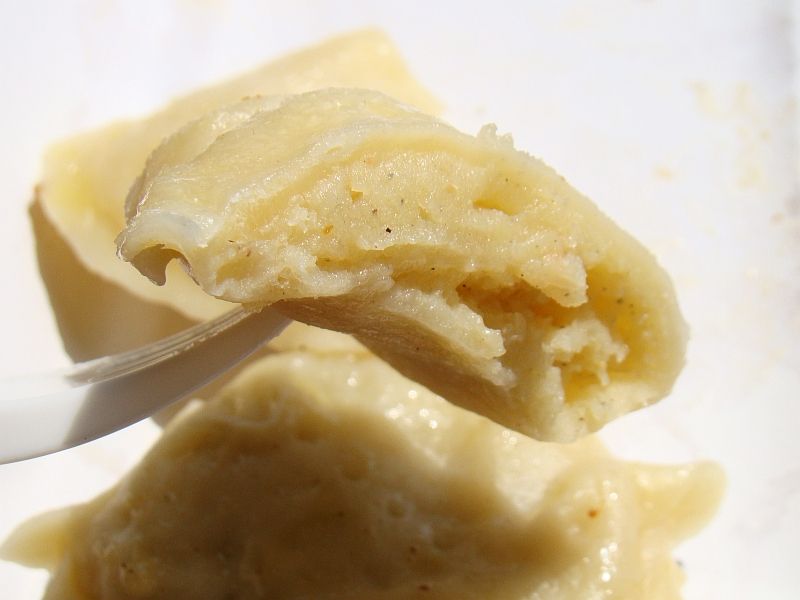
Potato dumplings occupy a specific place in Central and Eastern European cooking that mashed potatoes simply cannot fill. German Kartoffelklösse, one of the most recognized versions, can be made from cooked potatoes, raw potatoes, or a combination of both, depending on the regional tradition being followed.
These dumplings are dense, filling, and almost always served alongside meat dishes with plenty of gravy. The gravy matters because it provides moisture and flavor that the dumplings absorb as they sit on the plate.
German and Eastern European immigrant families carried these recipes into the American Midwest during the 19th century, where they became part of local food culture in communities with strong ties to those homelands. Making potato dumplings takes more time and effort than a pot of mashed potatoes, but families that grew up eating them rarely consider the two dishes interchangeable or comparable in any meaningful way.
10. Lyonnaise Potatoes
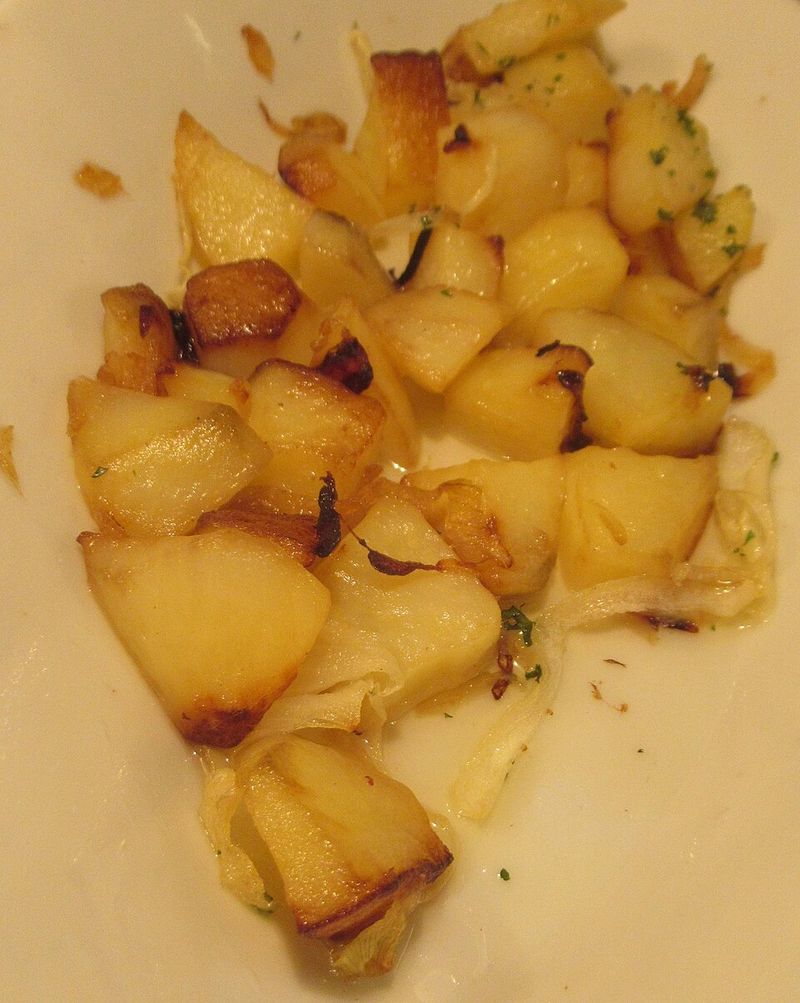
French in origin and practical by design, Lyonnaise potatoes have been on American menus long enough to feel like a domestic invention. The dish traces back to Lyon around 1845 and takes its name from the French culinary term “a la lyonnaise,” which signals that onions are a central ingredient rather than an afterthought.
Sliced potatoes are cooked with onions in butter or fat until both are browned and tender. Chopped parsley finishes the dish.
Auguste Escoffier formalized the recipe in 1907, adding parsley to earlier versions documented by chefs like Andre Viard and Alexis Soyer in the 19th century.
American steakhouses and supper clubs adopted the preparation decades ago, and it remained a menu fixture well into the latter half of the 20th century. Browned potatoes and caramelized onions cooked together in butter don’t require reinvention to stay relevant.
11. Cottage Pie
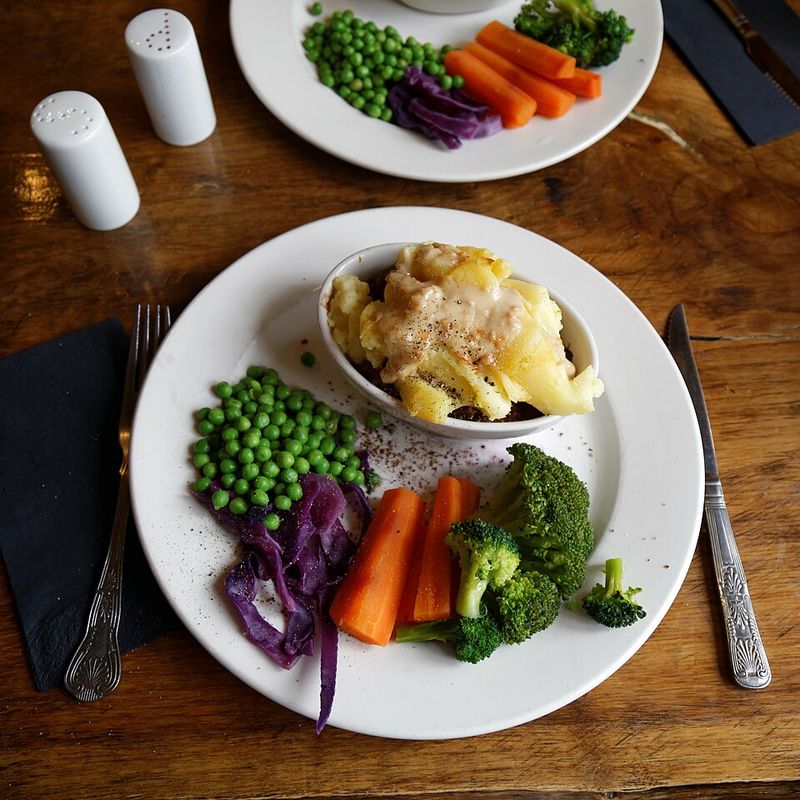
Cottage pie developed in Britain and Ireland in the late 1700s, not long after potatoes became a widely consumed staple rather than a curiosity. The dish placed seasoned ground beef and vegetables beneath a mashed potato topping, then baked everything until the surface browned.
The name distinguished it from shepherd’s pie, which uses lamb. That distinction gets blurred frequently in the United States, where both terms are sometimes used for the same dish regardless of the meat involved.
Originally a meal associated with working-class households, cottage pie provided meat, vegetables, and a starchy topping in a single baking dish with minimal waste. That efficiency translated well across different economic contexts and different centuries.
Today it appears on pub menus, in home kitchens, and in school cafeterias, carrying the same basic structure it had when British and Irish cooks first assembled it over two hundred years ago.
12. Potato Croquettes
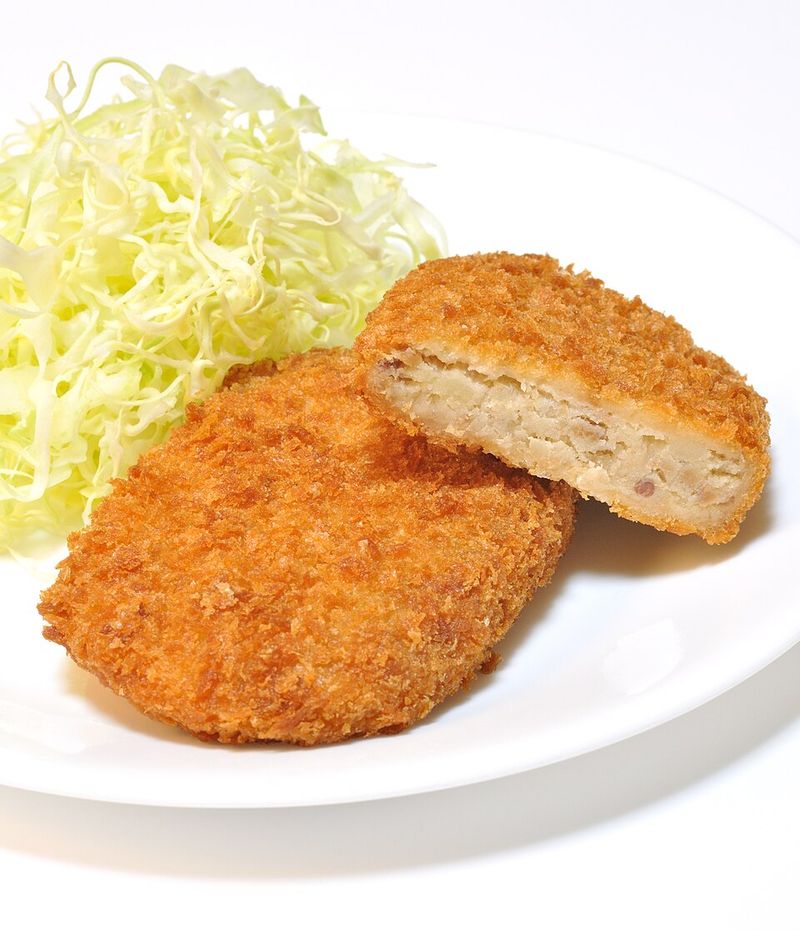
Potato croquettes gave leftover mashed potatoes a formal presentation that made them appropriate for dinner parties and restaurant plates alike. Mashed potatoes are shaped into cylinders, balls, or patties, coated in breadcrumbs, and then fried until the exterior becomes crisp and golden.
Recipes vary widely. Some versions incorporate cheese, herbs, or small amounts of meat.
Others keep the filling plain, relying entirely on the textural contrast between the crunchy coating and the soft potato interior to deliver the appeal.
Croquettes became popular across European cuisines during the 19th century and appeared regularly in American cookbooks and restaurant kitchens through the early and mid-20th century. They fell somewhat out of fashion as simpler potato preparations dominated home cooking, but they never disappeared from menus entirely.
Their current presence in both upscale restaurants and home kitchens suggests the concept didn’t need updating, just rediscovery.
13. Twice-Baked Potatoes
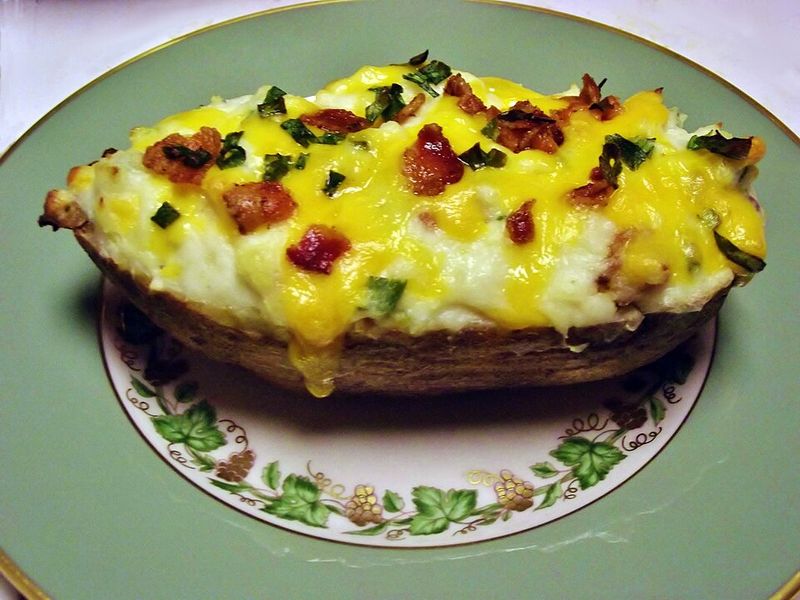
Twice-baked potatoes turned a simple baked potato into something worth serving at a dinner party without requiring much additional effort or expense. After an initial bake, the potato’s interior is scooped out and combined with butter, milk, sour cream, cheese, bacon, or chives, then returned to the potato skin for a second round in the oven.
The dish became a fixture of mid-20th-century American entertaining, particularly in the context of steakhouse menus that were popular from the 1950s onward. The potato skin functions as its own serving vessel, which eliminates the need for an additional dish and makes plating straightforward.
Its adaptability is a significant part of why it lasted. The filling can be adjusted to match dietary preferences, available ingredients, or the formality of the occasion.
That flexibility, combined with a familiar flavor profile, has kept twice-baked potatoes on menus and in home kitchens for decades without requiring major reinvention.
14. Fondant Potatoes
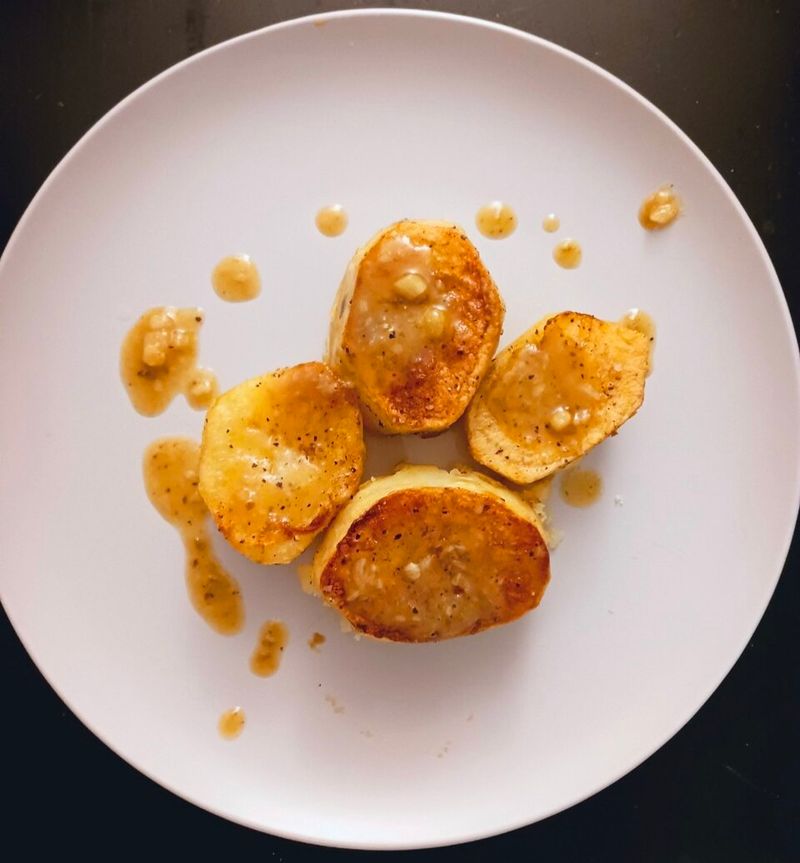
Fondant potatoes, known in French as pommes fondantes, meaning melting potatoes, originated as a classical French restaurant technique in the 19th century. Thick cylinders of potato are browned in butter, then slowly braised in stock and additional butter until the exterior develops a deep, browned crust and the interior becomes unusually tender.
The preparation became a standard in traditional European restaurant kitchens and remained closely associated with formal culinary training throughout much of the 20th century. It fell somewhat out of step with simpler, faster cooking trends during the 1980s and 1990s.
The method requires patience and attention to produce the right result, which may be part of why it stayed attached to professional kitchens longer than other preparations. Fondant potatoes continue appearing on restaurant menus and cooking program demonstrations today, suggesting that a properly executed classical technique doesn’t lose relevance simply because newer approaches arrive to compete with it.
Share this story