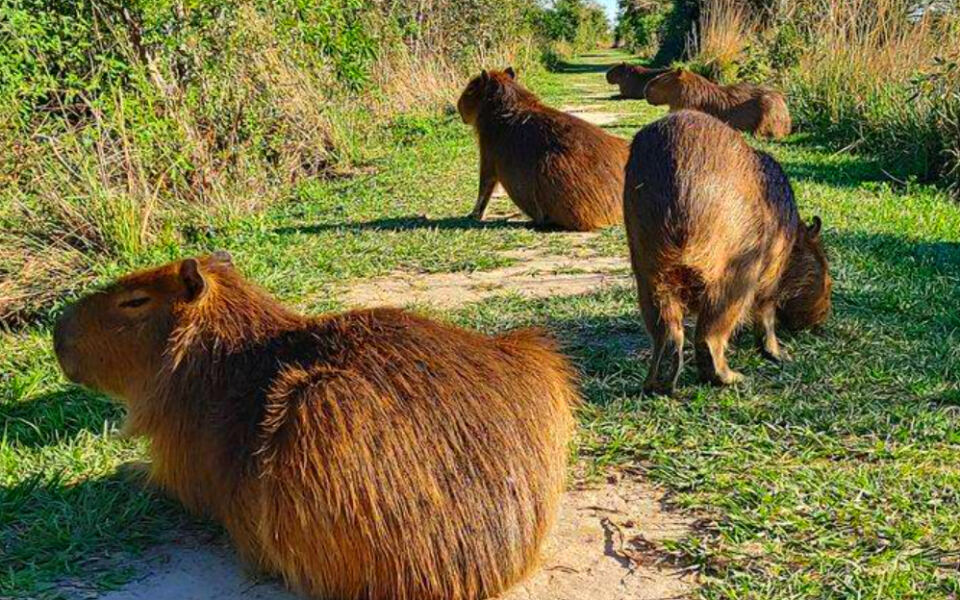
Capybaras have become internet celebrities, but seeing the world’s largest rodents in the wild is a completely different experience. In the right parts of South America, they gather beside lagoons, graze across wetlands, swim through rivers, and occasionally seem remarkably unconcerned about the humans watching them.
Their dependence on water makes vast wetlands and river systems particularly good places to look. Brazil’s Pantanal and Argentina’s Iberá Wetlands offer some of the best opportunities, while Amazonian reserves provide the chance to encounter capybaras in much wilder surroundings.
From Brazil to Peru, these 13 destinations put travelers in genuine capybara country.
1. Pantanal, Mato Grosso and Mato Grosso do Sul, Brazil
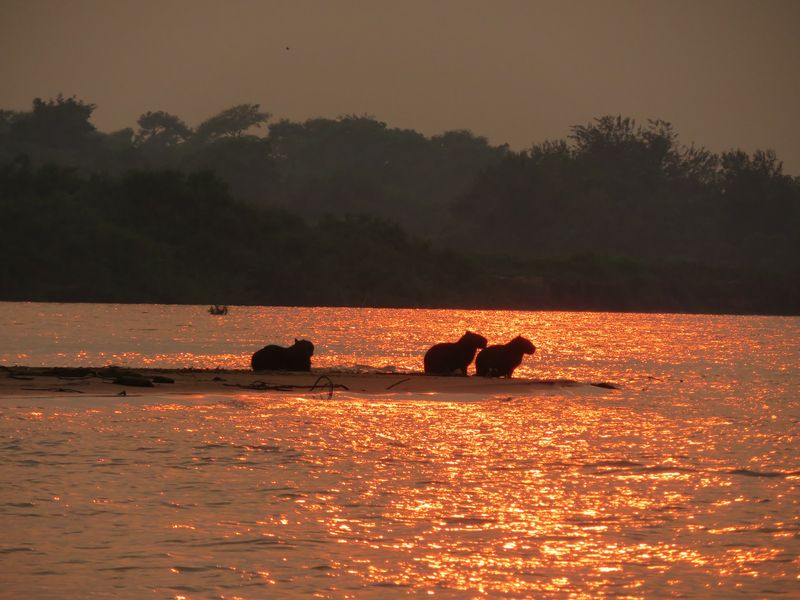
If capybaras are the main reason for your South American wildlife trip, the Pantanal should be near the top of the list. This enormous tropical wetland spreads across Brazil and neighboring countries, creating a maze of rivers, seasonal floodplains, ponds, and open grasslands that provide ideal capybara habitat.
The animals are commonly seen close to water, sometimes resting along muddy riverbanks or grazing together in family groups. Because much of the Pantanal is relatively open, wildlife is often easier to observe than it is in dense Amazon rainforest.
Boat trips, wildlife drives, and stays at traditional fazendas can all produce sightings. Caimans, giant otters, marsh deer, macaws, anteaters, and jaguars make the Pantanal one of the continent’s great wildlife destinations.
2. Laguna Iberá Portal, Colonia Carlos Pellegrini, Argentina
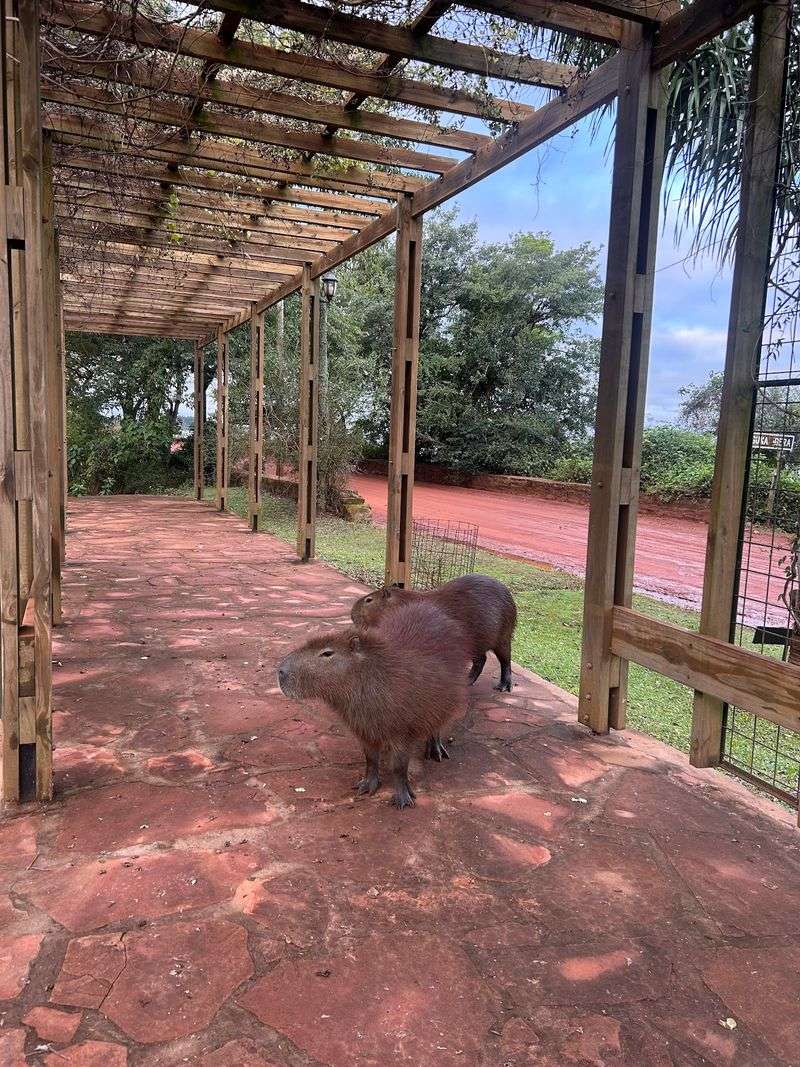
Colonia Carlos Pellegrini is one of the most established bases for exploring Iberá, and the nearby Laguna Iberá Portal is particularly good for travelers hoping to photograph capybaras without mounting a complicated expedition.
Wildlife begins appearing surprisingly close to the village. Capybaras can be encountered around grassy areas, roadsides, trails, and the edges of the lagoon, while boat excursions take visitors deeper into their wetland habitat.
Early morning and late afternoon are especially atmospheric, when softer light settles over the water and animals become more active. Caimans frequently bask near the shore, marsh deer move through the vegetation, and an extraordinary assortment of waterbirds fills the wetlands.
For a first visit to Iberá, this is one of the easiest places to start.
3. Northern Pantanal, Mato Grosso, Brazil
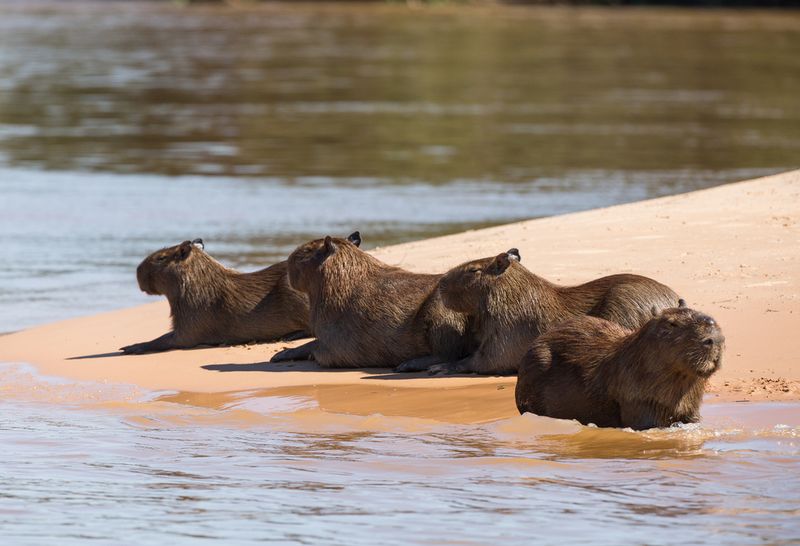
The northern Pantanal offers a classic South American wildlife adventure, particularly along the famous Transpantaneira road running south from Poconé. The route crosses bridges, wetlands, cattle ranches, ponds, and wildlife-rich waterways on its way toward Porto Jofre.
Capybaras are characteristic residents of this landscape and can often be spotted near rivers, marshes, and roadside water. Travelers sometimes encounter entire groups feeding together, with younger animals staying close to the adults.
The farther south you travel, the more immersive the wetland scenery becomes. Jaguars are the headline attraction around Porto Jofre, especially on river excursions, but giant otters, caimans, monkeys, macaws, and capybaras make every outing unpredictable.
Few road journeys offer such constant opportunities for wildlife watching.
4. Tambopata National Reserve, Madre de Dios, Peru
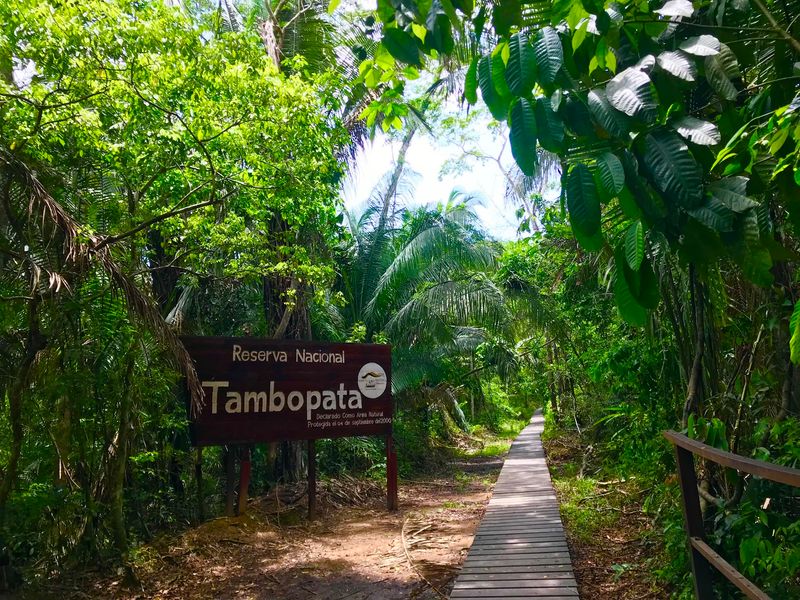
Tambopata offers a very different capybara experience from the open wetlands of Brazil and Argentina. Here, travelers enter the dense Peruvian Amazon, where enormous rivers, oxbow lakes, swamps, and rainforest create one of the most biologically diverse landscapes on Earth.
Capybaras occur within this ecosystem and can sometimes be spotted around waterways and lakes, although sightings generally require more patience than in the Pantanal. That uncertainty is part of the excitement.
A quiet boat journey might also reveal giant river otters, caimans, monkeys, turtles, macaws, or even signs of a jaguar. Tambopata is particularly famous for its spectacular clay licks, where large numbers of parrots and macaws gather.
A capybara encounter here feels less like visiting a predictable viewing area and more like discovering an animal deep within its wild habitat.
5. Sandoval Lake, Madre de Dios, Peru
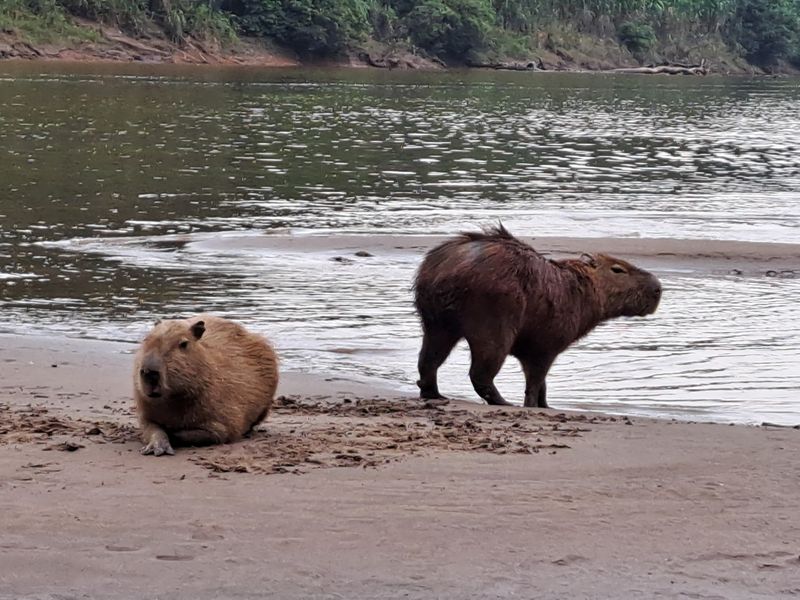
Sandoval Lake is located within Tambopata National Reserve, but its reputation as a wildlife-watching destination makes it worthy of separate attention. The oxbow lake is surrounded by lush Amazon rainforest and palms, creating an exceptionally beautiful setting for searching for animals.
Visitors typically travel from Puerto Maldonado before continuing on foot and by canoe or small boat. Once on the lake, moving quietly across the dark water allows travelers to scan the shoreline for wildlife.
Capybaras inhabit the area, although they may require more searching than their counterparts in open grassland ecosystems. Giant river otters are another celebrated resident, while monkeys, caimans, turtles, hoatzins, and other tropical birds may appear nearby.
Few capybara destinations on this list provide a more atmospheric backdrop.
6. Manu National Park, Peru
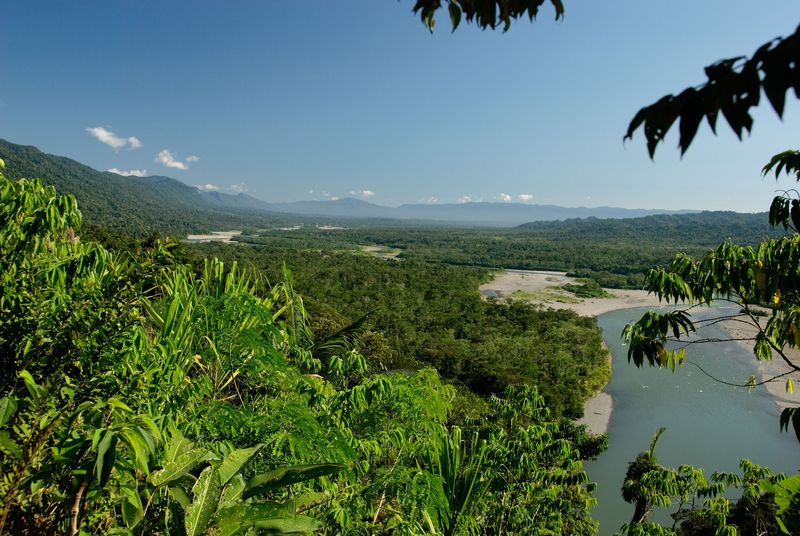
Manu National Park is for travelers who want their capybara search to feel like a genuine wilderness expedition. This immense protected landscape stretches from the Andes down into lowland Amazon rainforest, creating an extraordinary range of habitats and elevations.
Capybaras occur in the lower Amazonian portions of the region, particularly around rivers and wet areas. Spotting one is less predictable than in the Pantanal or Iberá, but the surroundings make every sighting special.
Manu supports an astonishing collection of wildlife, including giant otters, tapirs, several monkey species, macaws, caimans, and jaguars. Much of the experience involves patiently watching riverbanks, forest edges, and lakes to see what emerges.
For serious nature enthusiasts, the sense of remoteness is as important as checking individual species off a list.
7. Yasuní National Park, Ecuador
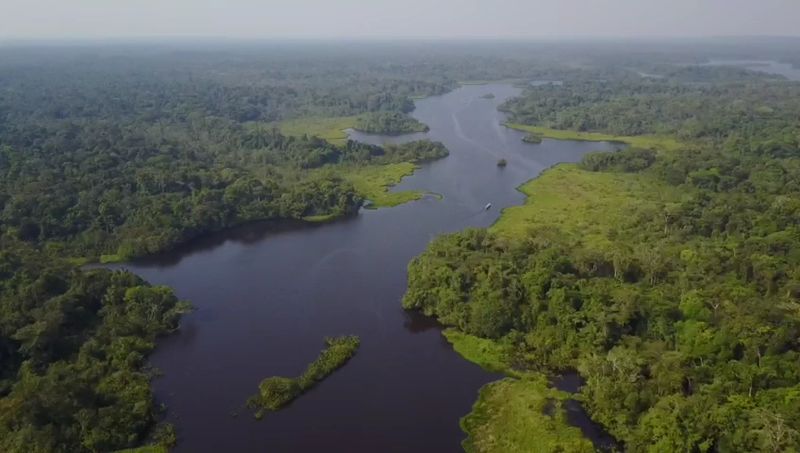
Yasuní lies deep within Ecuador’s Amazon region and protects one of the most biologically rich landscapes on the planet. Rivers twist through immense stretches of rainforest, while flooded forests and smaller waterways create habitat for an extraordinary range of wildlife.
Capybaras are native to this broader Amazonian ecosystem and favor areas where dense vegetation meets water. Wildlife watching often takes place from canoes or boats, allowing visitors to scan quiet riverbanks while listening to the surrounding forest.
Monkeys may crash through the canopy overhead while toucans, parrots, caimans, and river dolphins add to the experience. Capybara sightings are not as predictable here as they are in open wetlands, so Yasuní is best for travelers who value the complete Amazon experience rather than expecting guaranteed encounters with a single species.
8. Los Llanos, Venezuela and Colombia
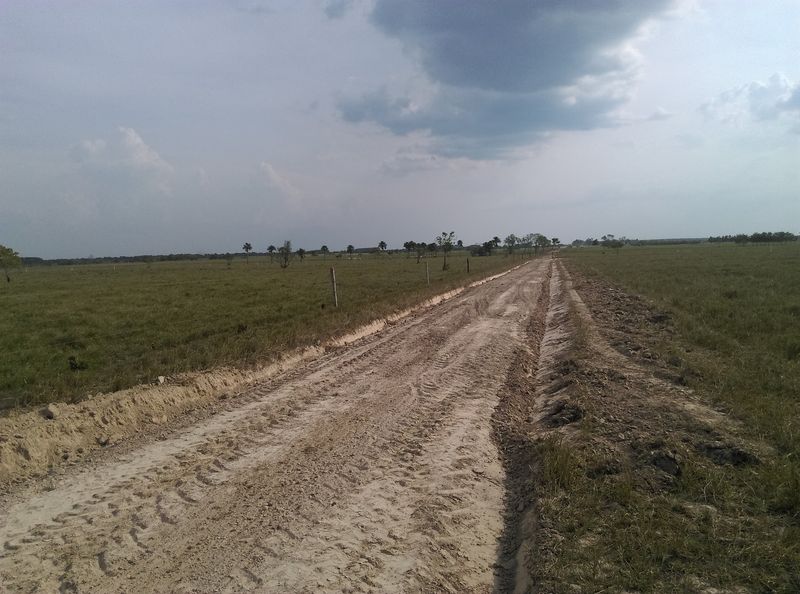
Stretching across enormous portions of Venezuela and eastern Colombia, Los Llanos is one of South America’s great capybara landscapes. These tropical plains change dramatically with the seasons, with heavy rains transforming vast grasslands into a network of shallow wetlands, ponds, rivers, and flooded savannas.
It is exactly the kind of water-rich environment capybaras need to thrive.
Known as chigüires in Venezuela and chigüiros in Colombia, capybaras can occur in large groups around rivers and remaining pools, particularly where food and water are abundant. The wide-open terrain also makes them much easier to observe than in dense Amazon rainforest.
Visitors may see families grazing across the plains, resting beside the water, or suddenly plunging in when something makes them nervous.
Wildlife watching here extends far beyond capybaras. Depending on the area, the Llanos support giant anteaters, caimans, anacondas, deer, monkeys, river dolphins, and extraordinary numbers of birds.
Wildlife-oriented ranches and reserves offer excursions by vehicle, boat, horseback, and on foot, providing different ways to experience the plains.
For travelers hoping to see capybaras behaving naturally in a vast, open ecosystem, the Llanos ranks alongside the Pantanal and Iberá as one of the continent’s most impressive destinations.
9. El Tuparro National Natural Park, Vichada, Colombia
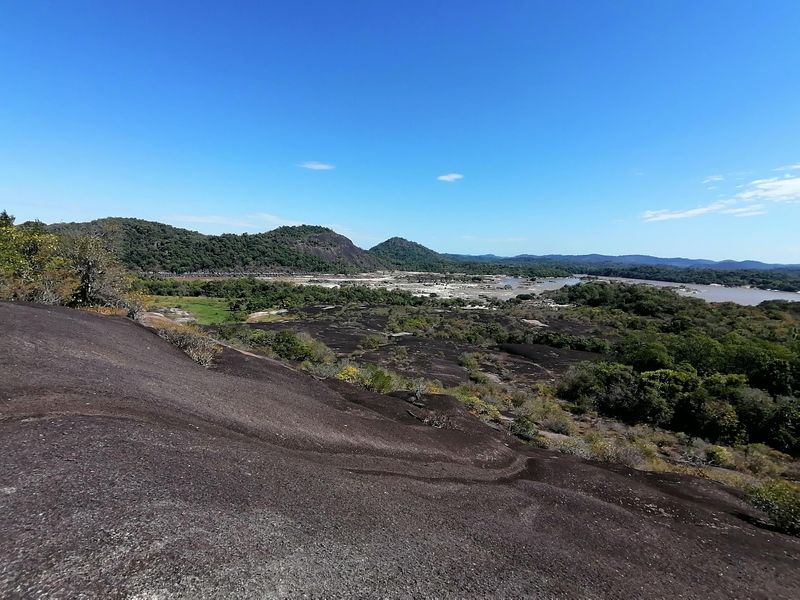
Travelers who prefer genuinely remote destinations can look toward El Tuparro National Natural Park in eastern Colombia. The park protects an enormous landscape of savannas, gallery forests, rocky outcrops, powerful rivers, and wetlands within the Orinoco basin.
Capybaras are native to this broader ecosystem and are closely tied to its rivers and water-rich habitats. Unlike more developed wildlife destinations, however, El Tuparro is not somewhere to visit expecting effortless or guaranteed sightings.
The attraction is experiencing capybaras and other animals as part of an immense wild landscape. River dolphins, giant otters, tapirs, caimans, monkeys, and remarkable birdlife are among the region’s other inhabitants.
Reaching the park takes planning, but its isolation is precisely what makes it memorable.
10. Iberá Wetlands, Corrientes, Argentina
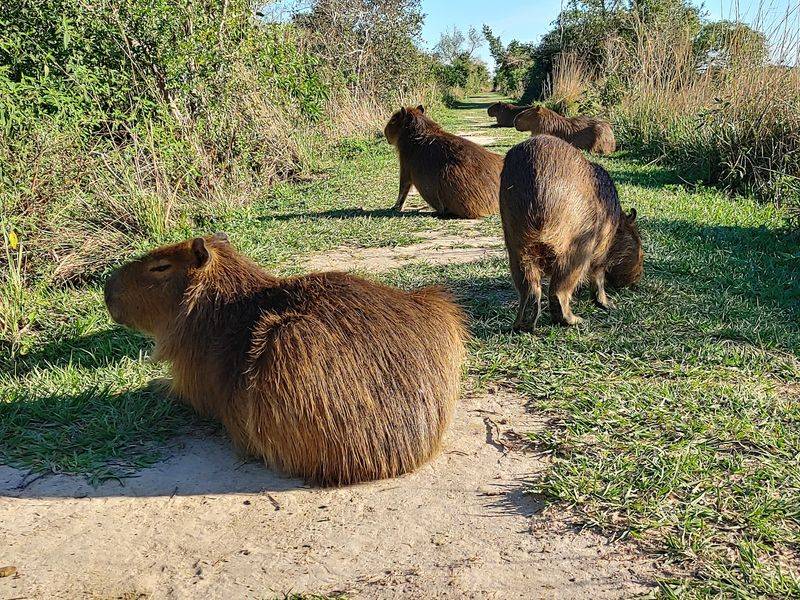
Argentina’s Iberá Wetlands offer one of the best combinations of abundant capybaras and accessible wildlife viewing anywhere in South America. Vast marshes, lagoons, floating vegetation, grasslands, and forest islands provide habitat for an extraordinary collection of animals.
Capybaras are among the most conspicuous residents. Visitors may see them grazing beside roads and trails, swimming across quiet waterways, or resting in groups near the shore.
Their relaxed behavior can make Iberá particularly rewarding for photographers who want time to observe rather than simply catch a fleeting glimpse. Boat trips and guided walks also reveal caimans, marsh deer, howler monkeys, rheas, and colorful birdlife.
The successful restoration of native wildlife has made Iberá one of Argentina’s most exciting conservation destinations.
11. Mburucuyá National Park, Corrientes, Argentina
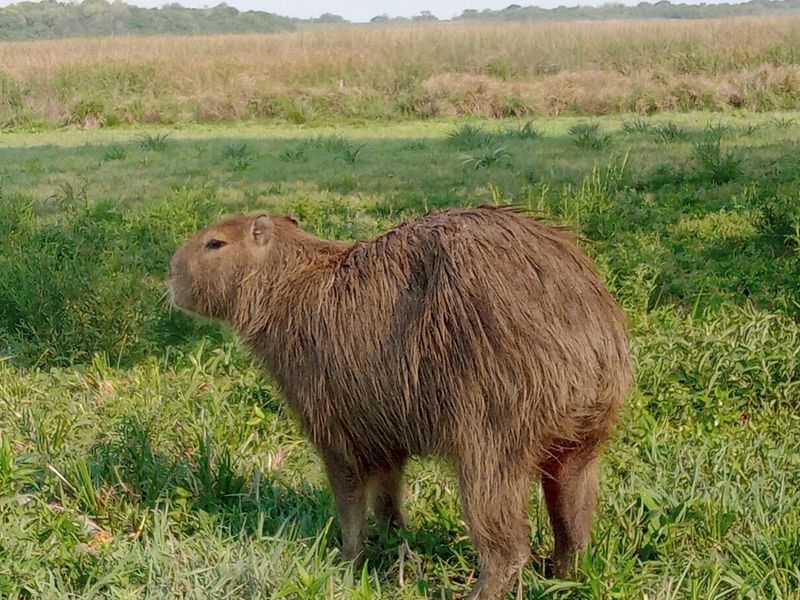
Iberá receives most of the international attention in Corrientes Province, but Mburucuyá National Park offers another opportunity to explore northeastern Argentina’s wildlife-rich landscapes.
The park protects a mixture of wetlands, lagoons, palm groves, grasslands, and forests. Capybaras are among the native mammals that inhabit these environments, sharing the park with foxes, monkeys, armadillos, marsh-associated wildlife, and an impressive assortment of birds.
Walking trails make Mburucuyá especially appealing for travelers who enjoy exploring slowly on foot rather than relying entirely on boats or safari vehicles. It is quieter and less famous than the main Iberá gateways, which can make wildlife encounters feel particularly rewarding.
For anyone already traveling through Corrientes, it is a natural addition to a capybara-focused itinerary.
12. Galarza Portal, Iberá, Argentina
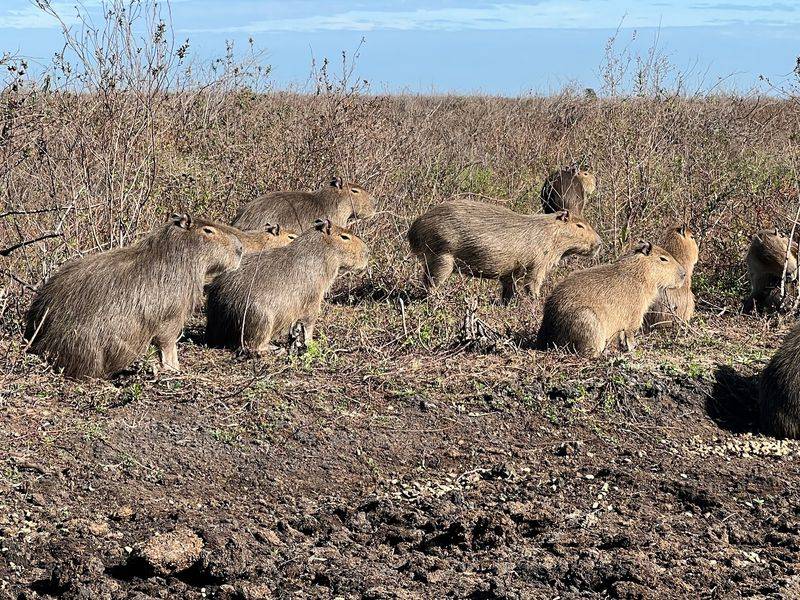
Galarza provides a quieter entrance into the enormous Iberá wetland system and is especially appealing to travelers who want wildlife without concentrating entirely on the more visited areas around Colonia Carlos Pellegrini.
The surrounding marshes, grasslands, lagoons, and waterways provide excellent habitat for capybaras. Animals may appear near water or move through open areas, where the unobstructed landscape creates good opportunities for observation and photography.
Marsh deer, caimans, and numerous wetland birds add to the experience. Early morning and late afternoon are particularly beautiful, when the light stretches across the grasslands and wildlife becomes more active.
Galarza’s relative remoteness also helps preserve the feeling that you are watching animals within a vast functioning ecosystem rather than at a busy attraction.
13. Uguay Portal, Iberá, Argentina
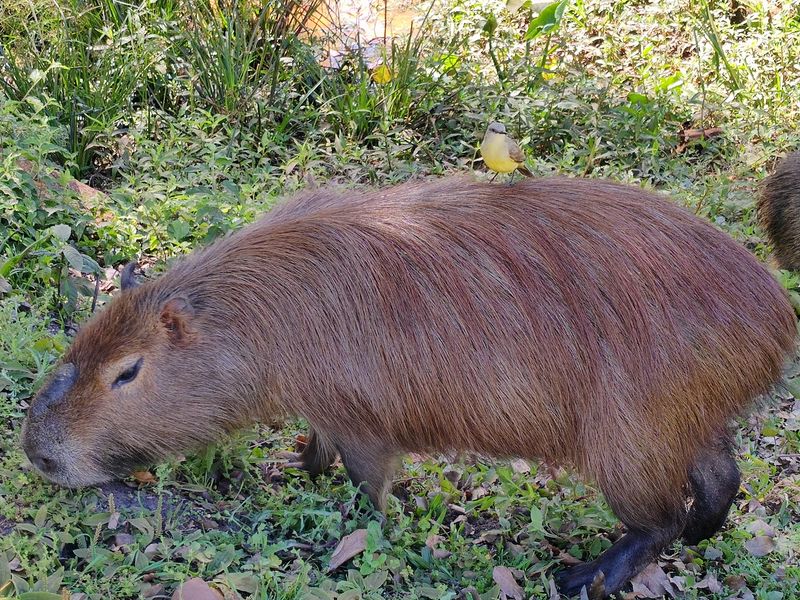
Uguay is another lesser-known gateway into Iberá and offers a more intimate look at one of South America’s greatest wetland environments. The landscape combines marshes, grasslands, waterways, and patches of forest, all of which support an impressive diversity of wildlife.
Capybaras are among the animals visitors may encounter while exploring the region, particularly around water and open grazing areas. Marsh deer, caimans, howler monkeys, and countless birds provide additional reasons to keep binoculars ready.
Uguay lacks the international recognition of Colonia Carlos Pellegrini, but that can be an advantage for travelers seeking quieter surroundings. Spending time here demonstrates that Iberá is far more than a single lagoon or wildlife-viewing spot.
It is an enormous interconnected ecosystem where capybaras remain a natural part of everyday life.
Share this story